 Roots Run Deep, Fruita: The Site’s Own Logic
Gateway Canyons Resort, Grand Junction: A Walk Through the Site
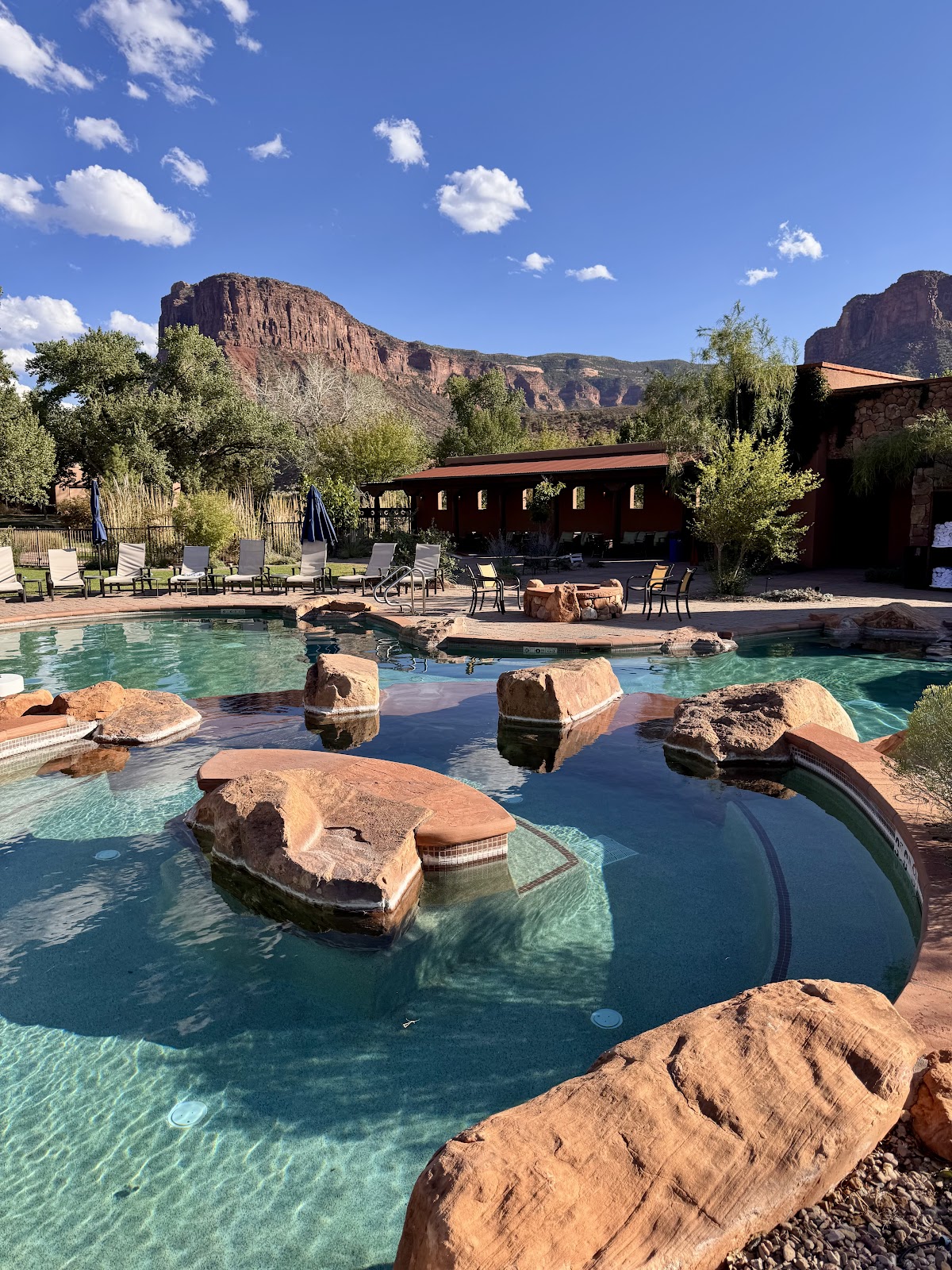
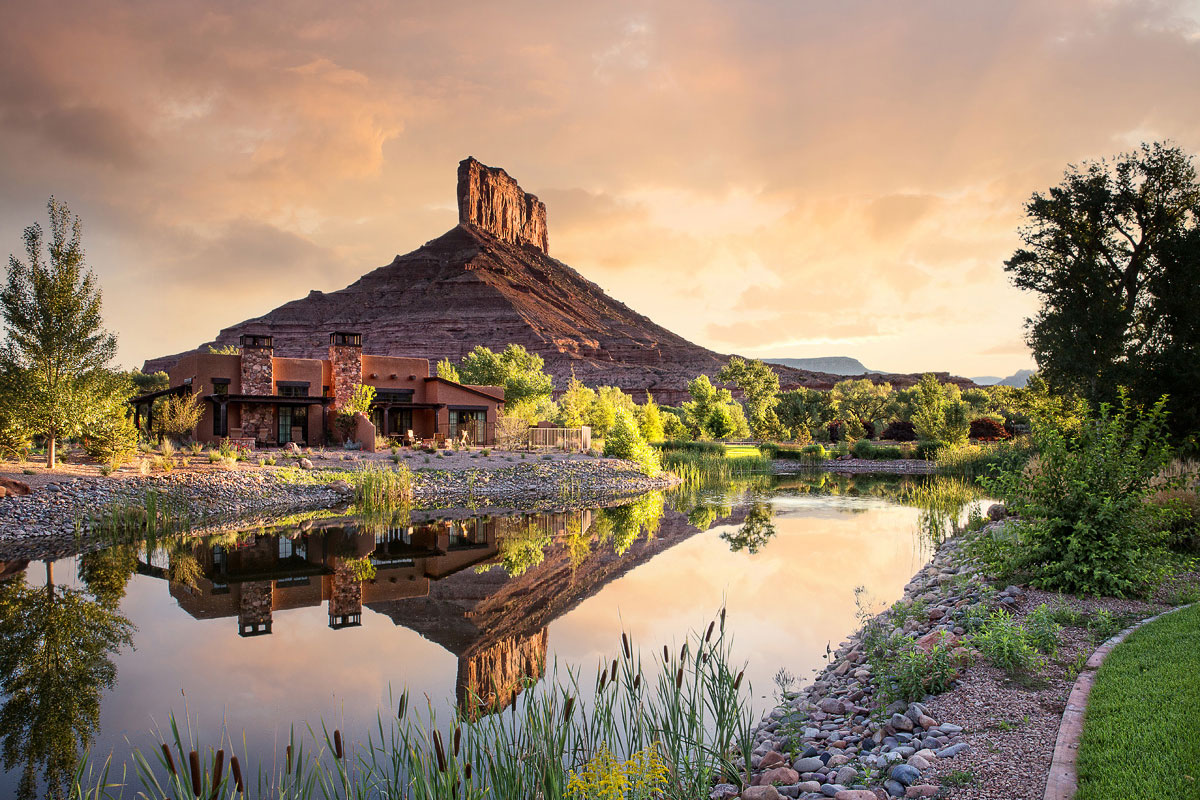
Red rock on all sides. It bounces warm light into everything and it decides when each part of the site works.
This is a walk through the site in the order a wedding day tends to use it, and the reason for walking it rather than listing it is that in a canyon the time of day and the place are the same variable.
Colorado’s western slope is not the Colorado of the mountain venues. This is desert country at around four and a half thousand feet — red Wingate and Entrada sandstone, sparse piñon and juniper, dry air, and walls rather than peaks. Everything that governs the light here is a consequence of those walls.
Three things follow from them. They block the sun early and late, which means the canyon floor has a much shorter direct-sun day than the sky above it suggests. They bounce, and because they are red, everything in open shade near a wall is lit warm — which is either the best free light on the property or a correction problem, depending on whether it was noticed. And they radiate heat back after sunset, which is a comfort fact as much as a photographic one.
We have not photographed a wedding at Gateway Canyons; red-rock canyon sites behave consistently. Which buildings and outdoor areas are included, the covered alternative, and whether the interior lighting is adjustable are questions for their team.
Gateway Canyons Resort at a glance
| Where | A red-rock canyon on Colorado’s western slope, near Grand Junction |
| The walls | They block the sun early and late, and bounce warm light into everything |
| The shade | Wall shade all day; piñon and juniper barely shade at all |
| The gift | Reflected canyon light — soft, directional and very warm |
| The heat | Desert summer, and rock that radiates after sunset |
Morning: the rooms, and the wall in shadow
Start indoors, because morning is when the rooms are used and because desert interiors have a particular characteristic worth knowing.
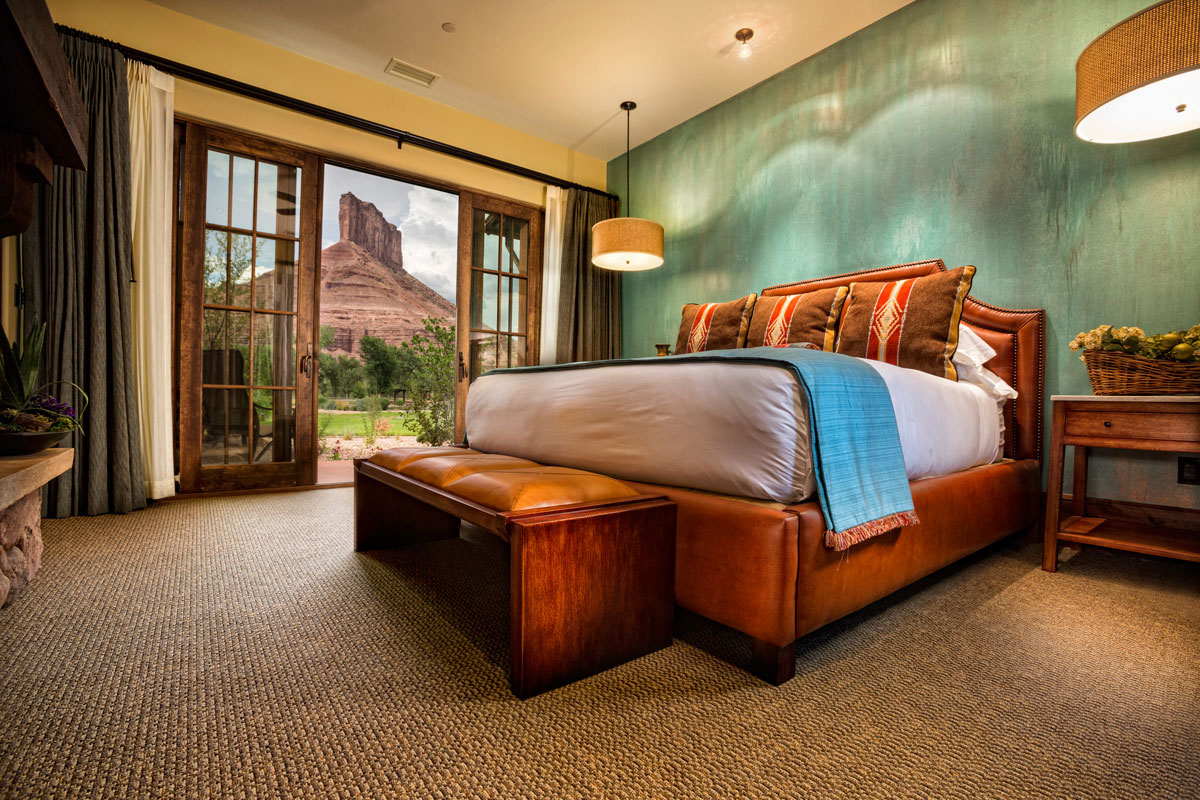
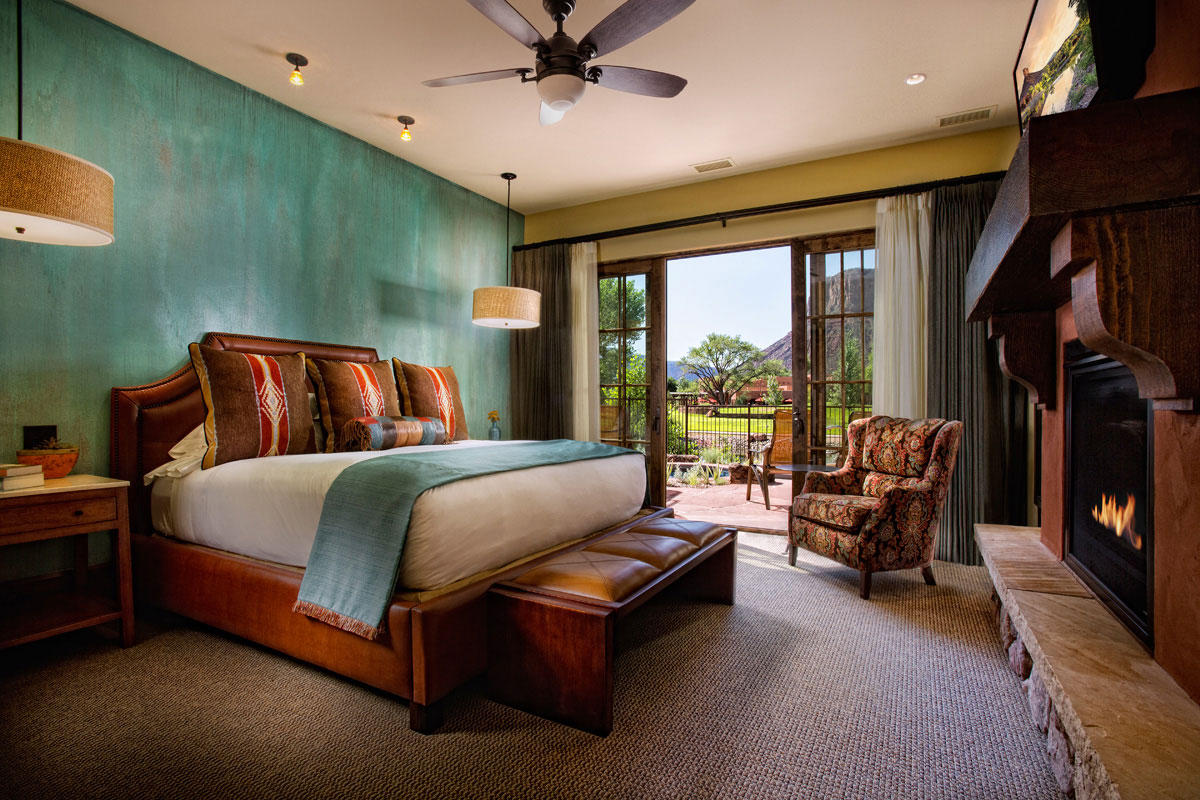
Where a room has a window facing a sunlit canyon wall, that window is not delivering neutral daylight. It is delivering light reflected off red sandstone, which arrives soft, directional and strongly warm — and it is the best light in the building. A subject a metre from it, turned so the light crosses the face rather than hitting it flat, needs nothing added.
The white balance is the whole technical point. Set on a face in position rather than left on a daylight preset, because a preset renders red-bounced light as a genuine colour cast and the correction afterwards is never as clean. Set properly, it renders as warm skin in warm light, which is what it actually is.
Where a room faces a shaded wall or open sky instead, the light is the opposite: cool, because the sky at altitude in dry air is a deep blue. The same room can therefore have warm light on one side and cool on the other, and one white balance cannot serve both. Choose the one the face is in.
Interiors in desert lodges tend to be dark-toned — timber, stone, leather — which puts a room a stop or two below a pale interior. Measure rather than estimate, and where a source is needed, one warm-gelled light at about a stop above the ambient with the white balance set to the gel does more than several. Steep fall-off is the compensation for the dark walls: a background two metres behind a subject goes several stops down on its own.
Outside in the morning, the usable ground is the shadowed side of the canyon, and it is extensive. One wall is lit and the other is in full shade for hours, which gives an enormous soft-lit area with a brilliantly lit red wall opposite acting as a giant warm reflector. That is the single best outdoor condition on the property and it exists twice a day.
The position within it matters: facing the lit wall gives soft directional warm light on the face with dark shaded rock behind, which is free separation and free modelling at once. Facing away gives flat light and a bright background, which is the same place used backwards.
The exposure trap here is the opposite of the mountain one. A meter looking at a large area of brightly lit red rock underexposes the shaded face in front of it, so metering on skin and working in manual is the rule — and in a canyon the difference between lit and shaded rock can be four or five stops, which no automatic mode handles.
The vegetation gives nothing. Piñon and juniper are small, open and sparse, with thin crowns that filter rather than block, so they dapple and nothing more. They are foreground and texture, not shade — and a face under a juniper is a face in dappled light.
Midday to evening: the floor, the walls, and the sky
Midday in a canyon is the one hour when the walls stop helping. With the sun overhead both walls are lit, the bounce comes from everywhere at once and therefore models nothing, and the floor takes direct sun with the vertical shadows that flatten a face and darken the eyes.
The resolution is architecture rather than technique: a covered structure with a solid roof, a deep porch, a colonnade, anything that blocks the overhead component and keeps a horizontal band. Two or three metres in from the open edge is the working position, it is available at any hour, and it cannot dapple. In desert country this is not a fallback but the main midday plan.
Heat is the real midday issue and it is larger than the light problem. Western Colorado in summer is genuinely hot — routinely above thirty-five degrees Celsius — and a wedding party in formal clothes on a canyon floor at two in the afternoon is uncomfortable in a way that shows in the pictures. Shade, water and short deliberate trips rather than long wanders is the plan, and it is a welfare judgement more than a preference.
Late afternoon is when the site becomes extraordinary, and it happens earlier than a sunset table suggests. Walls block the sun well before it reaches the horizon, so the canyon floor goes into shade while the tops of the walls stay lit — and that is the frame the place exists for: a couple in soft even shade with a band of brilliantly lit red sandstone glowing above them.
Red rock in low sun is the most saturated natural colour in this landscape, because the same iron oxide that makes it red is most intense when the light itself is warmest. It does not need help and it does not need saturation added; it needs to be exposed for rather than averaged with the faces.
So the exposure goes on the rock, and the faces are lifted by a close source gelled warm to match. Close, because nothing in a canyon at that hour bounces enough to matter and light falls off with the square of distance — a source at two metres needs a quarter of the output it needs at four.
The lens decision is the last of it. A wide lens in a canyon renders the walls as receding and small, which loses the scale that is the whole subject. A longer lens from further back stacks the walls into layers and keeps them monumental, and in exceptionally dry western-slope air that compression holds detail with almost no haze. Both have their place: wide for a couple dwarfed by a wall, long for the wall as a presence behind them.
After sunset the site gives two more things. The rock holds its colour in the afterglow for longer than a mountain site does, because the light reflecting between the walls keeps bouncing — so there is a usable window past the point where an open site has gone flat. And the sky here is exceptionally dark: the western slope has some of the least light-polluted skies in the country, which makes a night frame with the Milky Way over a canyon wall a real possibility rather than a hope. It needs a tripod, a wide fast lens, twenty or thirty seconds, and a party who will stand still.
The heat radiating off the rock after sunset is the reason an evening here stays comfortable long after a mountain evening has turned cold, which is a genuine advantage for a late reception outdoors.
- Morning and late afternoon: the shaded wall with the lit one opposite
- Face the lit wall — soft warm light in front, dark rock behind
- Midday belongs to covered structures, not to technique
- Expose for the rock and lift the faces with a close warm-gelled source
- Set white balance on a face; red bounce is not a cast to fix later
The western-slope year
The seasons here run on a desert calendar rather than a mountain one, which surprises couples who associate Colorado with snow.
Spring is the best season and it is underused. The temperatures are comfortable, the light is long, the air is clear, and desert vegetation is at its greenest and briefly flowering — which against red sandstone is the strongest colour combination the site produces. The risk is wind, which in canyon country funnels and accelerates, and which makes a lightstand a liability, a veil unpredictable and a held panel a sail.
Summer is hot and the day splits in two. Morning and evening are excellent; the middle is a covered-structure proposition and a welfare one. The other summer factor is the monsoon: from roughly July into September, moisture moves up from the south and produces afternoon thunderstorms, which in canyon country means a flash-flood risk in drainages as well as lightning on exposed rock.
Flash flooding is the specific hazard of this landscape and worth naming plainly — a dry wash can carry water from rain falling miles away and out of sight. Anywhere in a drainage is a question for the property’s staff rather than a judgement to make on the day, and a named covered alternative with real capacity matters here as much as anywhere in the mountains.
The monsoon also produces the best skies of the year. Storm cloud over red rock, with a shaft of low sun catching a wall, is the most dramatic frame the site offers, and the clearing after a storm is when the rock is wet and at its most saturated — a brief window worth being ready for rather than waiting out indoors.
Autumn is the most reliable season overall. The heat breaks, the monsoon ends, the air is at its clearest, the light is long, and cottonwoods along any watercourse turn a strong yellow that reads beautifully against red walls. October on the western slope is a genuinely easy month, which is not true of October at eight thousand feet.
Winter here is mild by Colorado standards and completely different from the mountain venues. Snow falls but does not lie long at four and a half thousand feet, and a light dusting on red sandstone is one of the most striking things the landscape does — a brief high-contrast condition worth chasing if a date happens to land on it.
The December sun at this latitude reaches only about twenty-seven degrees above the horizon, which in a canyon has a specific consequence: the floor may get no direct sun at all for much of the day, because the walls block it entirely. That means a winter day here is all soft reflected light — easy, even, and with the warm bounce still working off the lit upper walls. On the light alone it is the simplest season, at the cost of a short day and cold mornings.
Across all seasons the constants are dry air, high ultraviolet, and dust. Ultraviolet at altitude in clear desert air burns a party faster than they expect, including under cloud. And fine red dust gets into everything, which argues for changing lenses rarely and in shelter, and for a cloth in a pocket.
More frames from Gateway Canyons Resort
Gateway Canyons Resort wedding photography: common questions
How is this different from the mountain venues?
It is desert at around four and a half thousand feet — red sandstone walls, piñon and juniper, dry heat. The walls govern the light rather than the peaks.
What is the best light on the site?
The shaded canyon wall with the lit wall opposite, morning and late afternoon. Soft warm directional light in front, dark rock behind.
Why set a custom white balance?
Because light bounced off red sandstone is genuinely warm. A daylight preset renders it as a cast, and correcting afterwards is never as clean.
What happens at midday?
Both walls light, the bounce stops modelling, and the floor takes overhead sun. Midday belongs to covered structures rather than to technique.
What is the main hazard?
Summer monsoon storms from July into September — lightning on exposed rock and flash flooding in drainages, which can come from rain falling miles away.
Which season is best?
Autumn for reliability and clear air, spring for green desert and long light. Winter is the easiest light, because the walls block direct sun almost all day.
More Colorado venue guides
We are writing a photographer’s guide to every venue we would happily shoot in Colorado. Here are three more, plus the full index:
- The Lafayette Hotel, Colorado: A Walk Through a Town Hotel
- Lionsgate Event Center, Colorado: A Garden Made Against the Climate
- The Little Nell, Aspen: A Hotel at the Bottom of a Mountain
Planning a wedding at Gateway Canyons Resort?
Red rock and a very different Colorado. Tell us your date and we will plan the hours.