 Roots Run Deep, Fruita: The Site’s Own Logic
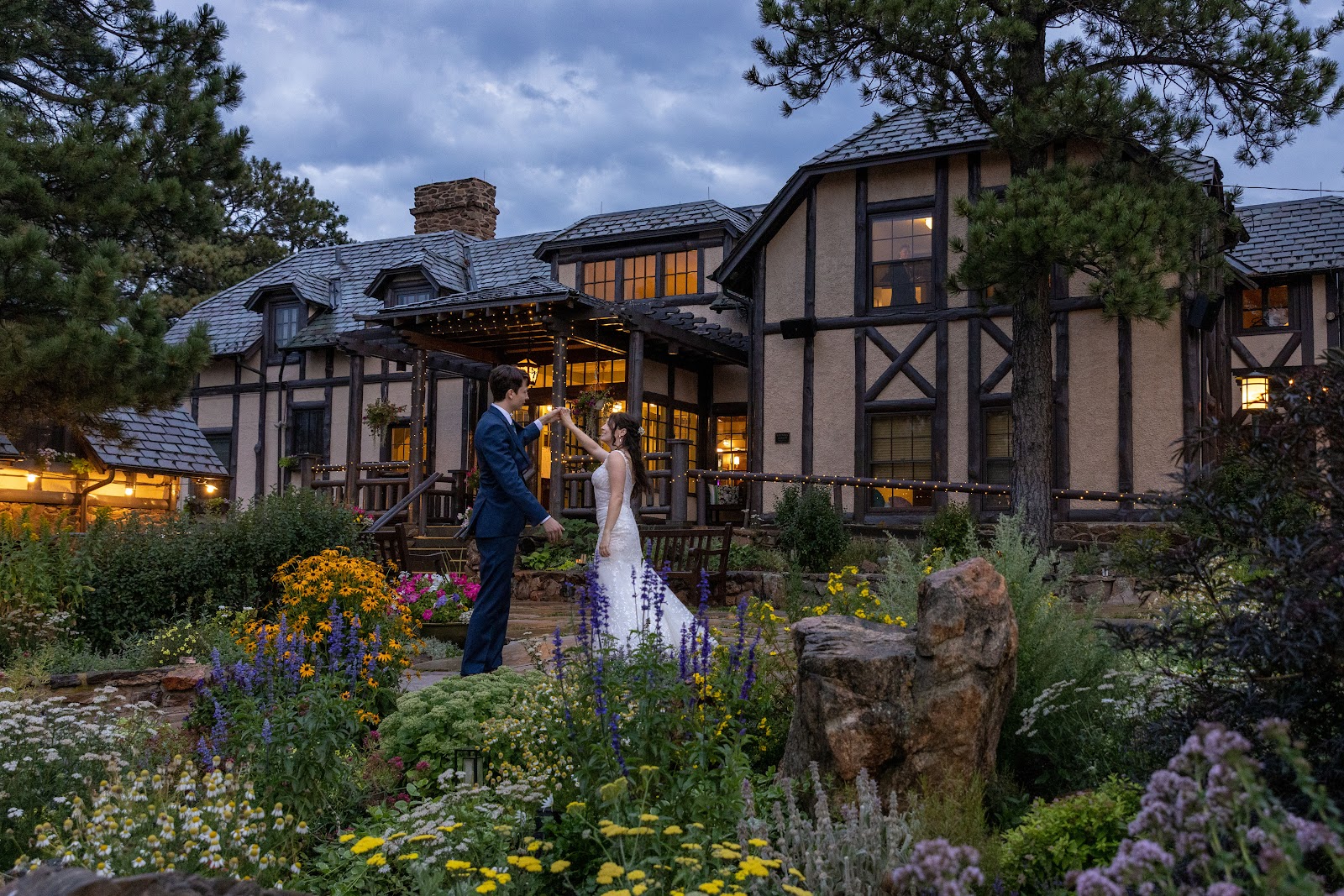
The Boettcher Mansion, Golden: The Problem, and Four Ways Out
Pine that filters instead of blocking, under a sun harder than sea level’s. That is the problem.
A rustic lodge on a Front Range mesa top faces a problem that is specific to this landscape and that catches photographers from wetter, lower places badly.
The sun is harder than at sea level. At around seven thousand feet there is meaningfully less atmosphere overhead to scatter it, which means shadows go deeper and sharper and the brightness range between lit and unlit exceeds what any sensor holds by a wider margin than lower down. A face half in sun here is beyond rescue rather than merely difficult.
And the trees do not help. Ponderosa pine is the dominant species at this elevation, and it has a high open crown with widely spaced needle clusters — which means it filters light into hard patches rather than blocking it. A ponderosa stand dapples; it does not shade. That is the opposite of an eastern hardwood canopy, where the problem is dense shade with dappled edges.
So a photographer arriving expecting to find shade under the trees will find none, and the answer has to come from somewhere else. There are four places, and the building supplies two of them.
We have not photographed a wedding at the Boettcher Mansion; Front Range mesa tops and ponderosa forest behave consistently. Which rooms and grounds are included, what the covered alternative is, and whether the lighting is adjustable are questions for their team.
The Boettcher Mansion at a glance
| Where | A mesa top above Golden, Colorado, at about 7,000 feet |
| The problem | Hard altitude sun with pine that dapples rather than shades |
| Way one | The building’s own shade — porches, eaves and its north side |
| Way two | Timber as a light. Way three: the interiors |
| Way four | Timing, and the mesa’s long views at the ends of the day |
Ways one and two: the building's shade, and its timber
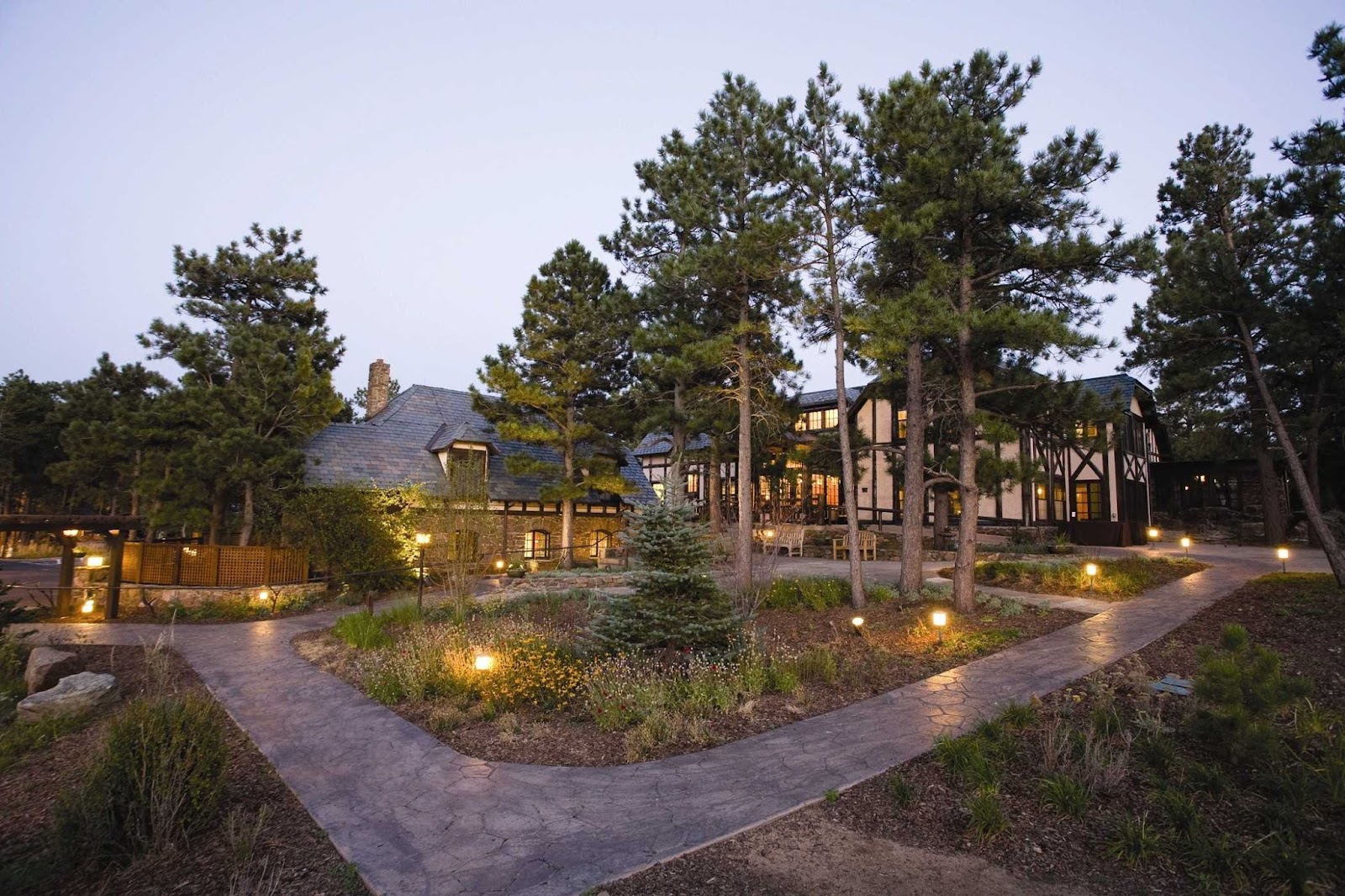
The first way out is the building itself, and a rustic lodge of this period has more shade in it than the whole forest around it.
Porches and deep eaves are the best of it. A roof with an open face does three things at once: it blocks the overhead component of the sun, which is what shadows eye sockets; it restricts the light to a horizontal band, which is direction; and the floor bounces it back to fill under the chin. That is a balanced three-source setup occurring naturally, and it cannot dapple because the roof is solid.
The working position is about a third of the way in from the open edge, and looking along a porch rather than out of it gives posts repeating into depth with the far end darkening by itself. One test frame at three depths settles it, and the position is worth marking because the day will return to it.
The north side of the building is the other reliable shade: at this latitude it is shaded all day, and a solid wall makes shade with direction rather than dappled shade. That matters more here than at a lowland venue, because there is no leafy alternative.
The second way out is to use the building’s timber as a light, and a rustic lodge is largely timber. Unfinished or lightly finished wood is a mid-toned warm reflector rather than a dark absorber, which means a sunlit timber elevation is a genuine soft source — a couple three or four metres out from one, facing it, is lit by a source the size of the wall.
It needs a custom white balance set on a face in the position being used, because timber bounce is markedly warmer than daylight and a daylight setting renders it orange. Dark-stained timber returns much less, so a glance at the finish before choosing a position is worth five seconds.
Timber also reads only under raking light. Log work, shingles, boarding and exposed structural timber all lift every joint and every grain line when light runs along them, and flatten into a field of one colour when light faces them square — so the elevations the sun is skimming are the ones worth photographing, which on a lodge with several faces means a walk round it.
Local stone, where the building uses it, behaves similarly: Front Range stone is mid-toned rather than dark, which makes it a modest reflector and a good raking-light subject.
Ways three and four: the interiors, and the timing
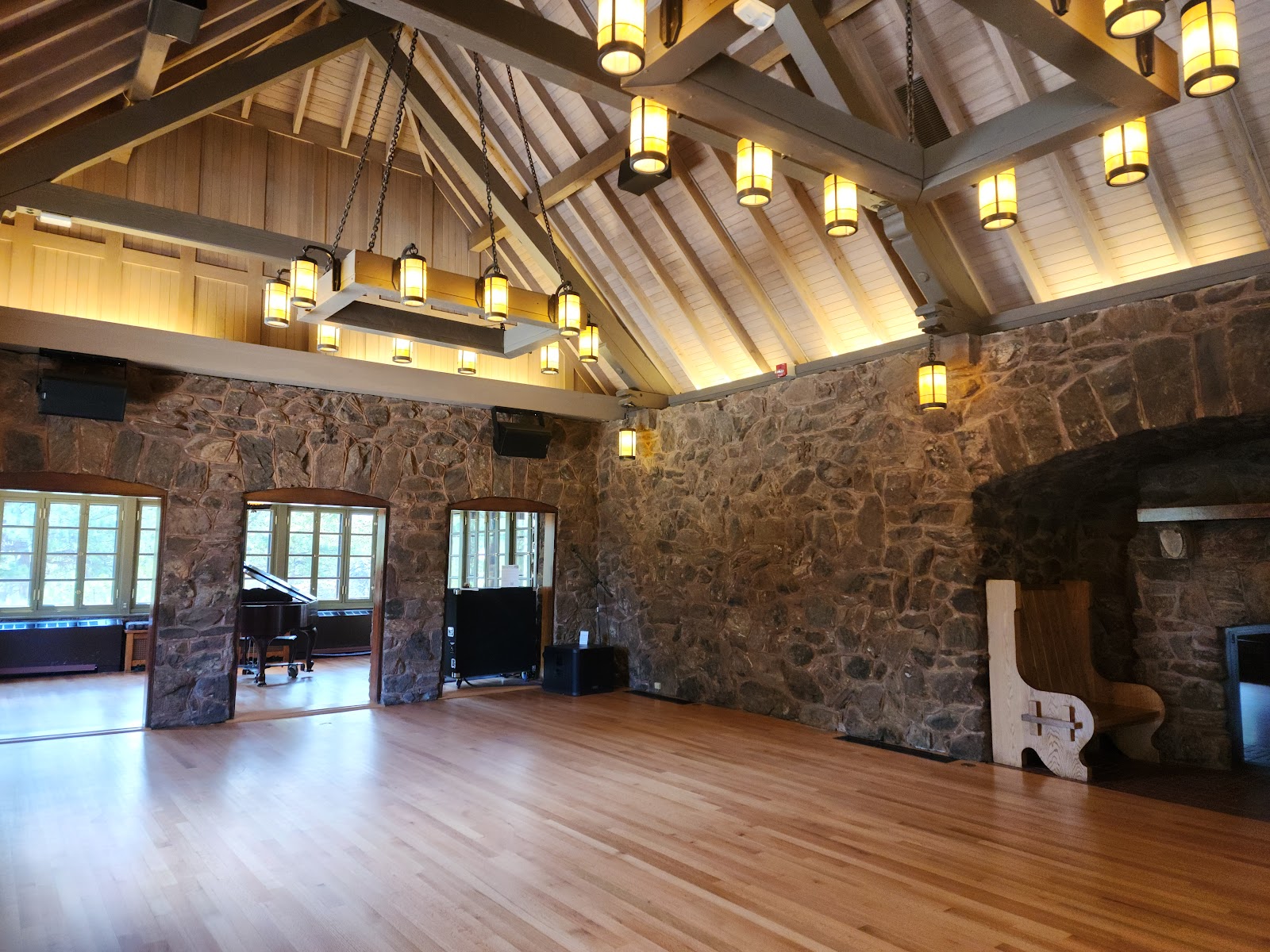
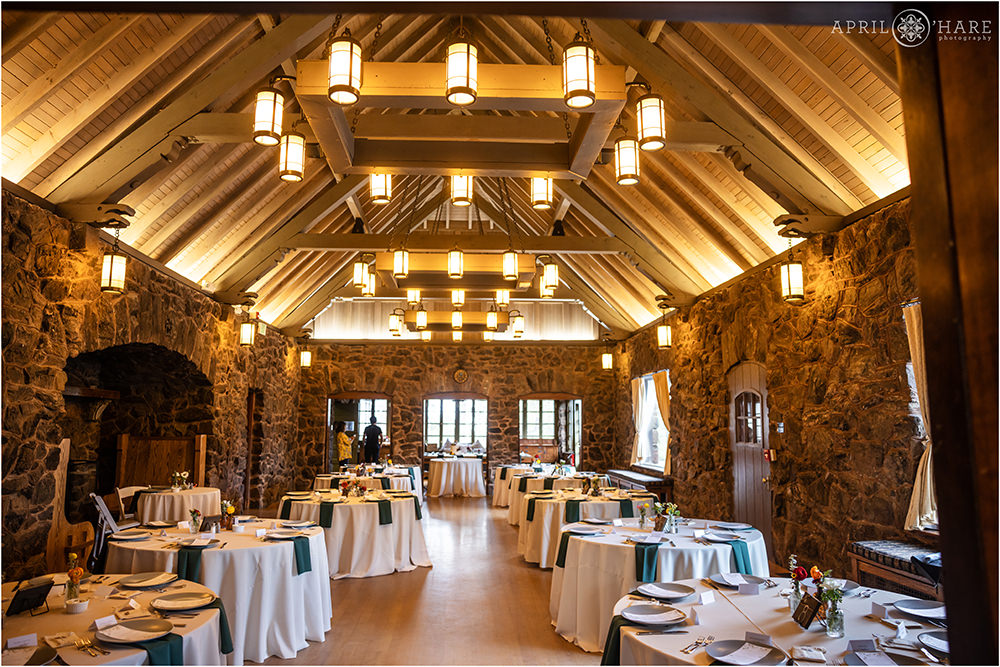
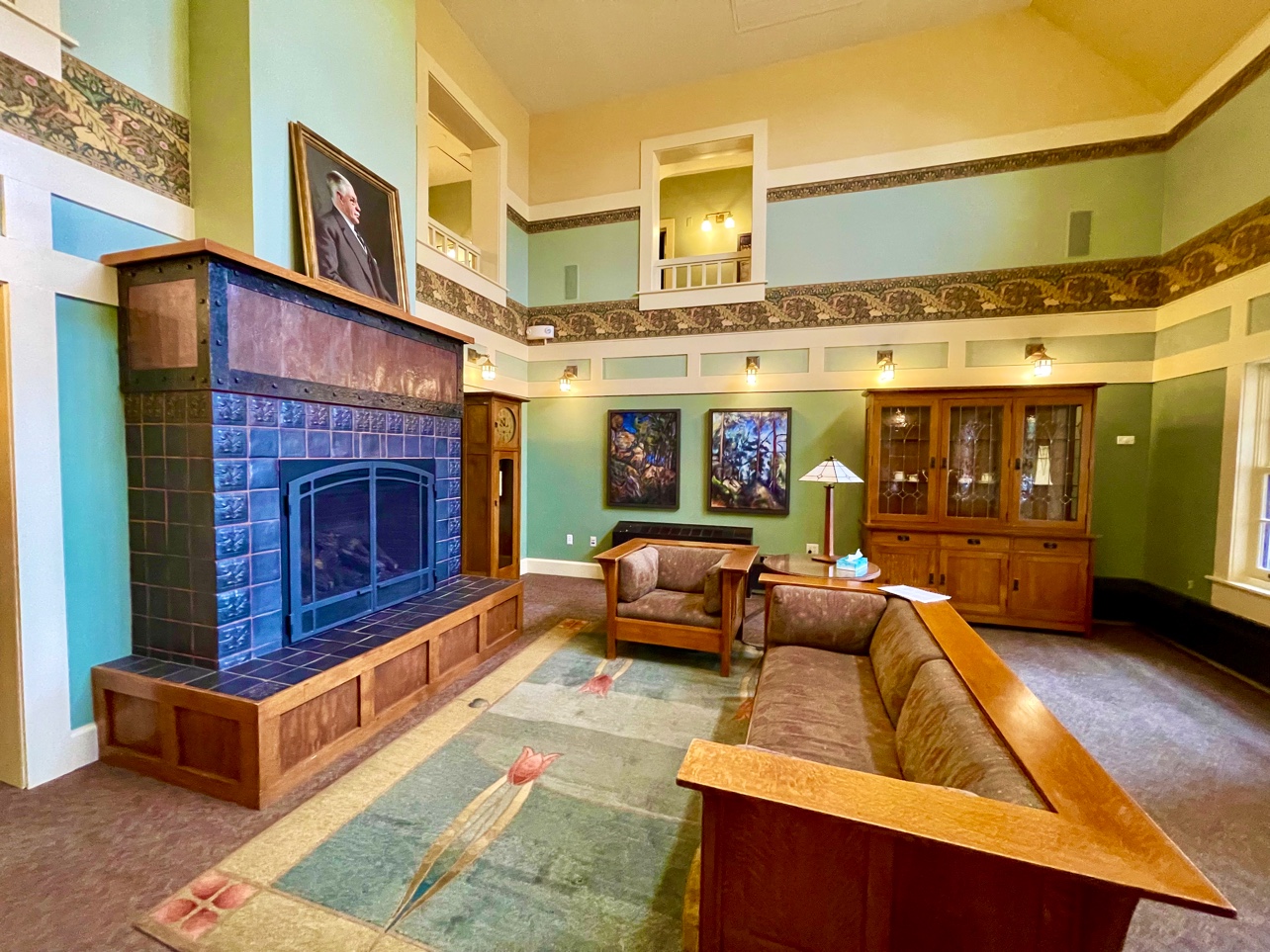
The third way out is the interiors, and a lodge of this type has a consistent character: timber-lined, warm, with generous windows because it was built when daylight was the light.
The windows are the best interior light and the requests are the ordinary ones: largest window on the shaded side, every overhead fitting off so the room has one colour of light, lamps out of frame, two to three metres back from the glass. In this climate the shaded side matters more than in a humid one, because dry clear air at altitude makes direct sun through glass a genuinely hard source.
Timber-lined interiors absorb, which puts a room a stop or two below a pale one with identical fittings — measure it with one frame on arrival rather than estimating, because eyes adapt and meters do not. And test bounce, because a timber ceiling returns very little and colours what it does return: one test frame aimed upward settles it, and the usual answer is to light directly into a modifier instead.
Warm bounce is the standing colour problem: timber reflects strongly warm onto the shadow side of a face from several directions at once, localised and bounced so global white balance cannot separate it from the subject. One warm-gelled source with white balance set to the gel is the method; a global correction turns skin grey and the timber the colour of ash.
Steep fall-off is the compensation: three metres of distance in a timber-lined room puts natural darkness behind a subject with no equipment at all, which is free separation.
The fourth way out is timing, and on a mesa top it comes with a genuine reward. The middle of the day is unusable in the open — and the ends of it are exceptional, because dry clear air at altitude gives the hardest and cleanest raking light a photographer will meet, and a mesa top has long sightlines in several directions.
That is the site’s real asset. From high ground the Front Range rises to the west and the plains fall away to the east, which means two completely different backgrounds from positions a short walk apart — mountains in one direction, open distance in the other. The exposure for either goes on the distance rather than the faces, with the faces lifted by a close source, because metering on skin gives a white sky and a flat view.
A long lens is what makes those views read: compressing the Front Range into layers of decreasing contrast, or the plains into bands, is what an elevated position is for. A wide lens from a mesa top gives a great deal of foreground and a thin distant strip.
And the crossing is the one unmovable frame: twenty-five to forty minutes after sunset, when the sky still holds colour at about the brightness of the building’s own lighting. In dry air at altitude that window is shorter than in a humid climate, so it is a scheduled ten minutes — and from a mesa top it is better than from a valley, because the mountain silhouette is visible against the last of the light.
- A third of the way in from a porch edge — a solid roof cannot dapple
- The north side of the building is shaded all day; use it as directional shade
- Three to four metres out from sunlit timber, with a custom white balance
- Test bounce indoors; a timber ceiling returns almost nothing
- Expose the long views for the distance; faces lifted by a close source
The Colorado year
Colorado’s governing photographic variable is elevation, and at seven thousand feet the year has sharp edges.
Summer afternoons bring the state’s defining hazard and it needs naming plainly. Mountain convection builds almost daily from July into September, and these storms produce lightning — which on an exposed mesa top with pine around it is genuinely dangerous rather than inconvenient. Colorado has one of the highest rates of lightning casualties in the country, and open high terrain in the afternoon is precisely why.
So a named covered or indoor alternative is a requirement rather than a courtesy, the decision to use it belongs to whoever is responsible for the party, and an early ceremony beats a late one in July and August because mornings are stable and afternoons frequently are not.
The compensation is that building cumulus over the Front Range is the best diffusion the state offers. Under it the dappling problem disappears entirely, the timber and stone saturate rather than glare, and the middle of the day becomes usable for once — so a cloudy afternoon here is a better photographic condition than a clear one, which is worth saying to a couple who might otherwise hope for sunshine.
Outside the storm season the sky is frequently cloudless, which means waiting for diffusion is not a plan. The porches, the north wall, the interiors and the timing are the plan.
Autumn is the best window of the year: the air is at its clearest, the afternoons stabilise, the temperatures are comfortable, and low sun arrives at a civilised hour. Late September into October is the strongest period — and at this elevation any aspen among the ponderosa turn gold in that window, which against dark pine is the region’s own colour pairing.
Aspen turn differently from eastern hardwood and it is worth knowing: a grove is clonal, which means the whole stand turns at once rather than tree by tree, giving a uniform gold mass instead of mixed colour. Aspen bark is also white and reflective, which makes a grove a bright vertical background rather than a dark one — the opposite of conifer.
Winter is long at this elevation and it is quietly excellent. The December midday sun at this latitude reaches only about twenty-seven degrees above the horizon, which means the whole short day is raking light rather than overhead light — exactly what timber, stone and bare branch structure all want, and the one season the middle of the day works outdoors.
Snow lies for months at seven thousand feet and it does two things: outdoors it is the best natural fill available, lifting exactly the shadows a low sun carves while fooling a meter by about two stops toward underexposure; and indoors it turns the ground into an enormous reflector, which transforms the windows of a timber-lined building whose main problem is absorbent walls.
Snow against dark pine is the widest natural brightness range a photographer meets here: expose for the snow, which holds the detail and clips irrecoverably, and let the conifer go near-black. And the diurnal swing is large — twenty degrees Celsius between afternoon and evening at altitude in dry air — so a party comfortable at four is cold by seven, and coats are the answer.
Ultraviolet increases with elevation, which is a welfare point rather than a photographic one: at seven thousand feet a party outdoors for an hour burns faster than expected, including under cloud and over snow.
More frames from The Boettcher Mansion
The Boettcher Mansion wedding photography: common questions
Why doesn't ponderosa pine give shade?
It has a high open crown with widely spaced needle clusters, so it filters light into hard patches rather than blocking it. A pine stand dapples.
Where is the shade then?
The building — porches with solid roofs, deep eaves, and the north wall, which is shaded all day at this latitude.
Can the building's timber be used as a light?
Yes. Unfinished timber is a mid-toned warm reflector, so a sunlit elevation is a source the size of the wall, needing a custom white balance on a face.
Does bounce flash work indoors?
Rarely. A timber-lined ceiling returns very little and colours what it does return. One test frame settles it; light directly into a modifier instead.
What is the main hazard?
Afternoon lightning from July into September. Colorado has one of the highest lightning casualty rates in the country, and exposed high ground is why.
Is a cloudy afternoon bad?
The opposite. Building cumulus is the best diffusion the state offers — it removes the dappling entirely and makes the middle of the day usable.
More Colorado venue guides
We are writing a photographer’s guide to every venue we would happily shoot in Colorado. Here are three more, plus the full index:
- The Chautauqua Dining Hall, Boulder: One Frame, and How It Is Made
- Devil’s Thumb Ranch, Tabernash: One Frame, and How It Is Made
- The Evergreen Lake House, Colorado: The One Decision That Governs Everything
Planning a wedding at The Boettcher Mansion?
The trees will not help. Tell us your date and we will use the building.