 Roots Run Deep, Fruita: The Site’s Own Logic
The Chautauqua Dining Hall, Boulder: One Frame, and How It Is Made
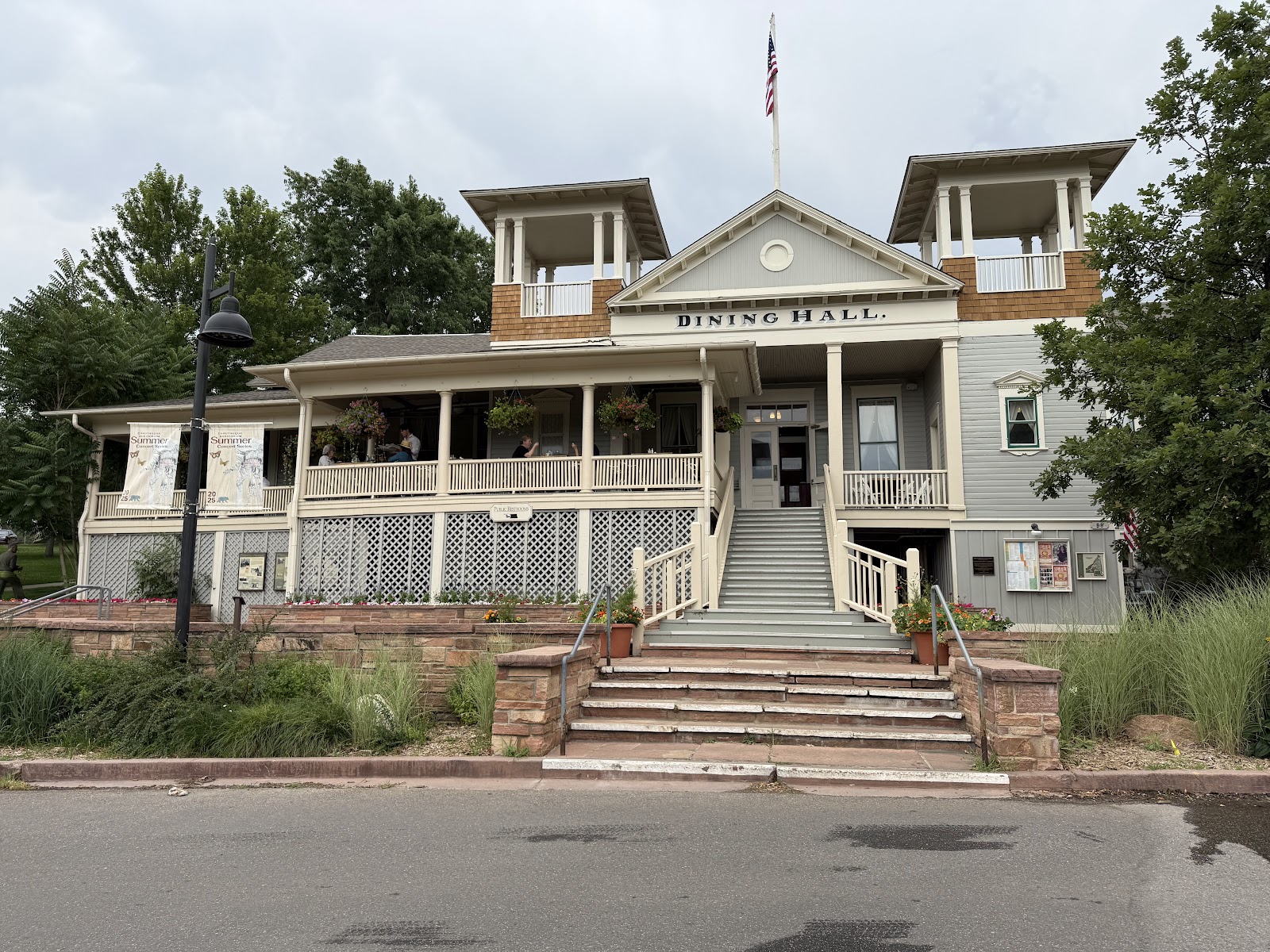
A wraparound porch under a hard mountain sun, with tilted rock slabs behind it. That is the frame.
There is one frame this site gives that combines the two things it has, and it is worth building deliberately because each half needs the other.
The frame is a couple on a deep wraparound porch, two or three metres in from its open edge, with the tilted rock slabs of the Flatirons visible beyond. The porch roof blocks the hard overhead sun; the open side supplies direction; the painted floor bounces light back to fill under the chin. And the rock behind, raked by low sun, gives a background that places the picture in Colorado and nowhere else.
The reason each half needs the other is the altitude. Boulder sits at around five and a half thousand feet with the foothills rising immediately west, and at that elevation there is meaningfully less atmosphere overhead to scatter sunlight — so direct sun is hard, shadows go deep and sharp, and a subject standing in the open in front of the Flatirons has black eye sockets and a hard line under the chin. The porch is what makes the rock usable as a background.
Six decisions make it. We have not photographed a wedding at the Chautauqua Dining Hall; deep porches and Front Range rock behave consistently. Which spaces are included, whether the porch and grounds are available and what the covered alternative is are questions for their team.
The Chautauqua Dining Hall at a glance
| Where | Boulder, Colorado, beneath the Flatirons at about 5,500 feet |
| The frame | A couple on a deep porch with tilted rock slabs beyond |
| Why the porch | It blocks the hard altitude sun that makes the rock unusable otherwise |
| The timing | Low sun on the rock, with the porch shaded |
| Ask first | Spaces included, porch and grounds access, covered alternative |
Decisions one to three: the depth, the side, the exposure
The first decision is how far into the porch to stand, and it has a narrow range with a clear test. At the very edge the light is strong but the sun can reach in at the ends of the day; against the building wall the light has bounced twice and lost its direction.
Two or three metres in is the working position, and the test is to look at the eyes: a catchlight in them and no bright patch on the top of the head means the depth is right. One test frame at three depths takes ninety seconds and settles the whole session.
The second decision is which side of the wraparound to use, and the criterion is which one is shaded while the rock is lit. That is the whole point of the pairing: a porch in shade with the Flatirons in sun gives a soft, directional foreground against a raked, saturated background — while a porch in sun and rock in shade gives the reverse, which is a much weaker picture.
Because the rock lies west of the site, that combination happens in the late afternoon and early evening, when the sun is low enough to light the west-facing slabs while the porch on the east or north side is in shadow. A short walk round the building to establish which side is shaded at the planned hour is worth more than any equipment, and the venue will know.
The floor colour is worth a glance before choosing a position. A pale painted porch floor returns a great deal and fills under the chin; a dark-stained one gives much less. And if the paint is strongly coloured it throws that colour onto skin from below, which a custom white balance set on a face handles.
The third decision is the exposure and it is the one that loses the frame. Sunlit tilted sandstone is bright — much brighter than a shaded porch — and the two can differ by three or four stops, which is at the edge of what a single exposure comfortably holds once both skin tone and rock detail are required.
There are two honest resolutions and one that is not. Expose for the rock and light the faces, which is the frame: the ambient set so the slabs hold their colour and texture, with a source lifting the faces to match. Or expose for the faces and let the rock go bright, which is legitimate and makes the picture about the couple rather than the place.
The one that is not honest is a compromise: grey rock and slightly dark faces, which is what automatic metering produces and which fails at both. Choose, then commit, and work in manual because a frame containing a bright distant field and a shaded foreground will be metered differently every time.
The added source must be close, because competing with sunlit rock needs proximity rather than power — a modifier at two metres needs a quarter of the output of the same modifier at four. And it must be gelled warm, because the rock is warm and an ungelled flash sits cooler than everything else in the frame.
Decisions four to six: the rock, the colour, the alternative
The fourth decision is how the rock is used, and tilted sandstone has a property that decides it: strong linear structure. The beds run at an angle across the faces, which means light running along them lifts every one while light facing the slab square flattens it into a red-brown field.
So the hour that works for the porch is also the hour the rock reads, which is a convenient alignment rather than a conflict. Low sun raking a tilted slab gives texture, depth and the sense of geology that midday removes entirely.
The framing decision follows. The slabs are large and distant, which means a wide lens renders them as a small strip above a lot of foreground — the opposite of the point. A longer lens compresses them and brings them forward, so they read as a wall behind the couple rather than as scenery in the distance. That is the single most useful choice in this frame and it costs nothing.
The fifth decision is the colour and there are two casts in play. The rock is warm and, where it is close, throws warm bounce onto anything near it; and the sky at this altitude is a markedly deeper blue than at sea level, which means open shade is cooler than it would be lower down.
A subject on a shaded porch is therefore lit by cool sky light with a warm background behind them, which is a pleasant separation rather than a problem — and a custom white balance set on a face in position renders the skin correctly while leaving the rock warm. A daylight setting makes the shaded faces blue; a correction for the shade turns the rock grey.
The sixth decision is what to do when the frame is not available, because it depends on clear skies over the foothills and on the porch being free.
The first alternative is the porch alone. A deep wraparound porch is good light regardless of what is behind it: looking along it rather than out of it gives posts repeating into depth with the far end darkening by itself, which is the cheapest separation available anywhere and needs no view at all.
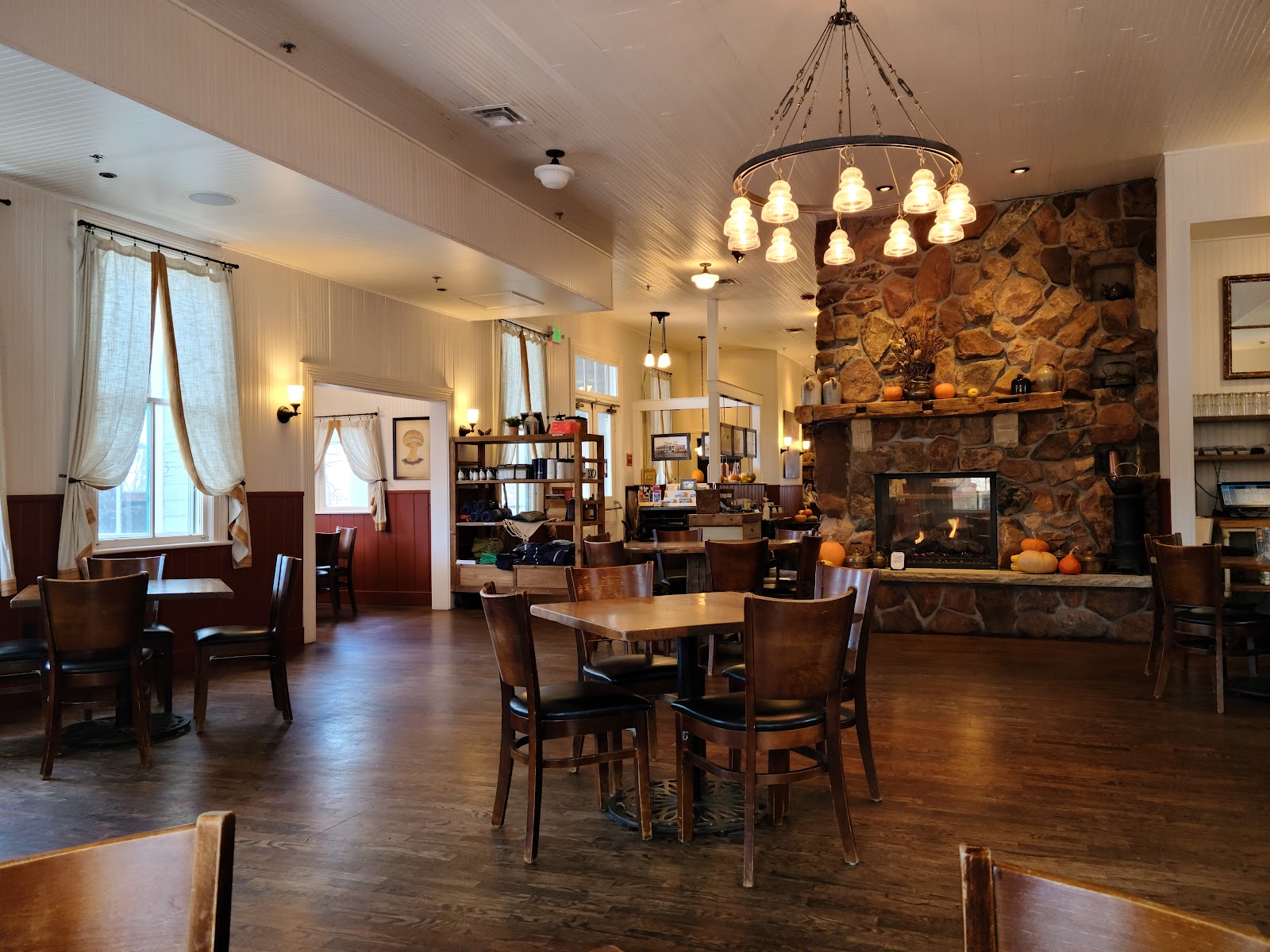
The second is the interior. A hall of this period is timber-lined with generous windows, which means the windows are the good light — largest on the shaded side, fittings off, two to three metres back — while the timber absorbs, putting the room a stop or two below a pale one and returning little to a bounced flash. One warm-gelled source at about a stop above the ambient is the method, and one test frame aimed at the ceiling settles the bounce question.
The third is the grounds, where the shade rule is absolute: ponderosa pine has a high open crown that filters hard altitude light into patches rather than blocking it, so a pine stand dapples and does not shade. The usable shade is the building, the porch and anything with a solid roof — and the test is to look at the face rather than the ground, because any bright spot means move a metre.
- Two or three metres into the porch; catchlight in the eyes, nothing on the head
- Use the side that is shaded while the rock is lit — late afternoon
- Expose for the rock and light the faces, or the reverse. Never compromise
- Use a longer lens: a wide one turns the slabs into a thin distant strip
- Custom white balance on a face; cool shade with warm rock behind
The Colorado year
Colorado’s governing photographic variable is elevation, and at the foot of the Front Range the year has hard edges.
Summer afternoons bring the state’s defining hazard and it needs naming plainly rather than in passing. Mountain convection builds almost daily from July into September, and these storms produce lightning — which on open ground beneath the foothills is genuinely dangerous rather than inconvenient. Colorado has one of the highest rates of lightning casualties in the country, and afternoon convection over exposed high terrain is precisely why.
That makes a named covered or indoor alternative a requirement, and the decision to use it belongs to whoever is responsible for the party. It also argues for an early ceremony in July and August, because mornings are stable and afternoons frequently are not — which conflicts with the frame described above, since the rock wants late light. That tension is worth naming to a couple in advance rather than discovering on the day.
The compensation is that building cumulus over the Front Range is the best diffusion the state offers, and it changes the frame rather than removing it: under cloud the porch and the rock come within a stop or two of each other, which means one exposure holds both with no added light at all. A cloudy afternoon here is an easier version of this picture, not a worse one.
Outside the storm season the sky is frequently cloudless, which means waiting for diffusion is not a plan. The porch, the timing and the longer lens are the plan.
Autumn is the best window of the year: the air is at its clearest so the slabs hold detail and texture, the afternoons stabilise, the temperatures are comfortable, and low sun arrives at a civilised hour. Late September into October is the strongest period, and any aspen in the foothills above turn gold in that window — which against tilted red rock is a colour pairing specific to this part of the state.
Winter is quietly excellent for this frame. The December midday sun at this latitude reaches only about twenty-eight degrees above the horizon, which means it rakes the west-facing slabs through the whole short day rather than for an hour at the end of it — so the condition the frame needs is available all afternoon instead of briefly.
Snow on tilted red sandstone is occasional at this elevation and it is the most striking version of the background there is, because white against saturated red-brown is a contrast nothing else provides. Snow also turns the ground into a reflector, which brightens the porch considerably and fills under the chin more strongly than the painted floor alone.
The diurnal swing is the constraint and at altitude in dry air it is large — twenty degrees Celsius between afternoon and evening is normal, and a porch in shade loses warmth quickly. A party comfortable at four is cold by seven, and coats are the answer.
And ultraviolet increases with elevation: a party outdoors for an hour here burns faster than they expect, including under cloud, which is worth mentioning in advance.
More frames from The Chautauqua Dining Hall
The Chautauqua Dining Hall wedding photography: common questions
What is the frame?
A couple two or three metres into a deep porch, with the tilted rock slabs of the Flatirons raked by low sun behind them.
Why is the porch necessary?
Because at this altitude direct sun is hard enough that a subject standing in the open in front of the rock has black eye sockets. The porch makes the rock usable.
Which side of the porch?
Whichever is shaded while the rock is lit — which, since the slabs lie west, means late afternoon and early evening.
What lens?
A longer one. A wide lens turns the slabs into a thin distant strip above a lot of foreground, which is the opposite of the point.
How is the exposure handled?
Expose for the rock and light the faces, or expose for the faces and let the rock go bright. A compromise gives grey rock and dark faces and fails at both.
Is a cloudy afternoon bad?
No — it is an easier version. Under cloud the porch and the rock come within a stop or two of each other, so one exposure holds both with nothing added.
More Colorado venue guides
We are writing a photographer’s guide to every venue we would happily shoot in Colorado. Here are three more, plus the full index:
- Devil’s Thumb Ranch, Tabernash: One Frame, and How It Is Made
- The Evergreen Lake House, Colorado: The One Decision That Governs Everything
- The Four Seasons Vail: The One Decision That Governs Everything
Planning a wedding at The Chautauqua Dining Hall?
Porch and rock, at the right hour. Tell us your date and we will find it.