 Roots Run Deep, Fruita: The Site’s Own Logic
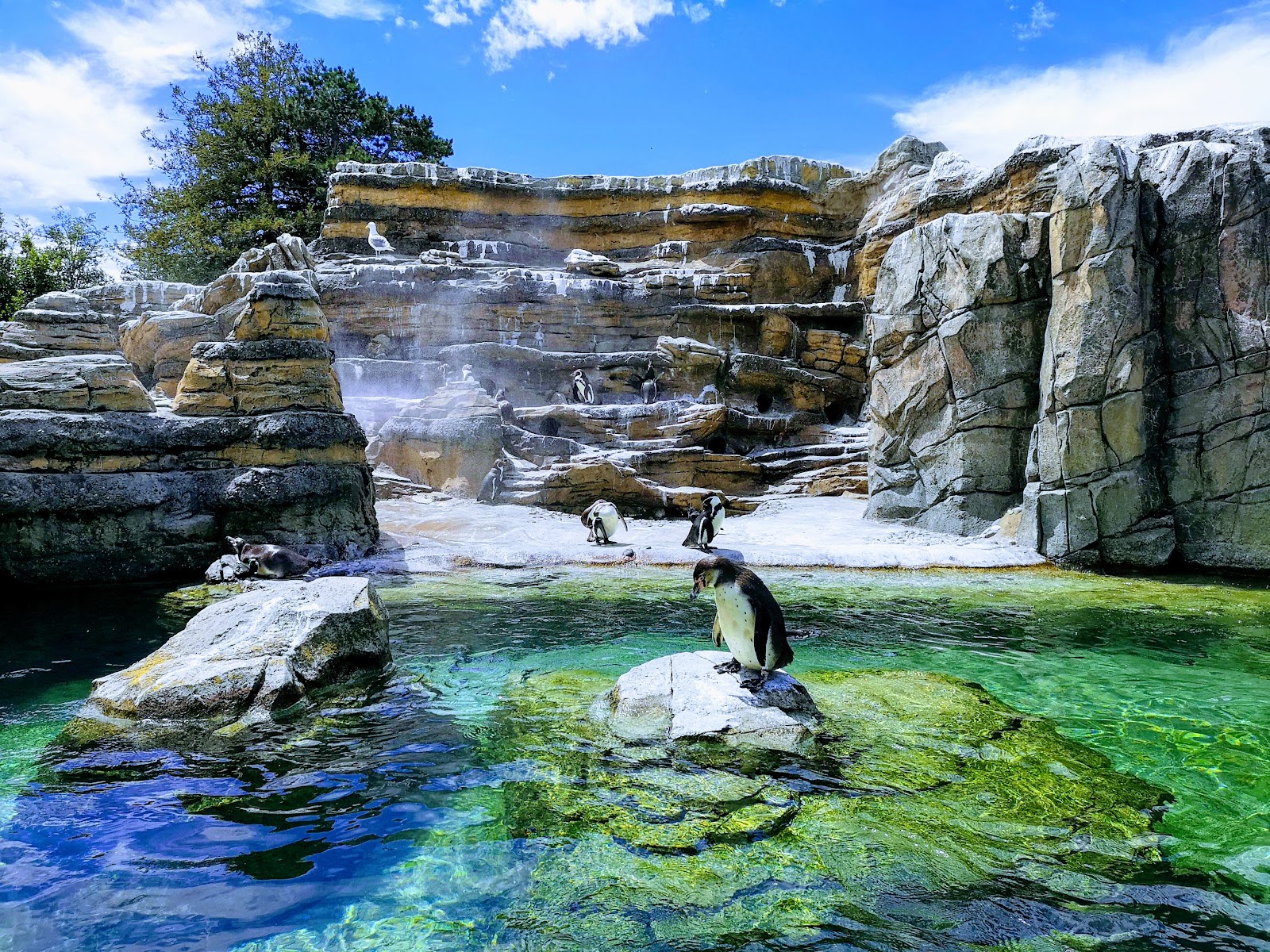
The Woodland Park Zoo, Colorado: One Frame, and How It Is Made
The animals decide what equipment you use. After that, the conifer and the peak decide the frame.
At a zoo the first rule is not a photographer’s to set, and it shapes everything that follows.
A facility housing live animals will have a policy on flash, on noise, on where people may stand and on how close they may come — and those exist for welfare reasons rather than as house preferences. That policy should be established before anything else in the plan, because it determines whether the day is worked with added light or without it.
Which is genuinely fine, because the frame this particular kind of site gives needs nothing added. At altitude in Colorado, a zoo built among conifer with a mountain beyond has one composition that works better than anything constructed: a couple in the full shade of a spruce stand, with a peak visible past the trees, and the whole thing lit by a deep high-altitude sky.
It works because the conifer solves the altitude’s hard-light problem, the sky supplies a soft source, and the peak supplies the one background that places the picture. Six decisions make it.
We have not photographed a wedding at the Woodland Park Zoo; high-altitude conifer and mountain backgrounds behave consistently. The flash and proximity policy, which areas are included, group limits and whether a ceremony is possible in the grounds are questions for their team — and the first of those comes before the rest.
The Woodland Park Zoo at a glance
| Where | Woodland Park, Colorado, at around 8,500 feet |
| The first rule | The animals’ welfare policy on flash, noise and proximity |
| The frame | A couple in conifer shade with a peak visible beyond |
| Why it works | Conifer fixes the hard light; the sky lights it; the peak places it |
| Ask first | Flash and proximity policy, areas included, group limits |
Decisions one to three: the policy, the shade, the exposure
The first decision belongs to the venue. A zoo’s policy on flash near animals is a welfare matter, and whatever it is becomes the starting configuration rather than a constraint to work around. Where flash is restricted, a fast lens and a high ISO are the answer — and at a site whose good light is natural anyway, that costs very little.
The second decision is the shade, and at this altitude it is the whole technical problem. At around eight and a half thousand feet there is roughly a third less atmosphere overhead than at sea level, which means correspondingly less scattering: direct sun is harder, shadows go deeper, and the range between lit and unlit exceeds what any sensor holds by a wide margin.
So a face half in sun here is unrecoverable rather than difficult, and full shade is not advisory but required. The test is universal and it takes two seconds: look at a face rather than the ground, and any bright spot on it means the position is not full shade and a metre will fix it.
Dense spruce and fir are the shade that works. They absorb almost all the light falling on them, which means a stand gives genuinely full shade — and it means the crowns have to be used as a group rather than singly, because high-elevation conifer is narrow and steeply tapered, so one tree shades very little. The positions are inside a stand rather than under a tree.
That same absorption is the frame’s other gift: a subject in front of dark conifer is separated by three or four stops with no equipment at all, which is the most reliable free separation in this landscape.
The third decision is the exposure and the conifer makes it counter-intuitive. A meter looking at a dark evergreen field tries to lift it towards mid-grey, which overexposes everything else in the frame by two stops or more — so the background has to be allowed to stay dark, which means metering on the faces or off a hand in the same light.
Working in manual is the mechanism rather than a preference, because a bright-sky or snow frame a minute later fools the meter in the opposite direction. Two stops each way, in consecutive pictures, is what automatic exposure cannot handle here.
And the open shade under a stand has a colour consequence worth naming. At altitude the sky is a markedly deeper blue than at sea level, which means shade lit by that sky is cooler than shade at sea level — so a subject in conifer shade is lit blue, and a custom white balance set on a face in position renders skin correctly where a daylight preset does not.
Decisions four to six: the peak, the animals, the alternative
The fourth decision is how the peak is used, and it comes down to lens choice more than position.
A mountain seen past trees is distant, which means a wide lens renders it as a small pale triangle above a lot of foreground — the opposite of the point. A longer lens compresses it and brings it forward, so it reads as a presence behind the couple rather than as scenery in the background. That single choice is the difference between a frame that places the picture and one that merely includes a mountain.
In dry clear air at this elevation that compression works, because the peak holds detail and texture rather than hazing into grey. In a humid climate the same frame would give a soft pale shape; here it gives rock, snow and shadow.
The exposure for it goes on the peak rather than the faces if the peak is sunlit, because sunlit rock or snow clips irrecoverably while faces can be lifted — and that is where the flash policy matters, because lifting faces without flash means finding a position where the shade is brighter rather than adding light to it. A position at the edge of a stand rather than deep inside it is the practical answer.
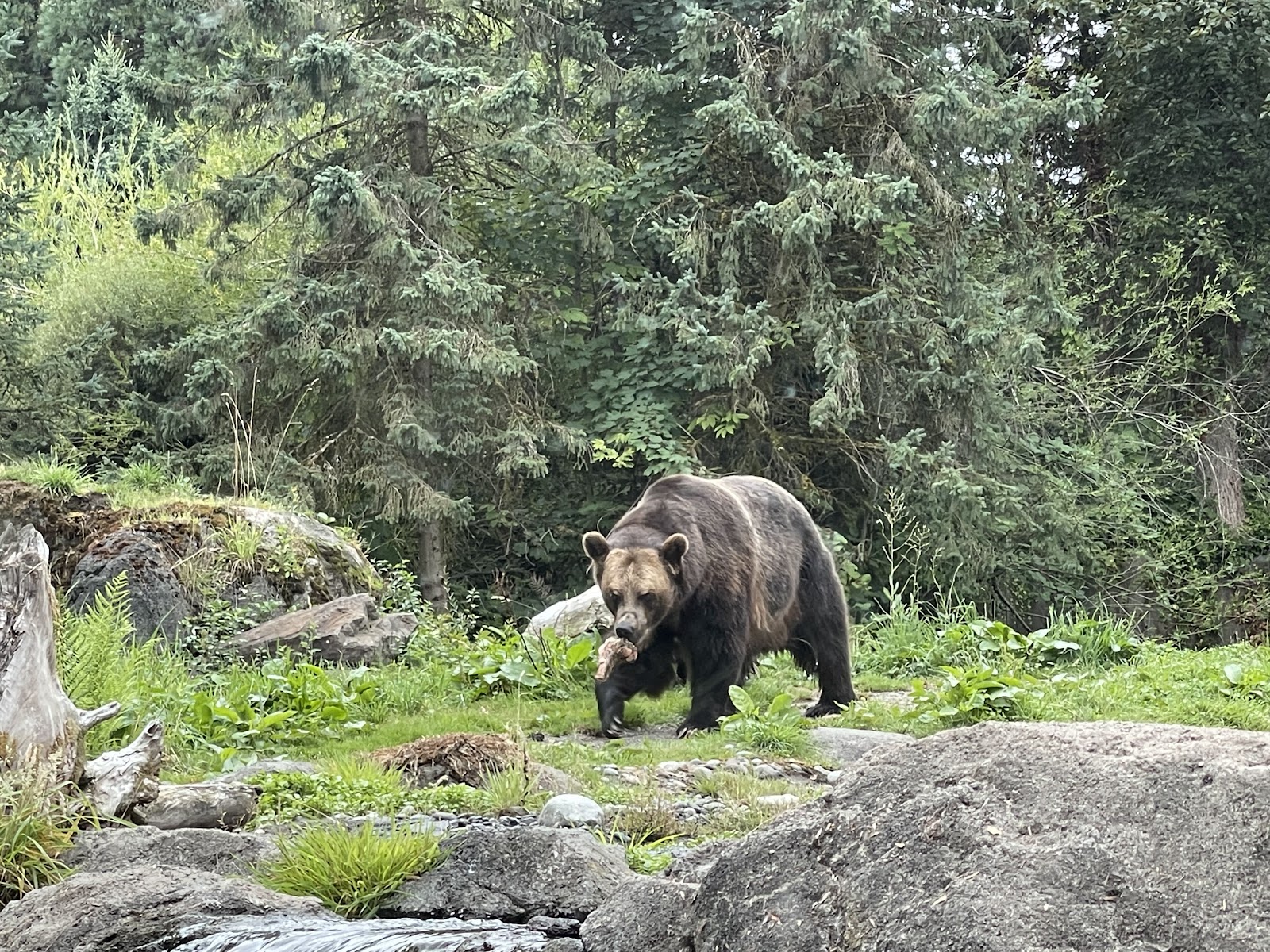
The fifth decision concerns the animals themselves, and it is worth treating as a subject rather than a hazard. An enclosure with a large animal in it is a background nothing else provides, and a frame that includes one is unrepeatable — but it depends entirely on the animal, which cannot be directed and which will be where it wants to be.
So it is a patience frame rather than a planned one: a position chosen near an enclosure, a known exposure, a fast enough shutter, and a willingness to wait for a moment that may not come. Chasing it produces nothing and irritates everybody.
Glass and mesh are the practical obstacles. Enclosure glazing behaves like a mirror pointed wherever the camera is, so photographing at an angle rather than square on moves reflections out of frame; and mesh disappears if the lens is close to it and the aperture wide, which is the standard technique and works reliably.
The sixth decision is the alternative, because the frame described above depends on clear skies over the peak and on an enclosure position being available.
The first alternative is aspen, which at this elevation grows among the conifer and behaves completely differently: white reflective bark makes a grove a bright vertical background rather than a dark mass, which is the reverse of spruce and a useful option when three stops of separation is not what a frame wants.
The second is any building or covered structure on the site: a solid roof with an open face blocks the overhead component, restricts the light to a horizontal band and bounces off the floor to fill — available at any hour and unable to dapple, which at this altitude is worth a great deal.
And the third is cloud, which at altitude is the best diffusion there is: under it the brightness range collapses, the dappling problem disappears entirely, the conifer greens saturate, and the whole site becomes usable through the middle of the day.
- Establish the flash and proximity policy before anything else
- Full shade only, and inside a stand rather than under one narrow tree
- Work in manual; conifer and snow fool the meter two stops in opposite directions
- Longer lens for the peak — a wide one makes it a pale triangle
- Animals are a patience frame, not a planned one; shoot glass at an angle
The Colorado high country year
At eight and a half thousand feet the year is short, sharp and partly a question of access.
Summer is when the site is most reliably open and it brings the state’s defining hazard. Mountain convection builds almost daily from July into September, and these storms produce lightning — which at this elevation on open ground is among the most dangerous situations in the state. Colorado has one of the highest rates of lightning casualties in the country, and high exposed terrain under afternoon convection is precisely why.
That makes a named covered alternative a requirement and the decision to use it belongs to whoever is responsible for the party — and it argues for a morning ceremony rather than an afternoon one in July and August, which conveniently coincides with the calmest air and the softest light.
The compensation is real: mountain cloud is the best diffusion available at altitude, and under it the whole site works through the middle of the day rather than at its edges. A cloudy morning here is an easier day than a clear one, and worth saying to a couple who might otherwise hope for sun.
Autumn is the best window and at this elevation it is early and short. Aspen turn gold typically in the second half of September — earlier than lower down — and because a grove is clonal, a single connected organism below ground, the whole stand turns at once rather than tree by tree. That gives a uniform gold mass and a sharp window of about a week either side of peak, which is worth asking the venue about rather than guessing.
The air is also at its clearest in autumn, which means the peak holds its detail and the compressed background frame is at its strongest. Gold aspen against dark spruce with a snow-dusted peak beyond is the strongest frame this landscape offers all year.
Winter is long at this elevation and the first question is access, because mountain roads close and a site at eight and a half thousand feet may simply not be reachable.
Where it is, winter gives the strongest light. Snow lies for months and it is the best natural fill available outdoors, lifting exactly the shadows a low sun carves while fooling a meter by about two stops toward underexposure — so a snow frame needs deliberate overexposure relative to what the camera suggests. Snow against dark spruce is the widest natural brightness range a photographer meets anywhere: expose for the snow and let the conifer go near-black.
And the December midday sun at this latitude reaches only about twenty-seven degrees above the horizon, which means the whole short day is raking light — so the altitude’s hard-light problem largely disappears and the middle of the day becomes usable.
The costs are real and worth planning for. Cold and altitude both drain batteries, so spares belong in an inside pocket. The diurnal swing is well over twenty degrees Celsius between afternoon and evening. Ultraviolet increases substantially with elevation, so an hour outdoors burns faster than expected even under cloud and over snow. And anyone arriving from sea level will feel eight and a half thousand feet, which argues for short routes and close positions rather than an ambitious plan.
More frames from The Woodland Park Zoo
The Woodland Park Zoo wedding photography: common questions
What comes before everything else?
The venue’s welfare policy on flash, noise and proximity to animals. It determines whether the day is worked with added light or without it.
Why is full shade mandatory here?
Because at around eight and a half thousand feet there is a third less atmosphere to scatter light, so a face half in sun is unrecoverable rather than difficult.
Why stand inside a conifer stand?
Because high-elevation spruce and fir are narrow and steeply tapered, so one tree shades very little. The positions are in the trees, not under one.
Which lens for the peak?
A longer one. A wide lens renders a distant mountain as a small pale triangle above a lot of foreground, which is the opposite of the point.
How should the animals be approached?
As a patience frame rather than a planned one — a chosen position, a known exposure, and a willingness to wait. Shoot enclosure glass at an angle.
Is cloud a problem?
The opposite. At altitude it is the best diffusion there is: the brightness range collapses, the dappling disappears, and the whole site works at midday.
More Colorado venue guides
We are writing a photographer’s guide to every venue we would happily shoot in Colorado. Here are three more, plus the full index:
- YMCA of the Rockies, Estes Park: What It Suits and What It Does Not
- The Broadmoor: What It Suits, and What It Does Not
- The Cheyenne Canon Inn: The Venue’s Own Logic
Planning a wedding at The Woodland Park Zoo?
The policy first, then the frame. Tell us your date and we will ask.