 Tulsa Country Club: Field Notes on a 1908 Club
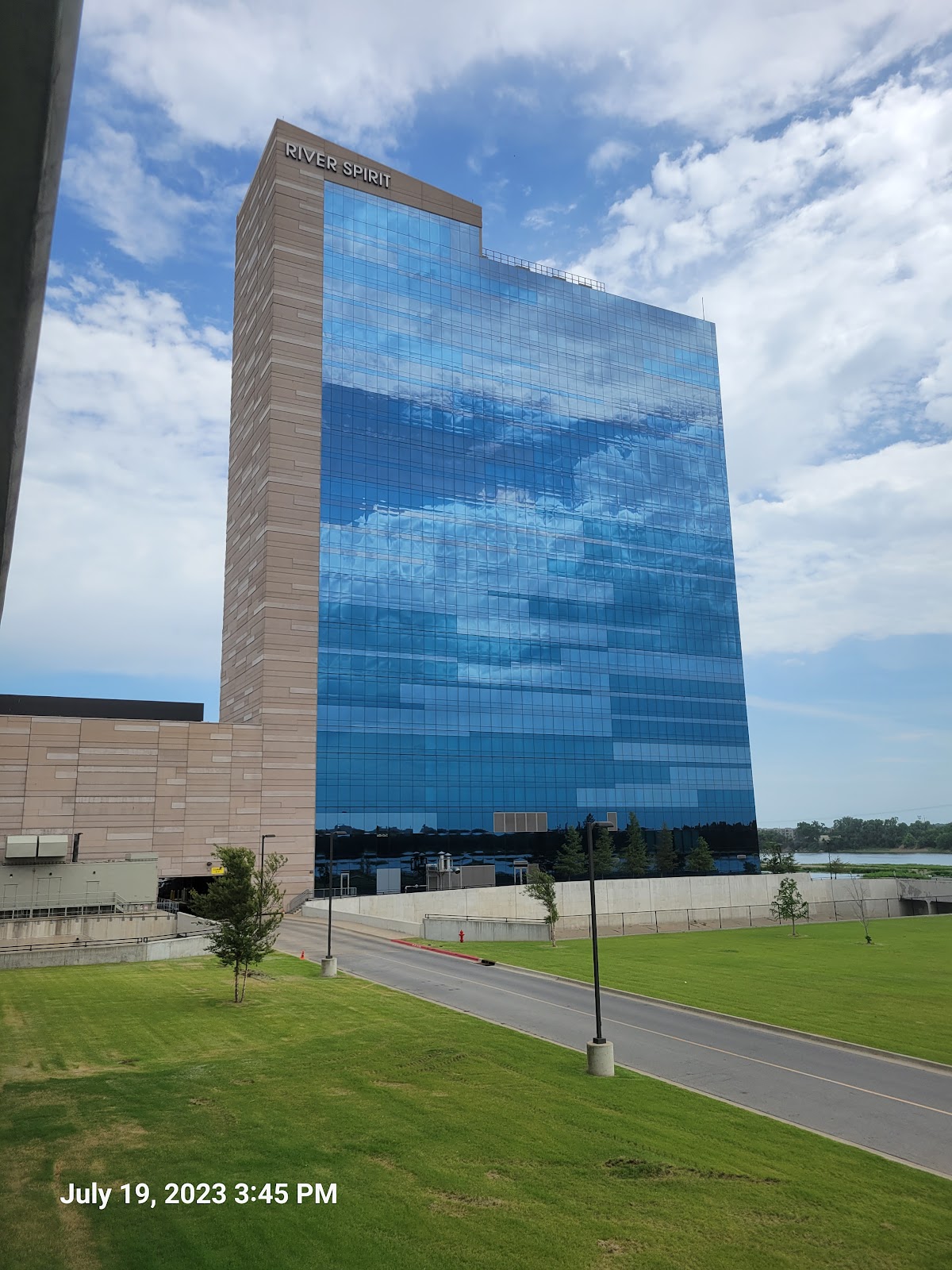
The River Spirit Casino, Tulsa: Field Notes on a Riverside Resort
A building with no clock inside and a river outside. The schedule writes itself if you know which is which.
A casino resort beside a river is two venues with opposite properties, and the useful thing is that they complement rather than compete.
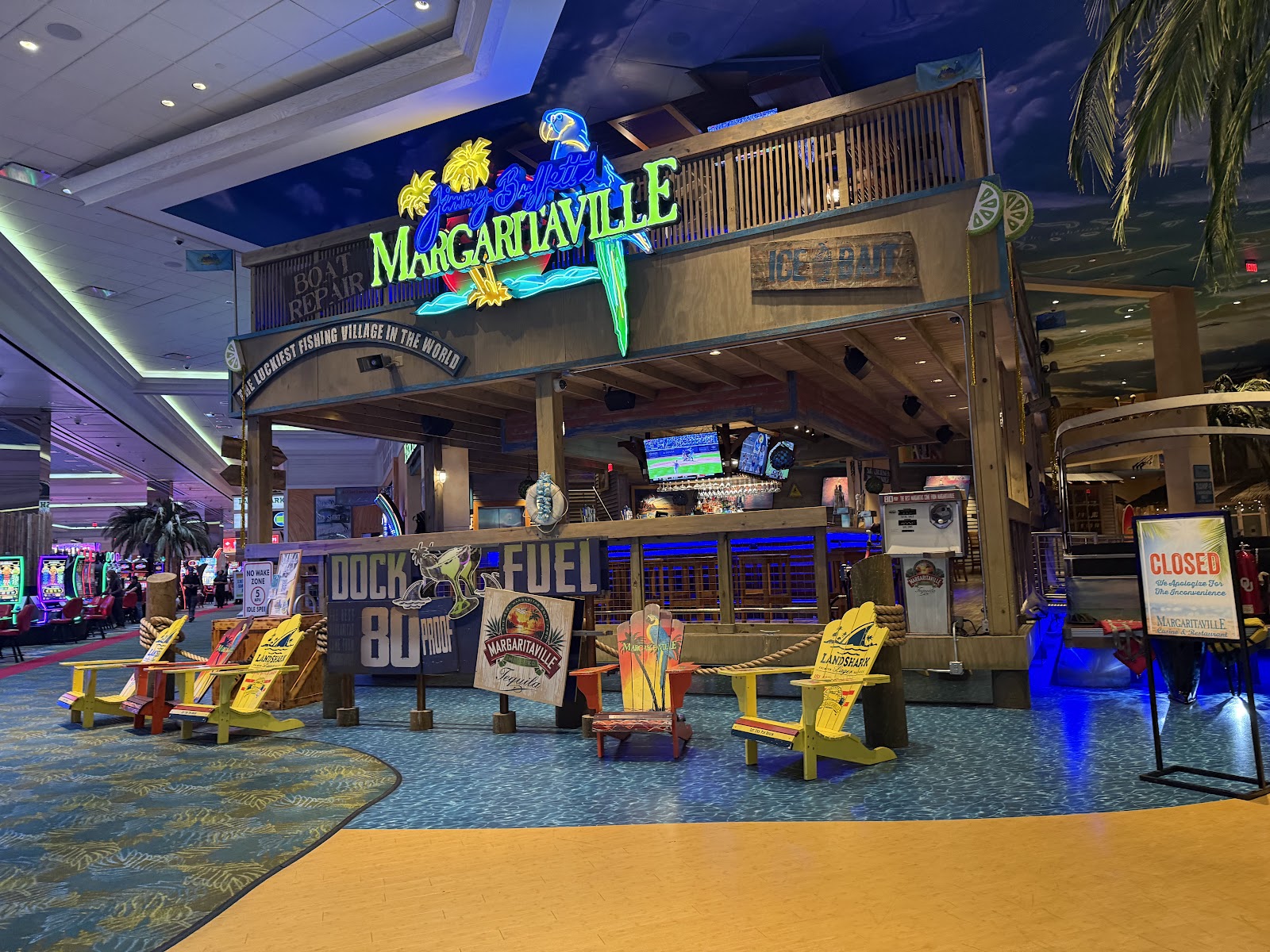
Inside, the building has no daylight in its public spaces. That is the design logic of a casino — no windows, no clocks, no views — and it means the interior is identical at ten in the morning and ten at night. Every frame there is movable.
Outside, the river is the opposite: it changes continuously, it has two narrow windows when it is at its best, and those windows cannot be moved at all.
So the schedule writes itself. The river sets the fixed points and the interior fills everything between them, which is the reverse of how most resort schedules are built and worth agreeing in advance rather than improvising.
These are field notes on both halves. We have not photographed a wedding at the River Spirit Casino; windowless resorts and river frontage behave consistently. Which spaces are included, whether riverside access is part of the offer and whether the lighting is adjustable are questions for their team.
The River Spirit Casino at a glance
| Where | Beside the Arkansas River, Tulsa, Oklahoma |
| Inside | No daylight, dense overhead fittings, low ceilings that bounce |
| Outside | A river with two narrow windows that cannot be moved |
| The schedule | The river sets the fixed points; the interior fills the rest |
| Ask first | Spaces included, riverside access, lighting control, room orientation |
What you meet inside, and what each one needs
Overhead light is the first condition and the most damaging. Dense downlighting is the standard fitting pattern in these buildings, and light arriving from straight above fills eye sockets with shadow and cuts a hard line under every chin — which is why an unlit frame on a casino floor looks tired even when the exposure is correct.
The fix is direction rather than brightness. One source off the camera axis at face height changes the character of every face at once, and the amount needed is small: half a stop to a stop above the ambient, because the ambient is already doing the filling. Anything more and the room disappears.
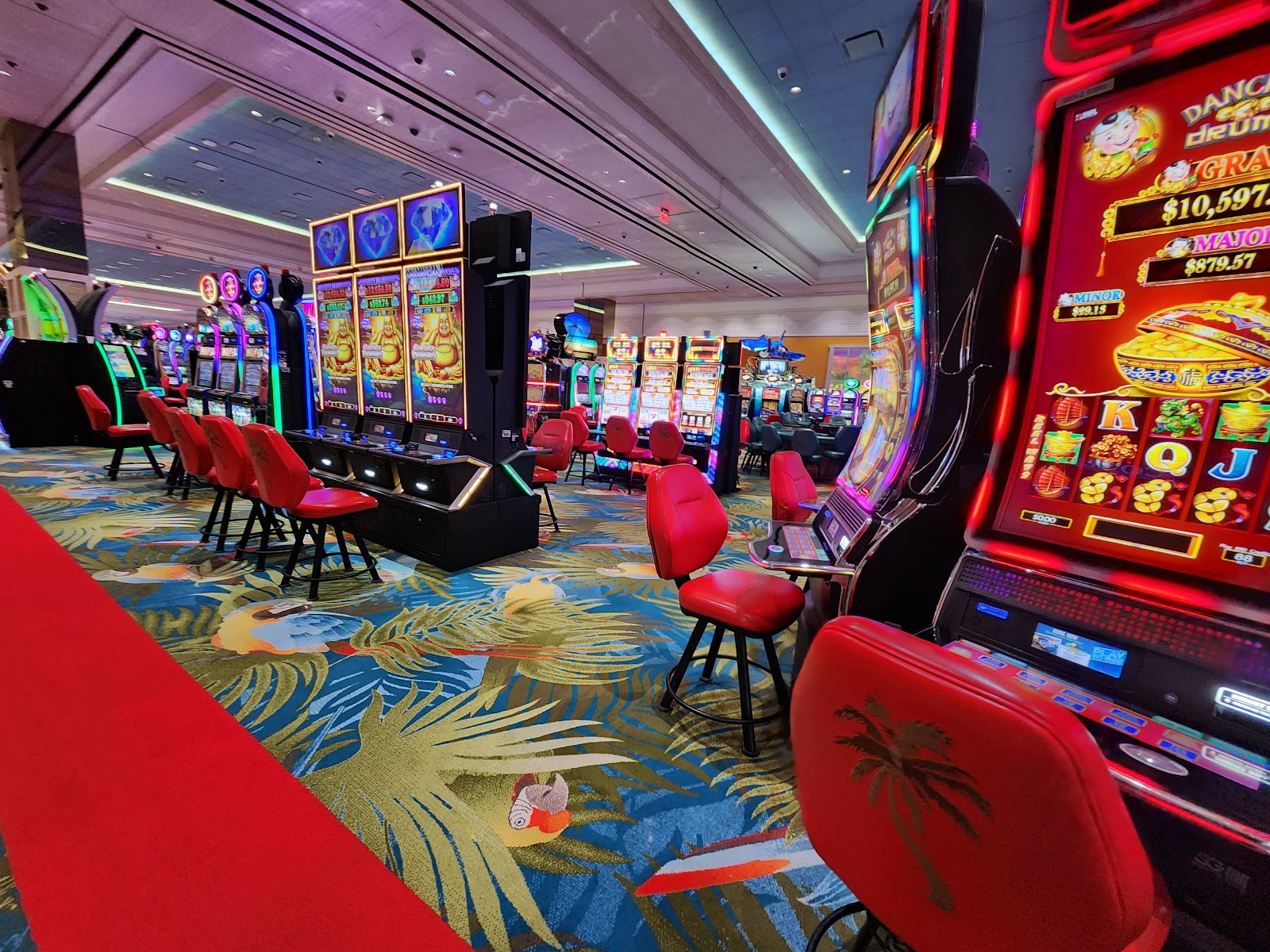
Low ceilings are the second condition and they are the genuine advantage. A casino floor runs a great distance in every direction with a ceiling only three or four metres up, which is remarkable for a space of that size and means a flash aimed upward returns something usable. In a conventional ballroom with a five-metre ceiling bounce is a wasted battery; here it frequently works, and a bounced source is a very large soft light that needs no stand, follows a walking pace and covers reportage without aiming.
One test frame on arrival settles it, because the finish decides it: a dark or strongly coloured ceiling absorbs most of what hits it and tints the rest.
Mixed colour is the third and it is the standing difficulty. Expect warm decorative fittings, cooler recessed downlights, coloured accent lighting, illuminated signage and screens, and any uplighting installed for the event. Three temperatures on one face cannot be reconciled afterwards, so pick the one that should be correct, set white balance to it, and switch off or overpower whatever else lands on skin. The coloured accents are usually the worst offender and frequently the easiest thing to have turned off for ten minutes.
Patterned carpet is the fourth and it is the least discussed. A figured carpet carries detail at roughly the same spatial frequency as a face, which means a wide frame from close range puts the two in competition — and it fills the bottom third of every standing portrait. Camera height that excludes it is the fastest fix; distance and a wide aperture dissolve it; brightness on the subject overrides it.
Reflective surfaces are the fifth: polished stone, glass, mirror and metal are the vocabulary of these buildings and each will show a badly placed light at full brightness in a way nothing removes. The habit is fifteen seconds long — stand where the camera will stand, look at every reflective surface in the frame, and place the source where none of them sees it.
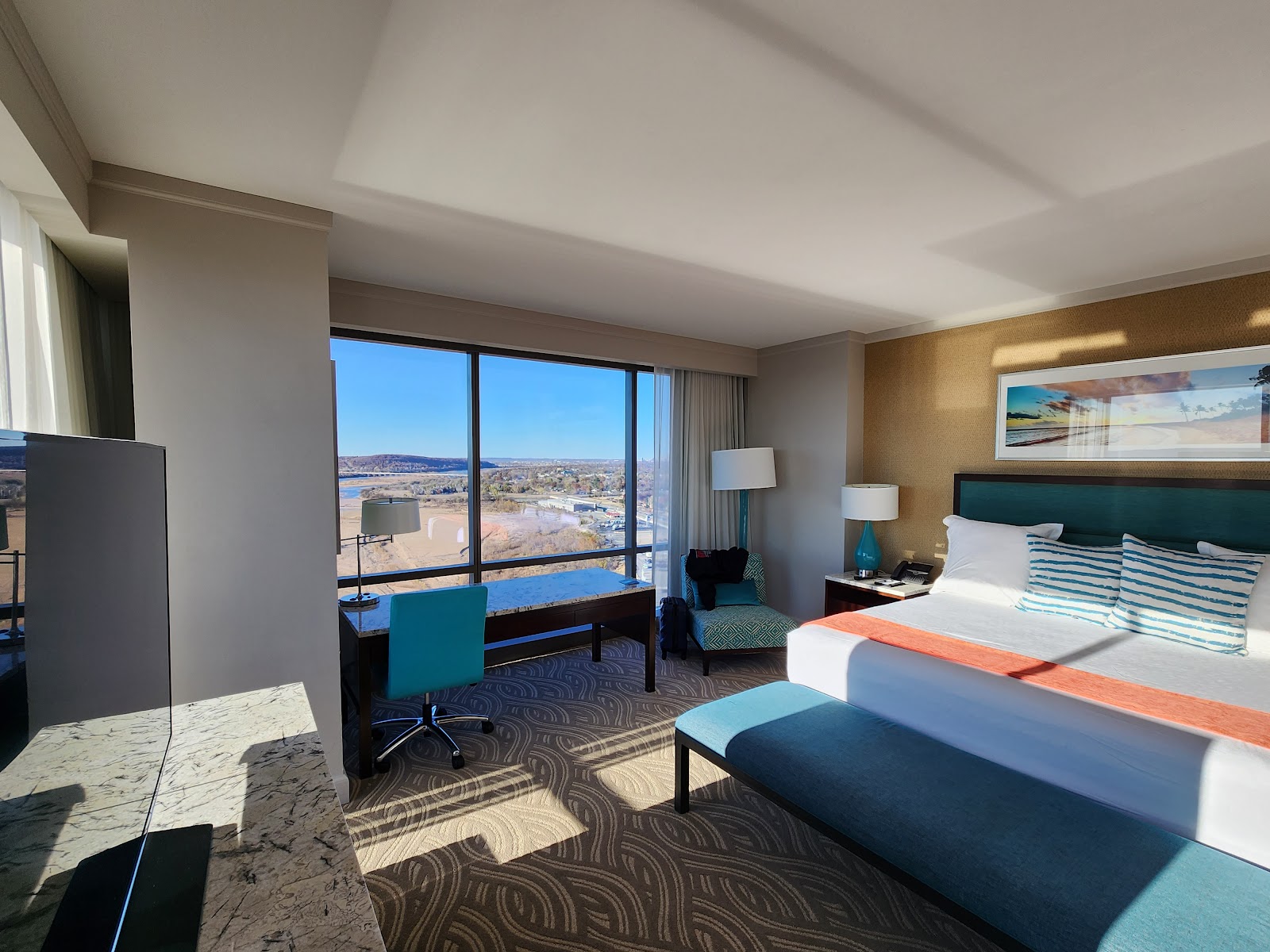
And the guest rooms are the only interior daylight, which makes them more valuable here rather than less. Largest window on the shaded side, every overhead fitting off, lamps out of frame, two to three metres back. At Tulsa’s latitude, about thirty-six degrees north, a north-facing room is shaded all year and is the most reliable, so orientation is the question worth asking rather than floor height.
The river, and the two windows
The river is the venue’s timed asset and it does three things worth using deliberately.
It reflects, which doubles anything lit and gives a second version of the building, the bridges and the sky for nothing. That follows one rule: camera height decides everything. A low camera looking across the surface sees a mirror; a high camera looking down sees the water’s own colour, which on the Arkansas is sediment brown. Low is nearly always the answer, and more so here than on clear water.
It bounces light upward, which fills exactly the shadows a high sun carves under eyes and chins — so a shaded position beside water is materially better light than the same shade beside paving, and at a venue whose only other outdoor surfaces are hard landscaping that matters.
And it moves, which makes shutter speed a deliberate choice: a long exposure smooths the surface into a soft field and strengthens reflections, a short one holds every ripple. In bright daylight the long version needs a neutral density filter, and a polariser is worth carrying because water in sun throws specular highlights several stops above everything else, which clip and fool a meter. It comes off for the mirror frames, because it reduces reflections — polarise to see into water, remove it to see the sky in water.
The two windows are the last hour of daylight and the twenty-five to forty minutes after sunset, and they are the only parts of the day that cannot be moved.
In the last hour low sun rakes the water surface and the near bank, the building’s material reads, and the bridges and trees along the bank go warm. In the crossing the sky still holds colour at about the brightness of the building’s own lighting, so one exposure holds couple, building, bridges and sky — with all of it doubled in the water, which is the version worth having.
That crossing is the one unmovable frame of the day. And this is where the interior’s property pays for the river’s: since nothing indoors changes, leaving the reception for fifteen minutes costs nothing at all. It is worth saying to a couple explicitly, because the request sounds larger than it is.
One practical note about riverside access: the banks of a large river are frequently soft, uneven and subject to changing water levels, and a position that exists in September may be underwater in spring. Worth asking rather than assuming, and worth walking in advance with formal shoes in mind.
And the transitions inside are worth using rather than losing on the way out and back. A corridor gives depth and repetition, with a subject at the far end sitting against a background that darkens by itself — the cheapest separation in any building. A stair gives elevation and rows of faces, and wants light from one side because overhead light on a stair shadows every eye socket at once.
- Direction, not brightness — one source off-axis fixes every face
- Test bounce once; low casino ceilings usually return something usable
- Camera low at the river; the Arkansas is brown from above
- Polarise to see into water; remove it to see the sky in water
- Protect the crossing; the interior costs nothing to leave
Downtown, and Oklahoma's year
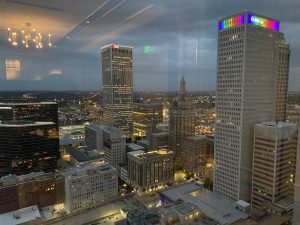
If the schedule allows a short trip, downtown Tulsa has an exterior asset that is genuinely distinctive: the city holds one of the largest concentrations of Art Deco architecture in the country, built on oil wealth in the nineteen-twenties and thirties.
Deco is unusually photogenic because of what it is made of. Terracotta, polychrome tile, cast stone and geometric relief all read only under raking light — light running along a moulded surface lifts every step and chevron, while the same light facing it flattens the whole facade into a field of one colour. So those are low-sun frames, and they suit tight framing rather than wide shots: a couple against a single bay of patterned terracotta reads better than the same couple in front of a whole building.
The seasons here are emphatic and one needs stating plainly. Spring in Oklahoma brings severe convective storms, and this region sits in the part of the country with the highest frequency of them — which means a spring date carries a genuine risk of severe weather rather than mere rain. At an entirely indoor venue that costs a decision rather than a picture, and it is a planning matter for whoever is responsible for the party.
The compensation is that a storm approaching across open country is visible for a long time before it arrives, which is both a useful warning and the most dramatic sky the region produces — and over a river, with the cloud base doubled in the water, it is the strongest weather frame the location gives.
Summer is hot and humid, and the humidity rather than the heat is the photographic fact: moist air scatters light, which softens shadows and slightly flattens distance — a gift for faces and a nuisance for a long view down the river, which can haze in July in a way it does not in October.
The fogging problem is the equipment issue in this climate and a casino makes it worse, because the floor is cooled hard for occupancy: a body carried straight out into July air fogs on every surface at once and does not clear quickly. Opening a bag twenty minutes before going out is the whole fix — and at a venue whose one unmovable frame is a timed crossing, a fogged lens means missing it entirely.
Autumn is the best light of the year: humidity drops, the air clears so the river view holds detail, the cover along the banks turns, and low sun arrives at a civilised hour, usually late October into November.
River fog is frequent on autumn and spring mornings, because a large body of water with cooler air above it produces it readily — and fog is diffusion at landscape scale, separating the far bank and the bridges into grey layers.
Winter is mild by northern standards, with cold snaps rather than sustained freeze. The December midday sun at about thirty-one degrees above the horizon rakes the water all day rather than lighting it from overhead, which makes winter the one season the middle of the day works outdoors — and snow, when it comes, turns the ground into a reflector that brightens every guest-room window in the building.
More frames from The River Spirit Casino
The River Spirit Casino wedding photography: common questions
How should the day be scheduled?
The river sets the fixed points and the interior fills everything between, because the interior does not change and the river does.
What is the main interior problem?
Overhead light. Dense downlighting shadows eye sockets and cuts a line under every chin, and no exposure correction fixes it — direction does.
Does bounce flash work?
Usually, which is unusual for spaces that size — casino ceilings are only three or four metres up. One test frame settles it.
How should the river be photographed?
Camera low across the surface for the mirror, because the Arkansas shows its sediment colour from above. Polarise to see into water, remove it to see sky in water.
Which frame cannot be moved?
The crossing, twenty-five to forty minutes after sunset. Everything indoors is available at any hour; that one is not.
Is there a seasonal warning?
Spring. This region has the highest frequency of severe convective storms in the country, which is a planning matter for the party.
More Oklahoma venue guides
We are writing a photographer’s guide to every venue we would happily shoot in Oklahoma. Here are three more, plus the full index:
- The Tulsa Convention Center: The Problem, and Four Ways Out
- The Ambassador Hotel, Tulsa: A Walk-Through of a 1929 Boutique Building
- Cain’s Ballroom: Field Notes on a 1924 Dance Hall
Planning a wedding at The River Spirit Casino?
No clock inside, two windows outside. Tell us your date and we will use both.