 The Portland Regency: A Season-by-Season Guide
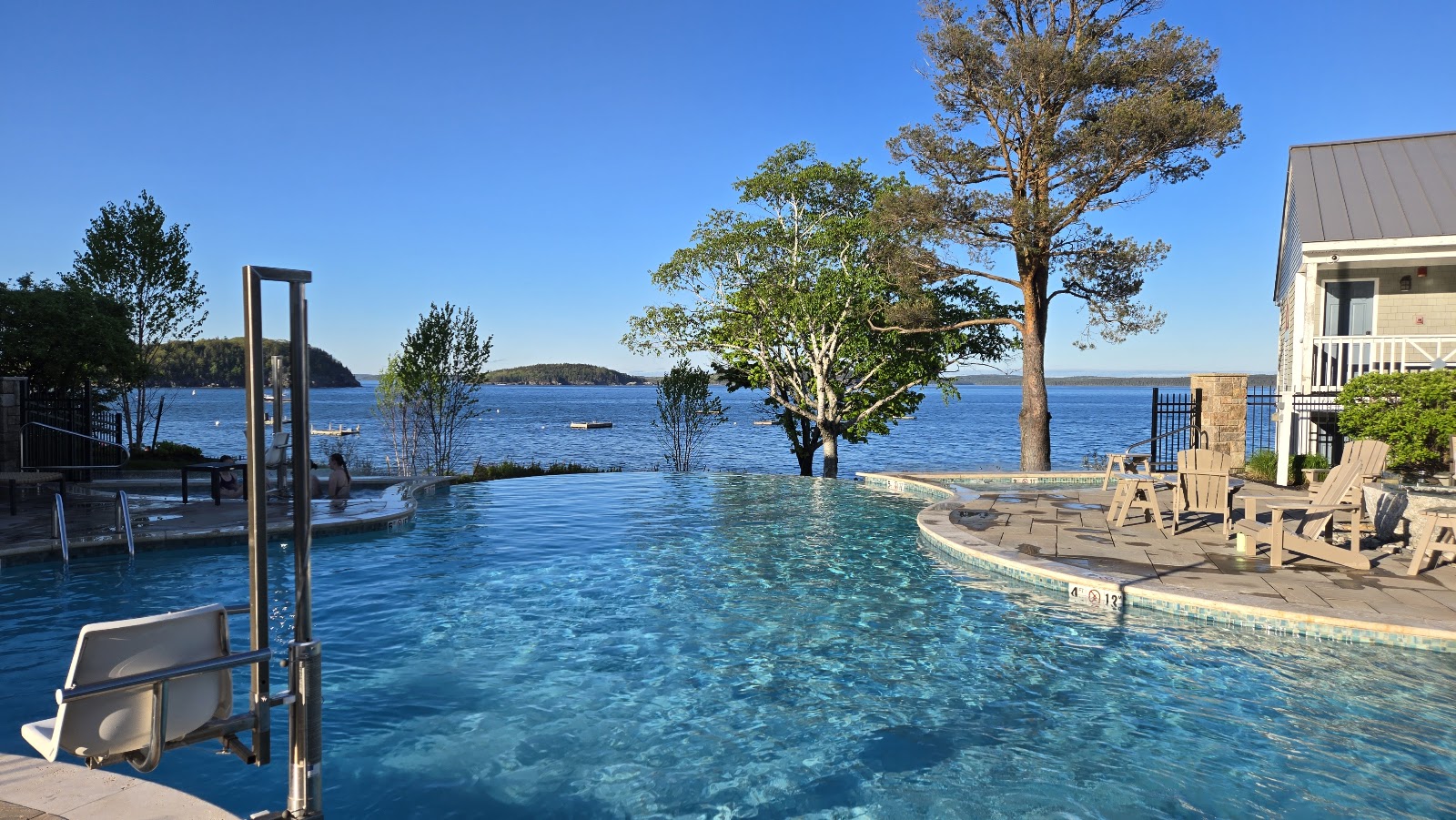
The Bar Harbor Inn, Maine: A Venue Built Facing the Water
East-facing, over some of the coldest water on the east coast. Both facts run the day.
A harbourfront inn on Mount Desert Island is built to face the water, and the water here is east. That single orientation sets the shape of a wedding day, and the temperature of the water sets everything else.
East-facing means the building’s own elevation is lit at dawn and in its own shade by the afternoon — which reverses the usual expectation that light improves towards sunset in the direction of the view. The sunset here happens behind the building, over the island’s interior and its mountains.
Cold water is the second and larger fact. The Gulf of Maine is cold year-round, which means warm summer air moving over it condenses — and Bar Harbor is one of the foggiest places on the east coast, with fog most frequent in high summer rather than spring or autumn. That is the reverse of the pattern further south and it is worth knowing before a July date is chosen.
And there is a third, which is the tide. The Gulf of Maine has one of the largest tidal ranges in the world, and at low water a gravel bar emerges connecting the shore to an offshore island — which is both a genuinely unusual frame and a hard timed window with a published schedule.
We have not photographed a wedding at the Bar Harbor Inn; harbourfront inns, cold-water fog and tides behave consistently. Which spaces are included, whether the lawn and shore path are part of the offer and what the covered alternative is are questions for their team.
The Bar Harbor Inn at a glance
| Where | Bar Harbor, Maine, on Mount Desert Island |
| The logic | Built facing east over the water |
| Dawn | The building lit, the water frontlit, and the first light in the country |
| The condition | Cold water means summer fog, frequently all day |
| Ask first | Spaces included, lawn and shore access, covered alternative, tide times |
What an east-facing harbourfront does
Dawn is when the whole logic pays off. The building’s water elevation is lit directly, the harbour is frontlit so every mooring and wake has texture, and the sun comes out of the water rather than from behind anything.
There is a local fact that makes it worth more than usual: Cadillac Mountain, a few miles away, is the highest point on the American Atlantic coast, and from October into early March it is the first place in the continental United States to see the sunrise. A dawn frame here is genuinely the first light in the country, which is a thing worth saying to a couple who are being asked to get up for it.
Through mid-morning the sun climbs off the water and the harbour-facing rooms become the best interior light briefly, with the sun still low enough in the east to be directional, before they lose it entirely.
The afternoon is the part that surprises people. An east-facing elevation in the afternoon is in its own shadow, lit by open sky over the water and by light bouncing off the sea — and that is genuinely excellent light: soft, directional, cool in colour and remarkably even, because water and sky together form a very large low source.
So the water-facing rooms, the lawn and the shore path are usable all afternoon, which is the opposite of what a west-facing hotel offers. The working method indoors is the ordinary one: every overhead fitting switched off so the room has one colour of light, lamps out of frame, two to three metres back from the glass so the fall-off is even across two faces.
The shore here is granite rather than sand, and that changes what the ground does. Coarse pink-grey granite is mid-toned, which means it reflects a useful amount rather than flooding light upward the way pale sand does — so there is less uplift under chins than on a beach, and the light is more directional as a result. Granite also has strong texture and reads only under raking light: low sun across a granite shore lifts every crystal and fracture, while midday flattens it to a grey field.
The evening reverses everything. The sun sets behind the building over the island’s interior, which means the evening frames face away from the water — inland, with the mountains catching the last light. That is a good frame and a different one, and it needs a position on the landward side rather than the shore.
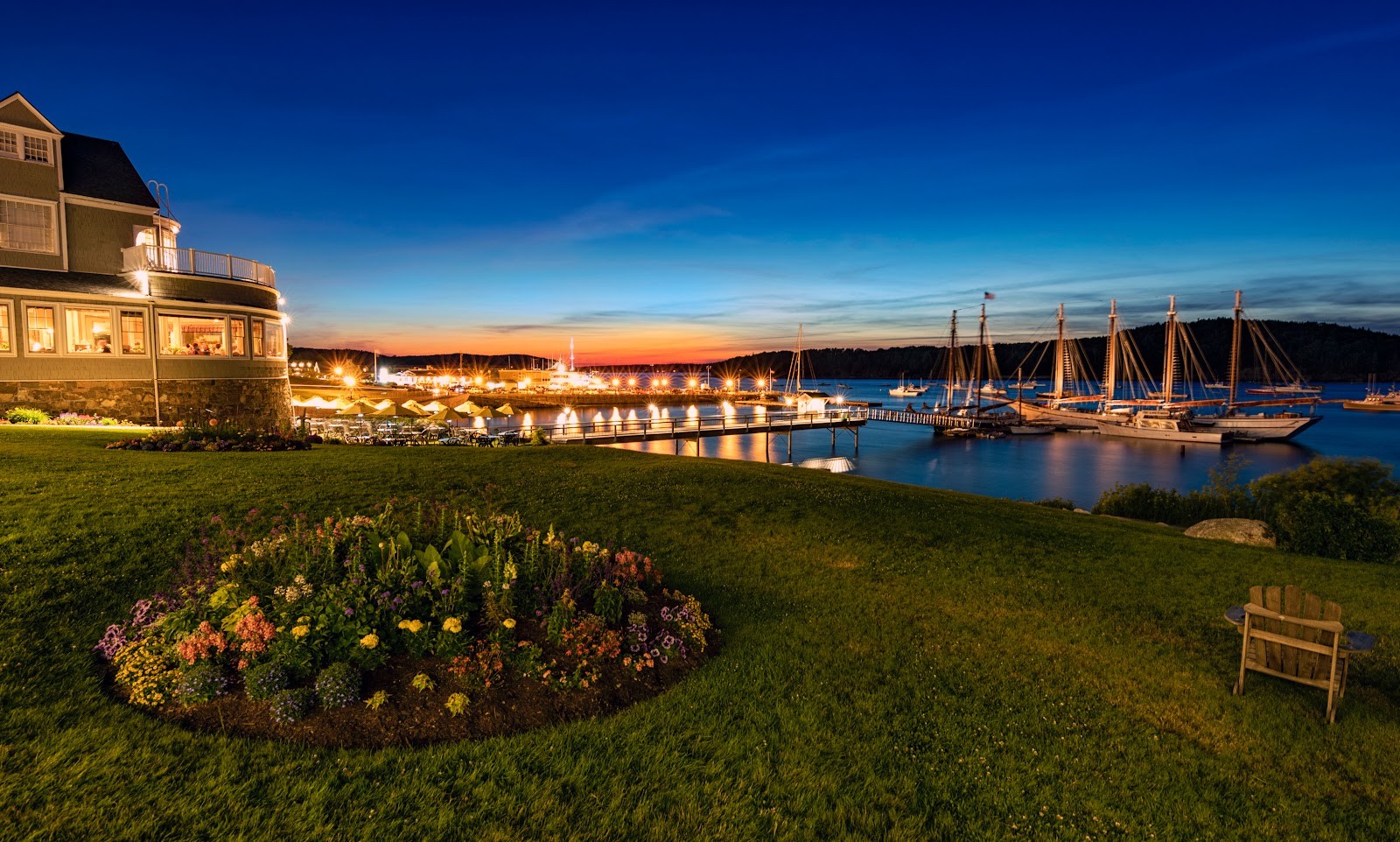
And the crossing, twenty-five to forty minutes after sunset, is the day’s one unmovable frame — with harbour lights and moored boats doubled in the water, which is the version worth having. At this latitude, about forty-four degrees north, that twilight is generously long in June and short and sharp in the clear cold air of winter.
The fog, and the tide
Fog is the condition that most defines photography on this coast and it needs planning for rather than hoping against. The Gulf of Maine stays cold through the summer, so warm air moving over it condenses — which makes June, July and August the foggiest months here, not spring.
It can persist all day rather than burning off by nine, and it can arrive in an hour. That is a genuine scheduling risk for anything that depends on a view, and the honest advice is that a couple booking a July date should expect the possibility and be told what the fog version of their day looks like.
Because the fog version is good, and that is the important part. Fog is diffusion at landscape scale: it removes every hard shadow, softens everything, and erases the horizon so that water and sky become one plain field of tone — which leaves a couple as the only thing in frame with edges. Moored boats become grey shapes at three distances. A granite shore recedes into nothing. The spruce on the headlands separates into flat layers.
Those are frames that a clear day cannot produce and they are easier to expose than clear ones, because the brightness range collapses. The practical adjustments are to watch the white balance, since fog is cool and flat, and to add a modest source for the faces if any separation is wanted — one light, gelled slightly warm, is enough to lift a couple out of a grey field.
The tide is the other local condition and it is a hard timed window. The Gulf of Maine has one of the world’s largest tidal ranges, and at low water a gravel bar emerges connecting the shore to an island offshore — which means there is a walkable path across the sea floor for a few hours either side of low tide, and no path at all the rest of the time.
That is a genuinely unusual frame: a couple on a bar between two shores, with water on both sides and a horizon in every direction. It requires the tide table, which is published and reliable, and it requires respecting it — the water returns at a predictable rate and being on the far side when it does is a serious matter rather than an inconvenience.
The same tidal range transforms the shore twice a day. At high water the granite is at the water’s edge and the frames are close and simple; at low water there is a wide apron of exposed rock, weed and tidal pool, which is textured, reflective and completely different. Neither is better and both are worth having, but they are not both available at the same hour — so the tide table belongs in the schedule alongside the sunset time.
And exposed tidal rock is slippery, weed-covered and uneven, which with long dresses and formal shoes is a real consideration. Firm footing and a short walk beat a better position further out.
- Book the dawn hour; from October it is the first light in the country
- The afternoon water side is in soft shade — genuinely good light
- Expect fog in July; know what the fog version of the day looks like
- Read the tide table — it changes the shore twice a day and opens the bar
- Rake the granite; midday flattens it to a grey field
The Maine year
Summer is cool here by most standards, because the water is cold — which makes it comfortable and makes it foggy, and those are the same fact. It is also the busiest season on the island by a wide margin, which matters for any frame that includes a public shore or a park: early morning is the only reliably quiet hour.
The compensations are the long days and the long twilight. At this latitude the June sun sets at a shallow angle, so the sky holds usable light for well over an hour afterwards, which turns the crossing into a relaxed half hour rather than a scramble. The cost is that it happens late, which needs agreeing in advance as a short deliberate excursion.
Autumn is the best season and it comes early. Colour on Mount Desert Island usually peaks in the first half of October — earlier than further south and earlier than most people plan for — and the combination of hardwood colour against dark spruce and pink granite is the island’s own palette. The air is also at its clearest, the fog frequency drops sharply, and the crowds thin.
October is also when the dawn frame becomes both spectacular and practical: the sunrise is at a civilised hour, the island is first in the country to see it, and the light is clear.
Winter is cold, quiet and empty, and for a photographer the emptiness is genuinely valuable — the shore and the park are unpopulated in a way they never are in summer. The December midday sun at this latitude reaches only about twenty-two degrees above the horizon, which means the whole short day is raking light: exactly what coarse granite, spruce and clapboard all need.
Snow does two things. Outdoors it is the best natural fill available, lifting exactly the shadows a low sun carves while fooling a meter by about two stops toward underexposure — so a snow frame needs deliberate overexposure relative to what the camera suggests. And snow against dark spruce is the widest natural brightness range a photographer meets; expose for the snow, which holds the detail and clips irrecoverably, and let the conifer go near-black, which is what the eye reads anyway.
Sea ice and frozen spray on granite are a winter-only subject and a striking one. The constraint is wind chill on an exposed shore, which means five minutes with coats rather than twenty without, and a warm interior to return to.
Spring is the awkward season here: cold, late, and with the water at its coldest, which means the fog season is beginning. Mud and bare ground rather than either snow or foliage. It is the one part of the year with no particular photographic argument for it.
Two closing practicalities. Salt spray settles on a front element and on exposed metal and etches coatings over time, so a damp cloth at the end of the day is routine rather than optional. And the fogging problem here runs the cold-climate way: a cold body brought into a heated inn fogs on every surface at once and does not clear quickly, so bodies stay bagged until warmed — which means planning the return from an excursion as well as the departure.
More frames from The Bar Harbor Inn
The Bar Harbor Inn wedding photography: common questions
Why does the east-facing orientation matter?
Because the building’s own elevation is lit at dawn and in its own shade by afternoon, and the sunset happens behind it over the island’s interior rather than over the water.
Is the afternoon a problem then?
No. An east elevation in the afternoon is lit by open sky and by light bouncing off the sea, which is soft, directional and remarkably even.
When is fog most likely here?
High summer. The Gulf of Maine stays cold, so warm air over it condenses — which makes June through August the foggiest months, the reverse of the pattern further south.
Is fog a lost day?
No. It removes every hard shadow, erases the horizon so water and sky become one field of tone, and leaves the couple as the only thing with edges. It is also easier to expose.
What does the tide change?
Everything on the shore, twice a day — and at low water a gravel bar emerges connecting to an offshore island, which is a walkable path for a few hours only. The table is published.
When is the island at its best?
The first half of October. Colour peaks earlier here than further south, the air is clearest, fog frequency drops and the crowds thin.
More Bar Harbor, ME venue guides
We are writing a photographer’s guide to every venue we would happily shoot in Bar Harbor, ME. Here are three more, plus the full index:
- The Jordan Pond House, Acadia: Field Notes on a Mountain Pond
- Acadia National Park, Maine: The Problem, and Four Ways Out
- The Asticou Inn, Maine: One Frame, and How It Is Made
Planning a wedding at The Bar Harbor Inn?
East-facing, foggy and tidal. Tell us your date and we will plan around all three.