 The Portland Regency: A Season-by-Season Guide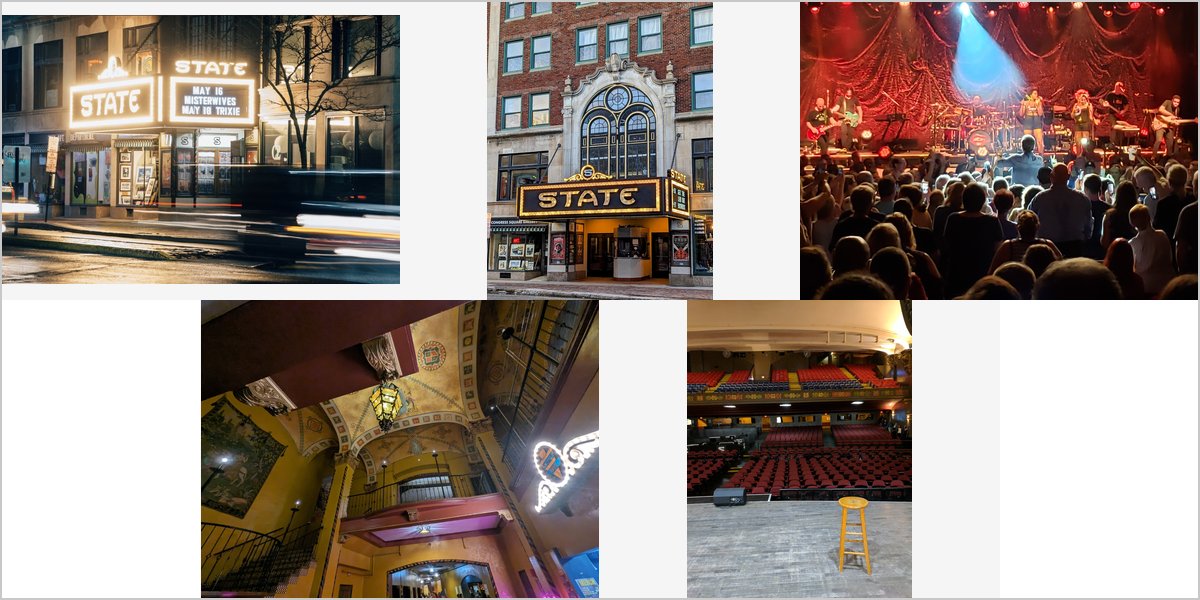
June 27, 2026
The State Theatre: Field Notes on a 1929 Movie Palace
A 1929 movie palace converted to a standing music venue. The ornament is historic; the configuration is concert — and that changes everything.
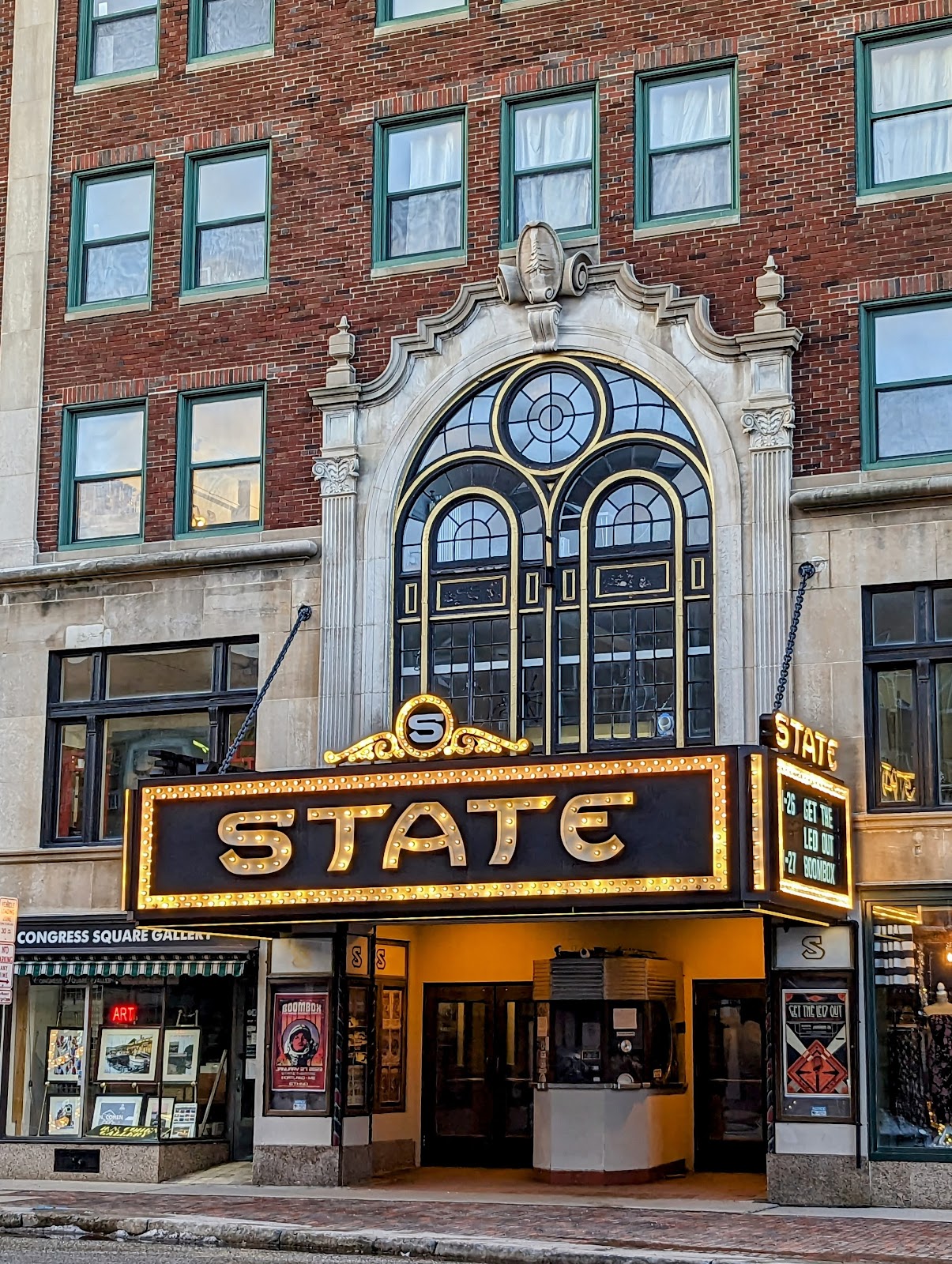
The State Theatre opened in 1929 on Congress Street in Portland, Maine, a movie palace with Spanish-influenced decorative detailing, and it now operates primarily as a standing-room music venue with a stage, a balcony and a general-admission floor.
Photographically that conversion is the key fact and it distinguishes this from the seated historic theatres elsewhere in this series. A standing-room floor means no fixed seating, which means a photographer can move freely — a genuine advantage over a raked auditorium where positions are limited to aisles and balcony. But it also means concert lighting, a dark room by design, and a floor configured for crowds rather than ceremonies.
These are field notes on three problems. We have not photographed a wedding at the State Theatre; converted movie palaces and concert lighting behave predictably. Stage access, balcony access, rigging, power and whether the lighting board will be operated are for their events team.
State Theatre at a glance
| Where | Congress Street, Portland, Maine |
| Opened | 1929 as a movie palace with Spanish-influenced detailing |
| Now | A standing-room music venue with a stage, balcony and open floor |
| Light | Concert-style, deliberately dark; no daylight anywhere |
| The advantage | No fixed seating, so a photographer can actually move |
Problem one: concert lighting is not wedding lighting
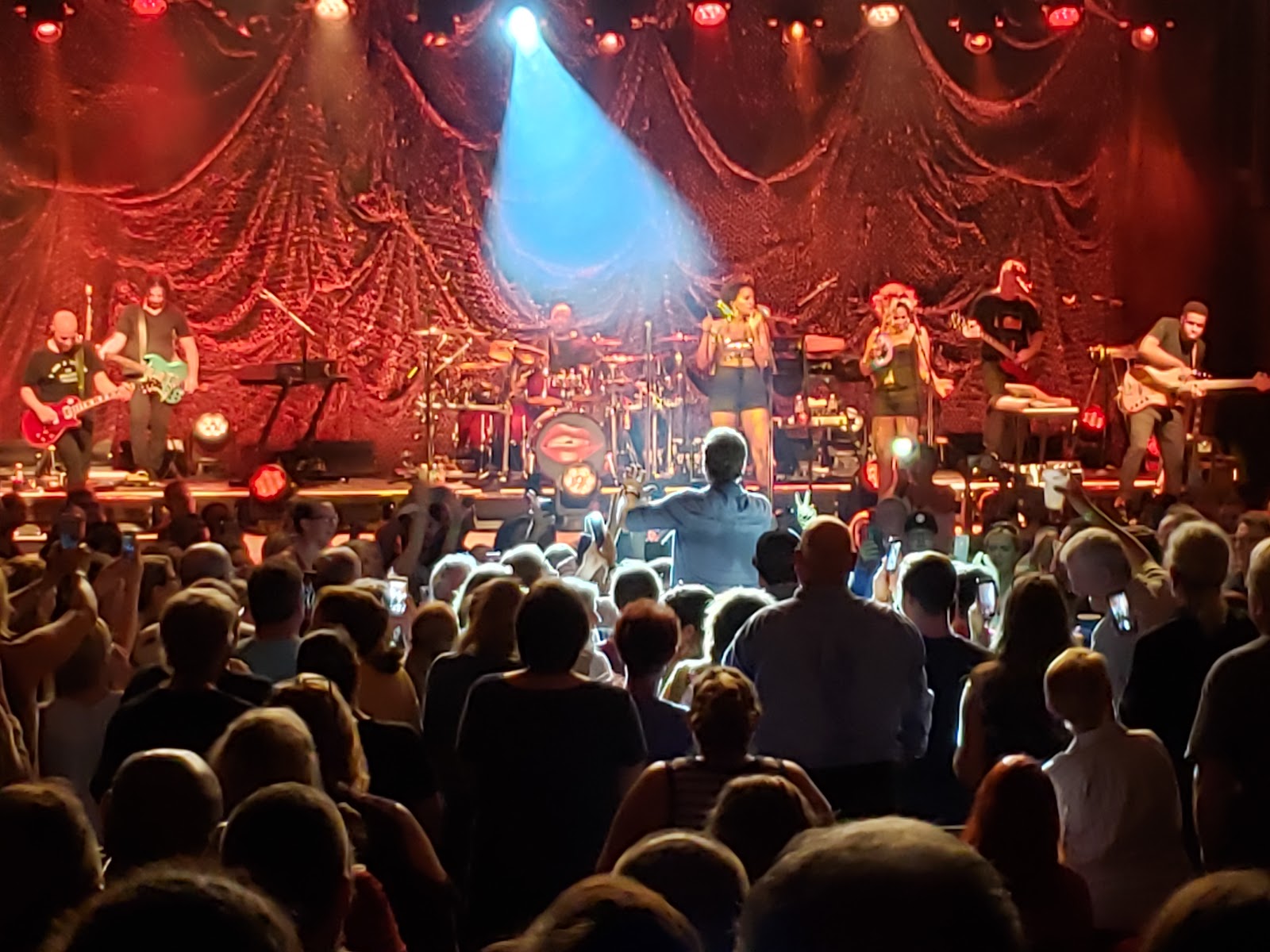
A music venue’s rig is designed to make a lit stage look dramatic in a dark room, which is close to the opposite of what a wedding needs. Fixtures are coloured, directional and often positioned to backlight performers rather than to light faces from the front. The house lighting exists to let people find the bar, not to illuminate a ceremony.
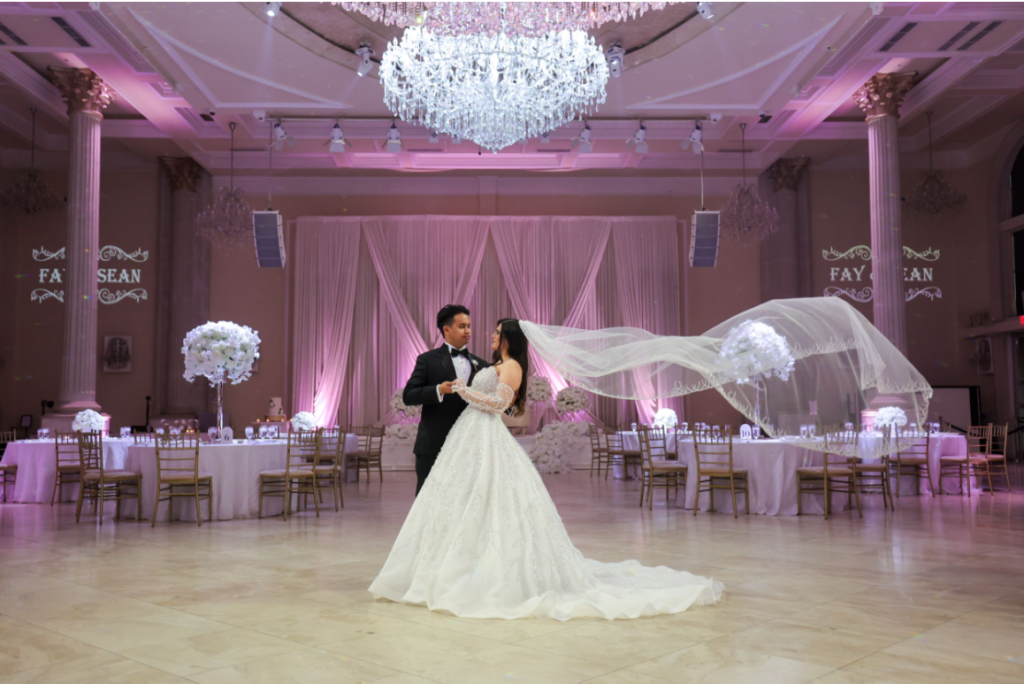
The fix is to ask whether the board will be operated for you, and if so to ask for something specific: a neutral or lightly warm front wash on the ceremony position, house lights kept low, and no coloured gels during the service. That last point matters — coloured light on a wedding dress is unrecoverable, and a concert rig’s default states are exactly the saturated washes that ruin it.
If the rig is not available, you are lighting the ceremony yourself, which in a dark ornate room means one modified key from the side plus a rim light behind. And a key placed off axis does double duty in a 1929 building: it models faces and it rakes across the plasterwork so the ornament reads.
Problem two: a standing floor is an opportunity and a hazard
The freedom is real. Without fixed raked seating you can stand anywhere, get low, get close, and move during a ceremony — which no seated historic theatre allows. For a photographer that is a substantial advantage and it produces coverage that a fixed-position venue cannot.
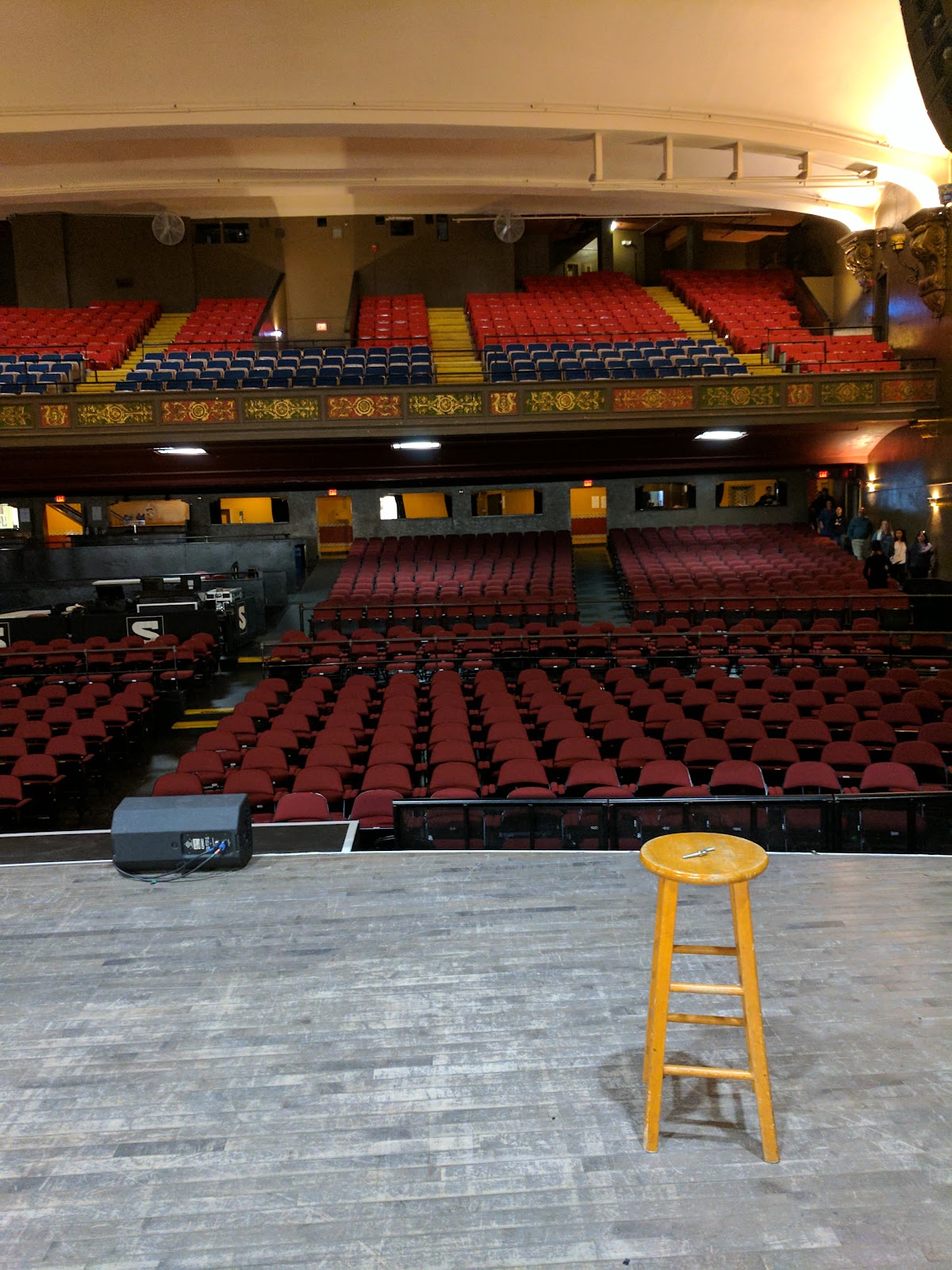
The hazard is that a standing floor is also a flat floor, which means sightlines. In a raked auditorium everyone can see over the person in front; on a flat floor they cannot, and neither can a camera. A ceremony on a standing floor with guests standing behind means the back half of the room sees very little, and photographs from behind the crowd show heads rather than a couple.
So the practical answer is elevation. Use the balcony for anything wide, get above the crowd for the ceremony if the layout allows, and for the ceremony itself work from the side or the front rather than from the back. And ask how the floor will be configured — seated in rows, standing, or with a raised platform — because it changes where you can be.
Problem three: ornament, darkness and colour
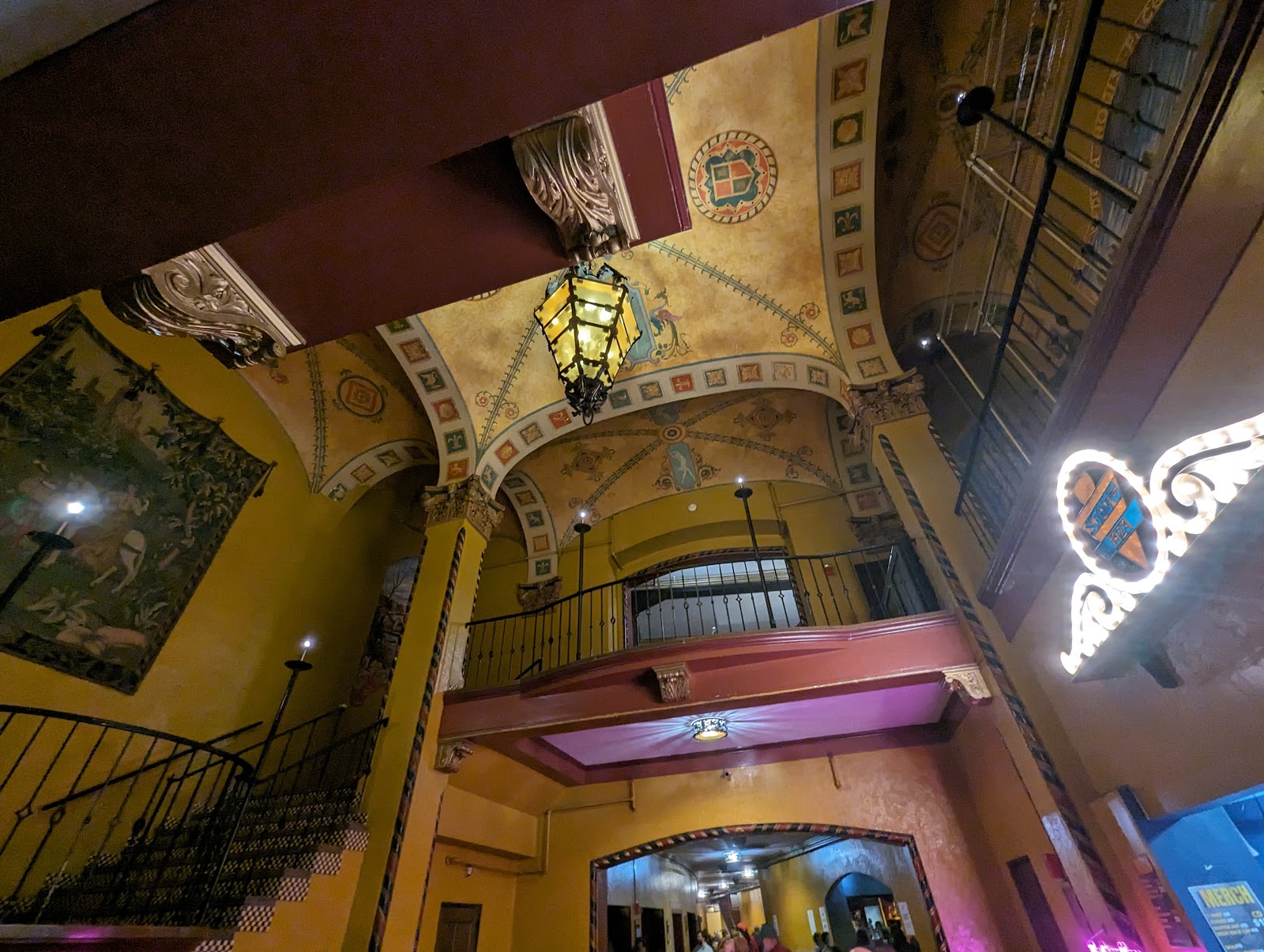
The 1929 decorative scheme is low-relief plasterwork with Spanish-influenced detail, and it behaves as all such ornament does: it reads only under raking light and vanishes under frontal light. So whatever key you use goes well off the camera axis, feathered to skim the surface.
The room is deliberately dark, as every atmospheric-era palace is, and lighting it brightly destroys the character. Light people two or three stops above the ambient and leave the room dark. Flooding it shows the wear rather than the atmosphere — and a converted music venue has a century of wear.
Colour needs the usual differential: keep the room warm because a 1929 palace genuinely is, light faces slightly cooler, and set white balance manually because a concert rig changes state and auto will chase every change and produce a set of frames that do not match.
Congress Street outside, and the timeline
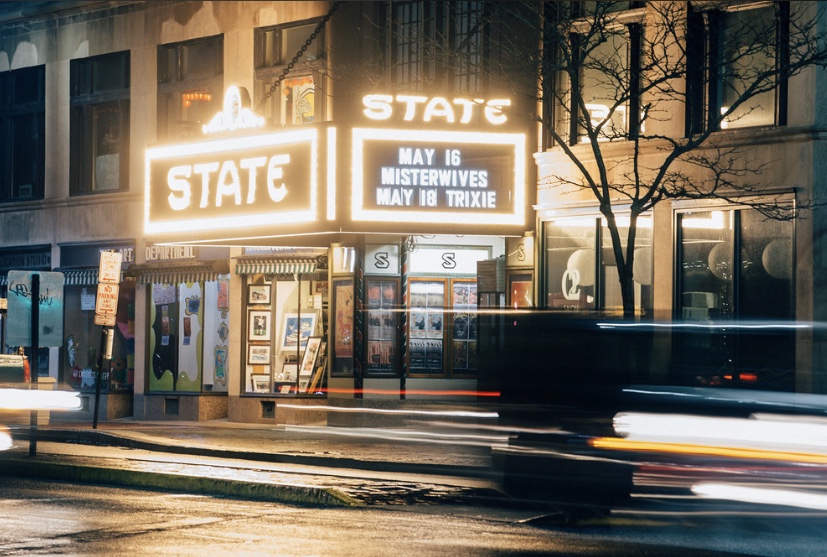
There is no daylight in a theatre, so the outdoor block is the only naturally lit part of the day. Congress Street is Portland’s main artery with a good stock of nineteenth and early twentieth-century commercial architecture, and the Old Port with its cobbles, brick and granite is a short walk. Both are excellent in the last hour of daylight and in the twenty minutes after sunset.
Maine’s latitude governs the length: usable light well past eight in July, a mid-afternoon sunset in December. In winter that means portraits must precede the ceremony, because afterwards there will be nothing. Calculate it for the date rather than assuming.
For the order of the day: portraits outside while daylight lasts; the empty auditorium and its plasterwork before guests arrive, with house lights up for the wide frame; the ceremony lit either by the operated rig or by your own key from the side; and the balcony for whatever wide frames the evening needs.
One further advantage of a music venue worth using: the sound and lighting infrastructure is already there, which means a band or DJ has everything they need and the evening will look better than it would in a blank room — the installed rig gives the party genuine visual drama.
What works in your favour
- No fixed seating, so a photographer can move freely — rare in a historic theatre
- A 1929 decorative scheme that is spectacular under raking light
- A concert rig, if operated, gives the party genuine visual drama
- A balcony for elevated wide frames
- Congress Street and the Old Port a short walk away for the daylight block
What to plan around
- Concert lighting defaults to saturated washes that ruin a white dress
- A flat standing floor destroys sightlines for guests and for the camera
- Deliberately dark; lighting it brightly shows a century of wear
- Frontal flash flattens the plaster relief entirely
- No daylight; a December sunset forces portraits before the ceremony
More frames from State Theatre
State Theatre wedding photography: common questions
What should we ask about the lighting?
Whether the board will be operated for you, and if so ask specifically for a neutral or lightly warm front wash on the ceremony position with house lights low and no coloured gels during the service. A concert rig’s default states are saturated washes, and coloured light on a wedding dress cannot be corrected afterwards.
Is a standing floor better or worse?
Better for the photographer and worse for the guests. Without fixed raked seating you can move freely, get low and get close during a ceremony, which no seated theatre allows. But a flat floor destroys sightlines — guests at the back see very little, and so does a camera behind them.
How do you handle the sightline problem?
With elevation and position. Use the balcony for wide frames, get above the crowd for the ceremony if the layout allows, and work from the side or front rather than from behind. Also ask how the floor will be configured — rows, standing, or a raised platform — because it changes where you can be.
Should the room be lit brightly?
No. A 1929 palace converted to a music venue is deliberately dark, and flooding it shows a century of wear rather than the atmosphere. Light people two or three stops above the ambient and leave the room dark, with the key well off axis so the plasterwork reads.
Where do the daylight photographs happen?
Congress Street and the Old Port, both a short walk and both good in the last hour of daylight and the twenty minutes after sunset. In a Maine December the sunset arrives mid-afternoon, so portraits must precede the ceremony — calculate it for your date rather than assuming.
More Portland, ME venue guides
We are writing a photographer’s guide to every venue we would happily shoot in Portland, ME. Here are three more, plus the full index:
- The Tate House: Who This 1755 House Suits
- Victoria Mansion: Who This 1860 Interior Suits
- The Cathedral of the Immaculate Conception: A Photographer Answers Your Questions
All Portland, ME Wedding Venues →
Planning a wedding at State Theatre?
A concert rig can make your party look spectacular and your ceremony look magenta. Tell us your date and whether the board will be run for you, and we will get the requests right.