 The Portland Regency: A Season-by-Season Guide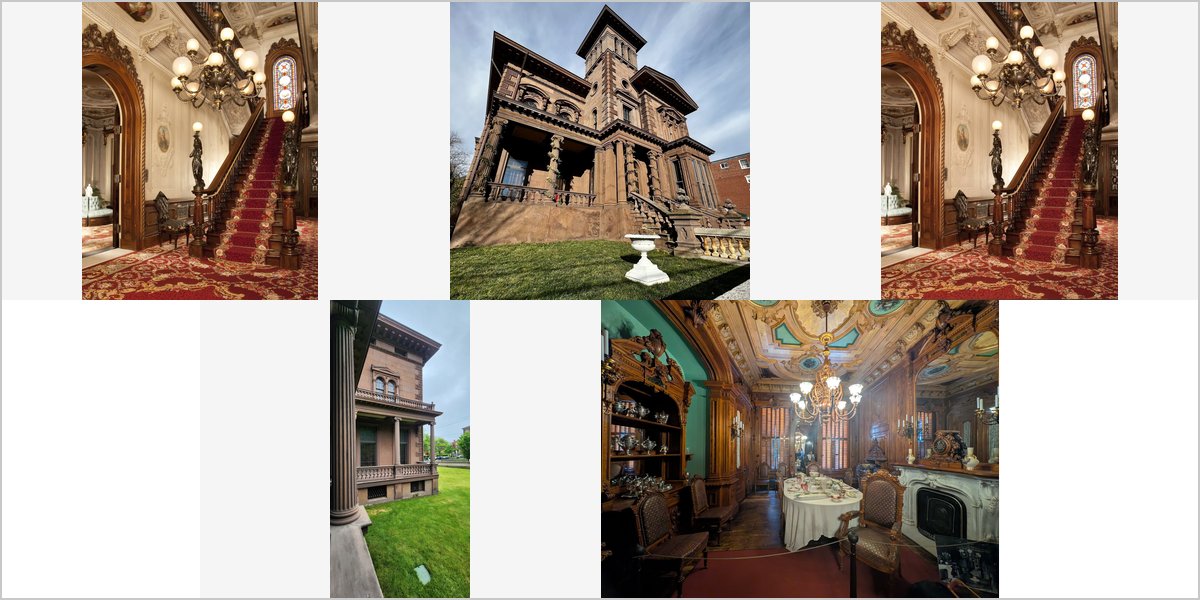
April 25, 2026
Victoria Mansion: Who This 1860 Interior Suits
One of the most intact 1860s interiors in the United States. That significance is the reason to want it and the reason the rules will be strict.
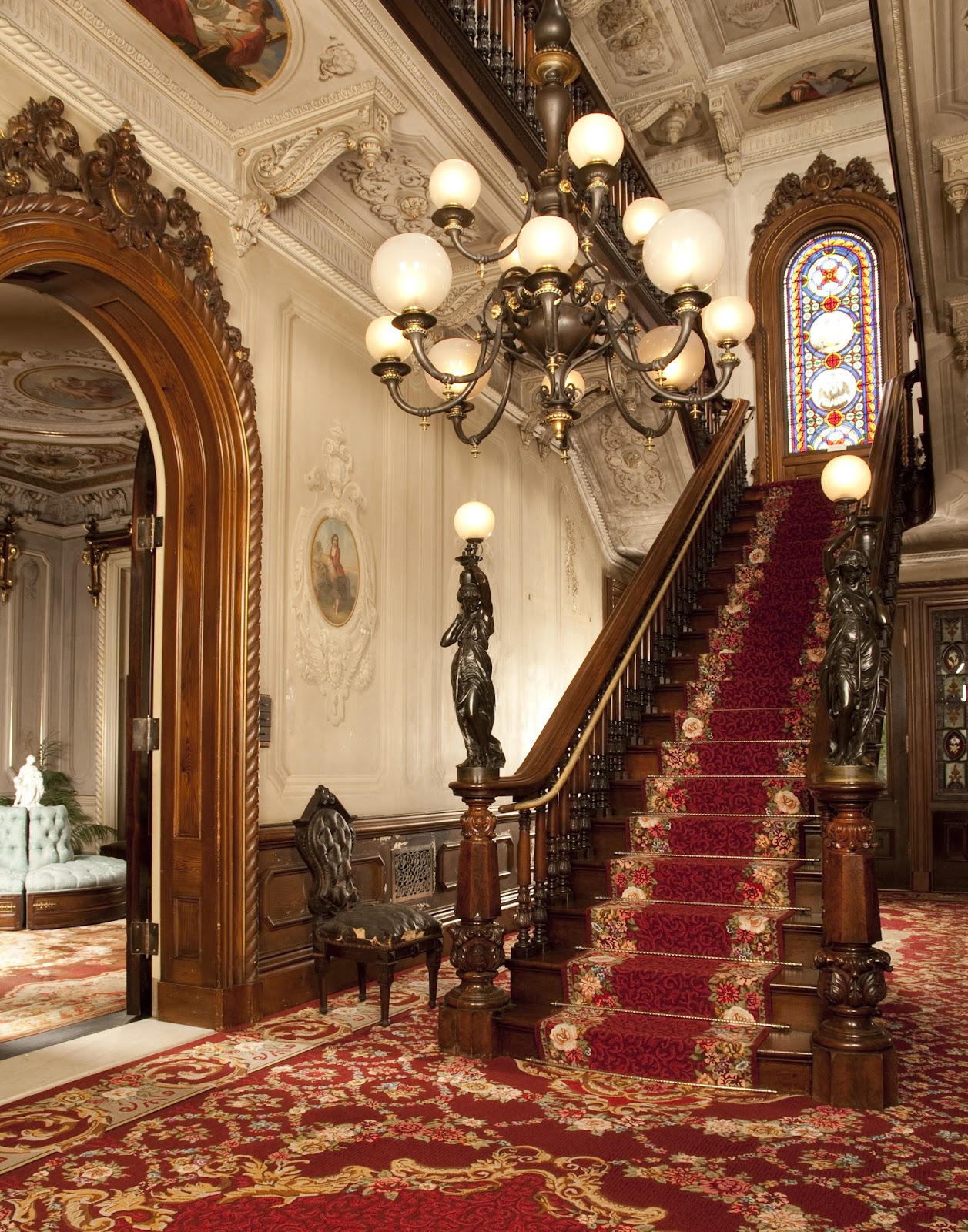
Victoria Mansion was built between 1858 and 1860 in Portland, Maine, as a summer house for Ruggles Sylvester Morse, an Italianate villa designed by Henry Austin with interiors by Gustave Herter. It is remarkable because roughly ninety per cent of its original interior decoration survives — painted walls and ceilings, stained glass, carved woodwork, furnishings, textiles — making it among the most intact interiors of its period anywhere in the country.
Photographically that intactness is both the attraction and the entire constraint. A house museum with original painted surfaces, original textiles and original furnishings is fragile in a way an empty historic building is not, and the rules that protect it will be correspondingly firm. Expect restrictions on flash, on where people may stand, on numbers in a room, and on what may be touched or moved.
So this is a fit assessment. We have not photographed a wedding at Victoria Mansion; dark painted Victorian interiors behave predictably. Capacity, which rooms are used, and the conservation rules are entirely for their team, and at a property of this significance they will be non-negotiable.
Victoria Mansion at a glance
| Where | Danforth Street, Portland, Maine |
| Built | 1858–1860, Italianate villa; interiors by Gustave Herter |
| Significance | Around ninety per cent of the original interior decoration survives |
| Light | Dark painted interiors with stained glass; very little usable daylight |
| Assume | Strict conservation rules on flash, movement, numbers and contact |
What intact Victorian interiors actually look like to a camera
Darker than any other kind of historic interior, and it is worth understanding why. Mid-nineteenth-century decorative schemes used deep colours — rich reds, greens, browns — often with painted or grained finishes and elaborate patterned surfaces. Dark paint absorbs light rather than returning it. Heavy textiles at the windows reduce what enters. Stained glass absorbs more still while tinting what passes through.
Combined, the effect is an interior that looks warm and atmospheric to the eye and meters several stops below what you would expect. Human vision adapts within seconds; a sensor does not. Rooms that feel comfortably lit will be genuinely dark.
Whatever light does bounce comes back strongly coloured, because it has bounced off deep red or green paint. That means skin picks up those tints, with no neutral surface anywhere to balance them — the same problem as a saturated modern room, but with less light to work with.
Who this venue suits
Four kinds of couple, and the fit is genuinely narrow.
- Very small weddings and elopements. Ten to thirty people. A house museum with original furnishings cannot take numbers, and the permitted capacity will reflect that.
- Couples who genuinely care about the house. If the fact that ninety per cent of the interior is original means something to you, this venue offers something almost nowhere else can.
- Anyone whose reference images are close, quiet and atmospheric. Dark rich rooms produce intimate documentary work, not bright airy portraiture.
- Couples treating it as a ceremony-and-portraits venue. Marry there, photograph there briefly, celebrate elsewhere. That structure respects the building and plays to its strengths.
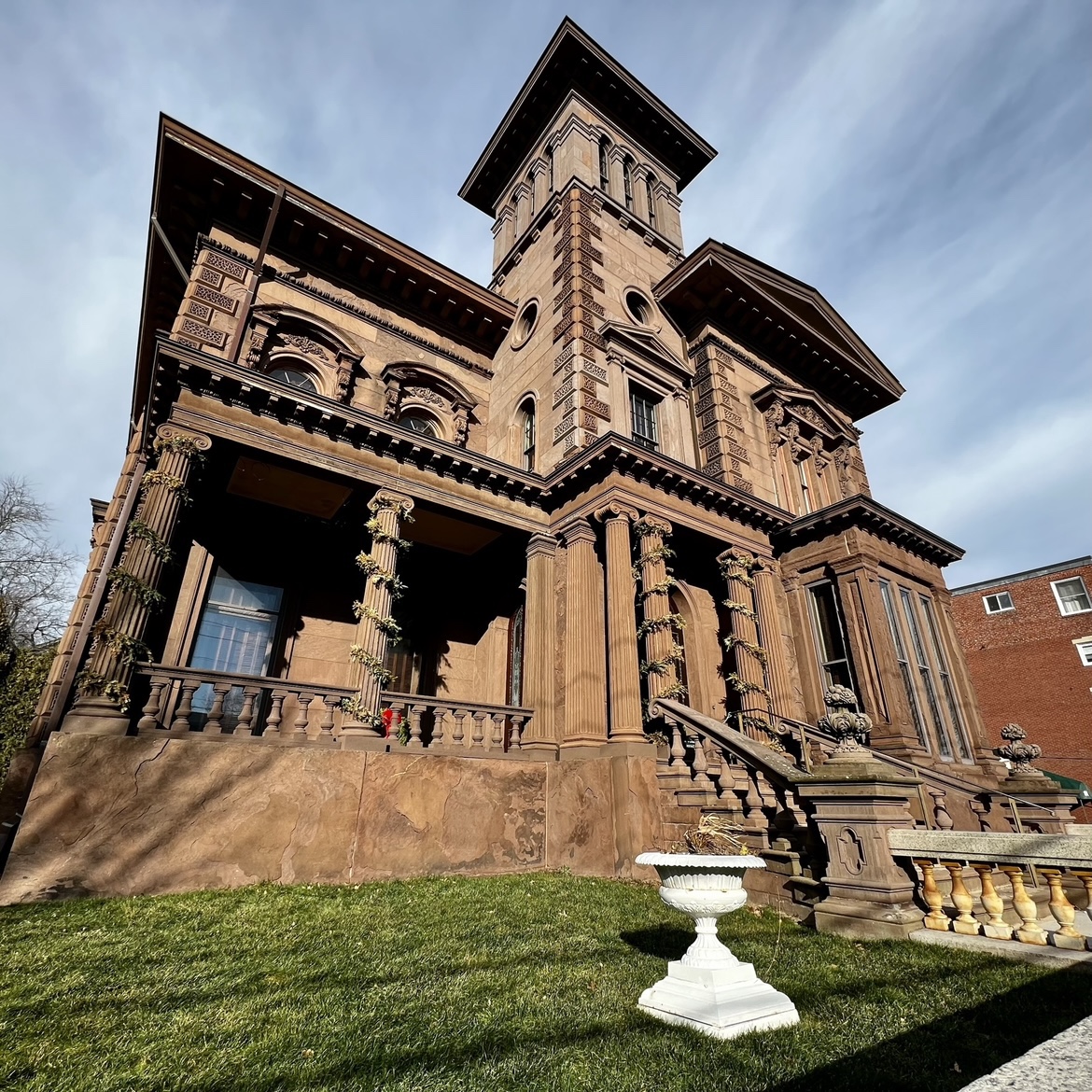
Who should look elsewhere
Directly, because this is a house where the wrong expectations cannot be accommodated.
- Anyone with more than about thirty guests. The rooms and the conservation requirements will not permit it.
- Couples wanting bright, airy, light-filled photographs. The interiors are deliberately dark and richly coloured. They will not become anything else.
- Anyone needing to light the rooms. Assume no flash near original painted surfaces and textiles. That is not a preference; it is conservation.
- Couples wanting a reception, or full-length portraits indoors. Neither is realistic. Both belong elsewhere.
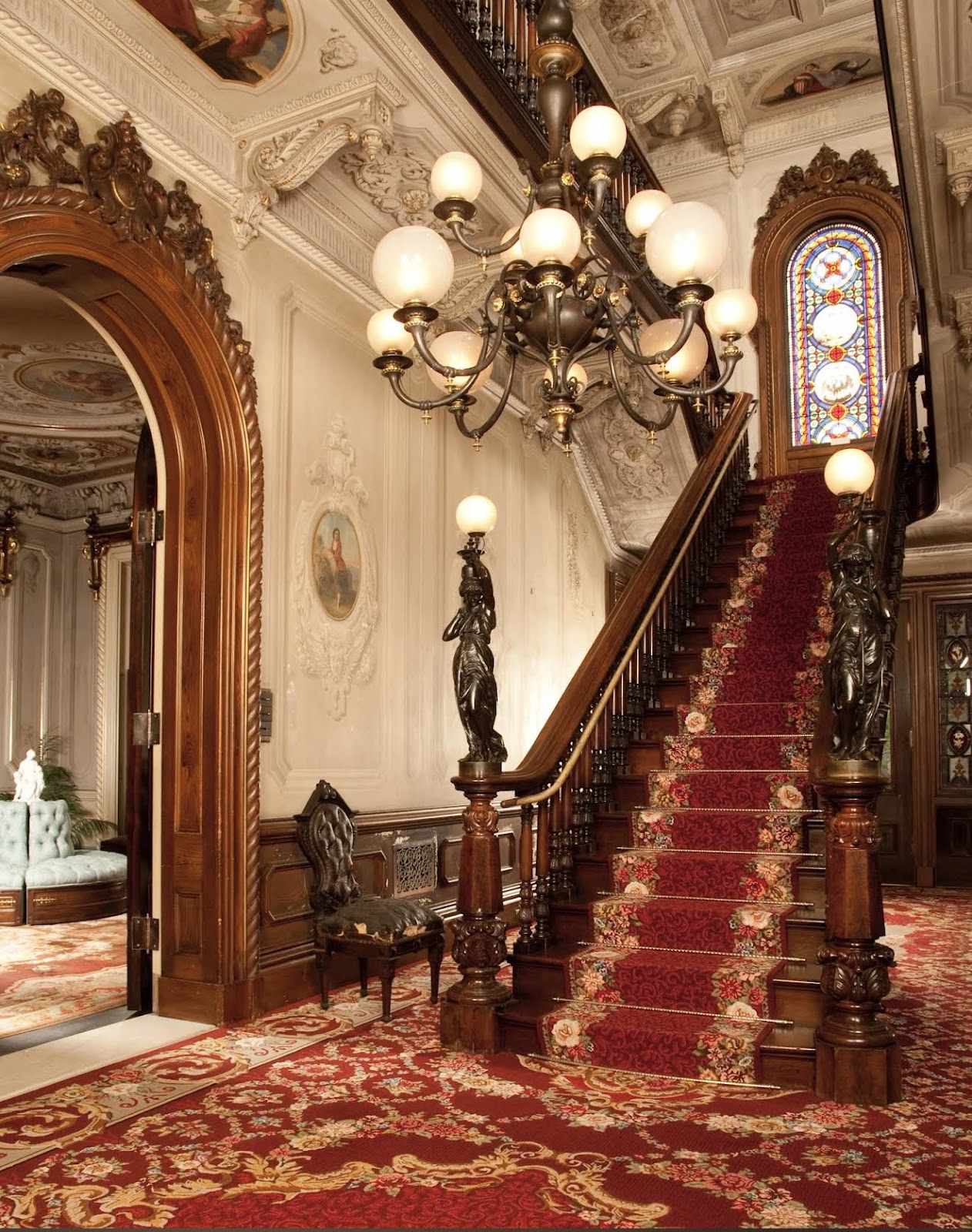
Making it work, and Portland outside
Within the constraints there is genuinely good work to be had. Find the windows — even heavily draped Victorian windows admit usable light within a metre or so — and place the couple there, turned into the light, letting the room fall away into darkness. That falloff is the character of the house rather than a fault, and a portrait lit by one window in a dark painted room is a beautiful and appropriate image.
Set white balance in each room, because a red room and a green room are different problems, and shoot raw. Accept high ISO and a wide aperture as the price of entry. And shoot the detail: painted ceilings, stained glass, carved woodwork, original textiles. Those close frames cost nothing in access, they are what makes the house significant, and in a venue with few wide frames available they matter more than usual.
Then go outside. Portland’s West End around the mansion is a district of nineteenth-century brick and clapboard houses, and the Old Port with its working waterfront, cobbles and brick warehouses is a short distance away. That covers full-length portraits, groups and golden hour.
Maine’s latitude is worth noting for the timeline: Portland is far enough north that summer evenings are long and winter days are short, with a mid-afternoon December sunset. Plan the outdoor block accordingly — generous in July, brief and early in January.
One more thing worth knowing about photographing in a house museum of this calibre, because it changes how the day feels rather than how it looks. Staff at these properties are usually curators or long-serving volunteers who know the building intimately, and they will tell you things no site visit reveals — which window gives the best light in October, which room the afternoon sun reaches, where a bride can stand without risk to a carpet. Asking them rather than working around them is the single most useful thing a photographer can do here, and it consistently produces better frames than treating the rules as an obstacle.
What works in your favour
- Among the most intact 1860s interiors in the United States — genuinely exceptional
- Painted ceilings, stained glass and original textiles give abundant significant detail frames
- One window in a dark painted room produces a beautiful, appropriate portrait
- Portland’s West End and the Old Port nearby for full-length portraits and groups
- Long Maine summer evenings give a generous outdoor window
What to plan around
- Darker than any other kind of historic interior; meters several stops below expectation
- Deep painted colours tint skin with no neutral surface anywhere to balance them
- Assume no flash near original painted surfaces and textiles
- Very limited capacity — realistically under thirty guests
- No reception, and no full-length portraits indoors
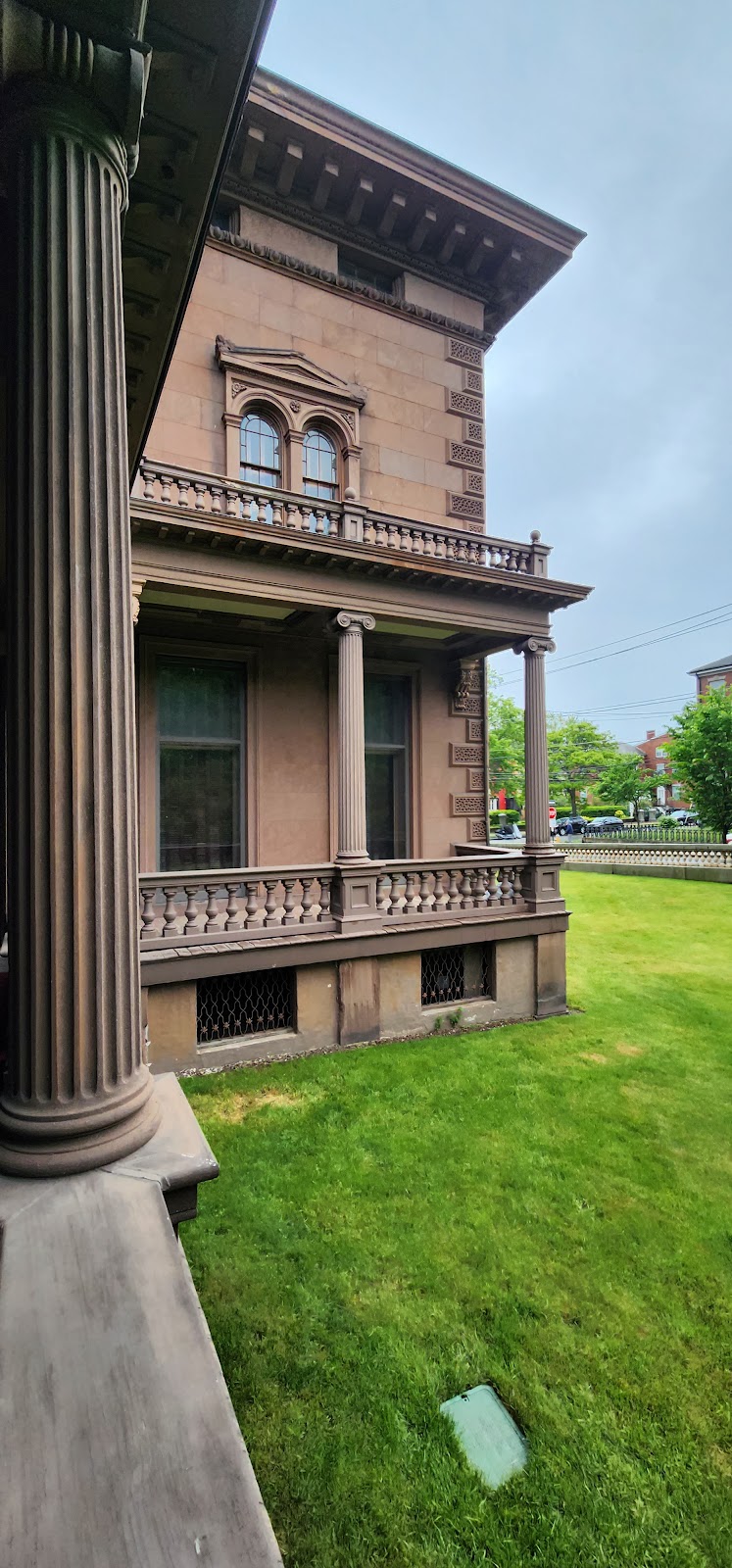
More frames from Victoria Mansion
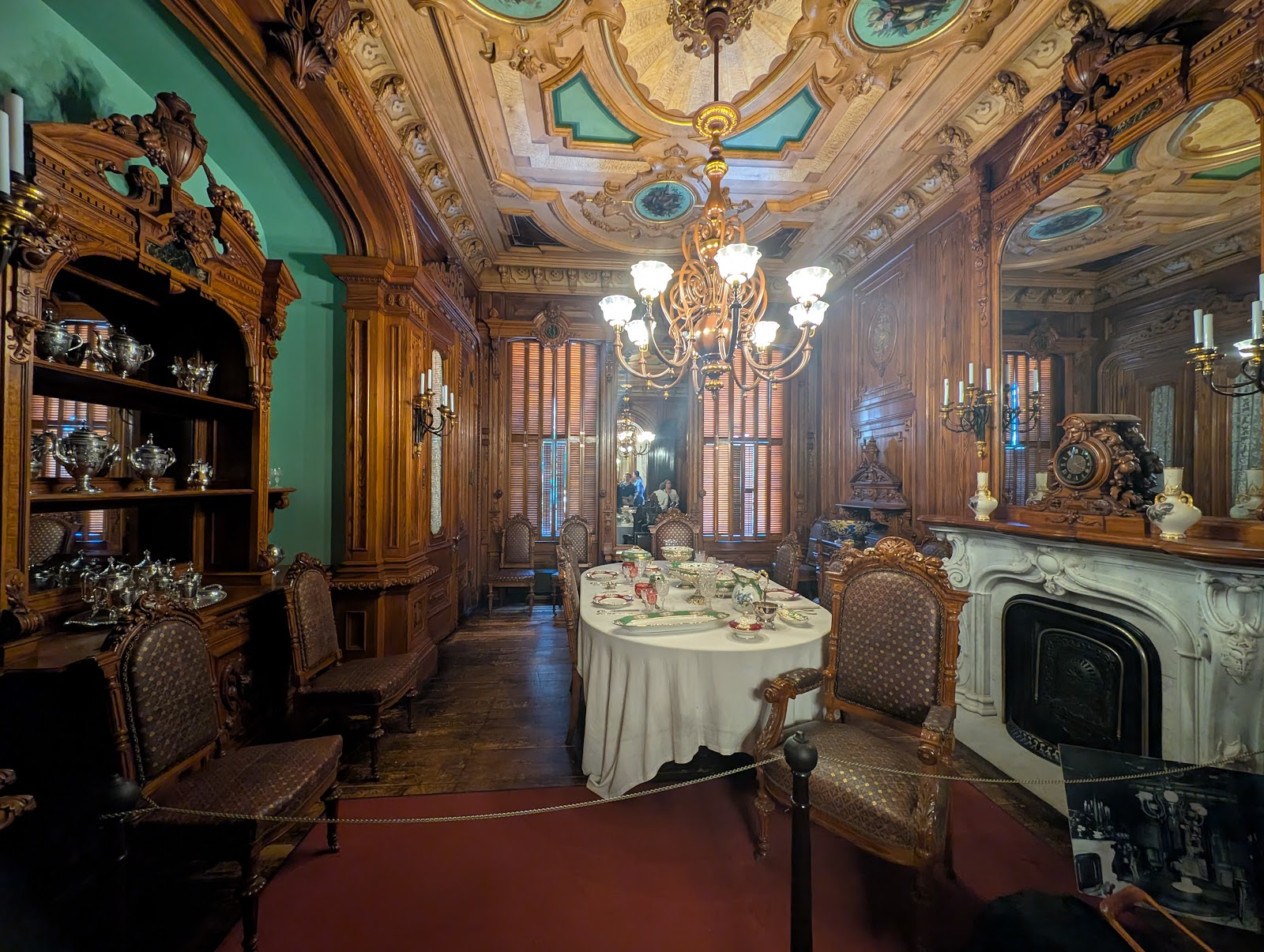
Victoria Mansion wedding photography: common questions
Why are these interiors so dark?
Because mid-nineteenth-century schemes used deep colours — rich reds, greens and browns — which absorb light rather than returning it, with heavy window textiles reducing what enters and stained glass absorbing more still. The rooms look warm and atmospheric to the eye and meter several stops below what you would expect.
Will the wall colours affect skin tones?
Yes. Whatever light bounces comes back strongly coloured because it has bounced off deep red or green paint, and there is no neutral surface anywhere to balance it. Set white balance per room, shoot raw, and place people in window light rather than relying on the room’s bounce.
Can we use flash?
Assume not near original painted surfaces and textiles. Around ninety per cent of this interior is original, which makes it fragile in a way an empty historic building is not, and the conservation rules protecting it are not negotiable. Plan a natural-light approach with fast lenses and high ISO.
How many guests does it suit?
Realistically ten to thirty. The rooms are domestic and the conservation requirements will cap numbers regardless. Treat it as a ceremony-and-portraits venue and hold the celebration elsewhere — that respects the house and plays to what it does well.
Where do the full-length portraits happen?
Outside. Portland’s West End around the mansion is a district of nineteenth-century brick and clapboard, and the Old Port’s cobbles, brick warehouses and working waterfront are a short distance away. Plan the block generously in a long Maine summer evening and briefly in a mid-afternoon January sunset.
Is there any advantage to the strict rules?
Indirectly, yes. Staff at a house museum of this calibre are usually curators or long-serving volunteers who know the building intimately, and they will tell you which window gives the best light in October or which room the afternoon sun reaches. Asking them rather than working around them reliably produces better frames.
More Portland, ME venue guides
We are writing a photographer’s guide to every venue we would happily shoot in Portland, ME. Here are three more, plus the full index:
- The Cathedral of the Immaculate Conception: A Photographer Answers Your Questions
- The Maine Historical Society: Building the Shot List
- The Maine State Pier: Reading the Light on a Working Waterfront
All Portland, ME Wedding Venues →
Planning a wedding at Victoria Mansion?
An interior this significant comes with rules worth respecting. Tell us your guest number and we will be straight about whether it fits — and plan Portland’s West End and Old Port for everything the house cannot do.