 The Portland Regency: A Season-by-Season Guide
The Jordan Pond House, Acadia: Field Notes on a Mountain Pond
Still fresh water is a mirror in a way the sea never is. That one difference changes everything here.
A mountain pond in a wooded basin behaves nothing like the coast a few miles away, and the differences are worth taking one at a time because they reverse several coastal habits.
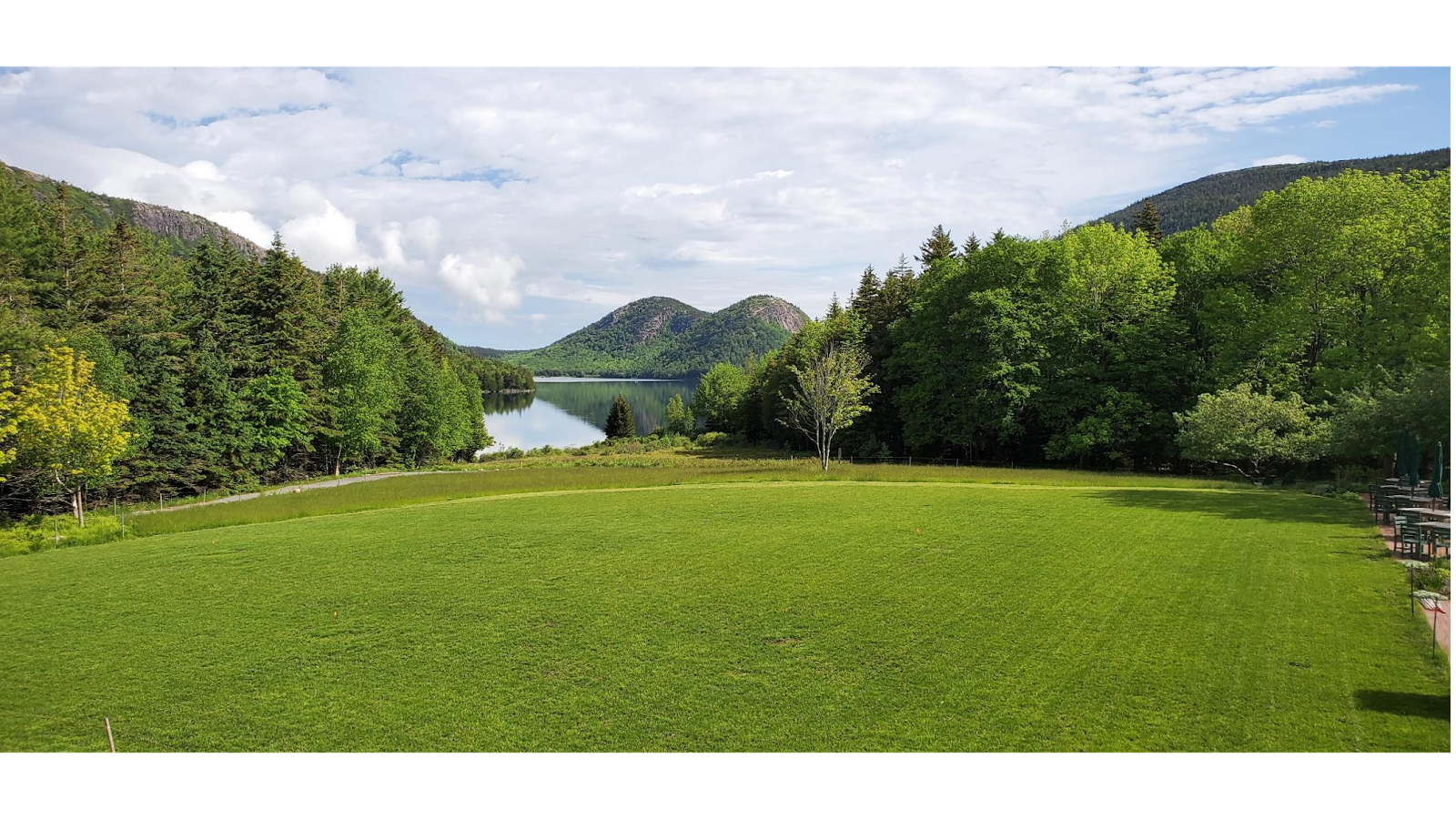
The water is fresh, still and sheltered rather than salt, moving and exposed. That makes it a genuine mirror: a pond enclosed by hills goes calm in a way open sea never does, which means reflections hold and the surface doubles the whole basin.
The basin is enclosed, which means the surrounding hills take the sun off the water earlier than a sunset table suggests — and the light in between is a long period of soft open shade, which is good rather than dead.
And the surround is spruce: dense dark conifer running down to the water on most sides, which is the darkest natural background there is and the most reliable free separation available anywhere.
These are field notes on all three. We have not photographed a wedding at the Jordan Pond House; mountain ponds, spruce basins and Acadia’s access rules behave consistently. Which areas are included, what the permit and group rules are, and what the covered alternative is are questions for their team and for the park authority.
The Jordan Pond House at a glance
| Where | A mountain pond in Acadia National Park, Maine |
| The water | Fresh, still and sheltered — a genuine mirror, unlike the sea |
| The basin | Hills on three sides, so the sun leaves the water early |
| The surround | Dark spruce: three or four stops of free separation |
| Ask first | Areas included, permit and group rules, covered alternative |
What you meet, and what each one needs
Still fresh water is the first condition and it is the one that distinguishes this place from the coast. A pond in a sheltered basin goes genuinely calm — most reliably in the early morning before the day’s heating stirs the air, and again in the last hour as it settles — and a calm freshwater surface is a mirror rather than a texture.
That gives the frame the location exists for: the surrounding hills and the sky doubled in the water, with a couple at the edge. Camera height is the governing variable, as at any water: low across the surface sees the mirror, high looking down sees through to the bed. Half a metre is the whole difference and low is the answer here.
One coastal habit needs reversing. On the sea a polariser is almost always useful, because moving salt water throws specular glare that clips and fools a meter. On a still pond a polariser removes the reflection, which is the entire subject — so it comes off for the mirror frames and goes on only if the intent is to see into the water rather than at it. Polarise to see into water; remove it to see the sky in water.
The enclosed basin is the second condition and it decides the timing. Hills on three sides mean the sun clears them late in the morning and drops behind them early in the afternoon, so the period of direct light on the water is shorter than the day’s length — and the published sunset time has very little to do with it. The most useful question to ask is when the sun leaves the water, which the venue will know precisely.
What the basin gives in exchange is a long period of open shade, lit by the strip of sky overhead and by whatever bounces off the water. That is genuinely good light: soft, downward, with no hard shadows — and unlike most open shade it has a reflector built in, because the pond throws light back up and fills under the chin.
Its one deficiency is direction, supplied by geometry rather than equipment: standing near a spruce edge, a rock or a structure blocks the light from one side and restores the modelling. The middle of an open shore in flat light is the flattest position available.
Dark spruce is the third condition and it is the best background material in the region. Dense conifer absorbs almost all the light falling on it, so a subject in front of it is separated by three or four stops with no equipment at all — and unlike a deciduous background it does not change through the day or the season.
It carries one exposure trap and it is the most important technical point here. A meter looking at a dark spruce field tries to lift it towards mid-grey, which overexposes everything else in the frame by two stops or more. So the background must be allowed to stay dark, which means metering on the faces or off a hand in the same light, and working in manual rather than trusting the camera — particularly because a snow or bright-water frame a minute later fools it the other way.
The shore, the rules, and the fog
The shore is granite and it is a different surface from sand in a way worth using. Coarse pink-grey granite is mid-toned, which means it reflects a useful amount without flooding light upward the way a beach does — so there is less uplift under chins here and the light stays more directional as a result.
It also has strong texture that reads only under raking light: low sun across granite lifts every crystal and fracture, while flat light or midday flattens it into a grey field. So the granite is a low-sun subject and a neutral foreground at any other hour.
The access rules come next and at a location inside a national park they shape the day more than any technique. A park is managed under rules about permits, group sizes, vehicles, where people may walk and what may be set up — and those exist because thin-soiled shoreline vegetation and granite lichen recover from foot traffic over decades rather than seasons.
The working assumption that follows is: no stands, nothing set on the ground, a source in a hand or on a bracket, small numbers at any one position, and the large group photographs somewhere built. That is a workable plan when it is the plan and a problem when it is a surprise, and the answers belong to the park authority rather than to a photographer.
Fog is the fourth condition and on this island it is frequent. The mechanism is the cold sea a few miles away: the Gulf of Maine stays cold through the summer, so warm air moving over it condenses, and the fog moves inland — which makes June, July and August the foggiest months here rather than spring, and means it can persist all day rather than burning off by nine.
In a spruce basin the fog version is arguably better than the clear one. Fog separates successive spruce edges into flat grey layers at three or four distances, which is a depth effect nothing else produces; it erases the far end of the pond so the water becomes a plain field of tone; and it removes every hard shadow. A couple at the edge is then the only thing in the frame with edges.
The practical adjustments are two. Watch the white balance, because fog is cool and flat and a daylight setting renders it blue. And add one modest source gelled slightly warm if separation is wanted — enough to lift a couple out of a grey field without removing the effect.
And rain is common here and worth the same treatment. Wet granite darkens, saturates and reflects, which is better than dry; spruce holds water on its needles and glitters; and a still pond in light rain gets a stippled surface that is a different and perfectly good texture. What rain needs is a plan for people rather than for pictures.
- Camera low for the mirror; half a metre decides mirror or bed
- Take the polariser off for reflections — it removes the subject
- Ask when the sun leaves the water; a table will not tell you
- Work in manual; dark spruce makes a meter overexpose by two stops
- Assume no stands and nothing on the ground; groups go somewhere built

The Maine year
Autumn is the season for this basin and it comes earlier than most people plan for. Colour on Mount Desert Island usually peaks in the first half of October, and in a spruce basin the effect is particular: the hardwoods turn in patches among black-green conifer, which gives a mottled, high-contrast surround rather than a uniform blaze — and all of it doubled in still water.
October also brings the clearest air of the year, a sharp drop in fog frequency, thinner crowds and a sunrise at a civilised hour. If there is one month for this place, it is October, and the first half of it.
Summer is cool because the sea is cold, which makes it comfortable and makes it foggy. It is also the busiest season by a wide margin, and a popular pond shore in July is populated at every hour except dawn — which makes the early morning both the quietest time and the calmest for reflections. Those two facts together make sunrise the obvious summer slot.
The long days and long twilight are the summer compensation: at this latitude, about forty-four degrees north, the June sun sets at a shallow angle so the sky holds usable light for well over an hour afterwards. The cost is that it happens very late, and the basin has already lost the direct sun hours earlier.
Winter is cold, quiet and empty, and the emptiness is genuinely valuable. The December midday sun at this latitude reaches only about twenty-two degrees above the horizon, which means the whole short day is raking light — exactly what granite and spruce need, and enough to reach into a basin that a higher sun would leave in shade for longer.
Snow does two things. It is the best natural fill available outdoors, lifting exactly the shadows a low sun carves while fooling a meter by about two stops toward underexposure — so a snow frame needs deliberate overexposure relative to what the camera suggests. And snow against dark spruce is the widest natural brightness range a photographer meets: expose for the snow, which holds the detail and clips irrecoverably, and let the conifer go near-black, which is what the eye reads anyway.
A frozen pond is a winter-only subject and a completely different one: the mirror disappears and is replaced by a flat pale plane, sometimes with wind-scoured patterns in the snow on it, which is graphic rather than reflective. Access on ice is a safety matter rather than a photographic one and belongs to whoever manages the site.
The practical winter constraints are real: seasonal road closures may put the basin out of reach entirely, daylight runs out in the middle of the afternoon, cold drains batteries so spares belong in an inside pocket, and a cold body brought into a heated building fogs on every surface at once and does not clear quickly.
Spring is the one season with no particular argument for it: cold, late, muddy, with the sea at its coldest so the fog season is beginning, and the hardwoods not yet in leaf.
More frames from The Jordan Pond House
The Jordan Pond House wedding photography: common questions
How does a pond differ from the sea here?
It is fresh, still and sheltered, which makes it a genuine mirror. Open salt water never goes that calm, and it throws specular glare instead.
Should a polariser be used?
Not for the mirror frames — it removes the reflection, which is the subject. Polarise to see into water; remove it to see the sky in water.
Why does the basin change the timing?
Hills on three sides mean the sun clears them late and drops behind them early, so direct light on the water is short and the sunset time is irrelevant.
What is the compensation?
A long period of open shade with a reflector built in, because the water throws light back up and fills under the chin. Stand near a spruce edge for direction.
Why work in manual?
Because dark spruce makes a meter overexpose by two stops and bright water or snow fools it the other way — and both can appear a minute apart.
When is the basin at its best?
The first half of October, when the hardwoods turn in patches among black-green spruce and all of it is doubled in still water.
More Bar Harbor, ME venue guides
We are writing a photographer’s guide to every venue we would happily shoot in Bar Harbor, ME. Here are three more, plus the full index:
- Acadia National Park, Maine: The Problem, and Four Ways Out
- The Asticou Inn, Maine: One Frame, and How It Is Made
- The Bar Harbor Inn, Maine: A Venue Built Facing the Water
Planning a wedding at The Jordan Pond House?
Still water, dark spruce, early shadow. Tell us your date and we will time it.