 The Van Dusen Mansion, Minneapolis: A Walk Through House and Grounds

The Walker Art Center, Minneapolis: Four Ways Out of the Gallery Problem
A contemporary gallery is harder than a historic one, and the sculpture garden next door is the reason to book it.
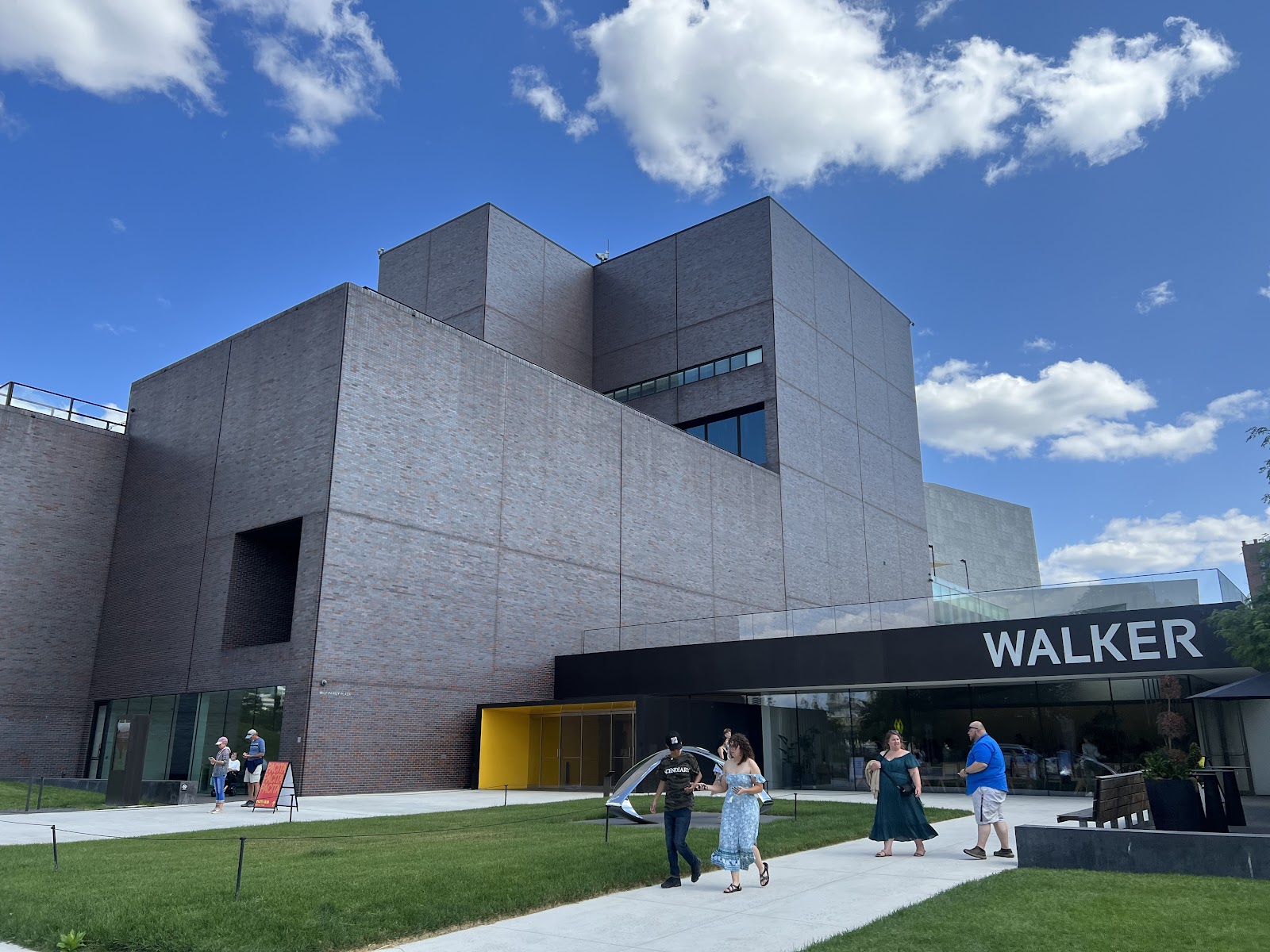
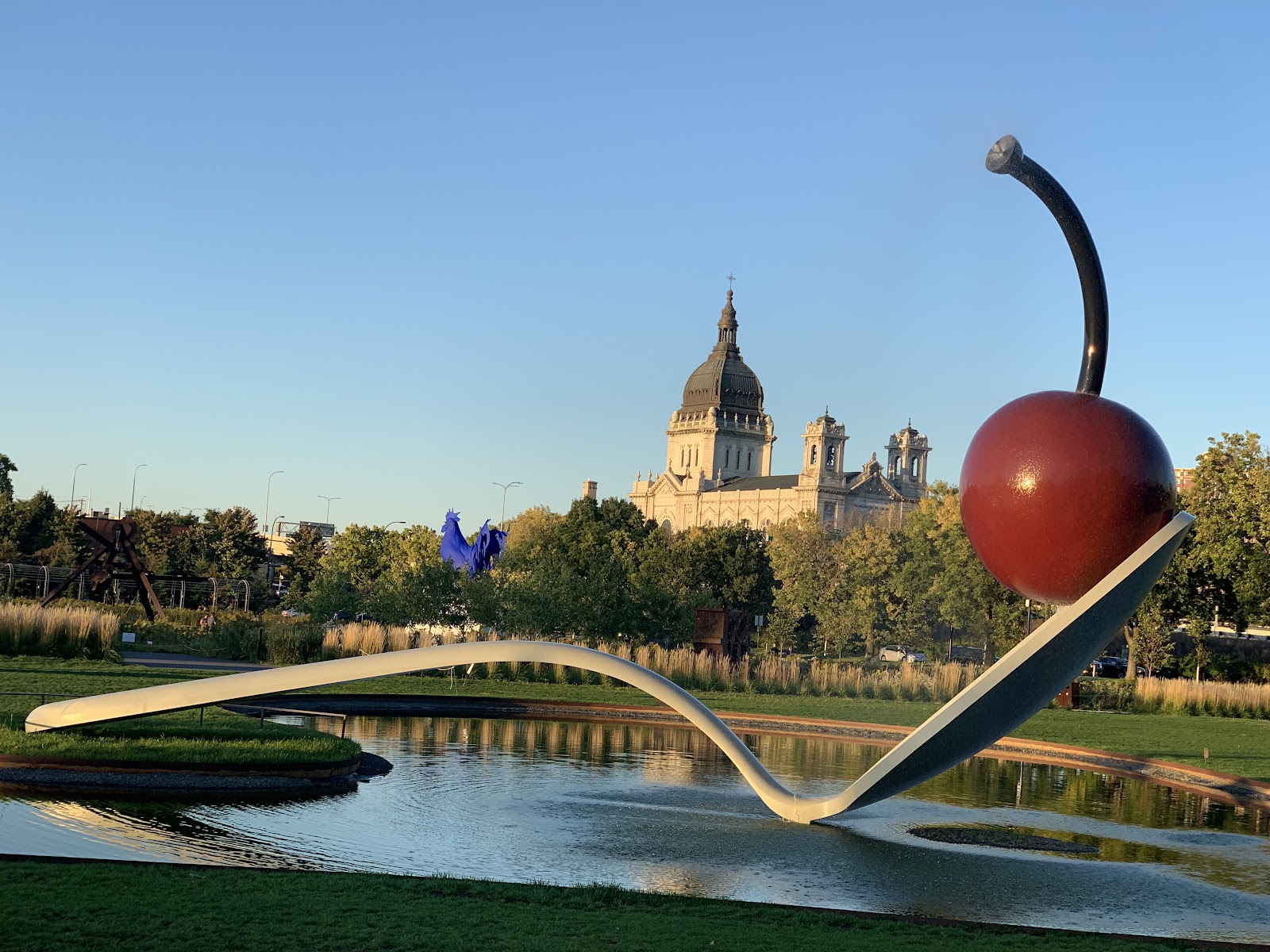
The Walker Art Center’s own material points, correctly, to the sculpture garden a stone’s throw from the main building as something not to forget.
That is the right emphasis, because a contemporary art museum is harder to photograph in than a historic one and the garden is where the day’s best frames are. Contemporary galleries are designed to disappear: white or mid-tone walls, sealed floors, no ornament, and lighting aimed precisely at works with nothing spilling anywhere else. That combination removes three things at once — texture, warmth and any background that is not simply a wall — while keeping all the ordinary conservation problems of low level, overhead direction and narrow-spectrum sources.
A sculpture garden, by contrast, has no conservation constraint at all, and large works there do something for a photographer that planting cannot. So the honest plan is that the galleries supply two or three deliberate frames and the garden supplies the gallery.
This is written as the problem and four ways out of it. We have not photographed a wedding at the Walker; contemporary museums and sculpture gardens both behave consistently. Whether photography is permitted in galleries, whether stands are permitted, and whether flash is permitted are three separate questions, and all three belong in writing.
The Walker Art Center at a glance
| Where | Minneapolis, Minnesota |
| Character | A contemporary art museum with an adjoining sculpture garden |
| The problem | Spare galleries remove texture, warmth and background at once |
| The answer | The sculpture garden, and the shadows large works cast |
| Ask first | Gallery photography, stands, flash — three separate questions |
Why a contemporary gallery is harder than a historic one
A historic gallery is dim and difficult, but it usually has something in it: patterned walls, a cornice, a parquet floor, a window. A contemporary gallery is designed to have nothing, because the point is that the work is the only thing in the room. That is admirable curatorially and it removes the photographer’s usual materials entirely.
Texture goes first. Smooth painted walls and sealed floors have no surface to rake, which means light crossing them at an angle produces nothing — the trick that saves a brick or plaster interior does not work here.
Warmth goes second. Neutral white or grey walls bounce neutral light, so skin receives no warm fill at all and can read cool and slightly grey in a way it does not in a timber or brick room. A warm reflector or a warm-gelled key is worth carrying specifically.
Background goes third. A plain wall behind a subject is not a background but an absence of one, and a mid-tone wall under even gallery light sits at almost exactly the same tone as skin — which gives no separation at all.
And the ordinary gallery problems remain on top of those. Conservation caps the level two or three stops below comfortable; display fittings aim down from the ceiling, which darkens eye sockets and draws a hard line from the nose; and narrow-spectrum sources render skin sallow or plum even at technically correct white balance, because the source is not emitting the wavelengths skin needs to reflect.
Large contemporary works add a fourth problem that historic paintings do not: they are frequently very large and very saturated, or reflective, or lit as objects in the round. A large saturated work throws its colour across a nearby face; a reflective one shows the room and the photographer; and an installation lit from within is a light source of its own colour.
Four ways out
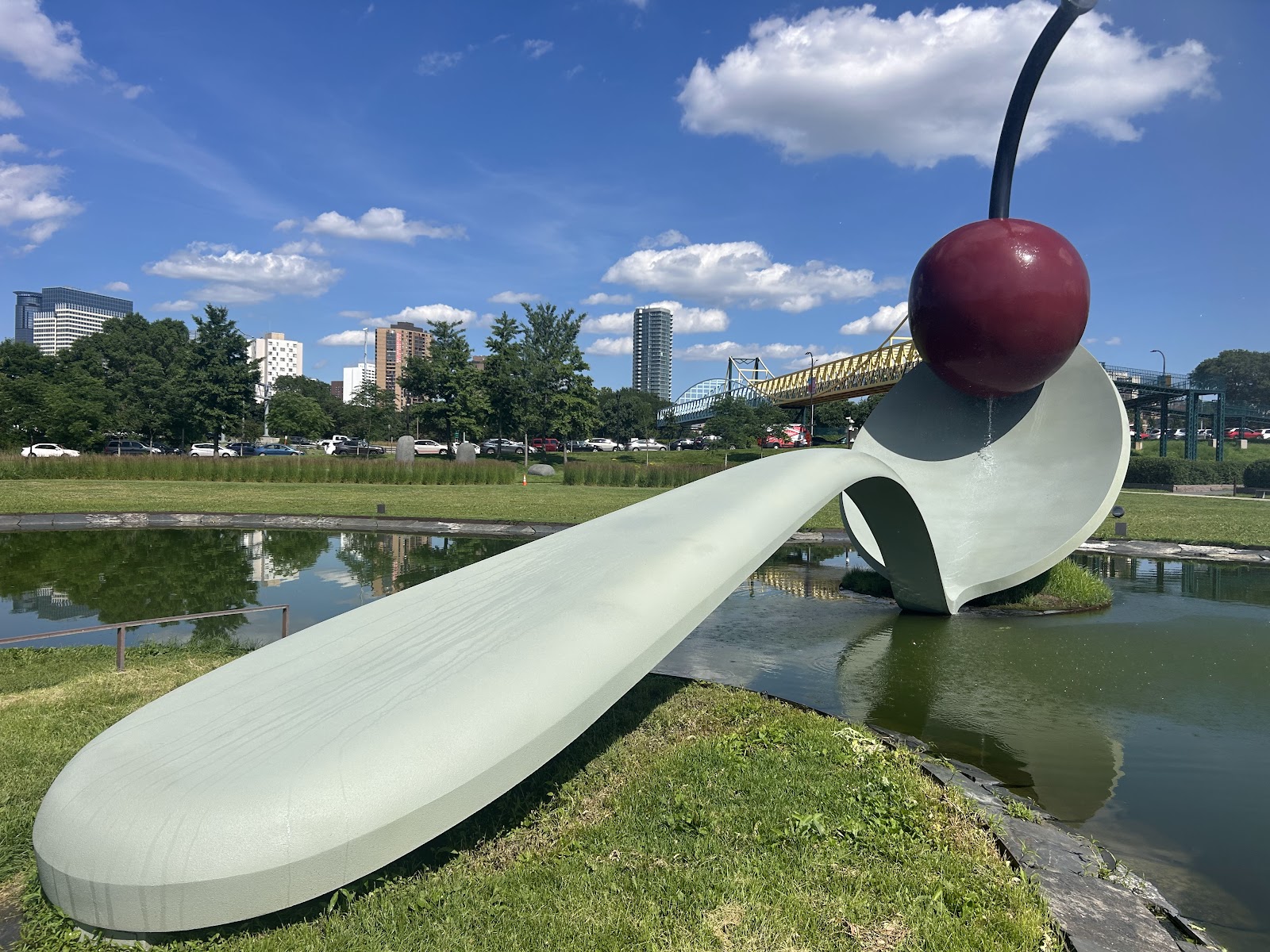
The first way out is the sculpture garden, and it is the strongest answer rather than an alternative. Outdoors there is no conservation constraint, no spectrum problem and — once the sun is low — no direction problem either.
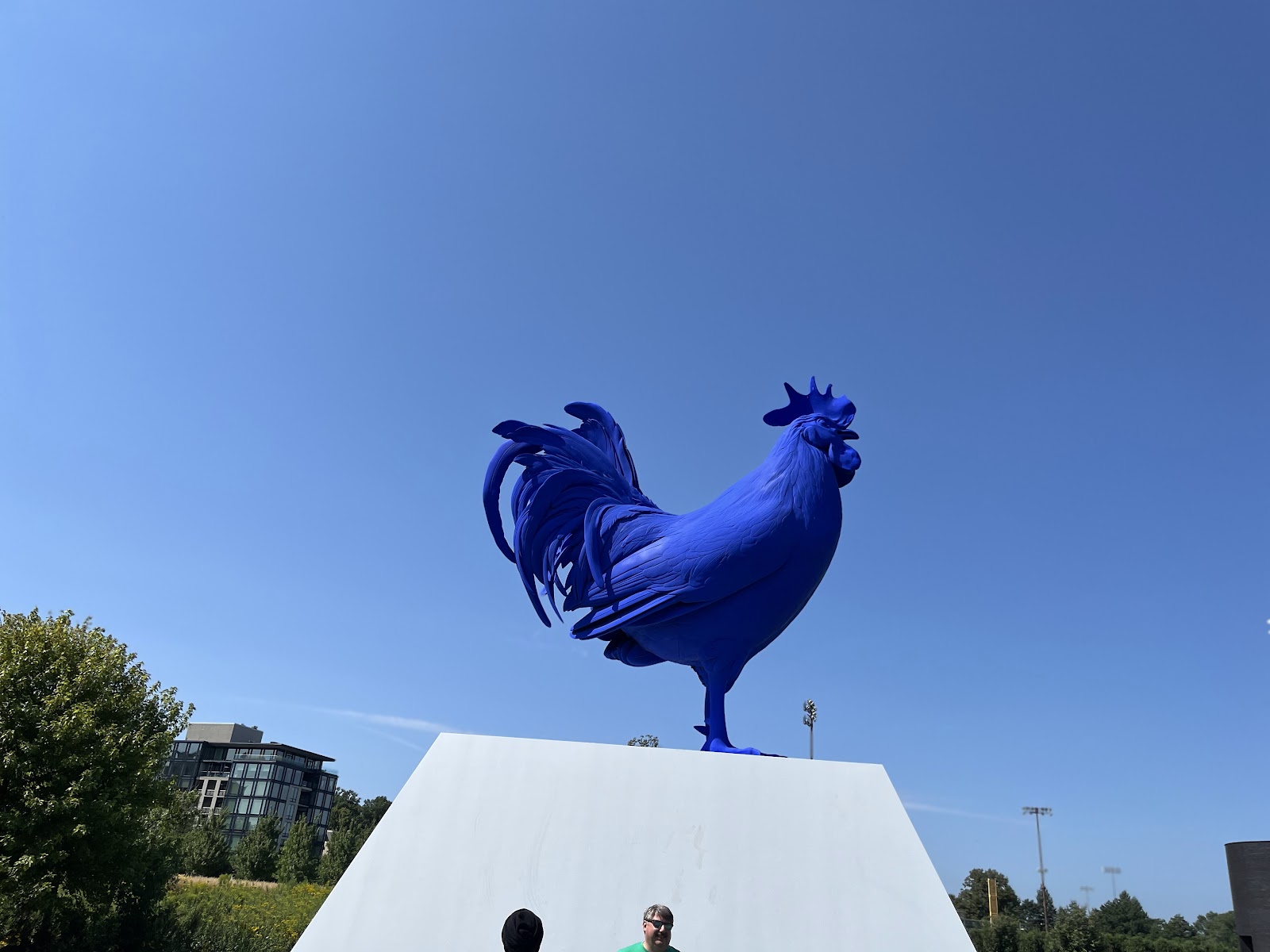
Large sculptures do something specific: they cast hard-edged, dependable shadows, and on open ground those shadows are often the only reliable shade available. Standing a couple two metres inside a shadow line, facing out, gives a soft directional key with a darker background, for nothing at all. That is a genuinely useful technique and it exists only where there are large objects on open ground.
Large works are also strong compositional elements and need the same decision as any artwork: commit, placing the couple in relation to the piece so both read; or subordinate with a long lens at a wide aperture so it becomes form and tone. A sculpture partly cropped and partly sharp fails. And polished metal or stone works throw their own colour and specular highlights onto nearby skin, so check a face at the position being used rather than at the one scouted.
The second way out is the museum’s own public architecture. Contemporary museums build generous daylit circulation — lobbies, atria, glazed corridors — precisely because they need somewhere that is not a gallery, and those spaces have no conservation limit. They are frequently the best-lit rooms in the building, and they need no permission to bring equipment into.
The third way out is to bring the texture and the warmth that the galleries removed. One warm-gelled source at face height, off the camera axis, at about a stop under a correct reading for the room, gives a face that reads warm against a neutral wall — which is exactly the contrast a spare gallery cannot supply itself. And negative fill, something dark on the shadow side of a face, restores the gradient that even gallery light erases.
The fourth way out is to use the emptiness deliberately. A spare gallery is a graphic environment: a couple small in a large white room, placed precisely against a strong horizontal, reads as a deliberate composition rather than as an absence. That frame needs precision — level, and centre exactly or clearly do not, because in an empty room a crooked horizontal is the only thing there is to notice — and it is the one genuinely good use of a contemporary gallery.
Where photography is permitted at all, keep any added light small and spilling onto nothing: a gridded source on the couple alone. Flooding a gallery reads as a lit room and is also the version most likely to breach the rules.
- Use a large sculpture’s shadow line as free shade with a dark background
- Shoot the daylit circulation; it has no conservation limit
- Bring warmth and texture with one gelled source; the galleries have neither
- Use the emptiness graphically — small figures, precise placement, level
- One gridded source in a gallery, spilling onto nothing
The garden through the year, and Minneapolis weather
A sculpture garden changes with the seasons more than a building does, and in Minneapolis those changes are extreme rather than gradual.
Summer gives full planting, maximum shade under whatever trees the garden has, and long days — sunset falls late enough in June that the golden hour arrives well after a reception has started, which needs agreeing in advance as a short deliberate excursion. Dapple under trees is the standing hazard: hot spots several stops above the surrounding shadow, shifting with any breeze, so full shade, open light, or wait.
Autumn is the best season: clear stable air, genuine colour in early October, and low sun that rakes across sculpture so form separates from ground. Large works photograph best when light crosses them rather than facing them, exactly as masonry does — so the last ninety minutes is when a sculpture garden becomes itself.
Winter transforms it entirely, and unusually for a garden it improves. Snow simplifies a sculpture garden to essentials: white ground, dark forms, bare structure, and low sun raking all day rather than for ninety minutes. Large sculptures against snow read as pure shape, which is what they were made to be — and snow is the best natural fill there is, lifting exactly the shadows a low sun carves while fooling a meter by about two stops.
The Minnesota qualifier is the cost. Days are short, with sunset in the middle of the afternoon in December, and temperatures are low enough that an outdoor block becomes three or four minutes rather than twenty — a welfare decision in formal clothes as much as a photographic one. So a winter sculpture garden gives the best frames and the least time to make them, which means the positions must be decided in advance and worked quickly.
The fogging risk is severe in both directions and worse than in a milder climate: a camera taken from a heated museum into subzero air and brought back will fog comprehensively and can take a long time to clear. Let a body stay cold between outdoor visits rather than cycling it, and plan one excursion rather than several.
Spring is the awkward season, with late snow possible into April and the planting not yet established — which means a spring date leans more heavily on the building and on the sculpture as form rather than on the garden as a garden.
And the crossing works outdoors as well as in: for roughly twenty minutes after sunset, with the sky still holding colour and any garden or building lighting beginning to read, one exposure holds a lit sculpture, a coloured sky and a couple — with one warm-gelled source at face height about a stop under the sky, or they silhouette.
More frames from The Walker Art Center
The Walker Art Center wedding photography: common questions
Why is a contemporary gallery harder than a historic one?
Because it is designed to have nothing in it. Smooth walls have no texture to rake, neutral paint gives no warm fill, and a plain mid-tone wall sits at almost the same tone as skin.
What is the strongest answer?
The sculpture garden. Outdoors there is no conservation constraint, no spectrum problem and — once the sun is low — no direction problem either.
What is the sculpture trick?
Using a large work’s shadow. It is hard-edged and dependable, so standing a couple two metres inside the line facing out gives a soft directional key with a dark background, for nothing.
How do you use a gallery well?
Graphically. A couple small in a large white room, placed precisely against a strong horizontal, reads as deliberate — but it demands a level, because in an empty room a crooked horizontal is all there is to notice.
Is winter bad for a sculpture garden?
Photographically it is the best season: snow simplifies it to white ground and dark forms, and low sun rakes all day. The cost is time — a block becomes three or four minutes.
What has to be in writing?
Three separate things: whether photography is permitted in galleries, whether stands are permitted, and whether flash is permitted. Institutions frequently answer them differently.
More Minneapolis, MN venue guides
We are writing a photographer’s guide to every venue we would happily shoot in Minneapolis, MN. Here are three more, plus the full index:
- The Aria, Minneapolis: Photographing Brick Under Chandeliers
- The Emery Hotel, Minneapolis: The One Decision That Governs Everything
- The Four Seasons Minneapolis: What It Suits and What It Does Not
All Minneapolis, MN Wedding Venues →
Planning a wedding at The Walker Art Center?
The garden is the reason and winter is its best season. Tell us your date.