 The Van Dusen Mansion, Minneapolis: A Walk Through House and Grounds
The Emery Hotel, Minneapolis: The One Decision That Governs Everything
A venue with a grand room and a small one is offering a choice, not a range. Choosing well decides the gallery.
Whether it is a grand ballroom or a more intimate setting, the Emery appears to have a space that fits, as its own description has it.
That is a genuine offer and it contains the one decision that governs the photographic day: which scale the wedding is actually for. It sounds like a question for the couple rather than the photographer, and it is not — because the two scales are different photographic environments with almost nothing in common, and a wedding that sits between them gets the worst of both.
A grand ballroom is a tall volume with a high ceiling, overhead lighting and steep fall-off: no bounce, real distance, free separation, and an appearance of emptiness at anything below capacity. A small room is the opposite: close walls that bounce, working bounce flash, no working distance, and guests in every background. Get the scale right and each is excellent. Get it wrong and the grand room reads as half-empty while the small one reads as crowded.
This is written around that decision. We have not photographed a wedding at the Emery; hotels offering both scales behave consistently. Which rooms a booking includes, what the comfortable capacity of each is rather than its maximum, and whether the ballroom lighting is adjustable are the questions for their team — the second one is the one that matters and the one least often asked.
The Emery Hotel at a glance
| Where | Minneapolis, Minnesota |
| Character | A hotel with a grand ballroom and smaller intimate spaces |
| The decision | Which scale the wedding is actually for |
| Why | The two scales are different environments, and between them is the worst place |
| Ask first | Comfortable capacity of each room, not maximum; lighting control |
The two scales, and what each one needs
A grand ballroom removes bounce, because a high ceiling is far enough away that a flash aimed at it returns almost nothing usable. The substitutes are a pale wall at a sensible distance, a reflector, or direct modified light — and the distances are real, so power and modifier choices have to assume them. Working a grand room with one small flash is the equipment mismatch this scale punishes.
What it gives back is steep fall-off, which is free separation: a couple three metres in front of anything else sits against natural darkness with no equipment at all. That is genuinely useful and it is the opposite of the problem a small pale room presents.
It also gives the appearance of emptiness at anything below capacity, and that is the thing to plan around rather than to fix. A room designed for two hundred with eighty people in it photographs as a room with eighty people in it — so the frames have to be tight rather than wide, long lenses rather than short, and any wide frame has to be composed so the emptiness reads as scale rather than as absence: a couple small in a large room, deliberately, rather than a crowd with gaps in it.
A small room is the reverse on every point. Close walls mean light bounces, which raises the ambient and makes a flash aimed at a pale ceiling a genuinely good source — worth testing in the first minute, because in a small pale room it works where it fails everywhere else in the building.
It also means no working distance: there is no room to step back for a wide view without a very wide lens, and a very wide lens close to a face stretches it. So the wide frame and the portrait frame become two different photographs, and shooting through a doorway from an adjoining space is the way to buy back what the walls took.
And it means guests are the background. In a small room there is no empty wall behind a subject — the background is people, at close range, often looking at the camera. That is either used deliberately, with guests as part of the picture, or excluded by going long and tight. In practice a small-room gallery is mostly close work, and it is better for it.
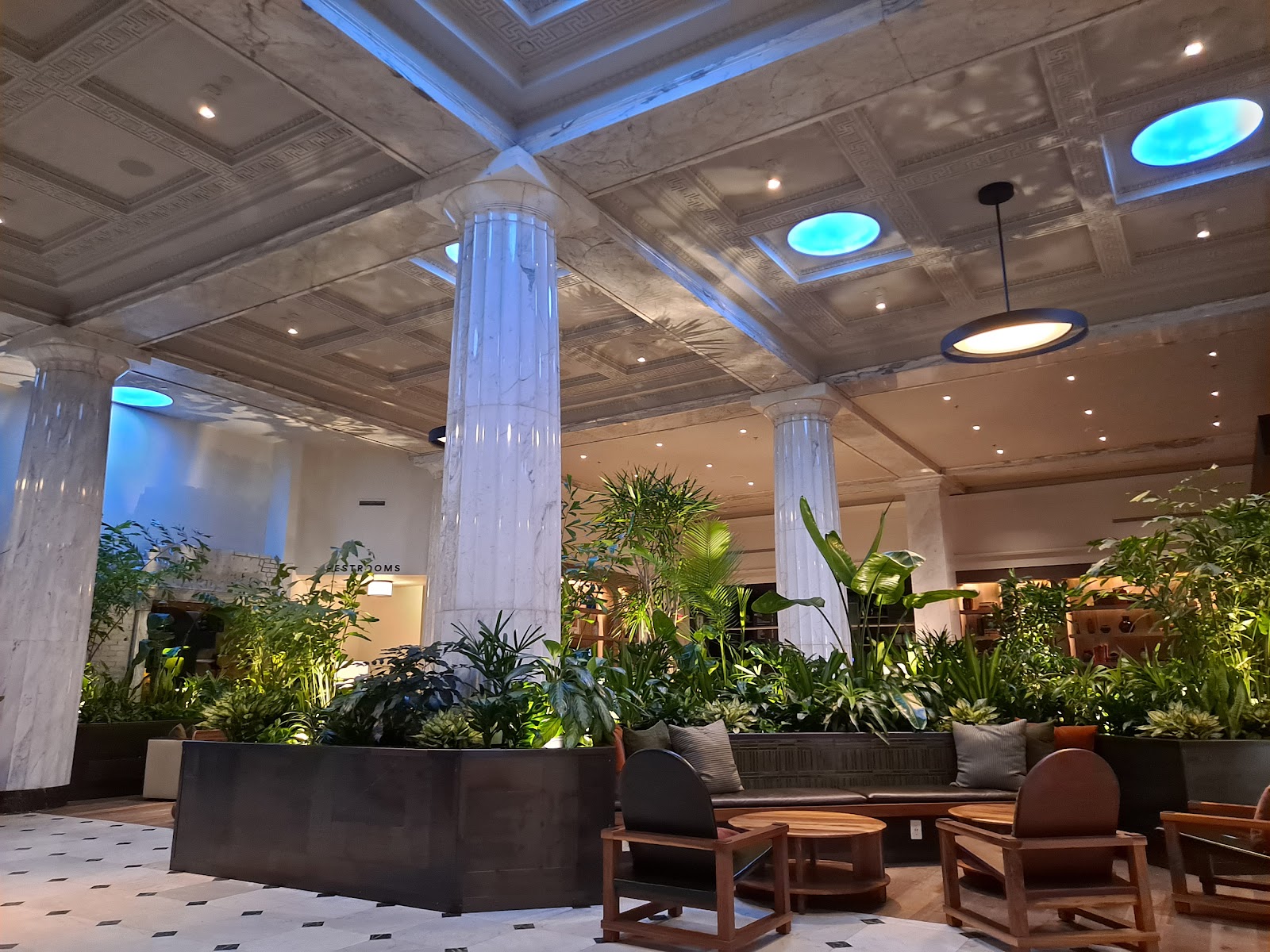
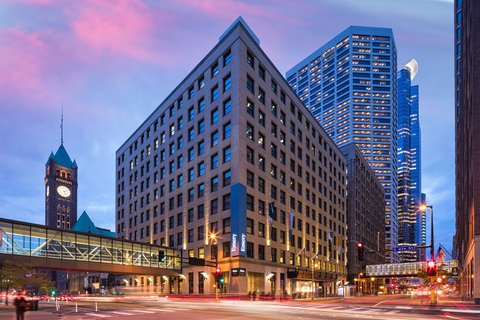
Both scales share the hotel conditions: guest rooms are the best portrait light in the building, and public floors are pale and evenly lit, which erases shape and separation. One directional source at close to ambient level restores the first; depth, aperture, dark placement and negative fill restore the second.
What follows: the running order and the light
Once the scale is settled, the day arranges itself, because nothing in a hotel changes through the day except the windows.
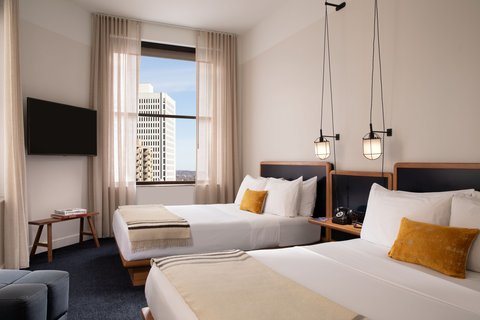
Guest rooms are where the morning belongs: domestic-sized windows with close walls that bounce and ceilings low enough that a flash aimed upward returns something usable. Largest window on the shaded side, every overhead fitting off so the room has one colour of light rather than three, lamps moved out of frame. In a downtown hotel, ask for a high floor as well — a room high in the building has more sky reaching its window because the building opposite blocks less of it.
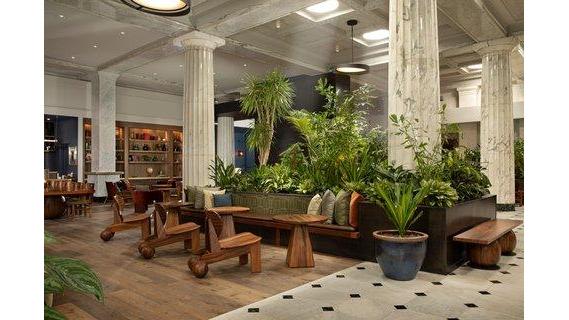
Public floors are the pale problem and negative fill is the answer. Something dark on the shadow side of a face subtracts bounced light and deepens the gradient, and in a pale marble or plaster interior that single move is frequently the difference between a flat frame and a modelled one. It costs nothing and it works where adding another source does not.
The ballroom is the evening at either scale, and the approach is the same: expose for the room so it still reads as the warm dim space it is, add one warm-gelled source at face height off the camera axis for anything that must be legible, set white balance to the gel and hold it for the whole block, and let decorative fittings become warm points behind a subject at a wide aperture.
Asking whether the ballroom lighting can be dimmed to pools rather than set evenly is worth more than any equipment decision, and it matters more at the grand scale than the small one — a large room lit evenly reads as a function room, while a large room with two areas lit and the rest falling away reads as an occasion.
The dusk crossing is the one timed frame and it happens at any large window: for roughly twenty minutes after sunset the street outside falls to about the brightness of the interior lighting, and one exposure holds the lit room, the couple and the city beyond. Take the sunset time, add fifteen minutes, be in position with the couple already there.
In Minneapolis that crossing moves a long way through the year, and it is worth stating: in June it lands well into the reception and needs agreeing in advance as a short deliberate excursion, while in December it falls in the middle of the afternoon and may precede the ceremony entirely.
- Settle the comfortable capacity of each room, not the maximum
- Grand room: assume no bounce, real distance, and compose emptiness as scale
- Small room: test ceiling bounce in the first minute — here it works
- Small room: shoot through doorways to buy back working distance
- In pale public rooms, subtract with negative fill rather than adding light
Outside, the skyways, and Minneapolis's year
Downtown Minneapolis supplies what a hotel interior cannot, and the grid makes it efficient: the streets are laid out regularly, so which ones take low sun straight down their length is readable from a map rather than discovered on foot. At a venue where the portrait block may have fifteen minutes in it, that is the difference between an excursion and a gamble.
Brick and warm stone bounce warm and flatter skin; pale stone and modern glass bounce neutral-to-cool and can grey it, so which side of a street to stand on is a decision rather than an accident. And glass towers in the last two hours reflect the sky as a large pale field, which turns a whole facade into a soft source for nothing.
Alleys are the reliable fallback: walls on both sides give directional light, a contained background with nothing distracting in it, and shelter.
The network of enclosed elevated walkways is the asset worth asking about. Glazed, heated corridors with views straight down streets give a very large soft source on one side, a city view on the other, and an elevated position — and in a Minnesota January that may be the only elevated frame available at all, with no coats, no cold and no fogging.
Minneapolis’s winter is the most demanding in this series. Days are short, with sunset in the middle of the afternoon in December, and temperatures are low enough that an outdoor block becomes three or four minutes rather than twenty — which is a welfare decision in formal clothes as much as a photographic one, and which means the outdoor frames must be decided in advance and executed quickly.
Snow is the compensation and it is the best natural fill there is, lifting exactly the shadows a low sun carves while fooling a meter by about two stops. Snow in a downtown street under low sun, or seen from a skyway with a lit city below, is the frame this city gives that warmer ones cannot.
The fogging risk is severe in both directions: a camera taken from a heated hotel into subzero air and brought back will fog comprehensively and can take a long time to clear. Let a body stay cold between outdoor visits, plan one excursion rather than several, and use the skyways where they exist.
Summer is warm and humid with very long days, which pushes the golden hour past the start of a reception — easy to accommodate at a venue whose interior does not change. And autumn gives the clearest air and the best street light of the year, which is the season the outdoor block is best in.
More frames from The Emery Hotel
The Emery Hotel wedding photography: common questions
What is the one decision?
Which scale the wedding is actually for. A grand ballroom and a small room are different photographic environments, and a wedding sitting between them gets the worst of both.
What should you ask about capacity?
The comfortable capacity of each room rather than the maximum. A room designed for two hundred with eighty people in it photographs as a room with eighty people in it.
How do you photograph a grand room below capacity?
Tight rather than wide, and long lenses rather than short — and any wide frame composed so the emptiness reads as scale: a couple small in a large room, deliberately.
Does bounce flash work?
In the small rooms, yes — close pale walls return real light, which is worth testing in the first minute. In the grand ballroom, no; the ceiling is too far away.
How do you handle a small room?
Two separate photographs — a wide frame about the room with people incidental, and tighter frames about the people. And shoot through doorways to buy back working distance.
How far does the dusk crossing move through the year here?
A long way. In June it lands well into the reception; in December it falls in the middle of the afternoon and may precede the ceremony entirely.
More Minneapolis, MN venue guides
We are writing a photographer’s guide to every venue we would happily shoot in Minneapolis, MN. Here are three more, plus the full index:
- The Four Seasons Minneapolis: What It Suits and What It Does Not
- The Graves 601 Hotel, Minneapolis: What It Suits and What It Does Not
- The Guthrie Theater, Minneapolis: How the Light Moves
All Minneapolis, MN Wedding Venues →
Planning a wedding at The Emery Hotel?
Settle the scale first; the rest follows. Tell us your date and we will settle it.