 The Van Dusen Mansion, Minneapolis: A Walk Through House and Grounds
The Four Seasons Minneapolis: What It Suits and What It Does Not
In this climate, a building where the weather is irrelevant is a photographic argument as well as a practical one.
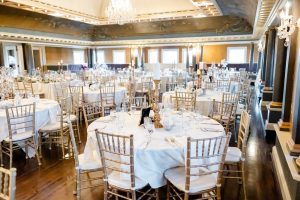
The Four Seasons Minneapolis offers a grand ballroom with a majestic ambiance and more subdued private dining rooms, as its own description has it — no shortage of options.
That is an honest account of a modern luxury hotel and it is worth assessing on its own terms. What this venue type gives is capacity, service, accessibility, rooms for travelling guests, and a day that is entirely unaffected by what the sky does — which in Minneapolis, where an outdoor block in January is three or four minutes and where late snow is possible into April, is a much larger advantage than it would be in a milder city.
What it does not give is a look that is specifically its own: contemporary luxury interiors converge everywhere, and even lighting with pale surfaces is the least photographically generous combination there is. Being explicit about that makes the planning better rather than worse, because it means the character has to be sourced deliberately from elsewhere — and in a city with an extensive network of heated elevated walkways, elsewhere is reachable without going outside.
This is written as suits and does not suit. We have not photographed a wedding at the Four Seasons Minneapolis; modern luxury hotels behave consistently. Which rooms are included, whether the ballroom lighting is adjustable, whether there is upper-floor access and whether the hotel connects to the skyway network are the questions for their team.
The Four Seasons Minneapolis at a glance
| Where | Minneapolis, Minnesota |
| Character | A modern luxury hotel with a grand ballroom and private dining rooms |
| Suits | Capacity, service, accessibility, and total weather independence |
| Does not suit | Couples who want the venue itself to supply the character |
| Ask first | Rooms included, ballroom lighting, upper floors, skyway connection |
The two interior conditions
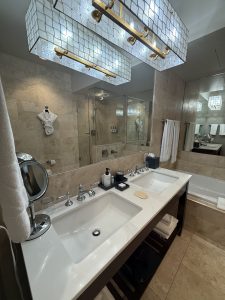
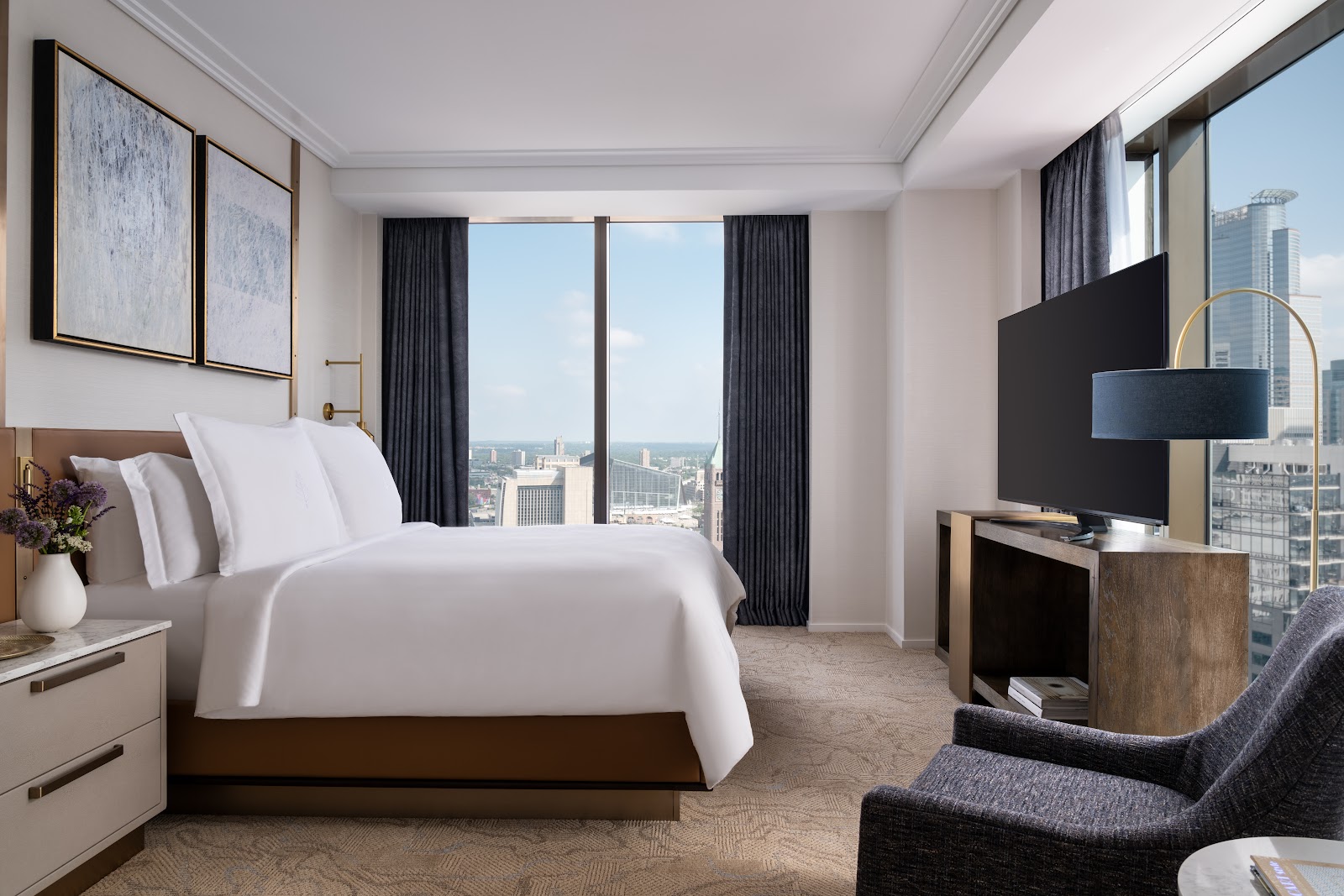
Modern luxury interiors are built on two principles and both are photographic problems disguised as qualities. Light should be even, because unevenness reads as cheap; surfaces should be pale and uncluttered, because that reads as calm and expensive.
Even light removes modelling. A face looks three-dimensional in a photograph because one side is brighter than the other, and the gradient between them is what the eye reads as shape — light arriving from many directions at similar intensity erases it, so a technically correct exposure can still produce a flat face.
The fix does not need to be strong. One directional source, off the camera axis at face height, set close to the ambient level rather than above it, restores a shadow side without making the frame look lit. In a room with high even ambient, adding half a stop in one direction does more than adding two stops overall.
Pale surfaces remove separation, which is the default failure in every hotel of this class: a pale dress against a pale wall under even light has almost nothing distinguishing the two. Four tools stack — depth, so the background sits well behind; a wide aperture, so it goes soft; placement against the darkest element in the room; and negative fill.
Negative fill is the under-used one and it costs nothing. Something dark on the shadow side of a face subtracts bounced light from that side and deepens the gradient, and in a pale marble room that single move is frequently the difference between a flat frame and a modelled one.
The ballroom is the exception, because a reception is lit low: expect a high ceiling with no usable bounce, warm decorative fittings, overhead sources and steep fall-off — and that fall-off is the free separation the rest of the hotel refuses to provide. Expose for the room so it stays warm and dim, add one warm-gelled source at face height where legibility matters, set white balance to the gel and hold it, and let decorative fittings become warm points behind a subject at a wide aperture.
Ask whether the ballroom lighting can be dimmed to pools rather than set evenly. It usually can, and the difference exceeds any equipment decision.
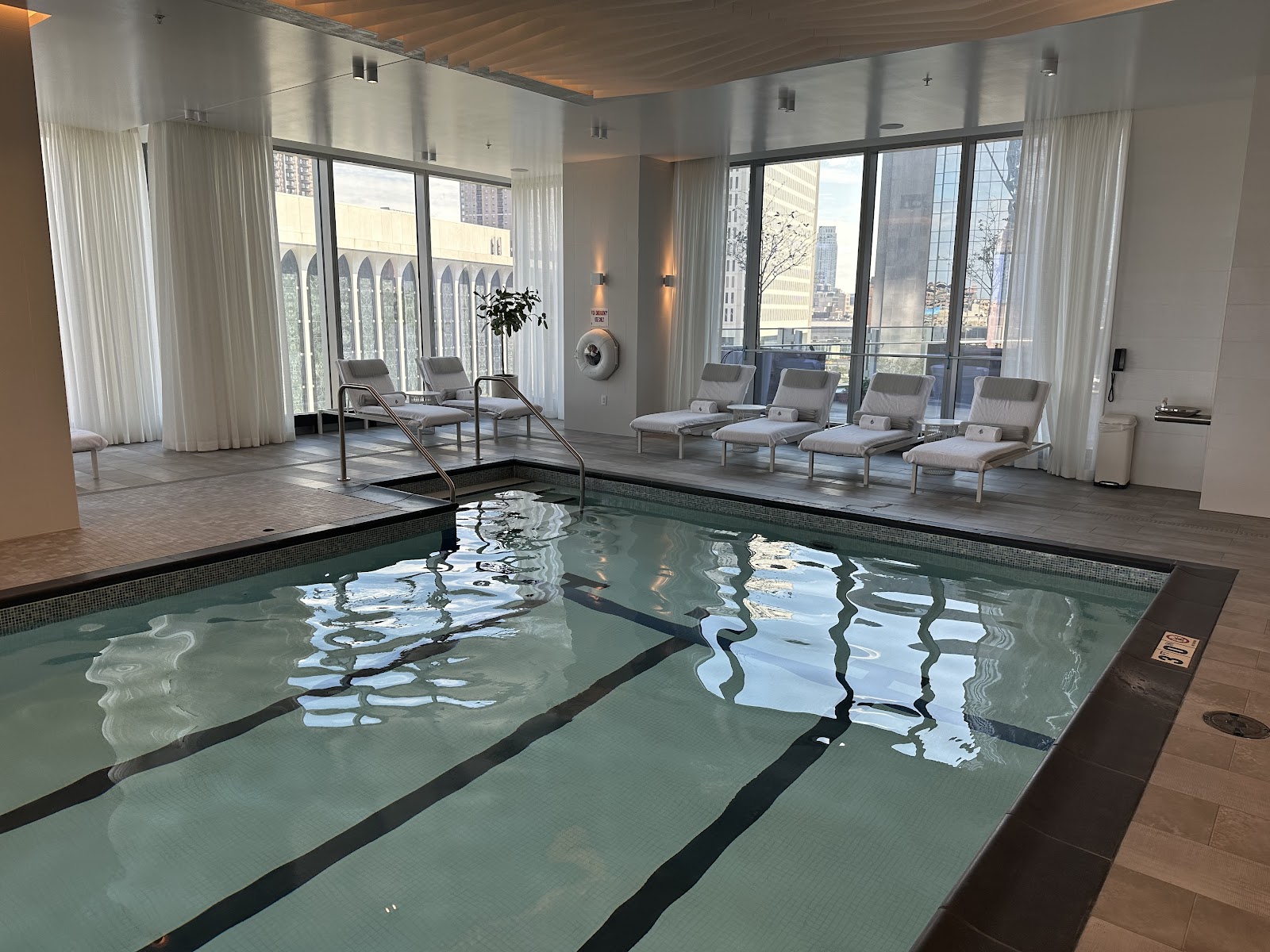
Smaller private dining rooms are worth seeking out for a different reason: they are the one part of a large hotel where the walls are close enough to bounce, which makes them better portrait rooms than the grand spaces. Guest rooms are better still.
Who it suits
The weather independence is the product in this city, and it is worth more here than the same feature is worth anywhere else in this series.
These briefs are well served here:
- Anyone marrying between November and April, when outdoors is minutes at best
- Larger guest counts, which the function space absorbs without strain
- Guests travelling in, who need rooms and no separate logistics
- Weddings where accessibility and step-free circulation matter
- Couples who want several spaces on one site with no travel between them
Who should look elsewhere
The reverse list is not a criticism. A hotel of this class is built to be excellent and unobtrusive across a very wide range of events, and the qualities that make it dependable are the ones that make it unspecific.
Several reasonable briefs run against the grain:
- Couples who want the venue immediately recognisable in the photographs
- Anyone whose references are brick, heavy timber or period ornament
- Small intimate weddings, which read as sparse in rooms built for hundreds
- Briefs where the interior should carry the gallery rather than the city
- Anyone wanting an outdoor ceremony space of the venue’s own
Where the character comes from, and Minneapolis's year
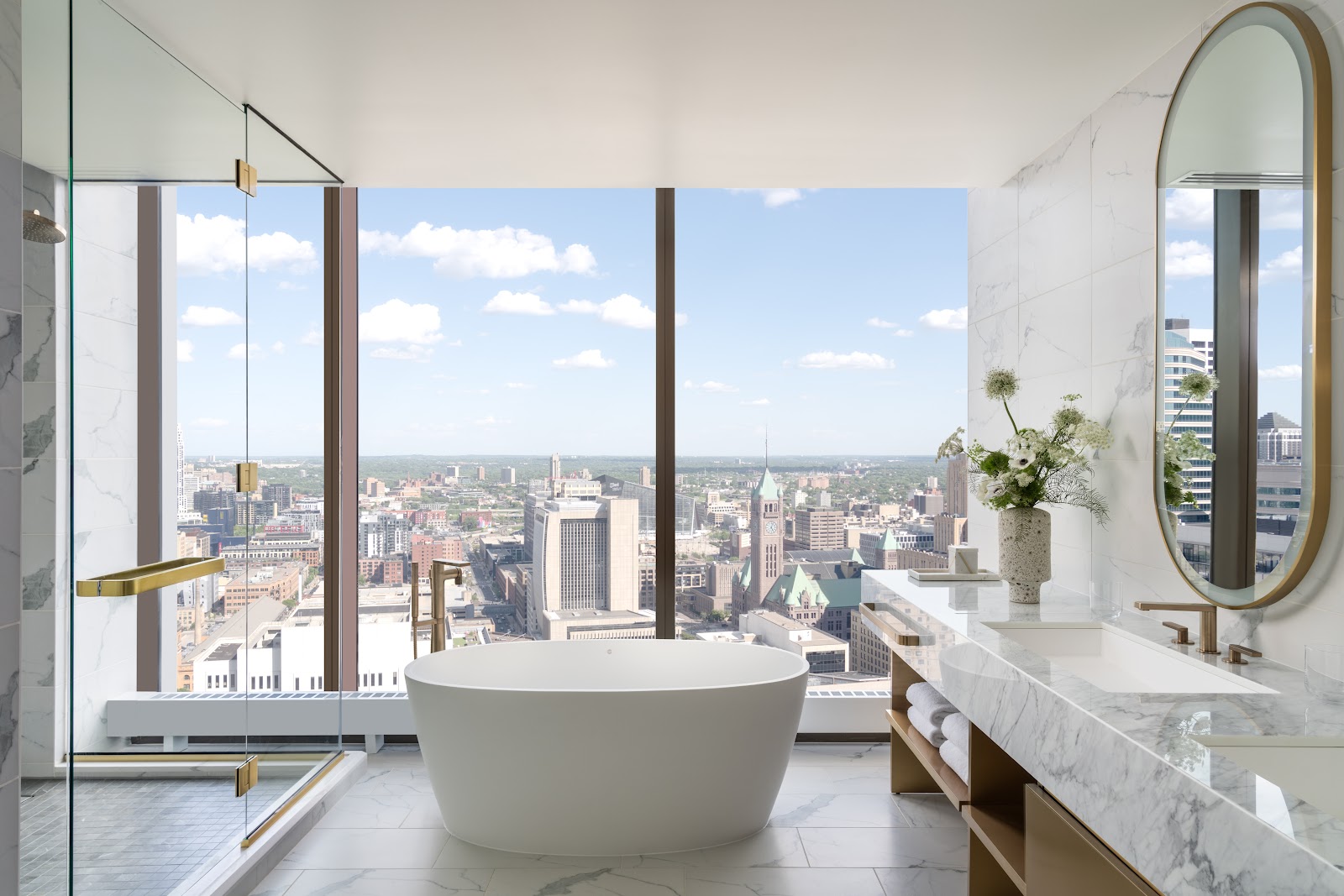
The honest plan is that the character comes from outside, and in Minneapolis that requires one question answered before anything else: does the hotel connect to the skyway network. An extensive system of enclosed elevated walkways links downtown buildings above street level, and they are glazed, heated corridors with views straight down streets.
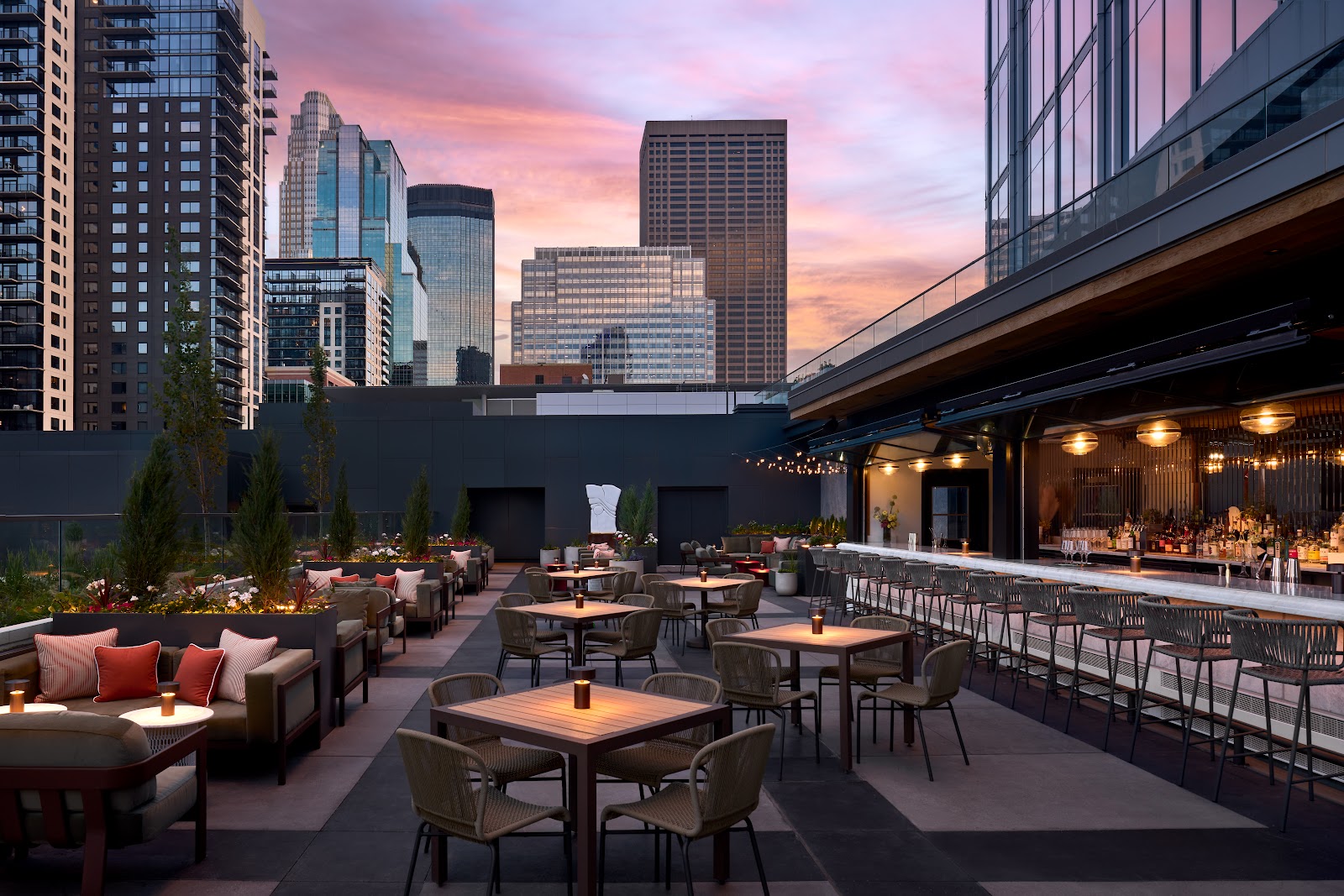
That makes a skyway three things at once — a very large soft source on one side, a city view on the other, and an elevated position — and it means a genuine city frame is available in January with no coats, no cold and no hurry. At a venue whose interior supplies no character, in a city where outdoors is unavailable for months, that connection is the single most consequential fact about the building.
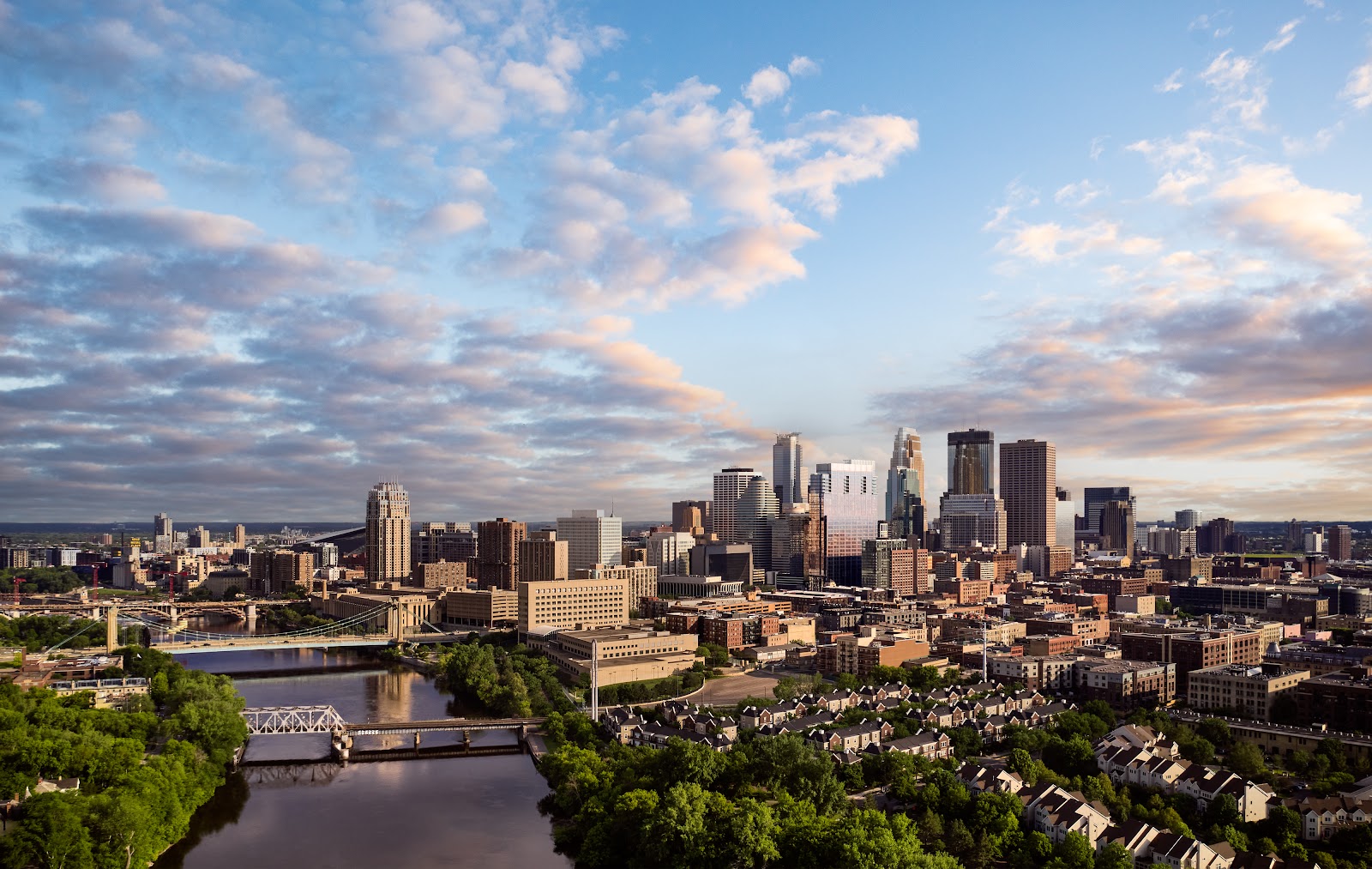
Upper-floor access is the other question worth pressing. Minneapolis’s towers are clustered rather than continuous, so from a height the city reads as distinct masses at different distances — exactly what a long lens wants. Compression stacks them into bands behind a couple; a wide lens reduces them to a strip. And height buys thirty or forty minutes of extra golden light, because the surrounding roofline is below.
At street level, the grid is the planning advantage: downtown is laid out regularly, so which streets take low sun down their length is readable from a map rather than discovered on foot. Brick and warm stone bounce warm and flatter skin; pale stone and modern glass bounce cool and can grey it, so which side to stand on is a decision.
Minneapolis’s winter is the most demanding in this series, and for this venue it is almost entirely an advantage. Days are short, with sunset in the middle of the afternoon in December; temperatures make an outdoor block three or four minutes; and a large hotel means the day continues indoors with no decision needed while every venue with an outdoor component is making one.
Snow is the compensation and it is the best natural fill there is, while fooling a meter by about two stops — and snow seen from a skyway or an upper floor, with a lit city below, is a frame this kind of building gives better than a street-level venue can.
The fogging risk is severe in both directions and worse than in a milder climate: a camera taken from a heated hotel into subzero air and brought back will fog comprehensively and can take a long time to clear. The skyways avoid the problem entirely, which is another reason to ask about them.
Summer is warm and humid with very long days, which pushes the golden hour past the start of a reception — easy to accommodate here as a short agreed excursion. And autumn gives the clearest air of the year, which matters most for any frame looking out from a height.
More frames from The Four Seasons Minneapolis
The Four Seasons Minneapolis wedding photography: common questions
What is this venue type good at, in this city specifically?
Weather independence. In a city where an outdoor block in January is three or four minutes and late snow is possible into April, a day unaffected by the sky is worth more than elsewhere.
What does it not give?
A look of its own. Contemporary luxury interiors converge everywhere, so the character has to be sourced deliberately from the city outside.
Why does even light cause a problem?
Because shape in a photograph comes from the gradient between a bright and a dark side of a face, and light arriving from many directions at similar intensity erases it.
What is the best fix for pale-on-pale?
Negative fill. Something dark on the shadow side of a face subtracts bounced light and deepens the gradient, and it beats adding another source.
What is the single most consequential question here?
Whether the hotel connects to the skyway network. That determines whether a real city frame is available in January at all.
Which rooms are the best portrait light?
Guest rooms first, then the smaller private dining rooms — they are the one part of a large hotel where the walls are close enough to bounce.
More Minneapolis, MN venue guides
We are writing a photographer’s guide to every venue we would happily shoot in Minneapolis, MN. Here are three more, plus the full index:
- The Graves 601 Hotel, Minneapolis: What It Suits and What It Does Not
- The Guthrie Theater, Minneapolis: How the Light Moves
- The Hewing Hotel, Minneapolis: How the Light Moves
All Minneapolis, MN Wedding Venues →
Planning a wedding at The Four Seasons Minneapolis?
Ask about the skyway connection first. Tell us your date and we will ask.