 The Van Dusen Mansion, Minneapolis: A Walk Through House and Grounds
The Hewing Hotel, Minneapolis: How the Light Moves
Heavy timber is warm and constant. A rooftop in Minnesota is neither.
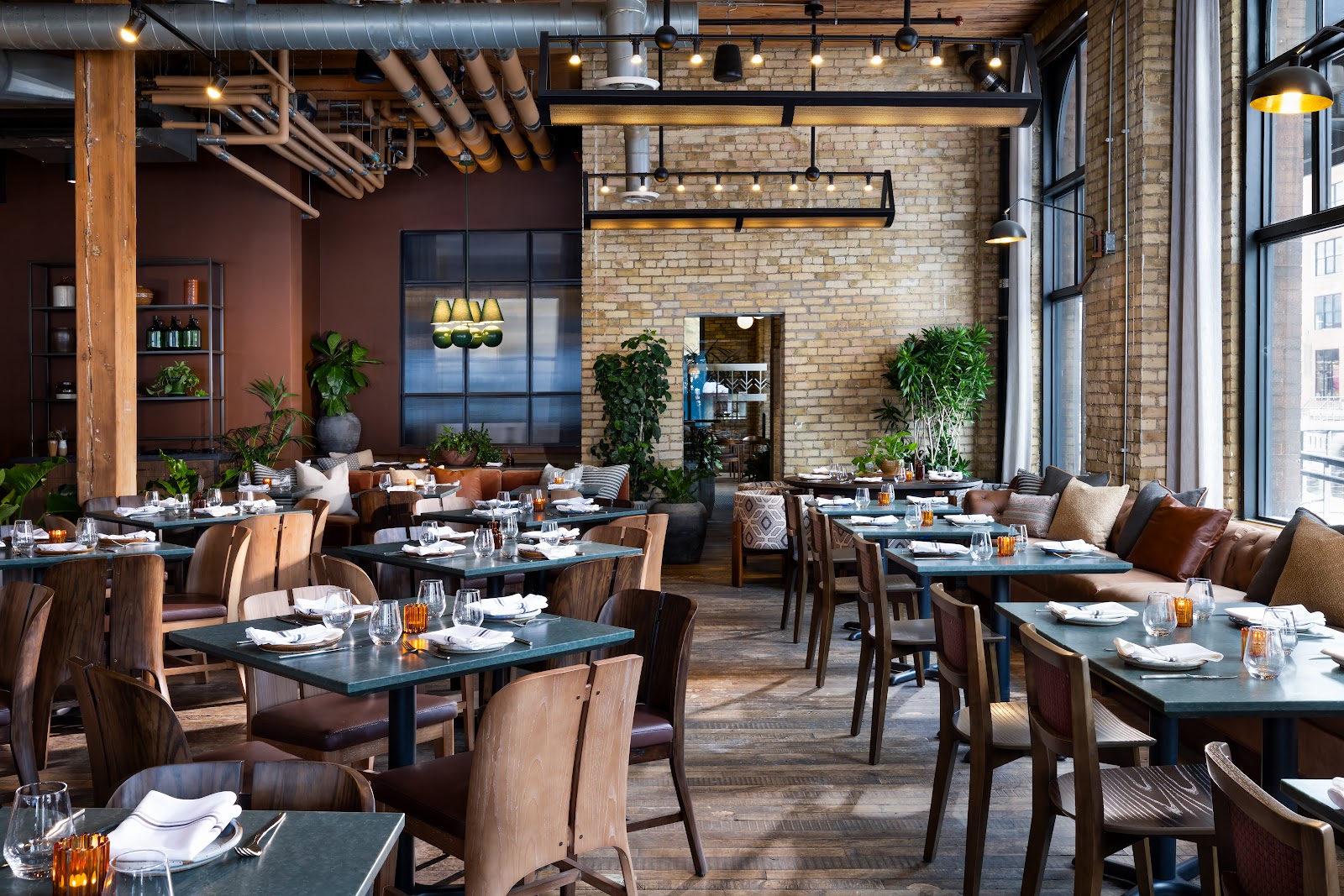
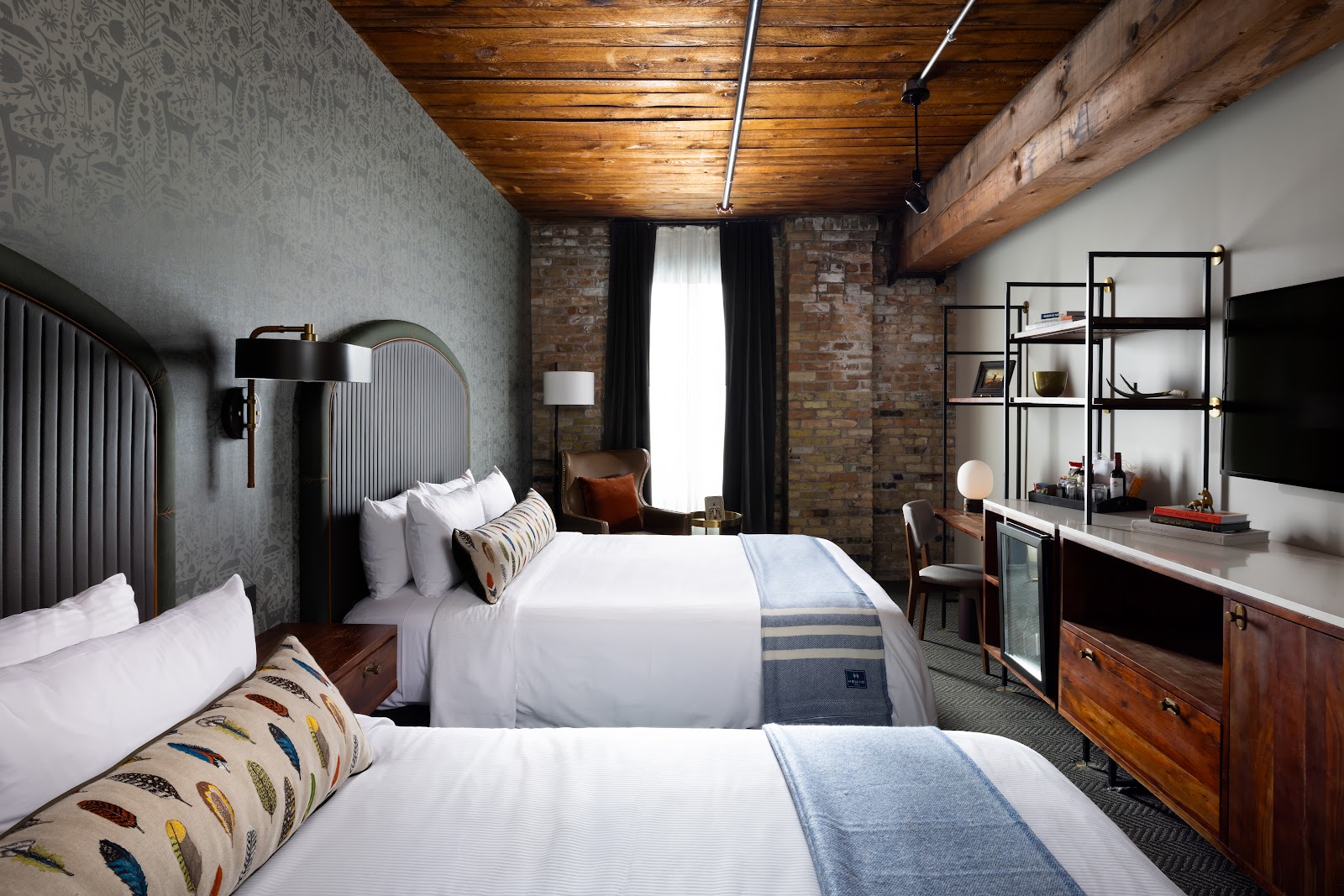
The Hewing Hotel’s exposed timber and brick walls give, as its own description has it, a warm and inviting backdrop.
A converted heavy-timber warehouse is one of the most consistent venue types in this series, and its photographic logic is worth stating once. Heavy timber means very large structural members — posts and beams of a size no modern building uses — which are warm, textured and forgiving, and which never change because the hotel’s own lighting on them is constant from mid-morning to midnight. Brick behaves the same way. That makes the interior a fixed condition rather than a variable one.
What varies is anything with daylight in it: the guest room windows, whatever glazing the public spaces retain, and — if the hotel has one — a rooftop, which in this city is the most seasonal space in the building by a wide margin.
So this is written as a day, which at a venue like this means a running order built around the daylight and the roof rather than around the rooms. We have not photographed a wedding at the Hewing; converted timber warehouses with rooftops behave consistently. Which spaces are included, whether the roof is exclusive and at what hour, and whether the house lighting is adjustable are the questions for their team.
The Hewing Hotel at a glance
| Where | Minneapolis, Minnesota |
| Character | A converted heavy-timber warehouse hotel with brick and rooftop space |
| The constant | Timber and brick under house lighting, at any hour |
| The variable | The guest room windows, and the roof |
| Ask first | Spaces included, roof exclusivity and hour, lighting control |
Morning and daytime: timber, brick and the guest rooms
Guest rooms are the best portrait light in any hotel and in a converted warehouse they are better than usual, because the windows are frequently large — a warehouse needed daylight for people to work by, and conversions keep those openings. A large window with close walls that bounce gives soft directional light with usable fill, and a subject two metres back from it has a broad key with the room reading behind them.
Three moves set a room up and they never change. Largest window on the shaded side. Every overhead fitting switched off so the room has one colour of light rather than three. Lamps moved out of frame rather than composed around. Mixed sources are the commonest single reason preparation coverage looks worse than the room did.
Heavy timber is the material and it asks for one thing: raking light. Light running along a timber post or beam lifts the grain, the saw marks and the checking; light pointed at it flattens the member into a plain brown column. The position worth finding is always the one where the window light grazes the timber rather than facing it — and in a room with a large window and timber running away from it, that position is easy to find.
Heavy timber members are also compositional elements in a way that panelling is not: a post is an object, which means it can frame, divide or foreground a subject rather than merely sitting behind them. Placing a couple so a post separates them from the rest of a room is a frame a converted warehouse gives and a hotel built as a hotel does not.
Brick and timber both bounce strongly warm, and in a room where both surround a subject the cast arrives from several directions at once. Because it is bounced and localised, global white balance cannot separate it — so let one gelled source be the authority on faces and let the materials be as warm as they are, or set a custom white balance on a face in position and hold it through the block.
Public spaces in a converted warehouse are likely to be tall enough that bounce returns little, so test it once with a single frame. Where it fails, a pale wall at a sensible distance is the better surface and direct modified light better than either — and the steep fall-off in a tall warm room is free separation.
Because the interior does not change and the windows do, the running order should be built around the windows: preparation and portrait work while the shaded window is giving good light, and everything else afterwards.
The roof: two windows, and a Minnesota qualifier
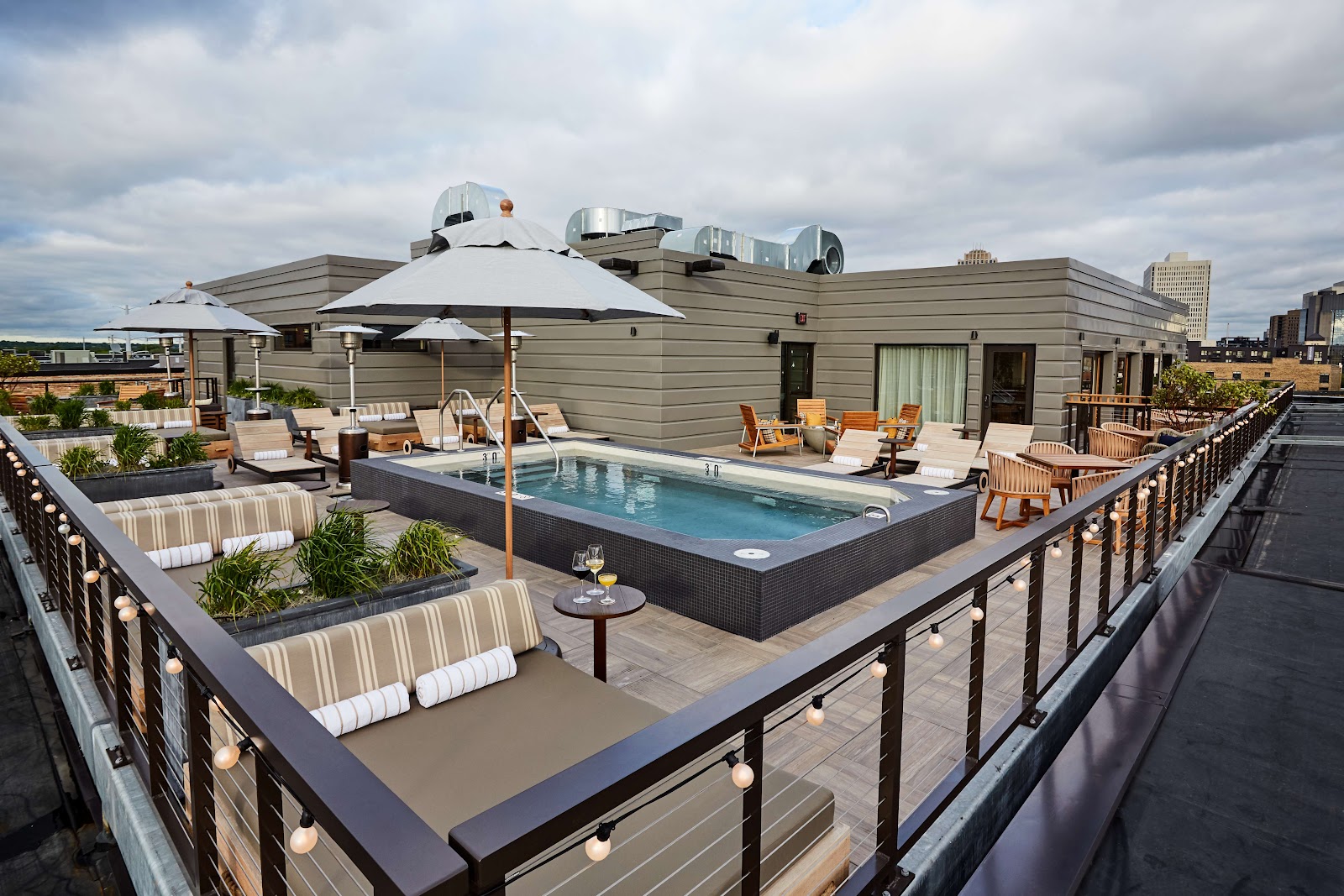
A rooftop follows outdoor rules entirely: nothing bounces, so every source is direct; the ambient after dark is close to zero, because a roof has no reflecting surfaces and no spill from windows; and the good light is confined to two narrow windows rather than spread across an afternoon.
The first window is the last forty minutes of daylight, and on a roof it starts earlier than at street level, because being above the surrounding roofline means low sun arrives while the streets below are already in shadow. That is worth thirty extra minutes in the schedule and it is a genuine advantage of a rooftop over a terrace.
Long lenses matter up there. Minneapolis’s towers are clustered rather than continuous, which means from a roof the city reads as distinct masses at different distances — exactly what compression wants. At 135mm or 200mm they stack into bands behind a couple; at 24mm they become a strip under a large empty sky. And a low camera puts the parapet or decking into the frame as a leading line and lifts the couple against sky, which is the cleanest background there is.
The second window is roughly twenty minutes after sunset and it is the frame the roof exists for: the couple, the skyline and a sky still holding colour in one exposure, with one warm-gelled source at face height about a stop under the sky, or they silhouette. Sunset plus fifteen, in position, couple already there, bracketed as the sky falls.
Rooftop wind is stronger and gustier than at street level, so a veil becomes a held-or-removed decision and any stand needs a sandbag rather than an intention — on a roof that is a safety matter as much as a photographic one.
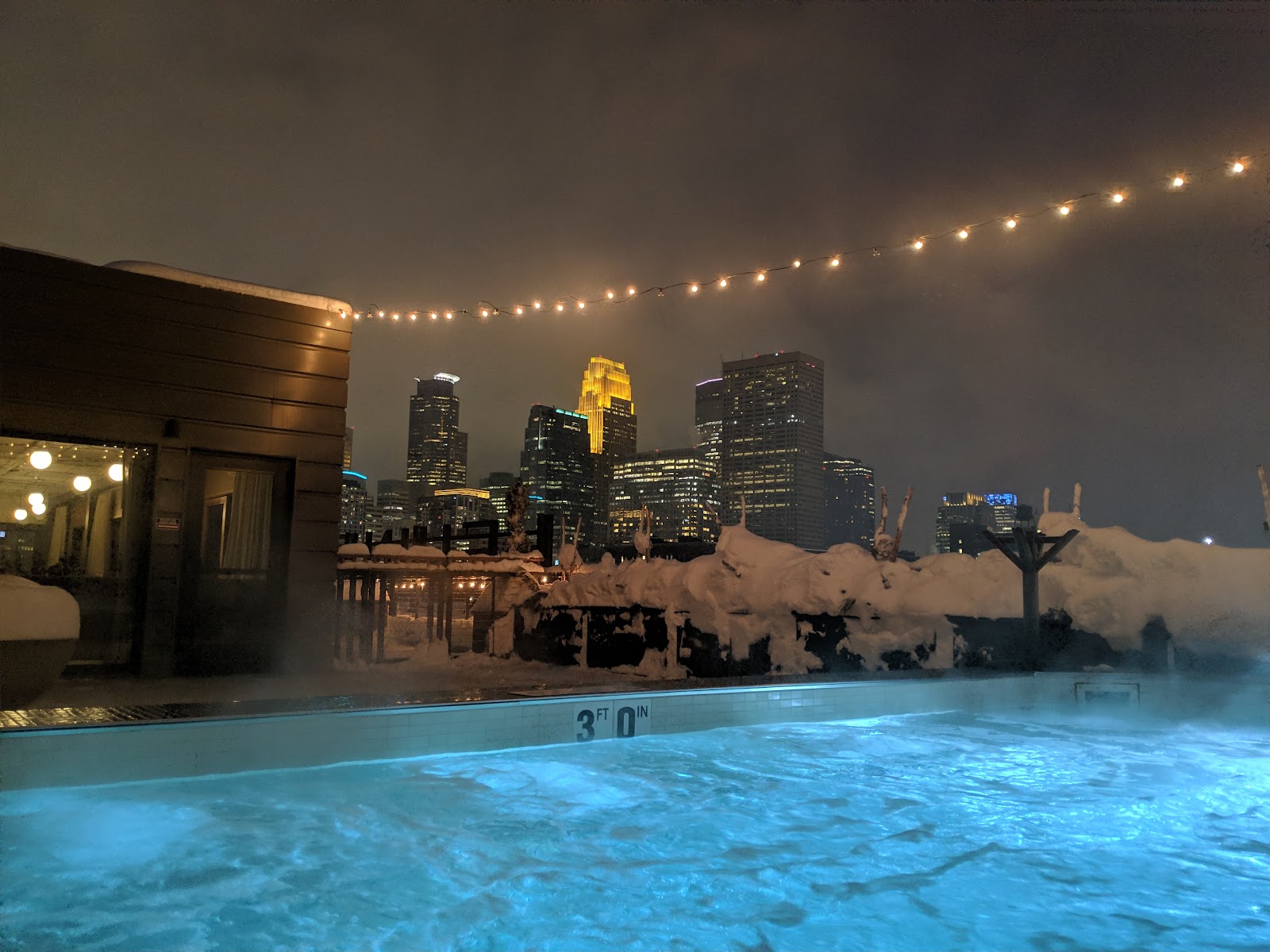
The Minnesota qualifier is the important part. A rooftop here is a seasonal space rather than a year-round one: for several months the cold makes a rooftop block a matter of two or three minutes rather than twenty, and for some of the winter it may be closed entirely. That is worth saying plainly to a couple rather than discovering in December.
In summer the opposite problem applies: days are long enough that the crossing falls well into the reception, which needs agreeing in advance as a short deliberate excursion because it is the one frame that cannot be moved.
When the roof is unavailable, the enclosed elevated walkways downtown are the substitute worth knowing about — glazed, heated corridors with views down streets, which give an elevated frame without going outside at all. Whether the hotel connects to that network is worth asking.
- Guest room: largest shaded window, overheads off, lamps out of frame
- Rake the timber and use a post as a framing element
- Let one gelled source own the faces; timber and brick will stay warm
- The roof’s golden window starts half an hour early — schedule for it
- Sunset plus fifteen on the roof, one warm source, stands weighted
Outside, and Minneapolis through the year
Minneapolis’s warehouse districts are the outdoor extension and they are a coherent match for a converted timber interior: brick and stone at a low-rise scale, loading openings, alleys and service elevations, all of it showing texture only when light runs along it. A short walk to find which side is being raked is worth more than any accessory, and alleys give directional light from walls on both sides with a contained background and shelter.
Minneapolis’s winter is the most demanding in this series and it governs the outdoor half of the day completely. Days are short, with sunset in the middle of the afternoon in December, and temperatures are low enough that an outdoor block becomes three or four minutes rather than twenty — a welfare decision in formal clothes as much as a photographic one. Outdoor frames must be decided in advance and executed quickly rather than explored.
Snow is the compensation and it is the best natural fill there is, lifting exactly the shadows a low sun carves while fooling a meter by about two stops. Snow against warm-lit timber and brick, seen through a large warehouse window, is the frame this venue type gives better than any other — and it exists only in this half of the year.
Cold clear air gives the deepest and longest-lasting sky colour of the year, so a rooftop crossing in winter is better than its summer version if the roof is open and anyone is willing to stand in it.
The fogging risk is severe in both directions and worse than in a milder climate. A camera taken from a heated hotel into subzero air and brought back will fog comprehensively and can take a long time to clear — long enough to lose a crossing. Let a body stay cold between outdoor visits rather than cycling it, and plan one excursion rather than several.
Summer is warm and humid with very long days, which pushes the golden hour past the start of a reception. Thunderstorms are a real possibility and a roof has no cover, so the roof’s wet-weather arrangement needs a capacity and a decision time.
Autumn is the best season for the exterior: clear stable air, the sharpest views of the year from a height, and the best raking light on brick and timber. Early October is a short window and worth building a date around.
And spring is the awkward one, with late snow possible into April — which is worth knowing when a rooftop is part of the plan.
More frames from The Hewing Hotel
The Hewing Hotel wedding photography: common questions
Why is the interior a constant?
Because heavy timber and brick under the hotel’s own lighting look identical at two in the afternoon and eleven at night. Only the windows and the roof change.
What does heavy timber need?
Raking light. Light running along a post or beam lifts the grain and saw marks; light pointed at it flattens the member into a plain brown column.
What does a timber post give that panelling does not?
It is an object rather than a surface, so it can frame, divide or foreground a subject — a frame a converted warehouse gives and a purpose-built hotel does not.
When is the roof's good light?
The last forty minutes of daylight, which starts half an hour earlier than at street level, and roughly twenty minutes after sunset with one warm source on the faces.
What is the Minnesota qualifier on a rooftop?
It is a seasonal space. For several months the cold makes a rooftop block two or three minutes rather than twenty, and for part of the winter it may be closed entirely.
What is the winter substitute for a roof?
The enclosed elevated walkways downtown — glazed, heated corridors with views down streets, which give an elevated frame without going outside at all.
More Minneapolis, MN venue guides
We are writing a photographer’s guide to every venue we would happily shoot in Minneapolis, MN. Here are three more, plus the full index:
- The Ivy Hotel, Minneapolis: The One Decision That Governs Everything
- The Lumber Exchange, Minneapolis: One Frame and How It Is Made
- The Machine Shop, Minneapolis: Field Notes on a Converted Machine Works
All Minneapolis, MN Wedding Venues →
Planning a wedding at The Hewing Hotel?
The windows and the roof set the clock. Tell us your date and we will place them.