 The Hotel St. Francis: A Walk-Through of Santa Fe’s Oldest Hotel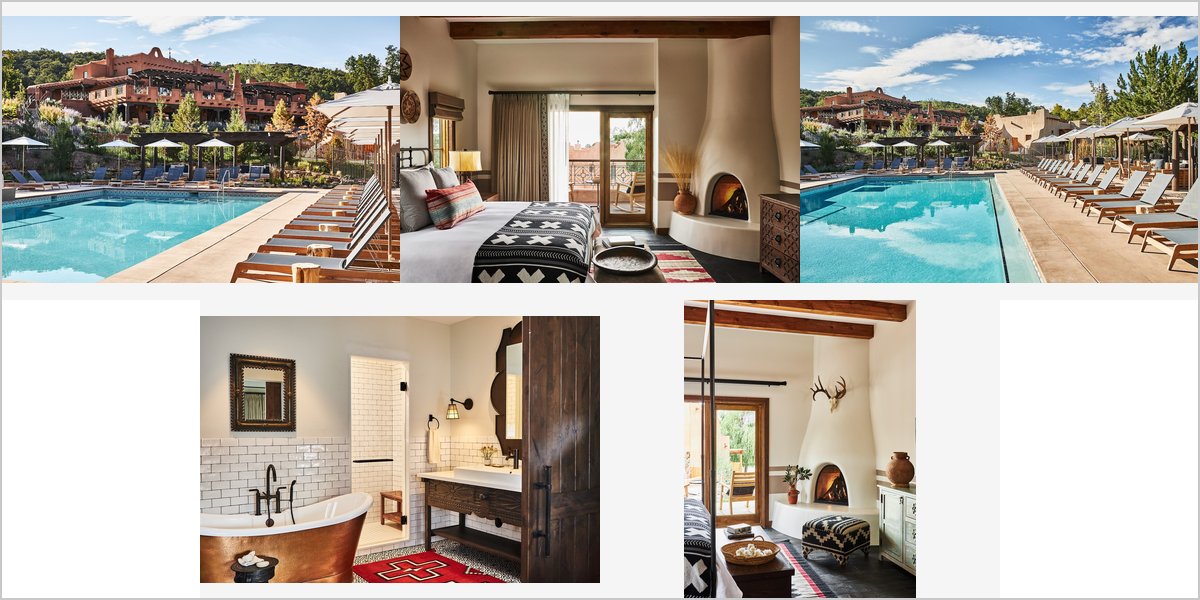
May 20, 2026
Bishop’s Lodge: A Season-by-Season Photography Guide
Three hundred acres in the foothills at 7,000 feet. The high desert has four genuinely distinct seasons and they change this venue completely.
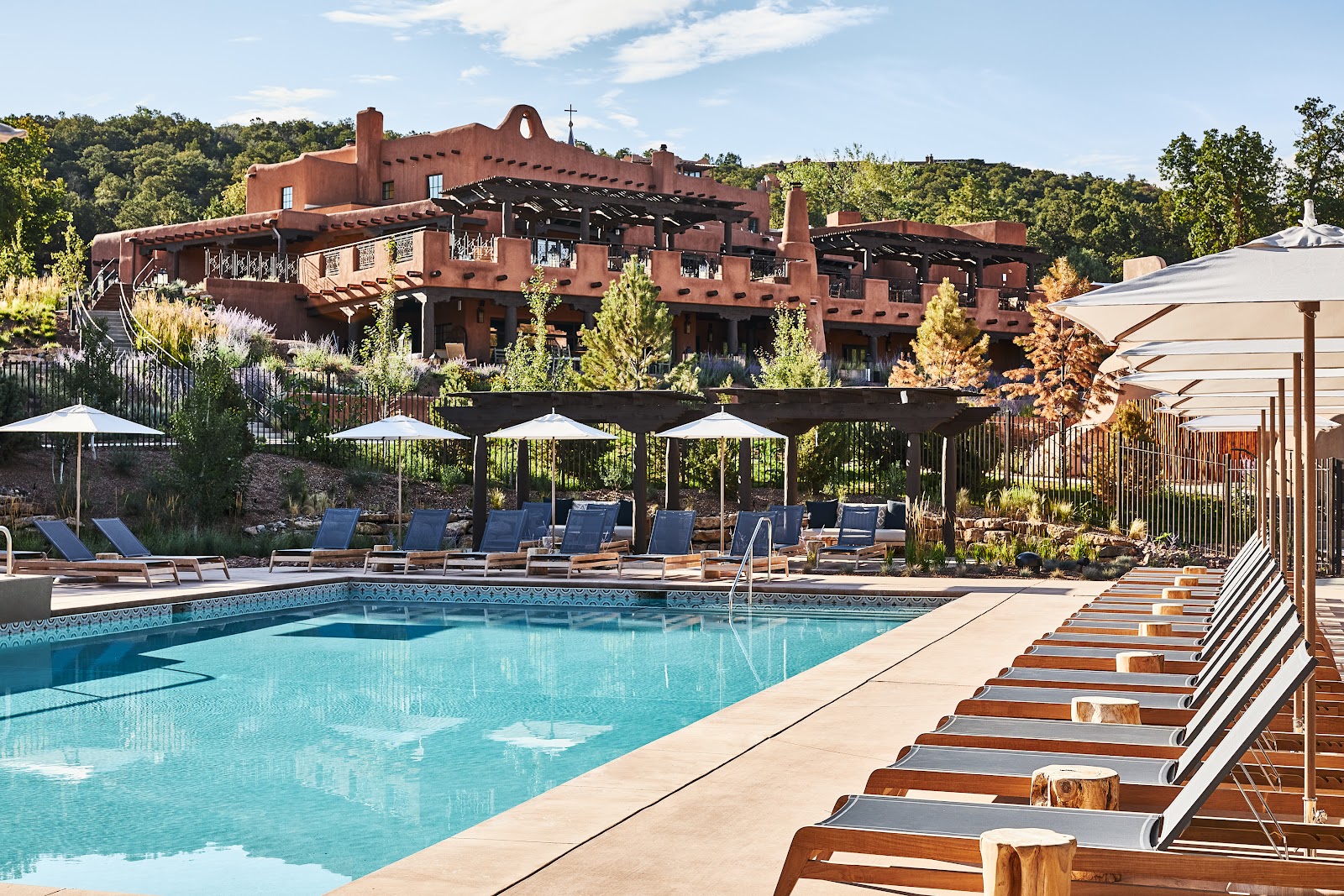
Bishop’s Lodge occupies around 300 acres in the Sangre de Cristo foothills a few miles north of Santa Fe, built up over more than a century around the small private chapel of Archbishop Jean-Baptiste Lamy, which dates from the 1870s. The site sits in Tesuque, higher than the city, with cottonwoods along the creek and piñon-juniper on the slopes.
Photographically the interest is the combination of altitude, acreage and a genuinely historic structure. Altitude gives hard clear light and dramatic skies. Acreage gives varied locations — creek, meadow, slopes, gardens. And the chapel gives a small, dark, deeply atmospheric interior that is entirely unlike the rest of the property.
Because the high desert’s seasons are more distinct than most people expect, this guide is organised by season. We have not photographed a wedding at Bishop’s Lodge; the behaviour of high-altitude light and northern New Mexico weather is well documented. Capacity, which areas are included and chapel access are for their events team — and chapel access is worth confirming.
Bishop's Lodge at a glance
| Where | Tesuque, in the Sangre de Cristo foothills north of Santa Fe — above 7,000 feet |
| Character | Around 300 acres; historic resort around Archbishop Lamy’s 1870s chapel |
| Landscape | Cottonwoods along the creek, piñon-juniper on the slopes, meadows and gardens |
| Light | Hard and clear at altitude; warm bounce from adobe and earth |
| Seasonal driver | Cottonwood colour, monsoon storms, and how cold the evenings get |
Spring: green cottonwoods and unstable weather
April and May bring the cottonwoods into leaf, which matters more than it sounds. In a landscape of piñon, juniper and earth tones, cottonwoods are the one genuinely bright green element, and they line the creek — so spring gives you a band of fresh green through an otherwise ochre landscape. That contrast photographs beautifully.
The light is at its most cooperative: strong enough for long days, not yet at the punishing summer angle, and the air is clear so the Sangre de Cristos read with real separation. Portraits under cottonwood canopy get dappled light that is soft rather than harsh, because the canopy is not yet dense.
The caution is wind. Northern New Mexico springs are genuinely windy — it is the windiest season by a clear margin — and at altitude on an exposed site that affects veils, hair, and any thought of a light modifier outdoors. Plan for it rather than being surprised.
Summer: the monsoon is the whole story
June is hot, dry and clear, with the most intense light of the year — at 7,000 feet in June, open sun at midday is genuinely unusable for faces. Then in early July the monsoon arrives, and northern New Mexico gets near-daily afternoon thunderstorms through July and August.
That pattern is remarkably consistent: clear mornings, building cloud through midday, storms in the mid-to-late afternoon, clearing in the evening. Once you know it, you can plan around it — morning portraits, a sheltered ceremony slot, and an evening that is often spectacular because the clearing storm leaves dramatic cloud catching sunset colour.
Monsoon skies are, genuinely, the best skies of the year here. Towering cumulus lit from below at sunset over a high-desert landscape is as good as landscape light gets, and it only happens in storm season. A monsoon-season wedding with a real covered plan is not a compromise; it is the most photogenic time to marry in New Mexico.
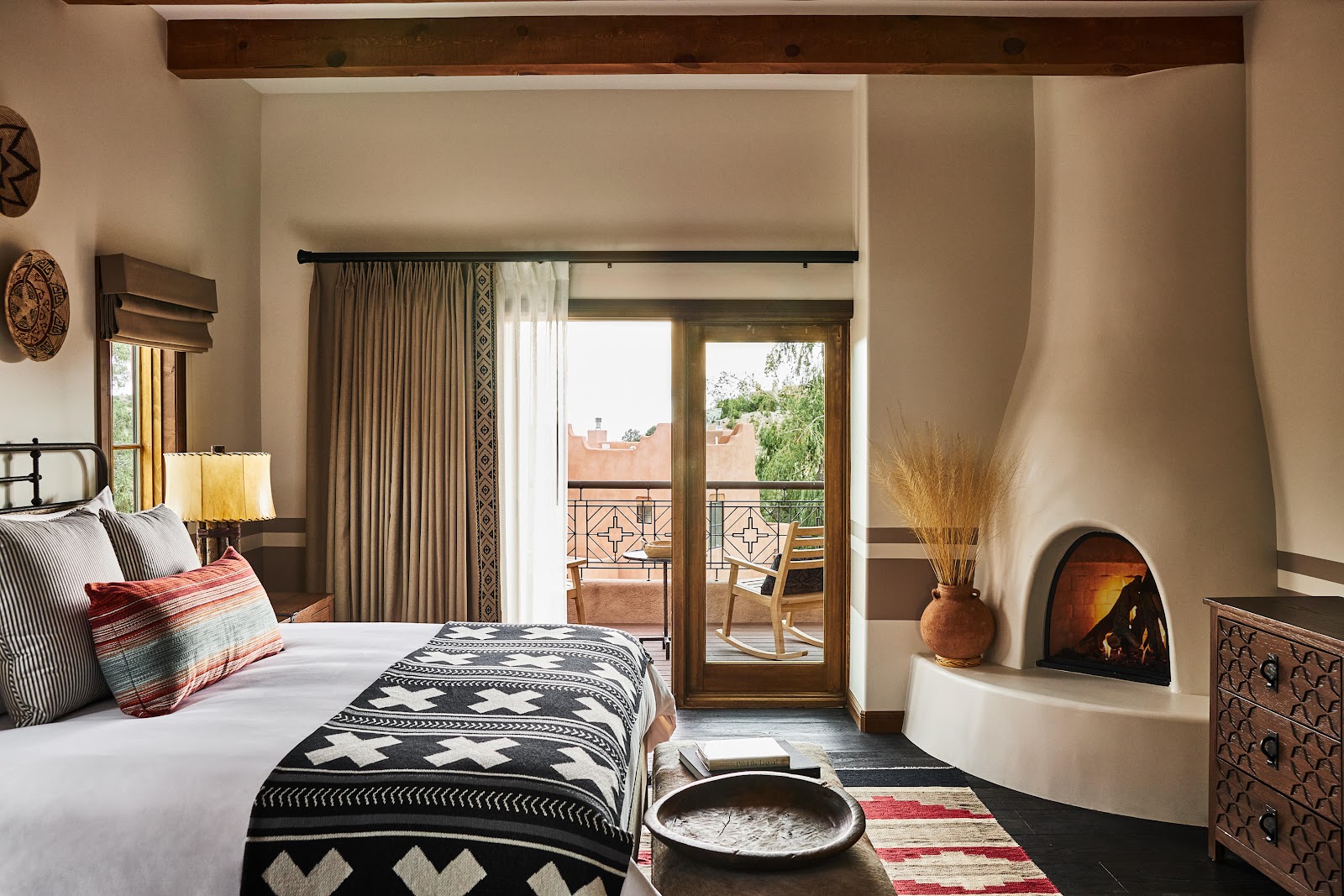
Autumn: the best season, comfortably
Late September into October is northern New Mexico at its finest. The monsoon has ended, the air is exceptionally clear, temperatures are comfortable, and the cottonwoods along the creek turn a vivid gold that against red-earth slopes and a deep blue high-altitude sky is one of the most striking colour combinations in the American landscape.
The light is also at its widest window. The sun stays low through most of the afternoon, so the raking light that flatters adobe and earth is available for hours rather than minutes, and the contrast that makes summer midday unusable has moderated.
It is the busiest season and cottonwood timing varies by a week or two year to year. Book for the venue rather than for guaranteed gold, and treat the colour as a strong probability.
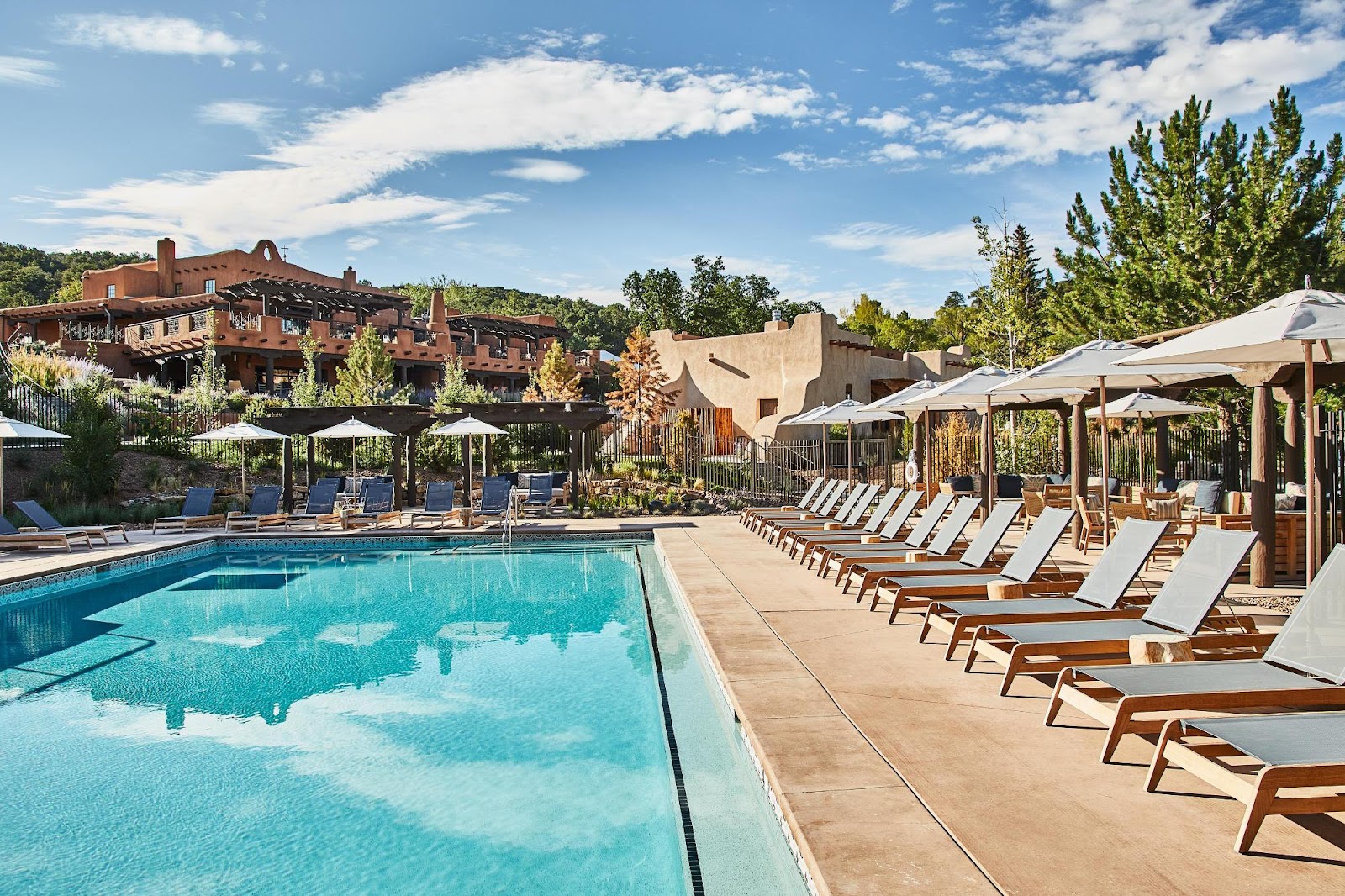
Winter: snow on adobe, and short days
Santa Fe winters are cold and sunny more often than grey, and snow at 7,000 feet is regular rather than exceptional. Snow on adobe and on piñon is a genuinely beautiful and unusual combination — warm earth-toned architecture against clean white, under the deep blue sky that high-altitude winter air produces.
Snow also solves the contrast problem. It reflects light upward into faces, filling shadows from below, which is the opposite of the harsh top-down summer condition. A bright snowy day at altitude is unusually flattering light, and the landscape reads with extraordinary clarity.
The constraints are real: short days with a mid-afternoon sunset, genuinely cold evenings, and the possibility that mountain roads north of the city are difficult. Outdoor time becomes a series of short deliberate excursions rather than an open block, and the interiors and the chapel have to carry the day. Ask what is heated and what the indoor options look like.
There is one more altitude effect worth knowing about, and it is about people rather than light. At 7,000 feet guests arriving from sea level are mildly short of breath, dehydrate faster and tire sooner, and alcohol hits harder. That shows up in photographs by the late evening more than couples expect. Scheduling the portraits earlier than you would at sea level, and keeping walking distances modest, is not fussiness — it is the difference between relaxed faces and tired ones in the frames you will actually keep.
What works in your favour
- Around 300 acres gives varied locations — creek, meadow, slopes and gardens
- A genuinely historic 1870s chapel, small and deeply atmospheric
- Cottonwoods give bright green in spring and vivid gold in autumn against ochre slopes
- Monsoon skies in July and August are the best landscape light of the year
- Snow reflects light up into faces, making winter unusually flattering at altitude
What to plan around
- At 7,000 feet, open sun at midday is unusable for faces, especially in June
- Spring is the windiest season, which rules out modifiers and affects veils
- Near-daily monsoon thunderstorms in July and August need a real covered plan
- Short winter days with a mid-afternoon sunset and genuinely cold evenings
- Distances across 300 acres eat the timeline; choose two or three locations
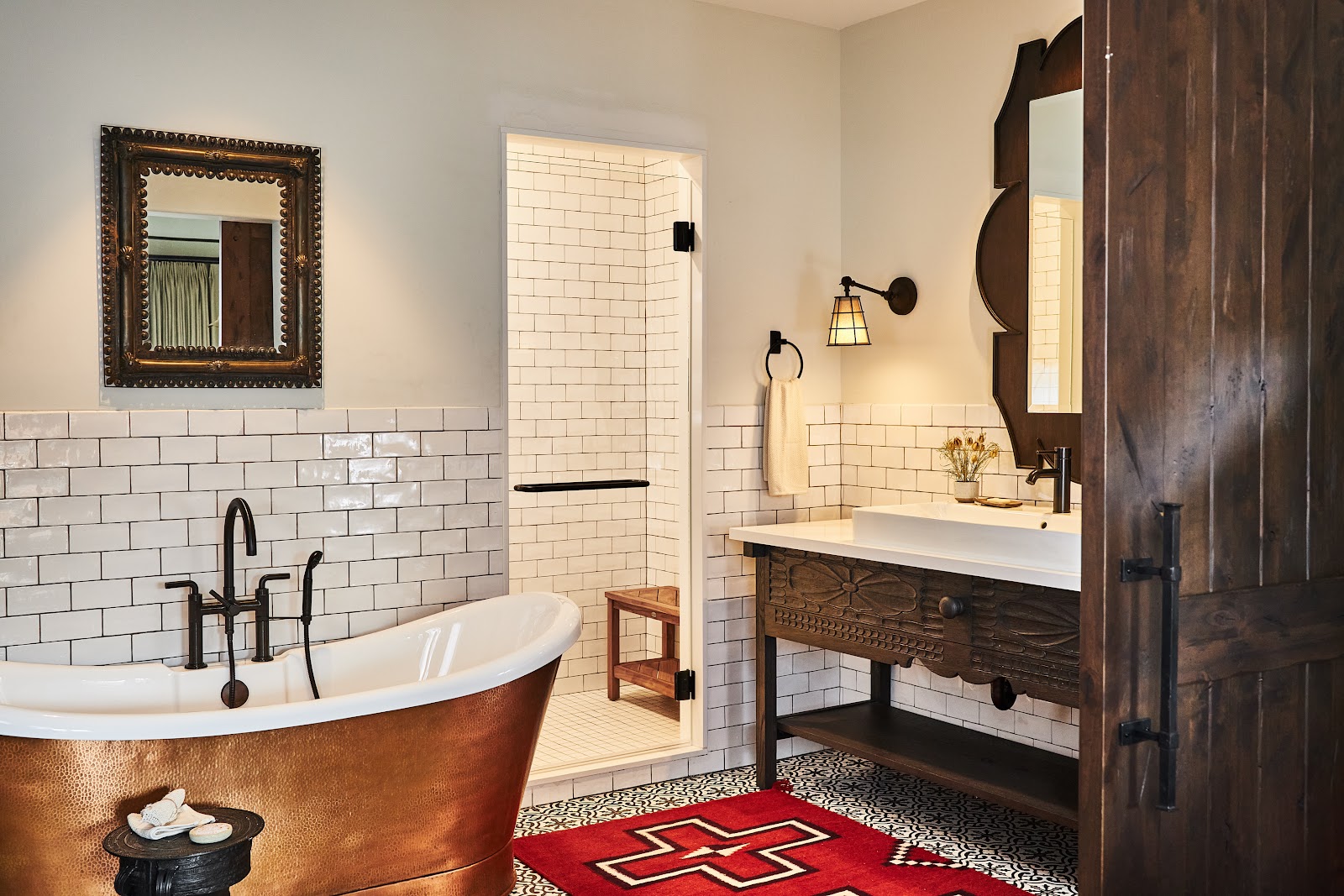
More frames from Bishop's Lodge
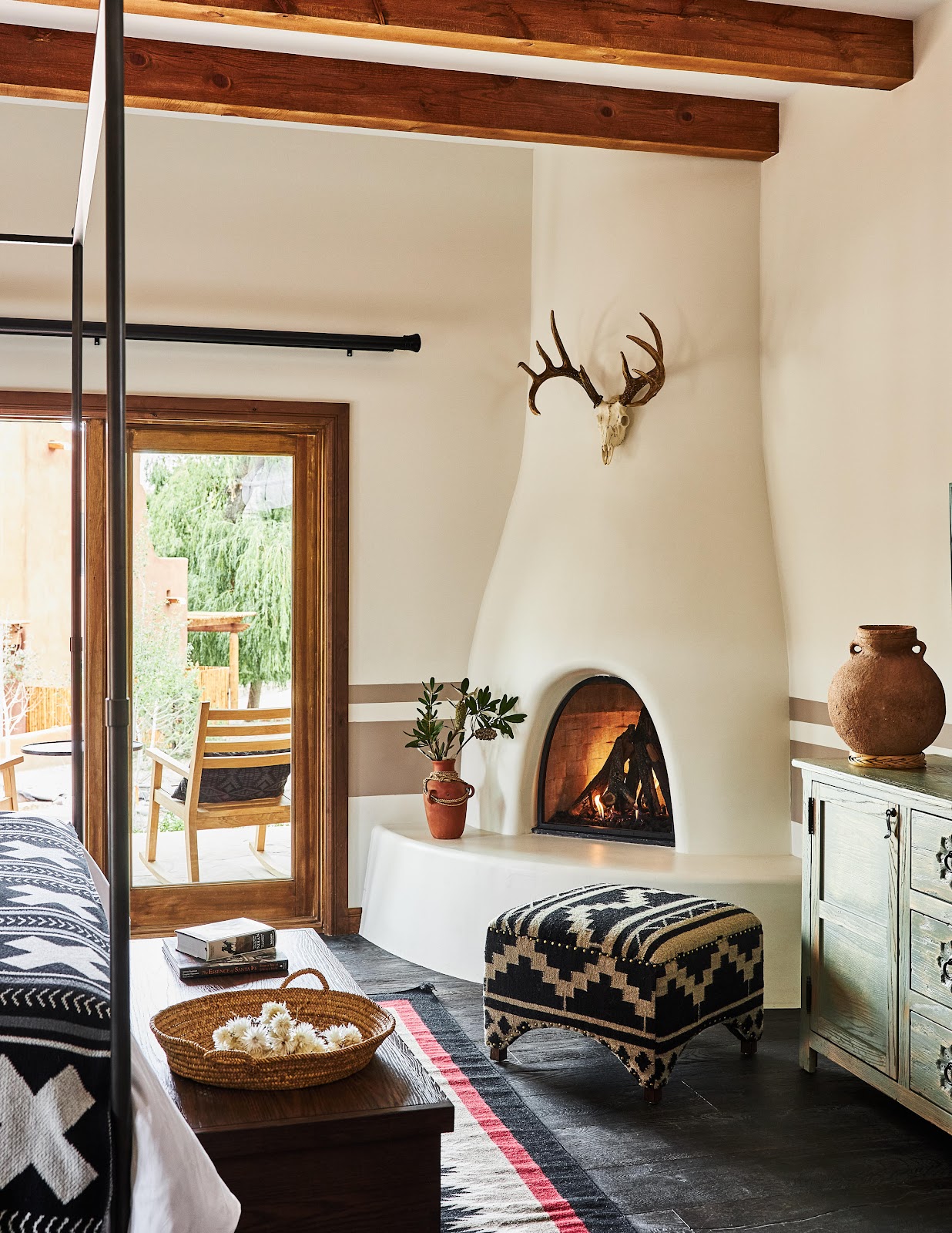
Bishop's Lodge wedding photography: common questions
What is the best season at Bishop's Lodge?
Late September into October. The monsoon has ended, the air is exceptionally clear, temperatures are comfortable, and the creek cottonwoods turn vivid gold against red-earth slopes and a deep blue sky. The sun also stays low through most of the afternoon, so the good light window is hours rather than minutes.
Is the monsoon season a bad time to marry?
Not at all, with a real covered plan. July and August bring near-daily afternoon thunderstorms on a remarkably consistent pattern — clear mornings, storms mid-to-late afternoon, clearing evenings. Those clearing storms leave towering cumulus lit from below at sunset, which is the best landscape light of the entire year here.
How bad is the wind?
Spring is the windiest season in northern New Mexico by a clear margin, and at 7,000 feet on an exposed foothill site that matters. It rules out light modifiers outdoors and moves veils and hair continuously. Plan for it rather than being surprised, and shoot bursts so the movement works for you.
Is a winter wedding worth considering?
Yes, with caveats. Snow on adobe and piñon under a deep blue high-altitude sky is beautiful and unusual, and snow reflects light up into faces, filling shadows from below — unusually flattering. But days are short with a mid-afternoon sunset, evenings are genuinely cold, and the interiors must carry the day.
How much does the acreage affect the timeline?
Considerably. Three hundred acres means real distances between the creek, the meadows, the slopes and the chapel, and each move costs time in formalwear at altitude where people tire faster. Choose two or three locations for their light rather than touring the property.
More Santa Fe venue guides
We are writing a photographer’s guide to every venue we would happily shoot in Santa Fe. Here are three more, plus the full index:
- The Eldorado Hotel: Working a Large Pueblo Revival Hotel
- The Georgia O’Keeffe Museum: Who This Venue Suits
- The Hotel St. Francis: A Walk-Through of Santa Fe’s Oldest Hotel
Planning a wedding at Bishop's Lodge?
Northern New Mexico has four genuinely different seasons and they change this venue completely. Tell us your date and we will tell you what the light, the cottonwoods and the sky will most likely be doing.