 The Hotel St. Francis: A Walk-Through of Santa Fe’s Oldest Hotel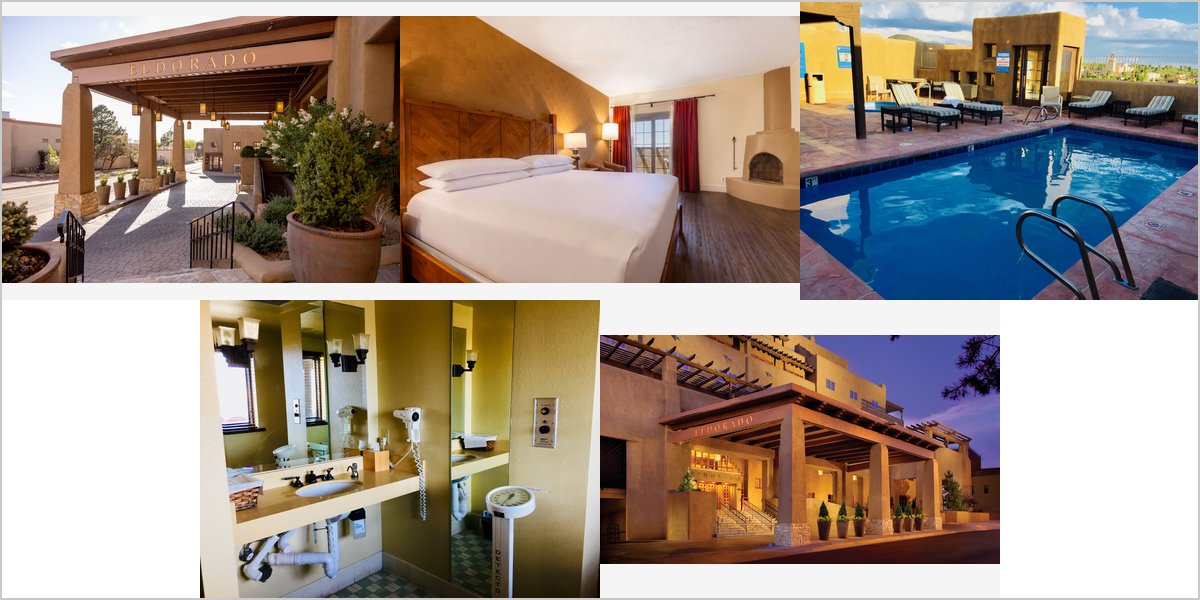
June 24, 2026
The Eldorado Hotel: Working a Large Pueblo Revival Hotel
The largest adobe-form hotel near the Plaza. Big enough for a real ballroom wedding, with a rooftop that does what every Santa Fe rooftop should.
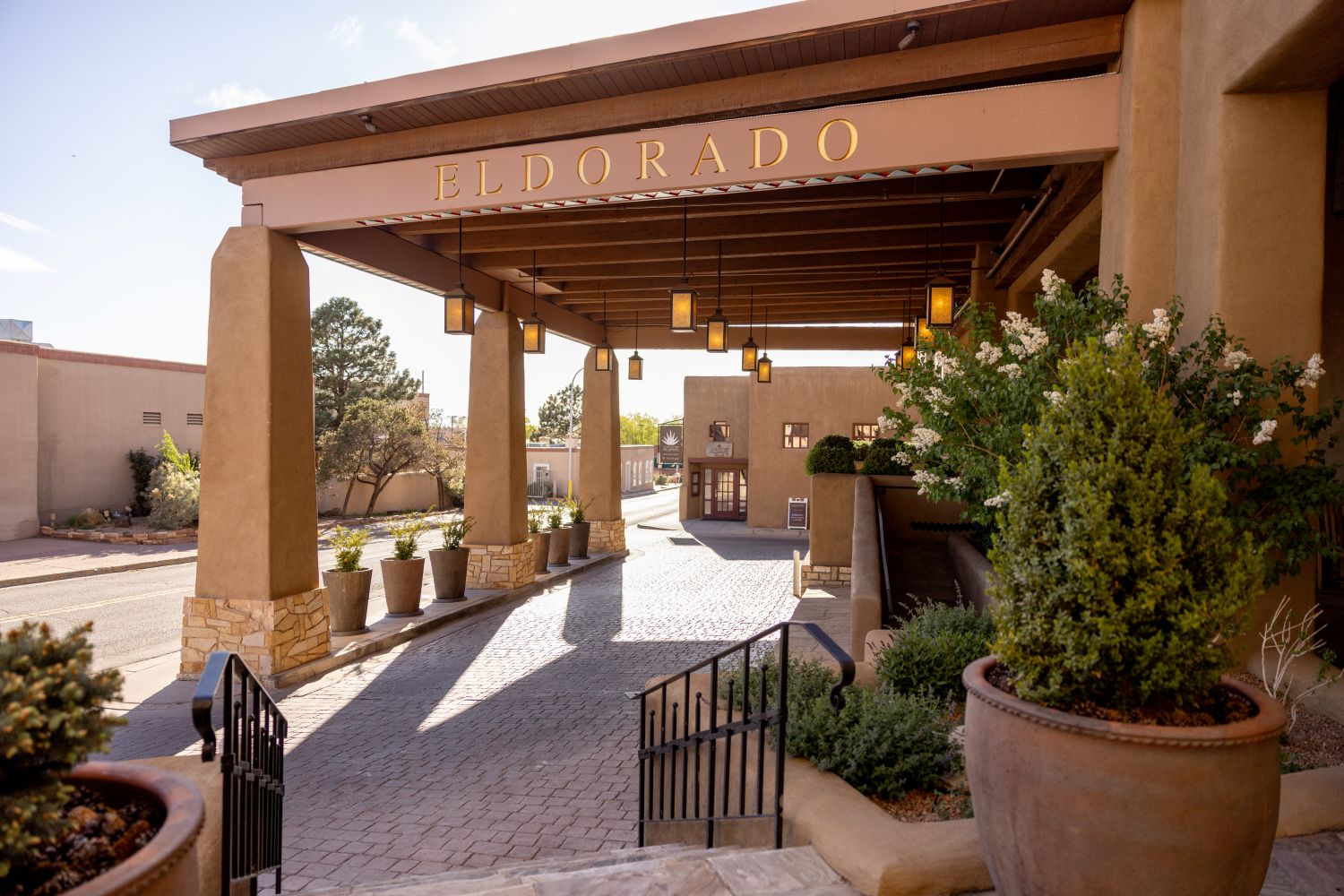
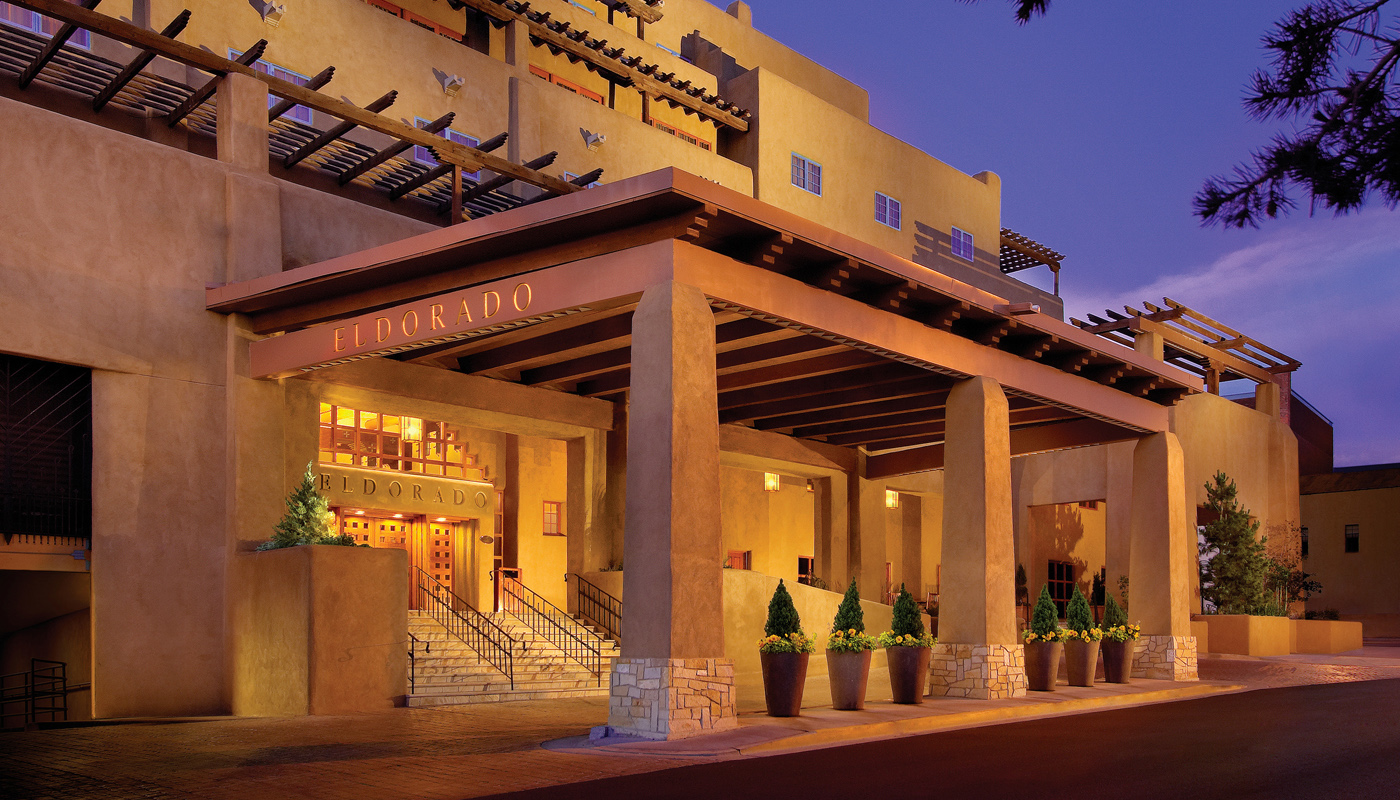
The Eldorado Hotel stands two blocks from the Santa Fe Plaza, built in the 1980s in the Pueblo Revival manner at a scale considerably larger than the city’s historic inns — ballrooms, substantial function space, a large lobby, and a rooftop terrace and pool area with views toward the Sangre de Cristo mountains.
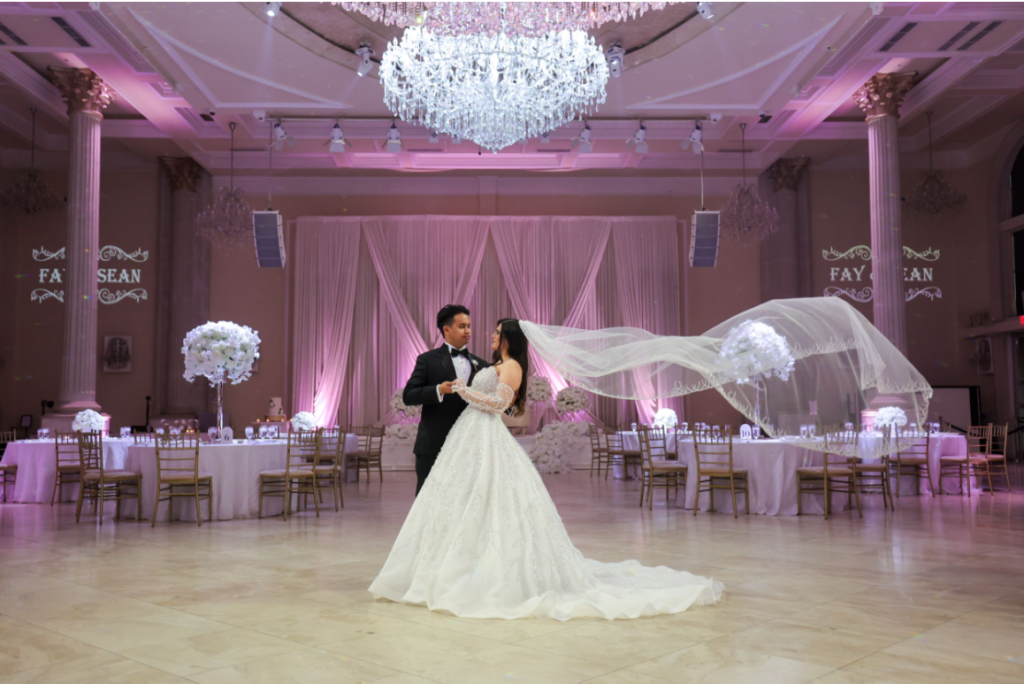
Photographically that scale is the point of difference. Most Santa Fe venues are small: courtyards, intimate inns, historic houses, and capacities that cap out below a hundred. A couple who wants a Santa Fe wedding with two hundred guests and a proper ballroom has few options, and this is the main one near the Plaza.
The trade is that a large modern building in a traditional idiom has less of the hand-crafted texture that makes the small inns special. This is a light-and-timeline guide built on that reality. We have not photographed a wedding at the Eldorado; Pueblo Revival massing and high-desert rooftop light behave predictably. Which spaces your booking includes and rooftop access are for their events team.
Eldorado Hotel at a glance
| Where | San Francisco Street, two blocks from the Santa Fe Plaza |
| Built | 1980s, Pueblo Revival, at a much larger scale than the city’s historic inns |
| Spaces | Ballrooms and substantial function space, large lobby, rooftop pool terrace |
| Light | Ballrooms artificial; rooftop gives open sky and mountain views |
| Why it matters | The main option near the Plaza for a large Santa Fe wedding |
Morning: guest rooms and the deep-reveal advantage
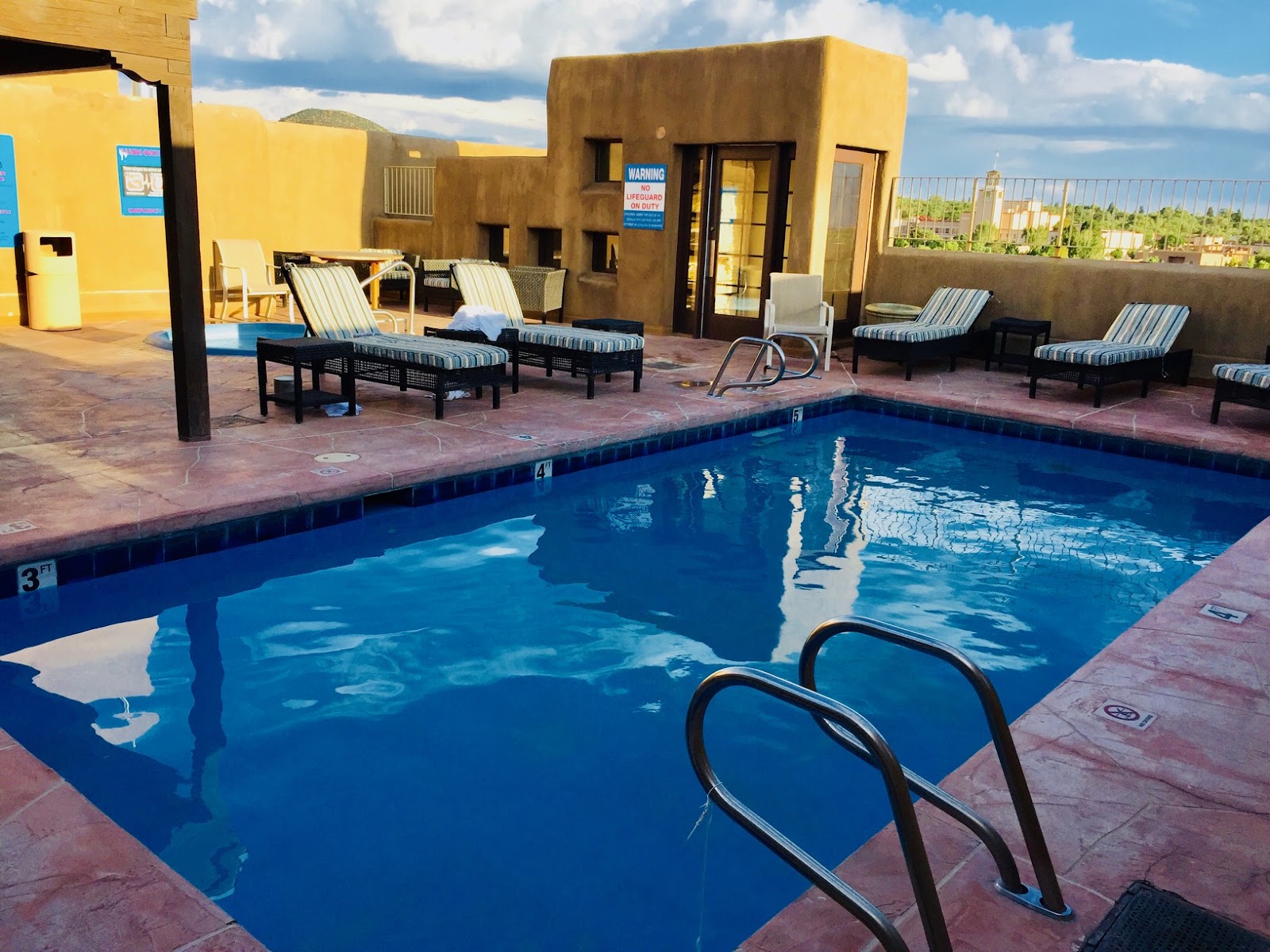
Preparation photographs belong in a guest room, and in a Pueblo Revival building they benefit from an architectural feature that modern hotels elsewhere do not have: thick walls with deep window reveals. Light entering through a deep reveal is shaped by it and falls off fast, which gives contained directional illumination rather than the flat frontal light a thin-walled window produces.
Place someone a metre inside the reveal, turned into the light, with every artificial fixture switched off, and you have genuinely good portrait light with no equipment. Ask for a higher floor if possible — at this elevation and this close to the Plaza, an upper room may also have a mountain view worth including.
The usual discipline applies and is usually skipped: all room lights off so daylight and tungsten are not mixing, clutter cleared from frame, everything brought to the window.
Afternoon: ballrooms, and what a modern adobe-form interior needs
The ballrooms are conventional large function spaces finished in the Southwestern idiom — earth-toned walls, timber detail, wrought iron and tin fixtures. No daylight to speak of, which makes the reception an artificial-light assignment.
The good news is that modern function rooms with moderate ceilings and pale-toned walls actually accept light. Unlike a dark 1920s ballroom with a high decorated ceiling, a bounced flash here returns something usable, and one or two off-camera units with modifiers will light the room comfortably. It is a straightforward lighting job rather than a difficult one.
Colour needs the usual differential. Earth-toned plaster, timber, wrought iron and punched tin all add warmth, so keep the room warm in white balance and light faces slightly cooler so skin keeps some coolness. And treat the patterned light from tin fixtures as background rather than key — lovely on a wall, difficult on a face.
One further thing about large function rooms in a traditional idiom is worth saying plainly, because it affects where the effort should go. These rooms are competent rather than distinctive — they will photograph cleanly and they will not identify themselves. That is not a criticism, it is a division of labour: the ballroom hosts the party, and the rooftop and the Plaza carry the venue’s identity in the photographs. Plan the portraits accordingly rather than expecting the reception room to do work it was never designed for.
The rooftop: the reason to book it
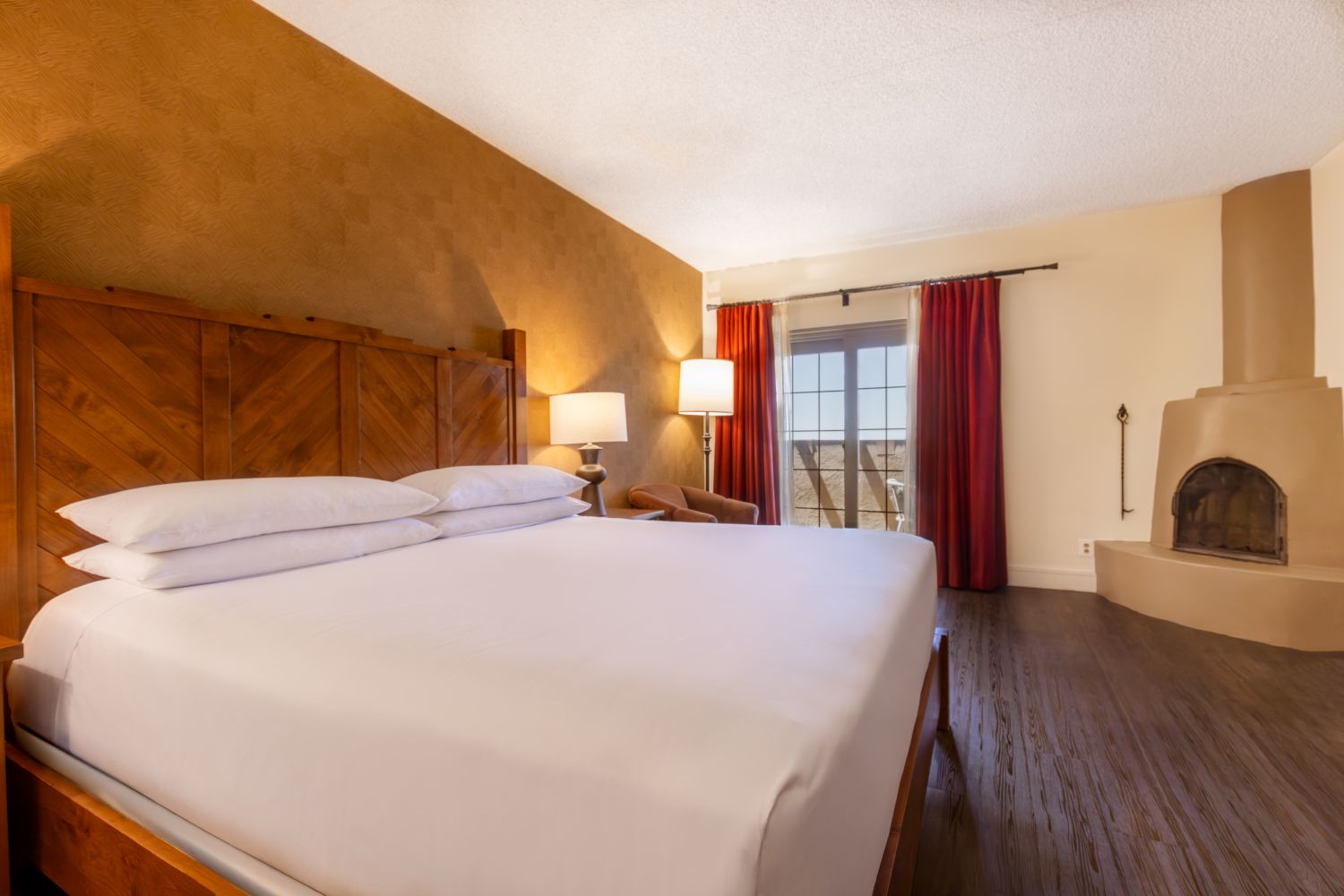
A rooftop terrace two blocks from the Plaza at 7,000 feet is a genuinely good asset, and it does three things the interiors cannot. It gives open sky and therefore real daylight. It gives elevation above the low-rise historic centre, so you can see over the city. And it gives a mountain horizon, which in thin dry high-desert air reads with far more separation and colour than it would through humid lowland haze.
The best window is the last hour before sunset and the twenty minutes after. At altitude the post-sunset sky is unusually intense and long-lasting, and the Sangre de Cristos to the east often catch a pink alpenglow while the western sky is still bright. That eastward glow is the frame most people miss, because they are facing the sunset.
Rooftops are also the only place at a large hotel where a group photograph can happen in natural light, so if access is included, use it for that. Be aware that it is exposed — windier than street level, and the temperature drop after sunset at this elevation is substantial and faster than guests expect.
The timeline, and two blocks to the Plaza
The plan that uses the building properly, and the location it happens to have.
- Preparation in a high guest room, a metre inside a deep window reveal, all artificial light off.
- Groups on the rooftop while daylight is even, since it is the only natural-light space large enough.
- Couple’s portraits in downtown Santa Fe — two blocks to the Plaza means adobe walls, portals and carved doors in the last hour of raking sun, which is the best light in the region.
- Rooftop again for the twenty minutes after sunset, looking east for alpenglow as well as west for the sky.
- Ballroom lit with bounce plus one or two stand lights, room kept warm, faces slightly cooler.
- Warn people about the cold. A 7,000-foot evening drops fast, and a rooftop in a sleeveless dress is a five-minute proposition after dark, not a twenty-minute one.
What works in your favour
- Large enough for a real ballroom wedding, which few Santa Fe venues are
- Deep window reveals give contained directional daylight in the guest rooms
- A rooftop with elevation, open sky and a clear Sangre de Cristo horizon
- Modern function rooms with moderate ceilings genuinely accept bounced light
- Two blocks from the Plaza — the best exterior light in the region on the doorstep
What to plan around
- No daylight in the ballrooms; the reception is an artificial-light assignment
- Less hand-crafted texture than Santa Fe’s small historic inns
- Warm earth-toned finishes need a differential white balance or skin reads orange
- Exposed rooftop: windier than street level, with a sharp post-sunset temperature drop
- Rooftop access should be confirmed rather than assumed
More frames from Eldorado Hotel
Eldorado Hotel wedding photography: common questions
Why choose this over a small Santa Fe inn?
Scale. Most Santa Fe venues are courtyards, intimate inns and historic houses with capacities below a hundred, so a couple wanting a large wedding with a proper ballroom near the Plaza has few options and this is the main one. The trade is less hand-crafted texture than the small inns have.
Where is the best natural light indoors?
A metre inside a deep window reveal in a guest room. Thick Pueblo Revival walls shape the entering light and make it fall off fast, giving contained directional illumination rather than the flat frontal light a thin-walled window gives. Turn every artificial fixture off first.
Are the ballrooms difficult to light?
No — easier than a historic ballroom. Modern function rooms with moderate ceilings and pale earth-toned walls actually return a bounced flash, unlike a 1920s room with a high decorated ceiling. One or two off-camera units will light the space comfortably.
What should we do on the rooftop and when?
Groups while the daylight is even, since it is the only natural-light space big enough, and then return for the twenty minutes after sunset. At 7,000 feet that sky is unusually intense and long-lasting — and look east, because the Sangre de Cristos often catch alpenglow while everyone else watches the sunset.
Anything practical to warn guests about?
The temperature. A 7,000-foot evening drops fast and further than visitors expect, so a rooftop in a sleeveless dress is a five-minute proposition after dark rather than a twenty-minute one. It is also windier up there than at street level.
More Santa Fe venue guides
We are writing a photographer’s guide to every venue we would happily shoot in Santa Fe. Here are three more, plus the full index:
- The Georgia O’Keeffe Museum: Who This Venue Suits
- The Hotel St. Francis: A Walk-Through of Santa Fe’s Oldest Hotel
- The Inn and Spa at Loretto: A Walk-Through of a Pueblo Revival Inn
Planning a wedding at Eldorado Hotel?
A large Santa Fe wedding needs a large Santa Fe venue, and this is the one near the Plaza. Tell us your date and we will plan the rooftop timing, the Plaza walk and the ballroom lighting.