 The Please Touch Museum, Philadelphia: What It Suits and What It Does Not
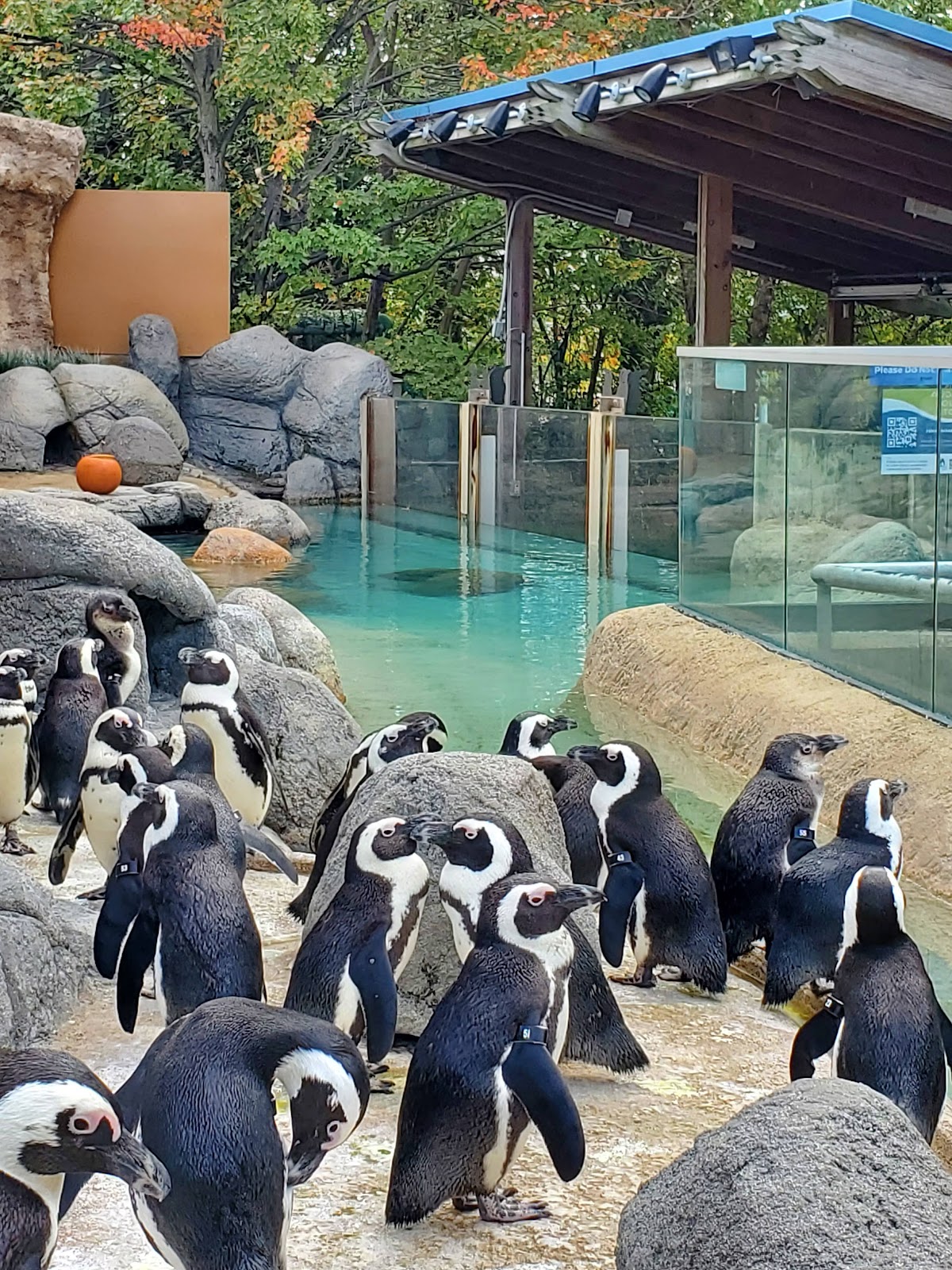
The Adventure Aquarium: Four Ways Out of the Blue Light Problem
Tank light is the problem. The river frontage facing a skyline is the answer, and it is outside.
The Adventure Aquarium brings, as its own description has it, a piece of the ocean to a celebration — a serene and thrilling setting at once.
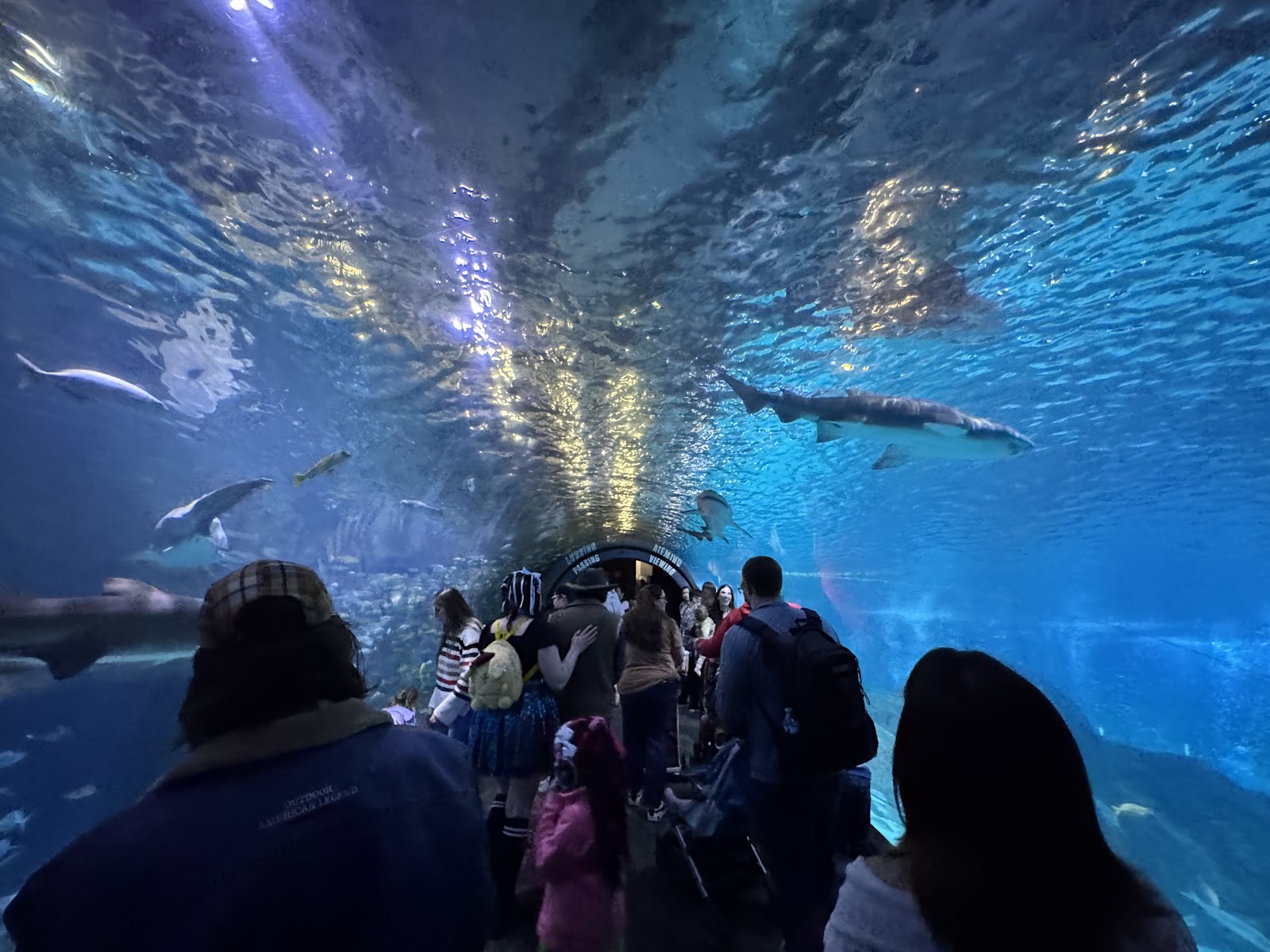
The serene part is accurate and the photographic problem sits inside it. Tank light has four characteristics that combine badly: it is dim, because the level inside an exhibit is set for the animals rather than for a room; it is strongly blue-green, because water absorbs red wavelengths and exhibit lighting is chosen to suit that; it moves, because water and animals move; and it is behind glass, which reflects everything bright on the viewing side.
What distinguishes this venue from an aquarium in the middle of a city is what is outside it: a river frontage looking across the water at the Philadelphia skyline. That view is the counterweight to the tanks, and the honest plan is that the tanks supply two or three spectacular photographs while the waterfront supplies the rest of the gallery.
This is written as the problem and four ways out of it. We have not photographed a wedding at the Adventure Aquarium; large public aquaria behave consistently. Whether flash is permitted near exhibits — frequently it is not, for the animals’ sake — and whether the river frontage is usable are the first questions.
The Adventure Aquarium at a glance
| Where | The Delaware waterfront, facing Philadelphia |
| Character | An aquarium with large tanks and a river frontage facing the city |
| The problem | Tank light: dim, blue-green, moving, behind reflective glass |
| The counterweight | A skyline across water, which is a long-lens frame |
| Ask first | Whether flash is permitted near exhibits; river frontage access |
Why tank light is four problems
Level first. Exhibit lighting is set for the animals living in it, which is typically well below what a room for people would be lit to — and the viewing areas are kept dim deliberately, so the tank reads as bright by comparison and the glass reflects less. A raised ISO with a fast lens is the baseline rather than a fallback.
Colour second, and it is the one that surprises people. Water absorbs red wavelengths quickly, so light that has travelled through a tank arrives blue-green, and exhibit lighting often enhances that. Blue-green light on skin is deeply unflattering and it is not a white-balance problem in the ordinary sense: correcting a strong blue cast globally pushes everything else warm and yellow, including the water, which then stops looking like water. Whichever way you correct, something looks wrong.
Motion third. Water moves, animals move through it, and caustic patterns shift continuously — so brightness and colour on a face can change measurably between consecutive frames. A burst of three is a burst of three different exposures, and a sequence that should match itself will not.
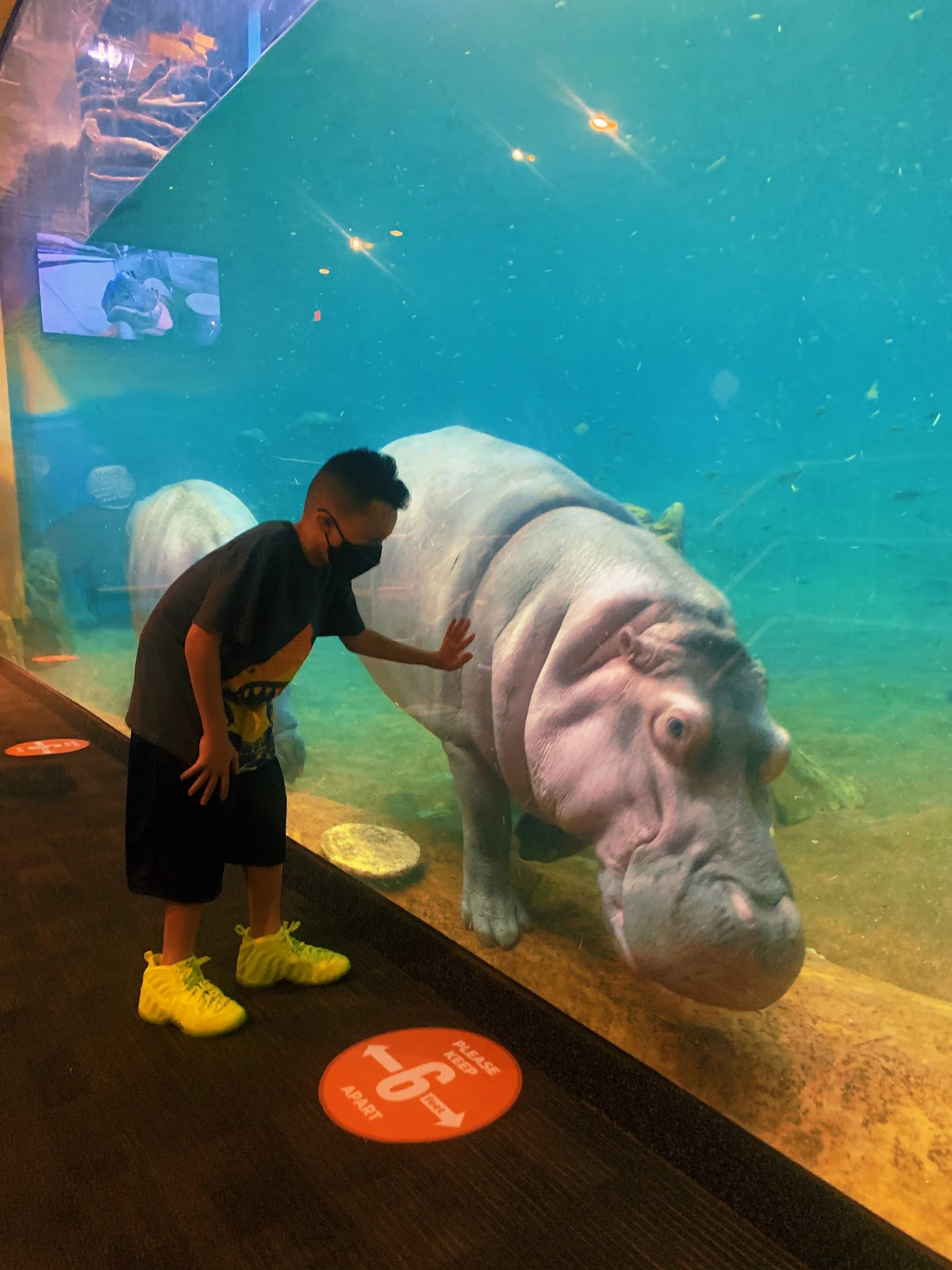
Reflection fourth. Tank glass is a large flat vertical reflector, and anything bright on the viewing side comes back into the frame: a lit sign, a phone screen, a light stand, a photographer. It is also often slightly tinted and, in busy areas, scratched.
Together those make an aquarium viewing area one of the hardest lighting environments a wedding photographer meets — and also one of the most distinctive, which is why it is worth solving properly rather than avoiding.
Four ways out
The first way out is to bring your own light and let it own the faces. One source, off the camera axis at face height, gelled to a chosen temperature, set bright enough to dominate the blue falling on skin, with white balance set to the gel. The tank then stays blue behind the couple — which is what makes the frame — while their faces are neutral and consistent. This is the single most effective move and it converts the problem into the asset.
Two cautions come with it. It must be well off the camera axis and angled away from the glass, or it reflects straight back. And flash may be prohibited entirely near exhibits for the animals’ sake, which is why that is the first question to ask — a continuous LED source is usually the permitted alternative and works fine at these levels.
The second way out is to commit to the blue deliberately rather than fighting it. A frame that accepts the cast as the look — a silhouette, a profile, a hand against glass, two figures in front of a wall of illuminated water — is a strong photograph that needs no equipment and no permission, and it often carries more of the place than a correctly lit frame does. Shooting both rather than choosing is the right answer.
The third way out is the reflection, used on purpose. Tank glass reflects, so a couple standing near it appears twice — once directly and once in the water. Shot obliquely with the viewing area dark, that doubling is a genuinely unusual frame. For a clean view into a tank the technique is the opposite: a rubber hood pressed flat to the glass, shooting perpendicular, which eliminates reflection entirely but only works for frames without people in them.
The fourth way out is the waterfront, and here it is better than at most aquaria. A river frontage looking across water at a city skyline gives three things the interior cannot: water bouncing light up from below, which fills faces; real depth to compress, so a long lens stacks river, far bank and towers into layers where a wide lens reduces them to a strip; and a background that is specific to this place rather than to aquaria in general.
Because the skyline is across the water rather than overhead, it reads as a distinct mass at a distance — which is exactly the condition a long lens wants. At 135mm or 200mm the towers sit close behind a couple as vertical geometry; at 24mm they are a grey strip at the bottom of a large sky.
- One gelled source owns the faces; let the tank stay blue behind
- Angle it well off-axis and away from the glass, or it reflects back
- Ask about flash first — a continuous LED is usually the permitted answer
- Commit to the blue for silhouettes and shapes; often the better picture
- Go long on the river; the skyline across water is a long-lens frame
The river, the crossing, and Philadelphia's year
The waterfront’s own rules are the ordinary ones. A low camera stretches the water’s edge towards the horizon and gives the frame depth; the sun’s specular path on the water must be kept off the line between camera and couple, because at the exposure a face needs it is unrecoverable white; and still water mirrors early in the day and breaks into texture as the breeze builds, so a reflection of the skyline is a morning proposition.
River wind is stronger and gustier at the water’s edge than a street back, which matters for a veil, for hair and for any light stand.
The dusk crossing is the one timed frame and across a river it is exceptional. For roughly twenty minutes after sunset the city falls to about the brightness of its own lighting, tower windows begin to read, and the water holds the sky’s colour — so one exposure can hold a lit skyline, a coloured sky, its reflection, and a couple. That needs one warm-gelled source at face height about a stop under the sky, or they silhouette. Sunset plus fifteen, in position, couple already there.
After it the river goes dark except where bank and bridge lights break across it into vertical coloured lines, which is a background specific to a waterfront: a long exposure smears them and a lit frame freezes them as texture, and both are worth having.
Philadelphia’s four seasons change the outdoor half of the day substantially. Summer is humid with afternoon thunderstorms common rather than rare, which for a large indoor attraction is an advantage — the day continues without a decision — but a river frontage has no cover, so the outdoor block needs a wet version and a decision time.
Autumn gives the sharpest skyline visibility of the year, because cool stable air is clearer than humid summer air — which for a frame that depends on towers across water is a real seasonal difference rather than a marginal one. Late October colour on the far bank reads as a coloured band at a long focal length.
Winter days are short, with sunset in the middle of the afternoon in December, which puts the crossing before or during the ceremony rather than after — and a river frontage in a cold wind limits an outdoor block to a few minutes. Cold clear air does give the deepest and longest-lasting sky colour of the year, so the crossing frame itself is better than in summer if anyone is willing to stand in it.
One equipment note specific to an aquarium: the interior is warm and humid by design, so a camera brought in from cold winter air will fog comprehensively and may take a long time to clear — and on the way back out the reverse happens. Let equipment come towards the temperature of where it is going before it gets there, and expect the crossing frame to be the one that suffers if you do not.
More frames from The Adventure Aquarium
The Adventure Aquarium wedding photography: common questions
Why is tank light so difficult?
Four reasons at once: it is dim because the level suits the animals, blue-green because water absorbs red, constantly moving, and behind glass that reflects everything bright on your side.
Can't you just correct the blue?
Not globally. Correcting a strong blue cast pushes everything else warm and yellow, including the water, which then stops looking like water.
What is the most effective move?
One gelled source off the camera axis at face height, bright enough to dominate the blue on skin, with white balance set to it. The tank stays blue and the faces stay neutral.
What has to be asked first?
Whether flash is permitted near exhibits. Frequently it is not, for the animals’ sake, and a continuous LED source is usually the permitted alternative.
Wide or long lens for the skyline across the river?
Long. The towers are a distinct mass at a distance, which is exactly what compression wants — at 200mm they sit close behind the couple; at 24mm they are a grey strip.
Which season gives the best skyline?
Autumn. Cool stable air is clearer than humid summer air, which for a frame that depends on towers across water is a real difference rather than a marginal one.
More Pennsylvania venue guides
We are writing a photographer’s guide to every venue we would happily shoot in Pennsylvania. Here are three more, plus the full index:
- The Barnes Foundation, Philadelphia: One Frame and How It Is Made
- The Bellevue Hotel, Philadelphia: Photographing a Grand City Hotel
- The Four Seasons Philadelphia: A Walk Up Through a High-Rise Hotel
Planning a wedding at The Adventure Aquarium?
Ask about flash, then plan the river. Tell us your date and we will do both.