 The Sheraton Portsmouth: What a Conventional Hotel Actually Buys You
The Loft at The Press Room: Field Notes on a Small Upper Room
A small upper room over a bar is tight, dark and warm-toned. All three are manageable and one of them is a gift.
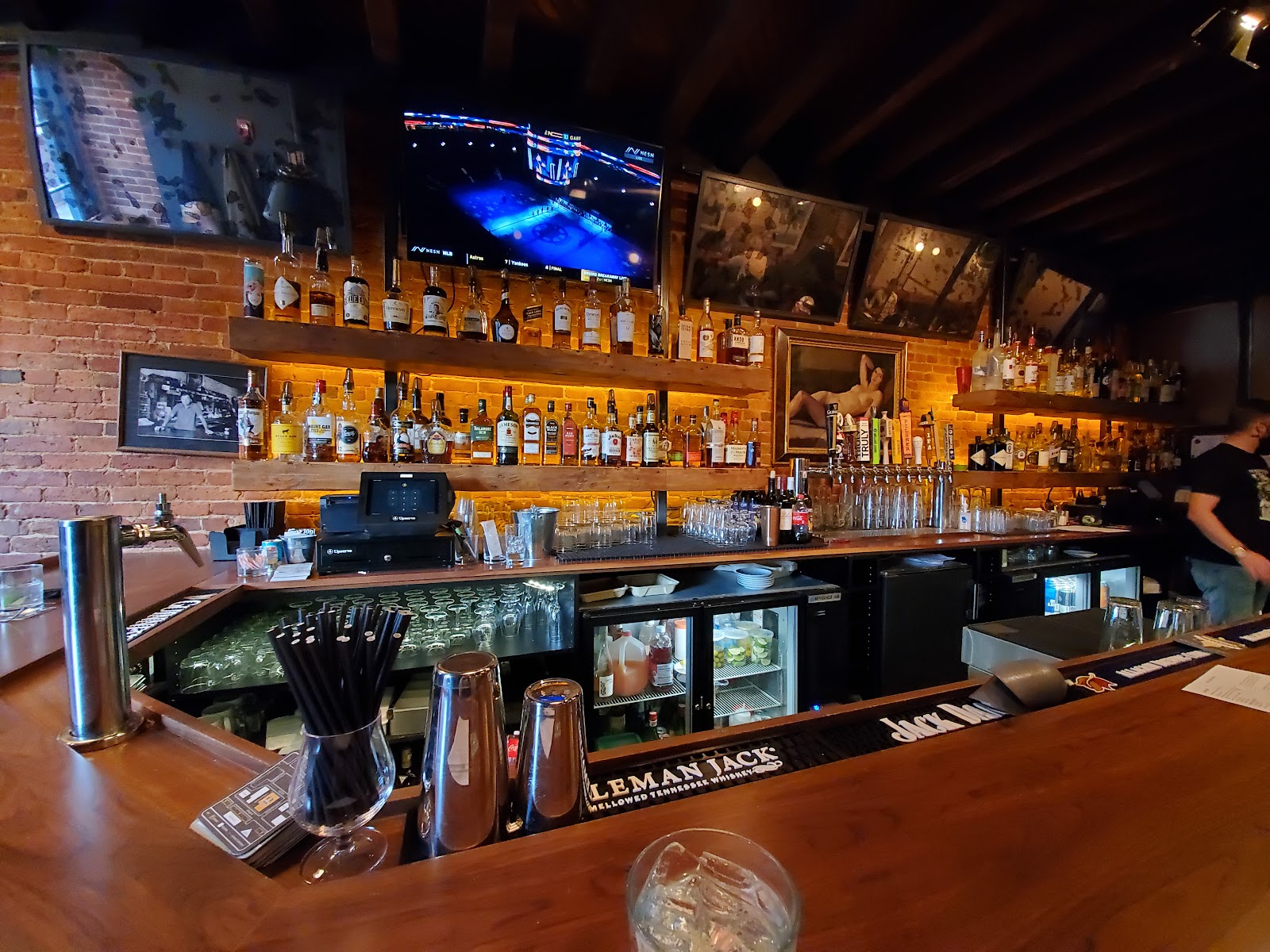
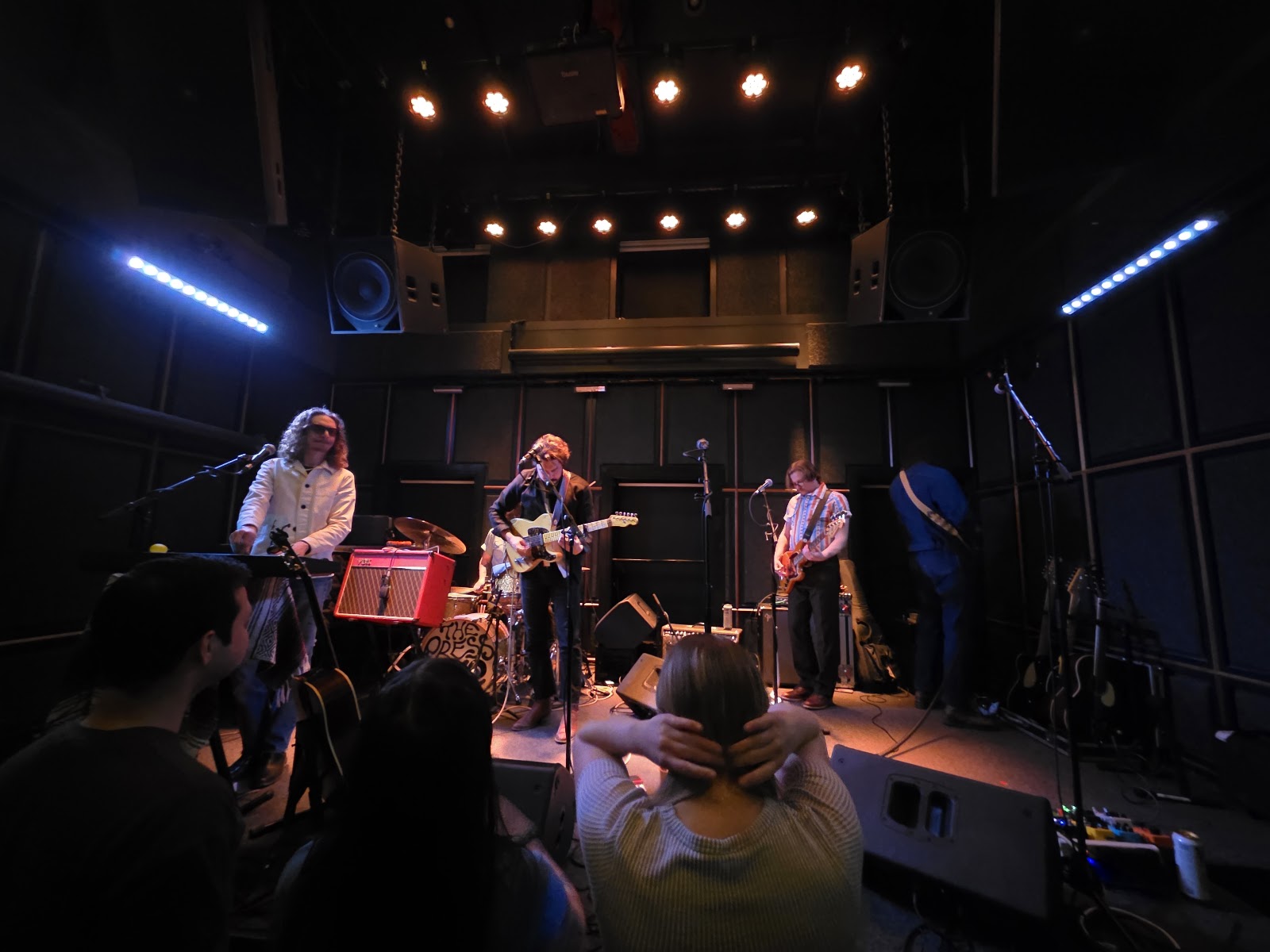
The Loft sits above The Press Room in downtown Portsmouth, New Hampshire, a long-established music bar — a brick-walled upper room with a mixture of period industrial fabric and contemporary fittings.
Small upper rooms in old commercial buildings are a recognisable venue type and they share a set of characteristics that a photographer should arrive expecting. They are tight, so camera position is fixed by the walls rather than chosen. They are dark, because the windows are small and the brick absorbs. They are strongly warm in colour, because brick reflects orange and the fittings are usually tungsten or tungsten-imitating. And they are low, which means the ceiling is within reach — which turns out to be the advantage that makes everything else workable.
These are field notes on each. We have not photographed a wedding at the Loft; small brick upper rooms behave the same wherever they are. Capacity, what may be attached to the walls, and whether the bar below is in use during the event are questions for their team — and the last one matters for noise and access.
The Loft at The Press Room at a glance
| Where | Above The Press Room, downtown Portsmouth, New Hampshire |
| Character | A brick-walled upper room over a long-established music bar |
| Problem one | Tight, so the wall picks your focal length |
| Problem two | Dark and strongly warm; brick absorbs and tints |
| The gift | A low ceiling, which makes bounce the best light available |
Problem one: the room picks the lens
In a small room there is generally one camera position for any given shot, and whatever covers the frame from there is the lens you are using — typically a 28mm or 35mm for anything with more than two people in it, and an 85mm for faces across a table.
Wide lenses at close range stretch whatever sits near the frame edge, and in a small room people naturally end up there. Two compositional habits fix most of it: keep faces towards the centre of the frame, and arrange any group in a shallow arc rather than a straight line, which brings the outer people inward and reduces the distortion on them.
Density is the aesthetic that suits the space. A frame packed with people, glassware and brick reads correctly in a small warm room in a way it never would in a ballroom, so the instinct to include the whole room should be resisted in favour of filling the frame with faces. The room is the context, not the subject.
Everything is also in shot. There is nowhere to hide a bag, a case or a coat, so tidying the corner you are shooting into is part of the work, and two minutes of it improves a frame more than any setting.
Problem two: dark, and orange
Exposed brick absorbs a good deal of the light that lands on it and reflects the rest strongly warm. Combined with small windows and tungsten fittings, that makes the room dim and decidedly orange — which is a pleasant direction to err in, since warm light on skin is flattering, but it needs to be a decision rather than an accident.
Set a custom white balance in the room and keep it for the whole block. Auto white balance in a warm room drifts frame to frame as the mix of window and tungsten changes, which is the usual reason a sequence shot in a space like this refuses to match itself. And do not neutralise the warmth entirely — brick corrected to grey looks like a mistake, and the room’s character is that it is warm.
Because the ambient is low, fast lenses wide open and a raised ISO are normal here, and the grain that comes with it suits the venue. A slightly grainy warm frame in a brick room over a bar looks like what it is; a clean flash-lit frame in the same room looks imported.
That argues for a deliberate split: ambient for the candid and atmospheric coverage, where warmth and grain are the point, and added light only for the moments that must be legible — speeches, the cake, posed pairs. Switching consciously between the two rather than drifting is what keeps a set coherent.
- 28mm or 35mm for groups; keep faces off the frame edge
- Arrange groups in a shallow arc, not a line
- Set a custom white balance and keep the warmth
- Bounce off the low ceiling — it beats any modifier that fits the room
- Ambient for candids, added light only where legibility matters

The gift: a low ceiling, and what else the building gives
The single most useful fact about a small upper room is that the ceiling is close. A bare flash bounced off a low ceiling turns the entire room into a soft source — larger than any modifier that would physically fit through the door, deployable in seconds, needing no stand, and travelling in a pocket. In a ballroom bounce achieves nothing because the surfaces are too far away; here it is the best light available.
The caveat is colour: if the ceiling is dark or wooden it will absorb and tint, in which case bounce off a pale wall instead, or off a reflector held by an assistant. Check what the ceiling actually is before relying on it, because a dark ceiling turns the best technique in the room into the worst.
Brick is a good background for a reason worth knowing: it is a mid-tone with texture. Unlike a white wall that clips or a dark panel that blocks, brick sits near the middle of the range and holds detail at almost any sensible exposure, and its texture means the frame never feels empty. It also reads best in raking light — a source running along a brick wall lifts every mortar line, while frontal light flattens it into a brown field.
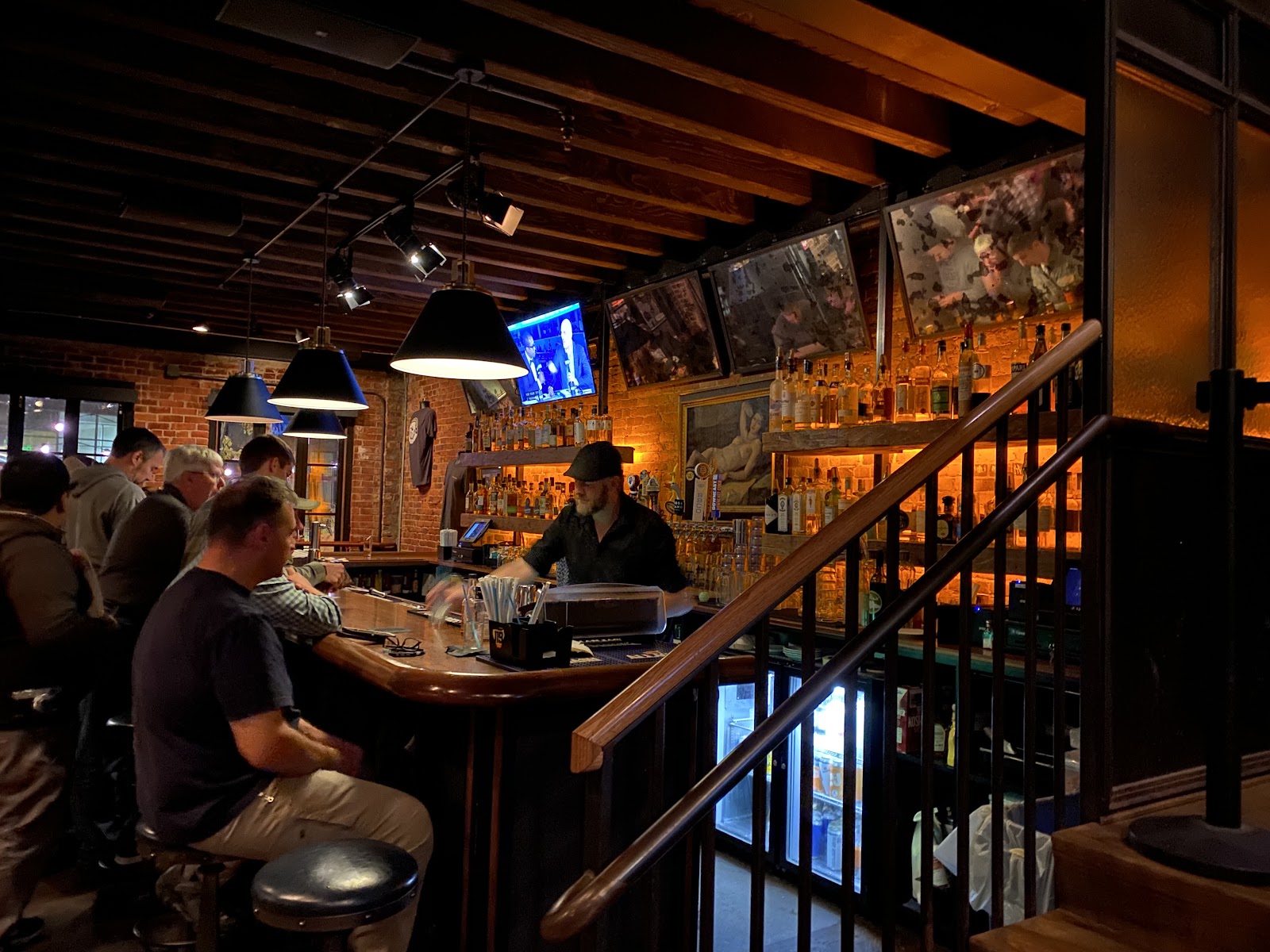
The bar below is part of the venue’s character and worth using if access allows. A long-established music bar has its own visual fabric — signage, taps, worn timber, low light — and a frame there is a completely different register from the room upstairs. It is also where the loose end of the night usually happens, which is frequently where the best unposed frames are.
Outside, downtown Portsmouth is immediately there and it is good material: a compact walkable historic centre of brick and clapboard, narrow streets, and the Piscataqua waterfront a few minutes away. Because the streets are low-rise, low evening sun reaches street level and runs their length, so a genuine street-level golden hour exists — which is the frame to schedule, since the interior is entirely time-independent.
What works in your favour
- A low ceiling makes bounce the best and simplest light available
- Brick is a forgiving mid-tone background with real texture
- Warmth and grain suit the venue rather than fighting it
- The bar below gives a second, looser register
- Low-rise Portsmouth outside, with street-level golden hour
What to plan around
- The wall picks the focal length; wide lenses stretch the frame edges
- Dark and strongly orange, so white balance must be deliberate
- Everything is in frame, so tidying is part of the work
- A dark or timber ceiling removes the bounce advantage entirely
- Small capacity makes large formal groups impractical indoors
More frames from The Loft at The Press Room

The Loft at The Press Room wedding photography: common questions
What lens do you need in a small upper room?
Whatever covers the shot from the only available position — usually 28mm or 35mm for groups and 85mm for faces across a table. Keep faces towards the centre, because wide lenses stretch whatever is near the frame edge.
Why is a low ceiling an advantage?
Because a bare flash bounced off it turns the whole room into a soft source — larger than any modifier that would fit through the door, deployable in seconds and needing no stand. In a ballroom bounce does nothing; here it is the best light there is.
What could go wrong with that?
A dark or timber ceiling. It absorbs and tints rather than returning light, which turns the best technique in the room into the worst. Check what the ceiling actually is before relying on it, and bounce off a pale wall instead if needed.
Should the orange cast be corrected?
Set a custom white balance and keep it for the whole block, but do not neutralise the warmth entirely — brick corrected to grey looks like a mistake. Auto white balance drifts frame to frame here, which is why sequences fail to match.
Is high ISO a problem?
No, it suits the venue. A slightly grainy warm frame in a brick room over a bar looks like what it is, whereas a clean flash-lit frame in the same room looks imported. Use ambient for candids and added light only where legibility matters.
Why is brick a good background?
Because it is a mid-tone with texture — it holds detail at almost any sensible exposure, unlike a white wall that clips or a dark panel that blocks, and the texture means the frame never feels empty. Light it along the wall, not at it.
More New Hampshire venue guides
We are writing a photographer’s guide to every venue we would happily shoot in New Hampshire. Here are three more, plus the full index:
- The Portsmouth Brewery: Reading a Brewpub Hour by Hour
- The Sheraton Portsmouth: What a Conventional Hotel Actually Buys You
- Strawbery Banke Museum: Photographing an Outdoor Museum of Houses
Planning a wedding at The Loft at The Press Room?
Small, dark and warm, with a ceiling close enough to use. Tell us your date and we will bring almost nothing.