 The Please Touch Museum, Philadelphia: What It Suits and What It Does Not
The Bellevue Hotel, Philadelphia: Photographing a Grand City Hotel
A grand hotel’s logic is height: tall rooms below, and something worth reaching at the top.
The Bellevue sits in the heart of Philadelphia and offers, as its own description has it, easy access for all guests whether they are local or flying in.
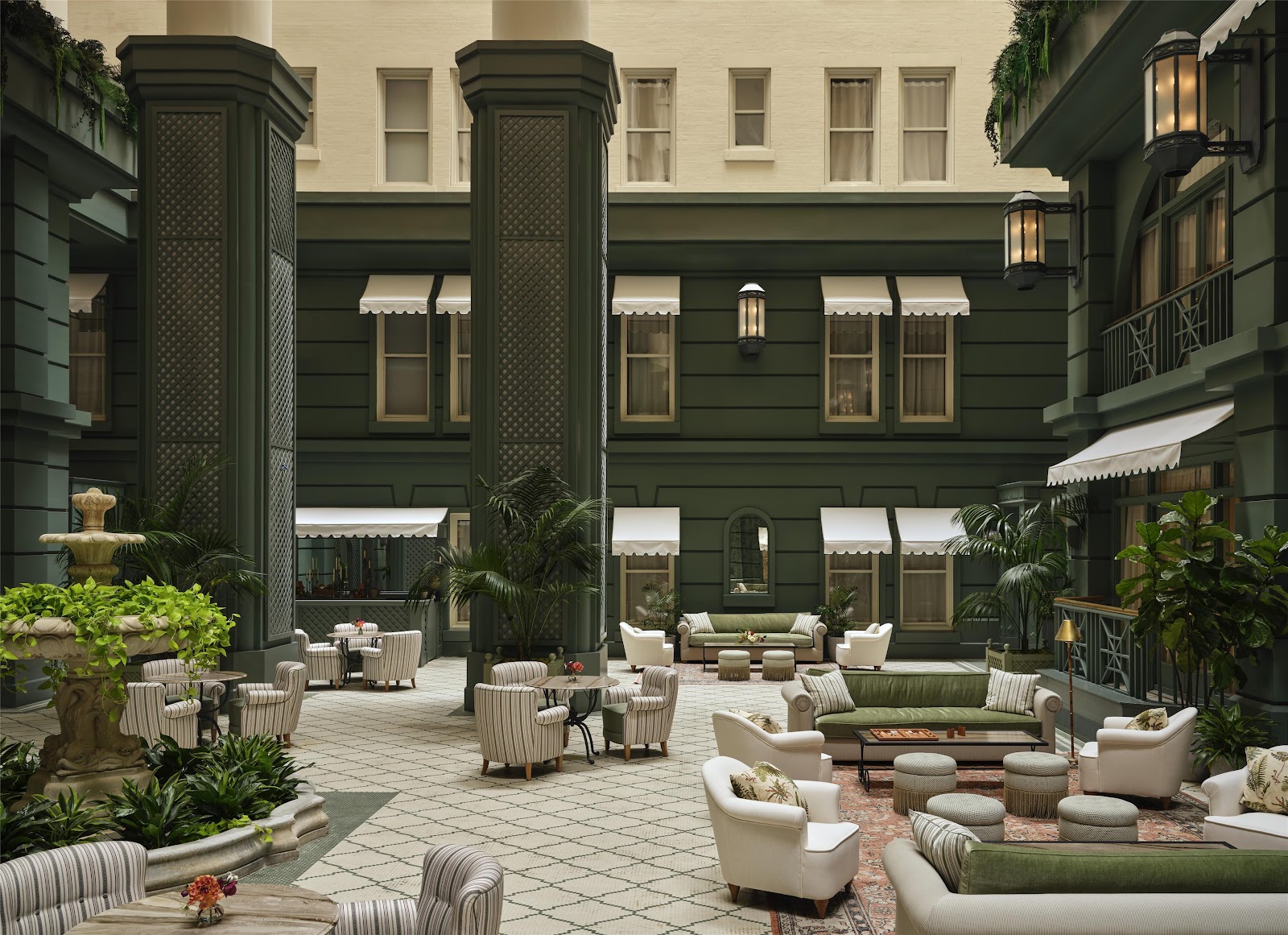
Accessibility is the honest headline for a grand city hotel and it is worth taking at face value, but the photographic logic of the building type is about height rather than location. A grand hotel of this kind is tall by design: tall ground-floor volumes to impress from the door, tall function rooms above them for the same reason, and — the part that matters most — upper floors that put a photographer above the surrounding streets. In a city with a low-rise historic core, that height is the single thing the building offers that nothing at street level can match.
So this follows the venue’s own logic, from the bottom up. We have not photographed a wedding at the Bellevue; grand city hotels behave consistently. Which rooms are included, whether the ballroom lighting is adjustable, and what upper-floor access exists are the questions for their team — the last one is the one worth pressing on.
The Bellevue Hotel at a glance
| Where | Central Philadelphia, Pennsylvania |
| Character | A grand city hotel with tall period function rooms and upper floors |
| The logic | Height — impressive volumes below, and a vantage above |
| The asset | An upper floor in a city with a low-rise historic core |
| Ask first | Rooms included, ballroom lighting control, upper-floor access |
The tall rooms: what height takes and what it gives
Tall volumes remove the reflex indoor move. A grand hotel’s ground-floor or ballroom ceiling is far enough away that a flash aimed at it returns almost nothing usable, so bounce barely functions. The substitutes are a pale wall at a sensible distance, a reflector, or direct modified light, and one test frame in the first minute settles which. Distance compounds it: in a large volume a source adequate in a guest room is lost, so power and modifiers have to assume real working distance.
What height gives back is steep fall-off, which is free separation: a subject three metres in front of anything else sits against natural darkness with no equipment at all. In a grand hotel that is worth exploiting rather than filling in, and it is the opposite of the problem a pale modern hotel presents.
Ornament is the second condition and it is concentrated exactly where the eye travels — cornices, doorcases, columns, coffers. All of it is three-dimensional, so it reads only when light crosses it at an angle and casts small shadows. Under the even downward lighting a modernised hotel installs, that ornament flattens into a pale field and a room photographs blander than it looks. One source placed to graze a surface rather than face it brings it back, and it is a one-light problem rather than a big-kit one.
Mixed sources are the third condition and they are certain in a building of this age: daylight through tall windows, warm decorative fittings, cooler recessed downlights, and possibly coloured accent lighting on architecture. Three colour temperatures in one frame cannot be resolved afterwards — pick the one that should be correct, set a manual white balance to it, and switch off or overpower whatever else lands on skin.
Tall windows are the fourth and they are the best natural light in the building’s public rooms. A window sized for an era before reliable artificial light sends light further into a room and higher up a standing figure than a modern one, and two or three metres inside a tall window on the shaded elevation is a broad soft key with steep natural fall-off.
A grand stair, where the hotel retains one, is the fifth and it is the most useful single feature in a building of this class: elevation, a diagonal or curve, a handrail as a leading line, and rows for a group automatically, which a flat ballroom floor never provides.
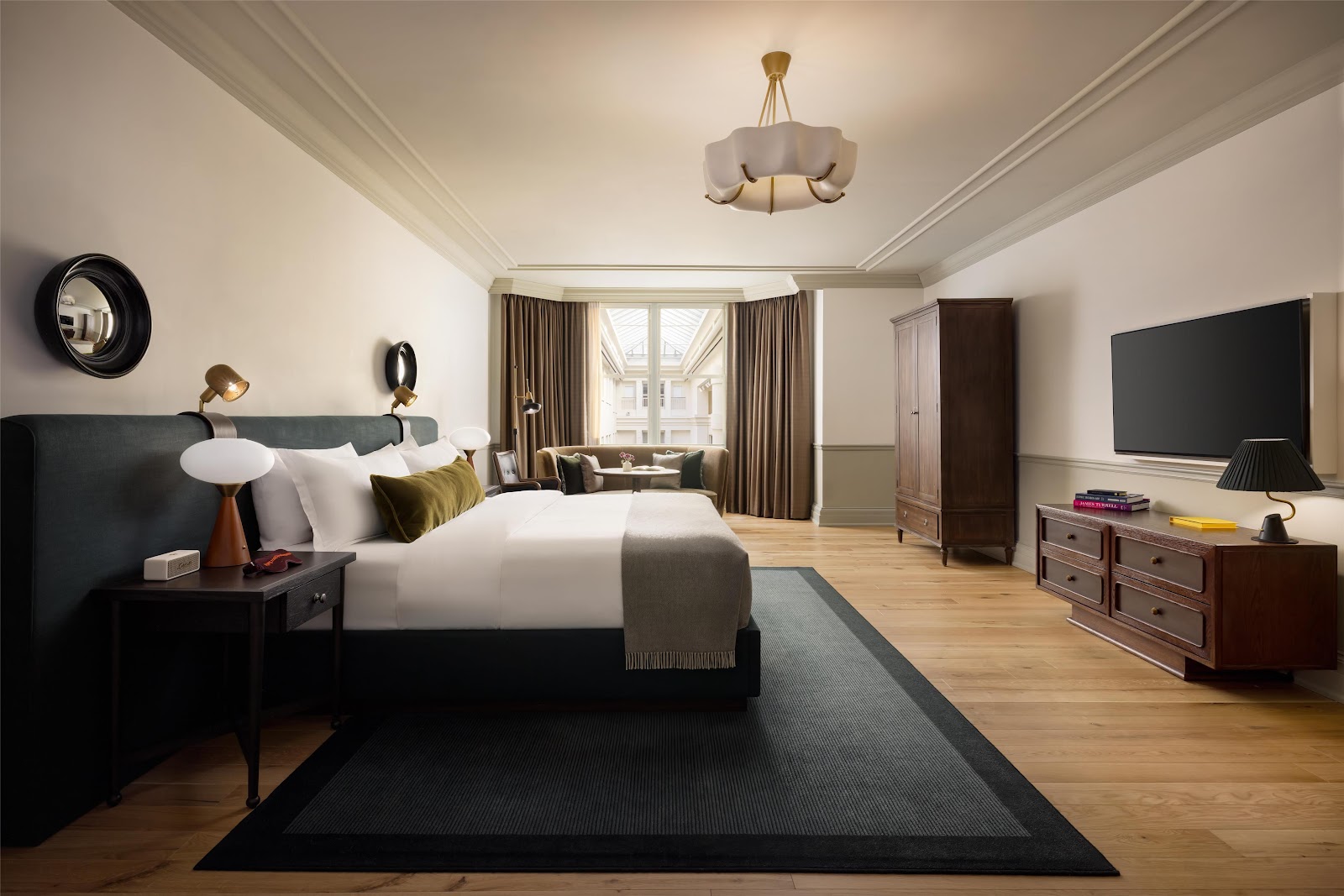
Guest rooms remain the best portrait light overall — domestic-sized windows, close walls that bounce, ceilings low enough that a flash aimed upward returns something. Largest window on the shaded side, every overhead off, lamps out of frame.
The upper floors, and why they matter in this city
Philadelphia’s historic core is low-rise over much of it, with towers clustered in the modern centre rather than spread evenly. That means height is disproportionately valuable: from an upper floor, the older fabric reads as a field of brick and slate roofs with the tower cluster rising behind it at a distance — which is a layered composition rather than a wall of city, and exactly what a long lens wants.
Compression is the technique. At 135mm or 200mm the roofscape, the towers and any distant landmark stack into bands behind a couple; at 24mm the same view becomes a strip at the bottom of a large sky. A view from a height is almost always a long-lens frame, which is counter-intuitive because the instinct with a view is to include all of it.
The same height means low sun arrives earlier than at street level, because the surrounding roofline is below you — thirty or forty minutes of extra golden light, which is worth building into a schedule rather than discovering.
Window glass is the constraint on an upper floor and it needs handling. In daylight, the view is four to six stops brighter than the room, which means a decision rather than a discovery: let the window blow to a white shape, which is legitimate if chosen; light the couple to match the view, which needs real power because you are competing with daylight; or wait for the crossing.
The crossing is the most valuable twenty minutes in the building. Roughly fifteen to thirty minutes after sunset the city falls to about the brightness of the interior lighting, and one exposure holds the lit room, the couple and the roofscape and towers behind them with no added light at all. Take the sunset time, add fifteen minutes, be in position with the couple already there.
After it, glass becomes a mirror, so lights go off the camera axis and frames go oblique rather than square — and a lit room doubled in dark glass with city lights beyond is a good frame if no stand is in it.
Reflections and cleanliness both matter more on an upper floor than at ground level: a window that has not been cleaned recently will show as haze and flare in a way a lobby window does not, and it is worth checking before the crossing rather than during it. Shooting with the lens close to the glass and a hand or a coat shielding stray light from the room is the practical answer.
- Test bounce once; a grand ceiling returns almost nothing
- Graze the ornament with one source, or the detail disappears
- From a height, go long — a view is a long-lens frame, not a wide one
- Height buys thirty extra minutes of golden light; schedule for it
- Sunset plus fifteen at an upper window, and check the glass is clean first
The street, the grid, and Philadelphia's year
At street level Philadelphia is unusually easy to plan for, because Center City is a strict grid oriented close to the compass. That means the east-west streets take low sun straight down their length while the north-south ones do not — a fact that can be read off a map rather than discovered on foot, which makes a twenty-minute portrait excursion genuinely efficient.
Red brick is the city’s material and it is the friendly one: it bounces warm and flatters skin, where pale stone and modern glass bounce cool and can grey a face. Brick also shows its texture only when light runs along it, so the position worth finding is always where the light is raking rather than facing.
White marble steps front many Philadelphia rowhouses and act as low reflectors, bouncing light up into a face to fill the shadow overhead sun creates — a located frame that is also a lit one. Cobbles in the older quarters are strong texture in raking light and a genuine trip hazard in heels.
Alleys are the most dependable positions in any downtown: walls on both sides give directional light and a contained background with nothing distracting in it, plus shelter.
Philadelphia’s four seasons change the plan. Summer is humid with afternoon thunderstorms common rather than rare, which for a grand hotel is almost entirely an advantage — the day continues indoors without a decision — and the light after a cell passes, with wet streets returning reflections of a lit facade, is frequently the best of the day.
Autumn gives the clearest air of the year, which matters for a view from a height more than for anything at street level: a long-lens frame of a distant tower cluster is sharper in October than in August. Late-October colour in the squares is a short additional asset.
Winter days are short, with sunset in the middle of the afternoon in December, which moves the crossing to the late afternoon — possibly before or during the ceremony rather than after it. Cold clear air does give the deepest and longest-lasting sky colour of the year, so the crossing frame itself is better in winter than in summer.
Snow is the compensation outdoors and it is the best natural fill there is, while fooling a meter by about two stops — and a roofscape under snow, seen from an upper floor, is a frame this building can give and almost nothing else in the city can.
Humidity and cold both fog a lens in opposite directions, and an upper-floor crossing will not wait, so let a body come towards the temperature of where it is going before it gets there.
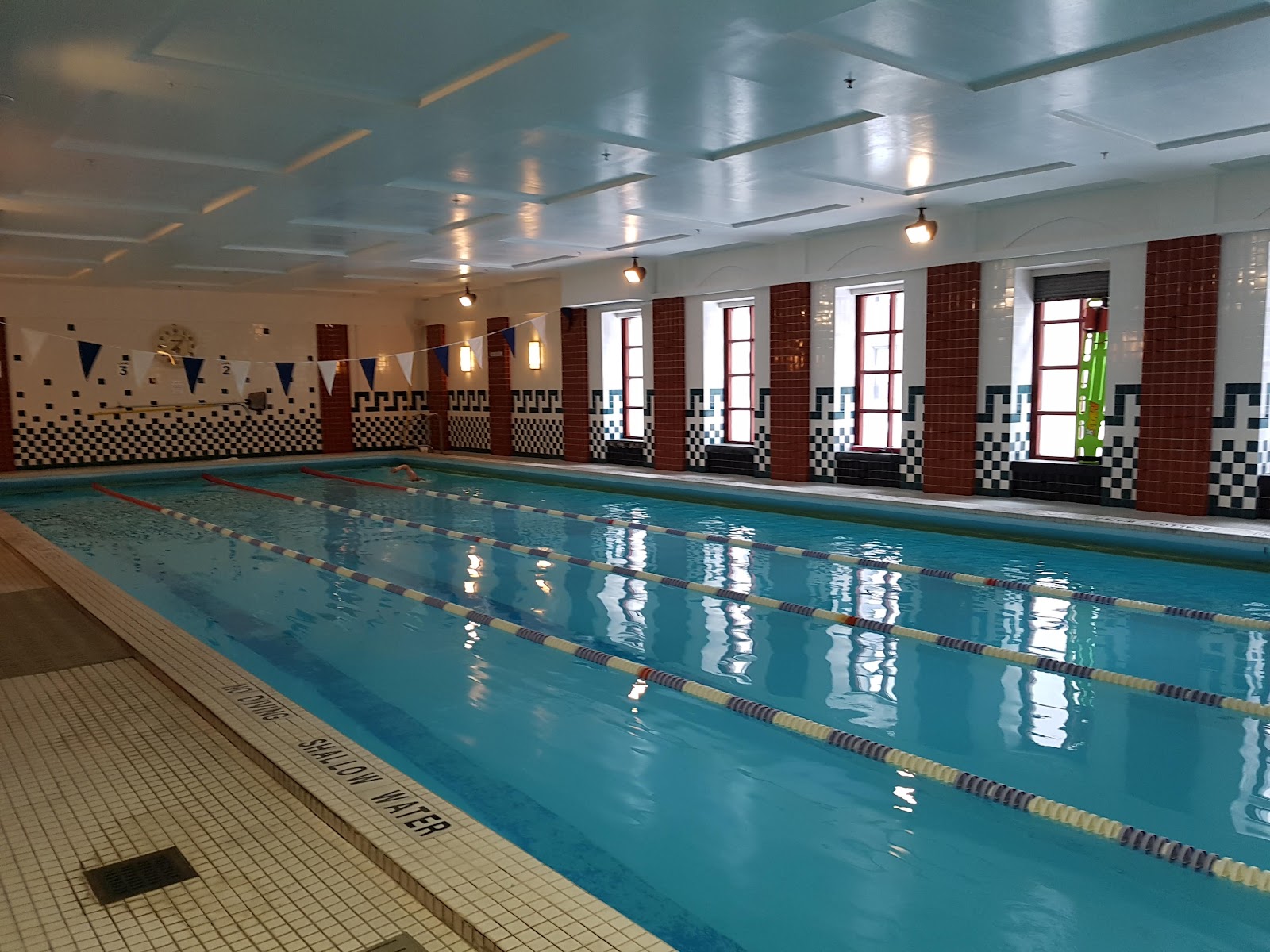
More frames from The Bellevue Hotel
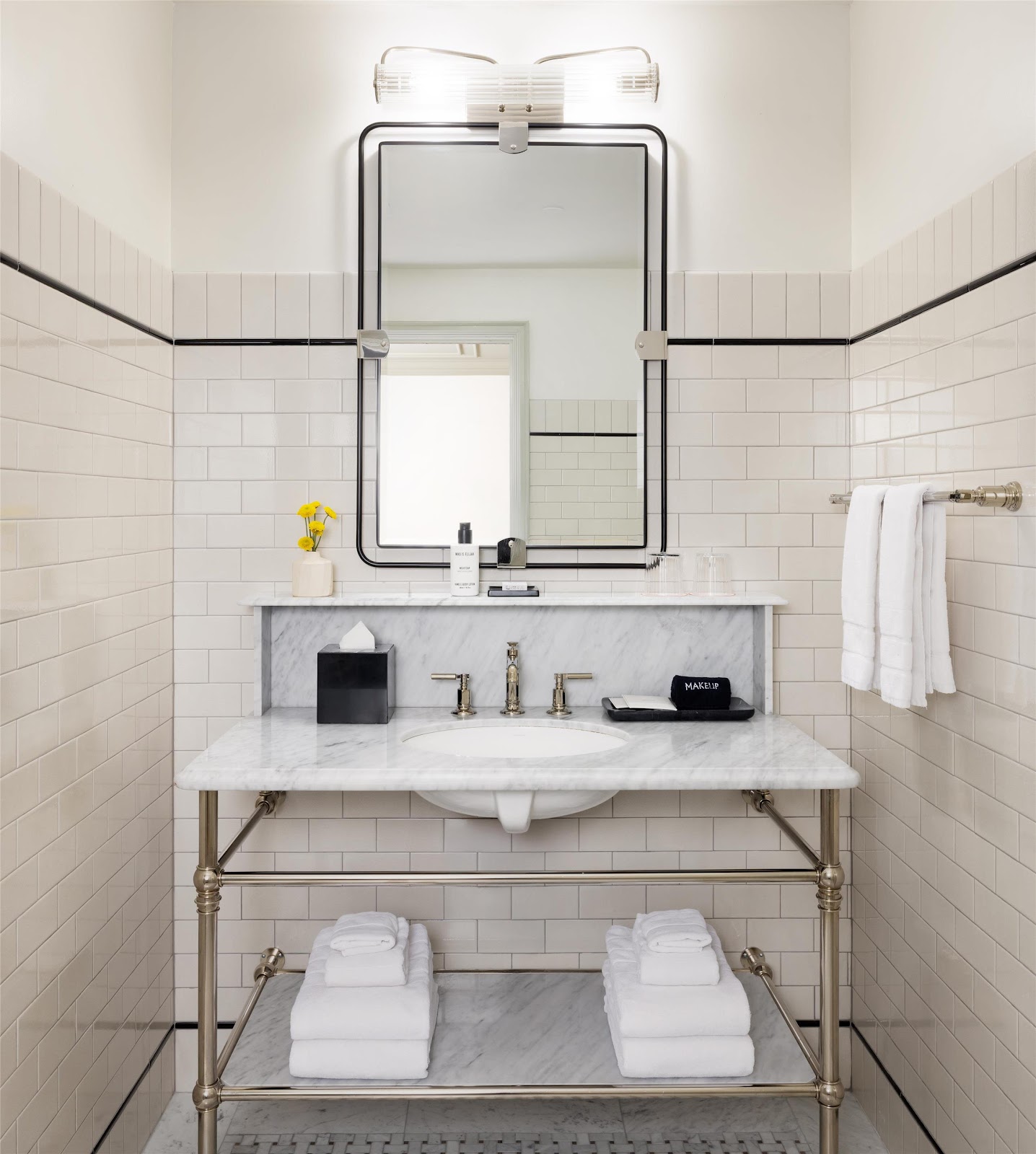
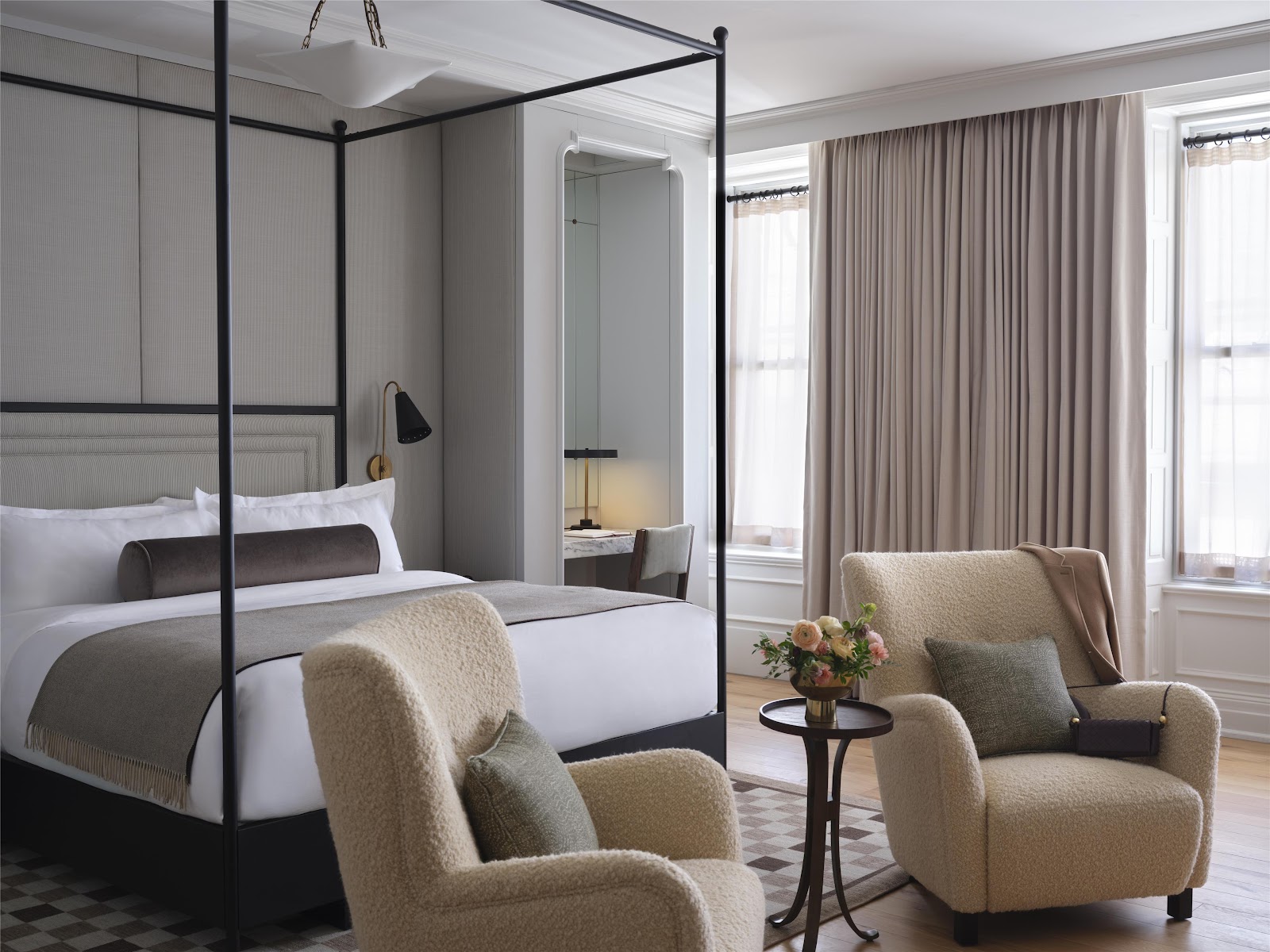
The Bellevue Hotel wedding photography: common questions
What is the building's real asset?
Height. In a city with a low-rise historic core, an upper floor gives a layered view — brick and slate roofs with the tower cluster rising behind — that nothing at street level can match.
Wide or long lens from a height?
Long. Compression stacks roofscape, towers and landmarks into bands behind the couple; a wide lens reduces all of it to a strip at the bottom of a big sky.
What does height do to the timing?
It buys thirty or forty extra minutes of golden light, because the surrounding roofline is below you and low sun arrives before it reaches the streets.
What do you do about a bright window?
Choose deliberately: blow it to a white shape, light the couple to match the view, or wait for the crossing about twenty minutes after sunset when both sit in one exposure.
What is easy to forget on an upper floor?
Clean glass. A window that has not been cleaned shows as haze and flare in a way a lobby window does not, and the crossing will not wait while you discover it.
Which season gives the best view frames?
Autumn, because the air is clearest — a long-lens frame of a distant tower cluster is sharper in October than in August. Winter gives the best crossing colour.
More Pennsylvania venue guides
We are writing a photographer’s guide to every venue we would happily shoot in Pennsylvania. Here are three more, plus the full index:
- The Four Seasons Philadelphia: A Walk Up Through a High-Rise Hotel
- The Franklin Institute, Philadelphia: Field Notes for a Wedding Photographer
- The Logan Hotel, Philadelphia: How the Light Moves
Planning a wedding at The Bellevue Hotel?
Press on the upper-floor question; it is the whole advantage. Tell us your date.