 The Please Touch Museum, Philadelphia: What It Suits and What It Does Not
The Franklin Institute, Philadelphia: Field Notes for a Wedding Photographer
A domed memorial hall and a science exhibit hall are opposite lighting problems under one roof.
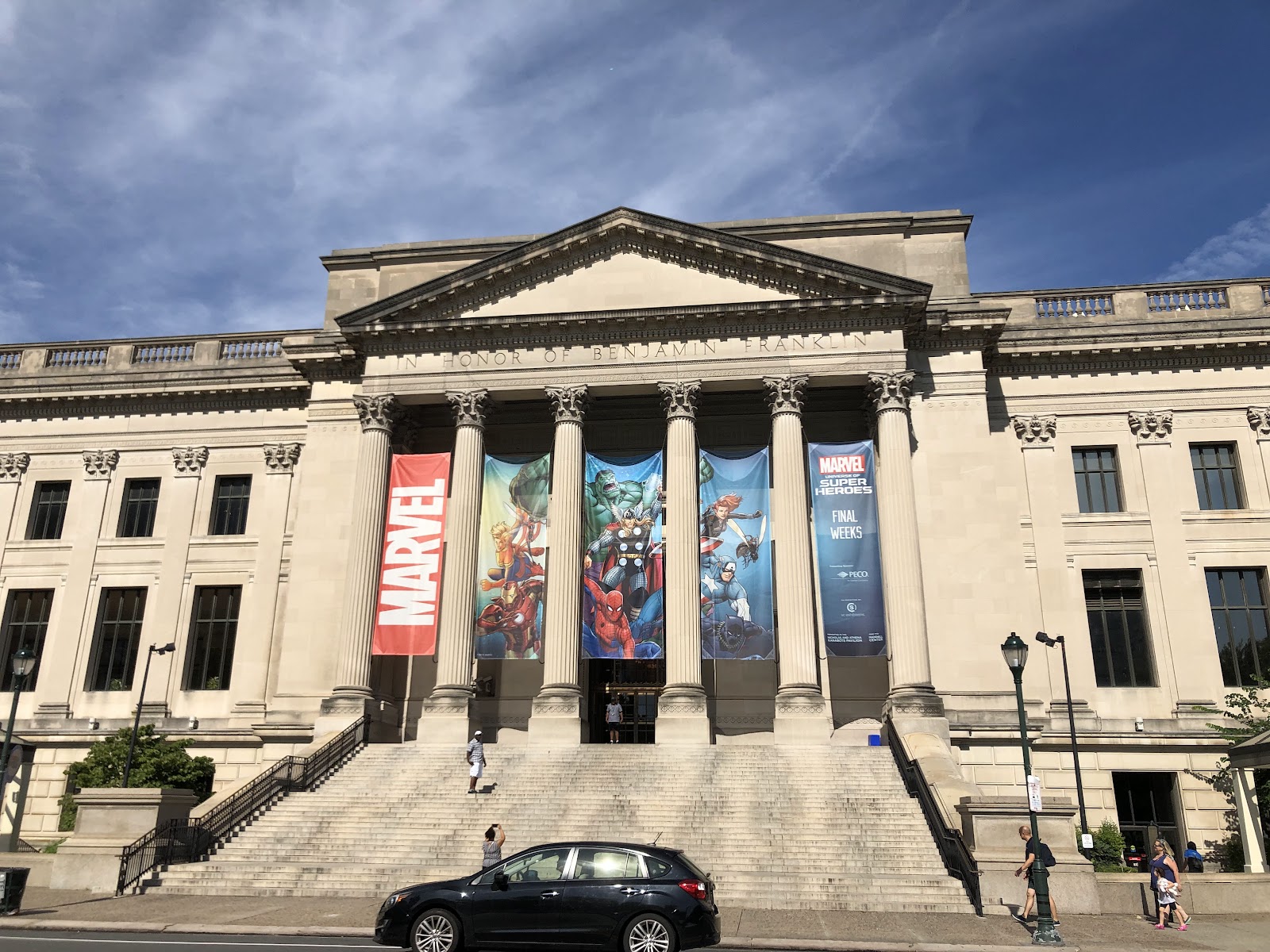
The Franklin Institute is a blend of history, science and romance, as its own description has it, all under one magnificent roof.
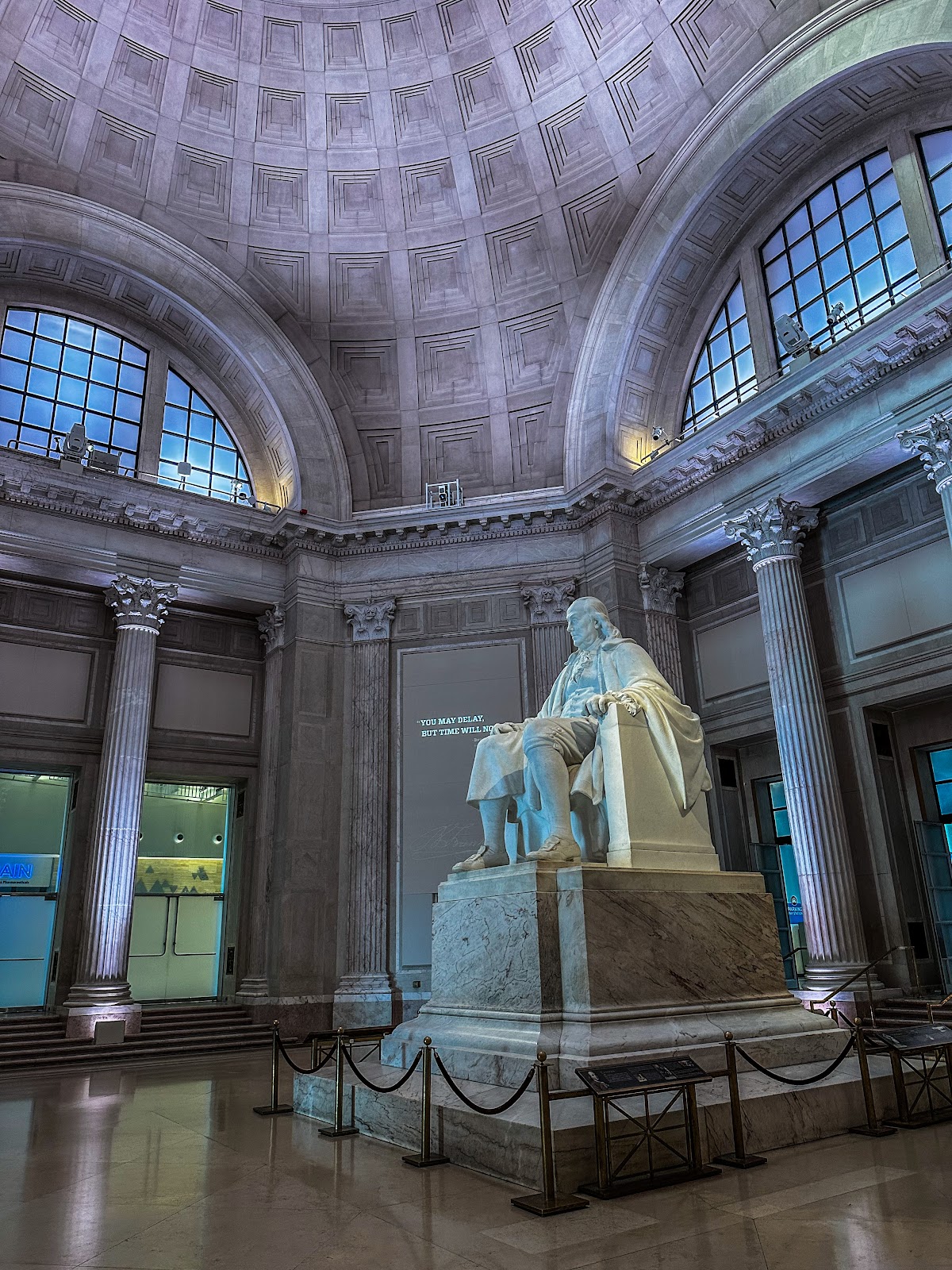
That blend is real and it is also two entirely opposite photographic environments sharing an address. The historical half is monumental neoclassical architecture — a domed rotunda in pale stone, lit from above, symmetrical and generous. The science half is exhibit halls, which are dark by design with internally lit, saturated, sometimes moving displays. One is soft, bright and colour-neutral; the other is dark, contrasty and coloured from six directions. They want opposite settings and opposite approaches, and the day works by treating them as two venues rather than as one.
These are field notes: the conditions you will meet in each and what they need. We have not photographed a wedding at the Franklin Institute; this combination of neoclassical civic architecture and modern exhibit space behaves consistently. Which spaces a booking includes, whether exhibit lighting can be dimmed, and whether the rotunda is available and for what are the questions for their team — the last one matters, because a memorial space may carry restrictions that a function room does not.
The Franklin Institute at a glance
| Where | The parkway, Philadelphia, Pennsylvania |
| Character | A neoclassical domed rotunda with modern science exhibit halls |
| Two worlds | Soft pale monumental stone, and dark saturated exhibit light |
| Best light | The rotunda, on any day, at any hour |
| Ask first | Spaces included, exhibit dimming, rotunda availability and restrictions |
The rotunda: what you meet, and what it needs
A domed rotunda in pale stone is one of the best interiors any city offers and the reasons are structural rather than aesthetic. It is tall and symmetrical, so the composition is half made before the camera is raised. It holds nothing light-sensitive, so it is generously lit. It is finished in pale stone, which reflects and raises ambient across the whole volume. And it is lit from above, through a dome or lantern, which produces soft even illumination that is the same everywhere.
That sameness is the advantage: position stops mattering, groups are easy, and nothing needs carrying. It is also the limitation, because light arriving from directly overhead darkens eye sockets and marks the line under the nose on everybody in the frame. The cheap fixes should be ready every time — a reflector held low, a lifted chin, or a small face-height source.
Direction can be brought back subtractively as well, and in a pale rotunda that works better than adding. Placing a couple against a wall, beside a column or in the shadow of an opening removes light from one side and restores a gradient. In light this even, subtracting beats adding.
Exposure needs a deliberate correction, because pale stone and a bright dome fill the frame and push a meter towards underexposure. Add a stop or more, exactly as for snow, and check that the stone still holds texture rather than clipping to blank cream.
Pale stone also bounces neutral-to-cool light into faces, which in flat weather renders skin slightly grey. A warm reflector, or a custom white balance set on a face in the position being used, is the correction — and it is worth carrying a warm gel specifically for stone interiors.
Symmetry rewards precision and punishes near-misses. A frame centred on a rotunda collapses if the camera is off centre or a degree out of level, because the geometry stops reading as geometry. Level, and either centre exactly or clearly do not. And a dome is worth pointing the camera straight up at once: coffers or ribs converging overhead make an abstract composition that almost nobody takes, and it costs a minute.
A memorial space carries a tone as well as a set of conditions, and it is worth asking what is appropriate rather than assuming. A rotunda built around a memorial is a place where restraint reads well, and the venue’s staff will be clear about what is welcome.
The exhibit halls, and the two-worlds problem
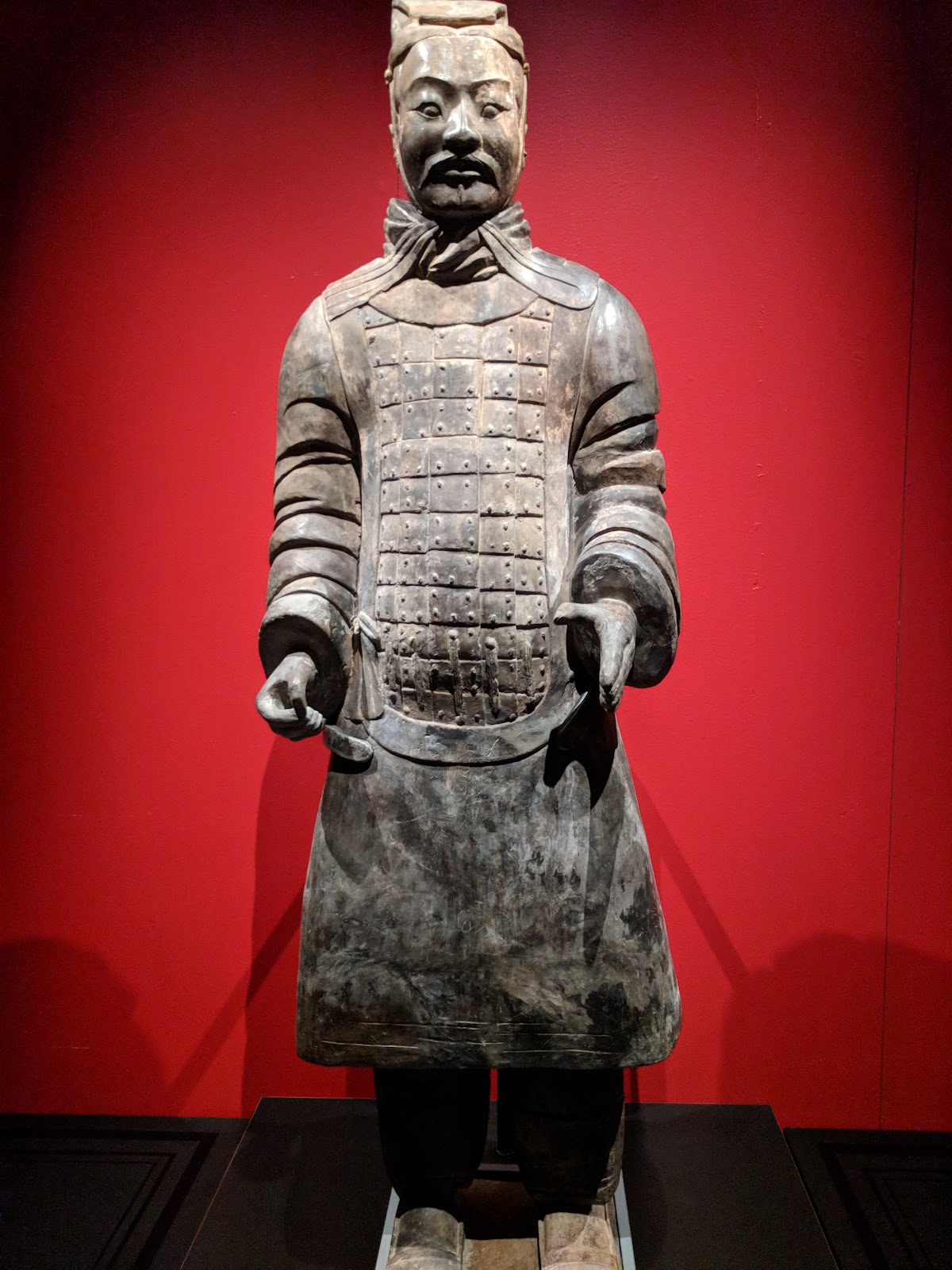
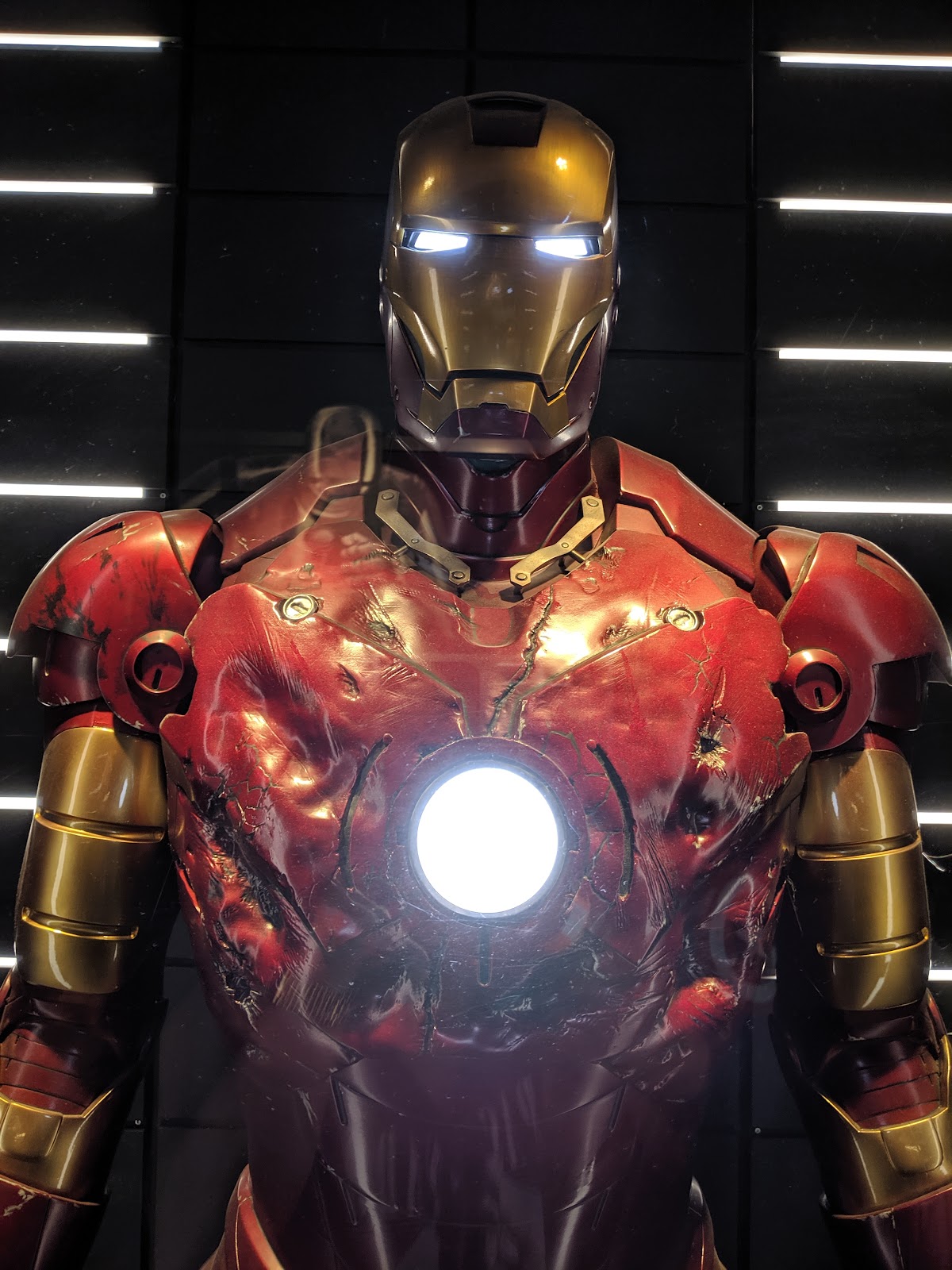
Science exhibits are designed to attract a visitor’s eye across a dark room, which means they are internally lit, saturated in colour, often moving, and frequently the brightest thing present. A hall with thirty of them is a room with thirty sources of different colours, none agreeing with any other.
The consequence on skin is severe and not fixable afterwards. A face lit by a blue screen on one side and an orange display on the other has two colour casts simultaneously, and white balance is a single global adjustment — it can correct one or the other, never both.
So one gelled source has to own the faces: off the camera axis at face height, bright enough to dominate the exhibit light falling on skin, with white balance set to the gel. The exhibits then stay as coloured as they are, which is what makes the frame interesting, while the faces are consistent from one frame to the next.
Motion compounds it. Moving, flashing or cycling displays change brightness and colour between one frame and the next, so a burst of three can contain three different colour balances. Where an exhibit cycles, wait for the phase you want rather than shooting through it.
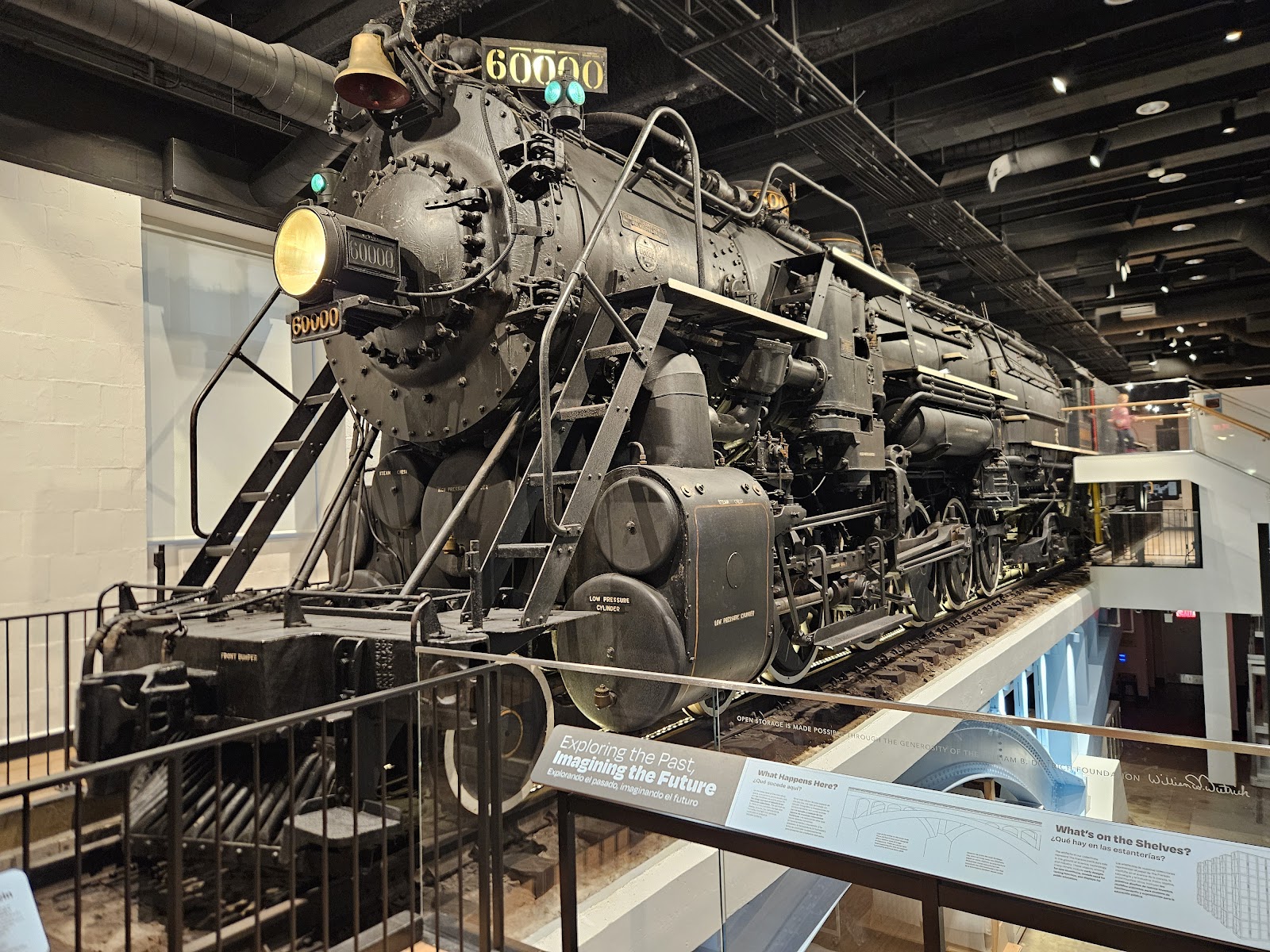
Dark halls with dark ceilings remove bounce entirely and the distances are real, so power and modifiers have to assume working distance — a small flash will be lost. The compensation is steep fall-off, which is free separation: a couple three metres in front of anything sits against darkness with no work at all.
Large exhibits behave as content rather than background, because scale and mechanical detail take the eye the way a face does. Commit — place the couple small and let the object be a co-subject — or go long and tight and exclude it. Half-in fails.
The two-worlds problem is the thing to manage across the day, and it is a sequencing problem rather than a technical one. Moving from a bright pale rotunda to a dark coloured exhibit hall is four or five stops and a complete change of colour, and a gallery that alternates between them frame by frame reads as inconsistent no matter how well each frame is made. The answer is to split by time: rotunda and architecture in one block, exhibit halls in another, and let the change land where the day naturally changes.
And the single most valuable request is whether exhibit lighting can be dimmed or switched in the spaces a wedding uses. A hall with most displays off and two left glowing converts thirty competing sources into two deliberate ones, which beats anything equipment can do.
- Fix the rotunda’s overhead light with a low reflector or a lifted chin
- Add a stop or more on pale stone, and carry a warm gel for it
- Point the camera straight up under the dome once — it takes a minute
- One gelled source owns the faces in the halls; let displays stay coloured
- Split the day by time: architecture in one block, exhibits in another
The parkway, the grid, and Philadelphia's year
Outside, the parkway is the most useful street in the city for a wedding and it is at the door. Philadelphia’s Center City is a strict grid oriented close to the compass, which means the east-west streets take low sun straight down their length and the north-south ones do not — plannable from a map rather than discovered on foot, which is unusual and genuinely useful.
The parkway is the exception: it runs diagonally across that grid, so it takes low sun at an angle no other street does, and it is tree-lined, which gives canopy shade along its length. That makes it both the reliable raking-light position and the reliable midday shade within a few minutes’ walk.
Canopy shade is the summer resource; dapple is its hazard, putting hot spots several stops above the surrounding shadow and shifting with any breeze, so full shade, open light, or wait. Green bounce from foliage is localised, so set a custom white balance on a face in the position being used.
Red brick away from the parkway is the friendly material — it bounces warm and flatters skin, where the museum’s own pale stone bounces cool and can grey it. Which surface a couple stands near changes the colour of a face here more than people expect, and walking two blocks into brick is a deliberate improvement.
White marble steps on Philadelphia rowhouses act as low reflectors, filling the shadow overhead sun creates — a located frame that is also a lit one. Cobbles in the older quarters give strong texture in raking light and a real trip hazard in heels.
Philadelphia’s four seasons matter. Summer is humid with afternoon thunderstorms common rather than rare, which for a large museum is an advantage: the day continues indoors without a decision. Autumn colour on the tree-lined parkway in late October is a genuine asset and a short window, and it complements a pale stone building particularly well.
Winter days are short, with sunset in the middle of the afternoon in December, which compresses the whole outdoor window into a couple of hours and makes an early protected block essential. Snow is the compensation and it is the best natural fill there is, lifting exactly the shadows a low sun carves while fooling a meter by about two stops — though against pale limestone the two together will clip if the exposure is not watched.
Humidity and cold both fog a lens, in opposite directions, and both take many minutes to clear. A warm dry museum interior and cold outside air is the worst combination, so let equipment come towards the temperature of where it is going before it gets there.
More frames from The Franklin Institute
The Franklin Institute wedding photography: common questions
Why is the rotunda the best interior?
It holds nothing light-sensitive so it is generously lit, and it is tall, symmetrical and pale-surfaced — soft even light at a usable level where position barely matters.
What does it need from you?
A fix for the overhead direction — low reflector, lifted chin or face-height source — plus a stop or more of added exposure and a warm reflector or gel, since pale stone fills cool.
Why can't white balance fix the exhibit halls?
Because it is one global adjustment. A face lit by a blue screen on one side and an orange display on the other has two casts at once, and correcting one leaves the other wrong.
What is the two-worlds problem?
Moving between a bright pale rotunda and a dark coloured exhibit hall is four or five stops and a complete colour change, so a gallery that alternates frame by frame reads as inconsistent.
How do you solve that?
Split by time. Architecture in one block, exhibits in another, so the change lands where the day naturally changes rather than in the middle of a sequence.
What is the most valuable request?
Whether exhibit lighting can be dimmed. Two displays glowing in an otherwise dark hall beats thirty competing ones, and it beats anything equipment can do.
More Pennsylvania venue guides
We are writing a photographer’s guide to every venue we would happily shoot in Pennsylvania. Here are three more, plus the full index:
- The Logan Hotel, Philadelphia: How the Light Moves
- The National Constitution Center, Philadelphia: The One Decision That Governs Everything
- The Philadelphia Museum of Art: One Frame and How It Is Made
Planning a wedding at The Franklin Institute?
Two venues, two blocks, one running order. Tell us your date.