 The Venue, Asheville: A Season-by-Season Guide
The U.S. Cellular Center, Asheville: The Problem, and Four Ways Out
A civic arena gives you volume and nothing else. Four ways to make that enough.
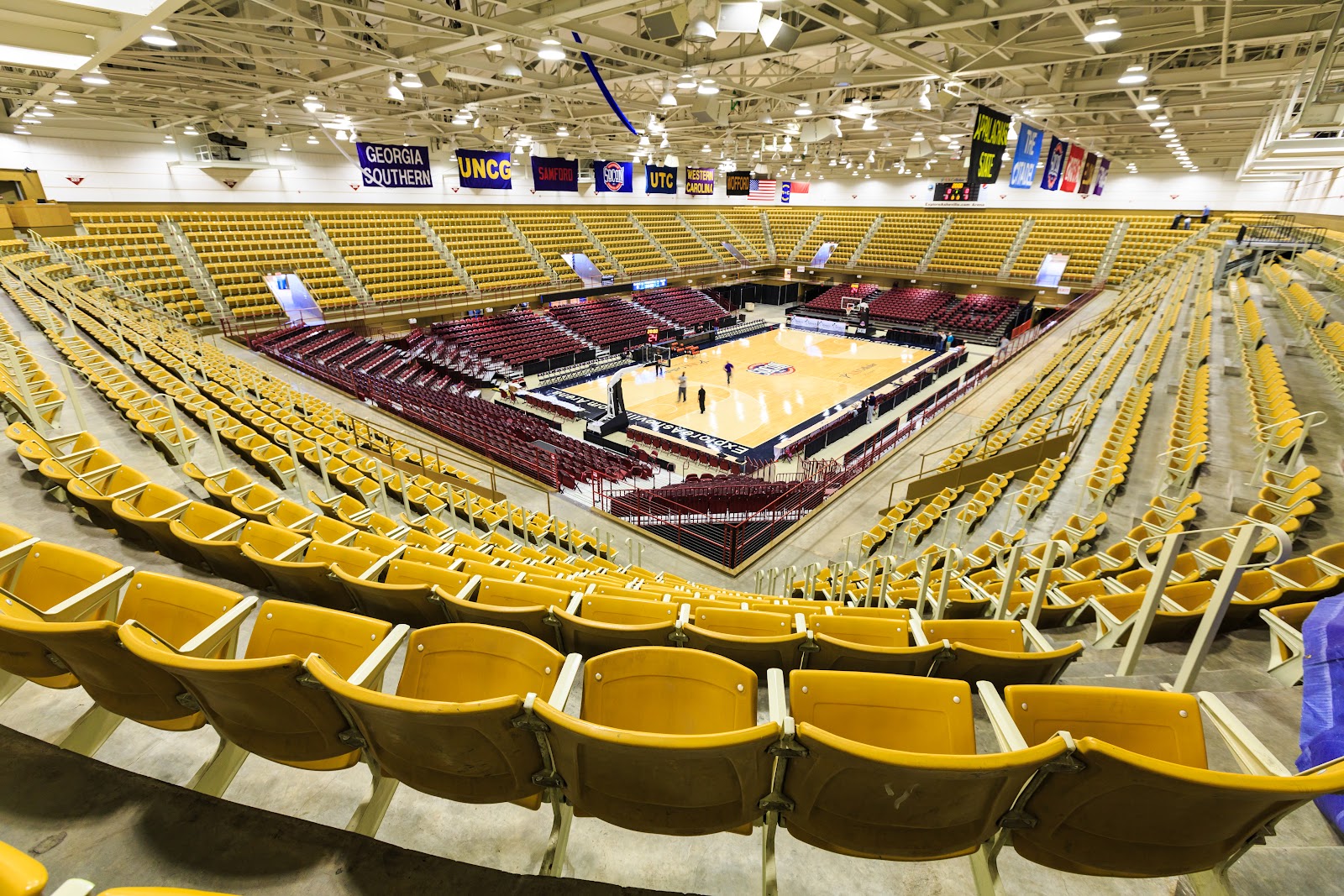
A civic arena is built to hold a crowd looking in one direction, and everything else about it is secondary. For a photographer that produces one clear problem with two halves.
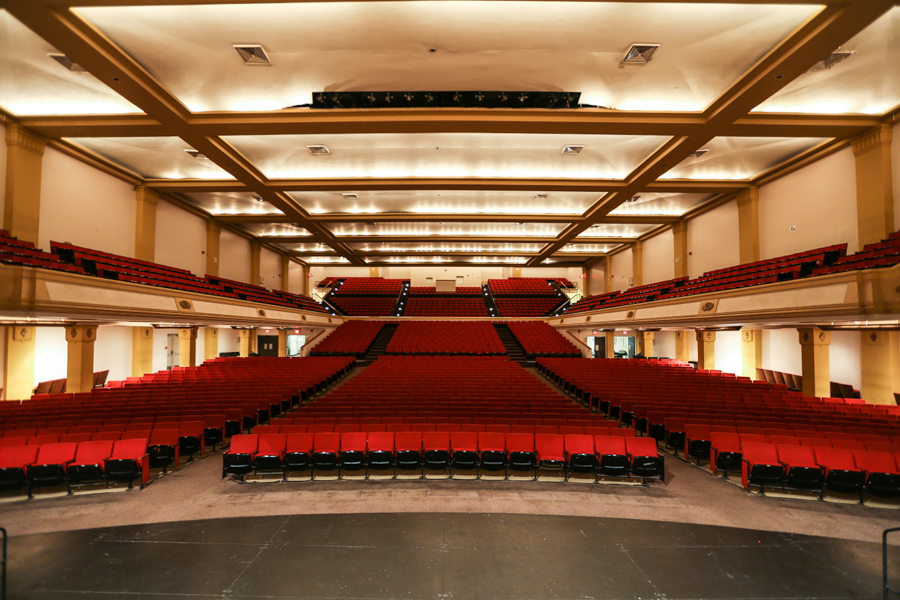
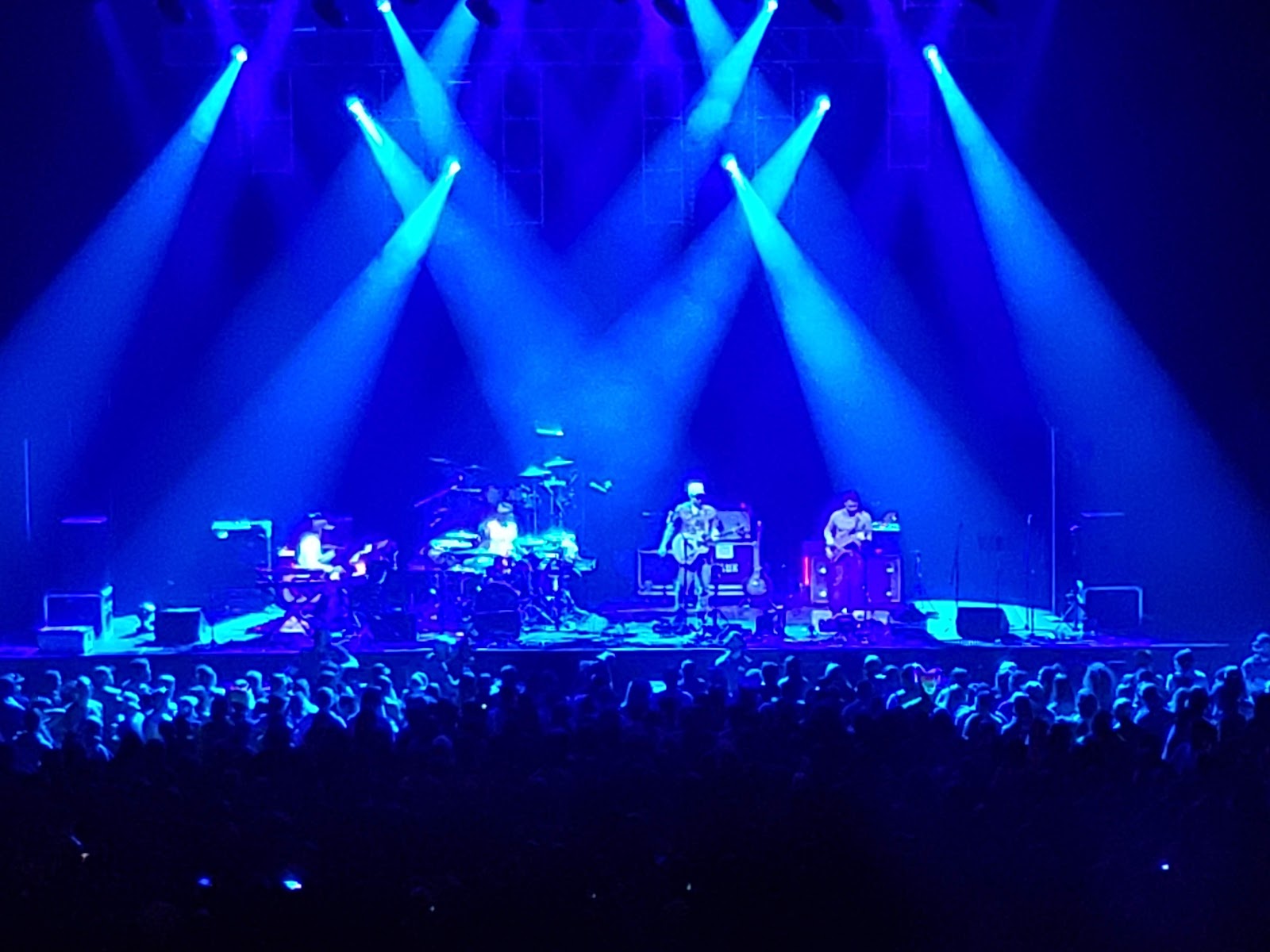
The main space has no daylight. An arena bowl is a windowless room lit by high-bay fittings on a rig, which means it never changes through the day and every frame in it is made with artificial light.
And it has no character. The surfaces are durable rather than decorative, the seating is the architecture, and nothing in a frame made there says where it was taken — which is a different problem from darkness and needs a different answer.
There are four ways out, and this particular city supplies a fifth that most do not: Asheville is in the Blue Ridge Mountains, which means there is genuinely distinctive landscape and architecture a short walk or drive from the door.
We have not photographed a wedding at the U.S. Cellular Center; civic arenas behave consistently. Which spaces are included, whether the bowl lighting switches in banks and what the access arrangements are are questions for their team.
The U.S. Cellular Center at a glance
| Where | Downtown Asheville, North Carolina |
| The problem | No daylight and no character in the main space |
| Way one | Use the scale: volume and free separation, with the banks switched off |
| Way two | Find the real features. Way three: the concourse and lobby glazing |
| Way four | Go outside — and here that means mountains and Deco brick |
Ways one and two: the scale, and the real features
The first way out is to use the one thing an arena has in abundance, which is volume — and the frame it gives is two people with genuine space around and above them, at a scale a photograph can convey because there is nothing in the way.
The physics is worth stating because it is counter-intuitive. In a large space the instinct is to put a light further back so it covers more ground, and that is exactly wrong: light falls off with the square of distance, so a source at three metres is four times as bright as the same source at six, and it is proportionally softer because it is larger relative to the subject. Close and modest beats far and powerful, every time.
And everything beyond the subject stays dark, which is not a side effect but the point. The darkness is what makes the volume read, and it separates the couple from a background that is otherwise an unlit expanse.
Bounce is unavailable and one test frame confirms it in five seconds: a roof and rig fifteen or twenty metres above the floor returns essentially nothing from a flash. So a source goes direct into a modifier, close, off the camera axis at face height.
The high-bay fittings are the other condition. Arena lighting has historically meant discharge lamps, which render skin poorly because their energy sits in a few narrow spectral bands, and increasingly means LED — and some older discharge fittings flicker at a rate that interacts with a fast shutter, making frames in a burst differ from one another. Either way, one gelled source should own the faces with white balance set to it, and a slower shutter averages out any flicker.
Bank switching is the most valuable control in the building and it is worth asking about by name. Arena lighting is almost always switchable in sections, and turning most of it off creates exactly the darkness the volume frame wants, at no cost and no effort.
The second way out is to find the building’s real features, and a civic arena has more of them than the bowl suggests.
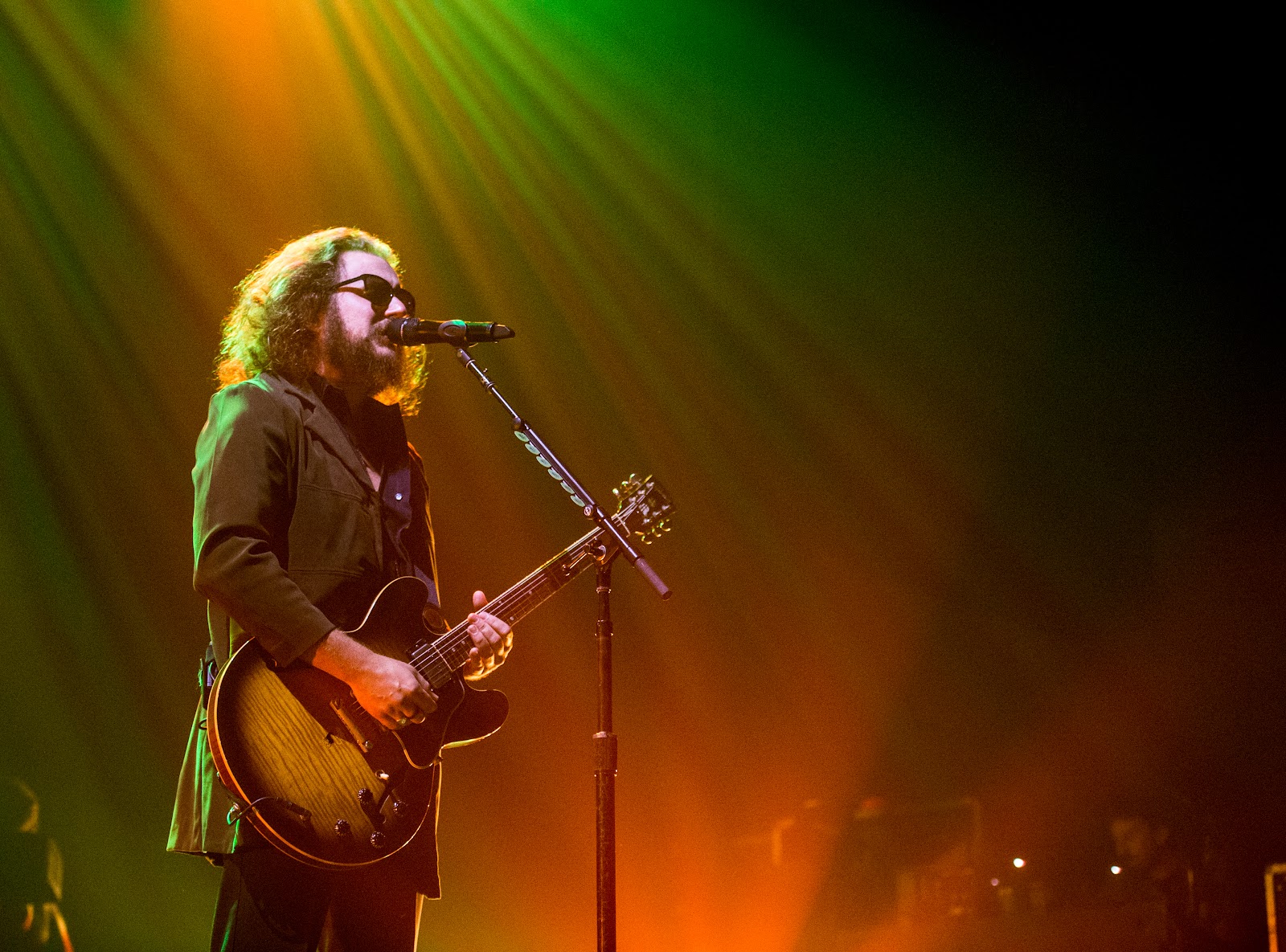
The concourse is the first, and where it is glazed it is the only significant daylight in the building — behaving like a very long window, best on the shaded side or under overcast, with about three metres between a group and the glass so the row is evenly lit rather than dropping two stops across it.
A stair is the second and it is the best architectural asset in most civic buildings: elevation, so a camera above a group sees faces rather than the backs of heads; a line for a descent; and a vertical composition. It wants light from one side, because overhead light on a stair shadows every eye socket at once.
A long corridor is the third, giving depth and repetition and the cheapest separation available anywhere. And back-of-house is the fourth — loading bays, service corridors, rigging and plant — which is frequently the most characterful part of a neutral building and is often available for ten minutes with someone escorting.
Ways three and four: the threshold, and outside
The third way out is the threshold between the dark bowl and the lit concourse, and it is the best portrait position in a building of this design.
Standing two or three metres inside a bowl portal, facing out into a glazed concourse, a subject is lit by a very large soft source with total darkness behind them. That needs no equipment at all, and one test frame at two, three and four metres in shows where the trade sits — watching the wall behind rather than the face, which will be fine at all three.
Where the concourse is not glazed, the same geometry works with the concourse’s own lighting as the source: it is brighter than the bowl, and the gradient between them is still usable.
The general point is that the interesting light in these buildings is always at a boundary rather than in the middle of a space, because the middle of any space in an arena is evenly lit and flat.
The fourth way out is to go outside, and in Asheville that is a stronger answer than in most cities, for two separate reasons.
The first is the architecture. Downtown here has a substantial stock of early twentieth-century buildings including a good deal of Art Deco, and Deco is unusually photogenic because of what it is made of — moulded terracotta, cast stone, tile and geometric relief, all of which read only under raking light. Light running along a moulded surface lifts every step and chevron; the same light facing it flattens the facade into a field of one colour. So those are low-sun frames, and they suit tight framing: a couple against a single bay of relief reads better than the same couple in front of a whole building.
Brick is the other local material and it behaves as a warm mid-toned reflector rather than a dark absorber — so a sunlit brick elevation is a genuine soft source, and a couple three or four metres out from one, facing it, is well lit for nothing. It needs a custom white balance set on a face, because brick bounce is markedly warmer than daylight.
The second reason is the mountains. Asheville sits in the Blue Ridge, and the haze that names those mountains is in every frame with distance in it — forest-derived scattering that turns successive ridges into progressively paler blue layers. That is aerial perspective occurring naturally and strongly, which means a long lens stacking ridgelines into layers of decreasing contrast is the region’s own frame and it needs only a position with a view.
It is also worth not correcting: pulling contrast back into a hazy distance undoes the effect, and a dehazed Blue Ridge looks like somewhere else.
The timed frame is the crossing: twenty-five to forty minutes after sunset, when the sky still holds colour at about the brightness of the city’s lighting, so one exposure holds couple, buildings and sky — and on a mountain site the ridges go deep blue while the buildings glow warm, which is a colour separation a flat city cannot give. Since the arena does not change through the day, taking ten minutes for it costs nothing indoors.
- Close and modest beats far and powerful — three metres, not eight
- Ask for bank switching; it creates the darkness the volume frame wants
- Work the threshold: two or three metres inside a portal facing the concourse
- Outside, rake the Deco relief and use brick as a warm reflector
- Stack the ridgelines with a long lens, and do not dehaze them
The Carolina mountain year
Asheville sits at elevation in one of the wettest parts of the eastern United States, which makes it cooler and cloudier than the surrounding lowlands — and for a building whose only real daylight is a glazed concourse, the frequent cloud is genuinely good news.
Overcast is the best soft source there is, which means glazing gives even, shadowless, flattering light with no direct-sun problem at all — and the question of which elevation to use dissolves, because on a grey day every glazed wall is a north-facing one.
Autumn is what the region is known for and it is long rather than sharp, because of the elevation range: colour peaks at the highest elevations in early October and works down into the valleys through the month and into early November. The air also clears as the humidity drops, so the long views are at their best — autumn gives the colour and the distance at the same time, which is the region’s strongest combination.
The colour carries one exposure note: intense red and orange foliage saturates the red channel long before the overall exposure looks bright, so err a third of a stop darker than instinct suggests and watch the individual channels.
Morning cloud inversions are frequent in autumn and they are the region’s other signature — from any elevated position, cloud filling the valleys while the ridges stand clear above. That burns off, so it is an early opportunity rather than something to schedule.
Summer is warm, very humid and frequently cloudy. The cloud is good for the glazing; the humidity softens shadows; and the cost is the long views, which the haze thickens to the point where distant ridges can dissolve almost entirely. Afternoon thunderstorms are a real possibility, which at an entirely indoor venue costs a decision rather than a picture.
The fogging problem is severe in this humidity: a body carried from an air-conditioned arena into July air fogs on every surface at once and does not clear quickly at these dew points. A large building cooled hard for occupancy makes the difference larger, so a bag opened twenty minutes early is the whole fix — and at a venue whose one unmovable frame is a timed crossing, a fogged lens means missing it.
Spring is long and staged because flowering works uphill through April and May rather than arriving at once, and the canopy has not yet closed, which makes any outdoor block more forgiving than in summer.
Winter is mild by northern standards with cold snaps rather than sustained freeze. The December midday sun at about thirty-two degrees above the horizon rakes brick, terracotta and relief ornament all day rather than lighting them from overhead — which makes winter quietly the best season for the city’s architecture, and the one time the middle of the day works outdoors.
The bare canopy also opens the views to the ridges, which are screened in summer, so the mountain backgrounds are at their most complete in January. And snow is occasional at this elevation; when it comes it turns the ground into a reflector, brightening the concourse glazing further.
More frames from The U.S. Cellular Center
The U.S. Cellular Center wedding photography: common questions
What is the problem with an arena?
Two things: no daylight in the main space, and no character. Nothing in a frame made in the bowl says where it was taken.
Should the light be further back to cover more?
No — the opposite. Light falls off with the square of distance, so a source at three metres is four times as bright as one at six, and softer relative to the subject.
What is the most valuable thing to ask for?
Bank switching in the bowl. Turning most of the lighting off creates exactly the darkness the volume frame wants.
Where is the best portrait position?
At the threshold — two or three metres inside a bowl portal facing out into the lit concourse. A very large source in front, total darkness behind.
What does Asheville supply outside?
Deco relief and brick that both read under raking light, and the Blue Ridge haze, which stacks ridgelines into layers of blue tone.
Is the frequent cloud a problem?
The opposite. It removes the direct-sun problem from the concourse glazing entirely, so every glazed wall works.
More Asheville venue guides
We are writing a photographer’s guide to every venue we would happily shoot in Asheville. Here are three more, plus the full index:
- The Asheville Masonic Temple: A Photographer’s Walk-Through
- Biltmore Estate: Reading the Light on 8,000 Acres
- The Botanical Gardens at Asheville: A Photographer Answers Your Questions
All Asheville Wedding Venues →
Planning a wedding at The U.S. Cellular Center?
Four ways out, and mountains outside. Tell us your date and we will use all five.