 The Somerset Club on Beacon Street: Is It Right for You?
The New England Aquarium, Boston: Four Ways Out of the Spiral Ramp Problem
A spiral ramp around a cylindrical tank is a geometry no other venue has, and it is not a flat floor.
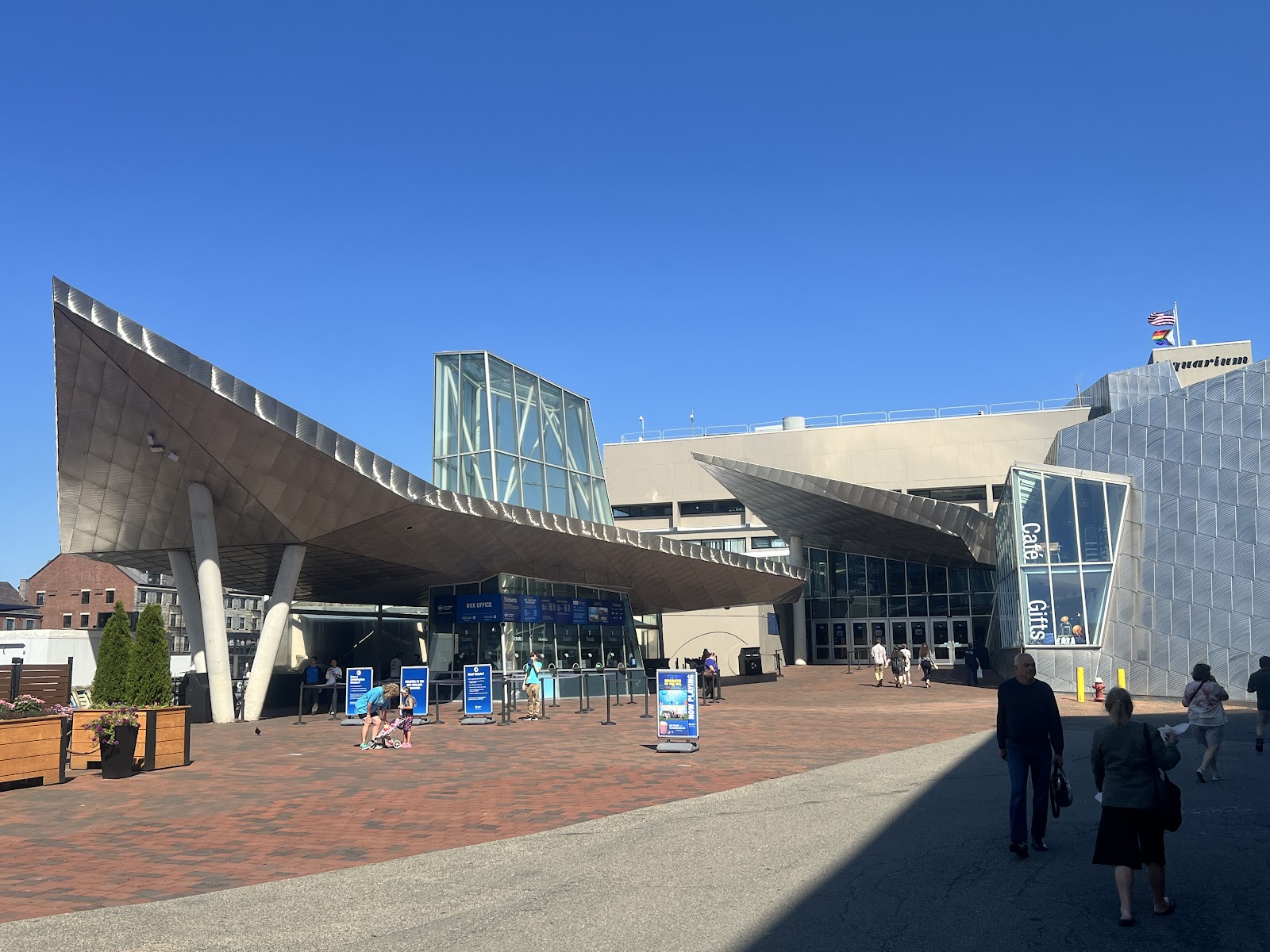
The New England Aquarium sits on Boston’s waterfront and gives, as its own description notes, a view of the harbour to guests as well as its exhibits.
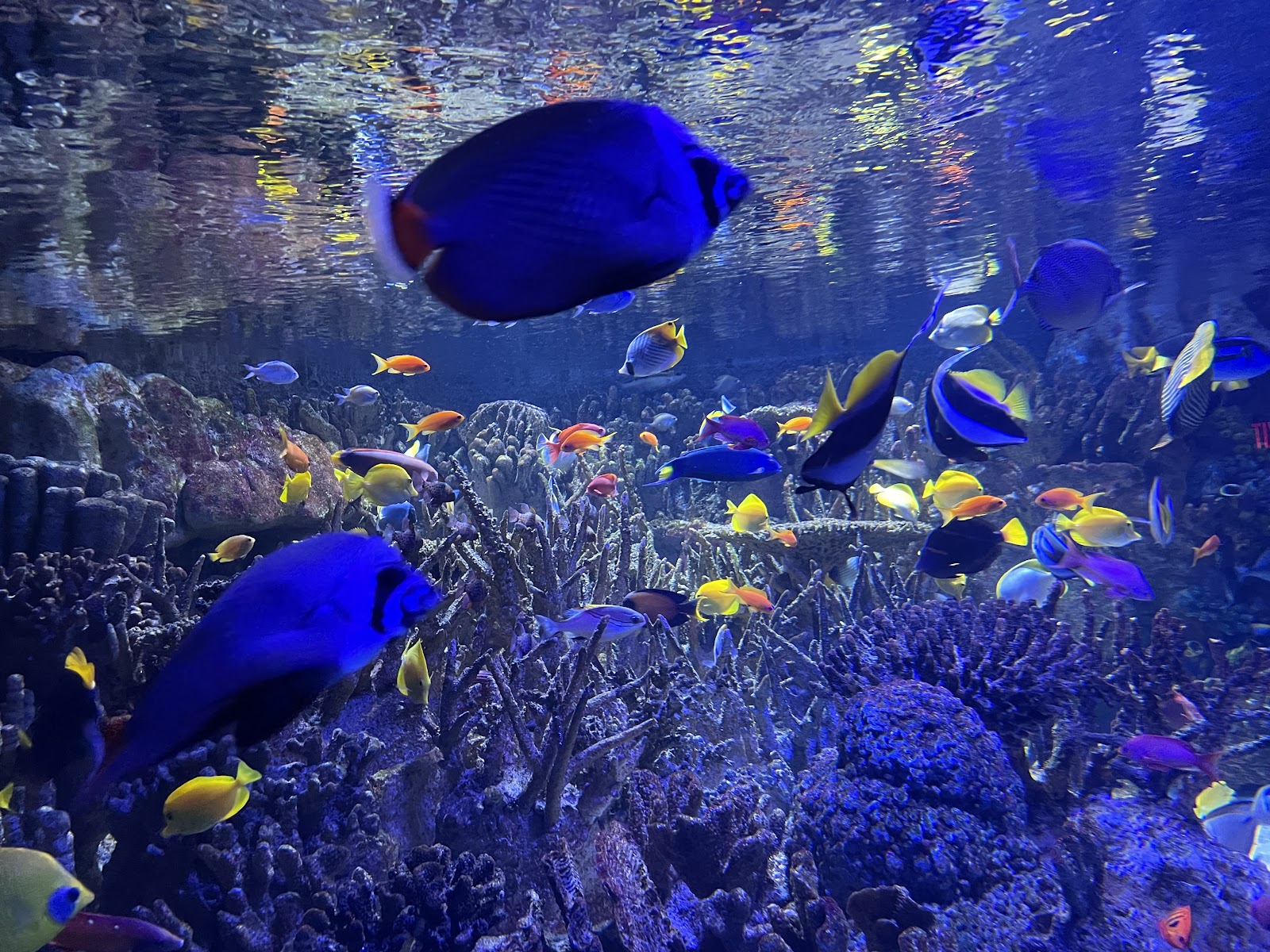
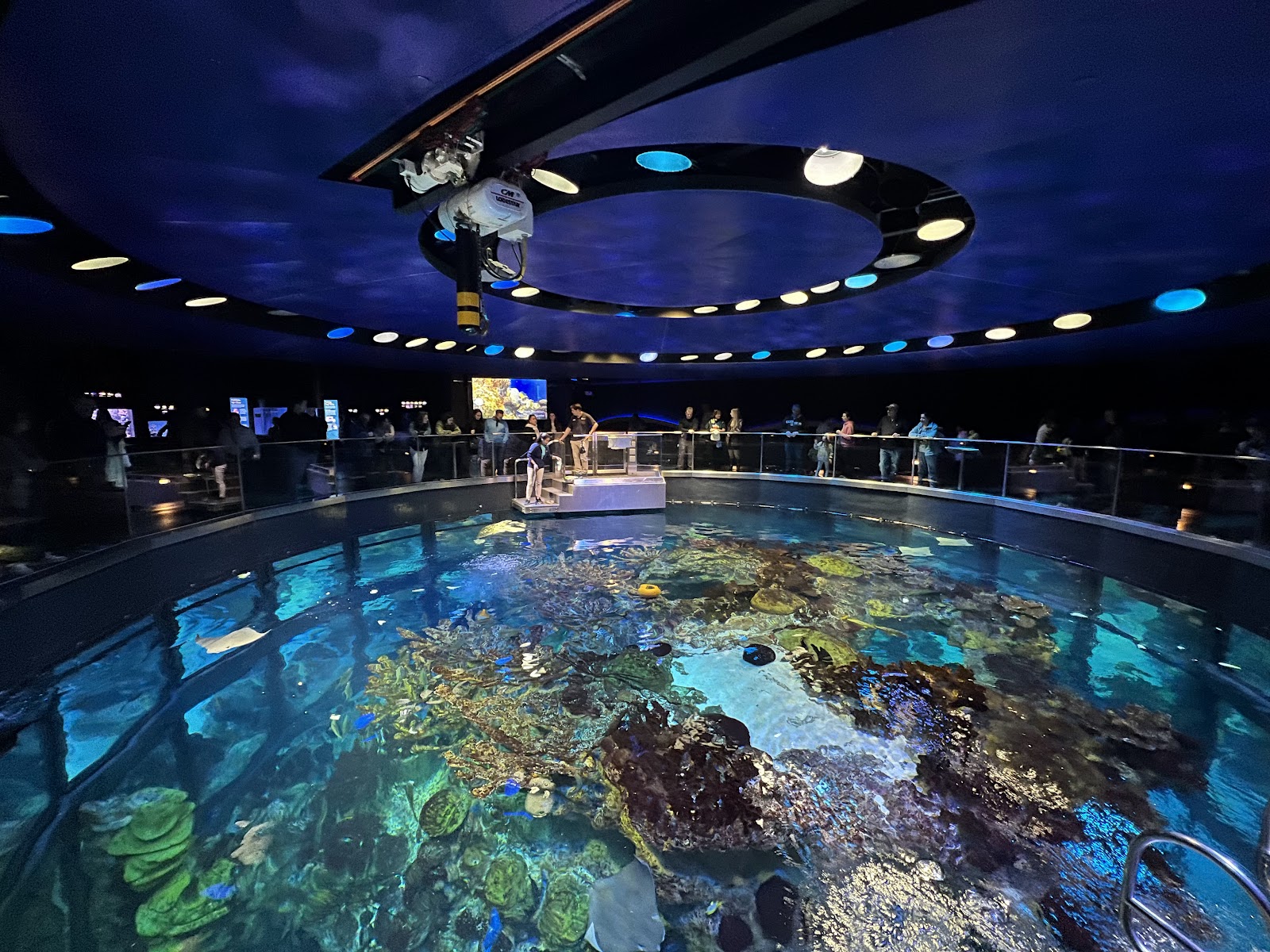
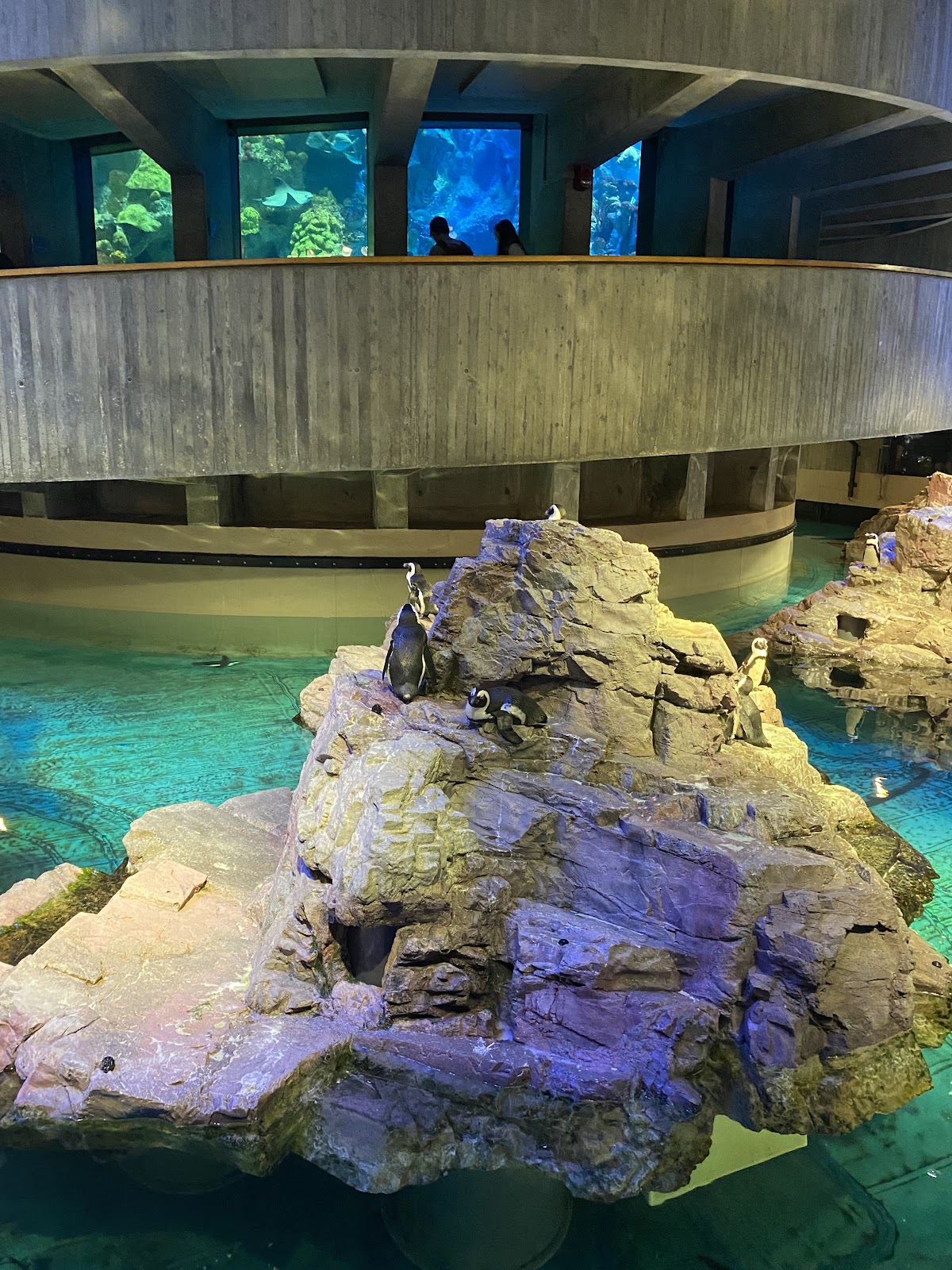
The interior’s defining feature is its central arrangement: a large cylindrical ocean tank with a ramp spiralling around it, so visitors circulate upward past curved glass rather than walking a flat gallery. That is a genuinely unusual geometry and it produces problems that a rectangular aquarium does not. The floor is never level. The glass is curved, so reflections behave differently from a flat panel. There is no place to stand back from anything, because the ramp is a corridor. And the tank light is blue, dim and moving, which is the ordinary aquarium condition on top of all of it.
This is written as that problem and four ways out of it. We have not photographed a wedding at the aquarium; large public aquaria behave consistently and curved glass behaves predictably. Whether flash is permitted near exhibits — often it is not, for the animals’ sake — and which spaces a wedding includes are the first questions.
The New England Aquarium at a glance
| Where | The waterfront, Boston, Massachusetts |
| Character | An aquarium arranged around a central tank with a spiral ramp |
| The problem | A sloping corridor, curved glass, no standing-back room, blue dim light |
| The payoff | Frames no other venue in the city can produce |
| Ask first | Whether flash is permitted near exhibits, which spaces are included |
Why a spiral ramp is its own problem
Start with the floor, because it is the thing nobody anticipates. A ramp is not level, which means every frame taken on it has a horizon decision to make: level the camera and the architecture leans, or match the ramp and the world tilts. Neither is wrong, but choosing by accident produces frames that look subtly incorrect in a way that is hard to diagnose afterwards.
The practical answer is to decide per frame and to be consistent within a sequence. Levelling to the true horizon and letting the ramp read as a slope is usually the better choice, because a slope reads as a slope and a leaning building reads as a mistake.
Curved glass is the second condition and it differs from a flat panel in a useful way and a difficult one. Usefully, a convex surface scatters reflections across a wide arc rather than returning them as a single mirror image, which means a light or a bright window behind the camera produces a smeared streak rather than a crisp double — often less obtrusive than a flat panel’s reflection. Difficultly, that same curvature means there is no single angle at which reflections disappear: the flat-panel trick of shooting perpendicular with a hood pressed against the glass does not fully work on a curve.
Curved glass also distorts. Anything seen through it — an animal, a diver, the far side of the tank — is stretched or compressed depending on the angle, which is not correctable and is sometimes the more interesting frame.
The third condition is the corridor. A ramp has width for people to walk, not to stand back, which means there is no working distance: the wide frame and the portrait frame are two different photographs and combining them fails. It also means a group cannot be arranged on the ramp at all, so group photography has to happen elsewhere and the position needs deciding in advance.
The fourth is the tank light, which is the ordinary aquarium problem. It is dim, because the level suits the animals; blue-green, because water absorbs red wavelengths; and moving, because water and animals move. Blue-green light on skin is deeply unflattering, and it cannot be globally corrected — neutralising it pushes everything else in the frame warm, which turns the water a colour it never was.
Four ways out
The first way out is one gelled source owning the faces. Off the camera axis at face height, gelled to a chosen temperature, bright enough to dominate the blue falling on skin, with white balance set to the gel — that gives faces that are neutral and consistent while the tank stays blue behind them, which is exactly what makes the frame. This is the single most effective move and it converts the problem into the asset.
Two cautions. On curved glass a source must be well off-axis and angled away, because a curve reflects across a wide arc and will find the lens from angles a flat panel would not. And flash may be prohibited near exhibits for the animals’ sake — which is why that is the first question to ask. A continuous LED source is usually the permitted alternative and works fine at these levels.
The second way out is to commit to the blue deliberately. A frame that accepts the cast as the look — a silhouette, a profile, two figures against a wall of illuminated water, a hand on curved glass — is a strong photograph that needs no equipment and no permission, and it often carries more of the place than a correctly lit frame does. Shooting both rather than choosing is the right answer.
The third way out is to use the spiral as architecture. A ramp curving away from the camera is a genuinely rare compositional element: it gives a continuous receding curve, repeating rail, and the option of photographing from above or below a couple simply by being further up or down it. Looking down the spiral from the top, with the couple a level or two below, is a frame that exists almost nowhere else — and it needs no glass in it at all.
The fourth way out is the harbour outside. The aquarium’s waterfront position gives what the interior cannot: water bouncing light up from below to fill faces, real depth to compress with a long lens, and open sky. The last ninety minutes on the harbour front, and the twenty minutes after sunset when the water glows and the city lights begin to read, are where the flattering frames live. The honest plan is that the tank supplies two or three spectacular photographs and the waterfront supplies the rest.
- Decide your horizon on a ramp and be consistent within a sequence
- One gelled source owns the faces; let the tank stay blue behind
- On curved glass, go well off-axis — a curve reflects across a wide arc
- Shoot down the spiral from above; it needs no glass and exists nowhere else
- Plan group photographs off the ramp; there is no room on it
The waterfront, and Boston through the year
Boston’s harbour front is the outdoor half and it behaves like any quayside with one local addition. Water acts as a broad reflector, raising ambient and filling faces from below, which is genuinely flattering when the sun is low and unflattering when it is high. It also gives depth: a long lens stacks water, shipping, the harbour islands and the city into layers where a wide lens reduces all of it to a strip.
Still water mirrors early in the day and breaks into texture as the breeze builds, so a reflection frame is a morning proposition. Harbour wind is stronger and gustier at the water’s edge than in the streets behind, which matters for a veil, for hair and for any light stand.
The dusk crossing is the one timed frame: roughly twenty minutes after sunset the harbour and city fall to about the brightness of the building’s lighting, and one exposure holds the lit facade or interior, the couple and the water behind. After it the harbour goes dark except where lights break across it into vertical coloured lines — worth taking once long for smear and once lit for texture.
New England seasons differ sharply. Summer is humid but rarely extreme, and the long June days put sunset late enough that the dusk crossing lands well into the reception, which needs agreeing in advance as a short deliberate excursion. Autumn brings the region’s foliage peaking in mid-October, which on a waterfront reads as a coloured band on the far shore at a long focal length rather than as canopy overhead.
Winter is the hard season on a harbour front. Sunset falls in the middle of the afternoon in December, compressing the outdoor window into a couple of hours, and a quayside in a north-easterly wind is genuinely cold — outdoor blocks become three or four minutes rather than twenty, which is a welfare decision as much as a photographic one. Snow is the compensation and it is the best natural fill there is, while fooling a meter by about two stops.
Coastal fog in spring and early summer is worth stepping out into specifically: it separates near from far, reduces harbour clutter to soft shapes and produces the frame nobody plans for.
One climate note specific to an aquarium: the interior is warm and humid by design, so a camera brought in from cold winter air will fog comprehensively and may take a long time to clear. Let equipment come up towards the interior temperature before it is needed — and in December, expect the reverse problem on the way back out.
More frames from The New England Aquarium
The New England Aquarium wedding photography: common questions
What is unusual about the interior?
A large cylindrical tank circled by a spiral ramp, so the floor is never level, the glass is curved, and there is no room to stand back from anything.
How do you handle a sloping floor?
Decide the horizon per frame and stay consistent within a sequence. Levelling to the true horizon and letting the ramp read as a slope is usually better, because a leaning building reads as a mistake.
How does curved glass differ from flat?
It scatters reflections across a wide arc rather than returning a crisp mirror image — often less obtrusive — but there is no angle at which reflections disappear, so the flat-panel hood trick does not fully work.
What is the most effective lighting move?
One gelled source off the camera axis at face height, bright enough to dominate the blue on skin, with white balance set to it. The tank stays blue and the faces stay neutral.
What is the frame that exists almost nowhere else?
Looking down the spiral from above, with the couple a level or two below. It uses the architecture rather than the glass, and it needs no permission or equipment.
What should be asked first?
Whether flash is permitted near exhibits. Often it is not, for the animals’ sake, and a continuous LED source is usually the permitted alternative.
More Boston, MA venue guides
We are writing a photographer’s guide to every venue we would happily shoot in Boston, MA. Here are three more, plus the full index:
- Old South Church, Boston: The One Decision That Governs Everything
- The Algonquin Club on Commonwealth Avenue: Questions Answered
- Arlington Street Church: Field Notes for Wedding Photographs
All Boston, MA Wedding Venues →
Planning a wedding at The New England Aquarium?
Ask about flash first, then plan the spiral. Tell us your date.