 Roxy’s Downtown: Photographing a Small Stage Room
Sedgwick County Zoo: What a Plains Zoo Suits and What It Does Not
Wind, no shade and fencing are the three constraints. A very long golden hour is what you get back.
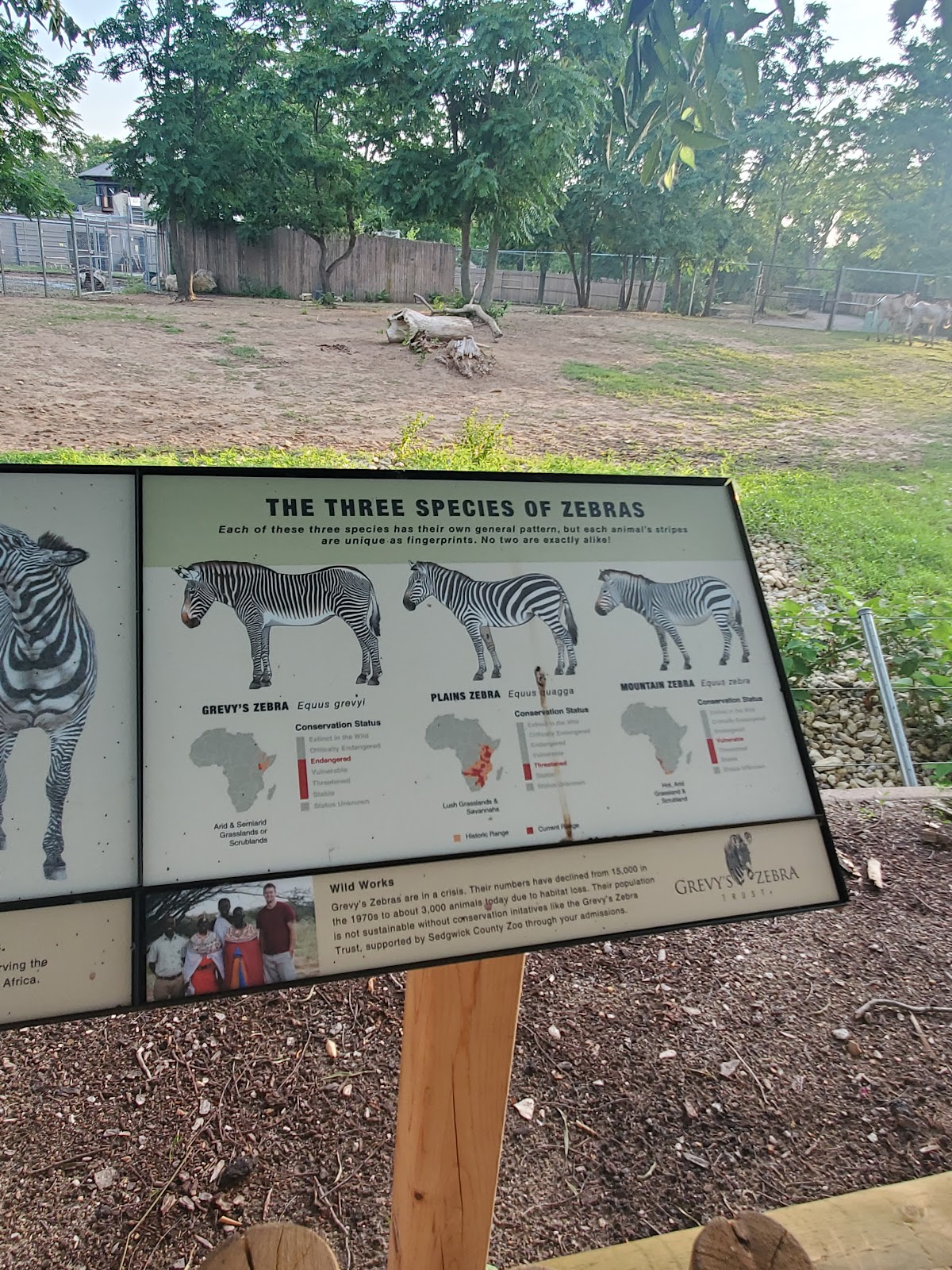
The Sedgwick County Zoo occupies an extensive site on open ground outside Wichita, Kansas, with animal habitats, water features, planted areas and buildings spread across it.
A zoo on the plains combines two sets of constraints rather than one. There are the constraints every zoo has — mesh, railings, glass, signage and service infrastructure everywhere, none of it movable and all of it reading badly. And there are the constraints of open Kansas ground: constant wind, very little continuous shade, and an enormous sky that dominates any wide frame.
Together those rule some briefs out entirely and suit others rather well. This is an honest account of which. We have not photographed a wedding at the Sedgwick County Zoo; enclosure fencing and open plains ground behave the same wherever they occur. Which areas host events, whether the grounds are private during them, and what shelter exists are questions for their events team — and privacy and shelter shape the day most.
The Sedgwick County Zoo at a glance
| Where | Open ground outside Wichita, Kansas |
| Character | Large zoo with habitats, water and planted areas across an extensive site |
| Three constraints | Fencing, no continuous shade, and constant plains wind |
| The reward | A very long low golden hour, and a sky that fills the frame |
| Ask first | Whether the grounds are private, and what shelter exists |
The three constraints, and the one tool for each
Fencing first, because it is in every frame. Mesh, bars, railings and safety barriers are unavoidable at a zoo, and the tool is optical: a long lens at a wide aperture, with the couple several metres in front of any barrier, turns mesh into an unreadable soft band. It is present in the frame but not legible as fencing, and it works consistently. The corollary is that a wide lens near an enclosure is a mistake — wide angles hold background detail sharp and include far more of it, so a wide frame near a barrier contains a visible fence, a sign, a bin and a service door.
Shade second. Zoo grounds are open because habitats need light and visitors need sight lines, and on plains ground the trees that exist are scattered rather than closed — which gives dapple, several stops across a face, shifting with any breeze, and correctable only by moving people. The reliable shade comes from buildings: a large structure throws a hard-edged, even, dependable shadow, and standing a couple two metres inside that line facing out towards the bright grounds gives a large soft key with a dark surround.
Wind third, and in Kansas it is the constant rather than the variable. Veils need to be a held-or-removed decision before the day rather than a question on it. Unweighted light stands are a hazard around guests and animals both. Any water on the site stops reflecting the moment a breeze arrives, which removes the mirror frame unless the air is calm early. And tall arrangements move continuously, which shows as softness in frames and as stress on the day.
None of those is unusual individually. What makes a plains zoo demanding is having all three at once across a large site, which means the plan has to be specific about locations rather than exploratory.
Who this venue suits
There are briefs it serves genuinely well:
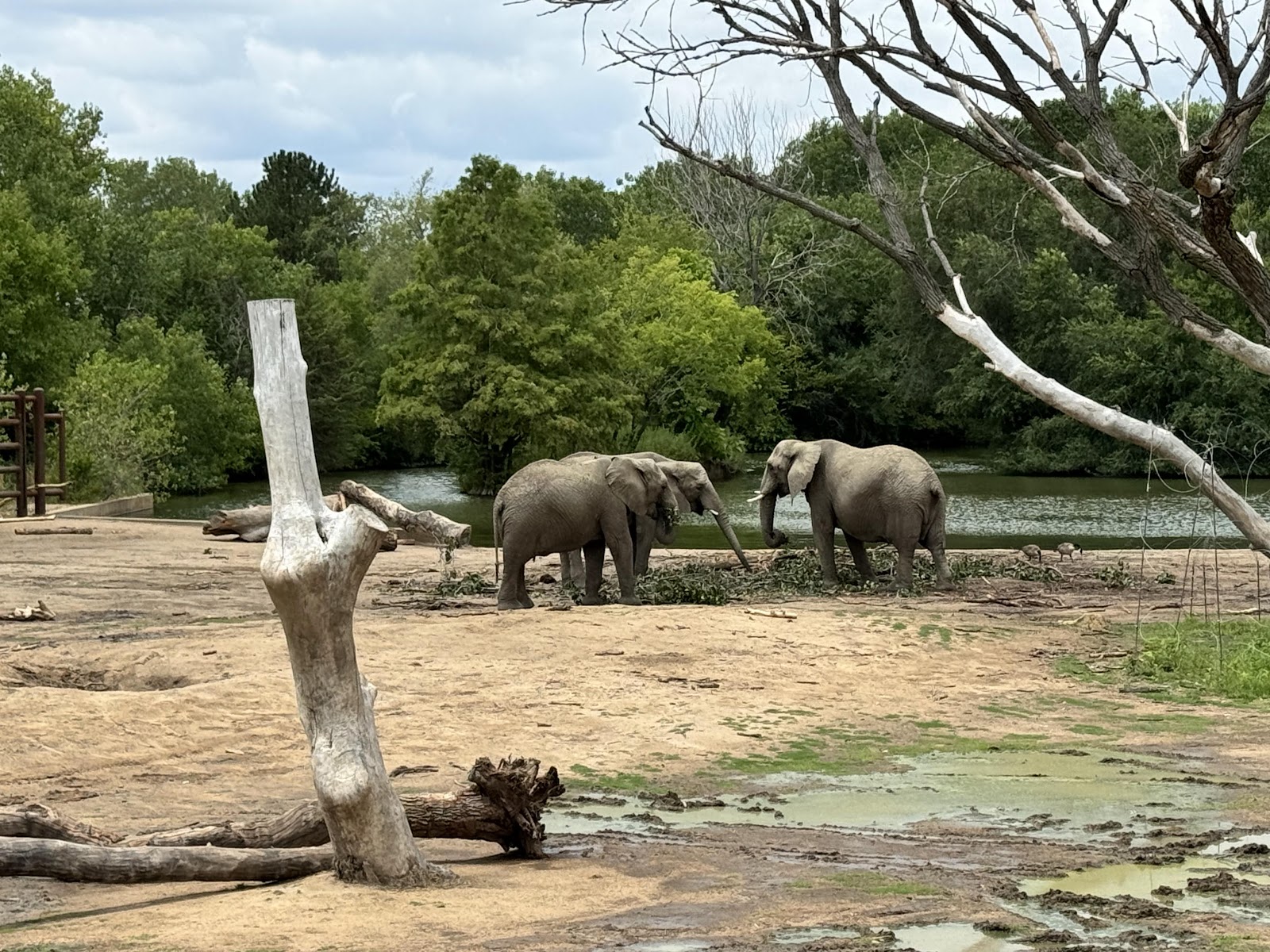
- Couples who actively want the animals and habitats in the photographs rather than merely nearby
- Larger guest counts, since an extensive site absorbs numbers without feeling crowded
- Late-afternoon and evening weddings, which get the long plains golden hour
- Anyone wanting a wedding gallery that looks unlike every other wedding gallery
- Couples happy for the photographer to work almost entirely on a long lens
Who should look elsewhere
And several reasonable intentions run into the constraints:
- Anyone whose gallery must contain no fencing, mesh or railings anywhere
- Midday summer ceremonies in the open, where there is no shade and no positional fix
- Briefs relying on still water reflections, which Kansas wind removes most days
- Couples wanting architectural character, since zoo buildings are functional
- Anyone who cannot tolerate visitors in frame, unless the grounds are private
The reward: a long golden hour and an enormous sky
Open plains ground gives a longer golden hour than anywhere with topography, and it is worth understanding why. With no hills to hide the sun and little haze to soften it, the sun stays visible almost all the way to the horizon, so instead of a brief window before it disappears behind something you get an extended period of genuinely low raking light. On a large open site that means the last ninety minutes are usable throughout rather than in a rush.
Low raking light also solves the fencing problem partly on its own. Light coming across a site rather than down onto it puts mesh in shadow while lighting the couple, which reduces how much the barrier reads — the same frame that fails at midday often works at seven.
The sky is the other plains asset and it should change the composition rather than sit behind it. On open ground the sky occupies a large share of any wide frame, so a couple placed small with a low horizon and dramatic cloud above is the shot this landscape gives. It is also what makes the twenty minutes after sunset worth staying for: an unobstructed horizon fills the entire frame with colour instead of showing it in gaps.
Water features give the upward fill that makes faces work under a high sun, on the rare calm day. And any indoor habitat building is the weather and midday answer, with the usual conditions — dim, often strongly coloured, and glazed panels that reflect your lights straight back. Shoot those obliquely and keep any source well off the camera axis.
Two Kansas practicalities. Severe convective storms occur in spring and early summer, which build fast and can be serious rather than merely wet — that needs a decision point and a shelter plan rather than optimism. And distances on a large zoo site are long, with no vehicle access in most areas, so plan one or two working positions rather than a tour and carry what each needs in a single trip.
More frames from The Sedgwick County Zoo
The Sedgwick County Zoo wedding photography: common questions
How do you keep fencing out of the frame?
A long lens at a wide aperture with the couple several metres in front of the barrier, which turns mesh into an unreadable soft band. A wide lens near an enclosure holds background detail sharp and will include a fence, a sign and a service door.
Where is the shade?
Behind buildings, not trees. Zoo grounds are open because habitats need light, and plains trees are scattered rather than closed so they give dapple — several stops across a face, moving with the breeze. A building’s shadow is hard-edged and dependable.
How much does wind matter?
It is the Kansas constant rather than a variable. Settle the veil as held or removed before the day, weight every stand, and accept that any water on site stops reflecting the moment a breeze arrives — so the mirror frame is early-morning or nothing.
What is the compensation?
A very long golden hour. With no hills to hide the sun and little haze, it stays visible almost to the horizon, so the last ninety minutes are usable throughout rather than in a rush. And low raking light puts mesh in shadow while lighting the couple.
How should the plains sky be used?
As part of the composition rather than as background. On open ground the sky fills a large share of any wide frame, so place the couple small with a low horizon and let dramatic cloud take the upper two-thirds.
What about the indoor habitat buildings?
They are the midday and weather answer, with the usual conditions — dim, often strongly coloured, and glazed panels that reflect your lights straight back. Shoot the glass obliquely and keep any source well off the camera axis.
More Kansas venue guides
We are writing a photographer’s guide to every venue we would happily shoot in Kansas. Here are three more, plus the full index:
- The Wichita Art Museum: Field Notes on Glass Under a Big Sky
- Colbert Hills Golf Course, Manhattan: What It Suits, and What It Does Not
- The Flint Hills Discovery Center, Manhattan: One Frame, and How It Is Made
Planning a wedding at The Sedgwick County Zoo?
Three constraints, one long golden hour, and a plan that names locations. Tell us your date and we will make it.