 The Hoxton Chicago: Photographing a Wedding in Fulton Market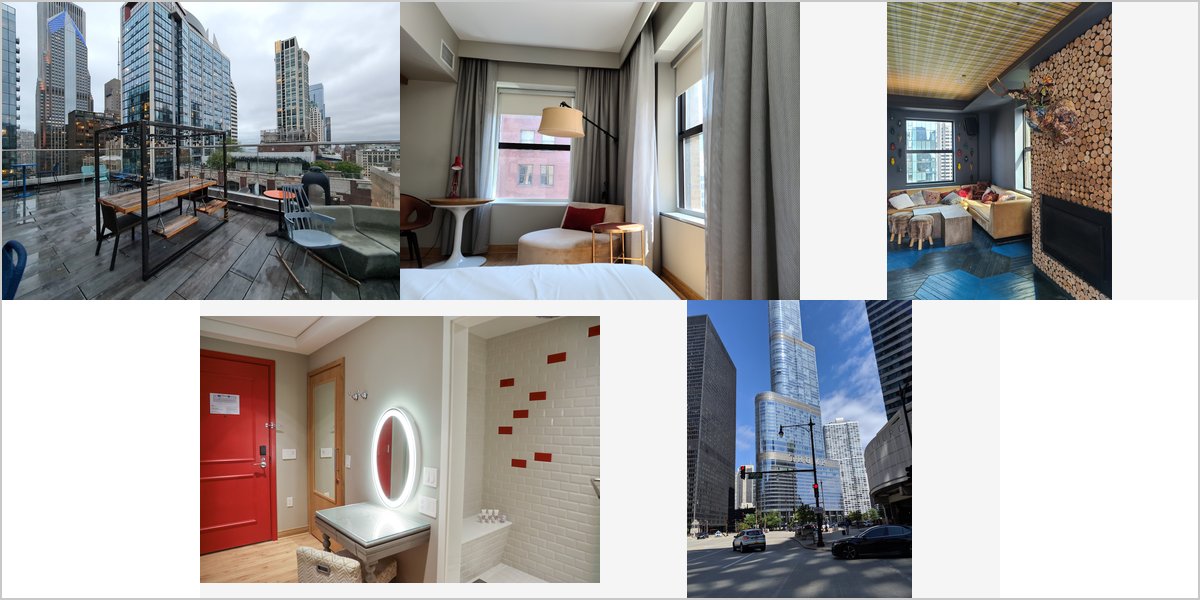
September 4, 2026
Virgin Hotels Chicago: A Venue of Small Rooms Rather Than Large Ones
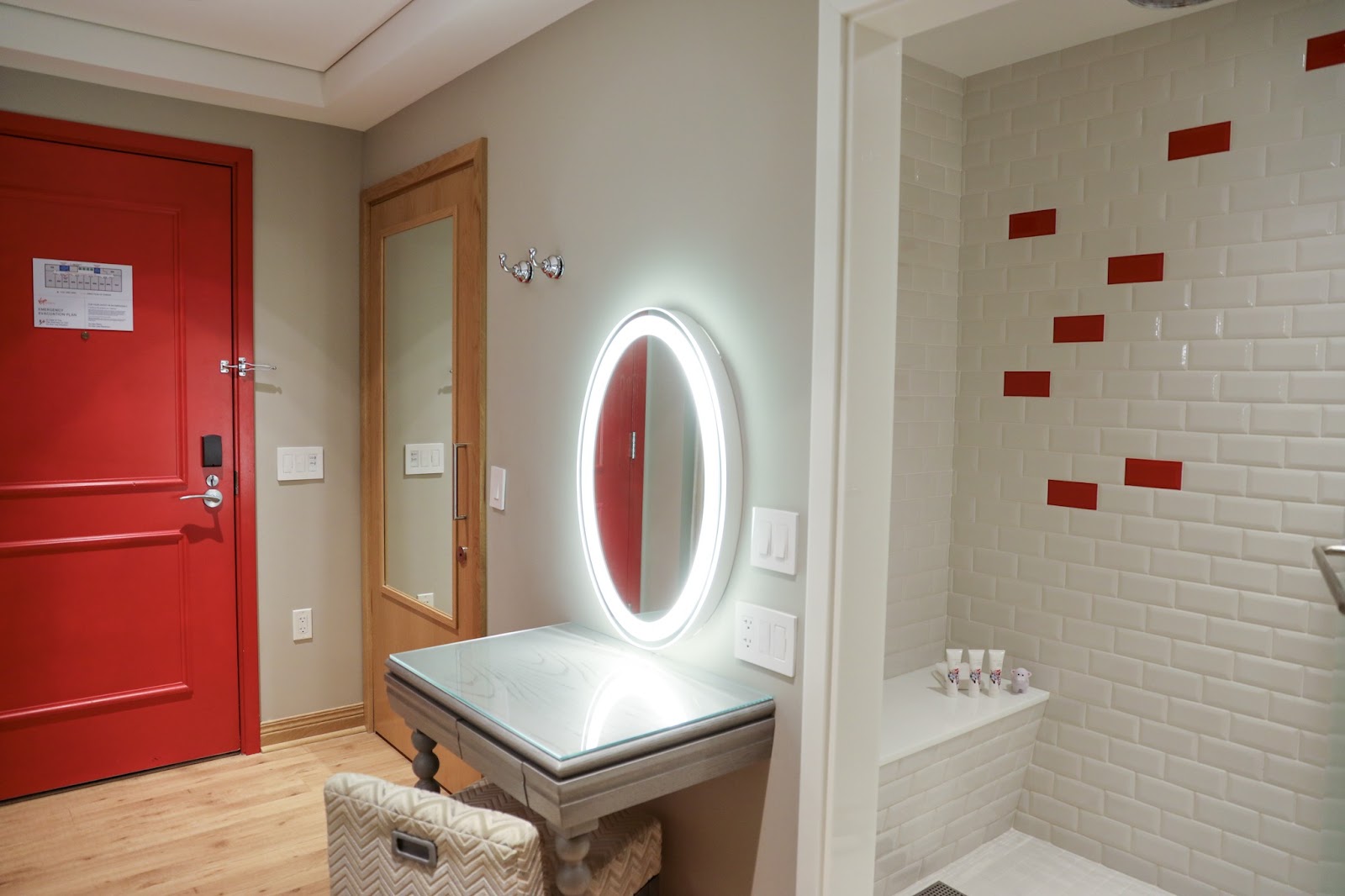
This is not a ballroom venue. It is a series of small rooms, and a wedding photographed across several rooms is a different job.
Virgin Hotels Chicago occupies a 1928 building in the Loop, originally built as a bank and offices, with a series of event spaces distributed across floors and a rooftop bar at the top.
The defining fact is the footprint. A 1920s Loop office building sits on a small city plot, which means its floors are modest and none of them contains the single large column-free ballroom that a purpose-built hotel offers. Instead there are several smaller rooms, on different levels, each with its own character and its own light.
That inverts how a wedding gets photographed. At a ballroom venue the day concentrates: one room holds the ceremony, the meal and the dancing, and the photographer sets up once. Here the day distributes across rooms, which costs movement and setup time but gives variety that a single-room venue cannot. Neither is better; they are different jobs, and the mistake is to work a distributed venue with ballroom habits. We have not photographed a wedding here; small-footprint period buildings behave the same anywhere. Which rooms are allocated and what the rooftop access allows are questions for their events team.
Virgin Hotels Chicago at a glance
| Where | The Loop, Chicago, Illinois |
| Character | A 1928 bank and office building with several small event spaces |
| The logic | Distributed rather than concentrated — a day across rooms, not in one |
| The gift | Genuine variety of background without leaving the building |
| The cost | Every room is a fresh setup, and none is large |
What a distributed venue costs, and how to stop it costing that
Each room change is a setup change. Lights have to be repositioned, white balance reset, and the room read afresh — and in a building where the rooms are on different floors, moving the kit costs a lift journey as well. A wedding that visits four rooms across an evening can easily absorb forty minutes in transitions if the transitions are not planned.
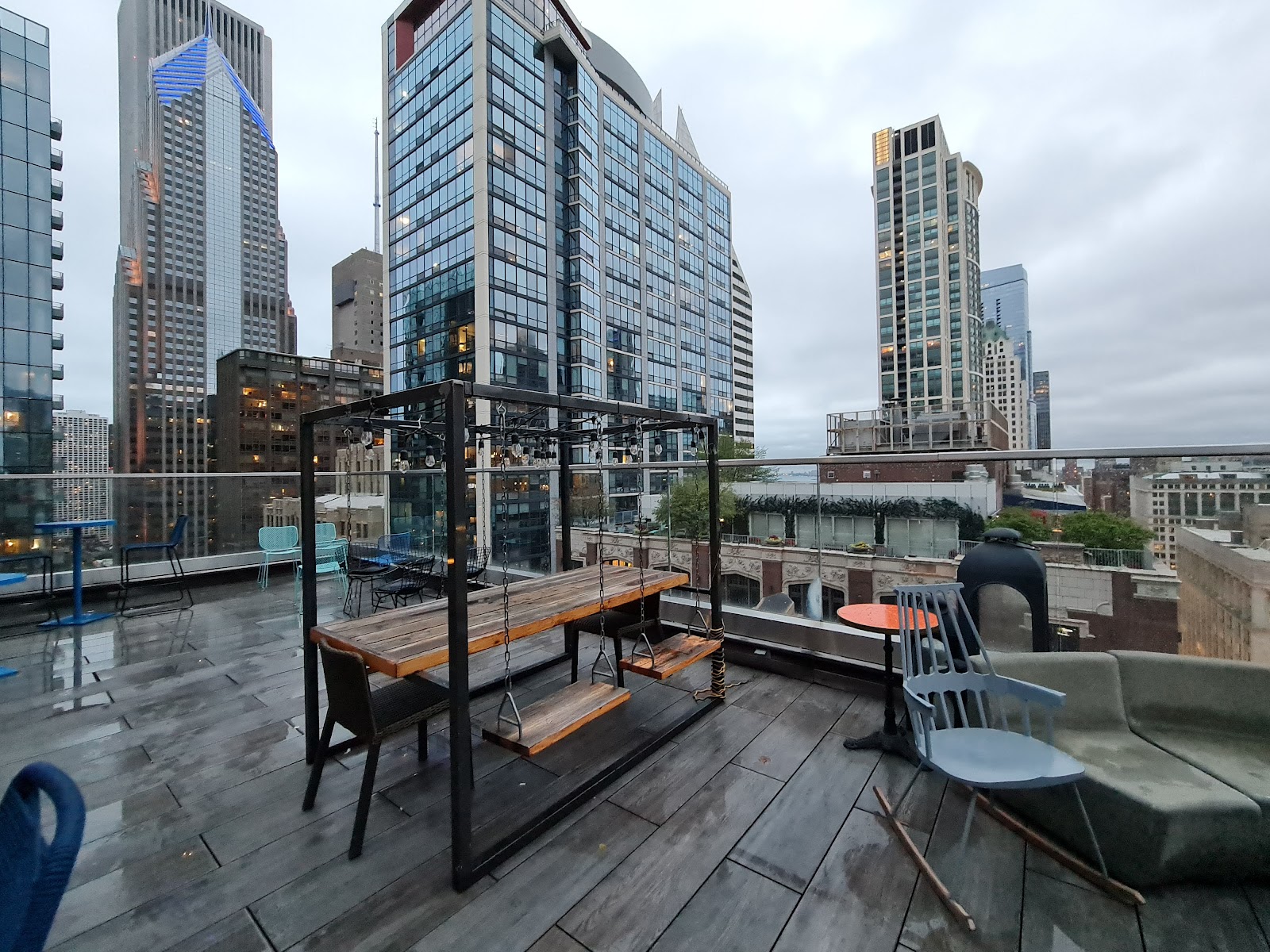
The response is to reduce the number of lit setups rather than the number of rooms. One approach that works well in small spaces: rely on bounce rather than on positioned modifiers. A small room with pale walls and a normal ceiling height turns a single bare flash into a room-sized soft source, which takes seconds to deploy, needs no stand, and travels between rooms in a pocket. In a ballroom bounce does nothing because the surfaces are too far away; in a small room it is better than anything you could carry.
The second is to accept different looks per room rather than trying to impose one. Small period rooms in a building like this will differ in colour and brightness, and a gallery that acknowledges that — reading as a progression through a building — is more interesting than one flattened towards uniformity. The discipline is per-room white balance, so each room is internally consistent even if rooms differ from each other.
The third is simply to know the order in advance. A distributed venue punishes improvisation and rewards a written sequence agreed with the coordinator: which room, what time, how long. Ten minutes of planning removes most of the forty.
What small period rooms give in return
Proximity, which is the thing large venues cannot buy. In a small room the camera is inside the event rather than observing it from the back of a hall. Reactions are legible, hands and glances are visible, and the frames are close by default because there is no position from which they would not be. For a documentary-leaning gallery this is an advantage rather than a constraint.
Period detail is the other. A 1928 bank building carries the materials of its moment — stonework, metalwork, terrazzo, heavy joinery, sometimes a former banking hall with real height and proportion. Those surfaces give a frame character without any styling, which is the opposite of a modern function room where the photographer must supply all the interest.
Where a former banking hall exists, it is the exception to everything above: tall, proportioned, symmetrical, and a genuinely grand space. It carries the same dynamic range issue as any grand interior — uplit plaster and fittings several stops above the people below — and the same answer: raise the couple towards the architecture with your own light rather than exposing down to them, so the room keeps its detail.
The small-room constraint that matters most practically is group photography. Formal groups need floor and ceiling, and a small period room has neither in quantity. If the guest list runs past a couple of dozen, groups need either the largest available room or an exterior location, and establishing which before the day rather than during it is the difference between a five-minute exercise and a twenty-minute one.
What works in your favour
- Genuine variety of background across several rooms in one building
- Small rooms make a bare bounced flash better than any carried modifier
- Proximity gives close, legible, documentary frames by default
- 1928 materials — stone, metal, terrazzo, joinery — supply character free
- A rooftop at the top of a Loop building for the city frames
What to plan around
- Every room is a fresh setup, and some are on different floors
- Rooms differ in colour and brightness and need per-room white balance
- No large column-free ballroom, so big formal groups are constrained
- Small footprints restrict camera position more than light does
- A Loop address, so street-level work contends with heavy footfall
The roof, the Loop and the order to work in
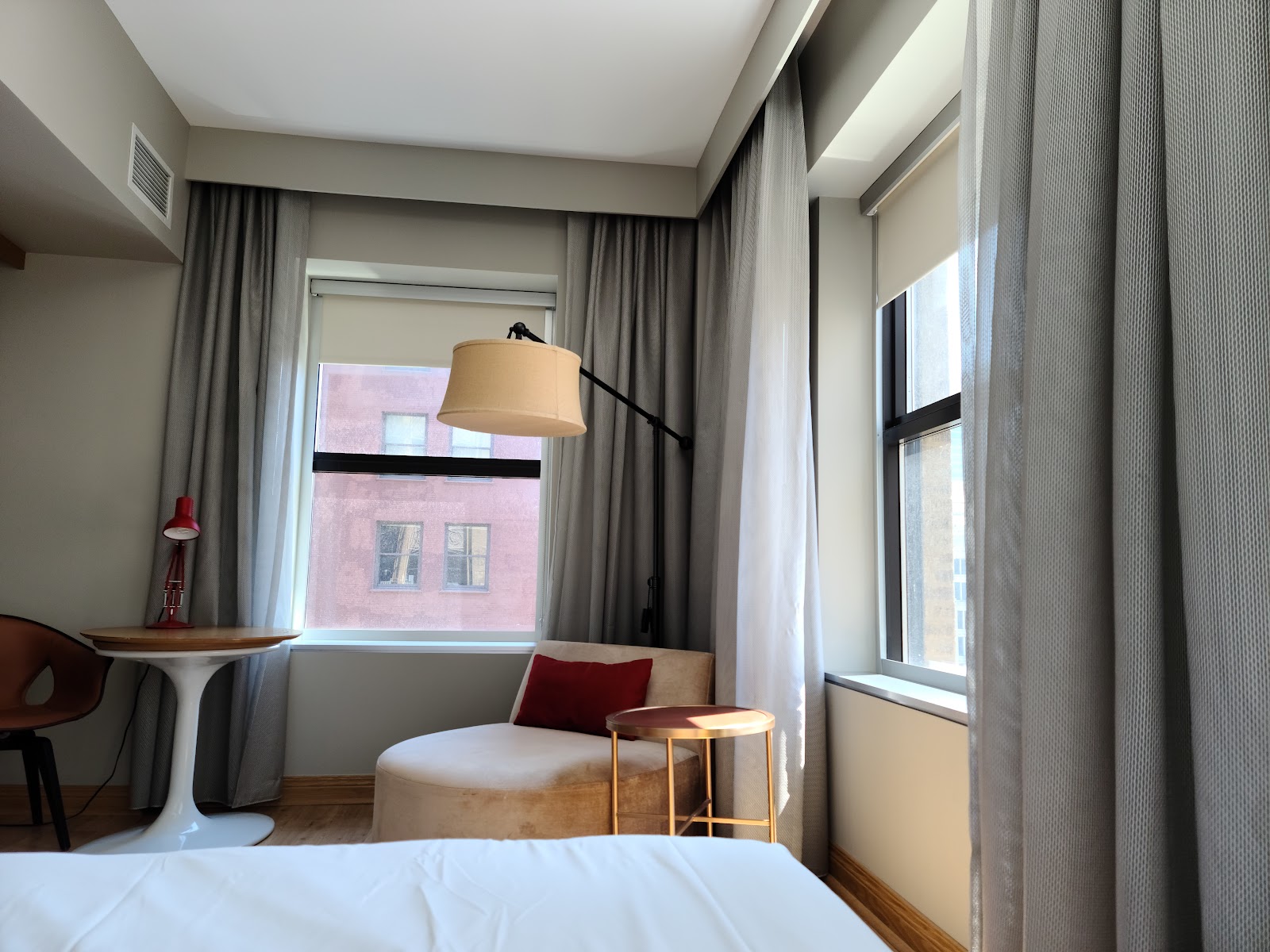
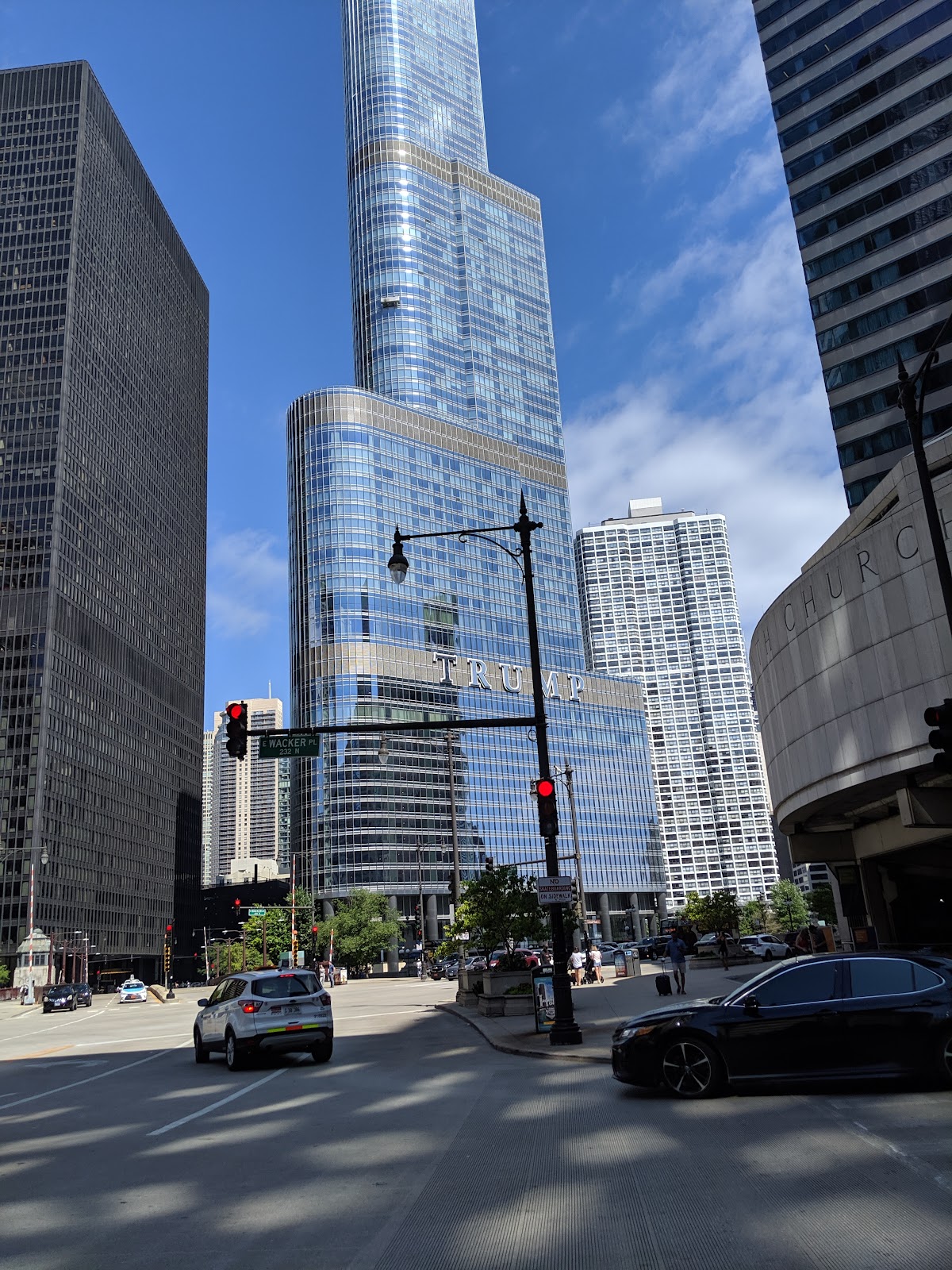
A rooftop on a Loop building has a particular quality that a rooftop in a low district does not: you are among towers rather than above a neighbourhood. That means the frames are enclosed and vertical rather than open and panoramic — buildings rising on several sides, sky in a slot above, and the sense of being inside the city rather than looking at it from outside. It is a different and arguably more interesting register than a panoramic view, and it suits a long lens looking up or along a street canyon.
The light there follows the usual downtown pattern: the surrounding towers take the sun early, so direct light disappears from a Loop rooftop well before the calendar sunset, and what follows is a long period of soft even shade. That is good for faces and poor for drama, and it means the dramatic frames have to come from the lit buildings after dark rather than from sunset light.
The after-dark version is strong. Lit towers close on several sides, with a couple on a roof between them, is a frame available only in a dense downtown, and it needs one warm off-camera source balanced against the building lights. As with every city-lights frame, erring towards too much flash is the common error.
Street level in the Loop gives 1920s and 1930s architecture at close quarters, the elevated line, and a grid where low sun occasionally runs the full length of a street. The footfall is heavy on weekdays and noticeably lighter at weekends, which is the opposite of the tourist districts and worth knowing — a Saturday morning in the financial Loop is one of the quieter downtown environments available.
The working order, then: preparation in a guest room, the distributed event rooms in a planned sequence with one bounce-based lighting approach carried between them, the roof for a short block after dark, and the Loop streets early if the date is a weekend. The venue rewards a plan and punishes a photographer who expects one room to hold the evening.
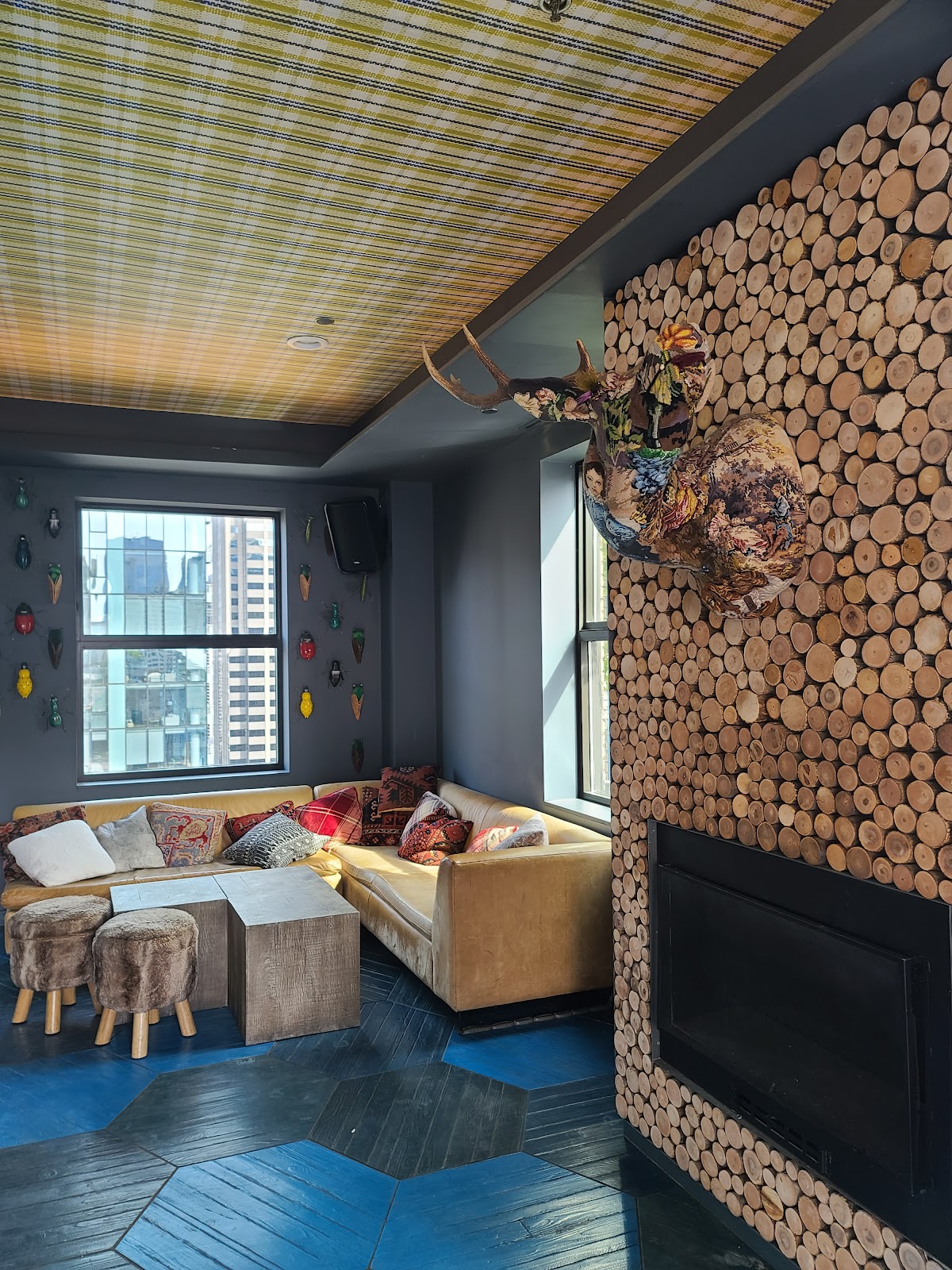
More frames from Virgin Hotels Chicago
Virgin Hotels Chicago wedding photography: common questions
How is a small-room venue different to photograph?
The day distributes rather than concentrates. At a ballroom you set up once; here each room is a fresh setup, on different floors, with its own colour and brightness. The fix is fewer lighting setups rather than fewer rooms, plus a written room-by-room sequence agreed in advance.
What is the best lighting approach in small rooms?
Bounce. A bare flash aimed at a pale wall or a normal-height ceiling turns the whole room into a soft source — deployable in seconds, no stand needed, and it travels in a pocket. In a ballroom bounce does nothing; in a small room it beats anything you could carry.
Should all the rooms be made to look the same?
No. They will differ in colour and brightness, and a gallery that reads as a progression through a building is more interesting than one flattened to uniformity. The discipline is per-room white balance so each space is internally consistent.
Can you do large group photographs?
Not comfortably. Formal groups need floor area and ceiling height, and small period rooms have neither in quantity. Past a couple of dozen guests, groups need the largest available room or an exterior spot — decided before the day, not during it.
What is a Loop rooftop like compared with other rooftops?
Enclosed rather than panoramic. You are among towers rather than above a neighbourhood, so the frames are vertical and canyon-like. Surrounding buildings also take the sun early, so direct light goes well before sunset and the drama comes from lit buildings after dark.
When is the Loop quietest at street level?
At weekends. Footfall in the financial Loop is heavy on weekdays and noticeably lighter on a Saturday — the opposite of the tourist districts. A Saturday morning there is one of the quieter downtown environments available for portraits.
More Chicago, IL venue guides
We are writing a photographer’s guide to every venue we would happily shoot in Chicago, IL. Here are three more, plus the full index:
- The Waldorf Astoria Chicago: A Walled Courtyard in a City
- The Willis Tower Skydeck: Field Notes on Glass at 1,350 Feet
- The Adler Planetarium: One Decision Governs the Whole Day
All Chicago, IL Wedding Venues →
Planning a wedding at Virgin Hotels Chicago?
A distributed venue rewards a written room order and one travelling light. Tell us your date and we will plan the sequence.