 The Whitby, New York: A Walk Through a Midtown Hotel
The Peninsula New York: What It Suits, and What It Does Not
A grand old building on a Manhattan avenue gives a lot and withholds one thing. Here is both.
A hotel occupying an early-twentieth-century building on Fifth Avenue offers a particular combination: interiors with genuine architectural character, a rooftop, and a location where the street itself cannot be photographed properly.
That is a real split rather than a rhetorical one, and knowing it in advance changes what gets planned. The interiors will carry pictures; the exterior will not, in the way people expect; and the rooftop is worth building a schedule around because it is the one place in the building where the city becomes visible.
So: what it suits, and what it does not. Both honestly.
We have not photographed a wedding at the Peninsula New York; grand hotels of this period behave consistently and Manhattan’s light does too. Which spaces are included, whether the rooftop is available, and whether the lighting is adjustable are questions for their team.
The Peninsula New York at a glance
| Where | Fifth Avenue at 55th Street, New York |
| Suits | Architectural interiors, a rooftop with a timed frame, scale, reliability |
| Resists | Any wide exterior frame; daylight in the function rooms |
| The fixed point | The twenty minutes after sunset on the roof |
| Ask first | Spaces included, rooftop access, lighting control, fixings on plaster |
What it suits
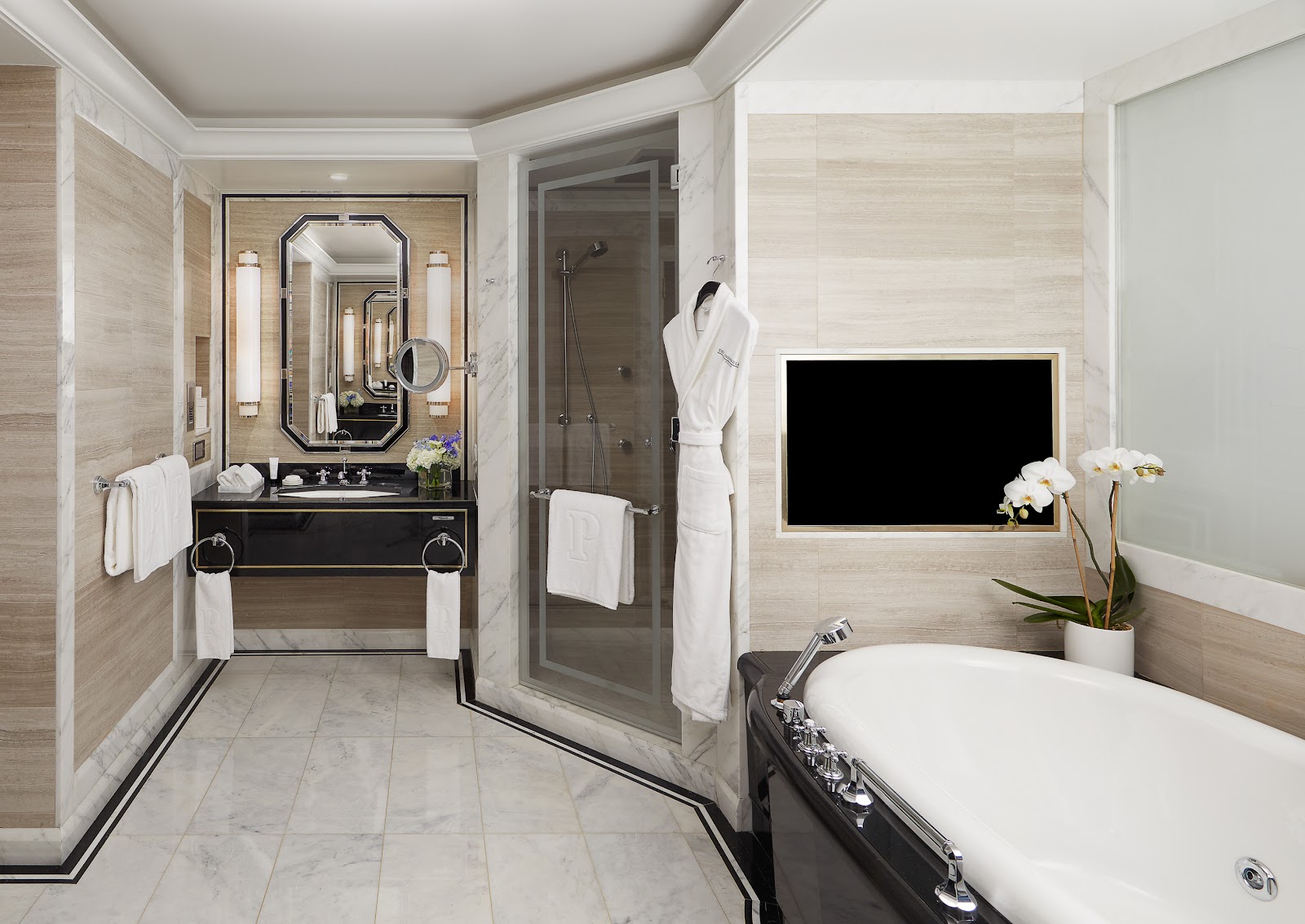
Architectural interiors first, and this is where a building of this period earns its money. Plaster mouldings, tall ceilings, panelling, stair balustrades and marble all photograph as subjects rather than as backdrop — which means the venue will be recognisable in the gallery in a way a modern hotel is not. That is the thing couples are paying for and it does show up in pictures.
It does so on one condition, which is raking light. Moulding, panelling, marble veining and carved stone all read only when light runs along them; a source pointed at panelling turns it into a flat brown field, while the same source placed to skim it lifts every profile. The positions worth finding on arrival are those where the key grazes the surface rather than facing it, and there are usually two or three in a building like this.
Fall-off suits it too and it is free separation. Rooms of this period are deep and their surfaces are warm and absorbent rather than pale and reflective, so a subject three metres in front of anything else sits against natural darkness with no equipment at all. That is the opposite of the modern-hotel problem and it is worth exploiting deliberately by choosing positions with depth behind them.
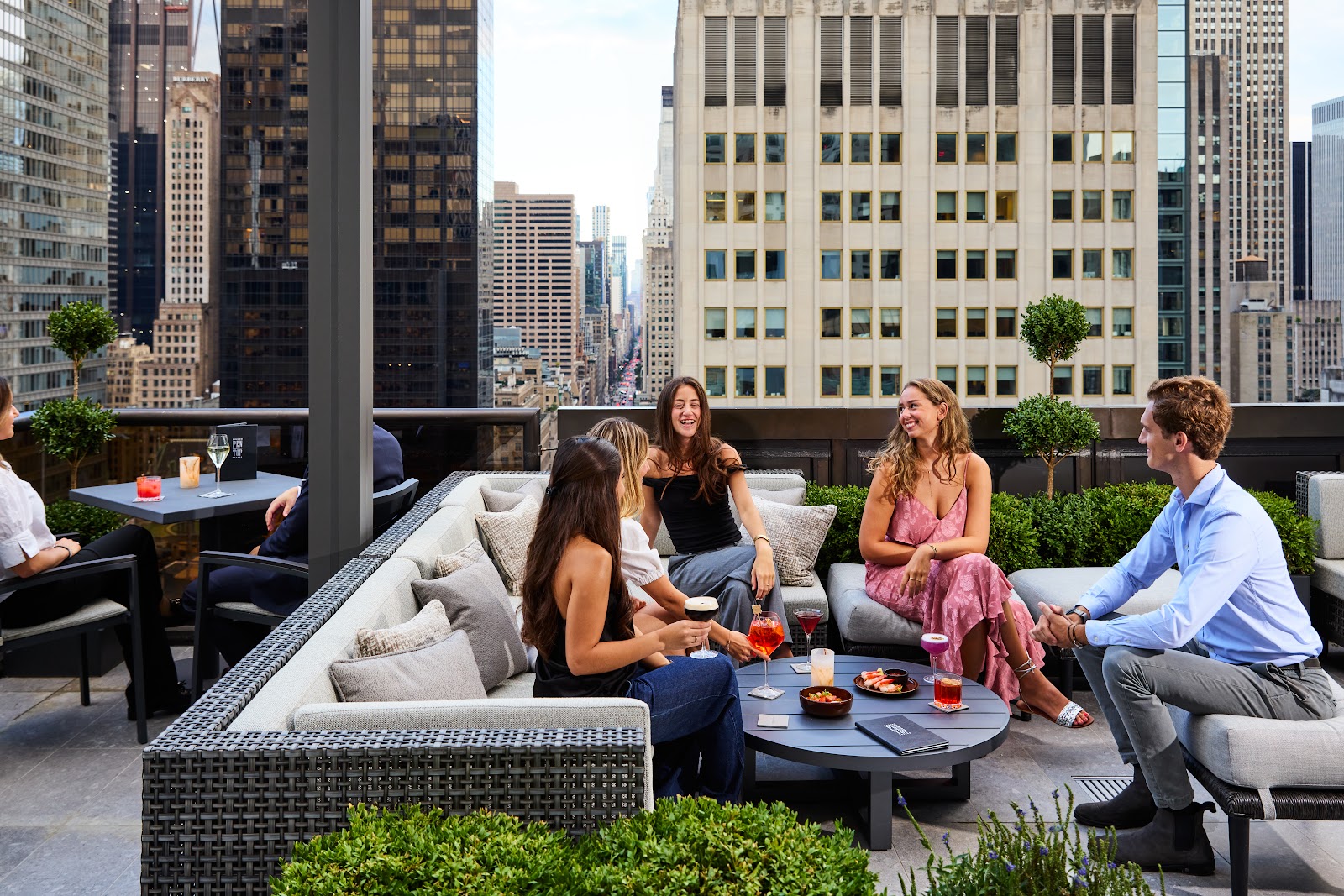
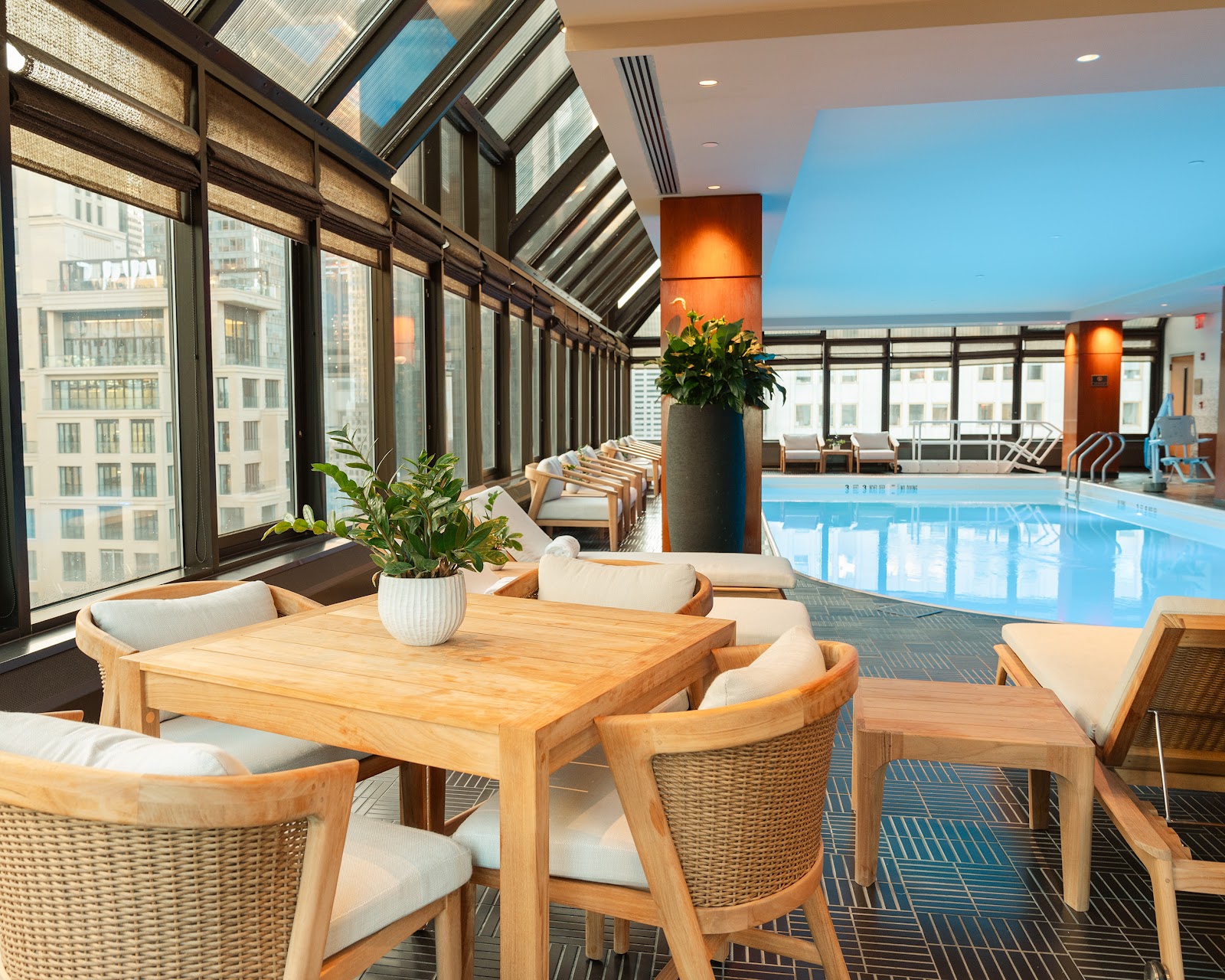
The rooftop suits the one frame that cannot be made anywhere else in the building, and it is worth scheduling around rather than fitting in. Above the surrounding roofline low sun arrives earlier than at street level, so the usable golden window opens about thirty minutes sooner than a street position — and for roughly twenty minutes after sunset the sky and the lit city sit at the same brightness, so one exposure holds both the couple and Manhattan behind them. That happens once and it cannot be rescheduled.
Scale suits it. Function rooms in a hotel of this size take large groups, wide frames hold a full room without distortion, and there is room to stand back from a thirty-person formal — which in Manhattan is a genuine asset rather than an assumption.
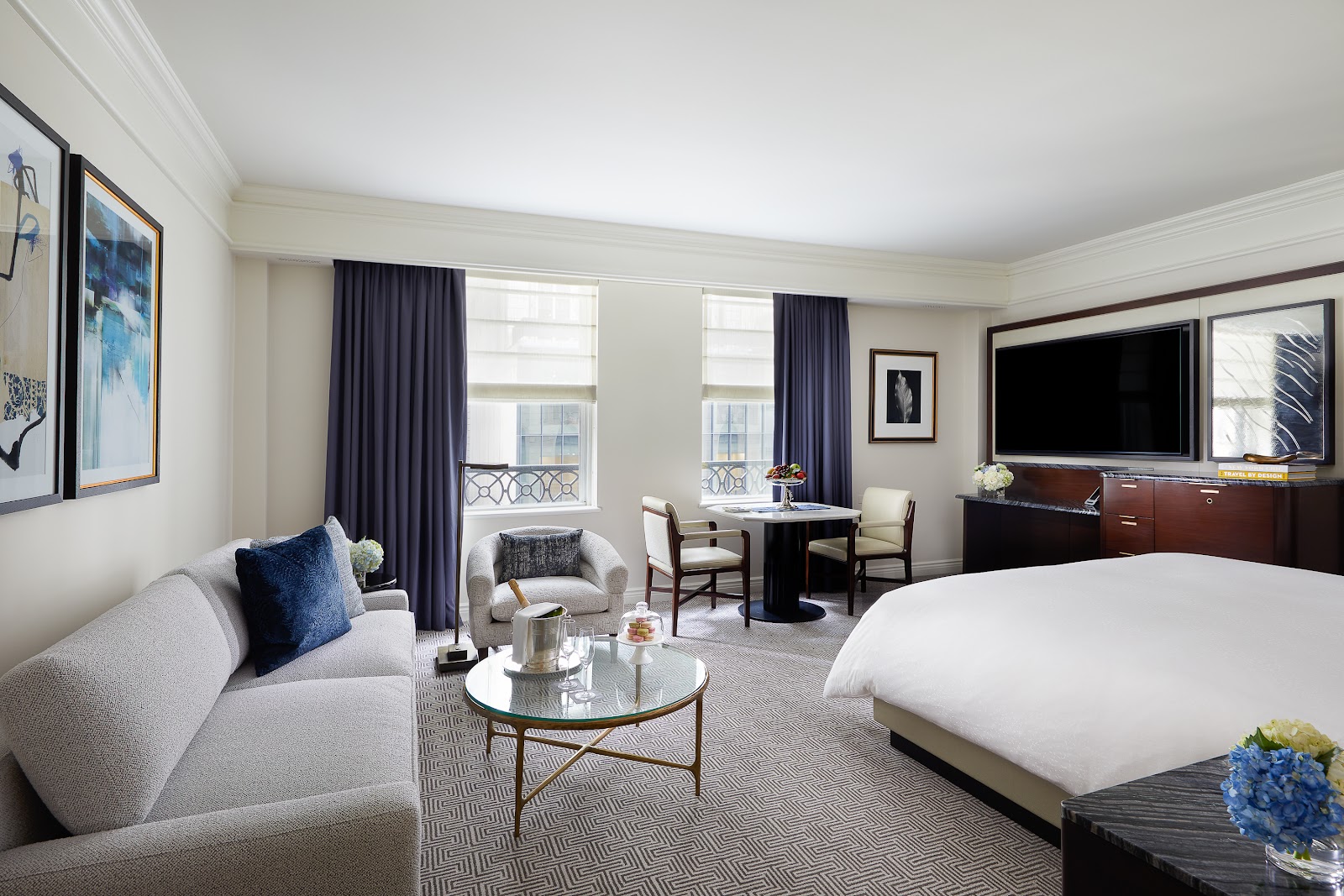
Guest rooms suit portraits, as in any hotel, and here it is worth asking for a high floor specifically. On Fifth Avenue the buildings opposite are tall and close, so the sky reaching a high window is worth more than a stop over a low one, and more sky means softer and more even as well as brighter. Largest window on the shaded side, overhead fittings off so the room has one colour of light, lamps moved out of frame.
And reliability suits it: everything happens indoors, nothing needs a rain decision, and in a New York summer — where an afternoon thunderstorm is a real possibility — the running order written in March survives into July. The only weather-dependent element is the rooftop, which is worth having a named indoor alternative for.
What it does not suit
The wide exterior frame is the flat refusal. There is no room to stand back on Fifth Avenue, so the facade cannot be photographed whole — and the couples who arrive wanting the establishing shot of the building with themselves in front of it are asking for something the street geometry does not permit. What it gives instead is fragments: the doorway, the canopy, ironwork, a detail of carved stone, and the view looking up, which in Manhattan is frequently the better picture anyway.
This is worth saying before the day rather than on it, because the alternative — a photographer backing into traffic to fit a building in — is both unsafe and unsuccessful.
Daylight in the function rooms is the second gap. Ballrooms in hotels of this kind typically have little or none, and where they have windows the glass may be tinted, which throws a localised colour cast that global white balance cannot remove. Gel a source to counter it, turn subjects away from the glass, or treat it as a bright background rather than a light.
Warm bounce is the standing colour problem in a building of this period. Timber, brass, deep paint, marble and warm textiles all reflect strongly warm, and the cast arrives on the shadow side of a face from several directions at once. Because it is bounced and localised, the fix is not editing but matching: one source, gelled warm to the room’s own light, with white balance set to the gel, which leaves the room warm and the skin correct.
Mixed sources are certain: period decorative lighting, cooler recessed fittings added in a later refit, candles, coloured uplighting installed for the event, and any daylight. Pick the temperature that should be correct and switch off or overpower whatever else lands on skin — and coloured uplighting is usually both the worst offender and the easiest thing to have turned off for ten minutes.
Bounce off the ceiling does not suit the grand rooms and it is worth testing rather than assuming. A ceiling four or five metres up returns almost nothing from a flash and colours whatever it does return, so direct into a modifier is the method in the large spaces. In the guest rooms and the smaller salons the ceilings are low enough that bounce works, which is a distinction to establish with one frame each on arrival.
And the low ambient of a warm period interior is lower than it looks. Richly furnished rooms sit two stops or more below pale ones with identical lamps, because the surfaces absorb rather than bounce. Expose for the room so it still reads as the warm space it is, then add just enough to put a catchlight in the eyes and separate a shoulder — lighting a face correctly and losing the room produces a portrait that could have been made anywhere, which at a building chosen for its character defeats the purpose.
- Accept fragments outside; no Fifth Avenue facade fits in a frame
- Find the two or three positions where the key grazes the plaster
- Exploit fall-off: depth behind a subject is free separation here
- One warm-gelled source, white balance set to the gel
- Test bounce room by room; grand ceilings return nothing, guest rooms do
The running order, and New York's year
The schedule has one fixed point and everything else is movable. The fixed point is the rooftop after sunset — roughly twenty minutes, non-negotiable, and worth ten minutes of the reception. Everything else, including the interior portraits, can happen at any hour, because the function rooms do not change through the day.
The second consideration is the guest-room light, which is best in the middle of the day and gone by late afternoon in December. In a summer wedding both windows are late; in a winter one the after-sunset frame may fall before the ceremony, which is a fact to build around rather than resist.
At street level, Manhattan’s grid is rotated about twenty-nine degrees from true north, so the cross streets take low sun down their length while the avenues stay in shadow, closest to exact around the ends of May and the middle of July. Most street light here is bounced down from lit facades above rather than direct — soft, directional, available for much of the day, genuinely good portrait light and not golden-hour light. Recessed doorways and canopies are the reliable small position and they work in rain.
New York’s seasons are four real ones. Summer is hot and humid with afternoon thunderstorms a real possibility, which indoors costs nothing and on a rooftop costs the rooftop — hence the named alternative. Humidity’s other cost is comfort during any outdoor block, so shorter is better.
Autumn gives the clearest air and the best light of the year, both on the street and from the roof; the visibility across the city in October is materially better than in August haze, which for a rooftop frame is the whole picture.
Winter is cold with short days, sunset in the middle of the afternoon in December, which compresses everything outdoor into a couple of hours and makes the rooftop trip a brief, well-rehearsed excursion rather than a wander. Cold on an exposed roof in formal clothes is a real constraint and coats are the answer.
Snow is the compensation twice. Outdoors it is the best natural fill there is, lifting exactly the shadows a low sun carves while fooling a meter by about two stops. Indoors it turns the street into a very large reflector, so the guest room windows give softer, brighter and more even light in February than at any other time of year — which makes the best natural light in the building a winter asset rather than a summer one.
And the fogging risk applies in both directions, so let a body come towards the temperature of where it is going before it gets there; a lens taken from a warm ballroom onto a cold roof fogs, and it does not clear in twenty minutes.
More frames from The Peninsula New York
The Peninsula New York wedding photography: common questions
What does the building do best?
Architectural interiors that photograph as subjects rather than backdrop, plus free separation from fall-off, and a rooftop with a frame that exists nowhere else in the building.
Can you photograph the facade?
Not whole. There is no room to stand back on Fifth Avenue, so the exterior frames are fragments, details and looking up — worth agreeing before the day rather than on it.
Why does raking light matter so much?
Because moulding, panelling and marble read only when light runs along them. The same source pointed at panelling makes a flat brown field.
How should the interior be lit?
One warm-gelled source with white balance set to the gel, exposed so the room still reads as warm and dim. Correcting globally for the warm bounce turns skin grey.
Can you bounce off the ceiling?
In the guest rooms and smaller salons, yes. In the grand rooms a ceiling four or five metres up returns almost nothing — test each with one frame.
What is the one thing to schedule around?
The twenty minutes after sunset on the roof, when the sky and the lit city are the same brightness. It happens once and it cannot be moved.
More New York venue guides
We are writing a photographer’s guide to every venue we would happily shoot in New York. Here are three more, plus the full index:
- The Plaza Hotel, New York: Photographing a Grand Ballroom
- The Ritz-Carlton Central Park, New York: The One Decision That Governs Everything
- The St. Regis New York: One Frame, and How It Is Made
Planning a wedding at The Peninsula New York?
One fixed point, and the rest planned around it. Tell us your date.