 The Hoxton Chicago: Photographing a Wedding in Fulton Market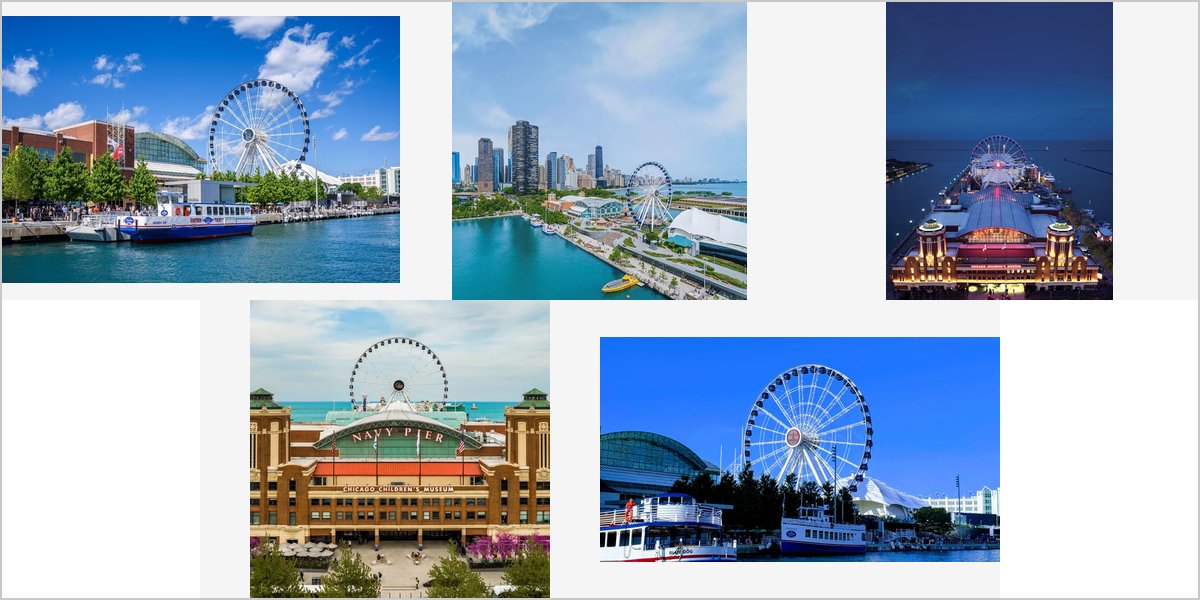
August 11, 2026
Navy Pier: Photographing a Wedding Out Over the Lake
A pier gives you something no land venue can: water on both sides and the skyline behind. It also gives you weather.
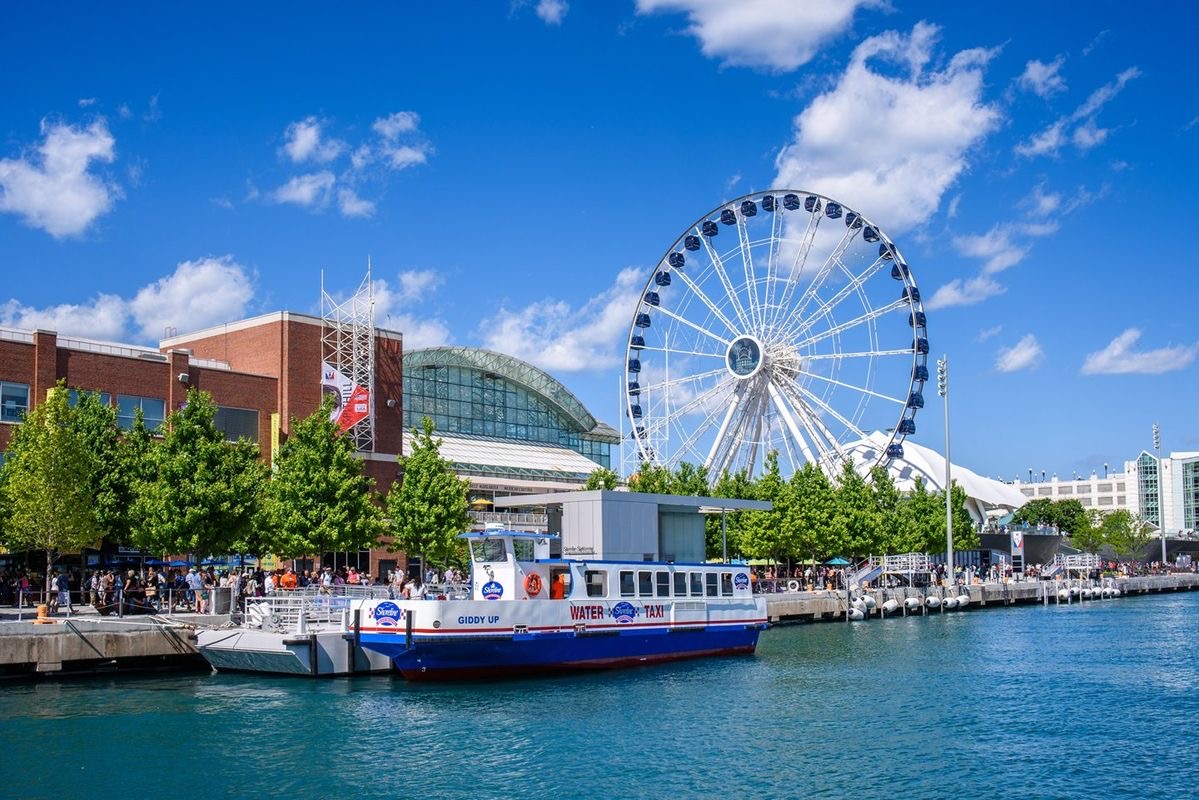
Navy Pier extends from Chicago’s lakefront out into Lake Michigan, a structure of the early 1900s carrying halls, terraces and a ballroom along its length, with the city behind it and open water on either side.
The photographic situation is unusual in a way that is easy to state: you are standing on a narrow structure surrounded by water, facing a major skyline. That gives you a set of frames unavailable anywhere on land — the skyline from out on the water, portraits with lake on both sides, a horizon that is water rather than buildings — and it gives you full, unmitigated exposure to whatever Lake Michigan is doing that day.
So this is a walk along the pier, stretch by stretch, with what each part offers and demands. We have not photographed a wedding at Navy Pier; exposed waterfront structures and skyline-across-water frames behave the same anywhere. Which halls and terraces are available, and what the public-access arrangements are on your date, are questions for their events team — and the second matters a great deal here.
Navy Pier at a glance
| Where | Navy Pier, Chicago lakefront, Illinois |
| Character | A historic pier running into Lake Michigan, halls along its length |
| The gift | Skyline from out on the water, with lake on both sides |
| The cost | Total wind exposure and a genuinely public site |
| Best light | The skyline holds colour for about half an hour after sunset |
The landward end: the skyline frame, and when to take it
Looking back from the pier towards the city is the reason to be here. Distance and water do the compositional work: the skyline compresses into a clean band, the water gives you a foreground with no clutter in it, and the whole thing reflects. There is no equivalent view from a land venue, because on land you are always inside the city rather than looking at it.
The timing is the same as for any city skyline and it is unforgiving. The frame works in the roughly thirty minutes after sunset when the sky retains colour and the building lights have come on; both hold in one exposure only in that window. Before it, the windows are dark and the buildings are grey. After it, the sky is black and the towers are floating boxes. Take the clock time from sunset on the date and treat it as an appointment.
The couple must be lit for this frame — a skyline a mile away puts out very little light on a face. One off-camera source, warm, from the side, at a power balanced to the skyline rather than dominating it. And a long lens rather than a wide one: compression makes the skyline loom properly behind the couple, where a wide lens shrinks it into an insignificant strip along the horizon. This is the frame where focal length choice matters most and gets it wrong most often.
The length of the pier: wind, and what it does to a wedding
A pier is a structure with water on both sides and nothing upwind of it for a considerable distance, which makes wind the defining practical fact rather than an occasional inconvenience. On Lake Michigan it is persistent, and it is stronger and colder out on the pier than it is on the lakefront two hundred metres away.
What that means in practice: veils are effectively unmanageable and should be planned as a held-or-removed decision rather than a hoped-for one; loose hair will not stay; light stands without substantial weight are a genuine hazard to people and to the water below; and a dress with any volume becomes a sail. None of this ruins photographs — a veil caught fully open in a strong wind is a spectacular frame — but it has to be anticipated rather than discovered.
It also has a temperature consequence that couples consistently underestimate. Wind off a large cold lake makes the pier feel far colder than the forecast, in every season including summer evenings. A twenty-minute outdoor block in September is a genuinely cold twenty minutes, and the honest advice is to plan a short decisive outdoor session with layers waiting, rather than a leisurely wander.
The compensations are real. Wind means moving water, which means texture and light on the surface rather than a flat sheet. It means dramatic cloud rather than static haze. And it keeps the air clear, which matters for a skyline frame — the hazy still days that feel pleasant are the days the city disappears into grey.
What works in your favour
- Skyline across water, a frame no land venue in the city can give
- Water on both sides, so light comes from everywhere including below
- Open horizon for post-sunset colour with nothing obstructing it
- Indoor halls along the pier as a genuine weather fallback
- Wind keeps the air clear, which is what a skyline frame needs
What to plan around
- Persistent strong wind, colder out on the pier than on shore
- Veils, hair and volume in a dress all become liabilities
- A busy public attraction, with visitors in every exterior frame
- The skyline frame lives in a thirty-minute post-sunset window
- Long distances along the pier make equipment moves costly
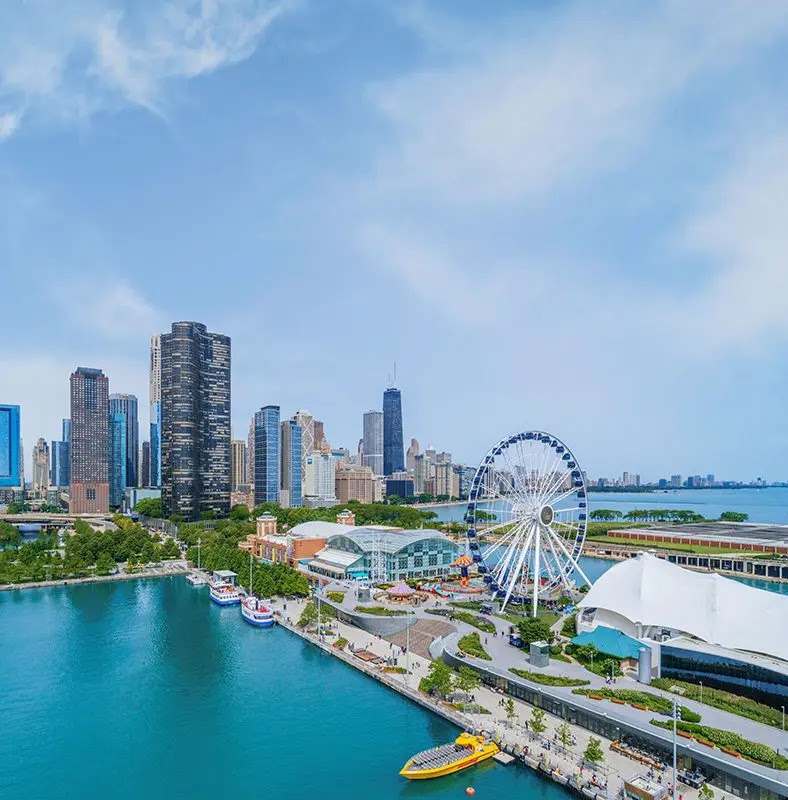
The halls, the far end, and the public question
The interior spaces along the pier are the weather plan and they are also the reason the venue works at all in a Chicago winter. They are large rooms with windows onto water on both sides, which gives them the same characteristic as any window venue: bright rectangles in the afternoon that need the interior lit up towards them, a convergence point around dusk where room and view balance, and mirrors after dark. The dusk convergence in a room with water on two sides is worth scheduling for deliberately.
The far end of the pier is the quietest part of it and usually the best place for couple portraits, for a straightforward reason: it is the longest walk, so fewer people are there. It also gives you the option of an all-water background with no city in it at all, which is a completely different register — open, minimal, almost coastal — and a useful contrast to the skyline frames from the landward end.
Which brings up the constraint that shapes everything: Navy Pier is one of the busiest public attractions in the city, and unless a specific area is closed for your event, the public is present. That is not a reason to avoid it, but it does mean the working method is the one for any public site — long lenses to compress crowds into unreadable background, tight framing, decisive short blocks, and a strong preference for early morning or the post-sunset window when the daytime crowd has thinned.
A final practical note. Distances here are long, there is no vehicle access along the pier, and everything you bring you carry the full length. Plan one kit position rather than three, and choose it in advance — a lighting plan that requires moving from the landward end to the far end mid-evening is a plan with a ten-minute walk hidden inside it.
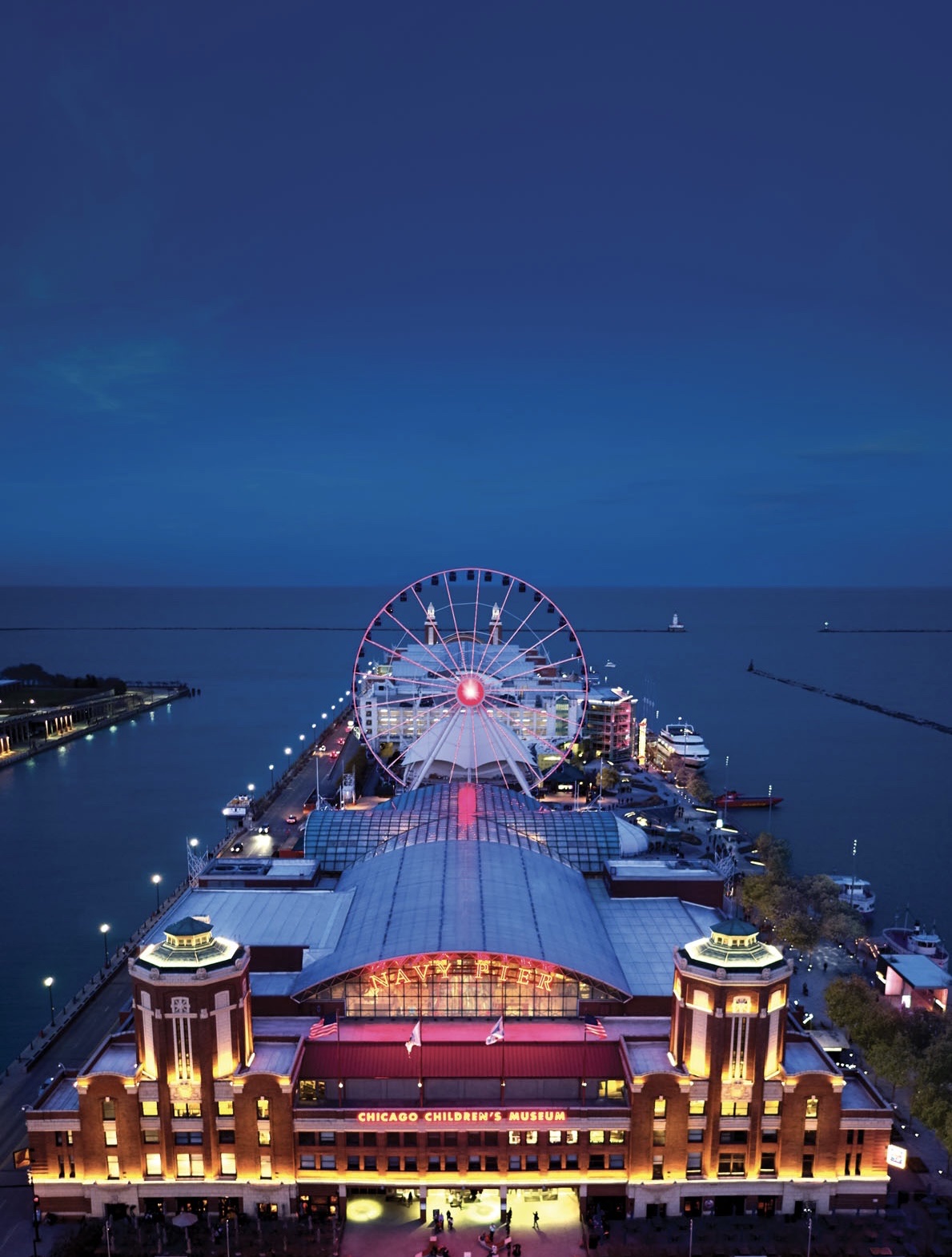
More frames from Navy Pier
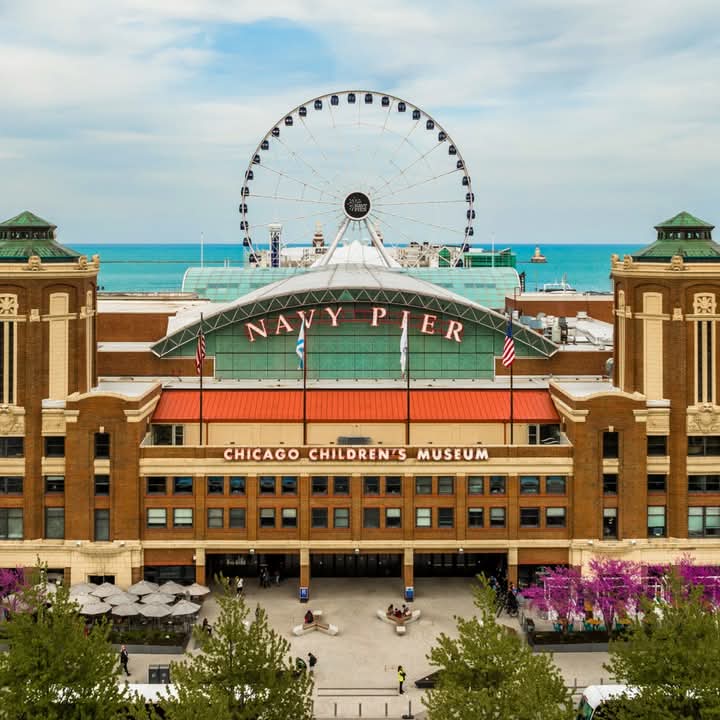
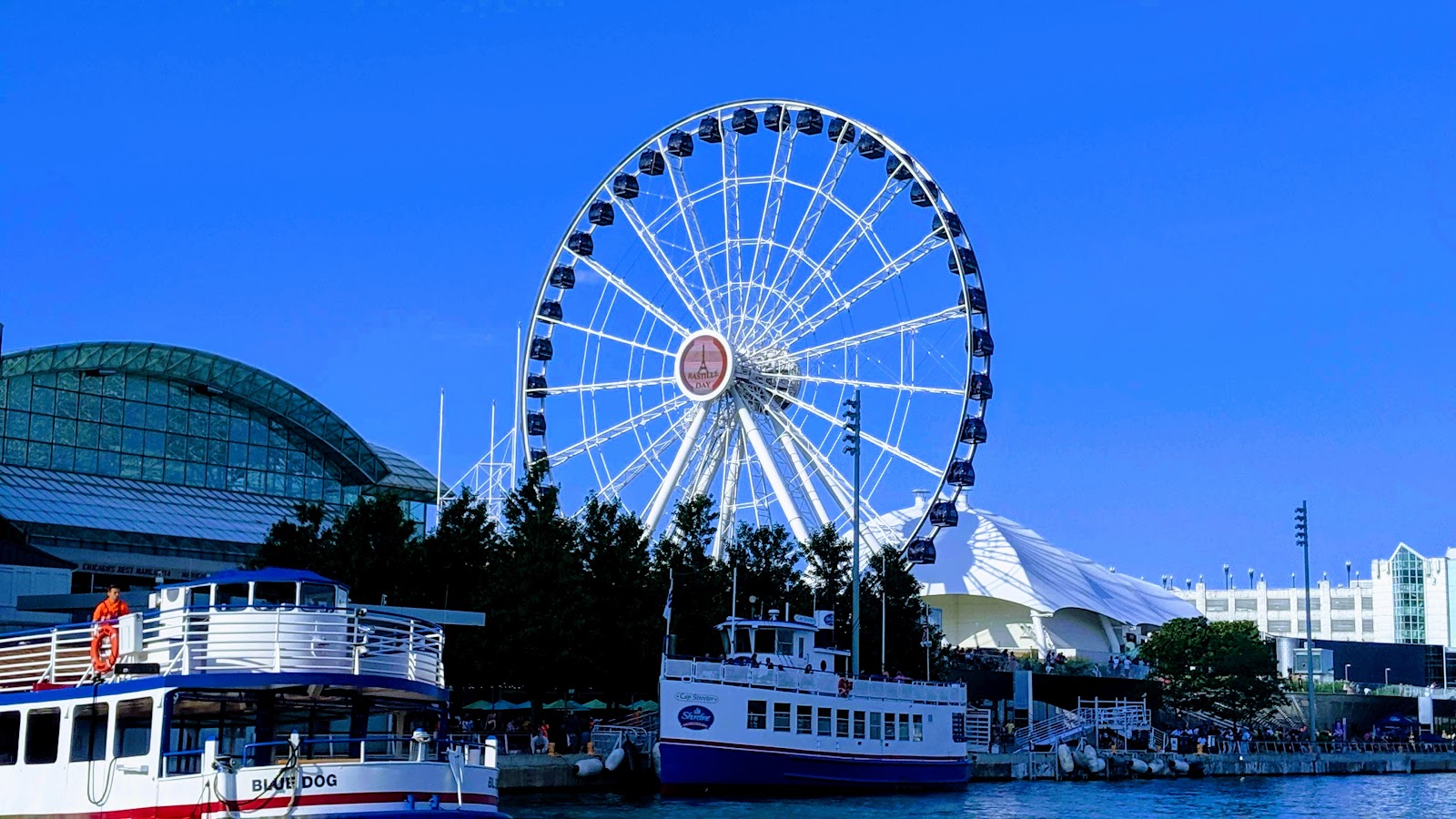
Navy Pier wedding photography: common questions
When should we do the skyline photographs?
In the thirty minutes after sunset, when the sky still holds colour and the building lights are on. Both only hold in one exposure then. Take the clock time from sunset on your date and treat it as a fixed appointment rather than a flexible slot.
Wide lens or long lens for the skyline?
Long. Compression makes the skyline loom properly behind the couple, where a wide lens shrinks it to an insignificant strip along the horizon. This is the frame where focal length matters most and where it most often goes wrong.
How bad is the wind on the pier?
Persistent rather than occasional, and stronger and colder than on the lakefront two hundred metres away. Plan the veil as a held-or-removed decision, expect loose hair to misbehave, and weight every light stand properly — there is water on both sides.
Will it be cold?
Colder than the forecast suggests, in every season including summer evenings, because the wind comes off a large cold lake. A twenty-minute outdoor block in September is genuinely cold. Plan something short and decisive with layers waiting.
Is the public going to be in our photographs?
Unless an area is specifically closed for your event, yes — it is one of the busiest attractions in the city. Use long lenses to compress the crowd into unreadable background, frame tight, work in short blocks, and favour early morning or after sunset.
Where are the best couple portraits?
The far end. It is the longest walk so fewer people are there, and it lets you shoot an all-water background with no city in it — open and almost coastal, a useful contrast to the skyline frames from the landward end.
More Chicago, IL venue guides
We are writing a photographer’s guide to every venue we would happily shoot in Chicago, IL. Here are three more, plus the full index:
- The Palmer House: How the Frescoed Ceiling Frame Is Actually Made
- The Peggy Notebaert Nature Museum: Glass, Butterflies and Prairie
- The Ritz-Carlton Chicago: Field Notes on a Sealed Ballroom
All Chicago, IL Wedding Venues →
Planning a wedding at Navy Pier?
A pier gives you frames no land venue can, on the lake’s terms. Tell us your date and we will plan the wind, the walk and the thirty minutes that matter.