 The Hoxton Chicago: Photographing a Wedding in Fulton Market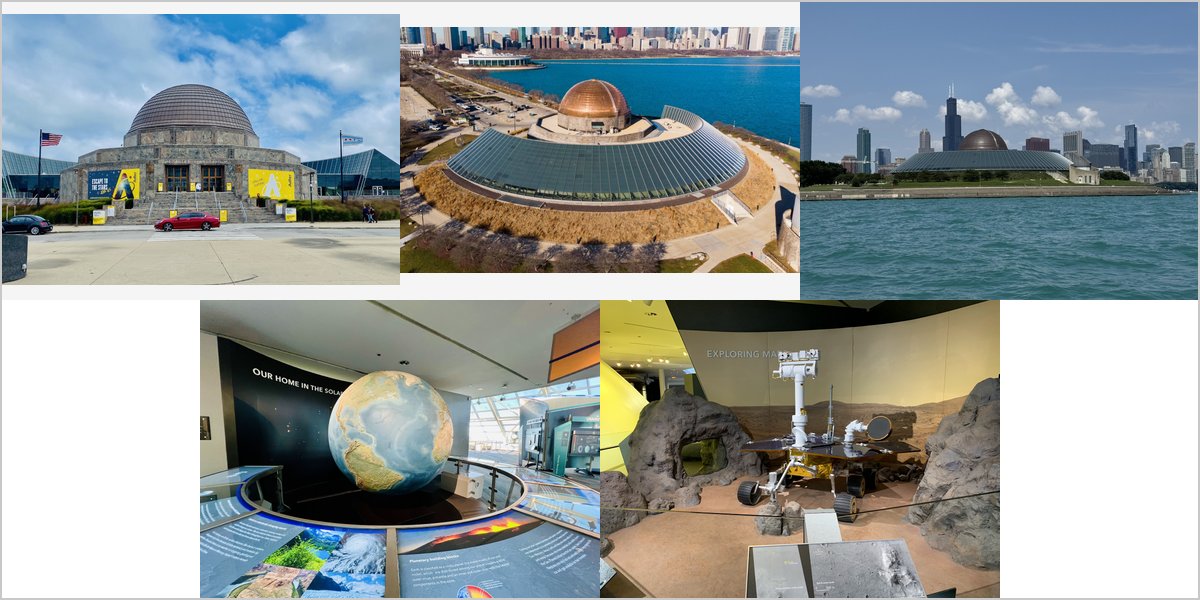
July 21, 2026
The Adler Planetarium: One Decision Governs the Whole Day
This venue holds two opposite conditions: the best skyline view in the city, and rooms built to exclude light entirely.
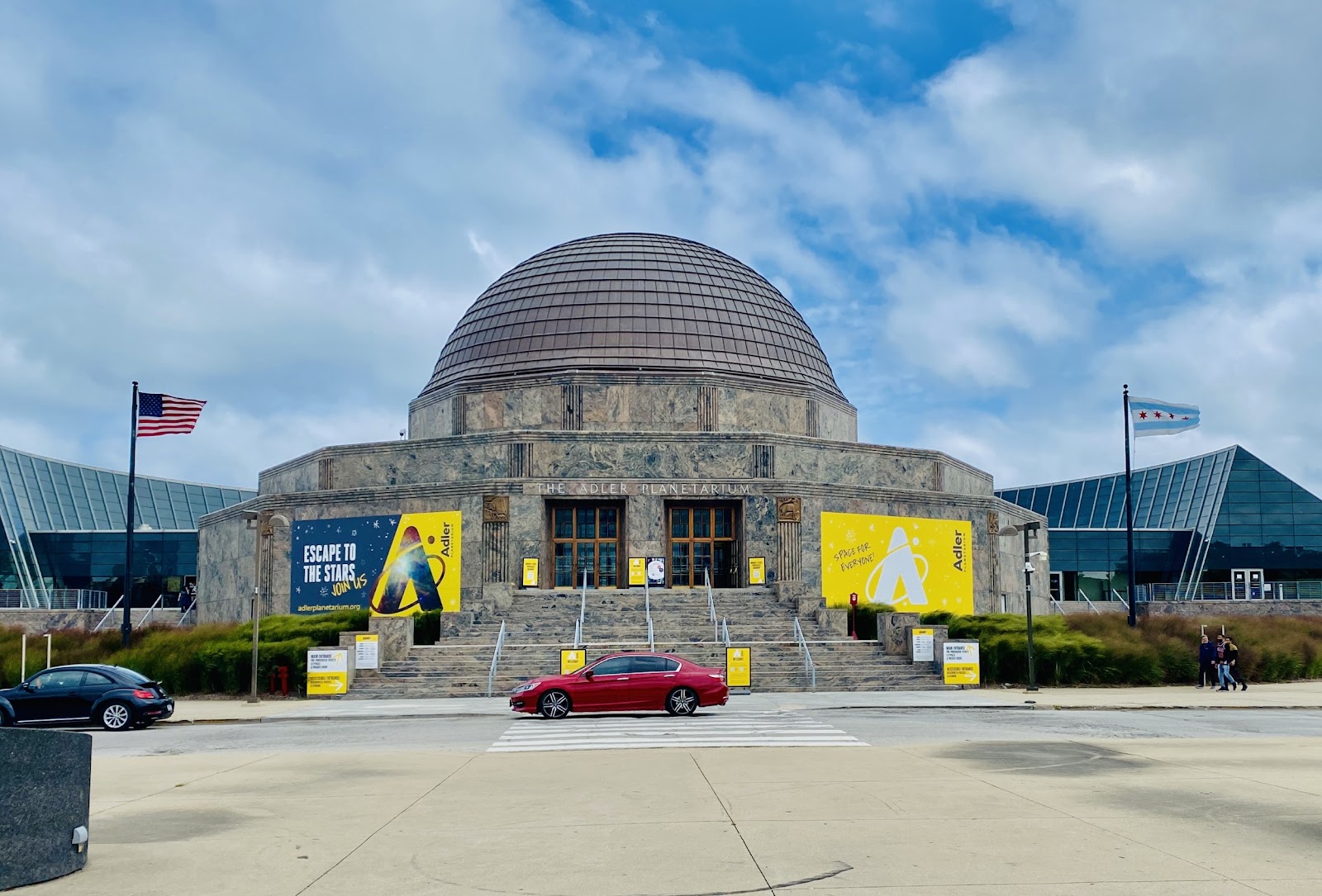
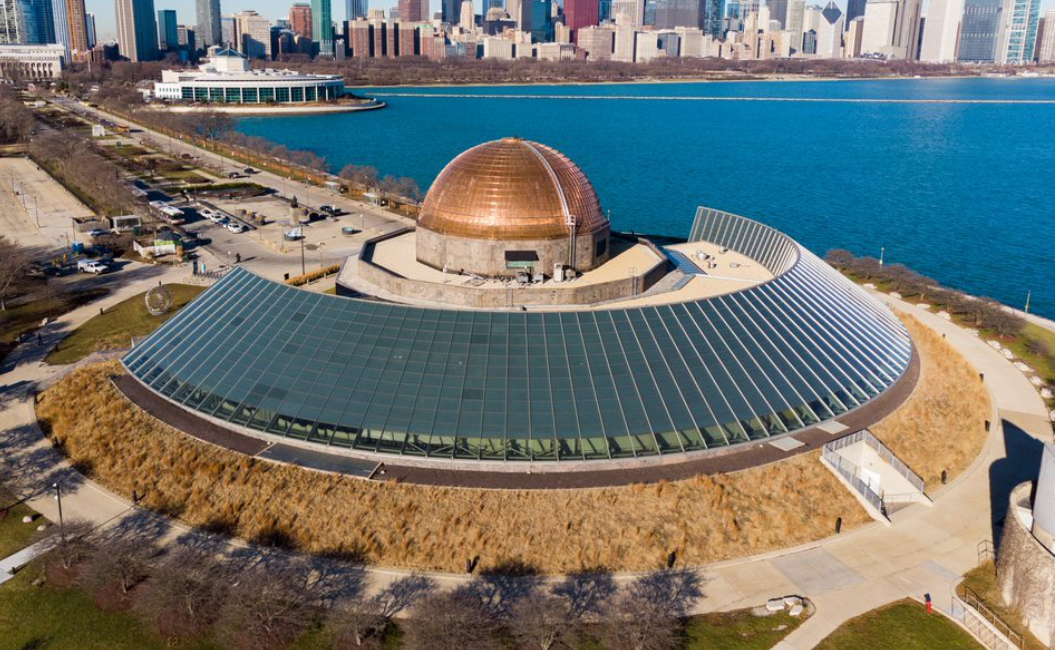
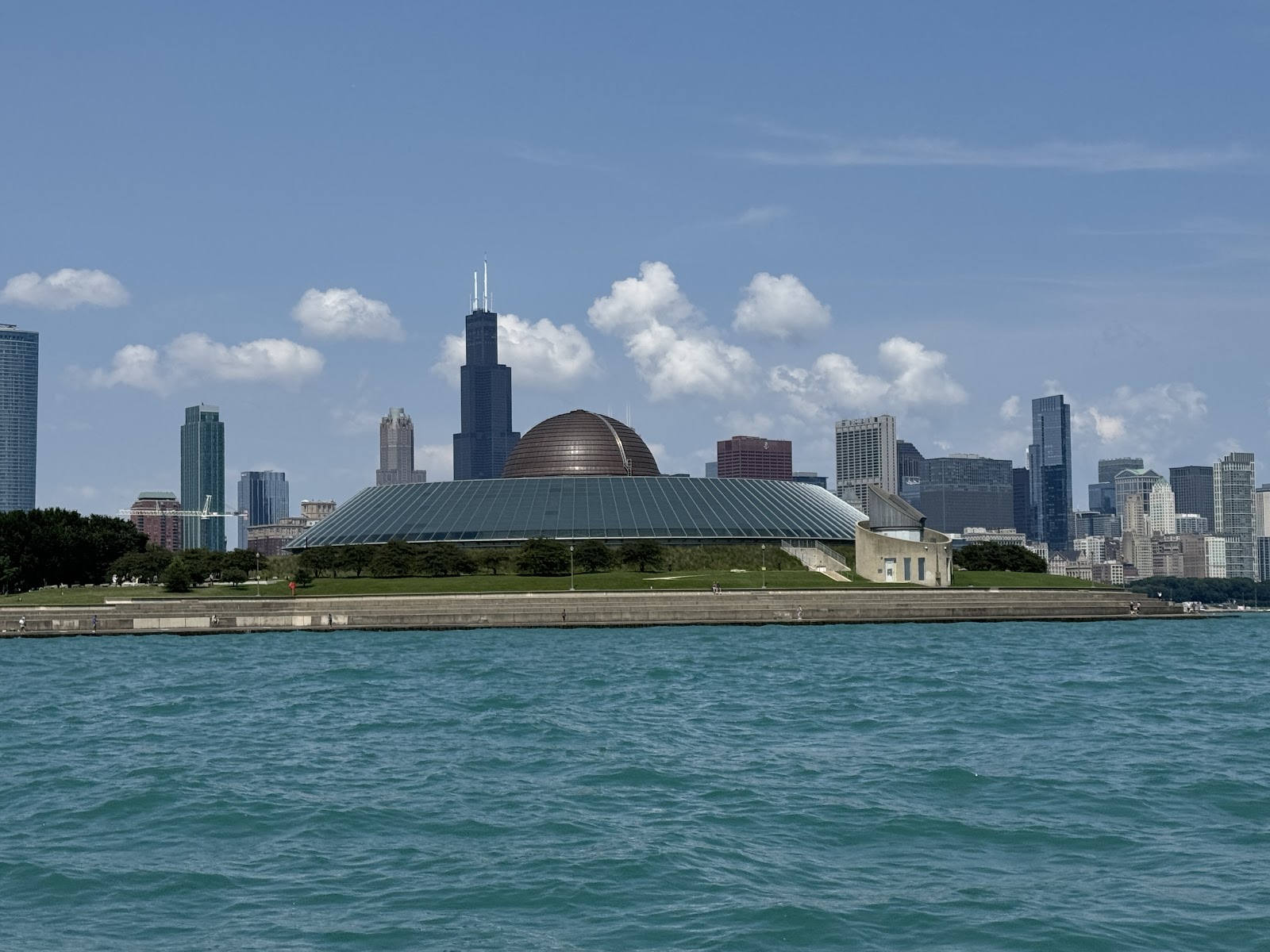
The Adler Planetarium sits at the northern tip of Northerly Island in Chicago, on the Museum Campus where the lakefront bends. Its position is the whole point: looking back across the harbour it faces the full downtown skyline, with Lake Michigan opening out behind.
Photographically the building contains two conditions that could not be more opposed. Outside, on the terrace and the approach, you have an unobstructed skyline across water — the most photographed view in Chicago and a genuinely spectacular backdrop. Inside, you have rooms designed to be dark, because a planetarium’s purpose is to exclude light. Domed theatres, black ceilings, exhibit halls lit to a level that suits projection rather than photography.
One decision follows from that, and it shapes the timeline more than any other: are you building the day around the exterior view, which means committing to a narrow window of good light, or around the interior, which means bringing every watt you own? This is about that fork. We have not photographed a wedding at the Adler; skyline-across-water and blacked-out interiors behave the same anywhere they occur. Which spaces are available and what the terrace access allows are questions for their events team.
The Adler Planetarium at a glance
| Where | Northerly Island, Museum Campus, Chicago, Illinois |
| Character | 1930s planetarium facing the skyline across the harbour |
| The fork | Commit to the exterior view, or to rooms built to exclude light |
| Outside | Unobstructed downtown skyline across water — and full wind exposure |
| Inside | Dark by design: domed theatres, black ceilings, projection-level light |
If you build the day around the view
The skyline across the harbour is a rare kind of backdrop because water sits between you and it. That gap does three useful things: it removes all the clutter that usually occupies the foreground of a city view, it reflects the buildings so the lit towers appear twice, and it gives you a clean horizontal line to compose against. A couple on the terrace with that behind them needs no styling at all.
It also imposes a schedule. A skyline reads best in the twenty to forty minutes after sunset, when the sky still holds colour and the building lights have come on — the two exposures converge and you can hold both in one frame. Fifteen minutes earlier the windows are dead; thirty minutes later the sky is black and you have lit boxes floating in nothing. So committing to the view means committing to being outside, with the couple, in that specific window. It is not a block you can slide.
Which means lighting the couple, because the skyline sets your exposure and the skyline is dim. There is no version of this frame where ambient light on faces is adequate — a couple lit only by a city a mile away is a silhouette. One off-camera light, warm, from the side, at a power that matches the skyline rather than overwhelming it, is the whole technique. Get the balance wrong towards flash and the background disappears; wrong towards ambient and the couple do.
Then there is the wind. This is a spit of land in Lake Michigan with no shelter on any side, and the lakefront wind is genuinely relentless rather than occasional. Veils are unmanageable, unweighted light stands are a hazard, and a bride in an off-the-shoulder dress in October will not stand outside for twenty minutes regardless of how good the frame is. Plan the exterior block as a short, decisive, rehearsed five minutes.
If you build the day around the interior
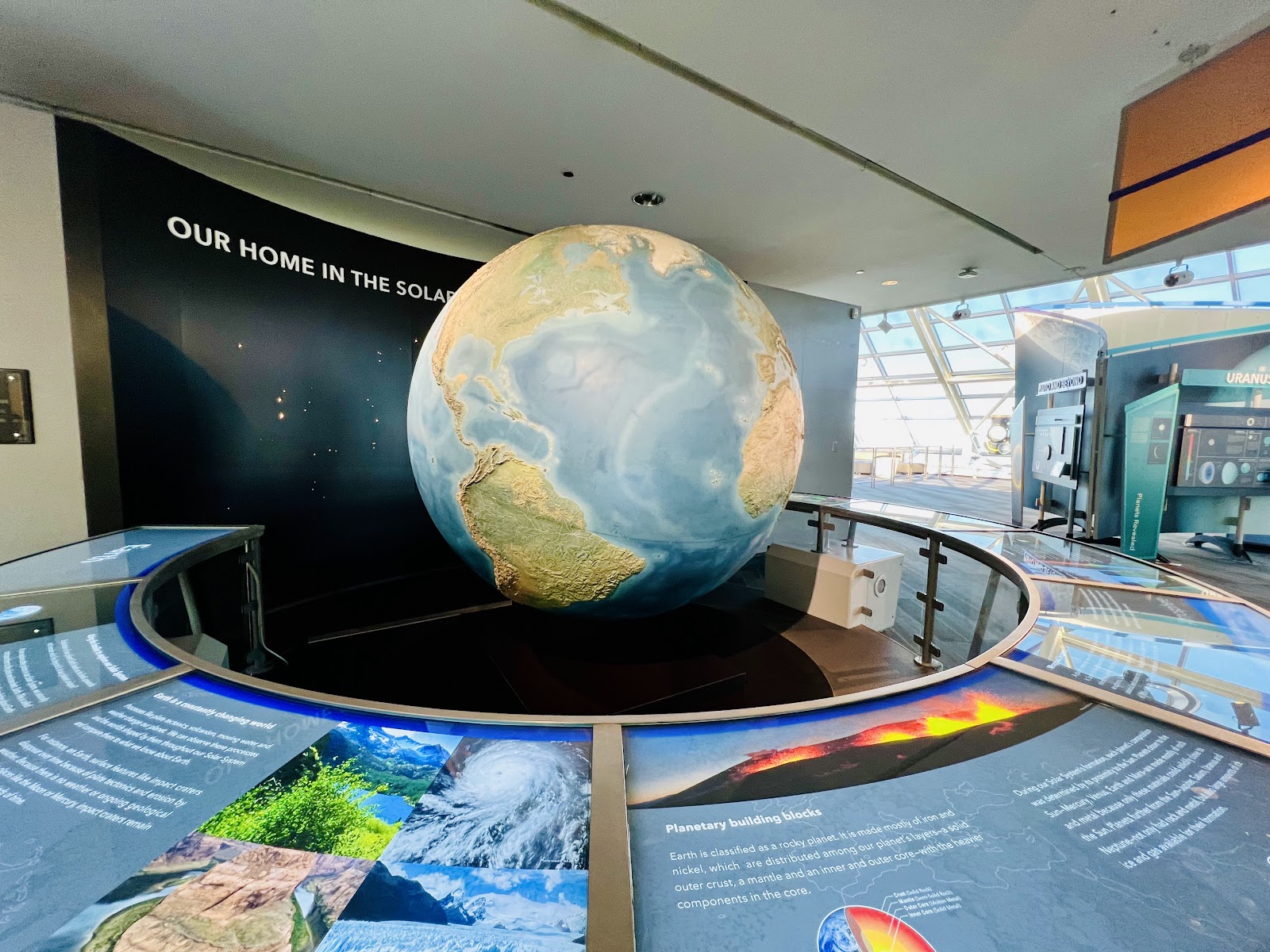
The inside of a planetarium is the darkest category of museum. Exhibit halls are lit for projection contrast, the domed theatres are effectively black, and there are stretches of the building with no daylight reaching them at all. What you do not get is the museum default of high ceilings with bright uplighting; what you get is a room that reads as deep space, which is entirely the intention.
The correct response is to stop treating the ambient light as a starting point. In a space this dark your own lights are not fill, they are the entire exposure, which is actually liberating: you control everything, nothing is competing with you, and a single hard source on a couple against a black ceiling produces a dramatic, clean, deliberate frame with no background to manage. This is one of the few venue types where a simple two-light setup gives a result that looks far more considered than the effort involved.
Colour is the trap. Projection and exhibit lighting runs to saturated blues, purples and magentas, and those are narrow-spectrum sources rather than colour temperatures — no white balance resolves them to neutral. Treat them as coloured light and compose with them, or overpower them locally on faces and let them be background. What fails is trying to correct a magenta exhibit wall to grey: everything else in the frame goes green.
The compensating gift is the dome. A domed ceiling with a projected star field above a couple is a frame that no hotel, church or garden can produce, and it is the single reason to choose this venue over any other museum in the city. Whether that is available for a wedding is the first thing to ask, because if it is, it changes the whole balance of the decision.
What works in your favour
- An unobstructed downtown skyline across water, reflected twice
- Very dark interiors mean your lights control the entire frame
- A projected dome overhead is a frame no other venue type offers
- Museum Campus location puts the lakefront path minutes away
- 1930s rotunda architecture gives symmetry and strong lines
What to plan around
- The skyline frame lives in a 30-minute window you cannot move
- Relentless lakefront wind, with no shelter anywhere on the island
- Interiors are dark by design; ambient light is never enough
- Saturated projection colour will not white-balance to neutral
- Two opposite lighting problems in one day, needing two kits
Why the honest answer is usually both, in a specific order
The two halves are not actually in competition if you sequence them properly, and the sequence is forced by the sky rather than chosen. Work the interior during daylight, when nothing outside is worth having — a midday skyline is flat, hazy and the sun is behind the wrong side of the buildings. Then step outside for the post-sunset window, take the five minutes that matter, and come back in.
That inverts the habit most photographers bring, which is to do portraits in the afternoon and interiors after dark. At this venue that ordering wastes both conditions: you get a flat afternoon skyline and a dark interior you now have to light anyway, at the end of the night, while the reception is running.
The practical version is a written two-line plan agreed with the couple in advance: an interior block mid-afternoon, and a hard-scheduled exterior block at a stated clock time derived from sunset on their date. Neither is long. Both are non-negotiable if the gallery is going to contain the two frames people book this venue for.
Two last notes specific to the Museum Campus. Parking and load-in are a real distance from the building and there is no discreet way to move equipment quickly, so bring what you can carry in one trip and keep the exterior kit minimal. And the lakefront path immediately outside is public and busy in every season, which is another argument for a short, decided, rehearsed exterior block rather than an exploratory wander.
More frames from The Adler Planetarium
The Adler Planetarium wedding photography: common questions
When exactly should the skyline portraits happen?
In the twenty to forty minutes after sunset, when the sky still holds colour and the building lights are on — that is the only time both hold in one exposure. Earlier the windows are dead, later you have lit boxes on black. Derive a clock time from sunset on the actual date and treat it as fixed.
Can you photograph the skyline without flash?
No. The skyline sets the exposure and the skyline is dim, so a couple lit only by a city a mile away is a silhouette. One warm off-camera light from the side, balanced to the skyline rather than overpowering it, is the entire technique.
How dark is the inside?
Darker than any other museum category. Halls are lit for projection contrast and the domed theatres are effectively black. Stop treating ambient as a starting point: your lights become the whole exposure, which means you control everything and there is no background to manage.
Why do the interior photos look the wrong colour?
Exhibit and projection lighting is saturated blue, purple and magenta, and those are narrow-spectrum sources rather than colour temperatures. No white balance makes them neutral. Compose with them as coloured light, or overpower them on faces and let them be background.
What order should the day run in?
Interior during daylight, exterior after sunset — the opposite of most photographers’ habit. A midday skyline is flat and hazy, so the afternoon is worth nothing outside, while the interior needs lighting whatever the hour. Doing it the usual way round wastes both conditions.
How bad is the wind?
Persistent rather than occasional — it is a spit of land in Lake Michigan with no shelter on any side. Veils become unmanageable and unweighted stands are a hazard. Plan the exterior as a rehearsed five minutes, and warn the couple what standing out there in October actually feels like.
More Chicago, IL venue guides
We are writing a photographer’s guide to every venue we would happily shoot in Chicago, IL. Here are three more, plus the full index:
- The Art Institute of Chicago: Reading a Museum Hour by Hour
- The Chicago Athletic Association: Dark Wood and Stained Glass
- The Chicago History Museum: Making the Glass-Dome Frame
All Chicago, IL Wedding Venues →
Planning a wedding at The Adler Planetarium?
This venue needs two plans and a clock time taken from sunset. Tell us your date and we will give you both before anything else is booked.