 Dry Tortugas National Park: A Walk Through an Island Fort
The Walt Disney World Resorts: What It Suits, and What It Does Not
The rules govern this venue more than the light does.
This is the only venue type in this library where the operating rules matter more to a photographer than the light, and being straight about that is the most useful thing a guide can do.
A large themed resort complex runs a controlled environment at enormous scale. Everything a visitor sees is designed, maintained and managed — which produces an extremely high standard of presentation and a correspondingly detailed set of conditions about what may be photographed, where, when, and by whom.
Those conditions are real and they are not negotiable. Commercial photography on this kind of property is typically governed by a policy that specifies which photographers may work, in which locations, at which times, and what equipment is permitted — and a resort of this scale enforces it consistently rather than case by case.
So the first question is not about light at all. It is whether an outside photographer may work the property, in what areas, and under what terms. That answer shapes everything, and it is worth establishing in writing before a deposit is paid rather than afterwards.
A couple who assume a photographer can work freely across a resort complex may find the coverage confined to the specific venue they booked, with the wider property off limits — which is a legitimate policy and a substantial difference from what they imagined.
The second thing to understand is scale. A resort complex of this kind is not a venue but a district: multiple hotels, multiple event spaces, internal transport, and distances measured in kilometres rather than metres.
For a photographer that means transitions cost real time. Moving a wedding party between two locations on a property this size is a bus or a boat rather than a walk, and at a latitude where civil twilight runs about twenty-one minutes, a badly planned transition costs the entire blue hour.
And the third is that the environment is themed, consistently and thoroughly. Each hotel has a coherent design idiom carried through every surface, which means backgrounds are distinctive and unmistakable — and also that nothing is neutral.
Orlando sits at about twenty-eight and a half degrees north at close to a hundred feet. The June noon sun reaches around eighty-five degrees, the December noon sun about thirty-eight, days run from about ten hours twenty to fourteen hours, and civil twilight is roughly twenty-one minutes — the shortest in this library.
We have not photographed a wedding here. The photography policy, which spaces are bookable and the permitted hours are questions for the resort, and the first one governs everything.
The Walt Disney World Resorts at a glance
| Where | A very large themed resort complex near Orlando, Florida |
| The first question | Whether an outside photographer may work, where, and under what terms |
| Suits | Large counts, flawless logistics, out-of-town guests, weather-proofing |
| Does not suit | Anyone wanting neutral backgrounds or unrestricted access |
| The latitude | About 28.5°N — a 21-minute twilight, the shortest in this library |
What it suits
It suits logistics more completely than any venue type in this library, and logistics affect photographs more than people expect.
A resort complex of this scale runs events as core business. That means kitchens that deliver on time, staff whose job is keeping a schedule, level access for equipment, adequate power everywhere, internal transport, and contingency for weather built into the operation rather than improvised.
A wedding that starts on time finishes on time, which means the light outside is where the plan said it would be when the speeches end. At a latitude with a twenty-one-minute twilight, a half-hour overrun costs the day’s best exterior frames entirely — so an operation that runs to time is protecting the coverage in a way nobody notices until it is absent.
It suits a large guest count without compromise. Purpose-built ballrooms hold several hundred for dinner in rooms designed for it, with aisles, a proper dance floor, sightlines to the top table, and room for a photographer to stand back with a longer lens.
It suits an out-of-town guest list, which for a destination resort is nearly all of them. Everyone sleeps on the property, nobody drives, the getting-ready rooms are a short distance from the ceremony, and the day runs continuously rather than being broken by transport.
It suits weather-proofing, and in central Florida that matters more than almost anywhere. Summer here produces afternoon thunderstorms from sea-breeze convergence almost daily, and this region receives more lightning than anywhere else in the United States.
A resort with real indoor alternatives for every outdoor space, staffed and available at short notice, is the difference between a plan and a hope. And hurricane season runs June through November, which for a Florida date is a genuine planning consideration.
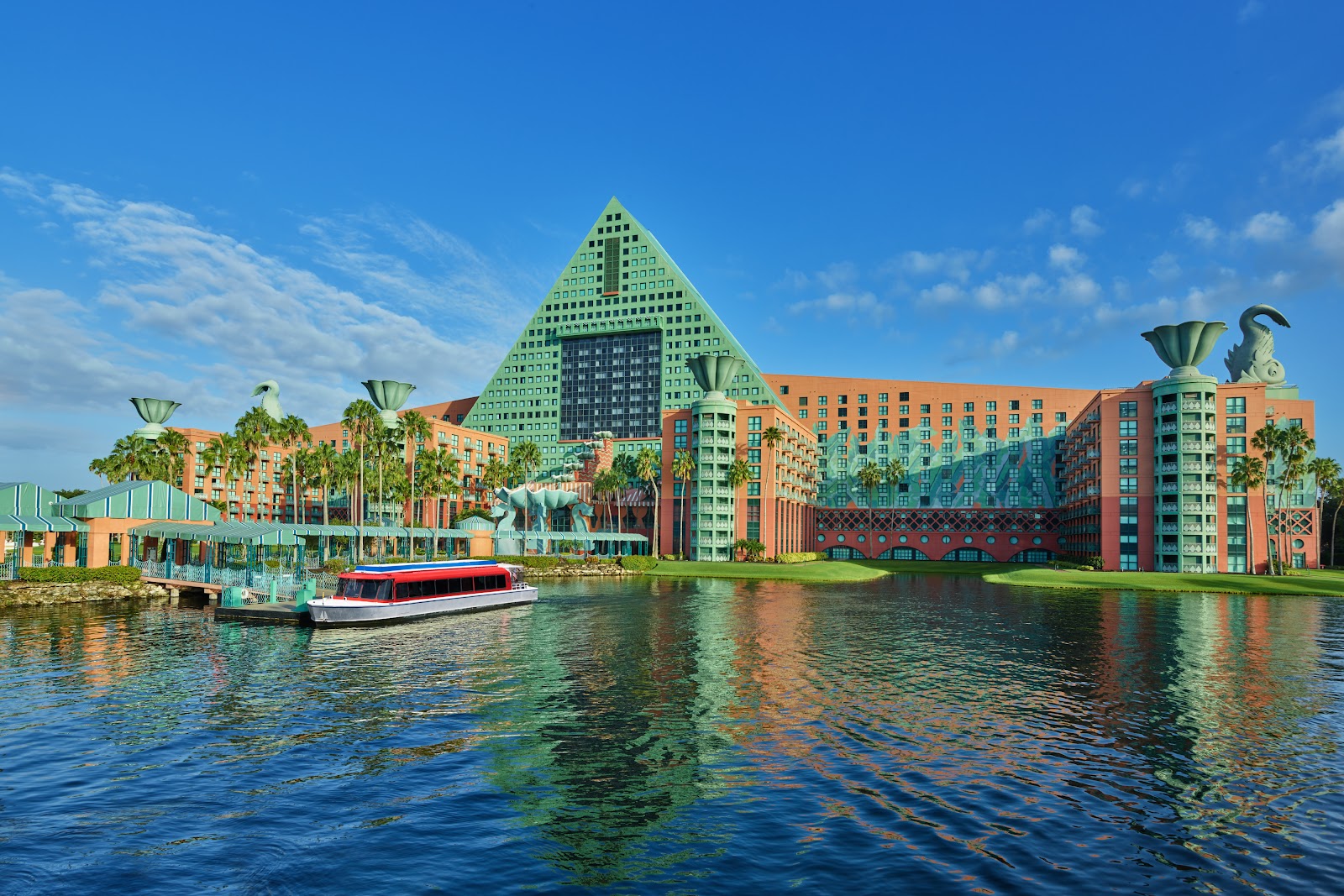
It suits the theming, for a couple who want it. Each hotel on a complex like this carries a coherent design idiom through every surface — architecture, planting, finishes, lighting — which means the backgrounds are distinctive and immediately identifiable.
That is genuinely valuable to the right couple. The pictures will look like somewhere specific rather than like a generic ballroom, and for people who chose the place deliberately that is the entire point.
It suits the planting, which is worth mentioning because it is better than people expect. A resort of this scale maintains its landscape at a standard almost no private venue matches, and in central Florida that means genuinely subtropical material: live oak with Spanish moss, sabal palm, crape myrtle, bougainvillea and mature specimen planting throughout.
Live oak is the important one. Evergreen, broad, dense and low-crowned, it casts genuine solid shade with no dapple in January as in July — which makes it the reliable midday position at any time of year, and that matters at a latitude where the June noon sun reaches eighty-five degrees.
And it suits a winter date, which reverses most of this library. December through April is central Florida’s dry, mild season, with a December noon sun of thirty-eight degrees that models rather than flattens and evergreen planting that looks the same as in summer.
What it does not suit
It does not suit a photographer who has not read the policy, and that is the honest headline.
Commercial photography on a property of this kind is governed by specific terms, and those terms may confine an outside photographer to the booked venue rather than the wider resort. That is a legitimate operating decision and it is a substantial constraint — so it has to be established before the booking rather than discovered on the day.
The practical consequence is that the frames a couple imagine from having visited as guests may not be available to them as clients. Walking a property freely with a phone is a different thing from working it professionally, and the difference is the policy.
It does not suit anyone wanting neutral backgrounds. Thorough theming means nothing is undecorated: every surface, fitting, planting scheme and lighting choice is part of a designed whole, and a portrait taken anywhere on the property is a portrait in that design.
A couple whose styling is minimal and modern will find the environment asserting itself in every frame. That is not a fault; it is what the place is.
It does not suit exclusivity in any sense. A resort complex has guests everywhere, and its public spaces are busy at almost all hours — which means strangers in the background of most frames and a photographer being tactical about backgrounds rather than assuming clear ones.
Early morning is the only reliably quiet time, and on a property that operates late into the evening even that is relative.
It does not suit a tight budget. Resorts of this class carry minimum spends, mandatory catering, service charges and supplier arrangements with real consequences — and the photography policy may itself carry a cost.
It does not suit a schedule with no slack, because of the distances. Transitions on a property measured in kilometres are transport rather than walking: a bus, a boat, an internal system. A plan that allows fifteen minutes to move a party of thirty between two locations has not accounted for loading, travel and unloading.
Thirty minutes is realistic. And a twenty-one-minute twilight will not wait.
It does not suit a photographer relying on house lighting indoors. Ballrooms are lit by high-level recessed downlights on a low dimmer, which gives strong top light with shadowed eye sockets and a chin shadow — the commonest failure in resort coverage. The house lighting is for atmosphere in the room, not for faces in a frame.
And it does not suit anyone who has not scouted. A property this large has a handful of genuinely good positions and a great many adequate ones, and the difference cannot be found during a wedding. Where the light falls at five in the afternoon, which courtyard is quiet, which waterfront faces west — those are questions answered by walking the site in advance, and the policy question determines whether that walk is even permitted.
- Establish the photography policy in writing before the booking, not after
- Budget thirty minutes for any transition; the distances are transport, not walking
- Never key from ballroom downlights — bounce warm and drag the shutter
- Live oak is the reliable midday shade at any time of year
- Twenty-one minutes of twilight: the shortest here, and it will not wait
Technique, and the central Florida year
Five things raise a day at a resort of this kind above the default.
Find the daylight and the water. A resort complex of this scale is built around artificial lakes and waterways, and water is disproportionately valuable: it reflects the sky, which makes it a large low-angle source filling under the chin and lifting eye sockets — strongest at grazing angles, so the last hour.
A low camera turns a rippled surface into a bright specular path running toward the lens, and dropping to knee height lengthens it considerably. That is the cheapest improvement available on any waterfront.
Use the covered structures. Themed resort architecture is generous with loggias, porte-cochères, covered walks and arcades, and every one is a large soft source with a hard mask — light in from the open side, bouncing off paving and ceiling, falling off with depth.
Depth back from the open edge is the whole control, and Florida’s humidity softens the ratio by perhaps two stops against a dry climate, which makes those positions forgiving.
Warm-gel everything and drag the shutter. Resort lighting is warm tungsten or warm LED throughout, decorative and low, and a daylight-balanced flash against it puts blue-white faces in a golden environment. A quarter to a half warm gel with a correspondingly warm white balance resolves it, and a thirtieth to a sixtieth keeps the fixtures visible — which on a themed property is much of what makes a frame recognisable.
Add a rim. Themed environments are visually busy, and a subject lit only frontally merges into the decoration behind them. A rim at about a stop over the key on the far shoulder lifts them clear, and it matters more here than in a plain room.
And watch the reflective surfaces, of which a resort has an unusual number — glass, polished stone, water features, metal. All will show a photographer and a light stand from some angle, and all are easy to miss in a viewfinder.
The central Florida year runs opposite to most of this library and the reversal is emphatic.
December through April is the season: mild, dry, sunny and comfortable, with a December noon sun of about thirty-eight degrees that models rather than flattens. Because the planting is evergreen, a January frame looks much like an October one — so a winter date here is a positive choice rather than a compromise.
It is also the busiest time, which is worth knowing when booking.
June through September is the constraint and it is severe. Subtropical summer brings afternoon temperatures in the nineties with dewpoints in the mid-to-high seventies, and for a party in formal clothing outdoors that is a welfare matter rather than a comfort one.
The humidity has a real photographic effect and it is mostly favourable. Water vapour scatters light and fills shadows, so a sunlit courtyard in July carries perhaps two and a half stops less contrast than the same sun angle in Arizona — soft shadow edges, eye sockets holding detail, and midday genuinely workable. The costs are a pale washed sky and hazed long lenses.
One equipment note specific to this climate: lenses fog when moving from an air-conditioned interior into outdoor air, within seconds, and take minutes to clear. The fix is to carry the camera warm rather than leaving it in the air conditioning while waiting.
The cloud is reliable and it is the compensation. Central Florida afternoons generate convection almost daily in summer, and the half hour after a cell passes is the best light of the year: washed air, wet paving reflecting the sky, saturated colour, a low sun under a broken ceiling.
The hazard is lightning, and it needs stating plainly. Central Florida receives more lightning than anywhere else in the United States, which for an outdoor ceremony in summer is a reason the covered alternative must genuinely exist and be reachable in minutes.
And the twilight is the shortest in this library at about twenty-one minutes. The end of the day needs its two or three frames known in advance and walked to — and on a property where walking to them may be a bus ride, that planning is not optional.
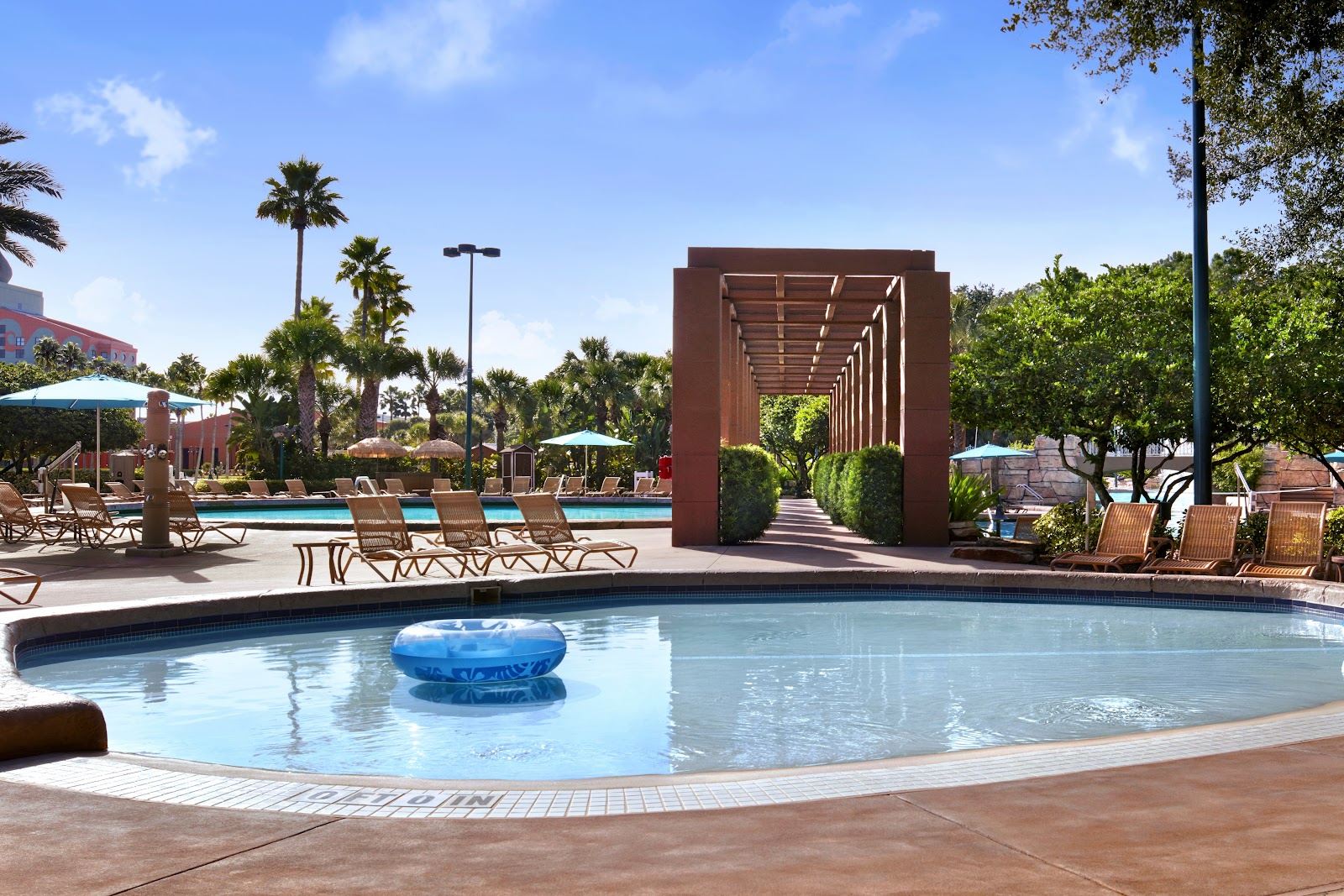
More frames from The Walt Disney World Resorts
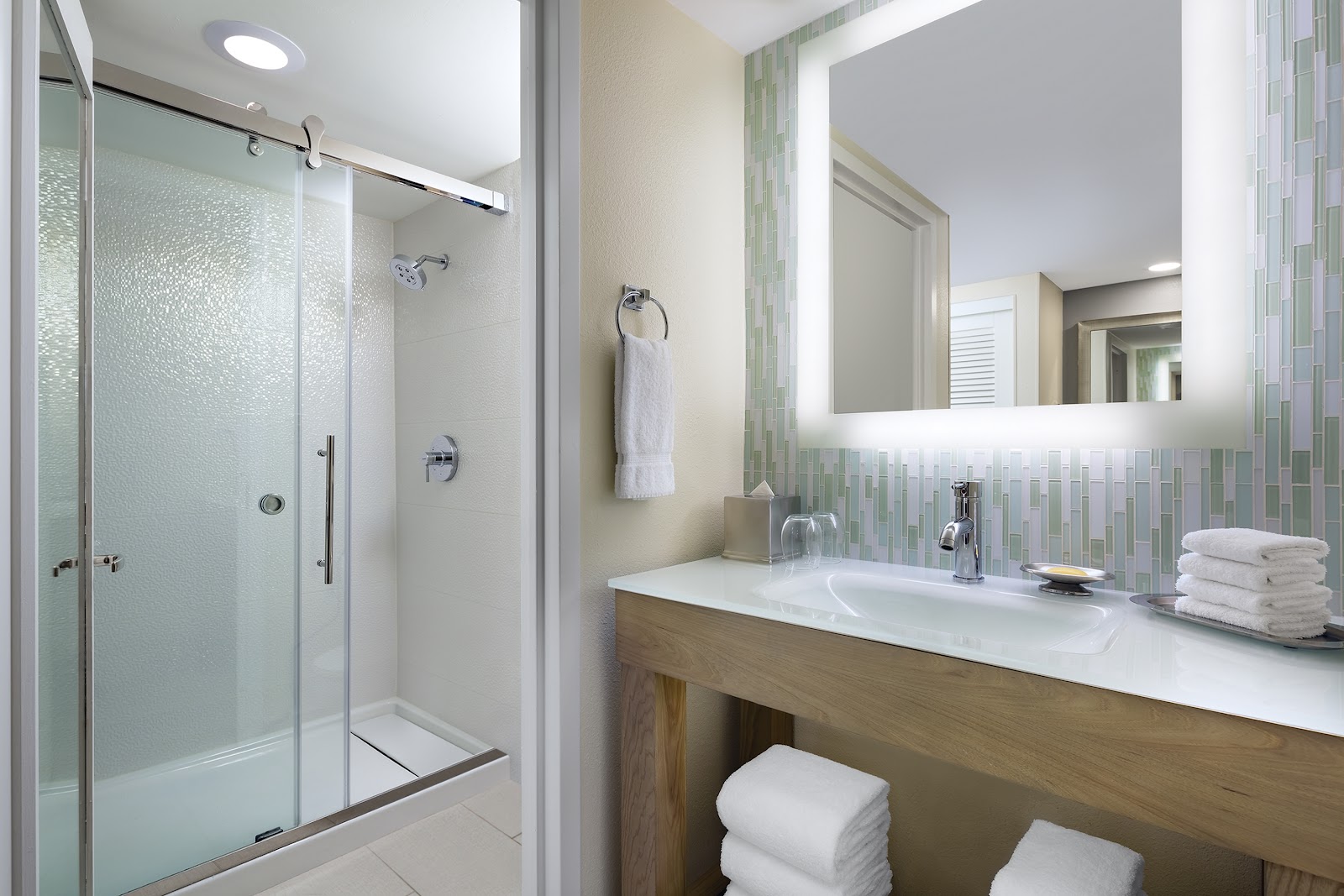
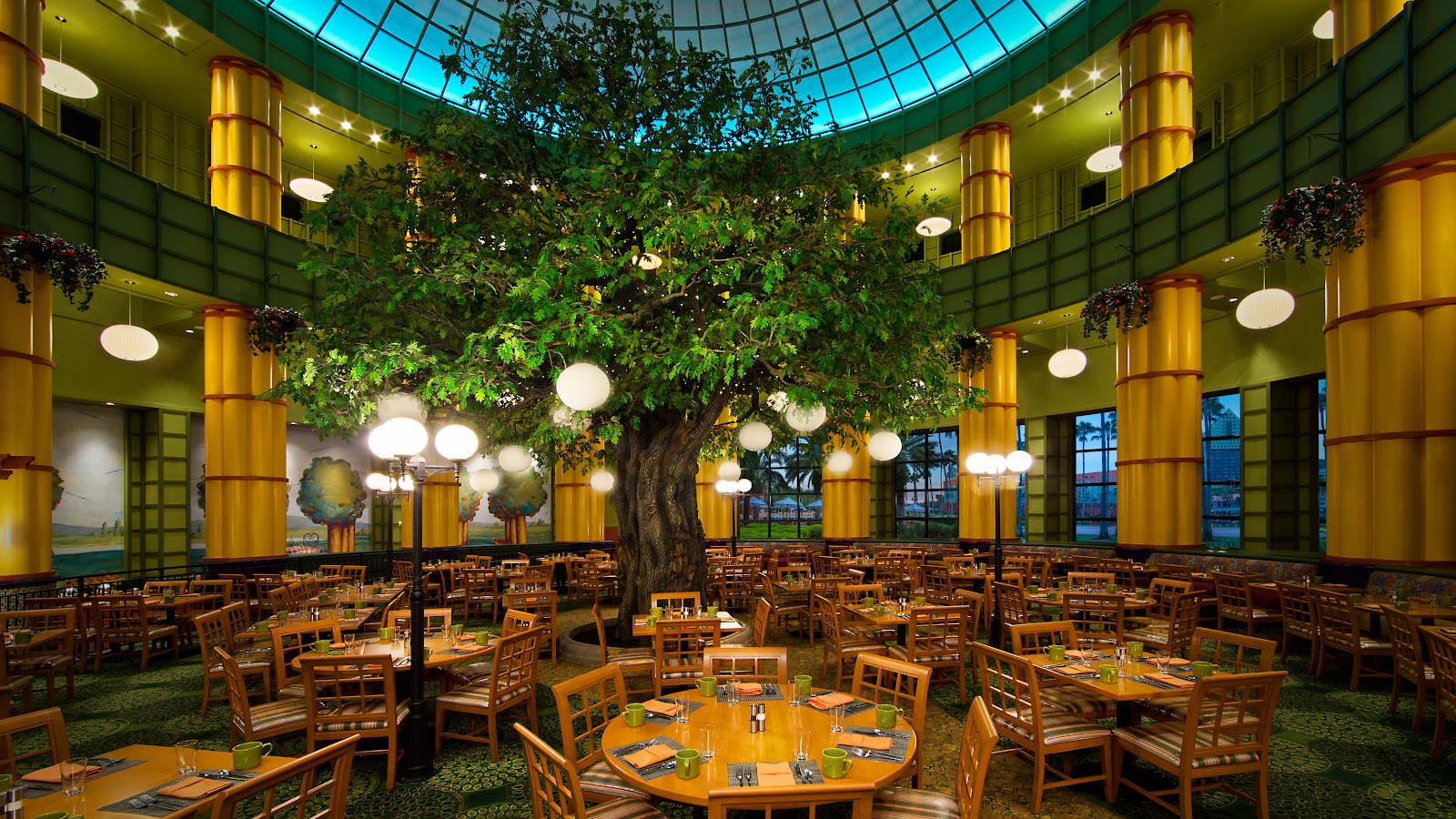
The Walt Disney World Resorts wedding photography: common questions
What is the first question here?
Whether an outside photographer may work the property, in which areas and under what terms. Establish it in writing before a deposit, not after.
Why does that matter so much?
The policy may confine coverage to the booked venue rather than the wider resort — a legitimate decision and a substantial difference from what a couple imagines.
How long do transitions take?
Thirty minutes for a party of thirty, because the distances are transport rather than walking. A twenty-one-minute twilight will not wait for a badly planned move.
What suits this venue type best?
Logistics. Kitchens that deliver on time, staff who keep a schedule, and real indoor alternatives — which in central Florida’s storm season is the difference between a plan and a hope.
Does Florida humidity help?
Mostly. It fills shadows by about two and a half stops against Arizona at the same sun angle, so midday is workable. It pales the sky and hazes distance.
What is the summer hazard?
Lightning. Central Florida gets more of it than anywhere else in the United States, so the covered alternative must be genuine and reachable in minutes.
More Florida venue guides
We are writing a photographer’s guide to every venue we would happily shoot in Florida. Here are three more, plus the full index:
- Dry Tortugas National Park: A Walk Through an Island Fort
- The Ernest Hemingway Home, Key West: One Frame, and How It Is Made
- Fort Zachary Taylor, Key West: What It Suits, and What It Does Not
Planning a wedding at The Walt Disney World Resorts?
Flawless logistics, and a policy to read first. Tell us your date.