 The Van Dusen Mansion, Minneapolis: A Walk Through House and Grounds
The W Minneapolis: The One Decision That Governs Everything
A modern hotel inside a historic tower has two identities. Choosing one makes the gallery; using both makes a muddle.
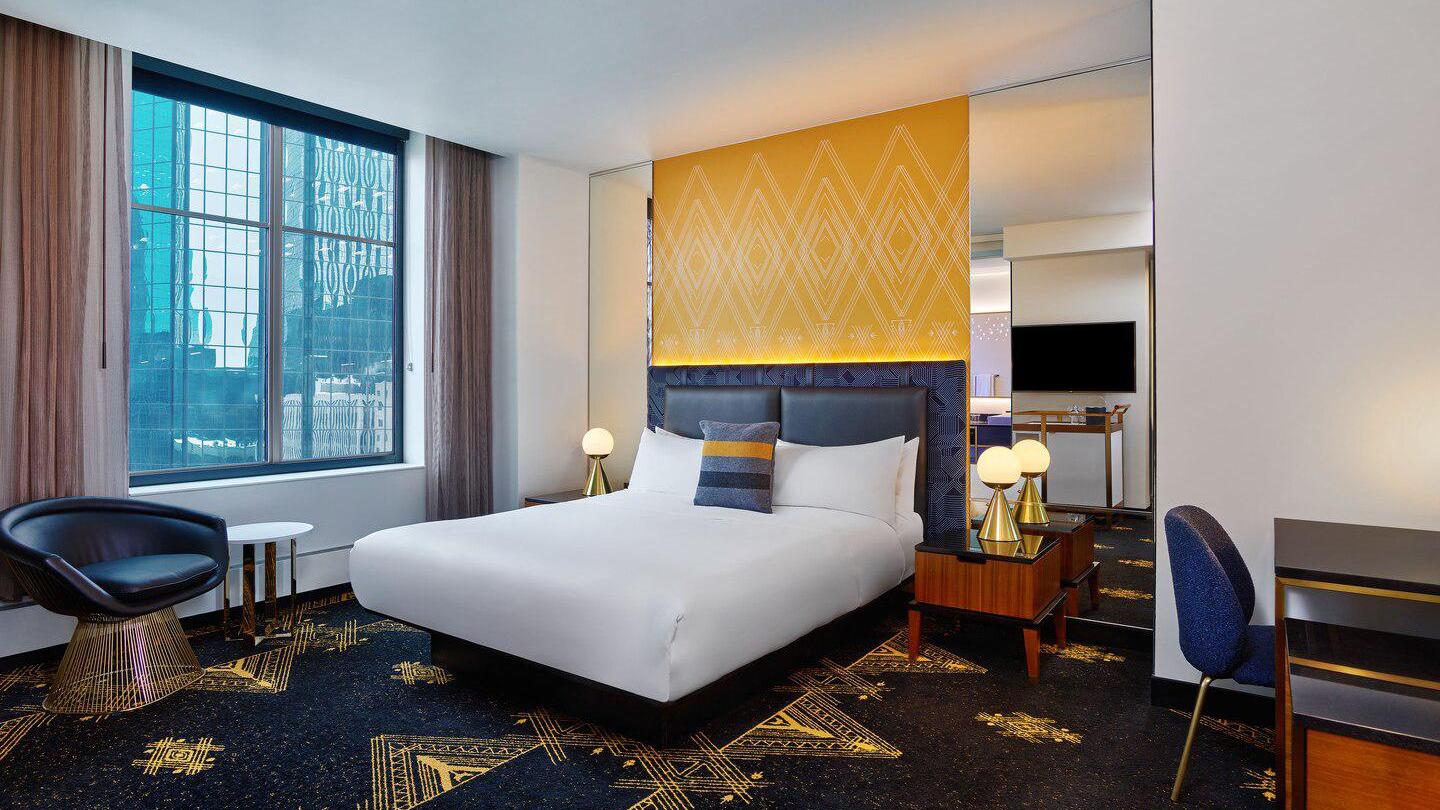
The main ballroom at the W Minneapolis radiates glamour, in its own description, with modern fixtures and plush seating.
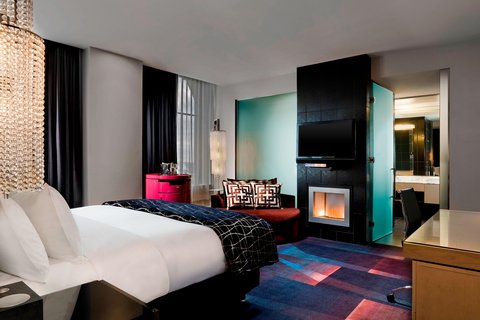
That is an accurate description of the fit-out and it points straight at the decision that governs the day. A contemporary hotel inside a historic tower has two identities: the building, which is period architecture with the geometry, materials and detail of its own era; and the fit-out, which is current hospitality design — modern fixtures, even lighting, pale surfaces, plush furnishing. Both are perfectly good and they are not compatible in a sequence.
A gallery that commits to the architecture reads as specific to Minneapolis and to a particular building. A gallery that commits to the fit-out reads as contemporary and could have been made in any city. A gallery that alternates between them frame by frame reads as inconsistent no matter how well each individual frame is made — because a warm, detailed, geometric period frame placed next to a cool, even, minimal modern one makes both look wrong.
So the decision is which identity leads, and it is worth making before the day rather than during it. We have not photographed a wedding at the W Minneapolis; modern hotels inside historic towers behave consistently. Which spaces are included, whether the historic lobby and any period detail may be worked in, whether the ballroom lighting is adjustable, and what upper-floor access exists are the questions for their team.
The W Minneapolis at a glance
| Where | Downtown Minneapolis, Minnesota |
| Character | A contemporary hotel inside a historic tower |
| The decision | Which identity leads — the building, or the fit-out |
| Why | Period and modern frames placed side by side make both look wrong |
| Ask first | Spaces included, period areas, ballroom lighting, upper floors |
Why the two identities cannot be mixed
The clash is measurable rather than a matter of taste. A period interior is lit warm and is high in visual contrast, because ornament, stone and dark materials create strong tonal separation. A contemporary fit-out is lit cooler and is low in contrast, because that is what pale surfaces under even light produce.
Put a warm high-contrast frame next to a cool low-contrast one in a sequence and both look wrong: the period one reads as orange, the modern one as grey. Neither photograph is at fault; the pairing is. And because a wedding gallery is consumed as a sequence rather than as single images, the pairing is what matters.
Grading cannot reconcile them. Cooling the period material drains its character and warming the modern fit-out makes it look strange, because the warmth of one and the coolness of the other are what each thing is. Removing both leaves nothing.
So the decision is a spine rather than a compromise — and at a hotel inside a historic tower the period identity is usually the stronger choice, for one reason: a contemporary hotel interior in Minneapolis looks much like a contemporary hotel interior anywhere, whereas a specific historic tower does not. If the gallery is going to say where it was taken, the building has to lead.
That does not mean ignoring the fit-out. It means using it where it is genuinely better — preparation, details, anything needing clean uncluttered backgrounds — and splitting by time rather than interleaving, so the change lands where the day naturally changes rather than in the middle of a sequence.
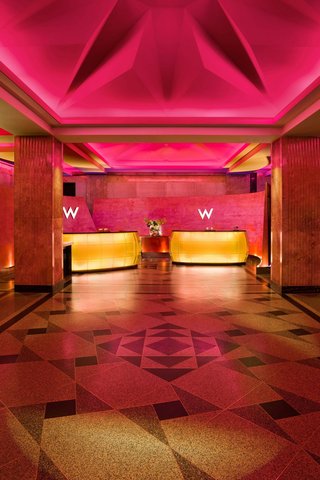
Period detail in a tower of this kind is likely to be concentrated at the base, because that is where the public met the building: a lobby, an entrance, lift doors, metalwork, stone, a stair. Those are the spaces worth asking about specifically, and they are frequently in continuous use as a working hotel lobby — which means the frames should be known in advance and the quiet hour asked about, because twenty prepared minutes beats an hour of improvisation.
What follows from the decision
If the building leads, then the technique follows from its materials. Period metalwork — bronze, brass, nickel — is specular rather than merely shiny, which means it returns an image of whatever is around it rather than a soft scatter. A photographer’s position relative to metalwork is therefore technical rather than compositional: look at the surface before looking through the viewfinder, find where the reflection is clean, and put the camera there. Your own light must be angled so its reflection falls out of the frame’s centre of interest.
Period stone and plaster relief read only when light crosses them at an angle and casts small shadows, so one source placed to graze a surface rather than face it brings the detail back. Under the even downward lighting a modern fit-out installs, the same detail flattens into a pale field — which is the single commonest failure in a building like this.
Geometry rewards precision. Period towers are usually built on strong symmetry and repeating modules, and the eye detects a two-degree error against a strong pattern instantly while forgiving a large one in an asymmetrical composition. Level, and either centre exactly or clearly do not.
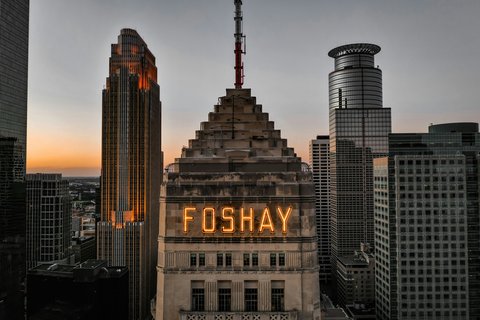
Verticality is the tower’s own asset and it changes composition outdoors. A tower photographs best in tall frames from low positions: a low camera close to the base exaggerates the rise and lets the setbacks or storeys recede up the frame, with a couple small at the bottom. That is the one frame where going wide is right, and it is easy to miss because the instinct outside a hotel is to photograph the entrance.
Height is the fourth thing a tower gives, and upper-floor access is worth pressing on. Minneapolis’s towers are clustered rather than continuous, so from a height the city reads as distinct masses at different distances — exactly what a long lens wants, stacking them into bands behind a couple. Height also buys thirty or forty minutes of extra golden light, because the surrounding roofline is below.
If instead the fit-out leads, the method is the modern one: one directional source at close to ambient level to restore shape; depth, aperture, dark placement and negative fill for separation; and the ballroom’s steep fall-off exploited as the free separation the daytime rooms refuse to provide. Asking whether the ballroom lighting can be dimmed to pools rather than set evenly is worth more than any equipment decision.
Either way, the crossing is the one timed frame and from an upper floor it is exceptional: twenty minutes after sunset the city falls to about the brightness of the interior lighting, and one exposure holds the lit room, the couple and a layered skyline with a coloured sky above.
- Choose a spine — the building or the fit-out — and split by time, not by frame
- Look at period metalwork before looking through the viewfinder
- Graze the stone and plaster, or the detail flattens to a pale field
- Get low outside and let the tower recede; the one wide frame worth taking
- Sunset plus fifteen from a height, with a long lens
Downtown, the skyways, and Minneapolis's year
Downtown Minneapolis is the outdoor extension and it is efficient to work because the grid is regular: which streets take low sun straight down their length is readable from a map rather than discovered on foot. Brick and warm stone bounce warm and flatter skin; pale stone and modern glass bounce cool and can grey it, so which side of a street to stand on is a decision — and at a historic stone tower, the warm material is usually across the street rather than on the building.
The network of enclosed elevated walkways is the asset worth asking about. Glazed, heated corridors with views down streets give a very large soft source on one side, a city view on the other, and an elevated position — and in a Minnesota January they may be the only elevated frame available at all, with no coats, no cold and no fogging.
Minneapolis’s winter is the most demanding in this series. Days are short, with sunset in the middle of the afternoon in December, and temperatures make an outdoor block three or four minutes rather than twenty — a welfare decision as much as a photographic one, which means the outdoor frames must be decided in advance and executed quickly.
That suits a historic tower particularly well, because the building’s own best frames are indoors at the base and upstairs at height, both of them heated. A short cold day spent in a warm period lobby and a warm upper floor, with one three-minute street excursion, is a complete gallery.
Snow is the compensation and it is the best natural fill there is, lifting exactly the shadows a low sun carves while fooling a meter by about two stops. Snow against period stone, with the tower rising behind, is a frame specific to this city and this building type — and a snow-covered city seen from an upper floor is one street-level venues cannot produce.
Cold clear air also gives the deepest and longest-lasting sky colour of the year, so the crossing from a height is better in winter than in summer.
The fogging risk is severe in both directions and worse than elsewhere, and a masonry tower holds cold longer than a modern building. Let a body stay cold between outdoor visits rather than cycling it, plan one excursion rather than several, and use the skyways where they exist.
Summer is warm and humid with very long days, which pushes the crossing well into the reception and needs agreeing in advance. Autumn gives the clearest air of the year, which matters most for the frames looking out from a height.
More frames from The W Minneapolis
The W Minneapolis wedding photography: common questions
What is the one decision?
Which identity leads — the historic building or the contemporary fit-out. They are both good and they are not compatible in a sequence.
Why can't they be mixed?
Because a period frame is warm and high-contrast while a modern one is cool and low-contrast, so side by side the first reads as orange and the second as grey. Grading cannot reconcile them.
Which one should usually lead?
The building. A contemporary hotel interior in Minneapolis looks like one anywhere; a specific historic tower does not. If the gallery is going to say where it was taken, the building has to lead.
How do you handle period metalwork?
As a mirror. Look at the surface before looking through the viewfinder, find where the reflection is clean, and angle your own source so its reflection falls out of frame.
What is the one wide frame?
From street level, low and close to the base, letting the tower recede up the frame with the couple small at the bottom. It is a photograph about the building and the city.
Why does this venue suit a Minnesota winter?
Because its best frames are indoors at the base and upstairs at height, both heated — so a short cold day plus one three-minute street excursion is a complete gallery.
More Minneapolis, MN venue guides
We are writing a photographer’s guide to every venue we would happily shoot in Minneapolis, MN. Here are three more, plus the full index:
- The Walker Art Center, Minneapolis: Four Ways Out of the Gallery Problem
- The Aria, Minneapolis: Photographing Brick Under Chandeliers
- The Emery Hotel, Minneapolis: The One Decision That Governs Everything
All Minneapolis, MN Wedding Venues →
Planning a wedding at The W Minneapolis?
Pick the spine before the day. Tell us your date and we will pick it with you.