 Roots Run Deep, Fruita: The Site’s Own Logic
The Vail Mountain Club, Vail: Field Notes
Eight thousand feet. At that height altitude is the whole story.
At eight thousand feet the altitude stops being a background fact and becomes the dominant variable in every decision, and that is the honest starting point for this venue.
Vail’s valley floor sits at around eight thousand one hundred and fifty feet, with the mountain rising to over eleven and a half thousand above it. That is substantially higher than the Front Range venues elsewhere in this library, and the difference is not marginal — it is roughly twenty-five percent less atmosphere above the camera rather than twenty.
Four problems follow and each has a clean answer.
The light is harder than anywhere else in this library. Less air means less scattering, so the direct beam arrives more intact and — critically — the shadows receive almost no fill at all. A subject half in sun and half in shade at eight thousand feet is a six-stop problem, which is beyond what a single exposure holds comfortably.
The sky is a very deep blue, which looks magnificent and creates a colour problem: open shade is lit almost entirely by that sky and reads distinctly cool, while sunlit rock, timber and snow read warm. The gap is wider here than at lower elevation.
The terrain shortens the day severely. A narrow valley with high ground on both sides loses the sun early and gains it late, and in a deep mountain valley that margin can be an hour or more — which means the published sunset time is not merely approximate but actively misleading.
And the altitude affects people. Eight thousand feet is enough that guests arriving from sea level will feel it genuinely — shortness of breath, faster fatigue, a markedly lower alcohol tolerance, and for some a headache. That is not a photographic problem and it changes how a day runs.
The compensations are the clarity, the aspen, and a valley that is genuinely spectacular. Vail sits at about thirty-nine and a half degrees north. The June noon sun reaches around seventy-three and a half degrees, the December noon sun about twenty-six and a half, days run from about nine hours twenty to fourteen hours fifty-five, and civil twilight is roughly twenty-seven minutes.
We have not photographed a wedding here. Which spaces are bookable, what each faces, and when the sun leaves the valley in your month are questions for the club — and the last one matters most.
The Vail Mountain Club at a glance
| Where | A private club in the Vail valley, Colorado, at about 8,150 feet |
| Problem one | Roughly 25% less atmosphere: a six-stop sun-to-shade gap |
| Problem two | A very deep blue sky, so shade is markedly cool and sun is warm |
| Problem three | A narrow valley loses the sun an hour or more early |
| Problem four | Eight thousand feet is enough for guests to feel genuinely |
Problems one and two: extreme contrast, and blue shade
The contrast is the first problem and the rule is simple: never split a subject between sun and shade.
At eight thousand feet the lit-to-shaded gap runs to six stops, because there is so little atmosphere to scatter light into the shadows. A face with half of it in a shaft of sun and half in shade cannot be exposed — hold the lit side and the shaded side is black; hold the shaded side and the lit side is blown white with no detail.
So put subjects entirely in one or the other, and entirely in shade is almost always the better choice for faces: soft even light on skin, with the sunlit valley or mountainside as a warm background at a ratio a single source can bridge.
That is the working method here and it is more absolute than at lower elevation. What passes as a manageable compromise at sea level does not survive at eight thousand feet.
Where a subject must be in sun, a diffuser overhead converts the beam into a large soft source and is genuinely necessary rather than optional — with the caveat that mountain valleys funnel wind and a diffuser on an unweighted stand will not survive it. Hand-held with a braced assistant is the only reliable method.
The colour is the second problem and the correction is the most reliable in the state.
Open shade at altitude is lit by a sky that is a genuinely deep blue, because reduced Rayleigh scattering lets the shorter wavelengths dominate more cleanly. That means shade reads markedly cool — more so than at six thousand feet, and far more than at sea level.
Meanwhile the sun, and everything it lights, reads warm. So a frame with a shaded subject and a sunlit background has two distinct colour worlds in it.
An ungelled flash makes that worse rather than better, because a daylight-balanced source in blue shade produces a face that sits slightly green against warm surroundings. Warm-gel every source by a quarter to a half and set a warmer white balance than the meter suggests. That single habit resolves most Colorado colour problems.
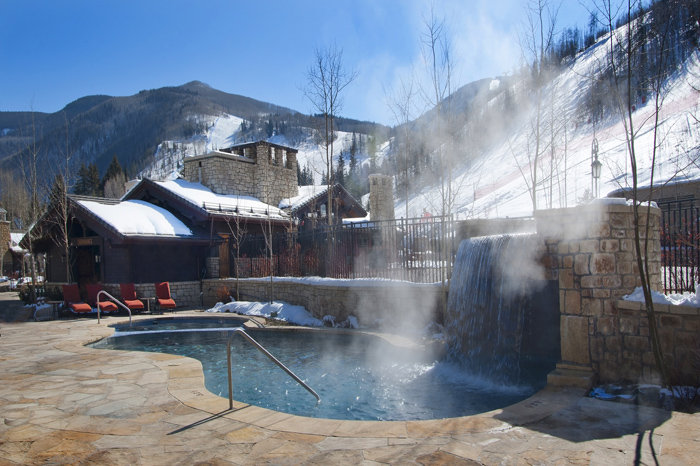
Snow amplifies everything and it is present here for a large part of the year. A snow-covered valley is an enormous reflector: it bounces light upward into faces, which fills eye sockets for free and makes a midday portrait on open snow genuinely flattering rather than harsh.
That is the reverse of the usual midday problem and it is one of the real photographic arguments for a winter wedding at altitude. The fill comes from below, which is exactly where overhead light needs it.
Snow also raises the exposure by two or three stops and confuses reflected metering badly. Meter for the snow deliberately — it should sit bright, not grey — or use incident metering, and check a histogram rather than trusting a match-needle.
And snow at altitude in clear air is blue in shade, strongly. Shaded snow under a deep blue sky renders genuinely blue, which is accurate rather than a fault, and warm-gelling a subject standing on it is what separates them from it.
Problems three and four: the valley clock, and the guests
The terrain clock is the third problem and it is the one that most often costs a photographer the frames they planned.
Every published sunrise and sunset time assumes a flat horizon. In a mountain valley with high ground on both sides, the sun disappears when it reaches the altitude of the western ridge — which in a deep valley can be twenty or thirty degrees, putting sunset an hour or more before the published figure.
The margin also changes through the year, because the sun sets at a different bearing in summer than in winter, so the ridge it goes behind is a different one. That means a single observation in one season does not transfer to another.
The only reliable answer is to ask. Club staff know precisely when the sun leaves a particular terrace in a particular month, because it governs their own operations — and that question is worth more than any amount of technique.
Failing that, assume the golden hour ends an hour earlier than published and plan accordingly. Arriving at the last position to find the light gone is the characteristic failure in mountain country and it is entirely preventable.
The compensation is the lag and it is the best light in the valley. After the sun drops behind the western ridge, the high ground opposite stays lit — often for twenty or thirty minutes — which gives a subject in soft even valley shade against a warmly lit mountainside, at a ratio one modest source bridges comfortably.
That is the frame to build the evening around, and in a valley with eleven and a half thousand feet of mountain on one side there is a great deal of lit ground to work with.
It reverses at dawn, with the opposite ridge lighting first while the valley floor is still dark — and the morning version has the cold still air that the evening does not, because cold air drains into a valley overnight and pools there.
That drainage is worth knowing as a comfort matter. A valley floor at eight thousand feet at dawn is genuinely cold even in summer, because thin air holds little heat and the cool dense air from the slopes above has been collecting all night.
The fourth problem is the guests and it is a real one at this elevation.
Eight thousand feet is high enough that people arriving from sea level will feel it within hours: shortness of breath on stairs, faster fatigue, disrupted sleep, a markedly lower alcohol tolerance, and for a proportion of people a genuine headache. Acclimatisation takes a day or two.
For a photographer that translates directly into expressions and energy. A wedding party who flew in the morning of the wedding will tire sooner and look it, and pacing the formal photographs accordingly produces materially better frames than pushing through a long session.
It also means the walk to a location matters more. A hundred metres uphill at eight thousand feet is not the same as a hundred metres at sea level, and a route that would be trivial elsewhere is a real ask here — particularly in formal shoes.
The ultraviolet is roughly a third higher than at sea level, which means a party outdoors for a long ceremony burns considerably faster than the temperature warns them. Worth mentioning, because the cool mountain air actively conceals it.
- Never split a face between sun and shade — at this altitude that is six stops
- Warm-gel everything; shade under a deep blue sky reads markedly cool
- Ask the club when the sun leaves your terrace in your month
- Wait for the lag: valley in shade, opposite mountainside still lit
- Pace the formal photographs; eight thousand feet tires people faster
The aspen, the club and the year
The vegetation at this elevation is specific and the aspen is the reason to consider an autumn date.
Quaking aspen dominates the mid-elevation slopes here, and it has a property that makes it unlike any other tree in this library: it grows in clonal stands. A grove is genetically a single organism spreading by root suckers, which means every tree in it turns colour at the same moment rather than tree by tree.
The photographic consequence is blocks of uniform gold rather than a mixture — and because the clones interleave with each other and with dark conifer, a mountainside in late September reads as patches of solid colour against near-black.
That is a distinctive look and it is nothing like the mixed hardwood colour of New England, where every tree turns on its own schedule.
Aspen bark is the other asset: smooth, pale grey-green and almost white in places, marked with dark scars. A mature trunk is a light-toned vertical, and a stand of them is a series of pale verticals against a dark understorey — which makes aspen one of the best natural portrait backgrounds anywhere, in any season.
Above the aspen the forest turns to spruce and fir, which are near-black in a photograph and give the best separation available. A metre or two inside the edge of a spruce stand gives soft directional light in front and four or five stops of darkness behind, which at this altitude is separation nothing else can match.
The timing of the turn moves with elevation and it moves fast. At eight to ten thousand feet the aspen turn in the second half of September, which is earlier than lower Colorado and considerably earlier than the eastern states. The window is roughly ten days and a hard frost or a wind event can strip a stand in a single night.
So an aspen date is a gamble within a known fortnight rather than a reliable booking, and asking the club what the last few years have done is worth the conversation.
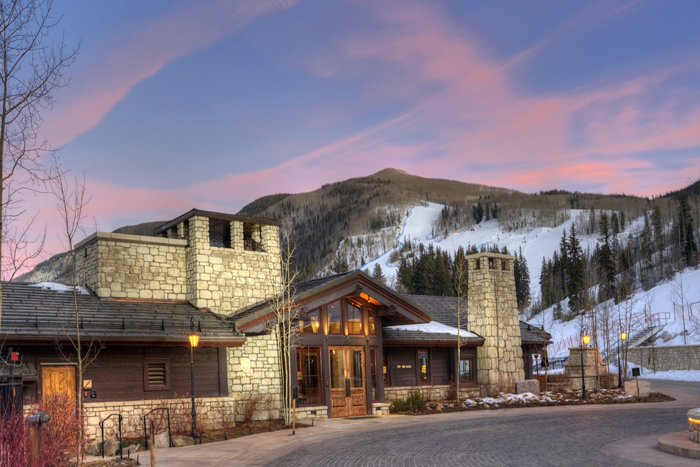
The club’s own interiors follow the mountain-west pattern: generous scale, warm stone and timber, heavy glazing on the view side. The glazing is the best light in the building — three or four metres in from a large window gives clear side modelling with no top-light problem, and groups arrange parallel to it rather than across the room.
The exposure trap is the view and at this altitude it is severe. A camera metering an interior against sunlit snow faces a range wider than anywhere else in this library, because the exterior is brighter than at sea level and snow adds two or three stops on top. Holding both means substantial fill indoors, or letting the glazing blow and composing so it reads as a clean shape.
The dark finishes mean bounce is limited — warm stone and stained timber return very little — so direct through a modifier with a rim is the method, and gel to match the warm fixtures.
The year at this elevation is shaped by snow more than by temperature.
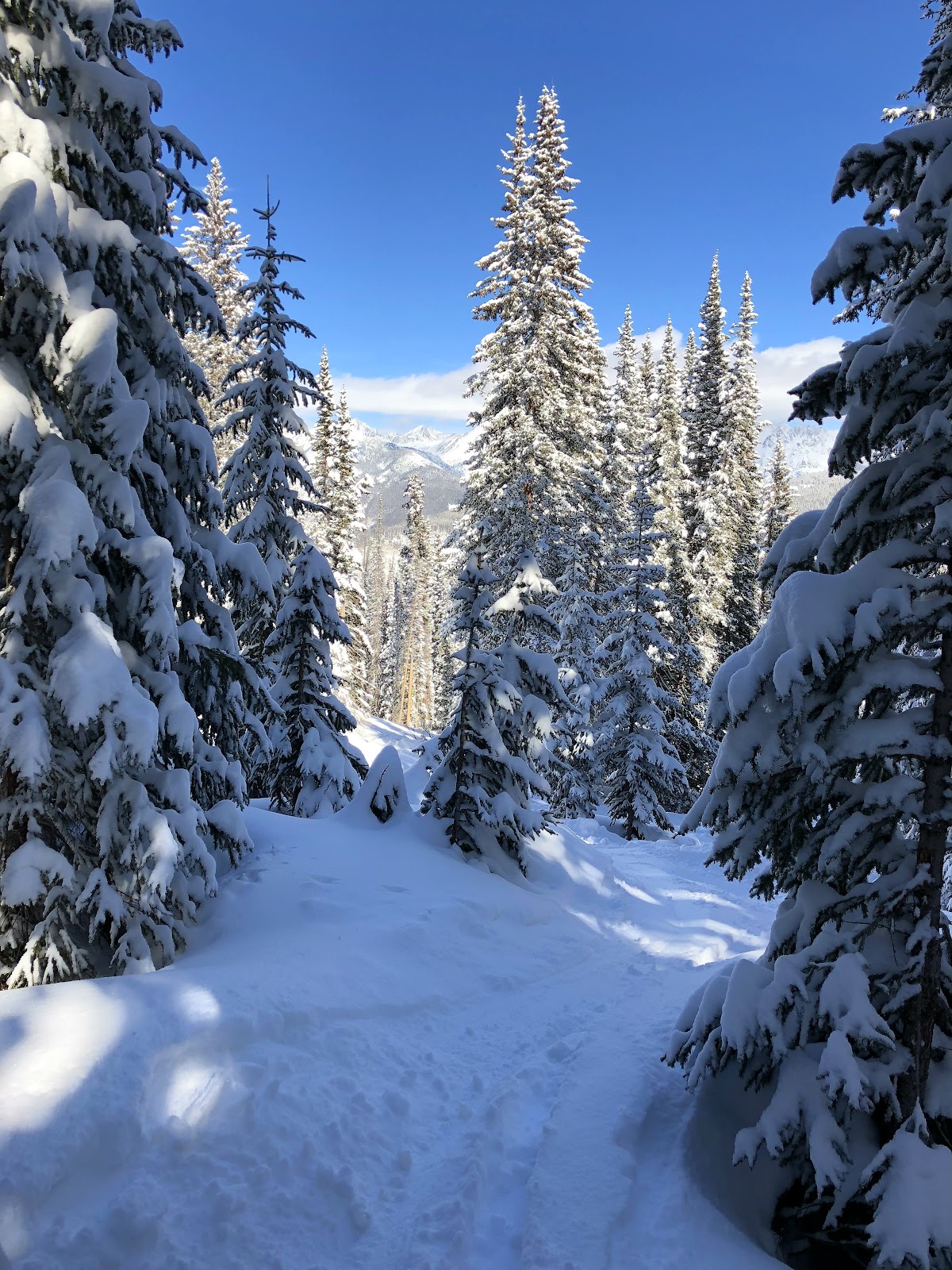
Winter is the valley’s principal season and the infrastructure is built for it: buildings warm, roads cleared properly, and a landscape at its most photogenic. Snow on spruce is the classic mountain frame, the light is excellent because snow fills every shadow from below, and the mountain reads far more legibly than in summer.
The constraints are a nine-and-a-half-hour December day, a twenty-seven-minute twilight, a valley that may be in shadow for much of it, and cold that limits standing outside to minutes.
Late September is the aspen fortnight and the best window if the timing holds. Summer is green, long-lit and comfortable, with afternoon thunderstorms that build over the peaks and break in the early afternoon — dramatic, and a reason to have a covered alternative at this elevation where lightning above treeline is a genuine hazard.
And spring is the season to avoid. At eight thousand feet the snow lingers into May or June, and what follows is not spring but mud: brown ground, dirty remnant snow, bare aspen, and closed trails. May and early June are the least photogenic weeks of the year in a high Colorado valley, and it is worth saying so plainly.
More frames from The Vail Mountain Club
The Vail Mountain Club wedding photography: common questions
What does eight thousand feet actually change?
Roughly twenty-five percent less atmosphere, so shadows get almost no fill. A face split between sun and shade is a six-stop problem here, not three.
Why gel every source?
A deep blue sky at altitude makes open shade markedly cool while everything sunlit reads warm. An ungelled flash gives a green face in a warm frame.
Does snow help or hurt?
Helps, substantially. It bounces light upward into faces, which fills eye sockets for free and makes a midday portrait on open snow flattering rather than harsh.
Why is the published sunset wrong?
It assumes a flat horizon. In a deep valley the sun disappears behind the western ridge an hour or more early, and the margin changes with the season.
What should I ask the club?
When the sun leaves the terrace you are using, in the month you are booking. Their staff know precisely, because it governs their own operations.
When do the aspen turn?
The second half of September at this elevation, for about ten days. Clonal stands turn all at once, and a frost or wind event can strip one overnight.
More Colorado venue guides
We are writing a photographer’s guide to every venue we would happily shoot in Colorado. Here are three more, plus the full index:
- The Willow Creek Farm, Westminster: The Light Through the Day
- The Argo Gold Mill, Idaho Springs: What It Suits, and What It Does Not
- Bella Collina, Monument: The Problem, and Four Ways Out
Planning a wedding at The Vail Mountain Club?
Real altitude, and light to match. Tell us your date.