 Roots Run Deep, Fruita: The Site’s Own Logic
Purgatory Resort, Durango: The One Decision That Governs Everything
Top or base. That single choice fixes the light, the schedule, the weather risk and the guest list.
At a ski-mountain venue there is one decision that settles almost everything else, and it is not a photographic one. It is whether the ceremony happens at the top of the lift or at the base.
Everything else follows from it: what the light does, when the day has to run, how much weather risk the wedding carries, how many guests can realistically attend, and what the pictures are of. Made early, it makes the rest of the planning straightforward. Made late, it forces a series of compromises that show.
The reason it governs so much is elevation. A base area in the San Juans sits high already — around eight and a half thousand feet — and a lift top is a thousand or two thousand feet above that, close to or above ten thousand. That difference is not scenic decoration. It changes the air, the light, the temperature, the wind and the weather exposure, all at once.
We have not photographed a wedding at Purgatory Resort; ski-mountain venues and high San Juan terrain behave consistently. Whether the lift runs in summer, on what schedule, what the last downloading time is, what the covered alternative is at each elevation, and how many guests a lift can move are questions for their team — and those answers, rather than anything here, decide which side of the decision a wedding lands on.
Purgatory Resort at a glance
| Where | A ski mountain near Durango, Colorado, in the San Juans |
| The decision | Top of the lift, or the base area |
| Top | The view of the year, and the most exposure and least control |
| Base | Buildings, shelter, shade and a schedule that bends |
| Ask first | Summer lift schedule, last download, covered alternative at each level |
If it is the top
The top gives the view of the year and takes away nearly all control, and both halves of that are worth saying plainly.
What it gives is the San Juans, which are among the most dramatic ranges in the country — steep, jagged, close together, and at a lift top you are inside them rather than looking across at them. The frame is not a distant band of mountain above a lot of foreground; it is rock and ridge filling the picture behind a couple.
A longer lens is the right instrument for that, because it compresses ridgelines into stacked layers and brings them forward. In the exceptionally dry clear air at ten thousand feet that compression holds detail rather than hazing, which is the whole reason the frame works here. A wide lens flattens the range into a pale strip and puts the emphasis on bare ski-run grass, which is the opposite of the point.
The exposure goes on the distance rather than on skin. Metering on faces produces a white sky and a flat washed-out range, which is the standard failure of open high country — so the ambient is set for the rock and snow, and the faces are lifted by a close source. Close matters because nothing at a lift top bounces: light falls off with the square of distance, so a source at two metres needs roughly a quarter of the output of the same source at four.
That source has to be gelled to whatever the ambient is doing — warm at the ends of the day, cool in open shade under a deep high-altitude sky — or the faces read as pasted into the landscape.
What the top takes away is everything else. There is no shade: at ten thousand feet the trees are stunted or absent, and there is roughly a third less atmosphere overhead than at sea level, so direct sun is the hardest of anywhere in this guide and a face half in sun is unrecoverable. Which means a top ceremony is a morning or an evening event, and in the middle of the day it is either overcast or a compromise everyone can see.
There is no shelter, which matters because afternoon convection builds almost daily in the San Juans from July into September and an exposed ridge is among the most dangerous places to be under a building storm. Colorado has one of the highest rates of lightning casualties in the country and high exposed terrain in the afternoon is precisely why. The plan is a morning ceremony and a party that can be moved down quickly, and the decision to move belongs to whoever is responsible for them.
There is a hard schedule, set by the lift rather than by the sun. If the last download is at five, then the last frame at the top is before five regardless of what the light is doing at seven — and at a site whose best light is the last hour of the day, that is the single most common planning failure. It is worth knowing the exact time before the ceremony time is set.
And there is a guest limit set by how many people a lift can move and how long that takes. Ninety guests at eight per chair is a long operation, and it changes the shape of the day.
Cold and wind are the last of it. The diurnal swing at altitude in dry air is well over twenty degrees Celsius, wind on an exposed ridge adds chill on top, and a party in formal clothes at ten thousand feet in the evening needs coats. Ultraviolet increases substantially with elevation too, so an hour up there burns faster than anyone expects, including under cloud and over snow.
If it is the base
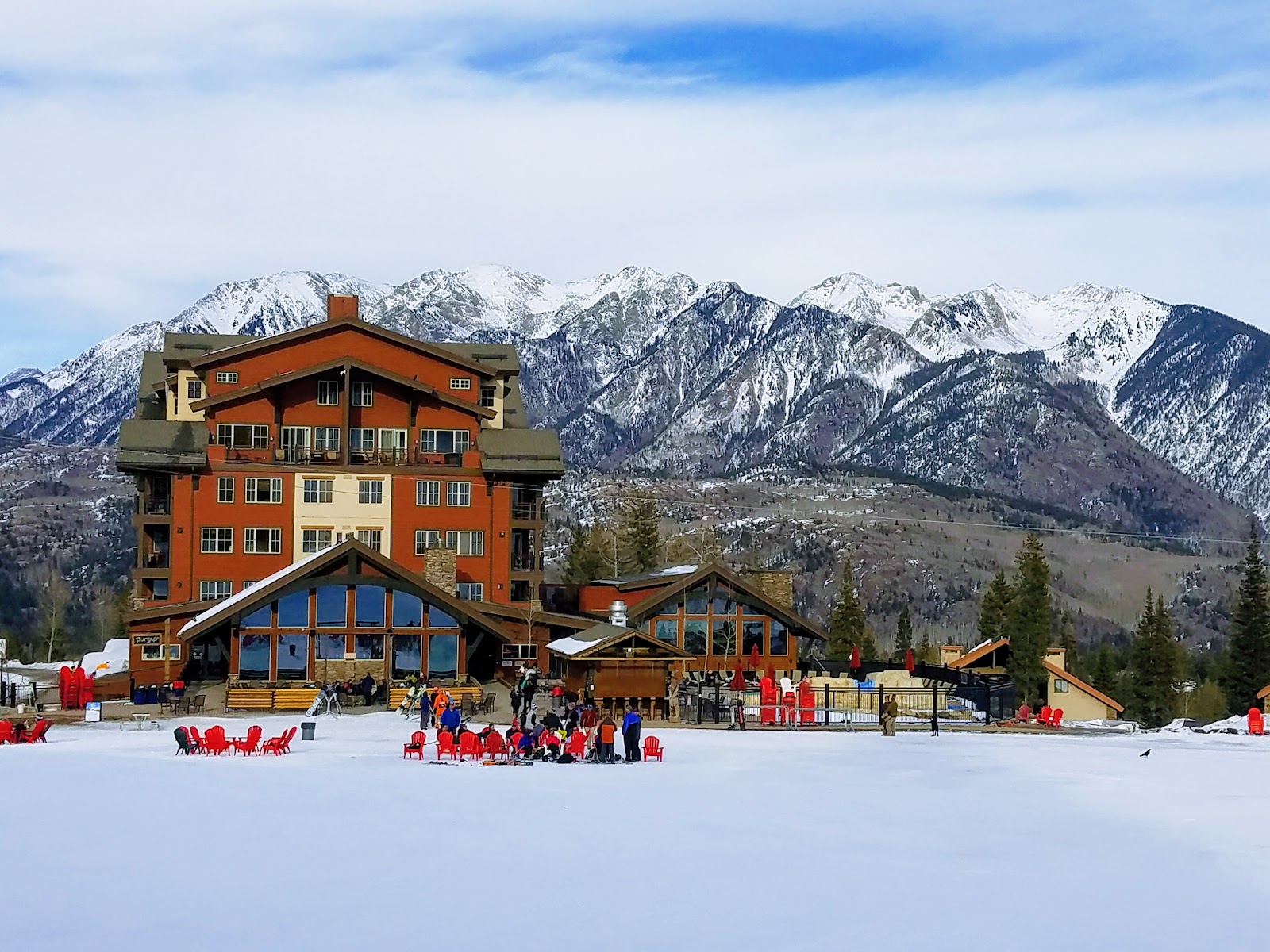
The base gives up the ridgeline frame and gets back everything the top removed, which for most weddings is the better trade.
It has buildings, which means shade at any hour, a named covered alternative with real capacity, and interior spaces that work in weather. A lodge doorway or covered deck with a solid roof blocks the overhead light, restricts it to a horizontal band and bounces off the decking to fill — the most reliable light on any mountain property, available at noon, and incapable of dappling. Two or three metres in from the open edge is the working position.
It has a schedule that bends. Without a lift deadline the day can run to the light rather than to an operations timetable, which means the last hour before sunset and the crossing that follows are actually available — and at a mountain base those are better than most people expect, because the terrain takes the sun early and the interval when the peaks stay lit while the base is already in shade can run twenty or thirty minutes.
That interval is the base area’s signature frame: a couple in soft even shade with brilliantly lit rock above and behind them. It works by lifting the faces with a close warm-gelled source rather than by underexposing the peaks to match.
It has real shade in the trees, which at base elevation means spruce and fir rather than the stunted growth higher up. Dense conifer absorbs almost everything, giving genuine full shade and three or four stops of free separation — though crowns are narrow at this elevation, so full shade means standing inside a stand rather than under one tree. That dark background carries the standard trap: a meter looking at conifer overexposes everything else by two stops, so manual exposure and metering on skin is the rule.
Where the conifer is lodgepole pine instead, it dapples rather than shades — tall narrow trunks with small high crowns behave like a colonnade, so the test is to look at a face rather than the ground, and any bright patch means move a metre.
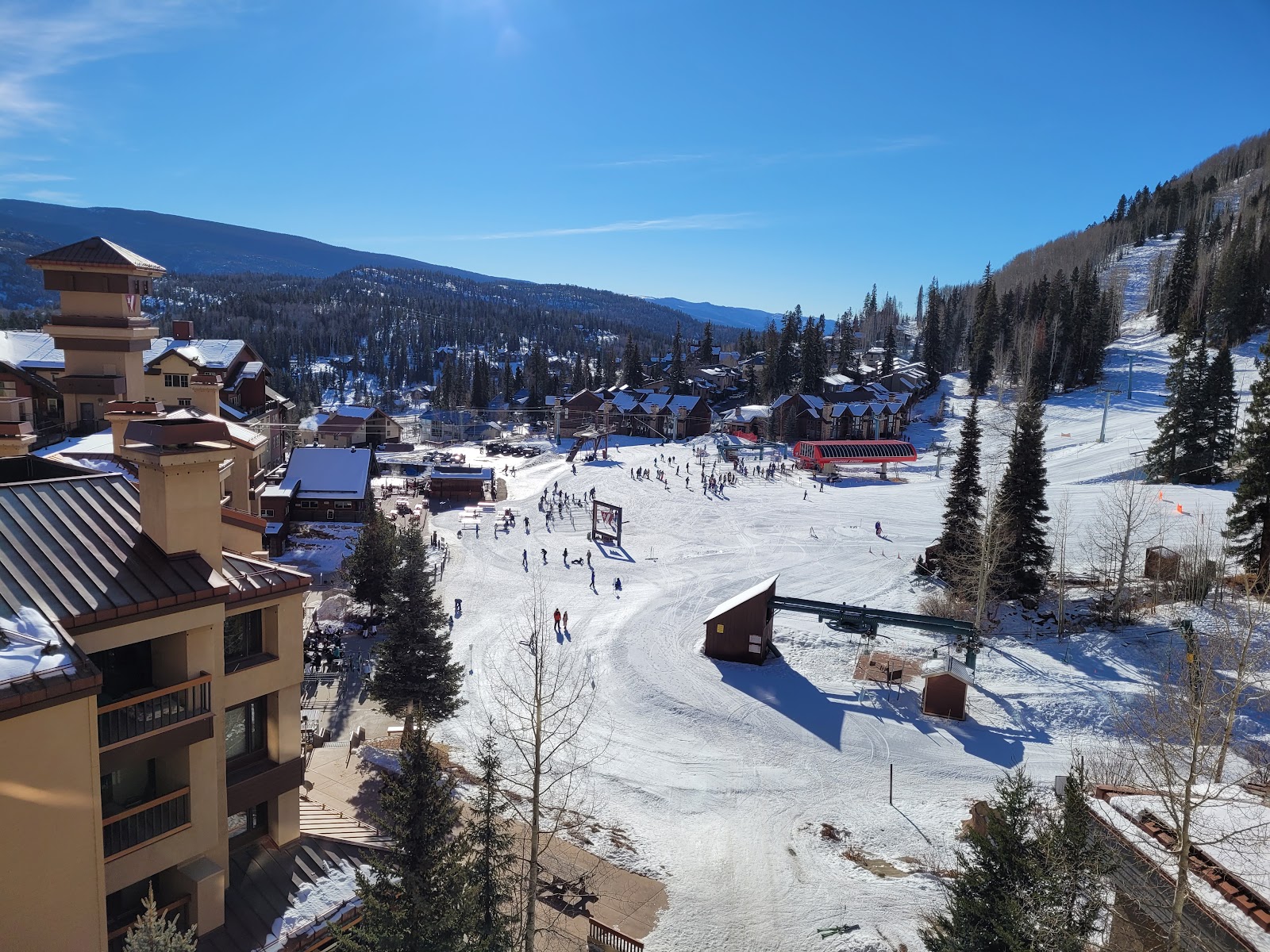
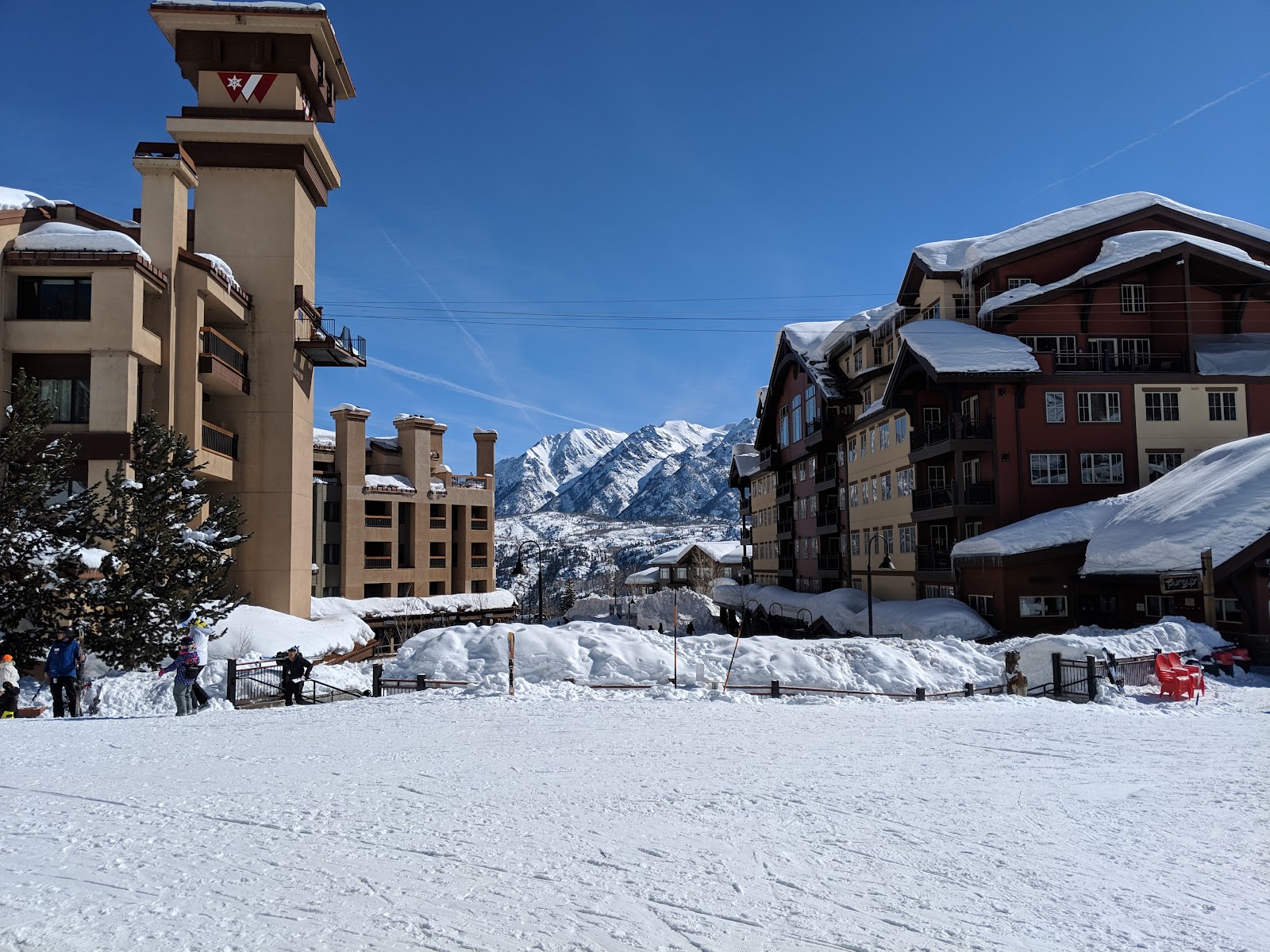
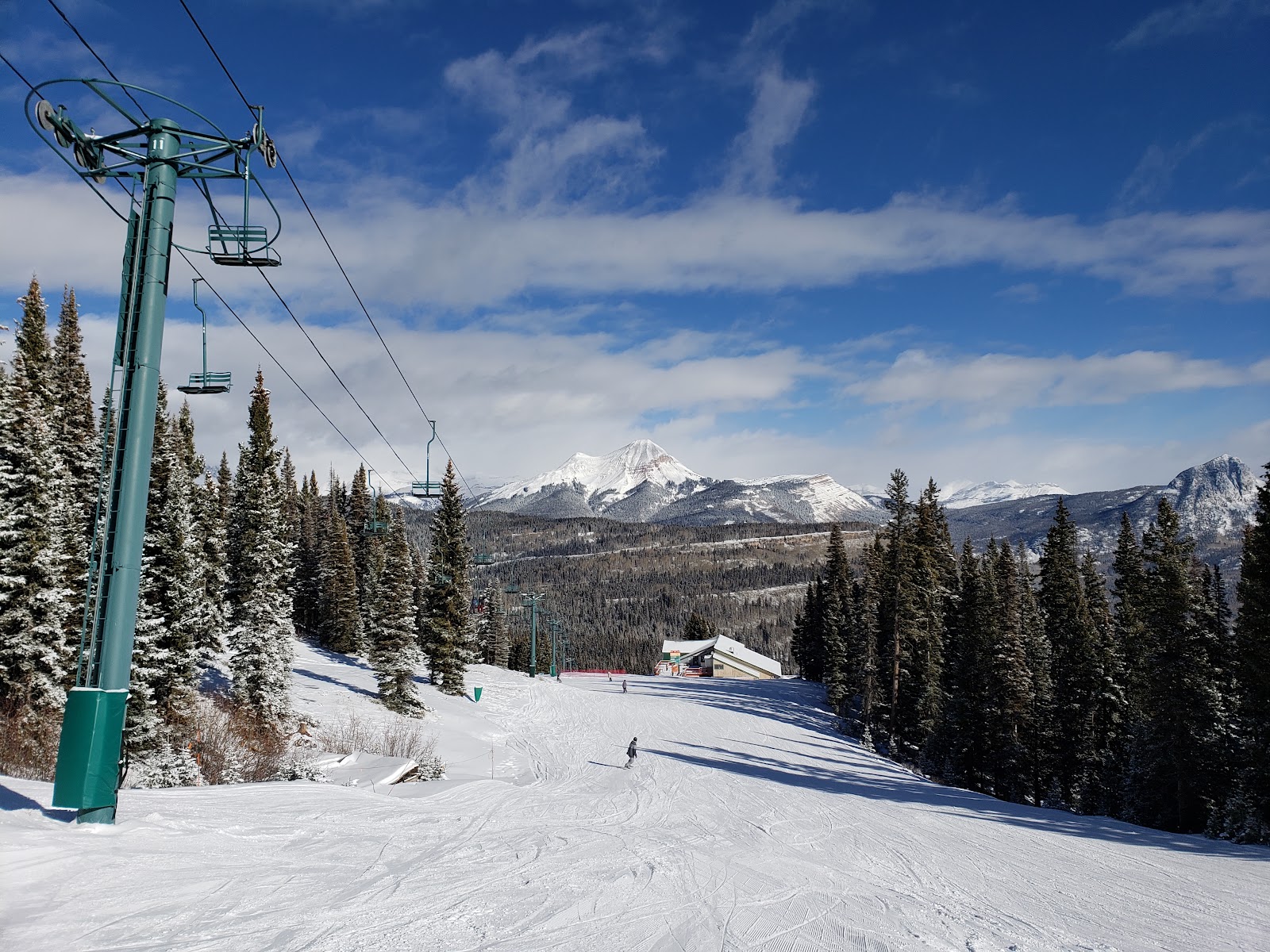
What the base gives up is the frame. Standing at the bottom of a mountain, the mountain is above you and foreshortened, which is a weaker picture than standing among the ridges — and ski infrastructure is visible at a base area in a way it is not at a top. Lift towers, cables, snowmaking equipment and cleared runs are all part of the view, and either they are composed out or they are accepted as what the place is.
Accepting them is more honest than pretending, and a cleared run climbing out of frame is a strong graphic line in its own right. Pretending, and framing tightly to avoid everything, produces pictures that could be anywhere.
The base also keeps the option of both, which is the answer for a good many weddings: ceremony and reception at the base where the shelter and the schedule are, and a short deliberate trip up the lift for twenty minutes of portraits in the ridgeline. That gets the frame without betting the wedding on it, and it is the configuration worth proposing when the decision is genuinely open.
- Top gives the San Juans and takes shade, shelter and the schedule
- Know the last download time before setting the ceremony time
- Base gives buildings, real shade, and a day that runs to the light
- Expose for the distance and lift faces with a close gelled source
- Ceremony at the base, twenty minutes at the top, is often the answer
The San Juan year
The San Juans have a short summer, a spectacular autumn and a long winter, and the decision above plays out differently in each.
Summer at the base is green, cool and reliable in the morning; at the top it is green, cold and reliable in the morning only. The lift’s summer schedule is the governing fact, and afternoon convection is the governing risk — which together push a high-summer wedding toward a morning ceremony regardless of which elevation it happens at.
Cloud without the storm is the best diffusion altitude offers. Under it the whole brightness range collapses, the dappling problem disappears, the greens saturate rather than glaring, and the middle of the day becomes usable at either elevation. An overcast morning here is easier than a clear one, which is worth saying to a couple hoping for sun.
Autumn in the San Juans is the strongest thing this landscape does and it is worth planning a wedding around. Aspen turn gold typically from the second half of September at these elevations, and because a grove is clonal — genetically a single organism connected below ground — the whole stand turns at once rather than tree by tree. On steep San Juan slopes that gives entire hillsides of uniform gold against dark spruce, with early snow on the peaks above, and a window of about a week either side of peak.
The air is also at its clearest in autumn, which is when the compressed long-lens frames hold the most detail they will all year. If the top is going to be used at all, late September is when it repays the risk.
The autumn caveat is the lift: summer operations often end before the colour peaks, which can close the top option exactly when it is best. That is a question with a definite answer and it is worth asking before a September date is set.
Winter is the mountain’s actual season and it inverts the whole analysis. The lift runs reliably, the top is accessible, and snow turns everything into a reflector — filling the shadows a low sun carves, brightening every window in the base buildings, and throwing light upward into every covered deck.
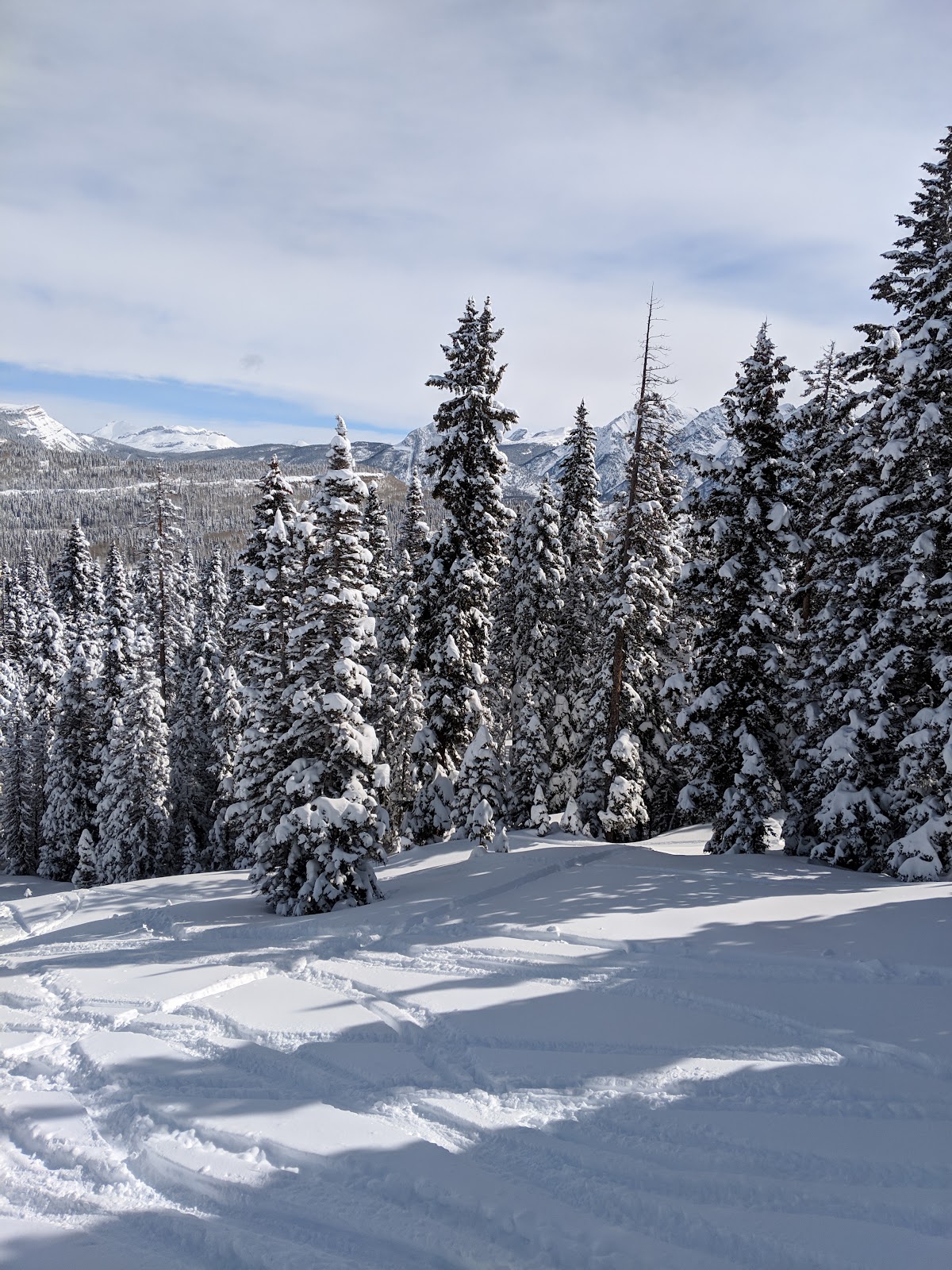
Snow is the best natural fill available outdoors and it fools a meter by about two stops toward underexposure, so a snow frame needs deliberate overexposure relative to what the camera suggests. Snow against dark spruce is the widest natural range there is: expose for the snow and let the conifer go near-black.
And the December sun at this latitude reaches only about twenty-seven degrees above the horizon, so the whole short day rakes — which removes the altitude’s hard-light problem entirely and makes both elevations usable from morning to evening. On the light alone, winter is the easiest time of year here.
The costs are cold that is serious rather than notional at ten thousand feet, wind chill, batteries draining faster at altitude, a cold body fogging when carried into a heated lodge, and a base area full of skiers. Spares in an inside pocket, bodies bagged until warm, and outdoor time in short deliberate trips rather than a long wander.
More frames from Purgatory Resort
Purgatory Resort wedding photography: common questions
Why does top-or-base decide everything?
Because it fixes the light, the schedule, the weather exposure and the guest count at once. A lift top is a thousand or two thousand feet higher, and everything changes with it.
What is the single question to ask first?
The last downloading time. At a site whose best light is the final hour, a five o’clock last chair decides the whole running order.
Is there shade at the top?
Effectively none — trees are stunted or absent near ten thousand feet. It is a morning or evening site, or an overcast one.
What does the base do better?
Shade at any hour, a real covered alternative, and a day that runs to the light instead of to a lift timetable.
Can we do both?
Usually the best answer: ceremony and reception at the base, and a short deliberate trip up for twenty minutes of portraits in the ridgeline.
When is the landscape best?
Late September, when clonal aspen groves turn whole hillsides gold at once against dark spruce — but check whether the lift is still running then.
More Colorado venue guides
We are writing a photographer’s guide to every venue we would happily shoot in Colorado. Here are three more, plus the full index:
- Red Rocks Amphitheatre, Morrison: A Venue Made of Tilted Rock
- Roots Run Deep, Fruita: The Site’s Own Logic
- Sapphire Point Overlook, Dillon: The Problem, and Four Ways Out
Planning a wedding at Purgatory Resort?
Top or base — decide it early. Tell us your date and we will plan the rest around it.