 Roots Run Deep, Fruita: The Site’s Own Logic
Red Rocks Amphitheatre, Morrison: A Venue Made of Tilted Rock
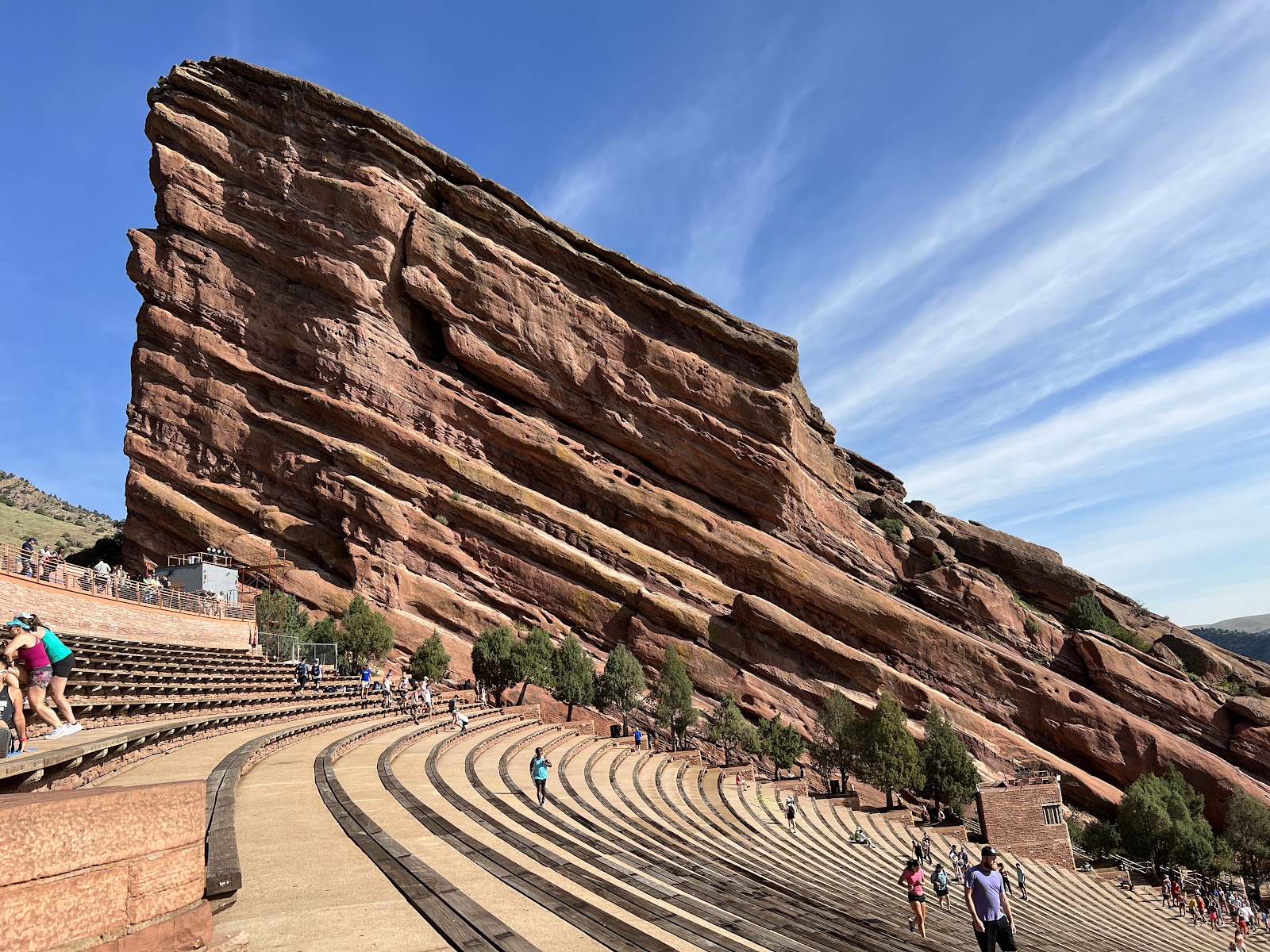
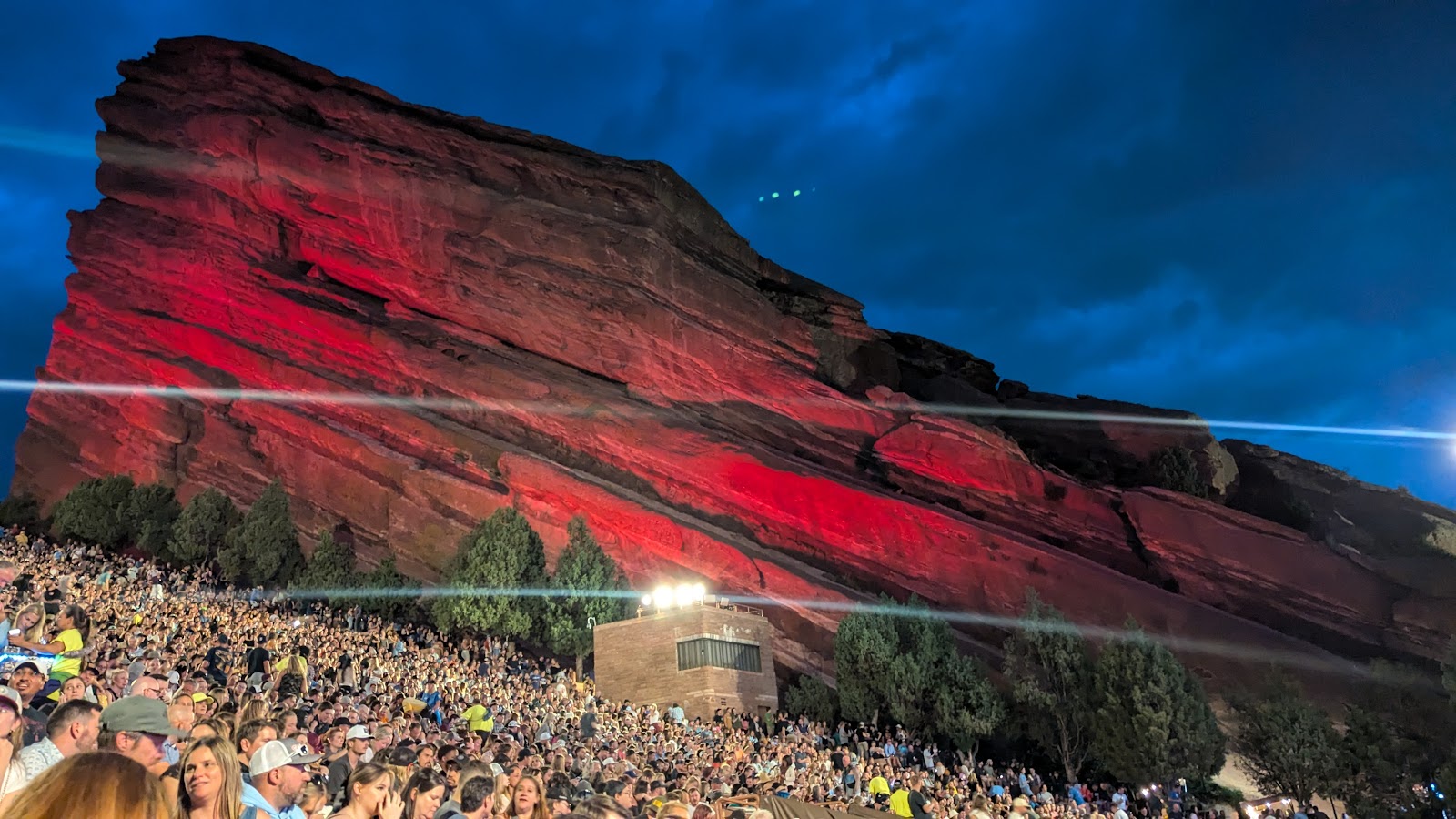
Two enormous slabs of red rock leaning towards each other. They are the walls, the acoustics and the light.
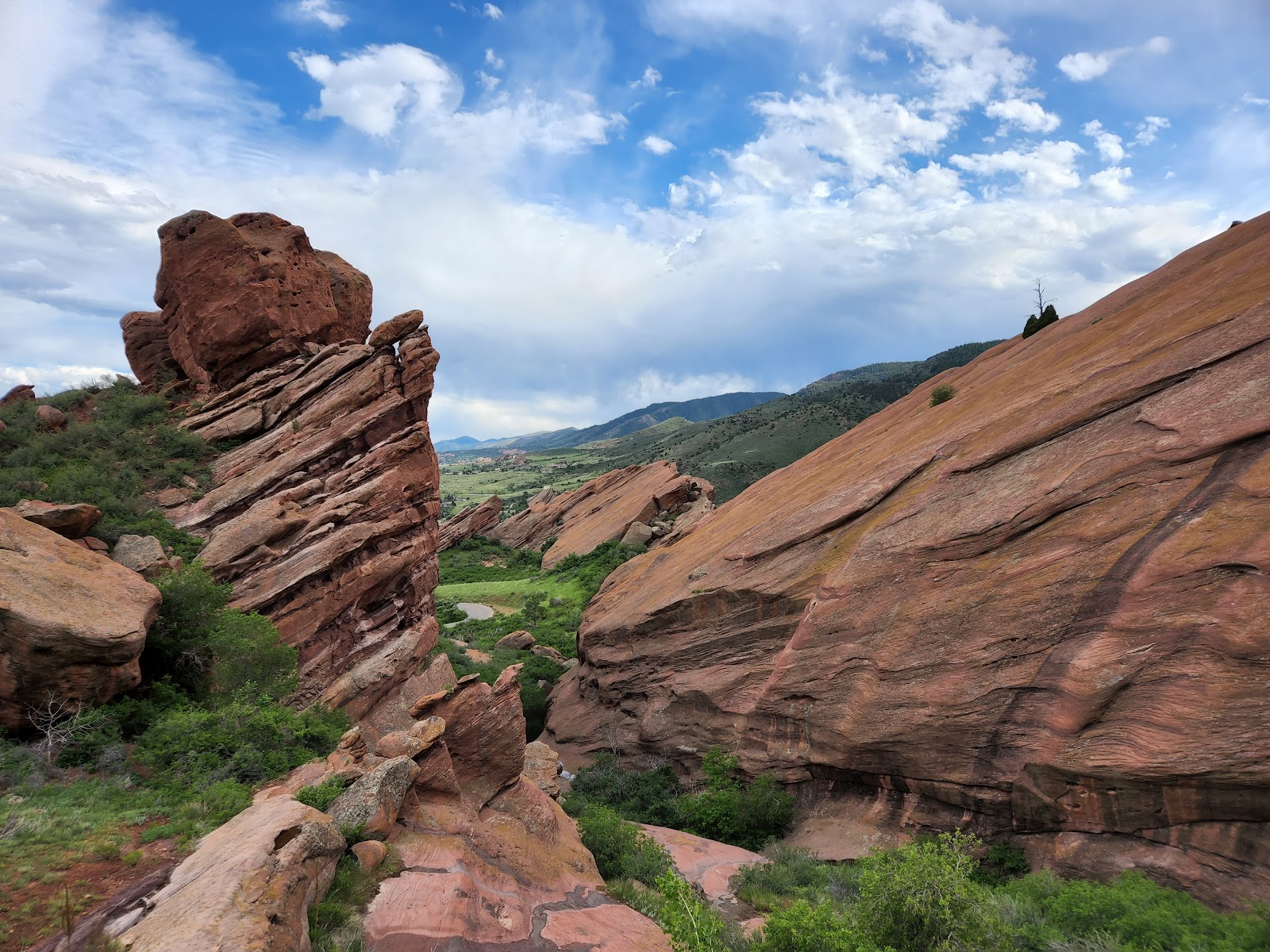
This venue was not built so much as fitted into a gap. Two enormous slabs of red sandstone stand tilted towards each other at the edge of the Front Range foothills, and the seating sits in the trough between them.
That geology is the venue’s entire logic. The slabs are what makes the acoustics; they are what makes the shape; and for a photographer they are what makes the light, because iron-stained sandstone is intensely warm and highly reflective. A sunlit slab is an enormous orange light source, and anything standing in the trough is lit by it whether or not anyone intended it.
It also means the light changes in a way a built venue’s does not. The slabs face each other, so one is lit while the other is shaded for most of the day — and the lit one is throwing its colour across the whole space onto everything on the shaded side.
Three other conditions follow from the site rather than the rock: it is at altitude, which makes the sun harder than at sea level; it is open to the sky, which means no shade at all except what the rock gives; and it is a working venue on public land, which means access is scheduled rather than assumed.
We have not photographed a wedding at Red Rocks Amphitheatre; tilted sandstone and Front Range altitude behave consistently. Access windows, permits, group limits and which areas may be used are questions for the venue’s own team, and the first of those determines whether a date works at all.
Red Rocks Amphitheatre at a glance
| Where | Morrison, Colorado, in the Front Range foothills at about 6,400 feet |
| The logic | Two tilted sandstone slabs facing each other across the seating |
| The light | One slab lit and one shaded, with warm bounce across the whole space |
| The constraint | Altitude, no natural shade, and scheduled access |
| Ask first | Access windows, permits, group limits, areas usable |
What the rock does
Red sandstone here is stained with iron oxide, which makes it strongly warm and highly reflective — and at the scale of these slabs that is not a background but a light. A fully sunlit face throws an enormous amount of warm light across the space, which means a subject standing on the shaded side is being lit by the rock opposite.
That produces the frame the site gives and almost nothing else does: a couple in shade, lit by a cliff, with shaded rock behind them. Soft because the source is vast, directional because it comes from one side, and warm in a way no gel reproduces.
The colour has to be handled at the time rather than corrected afterwards. Red rock bounce is far warmer than daylight, warmer than golden hour sun in its effect on skin, and there is no preset that renders it correctly. A custom white balance set on a face in the actual position is the fix; a daylight setting makes skin orange, and a global correction neutralises the face while turning the rock a dull grey-brown, which destroys the only thing the place has.
Because the bounce arrives from one side, a face can be warm on the rock side and cool on the other, lit by a deep high-altitude sky. No single white balance fixes that split, and the answers are to turn the couple so the rock light is more frontal, or to accept it as a warm-to-cool gradient — which in this landscape reads naturally rather than as an error.
Any added source must be gelled strongly warm to sit anywhere near the rock bounce, with white balance set to that gel. An ungelled flash here is conspicuously wrong because it is so much cooler than everything else in the frame.
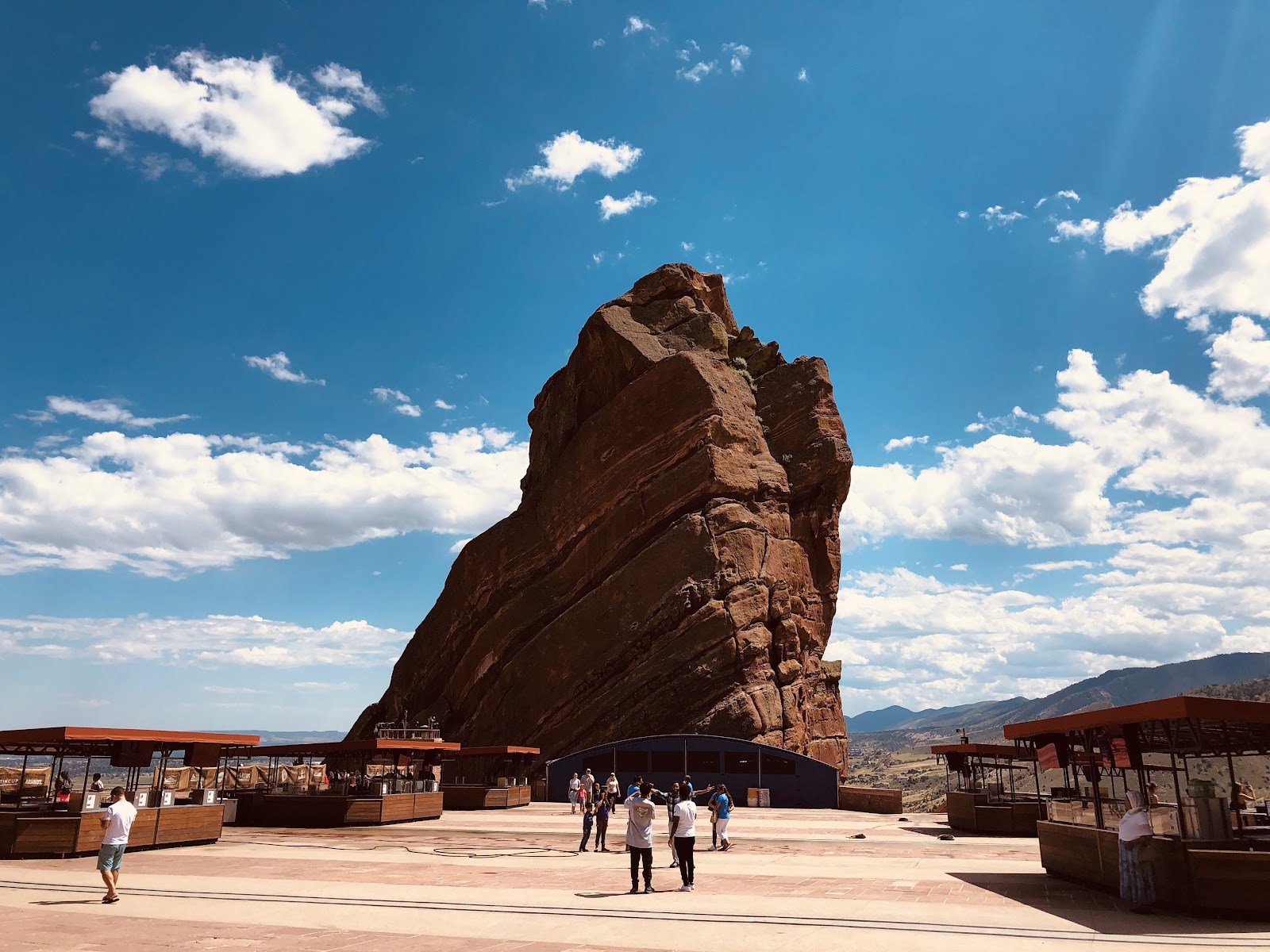
The second thing the rock does is provide the only shade. There are no trees in the trough and none is coming, so the shaded slab is the shade — which means the usable hours are the ones when one face is in shadow and the other is lit, and the unusable ones are when the sun is high enough to light both.
At this latitude, about thirty-nine and a half degrees north, that means the middle of a summer day is the problem and the ends of it are the point. A short walk to establish which slab is shaded at the planned hour is worth more than any equipment, and the venue will know.
And the rock reads as rock only under raking light. Tilted bedded sandstone has strong linear structure — the beds run at an angle across the face — and light running along those beds lifts every one of them, while light facing the slab square flattens it into a red field. So the low-sun hours are also the hours when the geology itself photographs.
The altitude, the seating, and the access
Altitude is the second condition and Colorado’s defining one. This site sits at around six and a half thousand feet, where there is meaningfully less atmosphere overhead to scatter sunlight than at sea level — which means direct sun is harder, shadows go deeper and sharper, the sky is a markedly deeper blue, and the brightness range between lit and unlit exceeds what a sensor holds by a wider margin than lower down.
The practical version is that a face half in sun is beyond rescue here rather than merely difficult, which makes the full-shade rule absolute: a subject must be entirely in the shadow of the rock or entirely out of it.
Ultraviolet also increases with elevation, which is a welfare point rather than a photographic one. A party standing in this trough for an hour burns faster than they expect, including under cloud, and that is worth mentioning in advance rather than discovering.
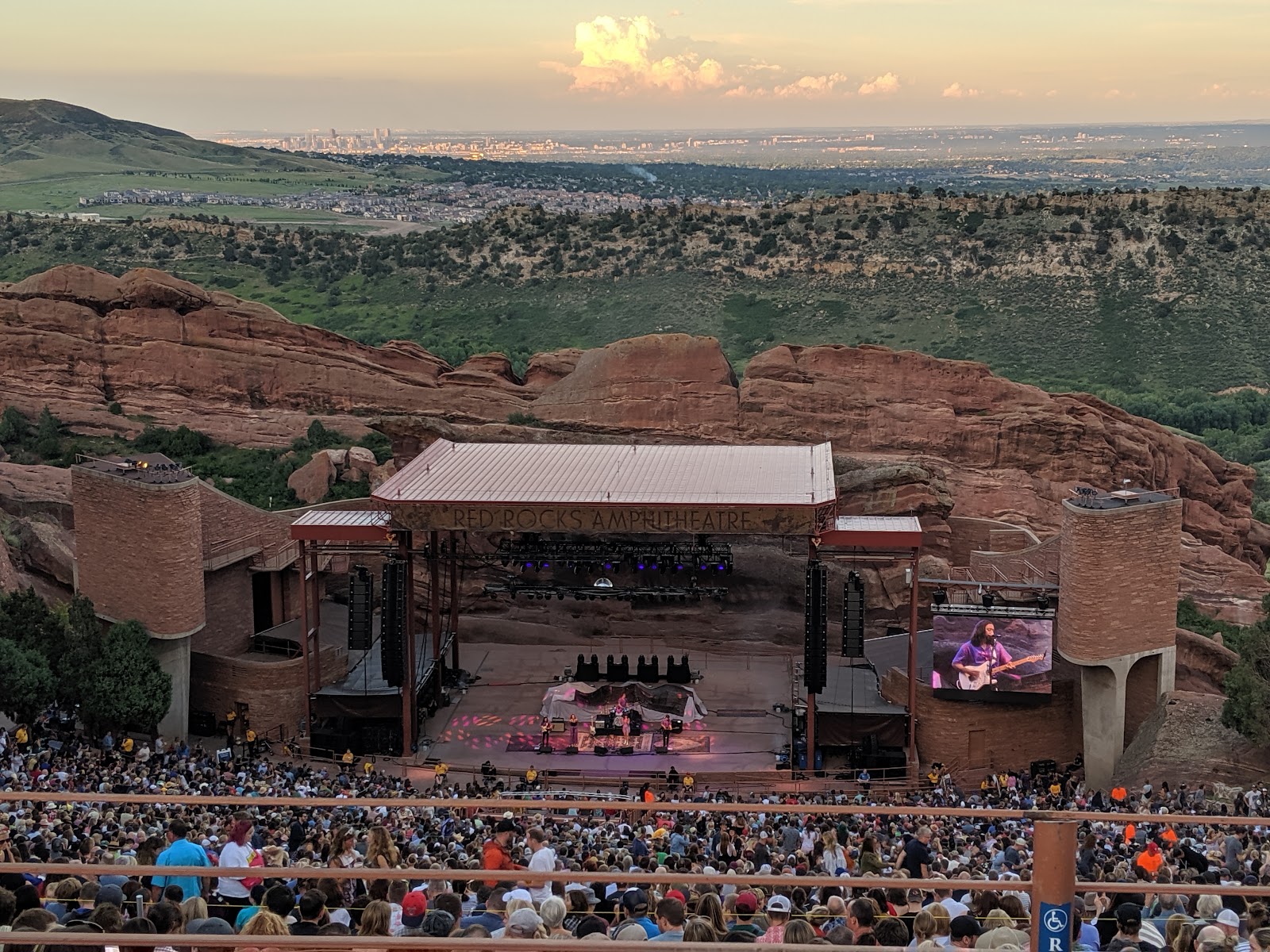
The seating is the third condition and it is the venue’s own architecture. Long tiered rows running up the trough give two things nothing else does: elevation, so a camera above a group sees faces rather than the backs of heads, and repetition — a strong graphic rhythm of parallel lines receding uphill, which in low sun casts a corresponding rhythm of shadows.
A couple on the stage photographed from partway up the seating, with the tiers receding below and the slabs rising on both sides, is the composition the site is built for. It needs a wide lens, a central position and a check on the edges.
The reverse is worth making too: a couple partway up the tiers photographed from the stage, with the rows rising behind them and the sky above, which is a completely different scale and reads as landscape rather than as architecture.
The steps are a practical consideration rather than a joke. Tiered seating at altitude means climbing, and a wedding party in formal shoes at six and a half thousand feet tires faster than they would at home — so a short route to a chosen position beats an ambitious one, and anyone arriving from sea level will feel it.
The access is the fourth condition and it is the one that decides whether a date works. This is a working performance venue on public land, which means availability is scheduled around events, permits and group limits apply, and which areas may be used varies. Those answers belong to the venue’s team, they should be settled long before anything else, and they are not a photographer’s to interpret.
The working assumption that follows is: no stands, nothing set against the rock, small numbers at any one position, a source in a hand or on a bracket, and a plan that fits inside whatever window has been granted.
- Establish which slab is shaded at the planned hour; the venue will know
- Custom white balance on a face — nothing else renders red rock bounce
- Full shade or full sun; at this altitude half-and-half cannot be saved
- Use the tiers for elevation and for their rhythm of parallel shadows
- Settle the access window, permits and group limits first
The Colorado year
Colorado’s governing photographic variable is elevation, and in the Front Range foothills it produces a year with sharper edges than a lowland one.
Summer afternoons bring the state’s defining hazard and it needs naming plainly rather than in passing. Mountain convection builds almost daily from July into September, and these storms produce lightning — which in an open amphitheatre with no shelter and rock underfoot is a genuinely dangerous place to be, not an inconvenience. Colorado has one of the highest rates of lightning casualties in the country, and the reason is exactly this combination of open high ground and afternoon convection.
That makes a named covered or indoor alternative a requirement rather than a courtesy, and the decision to use it belongs to whoever is responsible for the party rather than to whoever wants one more frame.
It also makes the timing of a summer wedding here a real consideration: morning is stable and afternoon frequently is not, which argues for an early ceremony rather than a late one in July and August.
The compensation is that the building cumulus over the Front Range is the best diffusion the state offers, and a storm clearing off the foothills with light breaking under it is the most dramatic frame this site can produce.
Outside the storm season the sky is frequently cloudless, which means waiting for diffusion is not a plan — the shaded slab, the tiers and the timing are the plan.
Autumn is the best window of the year in the foothills: the air is at its clearest, the afternoons are stable, the temperatures are comfortable, and low sun arrives at a civilised hour. Late September into October is the strongest period, and it coincides with the aspen turning at higher elevations if any of the day includes a drive up.
Winter is the quiet surprise. The December midday sun at this latitude reaches only about twenty-seven degrees above the horizon, which means it never gets high enough to light both slabs at once — so the shaded-slab condition that makes this site work is available through the whole short day rather than at the ends of it. Low sun also rakes the tilted beds all day, which is when the geology reads best.
Snow on red sandstone is occasional at this elevation and it is the most striking frame the site offers, because white against saturated red is a contrast nothing else in American landscape provides.
The diurnal swing is the constraint and at altitude in dry air it is large — twenty degrees Celsius between afternoon and evening is normal, and a trough between rock slabs loses the sun early and holds cold air. A party comfortable at four is genuinely cold by seven, and coats are the answer rather than optimism.
And the dry air means less fogging than a humid climate, though the evening temperature drop still condenses on a cooling body — a bag opened early is the fix.
More frames from Red Rocks Amphitheatre
Red Rocks Amphitheatre wedding photography: common questions
What is the venue's own logic?
Two tilted sandstone slabs facing each other across the seating. They make the acoustics, the shape and — because the rock is warm and reflective — the light.
How does the light work?
One slab is lit while the other is shaded for most of the day, and the lit one throws enormous warm bounce across the space onto everything in shadow.
What white balance does that need?
A custom one set on a face in position. A daylight setting renders skin orange; a global correction turns the rock a dull grey-brown.
Is there any shade?
Only the shaded slab. There are no trees, so the usable hours are when one face is in shadow and the other lit — the ends of the day in summer.
What is the main hazard?
Afternoon lightning from July into September. An open amphitheatre on high ground is a genuinely dangerous place under a building storm, not an inconvenient one.
Is winter useful?
Unusually so. A December sun never gets high enough to light both slabs, so the condition that makes the site work lasts the whole short day.
More Colorado venue guides
We are writing a photographer’s guide to every venue we would happily shoot in Colorado. Here are three more, plus the full index:
- Roots Run Deep, Fruita: The Site’s Own Logic
- Sapphire Point Overlook, Dillon: The Problem, and Four Ways Out
- Snow Mountain Ranch, Granby: Field Notes on a High Meadow
Planning a wedding at Red Rocks Amphitheatre?
The rock is the venue. Tell us your date and we will ask which slab is shaded.