 The Rio, Las Vegas: A Walk Through an Off-Strip Resort
The Strat, Las Vegas: What It Suits, and What It Does Not
Height gives you the whole valley and takes away almost everything else a photographer relies on.
A venue with a viewing level several hundred metres above the city offers something no other Las Vegas venue can, and it withholds several things every other venue provides. Both halves are worth knowing before booking.
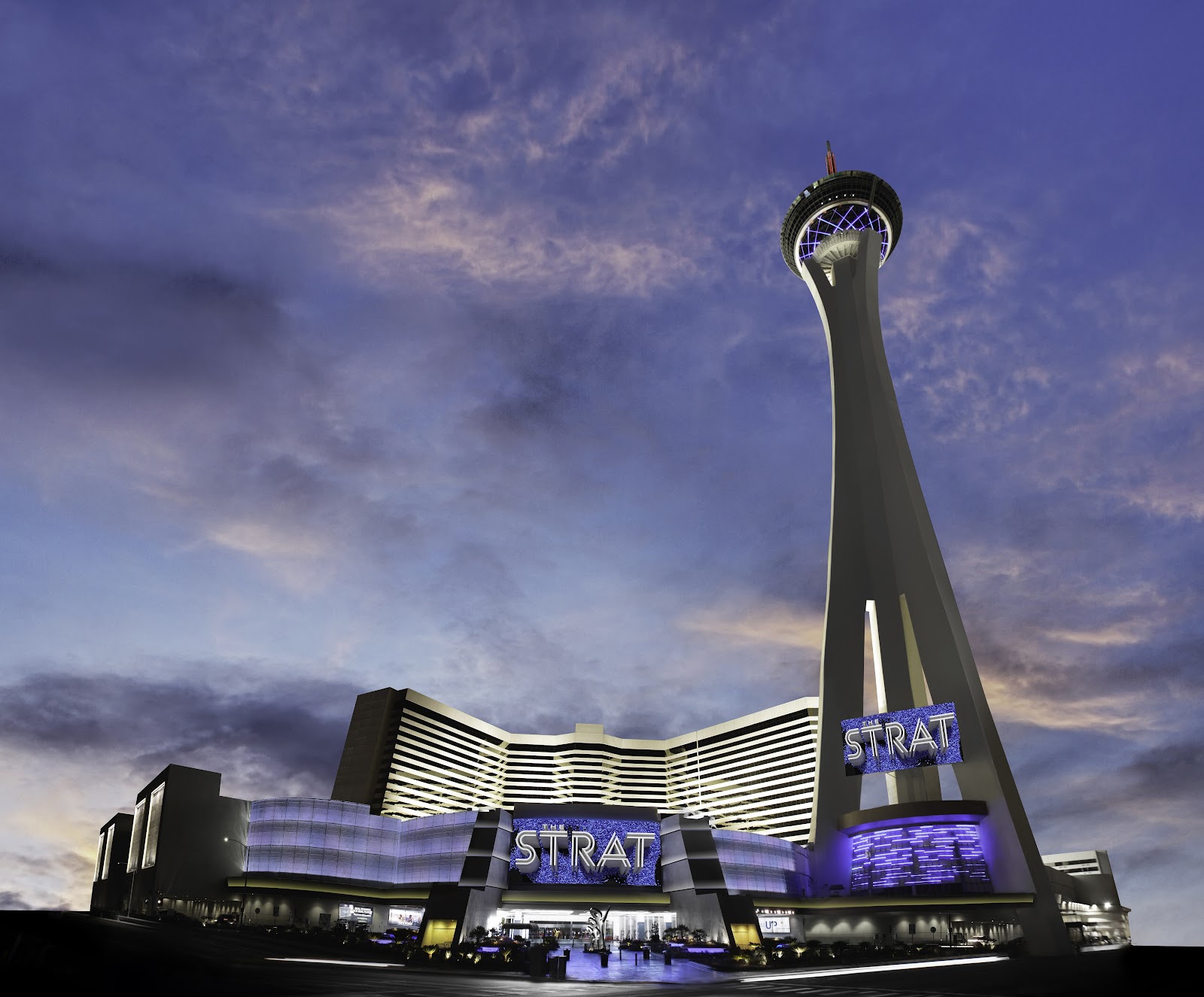
What height gives is the whole valley: the Strip laid out below, the ring of desert around it, the mountains beyond, and a sky that is unobstructed in every direction. At the right twenty minutes that is the best frame in the city.
What height takes away is space, control and light. An observation level is a narrow ring of floor behind glass, which means no room to stand back, no room for a group, glass between the camera and everything interesting, and interior lighting that was installed for wayfinding rather than for faces.
We have not photographed a wedding at the Strat; high observation levels behave consistently and their problems are geometric. Which levels are included, whether there is open-air access, what the glass is like and whether the lighting is adjustable are questions for their team.
The Strat at a glance
| Where | Las Vegas, Nevada |
| Suits | The whole valley, unobstructed sky, the best dusk frame in the city |
| Resists | Narrow floor, glass, reflections, and no room for a group |
| The one frame | Twenty-five minutes after sunset, with the Strip lit below |
| Ask first | Levels included, open-air access, glass type, lighting control |
What it suits
The dusk frame is the reason to be here and it is genuinely the best in Las Vegas. From a high level, in the roughly twenty-five minutes after sunset, the sky still holds deep colour while the Strip’s illumination comes up below — and a single exposure holds the couple, the whole lit valley and the sky together. At street level the same crossing gives one or two lit buildings; from height it gives the entire city.
The window is short here, because the very dry desert air gives less afterglow than a humid sky, so the colour drains quickly. Twenty-five minutes is generous, and this needs to be a scheduled ten minutes with the couple already in position rather than something drifted into.
Height also brings the golden hour forward, which is worth building a schedule around. Above the surrounding buildings the sun stays visible after it has set for anyone at street level, which means the last usable light arrives perhaps twenty to thirty minutes later up here — a real gain, and one of the few respects in which a high venue is more flexible than a low one.
The unobstructed sky suits the desert’s own conditions. This is one of the clearest atmospheres in the country, which means distant ranges hold detail rather than dissolving into grey, and a long lens compressing the mountains behind the city into layers is a picture that would not exist in a humid climate. October and January are the clearest months; spring dust and summer heat haze both flatten it.
It suits the couple-as-figures frame, because there is genuine scale available. Two people against a whole valley is a real composition, and the requirement is the usual one: the figures must be readable, separated by tone and placed where the eye lands, rather than merely present.
It suits the daytime version too, which people discount. The valley by day, with the desert ring and the mountains legible in clear air, is a strong frame and it is available at any hour — unlike almost everything else outdoors in this city.
And it suits a short, decisive plan. This is a venue for a handful of deliberate frames at a known time rather than an hour of exploration, and treated that way it delivers something no other venue in Las Vegas can.
What it does not suit
Space is the first refusal and it governs everything else. An observation level is a narrow ring of floor, which means there is no room to stand back — a photographer working with a moderate lens will find themselves against the inner wall with no way to increase the distance, and a group of any size cannot be arranged at all. The realistic frames here are two people, and a wide lens used deliberately rather than by necessity.
That has a scheduling consequence: the formals do not happen up here. They happen in a room with space in it, and the high level gets the couple and perhaps a handful of people.
Glass is the second and it is the technical problem. Glazing between the camera and the view does three things. It cuts light, which matters little here. It shifts colour, because solar-control glass in a hot climate is usually tinted green or blue — a cast that lands on anything near it and that global white balance cannot separate from a subject. And it reflects, which is the serious one.
At night, a lit interior behind the camera is reflected in the glass at full strength, which means the view is overlaid with a ghost image of the room, the photographer and every light. The methods that work are to get the lens as close to the glass as possible and to shade it — a hand, a coat, a rubber hood pressed against the surface — and to have interior lights behind the camera switched off or blocked where that is possible. What does not work is hoping the reflection is faint; it is not.
The third difficulty is the interior lighting on a level like this. It is installed for circulation and signage rather than for faces: dim, often coloured, frequently from directly overhead or from below at floor level, and inconsistent around the ring. Overhead light shadows eye sockets; uplight from floor fittings is worse, because nothing in nature lights a face from beneath.
The answer is one source of your own, off the camera axis at face height, gelled to roughly match whatever dominates, with white balance set to the gel. And the exposure set for the view rather than the faces, because the view is the reason for being here and it will clip if metered on skin.
The fourth is the physical and practical reality of a high level. Access is by lift, which means the party arrives in batches rather than together and the twenty-five-minute window can be consumed by the journey — leaving fifteen minutes early is the difference between having the frame and not. It is a public viewing level in normal circumstances, which means other people, and long lenses plus tight framing rather than empty compositions. And if there is open-air access, it is windy at height in a way it is not at ground level: a veil at three hundred metres behaves unpredictably, and a lightstand is not viable.
Finally, and honestly: the frames from here are about the city rather than about the couple. They are extraordinary and they are few. A gallery cannot be made up here, and treating the high level as one component of a day rather than as the venue is the approach that works.
- Book the twenty-five minutes after sunset; from height it is the best frame in the city
- Do the formals somewhere with space — the ring is too narrow for a group
- Lens against the glass and shaded, or the reflection of the room is in every frame
- Expose for the view and light the faces with one gelled source
- Leave fifteen minutes early; the lift will eat the window otherwise
The rest of the day, and the desert year
Down in the building the standard resort conditions apply, and they are worth knowing so the high-level window can be protected.
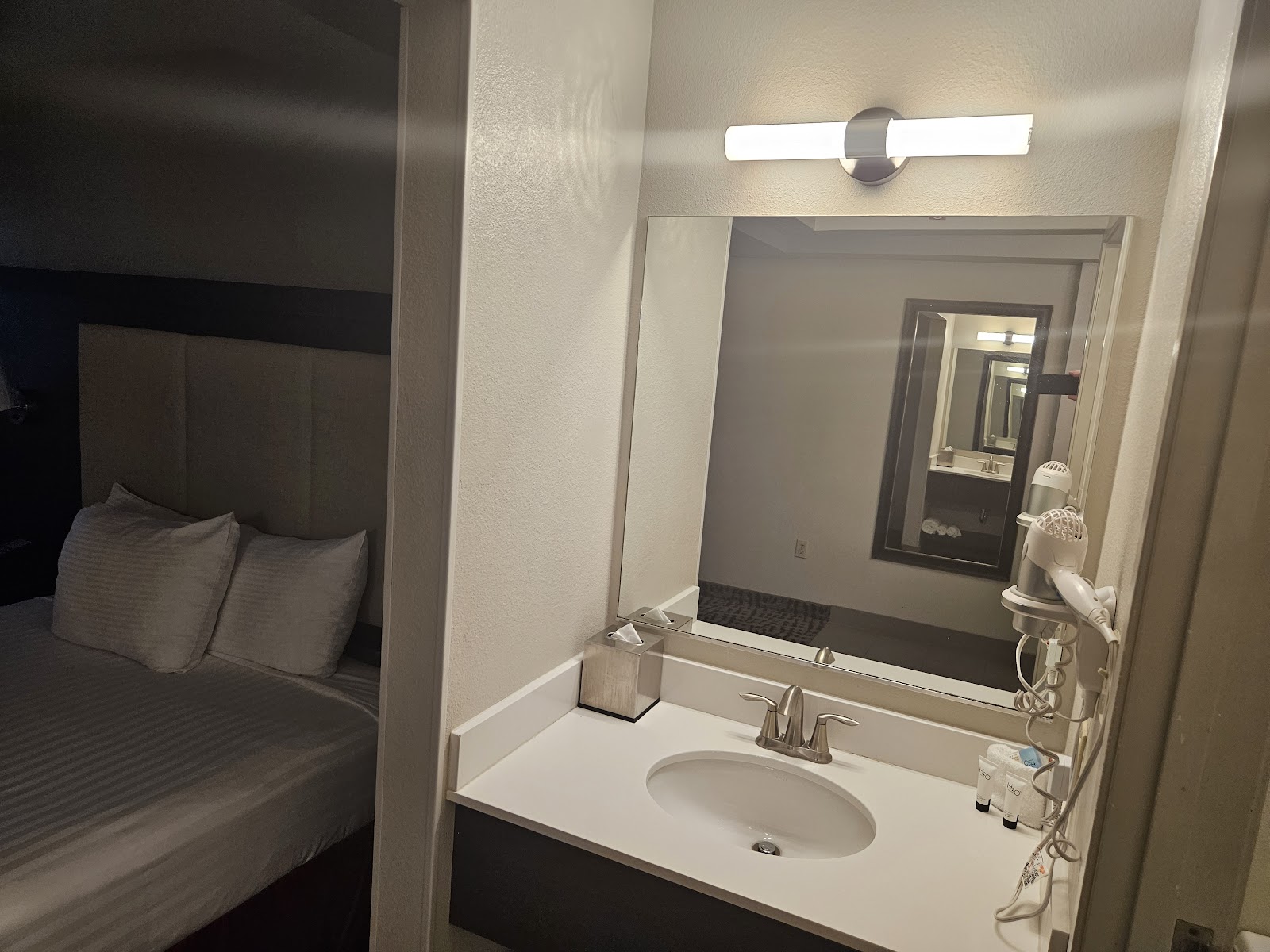
There is no daylight in the public spaces, so the interior never changes and every frame down there is movable — which is exactly what makes the one unmovable frame affordable. The installed lighting is dense and overhead, which shadows eye sockets and needs direction rather than brightness: one source off-axis at face height, half a stop to a stop above the ambient.
Ceilings over the largest floors are unusually low for their span, three or four metres across enormous spaces, so bounce flash usually returns something usable — worth one test frame, since a dark or coloured ceiling absorbs or tints. Patterned carpet competes with faces at the same spatial frequency, solved by camera height or distance. Reflective surfaces show a badly placed light, solved by fifteen seconds of checking from the camera position. And mixed colour is everywhere, solved by picking one temperature and killing or overpowering the rest.
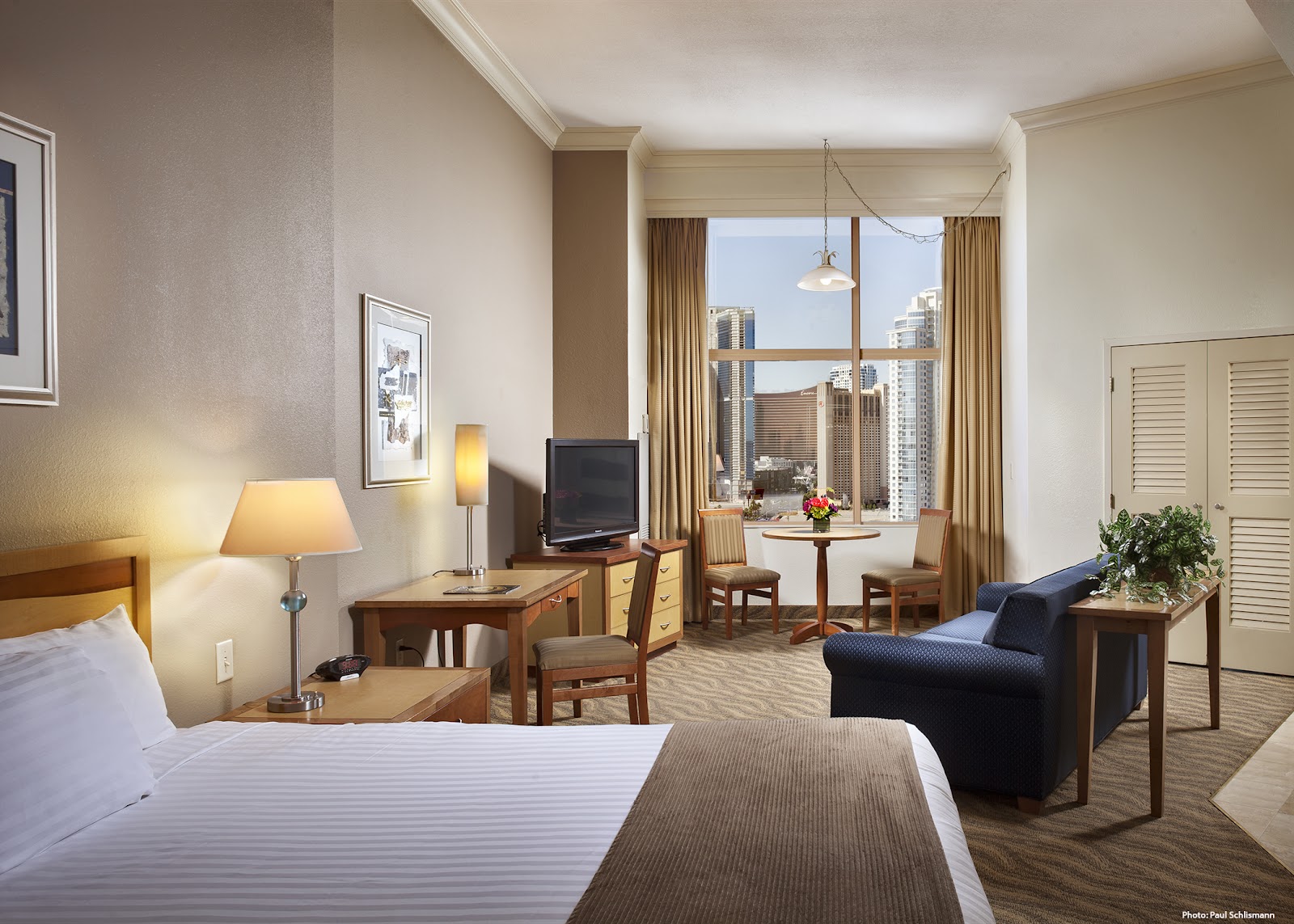
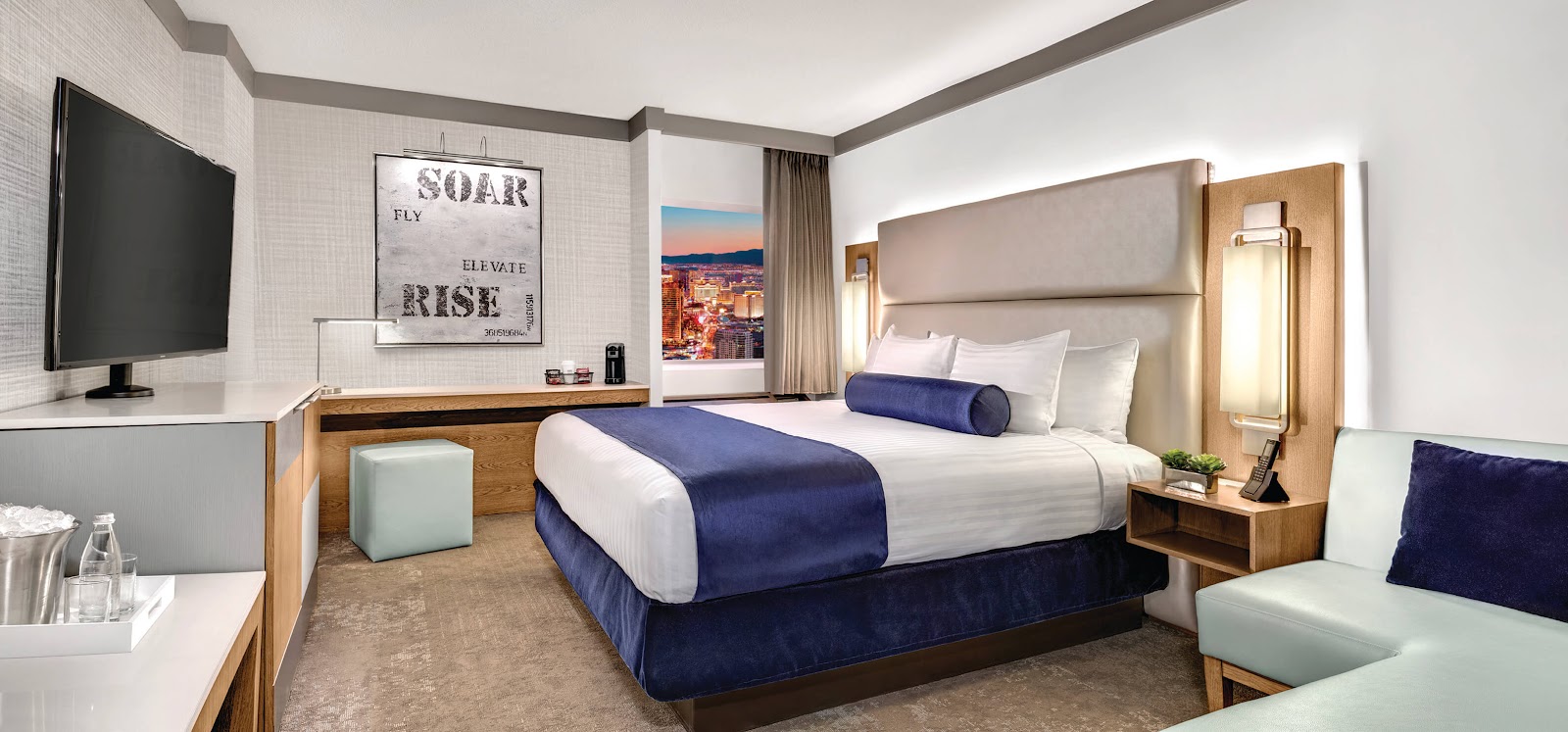
The guest rooms are the interior daylight: largest window on the shaded side, every overhead fitting off, lamps out of frame, two to three metres back from the glass. Direct sun through glass in this climate is unusually hard because the sun is high and the air dry, so the shaded side is the whole difference; and floor height matters less here than in a dense city, because the towers are far apart, so orientation is the better question.
Outdoors at street level, the desert gives two windows and no middle. The sun reaches roughly seventy-seven degrees above the horizon at midday in June at this latitude, and the very dry air scatters almost nothing, so the shadows are harder than the same angle gives in a humid climate. So it is the first hour after sunrise and the last hour before sunset, plus the crossing.
The year is two and a half seasons. Summer has daytime highs regularly above forty degrees Celsius, which makes street-level outdoor blocks a matter of minutes at the edges of the day — and makes a high glazed level more attractive, since it gives the view at a survivable temperature. The monsoon from July into September brings occasional afternoon thunderstorms and blowing dust; from a high level a desert storm is a spectacular frame rather than a cancellation, though any open-air access will close in one.
Winter is the good season all round: mild, the clearest air of the year, and sunset in mid-afternoon, which puts the crossing at a civilised hour rather than after nine at night. It is also when the view is best, because both spring dust and summer heat haze flatten the mountains that make the wide frame worth taking.
Spring is windy, and at height wind is a larger factor than at ground level — which matters if there is any open-air access. And fogging runs one way only here: a cold body from air conditioning taken into hot dry air fogs immediately. Twenty minutes of warming before the excursion is the whole fix, and at a venue where the window is twenty-five minutes long, a fogged lens means missing it entirely.
More frames from The Strat
The Strat wedding photography: common questions
What is the best frame here?
The crossing, about twenty-five minutes after sunset, when the sky holds colour and the whole lit valley is visible below. At street level the same window gives one or two buildings.
Does height change the golden hour?
Yes — the sun stays visible above the surrounding buildings, so the last usable light arrives twenty to thirty minutes later than at street level.
Can the formals happen up there?
No. An observation level is a narrow ring with no room to stand back, so a group cannot be arranged. Two people is the realistic limit.
How do you deal with the glass?
Get the lens as close to it as possible and shade it, and switch off or block interior lights behind the camera. A faint reflection is not something to hope for.
How should the exposure be set?
For the view, which will clip if metered on skin. Then light the faces with one gelled source off the camera axis.
When is the view clearest?
October and January. Spring dust and summer heat haze both flatten the mountains that make the wide frame worth taking.
More Las Vegas, NV venue guides
We are writing a photographer’s guide to every venue we would happily shoot in Las Vegas, NV. Here are three more, plus the full index:
- The Sure Thing Chapel, Las Vegas: A Walk Through a Las Vegas Chapel
- Treasure Island, Las Vegas: One Frame, and How It Is Made
- The Vdara, Las Vegas: One Frame, and How It Is Made
Planning a wedding at The Strat?
One frame, and it is worth the trip. Tell us your date and we will time the lift.