 The Rio, Las Vegas: A Walk Through an Off-Strip Resort
Treasure Island, Las Vegas: One Frame, and How It Is Made
Every couple who marries in Las Vegas wants the Strip behind them. Here is how to make that picture properly.
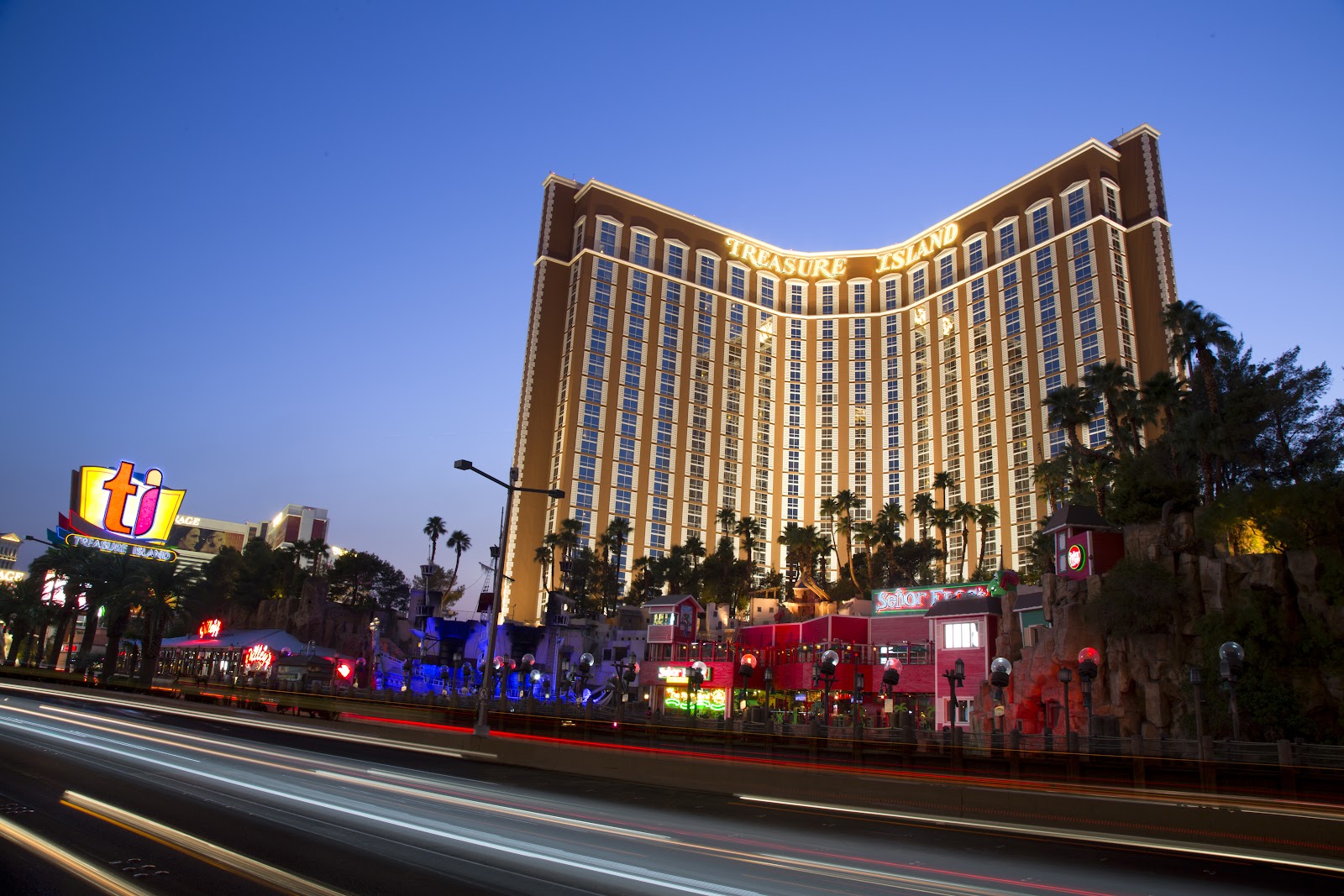
There is one frame a Las Vegas wedding is expected to contain and it is worth building deliberately, because the accidental version of it is a disappointment.
The frame is a couple in front of the Strip at night. Their faces are lit cleanly, with normal skin tone. Behind them the signage and the lit facades are legible and saturated rather than blown out. Nothing is clipped, nothing is a silhouette, and the picture could not have been made in any other city on earth.
The accidental version — camera pointed at a couple with bright lights behind them — gives two faces in shadow against streaks of clipped colour, and it is what most people come home with. The difference is five decisions.
We have not photographed a wedding at Treasure Island; the Strip’s illumination behaves consistently and the physics of mixing it with flash is fixed. Which spaces are included, how far the nearest exterior door is and whether the lighting is adjustable are questions for their team.
Treasure Island at a glance
| Where | Las Vegas Strip, Nevada |
| The frame | A couple lit cleanly with the Strip’s own illumination legible behind |
| Why it fails | Saturated signage is narrow-spectrum and clips one channel early |
| The core decision | Light the faces yourself; never let neon be the key |
| Ask first | Nearest exterior door, spaces included, lighting control |
Decisions one to three: the timing, the background, the exposure
The first decision is when, and the answer is narrower than people expect. The best version of this frame is not at full dark but in the roughly twenty-five minutes after sunset, when the sky still holds light and the signage has come up. In that window the sky is a deep blue rather than a black void, the lit facades sit at about the same brightness as it, and the whole frame holds together in one exposure.
It is shorter here than in a humid climate, because the very dry air gives less afterglow — colour drains from a Las Vegas sky faster than from a coastal one. Twenty-five minutes is a generous figure. Which means this is a scheduled ten-minute excursion with a destination already chosen, not something wandered into after dinner.
At full dark the frame still works, but differently: the sky goes black, the background becomes pure signage, and the picture is graphic rather than atmospheric. Both are good. Only one of them is time-limited, so the timed one goes first.
The second decision is what exactly is behind them, and it needs choosing rather than accepting. Signage at a distance compresses into legible colour; signage close up is a few enormous bright shapes. A long lens from further back is almost always the better version, because it stacks several lit buildings into layers rather than showing one wall of light.
The specific thing to avoid is a single very bright source immediately behind a head, which pulls the eye off the face every time and usually flares the lens as well. Moving the couple a step solves it; nothing solves it afterwards.
The third decision is the exposure, and it is set for the background rather than for the faces. The Strip’s brightest signage will clip if the exposure is set on skin, and clipped saturated colour is unrecoverable — a magenta sign that clips loses all its detail and becomes a flat shape. So the ambient exposure is set so the background is correct, deliberately leaving the faces underexposed, and then the faces are lit back up. That order is the whole technique.
The practical figures vary but the shape does not: the background will want a wider aperture and a slower shutter than daylight work, and the faces will want a source close enough to compete at that setting. A slow shutter also means the couple has to hold still, which is worth saying to them rather than assuming.
Decisions four and five: the light on the faces, and the colour
The fourth decision is the source on the faces, and it is not optional. It cannot be the Strip itself, for a reason that is physical rather than aesthetic.
Saturated coloured signage and neon are narrow-spectrum sources: they put a great deal of energy into one part of the visible spectrum and very little into the rest. Skin needs the whole spectrum to render as skin, so a face lit by saturated red or blue light has almost no information in two of its three colour channels — and no amount of editing recovers what was never recorded. A face lit by neon looks wrong in a way that cannot be described as a colour cast, because it is missing data rather than shifted.
So the faces get their own light. One source, off the camera axis at face height, in a modifier large enough to be soft at working distance, at close range — because competing with a lit city at a slow shutter means the source has to be near enough to matter.
The fifth decision is the colour of that source, and it is what separates a good version of this frame from an obviously lit one. An ungelled flash is bluer than the Strip’s warm signage, which produces faces that look like they were pasted in — the commonest tell in a night wedding photograph.
The answer is to gel the source warm, to roughly the temperature of the dominant lighting behind, and set white balance to that gel. The faces then read as though the city is lighting them, while remaining broad-spectrum and correctable. That single gel is the difference between a photograph of a couple in Las Vegas and a photograph of a couple with Las Vegas behind them.
Two refinements are worth the trouble. A second source behind the couple, low and warm, separates them from the background and echoes the city’s own light — and unlike a fill light it does not flatten anything. And where the signage behind is strongly one colour, gelling the key to a neighbouring temperature rather than an exactly matching one reads more naturally, because a face lit by pure magenta looks like a mistake even when it is deliberate.
What not to do is bounce. There is nothing to bounce off outdoors — no ceiling, no near walls — so a flash aimed anywhere but at the subject does nothing at all. Direct into a modifier, close, is the only method that works outdoors at night.
- Shoot the timed version first: twenty-five minutes after sunset, scheduled
- Long lens from further back; signage compresses into layers
- Expose for the background, then light the faces back up
- Never let neon be the key — it has no data in two channels
- Gel the key warm to match the city, and set white balance to the gel
The rest of the day, and the desert year
Getting out to make that frame is the practical problem at a Strip resort, because the nearest exterior door can be four or five minutes from the reception through public areas. Walking the route in advance with a watch is worth more than any equipment, and leaving fifteen minutes before the window rather than at the start of it is the difference between having the picture and not.
Indoors, the building follows the standard pattern. No daylight in the public spaces, so the interior never changes and every indoor frame is movable — which is exactly what makes protecting the outdoor window affordable. Dense overhead lighting that shadows eye sockets, fixed by direction rather than brightness: one source off-axis at face height, half a stop to a stop above the ambient.
Ceilings over the largest floors are unusually low for their span, three or four metres over enormous spaces, so bounce flash usually returns something usable — worth one test frame, since a dark or coloured ceiling absorbs or tints. Patterned carpet competes with faces at the same spatial frequency, solved by camera height or distance. Reflective surfaces will show a badly placed light, solved by fifteen seconds of checking from the camera position. And mixed colour is everywhere, solved by picking one temperature and killing or overpowering the rest.
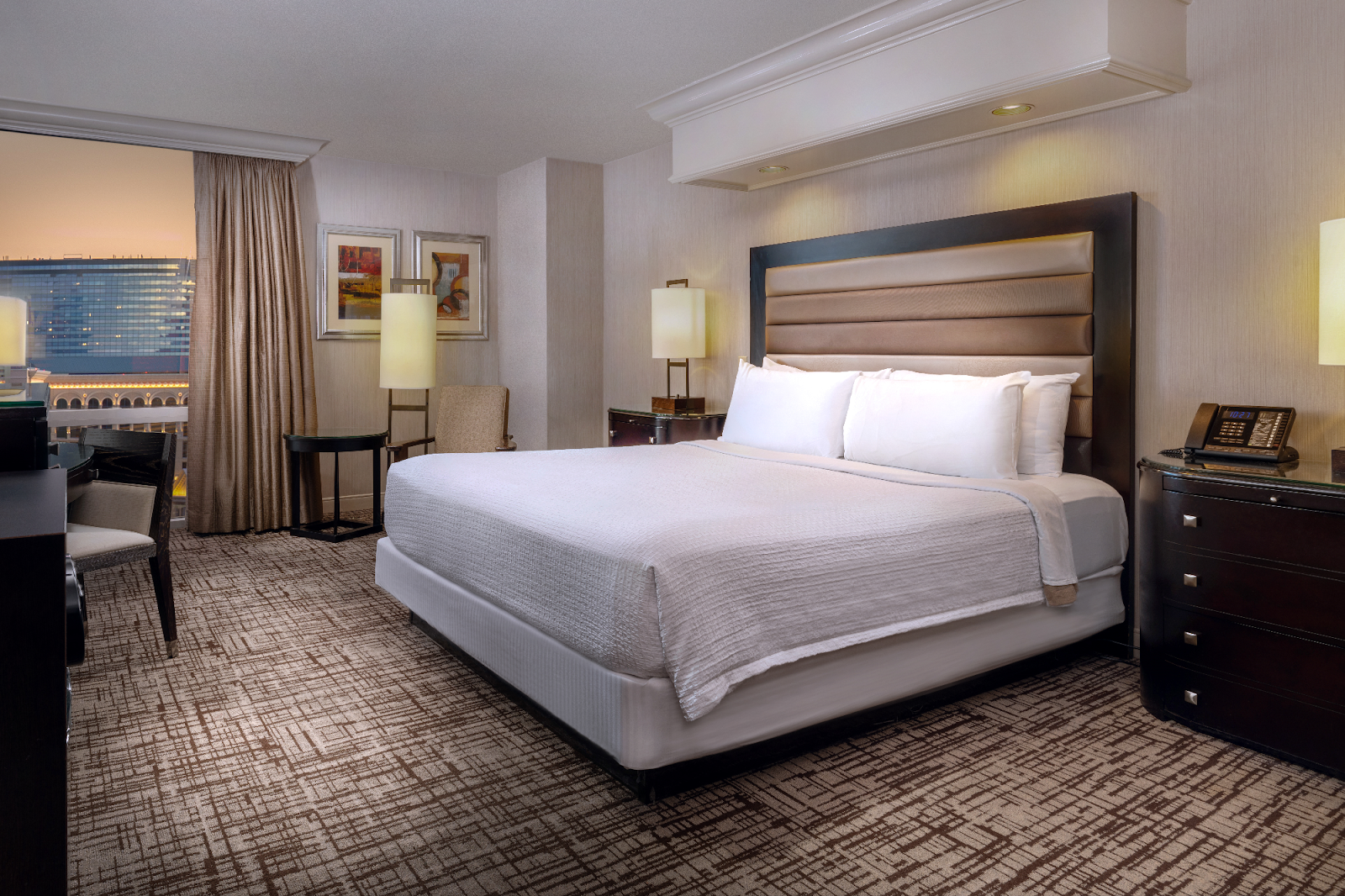
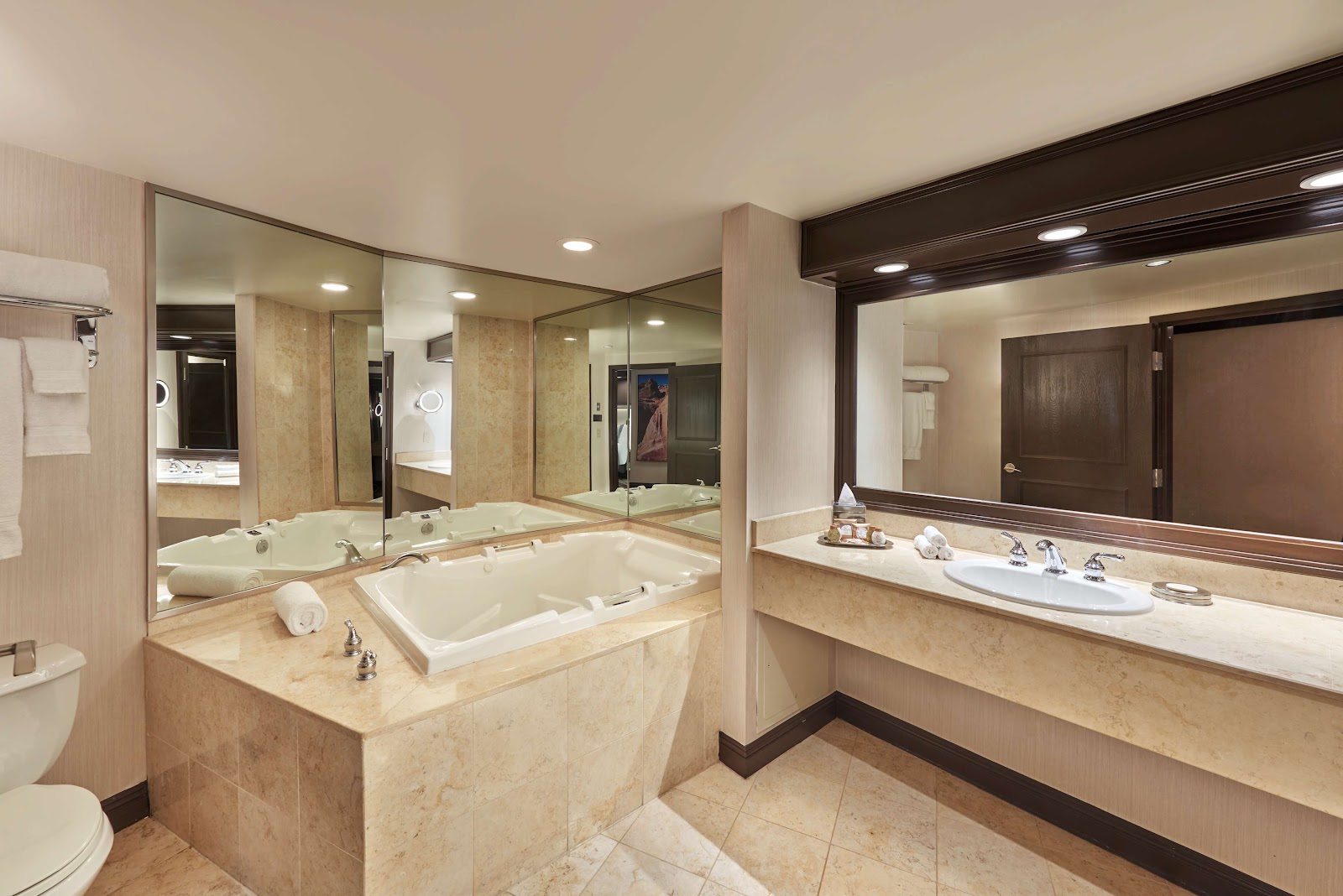
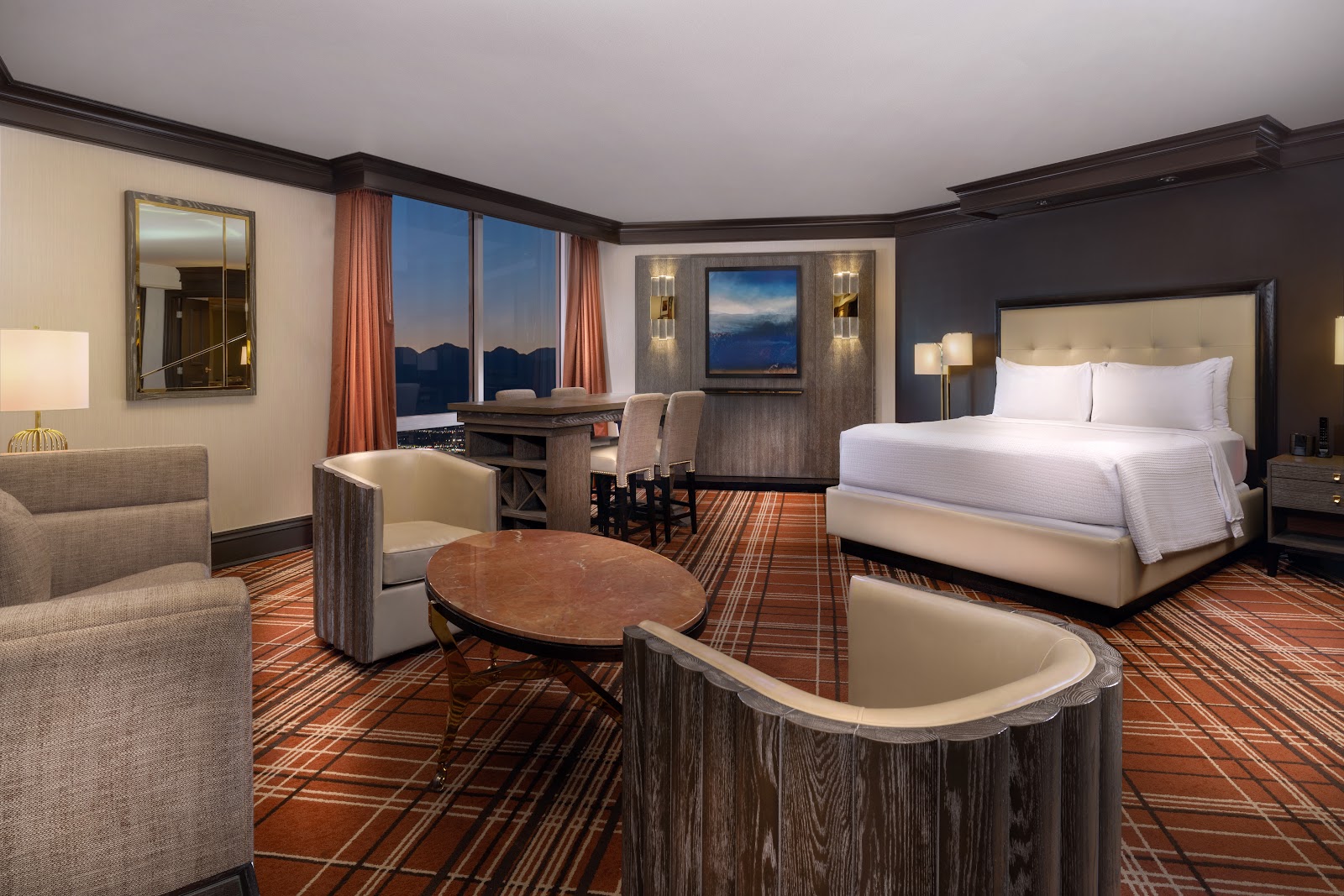
The guest rooms are the interior daylight: largest window on the shaded side, every overhead fitting off, lamps out of frame, two to three metres back. Direct sun through glass in this climate is unusually hard because the sun is high and the air dry, so the shaded side is the whole difference; and floor height matters less than in a dense city, so orientation is the better question. A high room with a view of the Strip is the exception worth asking for, because it gives a daytime version of the frame above.
Daytime outdoors has two windows and no middle. The first hour after sunrise, when the Strip is genuinely empty and the light is the best of the day; and the last hour before sunset, when low light rakes the facades and makes them legible. The middle of the day is unusable in the open: the sun reaches roughly seventy-seven degrees above the horizon at midday in June at this latitude, and the very dry air scatters almost nothing, so shadows are harder than the same angle gives in a humid climate.
The year is two and a half seasons. Summer has daytime highs regularly above forty degrees Celsius, which makes outdoor blocks a matter of minutes at the edges of the day. The monsoon from July into September brings occasional afternoon thunderstorms and blowing dust — and a desert thunderstorm at dusk is the most dramatic version of the frame described above, if the timing allows.
Winter is the good season: mild, clearest air of the year, and sunset in mid-afternoon, which puts the crossing at a civilised hour instead of after nine at night. Spring is windy, and wind means dust — haze that flattens distance, grit that gets everywhere.
And fogging runs one way only here: a cold body from air conditioning taken into hot dry air fogs immediately and does not clear inside twenty-five minutes. Twenty minutes of warming beforehand is the entire fix, and it can happen during the walk to the door.
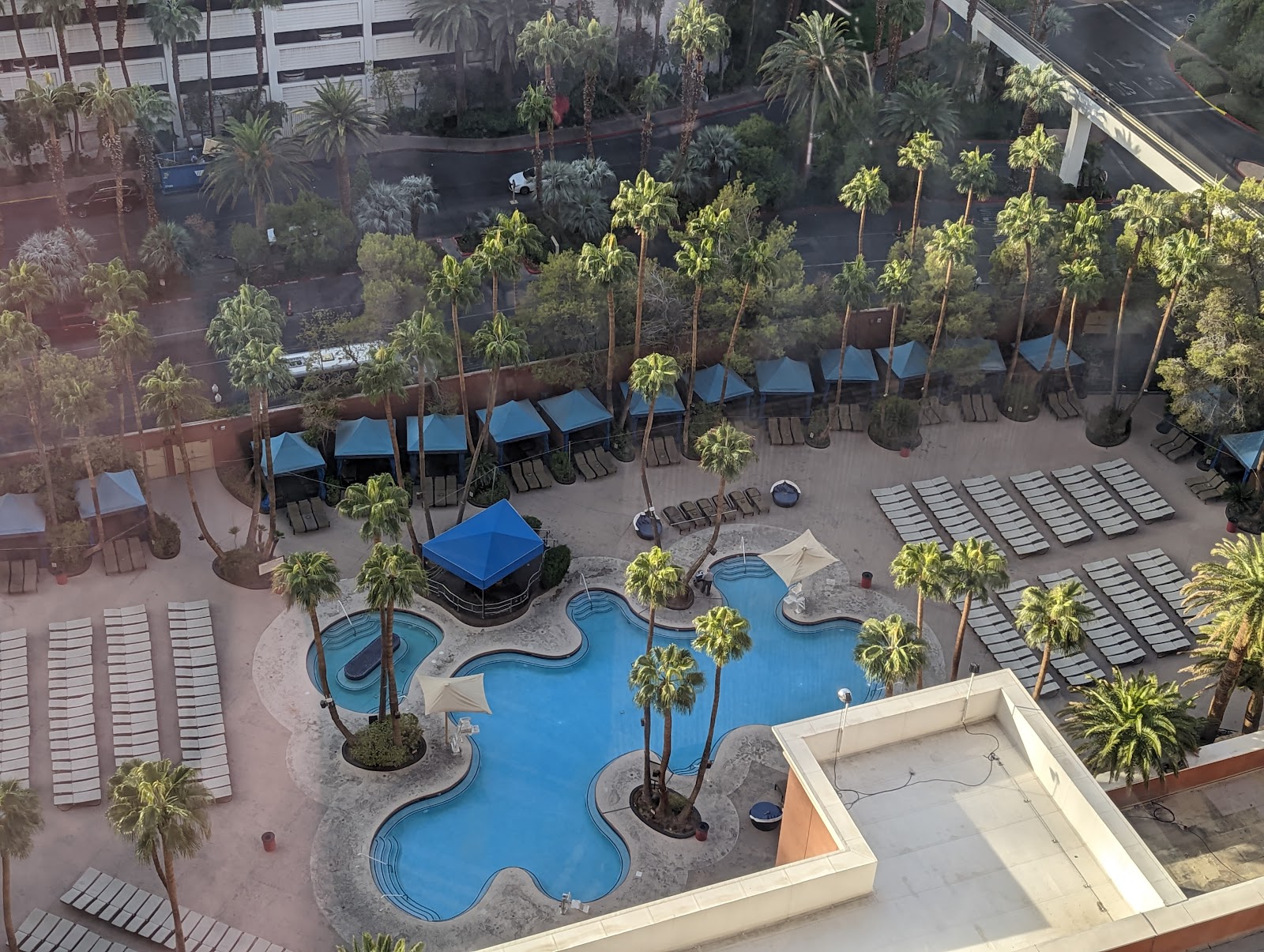
More frames from Treasure Island
Treasure Island wedding photography: common questions
When should the Strip frame be made?
In the roughly twenty-five minutes after sunset, when the sky still holds light and the signage has come up. It is shorter here than in a humid climate.
Why can't the Strip light the faces?
Because saturated signage is narrow-spectrum: two of the three colour channels have almost no information in them, and editing cannot recover data that was never recorded.
What order does the exposure go in?
Background first. Set the ambient so the signage is correct and the faces underexposed, then light the faces back up.
Why gel the flash?
Because an ungelled source is bluer than the Strip’s warm signage, which makes the faces look pasted in. Gelled warm, they read as though the city is lighting them.
Does bounce flash work outdoors?
No. There is nothing to bounce off, so a flash aimed anywhere but at the subject does nothing. Direct into a modifier, close.
How early should you leave the reception?
Fifteen minutes before the window, with the route walked in advance. The nearest door can be five minutes away through public areas.
More Las Vegas, NV venue guides
We are writing a photographer’s guide to every venue we would happily shoot in Las Vegas, NV. Here are three more, plus the full index:
- The Vdara, Las Vegas: One Frame, and How It Is Made
- The Venetian, Las Vegas: A Resort Whose Logic Is Painted Sky
- The Wynn Las Vegas: A Resort That Turns Inward
Planning a wedding at Treasure Island?
The frame everyone wants, made properly. Tell us your date and we will time it.