 Overhills Mansion: Who This Venue Suits, and Who It Doesn’t
The Sagamore Pendry, Baltimore: How the Light Moves
A hotel on a pier gives you two venues: one that changes every hour and one that never does.
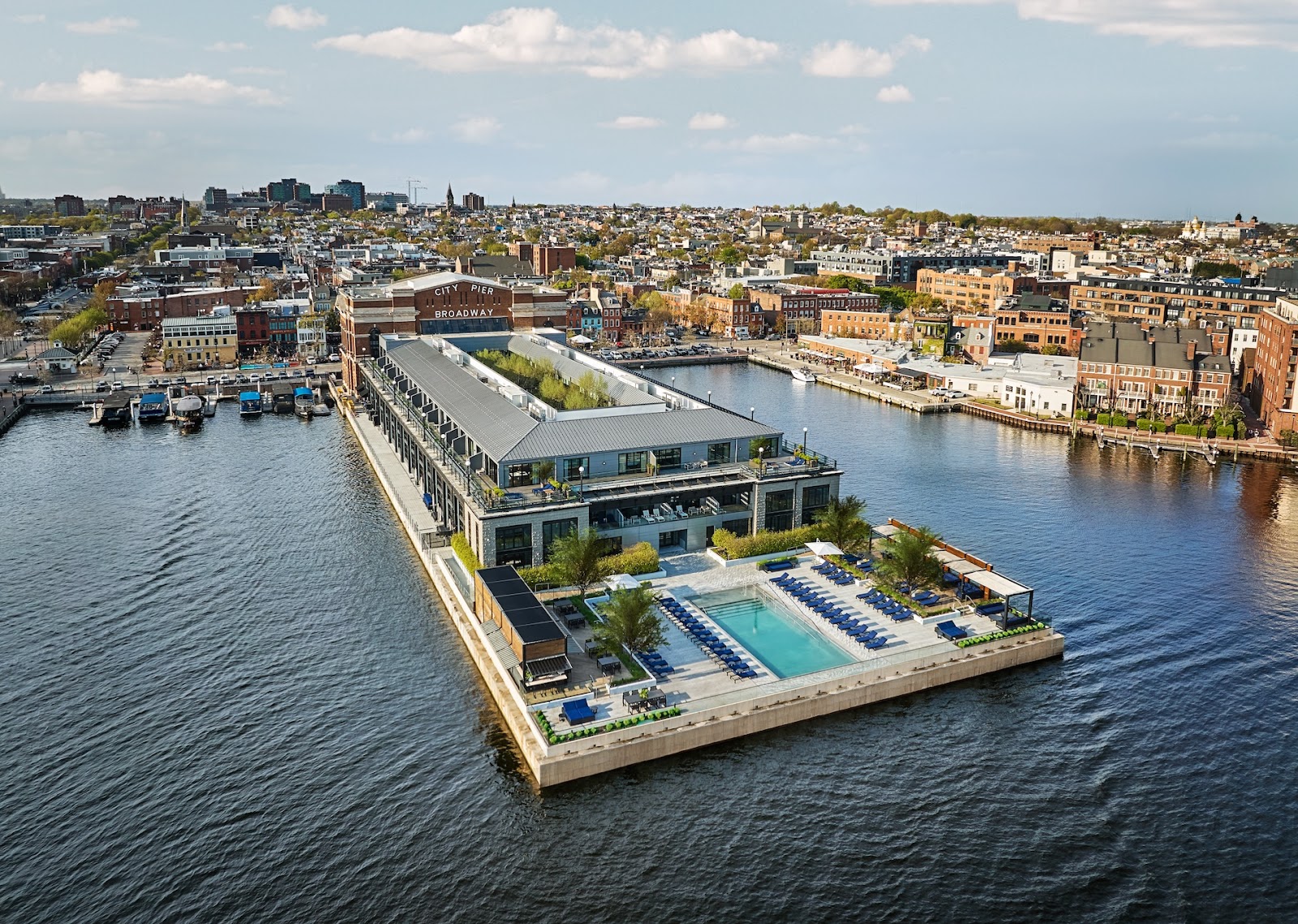
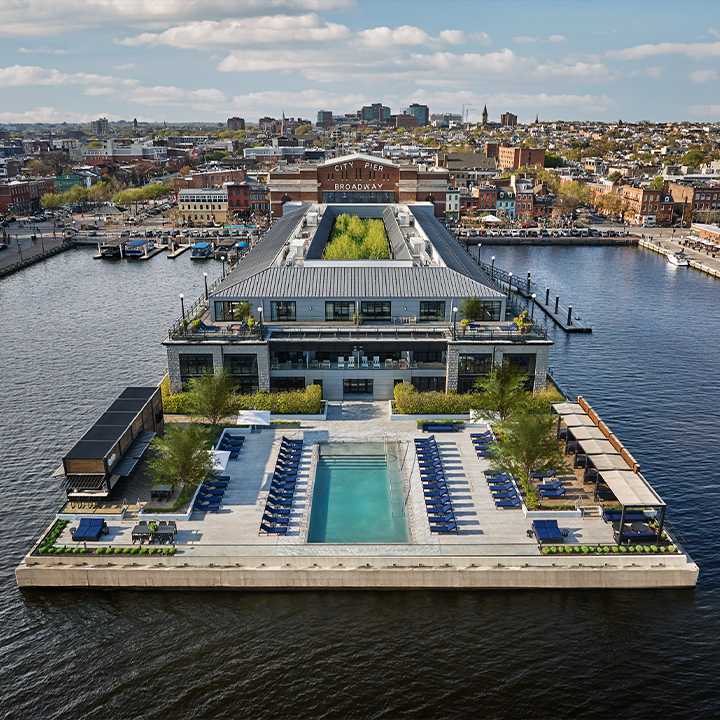
The Sagamore Pendry sits on the Baltimore waterfront and offers, as its own material emphasises, exclusivity and privacy — a hotel with pier-side outdoor space as well as interiors.
That combination makes the running order the most useful tool available, because the two halves behave in opposite ways. The interior lighting is essentially constant from mid-morning to midnight: whatever it looks like at three o’clock it will look like at ten. The pier and the water swing through five or six stops and change character completely — hard and specular at midday, raking and warm at six, luminous at seven-thirty, black with broken reflections at nine.
So this is written as a day. We have not photographed a wedding at the Pendry; waterfront hotels behave consistently. What pier access allows, whether the outdoor space is genuinely private, and what the fallback is if the pier is unusable are the questions for their team — the last matters because a pier has no shelter of its own.
The Sagamore Pendry at a glance
| Where | The waterfront, Baltimore, Maryland |
| Character | A waterfront hotel with pier-side private outdoor space |
| The two halves | A constant interior and a pier that changes every hour |
| Best hours outdoors | The last ninety minutes, and twenty minutes after sunset |
| Ask first | Pier access, whether it is private, and the shelter fallback |
Morning and midday: indoors, and why the pier waits
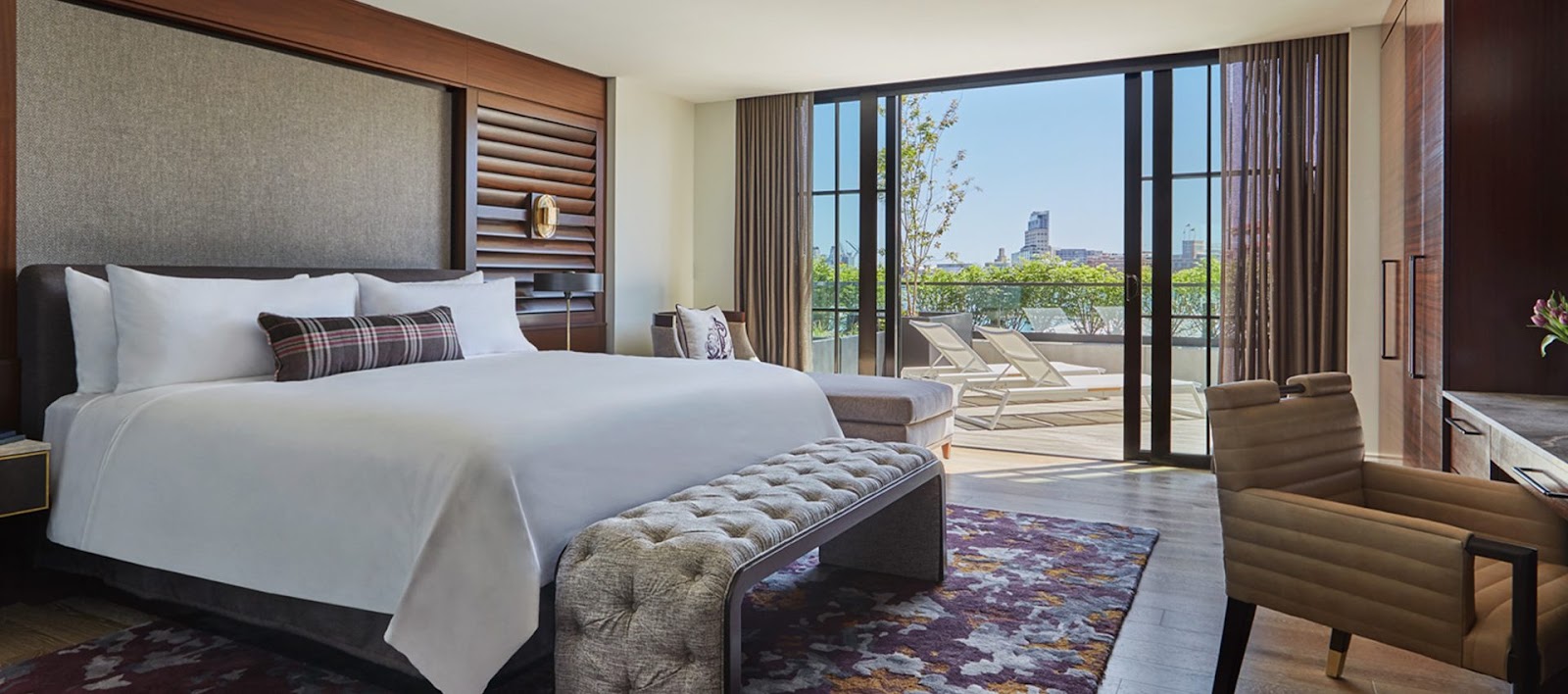
Morning belongs to the guest rooms, which in any hotel are the best portrait light in the building. Domestic-sized windows with walls close enough to bounce give soft directional light with usable fill, and low enough ceilings that a flash aimed upward actually returns something — a combination the public rooms do not offer.
It is worth setting up rather than documenting as found, and the three moves never change. Ask for the largest window on the shaded side. Switch off every overhead fitting so the room has one colour of light instead of three, since mixed sources are the commonest reason preparation coverage disappoints. And move the lamps out of frame rather than working around them.
On the water side there is a bonus. A room facing the harbour receives light twice — directly from the sky and again bounced up off the surface — which raises ambient, fills shadows from below and produces a quality that inland rooms do not have. It is genuinely flattering and specific to the location.
Midday on the pier is the part of the day to spend elsewhere, and the reason is optical rather than aesthetic. A high sun on flat water produces intense specular glare and raises light from below onto the underside of the chin, which is an unfamiliar and unflattering direction; there is no shade on a pier; and the harbour surface at that hour is a hard bright plane rather than a background. Add mid-Atlantic summer heat and humidity on an exposed deck and the honest answer is that midday is an interior hour.
Public interiors are the midday alternative and they need assessing on arrival for one thing: ceiling height. A hotel of this type may have high volumes where bounce returns nothing, or normal ones where it works. Test with a single frame rather than assuming, because it determines everything else.
Late afternoon into dusk: when the pier becomes the venue
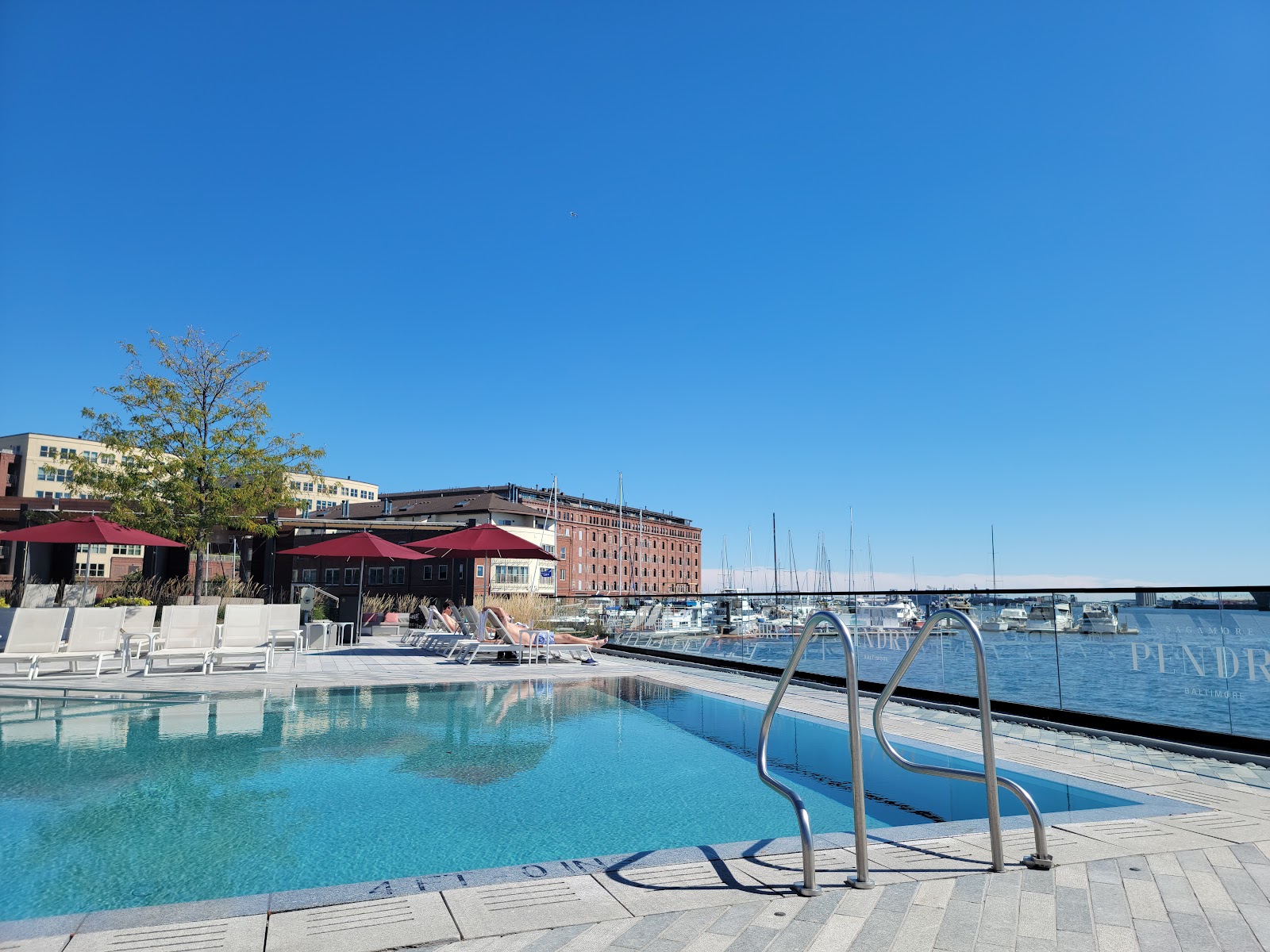
From about two hours before sunset the pier stops being a problem and becomes the reason to be here. The sun drops low enough that glare on the water resolves into texture and colour, the heat begins to break, and light starts raking along the deck, the railings and the hotel’s own elevation rather than falling straight down.
Long lenses earn their place along a waterfront because there is depth to compress. A couple on the pier with harbour, far shore and city behind them, shot at 135mm or 200mm wide open, stacks those elements into a layered background; the same frame at 24mm reduces the water to a strip and the city to specks. A waterfront is a long-lens environment, which is counter-intuitive because the space is wide.
A low camera is the other pier technique. Dropping close to the deck puts boards or planking running towards the viewer as a leading line, pushes the horizon down, and lets the sky and city occupy the upper frame. Standing at eye level on a pier wastes the one thing a pier gives you.
The geometry to avoid is the sun’s specular path. Low sun on flat water makes a hard bright lane running towards the camera, and at the exposure a face needs that lane is unrecoverable white — so position the couple lit across the frame, with the water to one side or behind but the sun not in line with it.
The last twenty minutes are the best version of the site. With the sun below the horizon the water stops reflecting and starts glowing, holding the whole sky’s colour as a luminous surface, and a couple placed against it will silhouette unless lit. One warm-gelled source at face height, about a stop under the sky, holds both — water bright and coloured, faces still faces.
That same window is the interior’s one timed frame too. Roughly twenty minutes after sunset the outside falls to the brightness of the hotel’s own lighting, so one exposure at any large window holds the lit room, the couple and the harbour together. It happens once; take the sunset time, add fifteen, and be in position with the couple already there.
- Guest room: biggest shaded window, overheads off, lamps out of frame
- Midday is an interior hour — no shade, glare, and light from below
- Go long on the pier; wide throws the harbour’s depth away
- Get low so the decking runs towards the viewer and the horizon drops
- Keep the sun’s specular path off the line between camera and couple
After dark, the wind, and Baltimore weather
Once the sky is gone the pier has almost no ambient of its own, so anything out there is entirely a lighting exercise — one source on the couple with the lit hotel elevation or the city behind them. A long exposure with the couple still and quayside lights broken into vertical lines across black water is the frame most often missed, because by then everyone has gone inside.
Take one long exposure for smear and one lit frame for texture rather than choosing on the night; the two look completely different and both belong in a waterfront gallery.
Indoors after dark the hotel becomes a warm low-light interior and should be allowed to look like one. Fast lenses wide open at a raised ISO give frames that match the rooms; one small warm-gelled source at face height fixes the overhead problem where legibility matters; and white balance wants setting for the faces and holding through the block, because auto white balance drifting between warm interiors is the usual reason a sequence fails to match itself.
Window glass after dark becomes a mirror, so lights go off-axis and frames go oblique. On a waterfront that is worth using deliberately — a lit room doubled in dark glass with harbour lights beyond is a good frame if no light stand is in it.
Harbour wind is the constant and it is stronger and gustier at the water’s edge than in the streets behind. That matters for a veil, which becomes a held-or-removed decision; for hair; and for any light stand, which needs real weight on an exposed deck. It also breaks the surface, so a mirrored reflection of the skyline is an early-morning proposition rather than an afternoon one.
Mid-Atlantic conditions set the rest. Summer heat and humidity keep outdoor blocks short and purposeful; afternoon thunderstorms are common rather than rare and a pier has no cover, which makes the shelter question real rather than nominal — and worth settling with a stated fallback and an agreed decision time. Humidity also produces fogging in both directions: kit chilled by air conditioning fogs on reaching warm damp air, and cold kit fogs on coming in, both taking many minutes to clear. And the light after a cell has passed over water — dark sky, low sun underneath, wet decking returning reflections — is the best the site will ever give, and worth going back out for.
More frames from The Sagamore Pendry
The Sagamore Pendry wedding photography: common questions
Why does the running order matter so much here?
Because the interior light is constant from mid-morning to midnight while the pier swings five or six stops and changes character completely. Putting each part of the day in the right place is worth more than any equipment decision.
What is wrong with the pier at midday?
No shade, intense specular glare on the water, and light raised from below onto the underside of the chin. Add summer heat on an exposed deck and it is an interior hour.
Wide or long lens on the pier?
Long. Compression stacks harbour, far shore and city into a layered background; a wide lens reduces the water to a strip and the city to specks, despite the space being wide.
How do you shoot against a luminous harbour at dusk?
One warm-gelled source at face height about a stop under the sky, or accept a silhouette. Without a source the couple goes dark against bright water.
What does harbour wind change?
A veil becomes a held-or-removed decision, hair needs managing, and any light stand needs real weight. It also breaks the water surface, so a mirrored skyline reflection is a morning frame.
What is the shelter situation?
A pier has none, and mid-Atlantic afternoon storms are common rather than rare. The fallback, its capacity and the decision time all need agreeing rather than improvising.
More Baltimore, MD venue guides
We are writing a photographer’s guide to every venue we would happily shoot in Baltimore, MD. Here are three more, plus the full index:
- St. Ignatius Church, Baltimore: The One Decision That Governs Everything
- The Walters Art Museum, Baltimore: Four Ways Out of the Gallery Problem
- The American Visionary Art Museum: Who This Venue Suits
All Baltimore, MD Wedding Venues →
Planning a wedding at The Sagamore Pendry?
The pier has two good hours and a shelter question. Tell us your date and we will settle both.