 The Tlaquepaque Arts Village, Sedona: Field Notes on Courtyards
The Paseo, Scottsdale: The Light Through the Day
An open-topped room. Its light changes completely, hour by hour.
A paseo is a walk between walls, and a walled outdoor venue is best understood as an open-topped interior rather than as a garden.
That distinction is the whole guide. A garden is lit by the sky and by whatever the vegetation does to it. A walled space is lit by the sky and by its own walls, and the walls change from a dark absorbing surface to an enormous light source and back again as the sun crosses them.
Which means the same courtyard offers four or five genuinely different lighting conditions in a day, and knowing which one is available at which hour is more useful than any technique.
The desert adds two amplifiers. The first is the air: very low humidity and almost no particulate scattering mean the direct beam arrives nearly unmodified and the shadows receive almost no atmospheric fill, so the difference between a sunlit wall and a shaded one runs roughly two stops wider here than the same sun angle gives in a humid climate. A walled space in Arizona is a higher-contrast instrument than the same walls in Florida.
The second is the colour. At this latitude in dry air the sky is a deep saturated blue, which means anything lit only by sky reads distinctly cool while anything in sun reads warm — and in a walled space those two conditions are often three feet apart.
Scottsdale sits at about thirty-three and a half degrees north at roughly twelve hundred and fifty feet. The June noon sun reaches around eighty degrees, the December noon sun about thirty-three, days run from about ten hours fifteen to fourteen hours twenty, and civil twilight is roughly twenty-five minutes.
What follows is the day in order. We have not photographed a wedding here; the wall heights, the orientation and the permitted hours are questions for the venue — and orientation is the one that decides everything below.
The Paseo at a glance
| Where | A walled outdoor venue in Scottsdale |
| How to read it | As an open-topped interior, not as a garden |
| Why | The walls go from dark surface to enormous light source as the sun crosses them |
| The desert amplifier | Almost no shadow fill, so wall ratios run two stops wider than in humid air |
| Ask first | Wall orientation and height; permitted hours |
Morning into noon
In the first hour after sunrise the courtyard is almost entirely in shadow and one wall has a band of light along its top.
That band is the frame. The sun is below ten degrees and travelling nearly horizontally, so it clears the eastern wall and strikes the upper part of the western one — which makes a bright warm horizontal stripe above a large volume of cool shade, and the stripe descends visibly as the sun climbs.
A subject in the shade below it is lit by blue sky alone, which is cool and soft and has no direction to speak of. That is a perfectly usable portrait light and it needs a warm gel on anything added to it, or the face will read yellow-green against a cold surround.
The stripe itself is better used than avoided. Put the subject at the point where the descending light reaches them and they are lit by a narrow warm band across the eyes and hair with cool shade below — a natural split that is very difficult to achieve deliberately and is available free for about twenty minutes.
Desert mornings are still, which is worth exploiting. The thermal circulation that produces the afternoon breeze has not begun, so a veil hangs, a table setting stays put, and a slow shutter is available in the shade.
Through mid-morning the sun climbs fast at this latitude — above forty-five degrees by nine in June — and the courtyard passes through its best condition. One wall is now fully lit and the opposite wall is fully shaded, which turns the lit wall into a single enormous directional source.
That is the strongest unassisted light the venue has and it is worth building the schedule around. A subject standing three or four metres out from a sunlit wall, facing it, is lit by a source the size of the wall: soft, directional, with a wrap that no portable modifier reproduces at that scale.
The colour of the bounce is whatever the wall is, and in the Southwest vernacular that is usually tan, ochre or warm white stucco — which makes the light warm and flattering. A white wall gives a neutral version; a strongly coloured wall will put its colour on skin and needs checking on a face rather than on a meter.
The trap at this hour is standing too close. A metre from a sunlit wall the subject is lit by a very bright small-angle source and the ratio is harsh; four metres out the wall subtends a wide angle from their position and the light wraps. Distance from the wall is the control, and further is usually better.
By eleven the courtyard has become a bright box. The sun is above sixty-five degrees in the warm half of the year, the light is descending nearly vertically, both walls are partly lit and neither is doing anything useful, and the space has no shape at all.
On a face that produces shadowed eye sockets, a bright forehead, a hard line under the nose and a chin shadow on the neck — with roughly two stops more range between the lit and shaded parts than a humid climate gives at the same angle, because there is no atmospheric fill.
There are three answers and no fourth. Find whatever built cover exists, which in a walled courtyard may be a loggia, a pergola or nothing. Carry a diffuser and hold it overhead, which converts the sun into a large soft source directly above and is the most portable solution in an open space. Or turn the subject so the brighter wall is behind them, expose for the shaded face, and let the wall blow — which in a warm stucco courtyard is a legitimate and rather good frame.
What does not work is finding a tree. If the courtyard is planted with the region’s natives, palo verde and mesquite carry leaves measured in millimetres on open branches and cast a hard moving dapple rather than cover. If it is planted with irrigated species — olive, Aleppo pine, oversized mesquite, citrus — those do give genuine shade, and finding out which on arrival is five minutes well spent.
Afternoon to dark
The afternoon reverses the morning and adds wind.
By early afternoon the desert floor has heated and a thermal breeze is established, building through the afternoon and often strongest in the two or three hours before sunset. In a walled space that is partly blocked, which is one of the real advantages of the type — a courtyard is measurably calmer than open ground, and a walled venue holds a table setting and a veil when an open lawn does not.
It is not eliminated, though, and wind in a walled space behaves oddly: it eddies and gusts rather than blowing steadily, which means hair moves unpredictably rather than consistently. A fast shutter is the answer and there is no positional fix.
Through mid-afternoon the geometry inverts. Now the eastern wall is lit and the western one shaded, which gives the same enormous directional bounce as the morning from the opposite side — and because the light has travelled a longer air path, the bounce is warmer than the morning’s version.
That is the second and better of the day’s two great conditions, and the last ninety minutes are where the venue is at its strongest. The bounce is warm, the wrap is wide, the shade opposite is soft, and the ratio between a subject and the lit wall behind them is manageable in a single exposure.
The frames to know are three. Facing the lit wall, which gives the soft warm key. Backed against the lit wall, which gives a warm rim and a bright textured background with the subject lifted by a small source. And in the shade with the lit wall filling the background, which is the most reliable portrait in the venue at any time of year.
As the sun drops the lit band climbs back up the eastern wall and the courtyard goes into full shade. That transition is quick and it is the cue to move to the last frames rather than to keep working where you are.
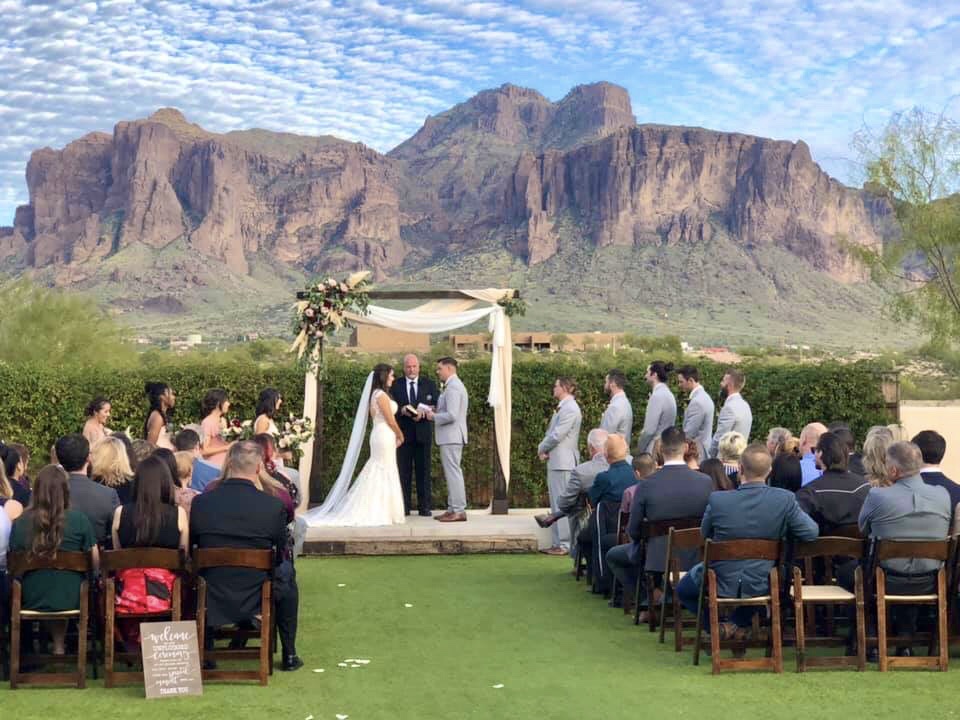
Once the walls are fully shaded, the courtyard is lit entirely by the sky and it reads cool and even. That is genuinely useful light for group photographs — no shadows, no squinting, no ratio to manage — and it is the right hour for the large formal frames rather than for portraits.
It is also the hour the walls stop helping and the sky takes over, which means what is above the courtyard becomes the picture. On a clear desert evening that is worth a lot: dry dust-carrying air scatters long wavelengths very efficiently, so the colour above a walled space ten minutes after sunset can be a saturated orange-to-violet gradient with the wall tops dark against it.
A wide lens from low in the courtyard, with the walls converging and the sky filling the upper half, is the frame that uses the architecture and the climate at once.
Civil twilight is about twenty-five minutes and the fall-off in clear air is abrupt rather than gradual. Two or three planned setups fit into it; improvised ones do not.
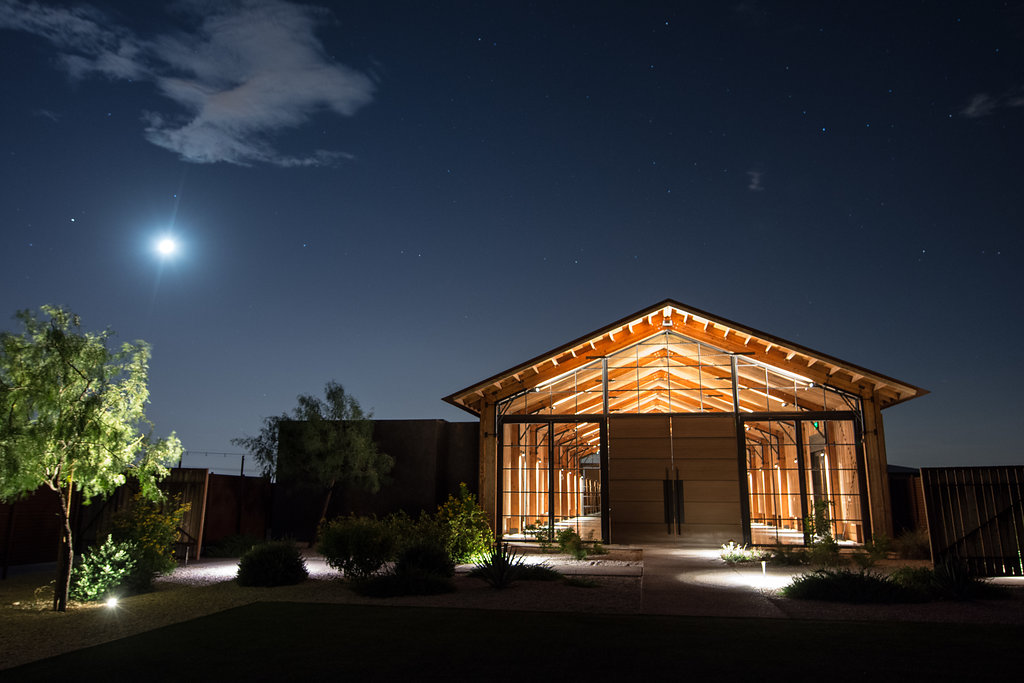
After dark a walled space becomes a lighting studio, and that is its final advantage. Walls at a known distance with a known reflectivity are exactly what a portable source needs — one light bounced off a courtyard wall after dark fills the whole space, which on an open lawn would take three.
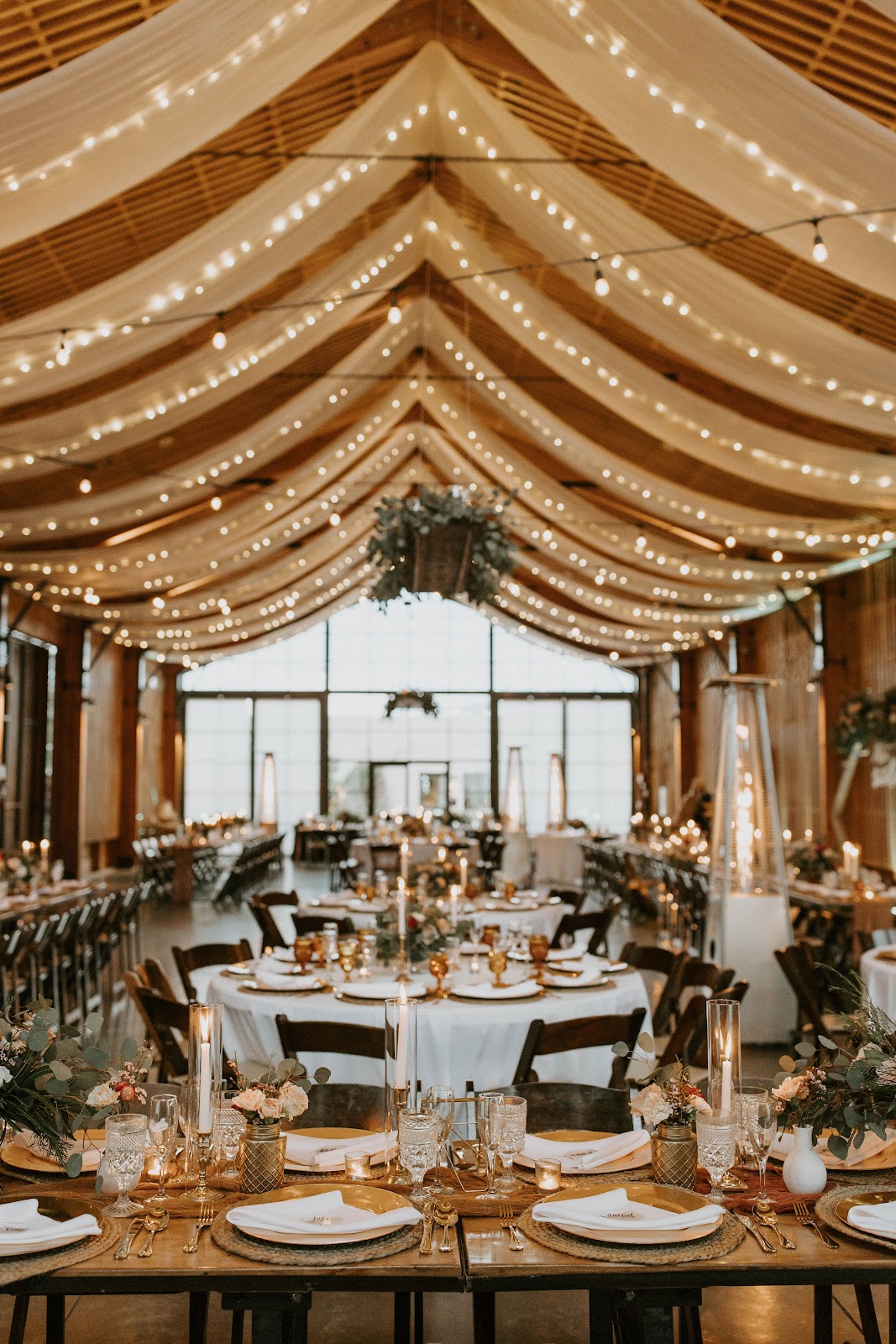
Two notes on the artificial light. Gel to match whatever the venue’s own fixtures are rather than correcting them; string lights and uplighters in a courtyard are almost always warm, and a daylight-balanced flash against them puts a blue face in an orange room. And drag the shutter enough that the fixtures register, because the strings and the wall washes are the reason the space looks like anything after dark.
The desert year governs the rest. November to April is the season: mild, dry, calm, and a December noon sun of about thirty-three degrees that never gets high enough to produce the midday problem at all — which means a winter wedding in a walled courtyard has directional light for the whole short day and no bad hour.
February to April is the best window in the state, with brittlebush, Mexican gold poppy and lupine in the wider desert in a wet year and palo verde flowering a mass of bright yellow through April. In a walled space that colour is whatever was planted rather than what is wild, so ask what is in the courtyard.
May to September is the constraint: afternoons above a hundred and ten degrees are a welfare matter for a party in formal clothes, and a walled courtyard is warmer than open ground rather than cooler, because the walls store heat and block the breeze. The monsoon from July gives structured cloud, thunderstorms late and the best light of the year afterwards — and a walled space with no roof is a rain plan for nobody, which makes the covered alternative a real question rather than a formality.
- Ask the wall orientation — it decides which hour gives which condition
- Four metres out from a sunlit wall, not one: distance is the control
- Noon has no answer but built cover, a carried diffuser, or a blown wall behind
- Full shade is the hour for the big group frames, not for portraits
- After dark a walled space is a studio — one bounced source fills it
What the walls are made of
One more variable decides how all of the above actually behaves, and it is the surface.
A wall’s usefulness as a light source is a product of three things: how much light it reflects, how diffusely it reflects it, and what colour it returns. Those vary enormously across the materials a Southwest courtyard is built from, and the difference is practical rather than academic.
Smooth white or pale stucco is the best case. It reflects a high proportion of the light, it scatters it broadly, and it returns a near-neutral colour — which makes it the closest thing to a studio softbox that a building provides. A sunlit white stucco wall is a genuinely powerful source and a subject four metres from one is well lit with nothing added.
Tan or ochre stucco is the common case and it is nearly as good, with a warm cast. That cast is a benefit on skin and it needs acknowledging in white balance: set it on a face in the actual position rather than on a preset, or the correction will neutralise the warmth that made the light flattering.
Exposed adobe or rammed earth is darker and rougher. It reflects considerably less, and the texture means the reflection is broken rather than smooth — which gives a softer, weaker, warmer bounce. A subject four metres from a sunlit adobe wall is lit, but noticeably less than from stucco, and closer is required.
Desert masonry — concrete with local rock set into its face, a technique used widely in this region — is the most variable. It is dark, strongly textured and multi-coloured, which makes it a poor reflector and an excellent background. Do not expect a bounce from it; do expect it to photograph well.
Raw concrete block is cool grey and moderately reflective, which produces the one genuinely awkward case: a cool bounce in a landscape where everything else is warm. A subject lit by grey block in sun and blue sky in shade is being lit by two cool sources in a warm frame, and the fix is a warm-gelled key rather than a white balance shift.
Corten or weathered steel appears in contemporary desert landscaping and it behaves like a coloured gel. A large sunlit rust-coloured panel throws a strong orange bounce that is beautiful on skin in small amounts and looks like a fault in large ones. Look at the face, not at the panel.
Height is the other variable and it decides the hours. A high wall shades the courtyard for longer, arrives at the good raking condition later and leaves it earlier, and produces a deeper, cooler shade in between. A low wall gives more hours of sun, less shelter from the breeze, and a smaller bounce because less of it is above the subject’s eye line.
So a tall walled courtyard is a winter venue with a long usable day and a summer venue with a genuinely shaded middle; a low walled one is the reverse. That is worth asking about, because the answer changes the schedule more than anything in this guide.
And the floor matters as much as the walls, which is easy to forget. Pale paving under a sunlit sky is a large low reflector that fills under the chin and opens the eye sockets, and in the desert — where the ground is pale and the sun is strong — that uplight is stronger than in almost any other region. Dark paving, gravel or decomposed granite absorbs instead, and a courtyard floored in dark decomposed granite loses a light source that a flagstone one has for free.
More frames from The Paseo
The Paseo wedding photography: common questions
How should I think about a walled venue?
As an open-topped interior. Its walls swing from dark absorbing surfaces to enormous light sources as the sun crosses them, which gives four or five distinct conditions in a day.
What is the best unassisted light here?
A subject four metres out from a sunlit wall, facing it. The wall becomes a source its own size, with a wrap no portable modifier matches.
Why four metres and not one?
Close in, the wall subtends a narrow angle and the light is harsh. Further out it subtends a wide angle and wraps. Distance from the wall is the control.
What do I do at noon?
Built cover, a carried diffuser held overhead, or turn them so the bright wall is behind and expose for the shaded face. There is no fourth option.
Does wall material matter?
Substantially. Pale stucco is nearly a softbox; adobe is weaker and warmer; desert masonry gives no bounce at all but photographs beautifully as a background.
Is a courtyard cooler in summer?
No — warmer. The walls store heat and block the breeze, so a walled space runs hotter than open ground in a low-desert summer.
More Arizona venue guides
We are writing a photographer’s guide to every venue we would happily shoot in Arizona. Here are three more, plus the full index:
- The Phoenician, Scottsdale: What It Suits, and What It Does Not
- The Pinnacle Peak Patio, Scottsdale: The Problem, and Four Ways Out of It
- The Ramada at South Mountain, Phoenix: One Frame, and How It Is Made
Planning a wedding at The Paseo?
A room with no roof, and five different lights in it. Tell us your date.