 Tulsa Country Club: Field Notes on a 1908 Club
The National Cowboy Museum: Four Ways Out of the Sculpture-Gallery Problem
Sculpture galleries are lit for the sculpture, and that lighting is the opposite of what a face wants.
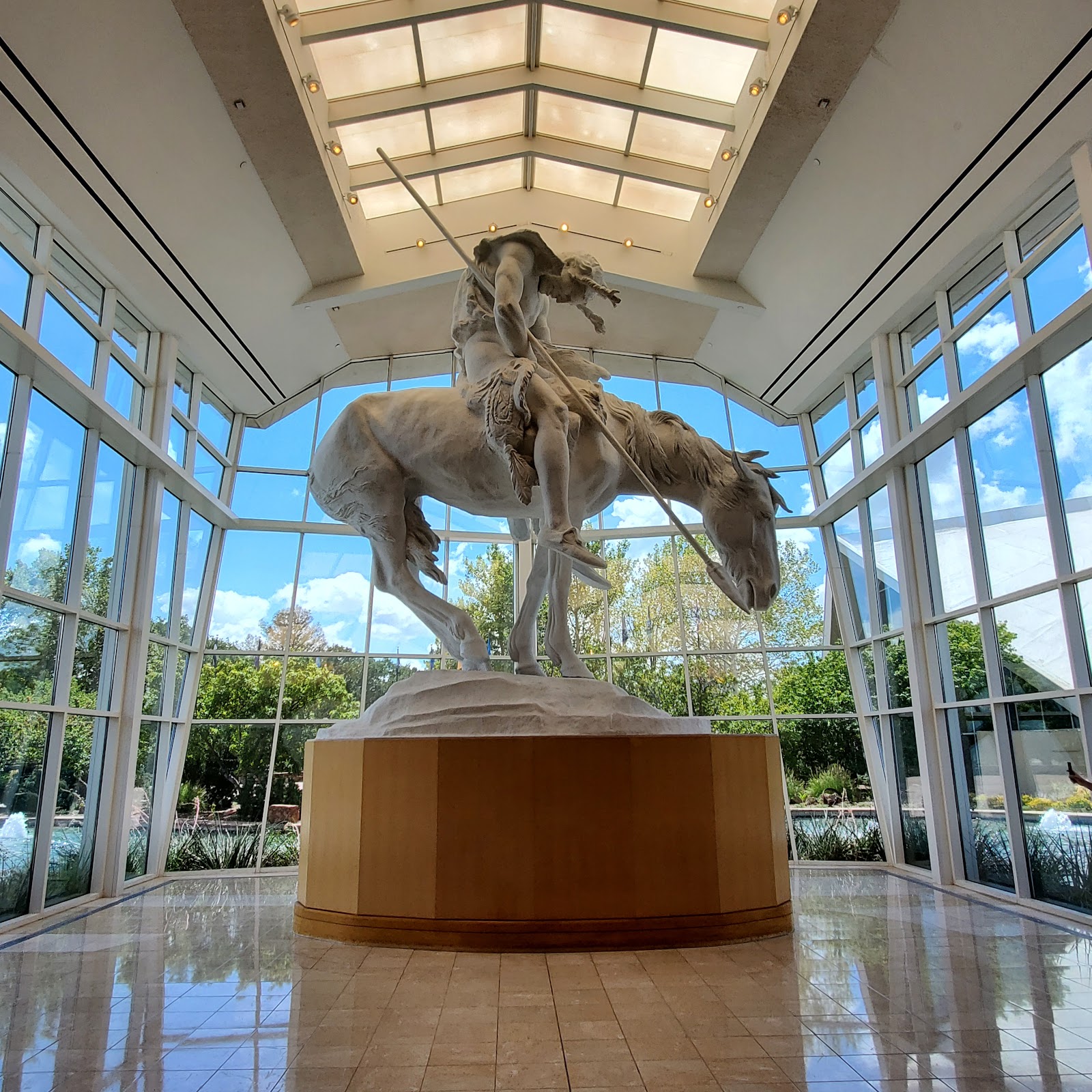
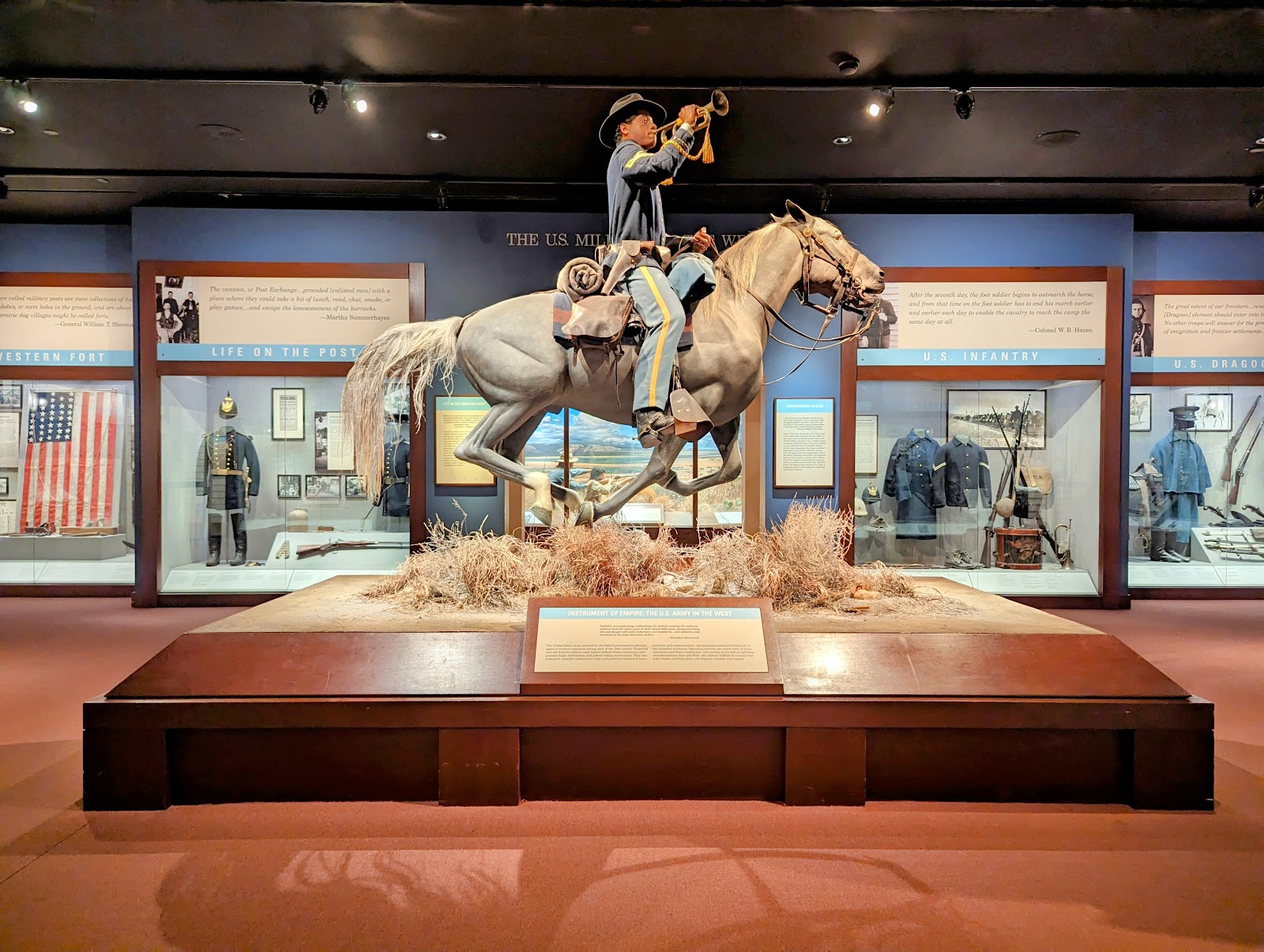
The National Cowboy & Western Heritage Museum occupies a substantial building in Oklahoma City, with galleries of Western painting and monumental sculpture, an atrium and landscaped grounds around it.
Sculpture galleries present a problem that painting galleries do not, and it is worth separating them. A painting is a flat surface that even light reveals adequately. A sculpture is a three-dimensional form, and it only reads as form when light rakes across it from one side — so sculpture galleries are lit hard and directionally, with strong single sources and deliberate deep shadow. That is exactly right for the object and exactly wrong for a face, which wants softer light from a broader source.
There are four ways through that, and they suit different frames. We have not photographed a wedding at the Cowboy Museum; sculpture lighting behaves the same wherever it is done properly. Which galleries host events, what the flash and tripod rules are, and which works may appear in published photographs are questions for their events team — and with a collection of this kind, all three answers matter.
The National Cowboy & Western Heritage Museum at a glance
| Where | Oklahoma City, Oklahoma |
| Character | Western art and heritage museum with monumental sculpture and painting |
| The problem | Sculpture lighting is hard and directional — right for bronze, wrong for faces |
| Also | Bronze is specular, so it shows what the light bounces off |
| Ask first | Flash and tripod rules, and publication permissions |
Why sculpture lighting fights a portrait
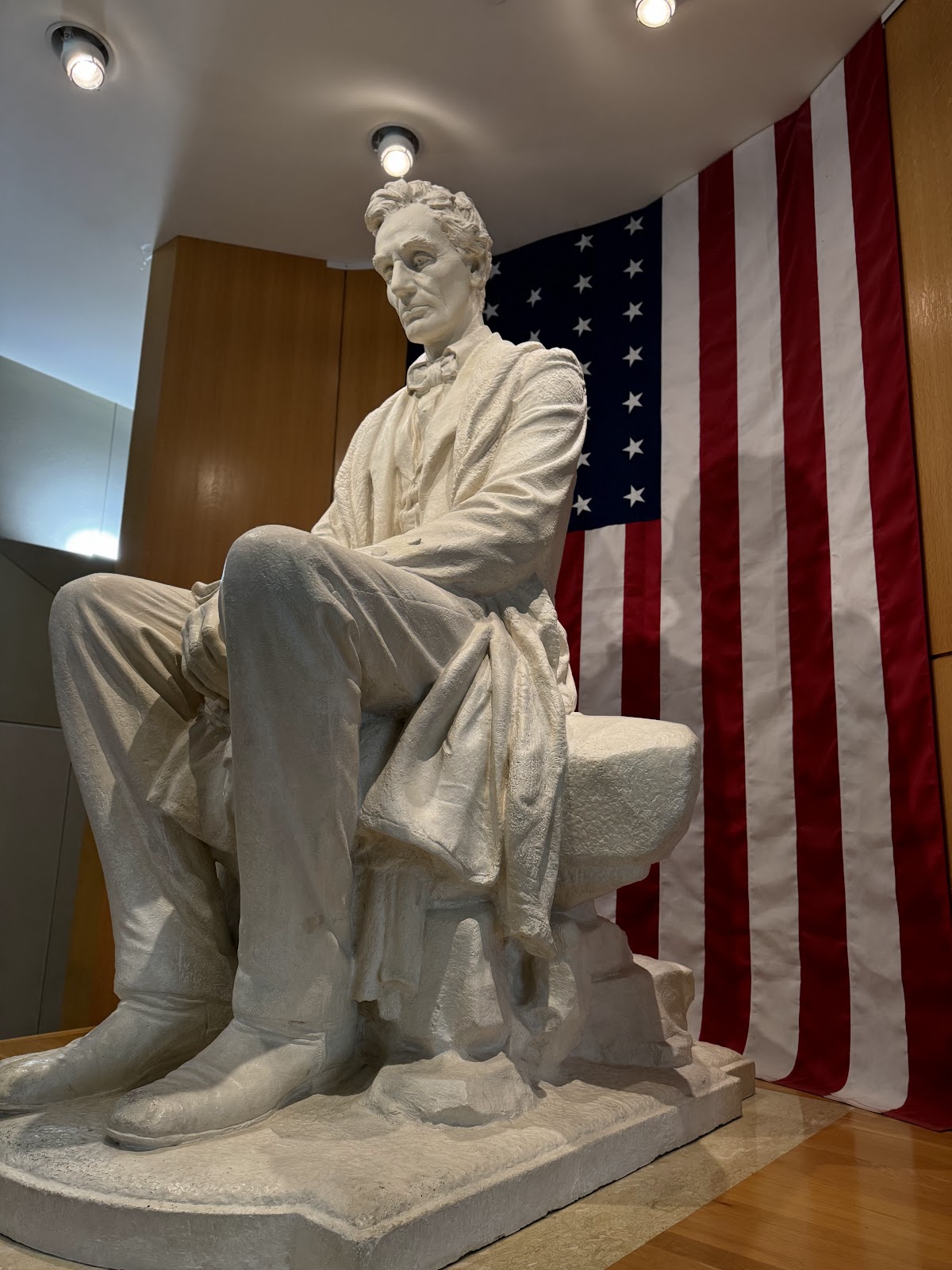
Good sculpture lighting is hard, single-source and directional, because form reads through the gradient from lit to shadowed and a soft even wash flattens a bronze into a silhouette of itself. Museums therefore light sculpture the way a portrait photographer would light a landscape — for maximum modelling and with deep deliberate shadow.
On a face that same light produces harsh shadow edges, blocked-up shadow sides and unflattering transitions, and because the sources are usually high it also shadows the eye sockets. The gallery is not badly lit; it is well lit for something other than people.
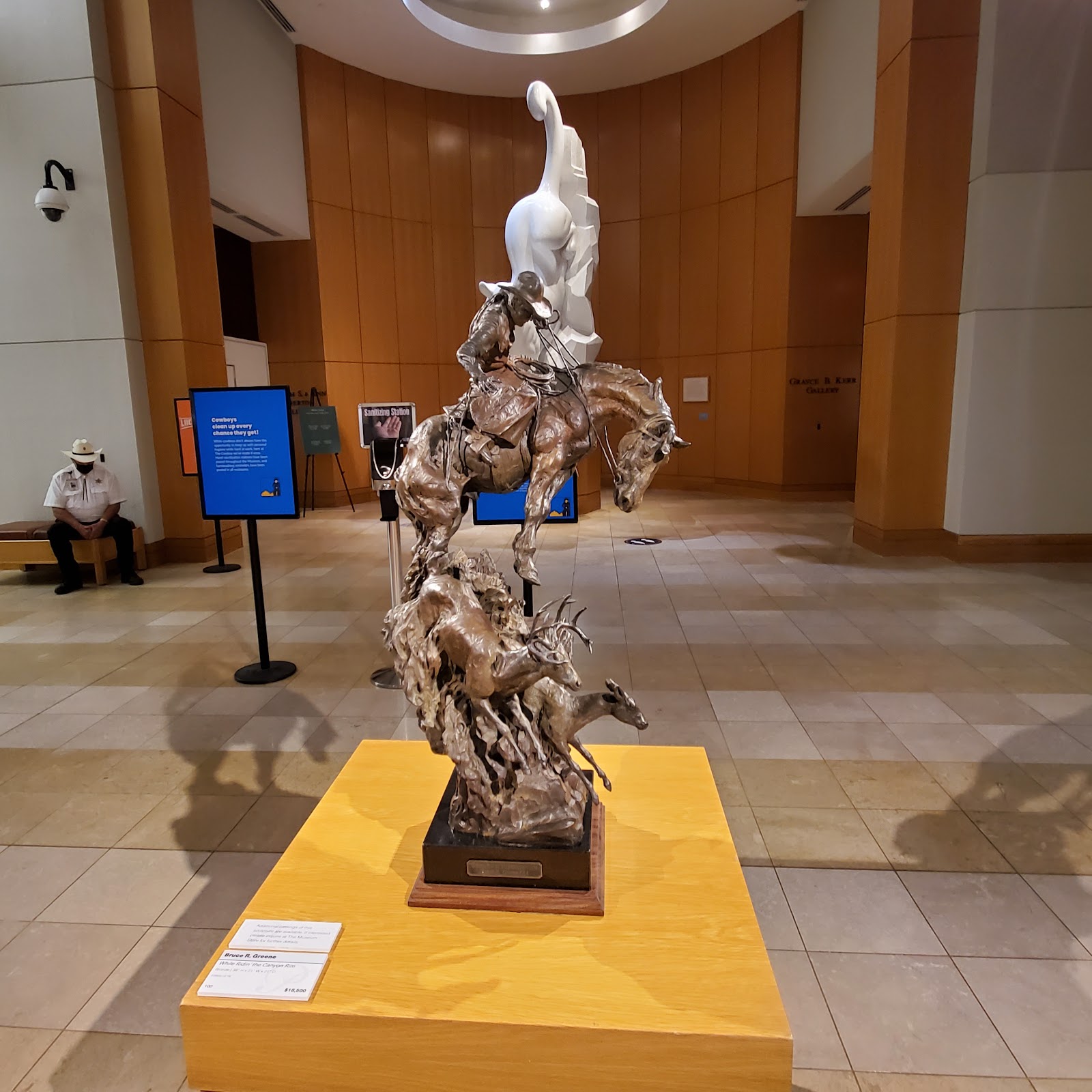
Bronze adds a second condition. A polished or patinated bronze surface is specular rather than diffuse, which means it does not show the light — it shows what the light is bouncing off. A bare flash on a bronze gives a hard small hot spot; a broad bounced source gives a long soft gradient down the form, which is what makes it read as metal. Light the reflection, not the object.
And bronze shows you. A curved bronze reflects a wide field, so the photographer and the lights can appear in a frame from an angle you would not expect. Check the sculpture rather than only the faces before committing to a position.
Ways one and two: bring your own key, or work the fall-off
The first approach is the reliable one: make your own light the thing illuminating skin. A gently warm-gelled source at face height, bright enough locally to compete with the gallery’s own directional lighting, with white balance set to it — and skin becomes consistent and properly modelled regardless of what the exhibit lighting is doing to the bronzes around it.
Keep it soft and keep it off-axis, and flag it so it does not spill onto the works. Spilling light onto a sculpture does two things you do not want: it flattens the museum’s careful modelling, and it is the sort of thing that gets a photographer politely stopped.
The second approach costs nothing and uses what the gallery already does. Hard directional lighting produces steep fall-off, which means there are pools of light and areas of deep shadow — and a couple placed at the edge of a pool, with the gallery falling away dark behind them, gets a dramatic directional frame that reads as intentional rather than as harsh.
That is the same technique that works in any dramatically lit space: stand at the margin of the light rather than in the middle of it, so half the face is lit and the rest falls into the room. In a sculpture gallery it is particularly effective, because the deep shadows are already there and the museum put them there on purpose.
- Bring a warm-gelled key and flag it off the sculpture
- Stand at the edge of a light pool, not in the middle of it
- Light bronze with a broad bounce, never a bare flash
- Check the bronze for your own reflection before committing
- Settle flash, tripod and publication rules separately, in writing
Ways three and four: the atrium, and the grounds
The third approach is to leave the galleries for the frames that need flattering light. A museum atrium holds nothing light-sensitive, so it is usually generously glazed or top-lit, which makes it the best place in the building for groups, portraits and anything that must simply work. Where it is top-lit, the same caveat applies as everywhere — overhead light shadows the eye sockets, so keep a low bounce or a lifted chin ready — and pale stone with a lit ceiling will fool a meter, so add a stop and check the highlights.
Where there is monumental sculpture in an atrium, it is an assertive background with a decision attached: commit to it by going wide with the couple placed deliberately and small, or subordinate it with a long lens at a wide aperture. Half-in fails, as it does with any strong background object.
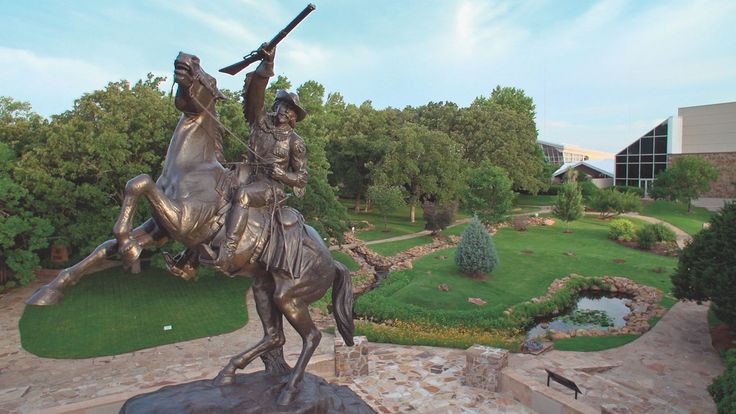
The fourth approach is the grounds. Landscaped exterior space gives directional daylight, shade from structures and planting, and a completely different register from a dark gallery. The last ninety minutes are when it works, because low sun rakes across planting and any stonework — and on the southern plains that window is long, since nothing intercepts the sun near the horizon.
Oklahoma conditions apply outdoors and both matter. Summer heat is severe enough to limit how long anyone will stand in open sun, so the building’s own shadow is the dependable midday option and outdoor blocks should be short and decisive. And this is squarely in the region where severe convective storms build fast in spring and early summer — which means a real decision point rather than optimism, though at a large museum the fallback is an entire building, which is about as comfortable a position as an outdoor plan can be in.
Humidity also fogs a lens carried from heavy air conditioning into outdoor air for ten to twenty minutes, so acclimatise the body you intend to use outside before the block rather than during it.
More frames from The National Cowboy & Western Heritage Museum
The National Cowboy & Western Heritage Museum wedding photography: common questions
Why does sculpture lighting fight a portrait?
Because form reads through the gradient from lit to shadowed, so sculpture is lit hard, single-source and directional with deep deliberate shadow. On a face that gives harsh edges, blocked shadow sides and shadowed eye sockets.
How do you photograph bronze?
Light the reflection, not the object. Bronze is specular rather than diffuse, so a bare flash gives a hard hot spot while a broad bounced source gives a long soft gradient down the form — which is what makes it read as metal.
What is the trap with bronze?
It reflects a wide field, so you and your lights can appear from an angle you would not expect. Check the sculpture rather than only the faces before committing to a position.
What is the free technique here?
Standing at the edge of a light pool rather than in the middle of it, so half the face is lit and the rest falls into the room. Sculpture galleries already have deep deliberate shadows, and the museum put them there on purpose.
Should your light touch the sculpture?
No — flag it off. Spilling light onto a work flattens the museum’s careful modelling, and it is the sort of thing that gets a photographer politely stopped.
Where is the flattering light?
The atrium. It holds nothing light-sensitive so it is usually generously glazed or top-lit, which makes it the right place for groups and anything that must simply work — with a low bounce ready if it is lit from above.
More Oklahoma venue guides
We are writing a photographer’s guide to every venue we would happily shoot in Oklahoma. Here are three more, plus the full index:
- Oklahoma City Farmers Market: One Frame and How It Is Made
- The Oklahoma City Museum of Art: Field Notes on Glass, Twice Over
- The Packard Building: Photographing a Converted Car Showroom
Planning a wedding at The National Cowboy & Western Heritage Museum?
Sculpture light is deliberate and it is not for faces. Tell us your date and we will bring our own key and flag it properly.