 The Hotel Indigo Madison: What It Suits, and What It Does Not
The Milwaukee Public Museum: The Problem, and Four Ways Out of It
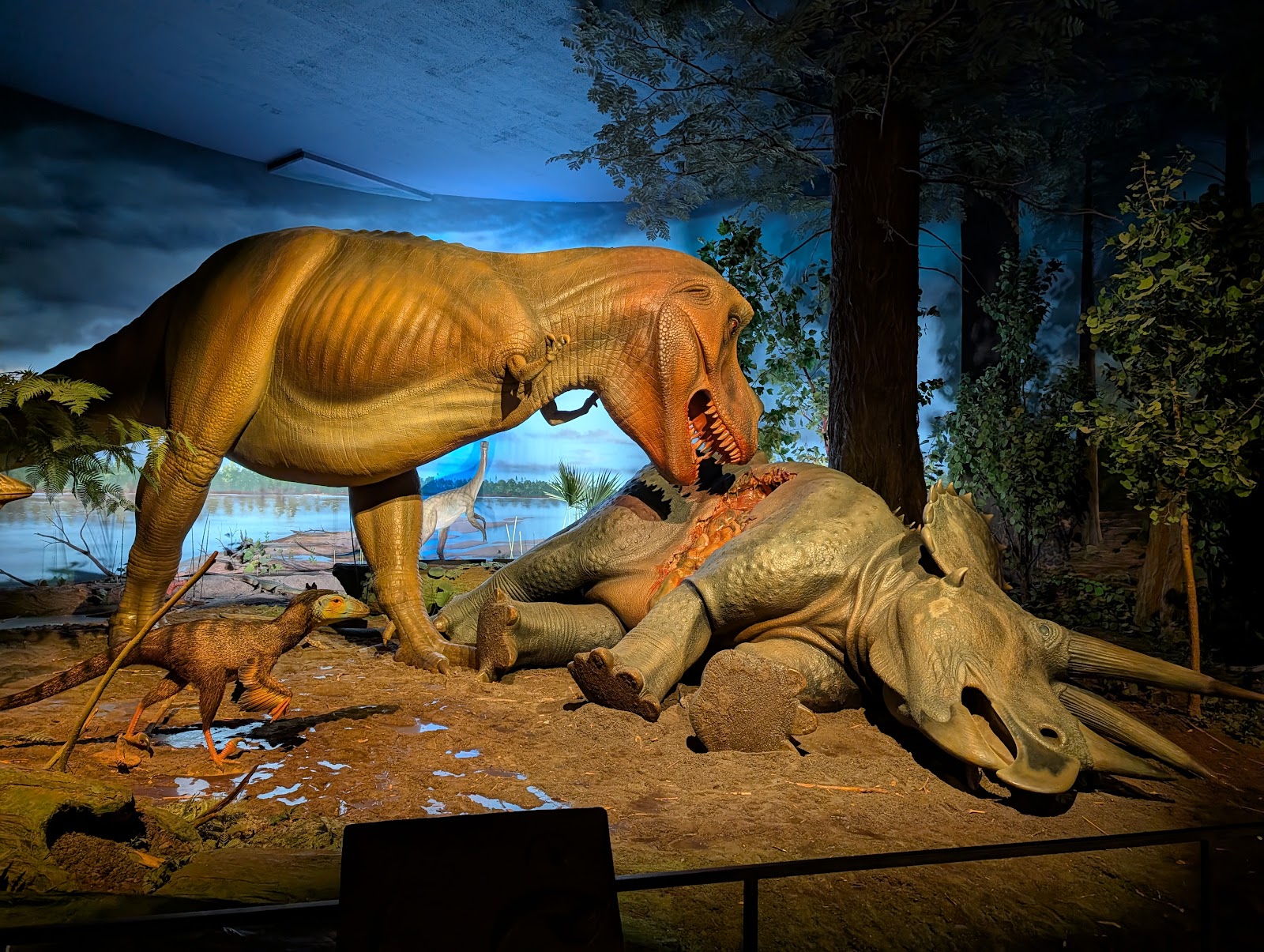
The exhibits are lit as theatre. That is the problem.
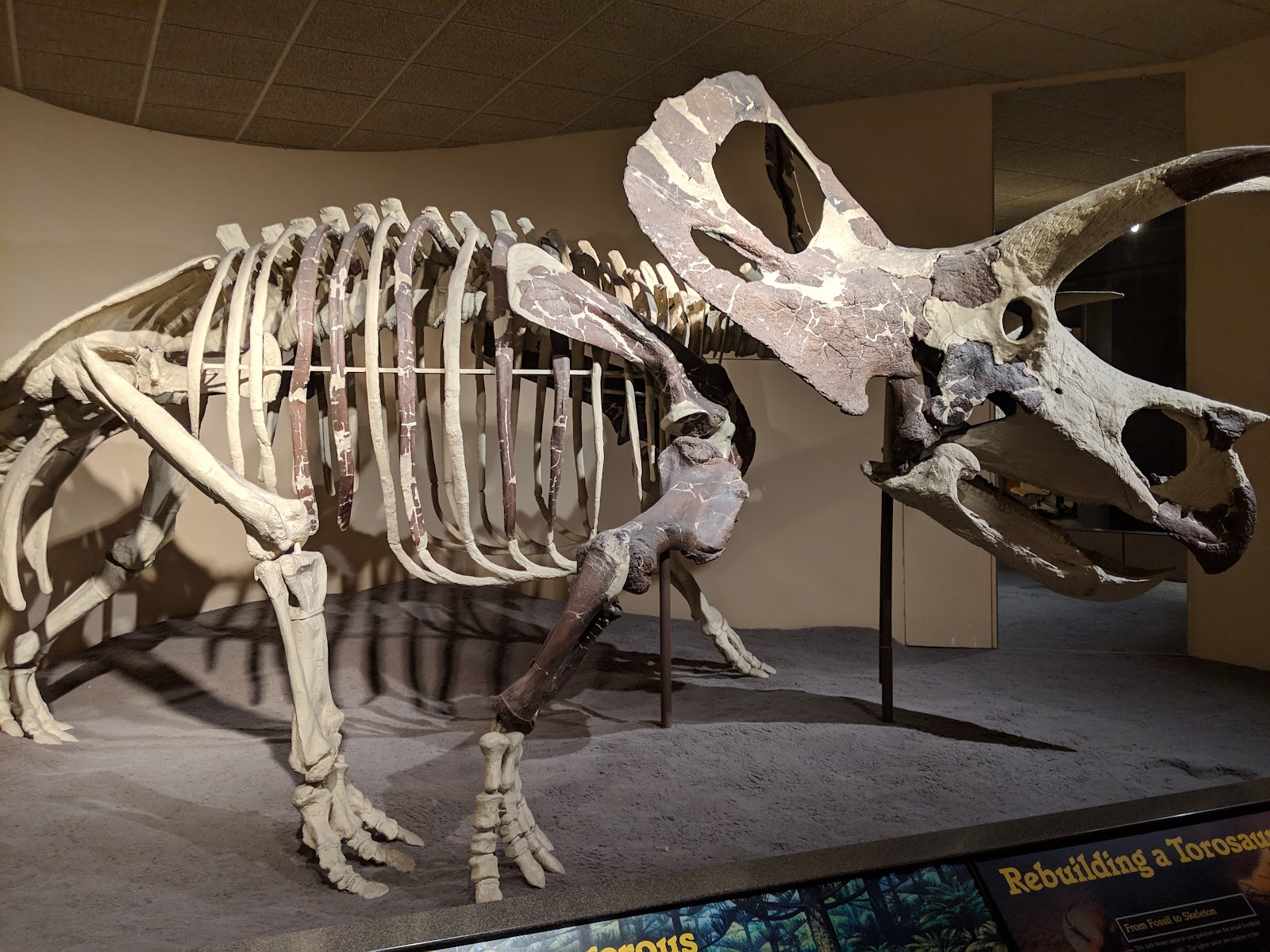
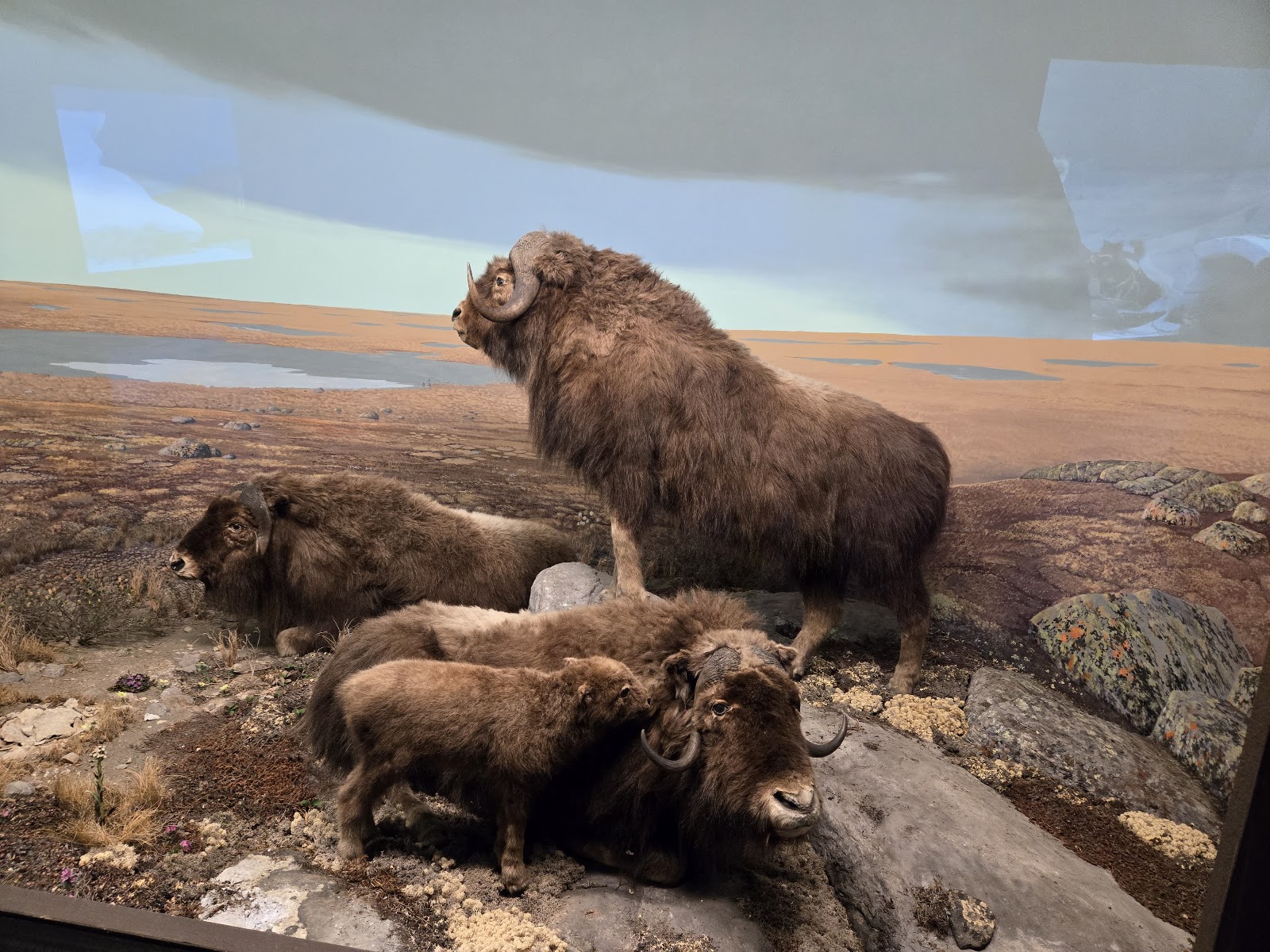
The problem at a natural history museum of this kind is that the exhibits are lit as theatre rather than as display, and that is a genuinely different and harder condition than an art gallery’s.
An art museum lights a wall evenly and keeps the level low. A walk-through diorama does the opposite: it creates an illusion of somewhere else, which means directional and coloured lighting, deliberate pools and shadows, painted backdrops lit separately from foreground objects, and levels that vary enormously from one step to the next.
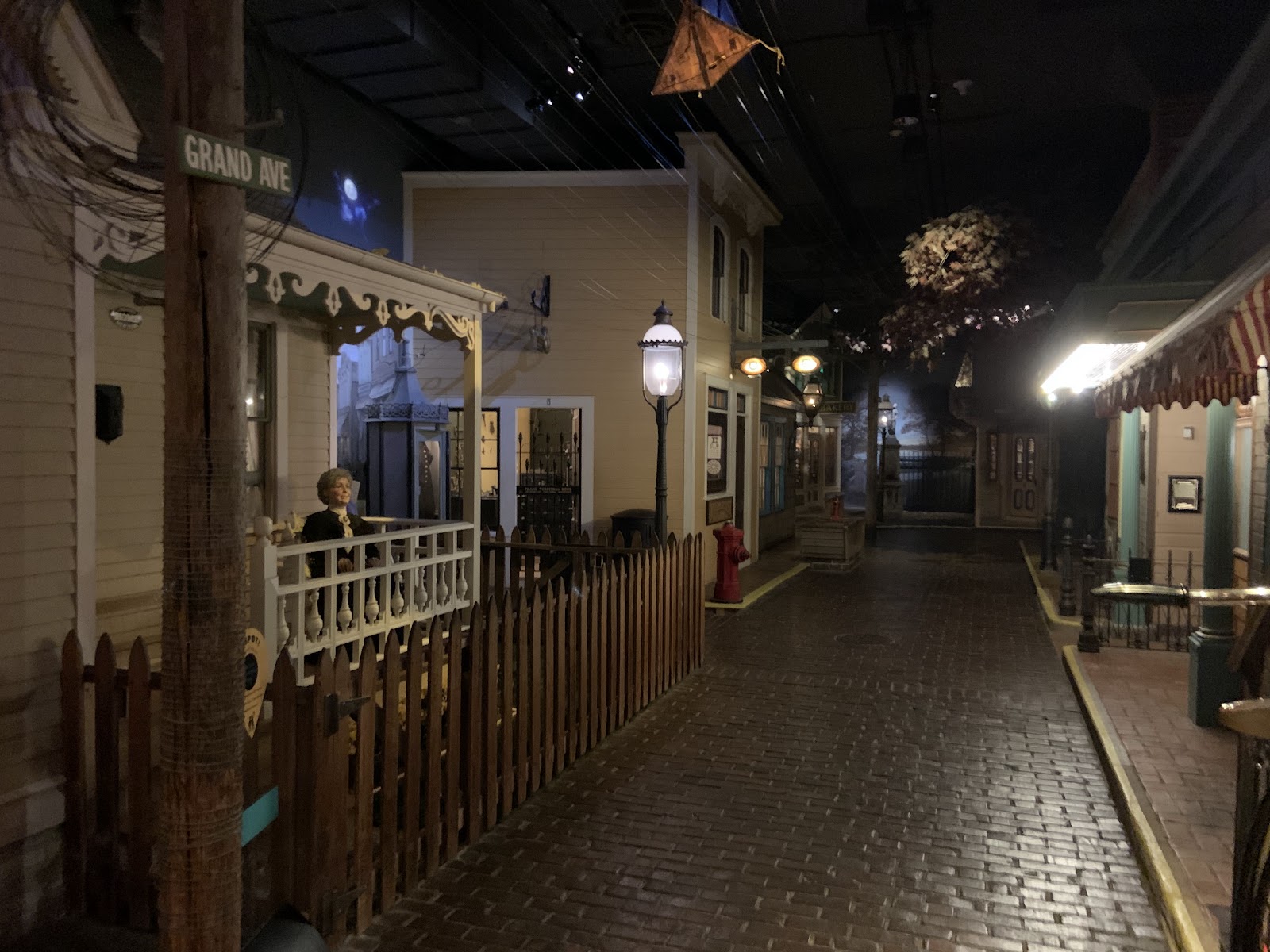
The most famous version of that here is the walk-through street — a recreated turn-of-the-century Milwaukee at full scale, with shopfronts, cobbles and a permanently dusk-lit sky overhead. Others include full-scale habitat dioramas and an immersive rainforest.
Photographically that produces four problems.
The colour is not correctable. Exhibit lighting is gelled to serve an illusion — warm for a gaslit street, green-blue for a rainforest, amber for a desert — and those are not white-balance errors to be fixed but the intended condition. Neutralising them destroys the exhibit.
The levels are very low and very uneven. A diorama street lit to feel like evening is perhaps two or three stops below an already dim gallery, and it changes by several stops within a few metres.
The sightlines are short and the ceilings are close. An immersive set is built to be walked through, which means there is nowhere to stand back to and the painted sky overhead is lower than a real one.
And the sets are not real. A painted backdrop photographed with a flash on it reads immediately as a painted backdrop, because the light reveals the flatness the exhibit lighting was designed to hide.
Milwaukee sits at about forty-three degrees north at roughly six hundred feet near Lake Michigan. The June noon sun reaches around seventy and a half degrees, the December noon sun about twenty-three and a half, and civil twilight is roughly thirty-three minutes — which matters only outdoors.
What follows is four ways out of it. We have not photographed a wedding here; which halls are bookable, the flash and tripod policies and the permitted hours are questions for the museum.
The Milwaukee Public Museum at a glance
| Where | A natural history museum in Milwaukee built around walk-through dioramas |
| The problem | Exhibits lit as theatre: coloured, directional, very low and very uneven |
| The trap | Flash on a painted backdrop reveals the flatness the lighting hides |
| The constraint | Immersive sets have no space to stand back to |
| Ask first | Flash and tripod policies; which halls are bookable |
Way one: work with the exhibit light, not against it
The first and best answer is to treat the exhibit lighting as the light and to add nothing, or almost nothing.
That means a fast lens wide open, a high ISO, and accepting the colour as intended. A recreated gaslit street is meant to look warm and dim; photographed warm and dim it looks like itself, and a couple walking it reads as being somewhere rather than standing in front of something.
Set white balance on skin rather than on a card or a preset. That keeps faces plausible while letting the set’s colour sit where the designers put it — which is the correct compromise, because the alternative is either grey skin or a neutralised exhibit.
The shutter is the discipline. Exhibit light tempts a photographer down to a thirtieth or lower, and at those speeds a walking subject is a smear and a standing one who breathes is soft. Hold a hundred and twenty-fifth for anyone still and a two-hundred-and-fiftieth for anyone moving, and pay for it in ISO — grain in a dim atmospheric set is a much smaller problem than blur.
Find the practicals. An immersive street has shop windows, street lamps and interior lights, and those are small bright sources at close range — which means a face turned toward a lit shopfront picks up a defined key with rapid falloff. That is the single most useful move in a diorama: use the set’s own lamps as your lights.
A lit window is the best of them, being effectively a softbox built into the scenery. Placing a couple beside one, turned into it, gives modelling that no added source would improve.
Where a modest amount of light must be added, keep it off the backdrop. A small source aimed narrowly at the subject — a gridded speedlight, a snooted flash — lights faces without reaching the painted surfaces behind, which preserves the illusion.
The failure to avoid is a bare or broad flash pointed into the set. It flattens the painted sky, shows the seams and the brush marks, and turns an atmospheric street into a photograph of a stage set. That single mistake undoes everything the venue offers.
Gel anything you add to match the set. A gaslit street wants a warm gel — a half or a full CTO — and a cool-lit habitat wants nothing or a slight cool correction. Matching is the goal rather than correcting.
One practical note about tripods. A tripod solves the level problem entirely for any frame without people moving in it, and museums frequently restrict them for egress reasons rather than conservation ones. It is worth asking specifically, because in a dim diorama a tripod is worth two stops of image quality.
Ways two and three: the architecture, and the permitted rooms
The second way out is to photograph the building rather than the exhibits, because a civic museum of this type usually has architecture that the dioramas obscure.
A large public museum has an entrance hall, stairs, circulation space and often a rotunda or atrium — and those are lit for wayfinding rather than for illusion, which means brighter, whiter and more even. They are also the only spaces with any daylight, where the building has windows at all.
The entrance hall is usually the best of them and it is the sensible location for large group photographs, which dioramas cannot take because the sets are narrow and the sightlines short.
Stairs are the reliable architectural asset and they give the standard three frames: from below looking up, which makes the subjects dominant; from a landing looking down, which suits a group on the treads; and from across the space at landing height, which shows the stair as architecture and is the one most people skip.
Where the building has a glazed elevation or a skylight, that is the best unassisted light in it: three or four metres in from glass gives strong directional light with no top-light problem, and groups arrange parallel to the glazing rather than across the space.
The third way out is to identify which spaces permit what, and to build the day around them rather than against them.
Natural history collections include some of the most light-sensitive material there is — textiles, feathers, dyed specimens, works on paper — so flash prohibitions in exhibit halls are common and often absolute. Conversely, function rooms, halls and lobbies are usually unrestricted.
Settle that room by room in writing before the day. It is the single most consequential question about this venue, because a photographer who plans lit portraits in the recreated street and finds flash forbidden has lost the frames the day was built around.
And there is a further consideration specific to immersive exhibits: many have restrictions on where people may stand and what may be touched, because the sets themselves are the collection. A street built in the mid-twentieth century is now a historic artefact in its own right, and treating it as a backdrop to lean against is not acceptable.
Establishing the rules and then working inside them produces better frames than negotiating on the day, because staff who know a photographer is careful will usually allow more rather than less.
One last architectural note. A museum of this age and type is often built in a monumental civic idiom — substantial masonry, a symmetrical plan, a formal entrance — and that exterior wants raking light. A masonry elevation under a frontal midday sun is an even field with no modelling; at a low angle every joint and reveal appears.
In Milwaukee the material is frequently Cream City brick, which is worth knowing: a distinctive pale yellow brick made from local clay and used extensively in the city’s nineteenth-century building. It is unusual, it is specific to this city, and in low evening light it goes a genuine pale gold rather than the red-orange that most American brick produces.
- Use the set’s own practicals — a lit shopfront is a softbox in the scenery
- Set white balance on skin, not on a card; the set’s colour is intended
- Hold a hundred and twenty-fifth and pay in ISO; a thirtieth smears a walking subject
- Keep added light off the painted backdrops — a grid or a snoot, never a bare flash
- Settle flash and tripod policies room by room, in writing
Way four: go outside, and the lake
The fourth way out is to leave the building, and in downtown Milwaukee that is worth doing.
The city’s nineteenth-century building stock is substantial and coherent, and Cream City brick gives it a palette found nowhere else. That pale yellow-buff brick was made from a local clay high in lime and low in iron, which is why it fires pale rather than red — and a street of it in low evening light is a distinctive warm gold that no other American city offers at that scale.
It needs raking light like any masonry. Frontal midday sun renders it as a flat pale field; a low sun brings out every joint, and the colour shifts from cream to gold.
The lakefront is the other direction and it is a short distance. Lake Michigan gives a true horizon — tens of miles of sightline with nothing in it — which no inland city can offer, and a very large reflective surface.
Open water reflects the sky, making it a large low-angle source that fills under the chin and lifts eye sockets, strongest at grazing angles. So a subject at the lakefront in the last hour is lit from below as well as from the side.
The shore faces east, which has a clean consequence worth planning around: the sun rises over the water and sets behind the city. Sunrise is the water frame; sunset puts warm light on the buildings with the lake in shade behind them. Those are two different pictures and knowing which a schedule permits matters.
The lake also shapes the weather in ways worth anticipating.
It lags the seasons, being a thermal mass on an enormous scale. Spring on the shore is cold and late because the water is still near freezing into May; autumn is mild and extended because the water holds summer heat into November. A lakefront frame in April is much colder than the air temperature suggests.
That temperature difference produces lake fog in spring and early summer: warm air moving over cold water condenses, and fog forms over the lake and drifts onto the shore, sometimes stopping a few streets inland. It is unplannable and it is extraordinary — a masonry city half-dissolved in fog is a frame nothing else gives.
The lake breeze is the daily version. On a warm day the water-land temperature difference drives an onshore wind that builds through the afternoon, which makes the lakefront reliably breezier than inland. No unweighted light stands there, and a five-hundredth for hair and fabric.
The seasons rank clearly. Late September into mid-October is the best window: the inland hardwoods turn — sugar maple to scarlet and orange, oak to russet, basswood to yellow — the air reaches its clearest of the year, restoring the long lake sightline that summer haze removes, and the water is still mild and often calm.
Summer is long-lit at fifteen hours twenty-five, humid enough to fill shadows by about a stop and a half against a dry climate, and hazy across the water.
Winter is cold, snowy and short — about eight hours fifty-five in December — with flat grey overcast that flatters faces and gives masonry nothing. Its compensation on this shore is genuinely unusual: shelf ice builds along the lakefront in a hard winter, spray freezes on railings and structures, and steam fog rises off open water when the air is far colder than the lake.
For a venue whose best frames are interior dioramas, none of that matters much — which is the honest strength here. A museum built around artificial light is indifferent to a Milwaukee January, and the interior conditions are identical in any month of the year.
More frames from The Milwaukee Public Museum
The Milwaukee Public Museum wedding photography: common questions
Why are dioramas harder than galleries?
They are lit as theatre rather than display — coloured, directional, very low and very uneven, with painted backdrops lit separately from foreground objects.
What is the single biggest mistake?
A bare or broad flash pointed into a set. It flattens the painted sky and shows the seams, turning an atmospheric street into a photograph of a stage set.
So what do I light with?
The set’s own practicals. A lit shopfront or street lamp is a small bright source at close range — effectively a softbox built into the scenery.
How do I handle the colour?
Set white balance on skin and let the set’s colour stay where the designers put it. Neutralising it destroys the exhibit.
What shutter speed?
A hundred and twenty-fifth for anyone still, a two-hundred-and-fiftieth for anyone walking. Pay for it in ISO — grain beats blur in a dim set.
What is Cream City brick?
A pale yellow brick from local Milwaukee clay, high in lime and low in iron so it fires pale rather than red. In low sun it goes a genuine gold.
More Milwaukee, WI venue guides
We are writing a photographer’s guide to every venue we would happily shoot in Milwaukee, WI. Here are three more, plus the full index:
- The Milwaukee Repertory Theater: A Walk Through the Building
- The Milwaukee Zoo: Field Notes
- The Milwaukee Art Museum: One Frame, and How It Is Made
Planning a wedding at The Milwaukee Public Museum?
Sets built as theatre, lit as theatre. Tell us your date.