 The Hotel Indigo Madison: What It Suits, and What It Does Not
The Graduate Madison: What It Suits, and What It Does Not
Every surface is doing something. That is the whole question.
A maximalist hotel interior is a specific proposition and the honest way to describe it is by what the decoration does, because there is no neutral surface anywhere in the building.
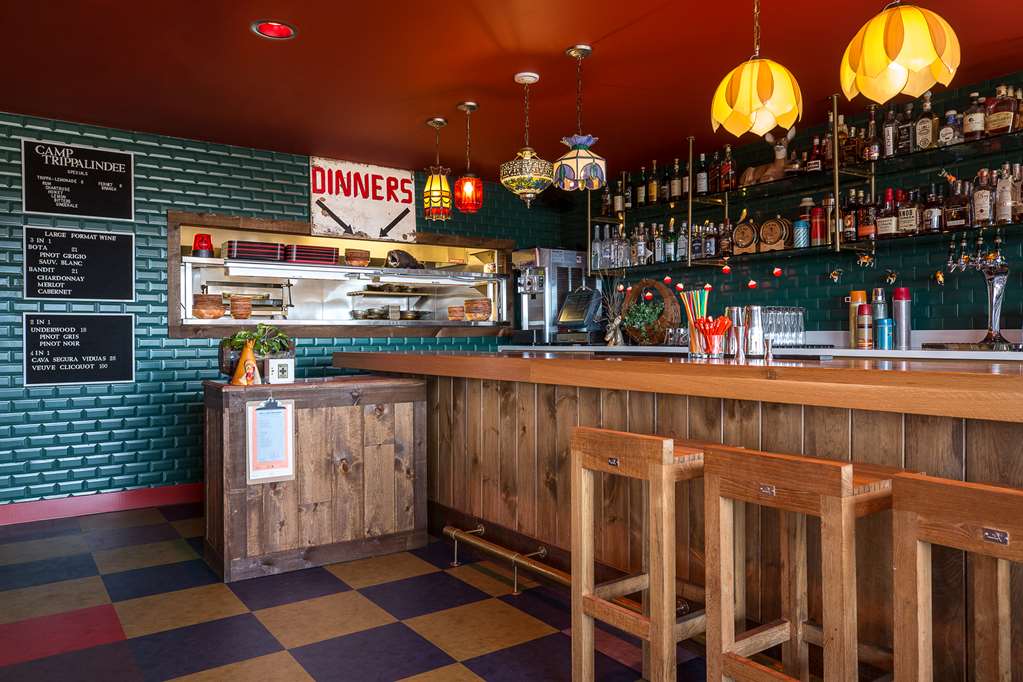
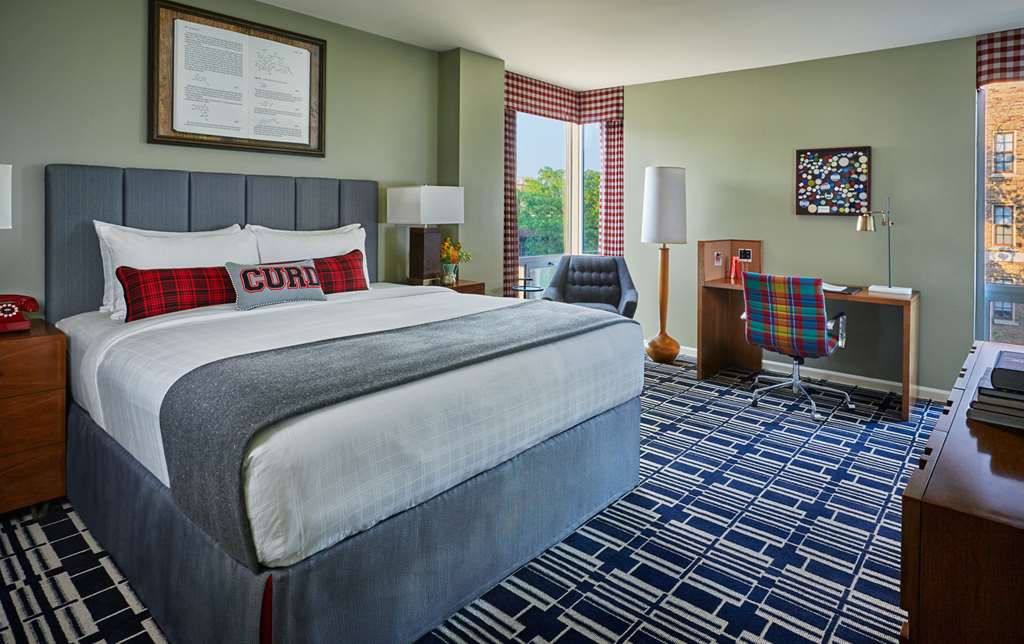
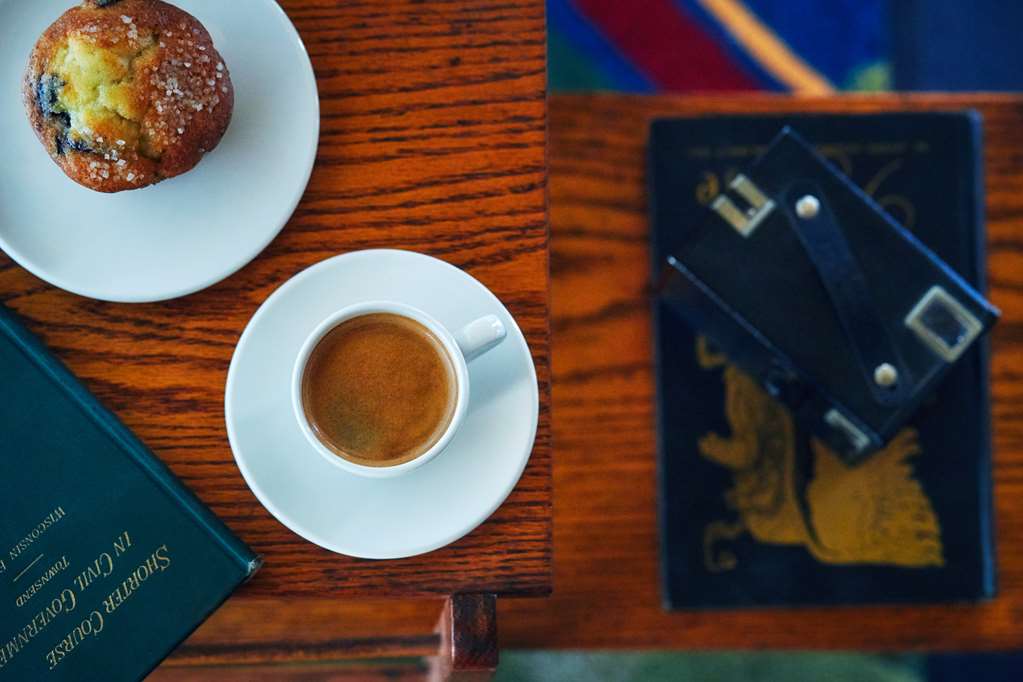
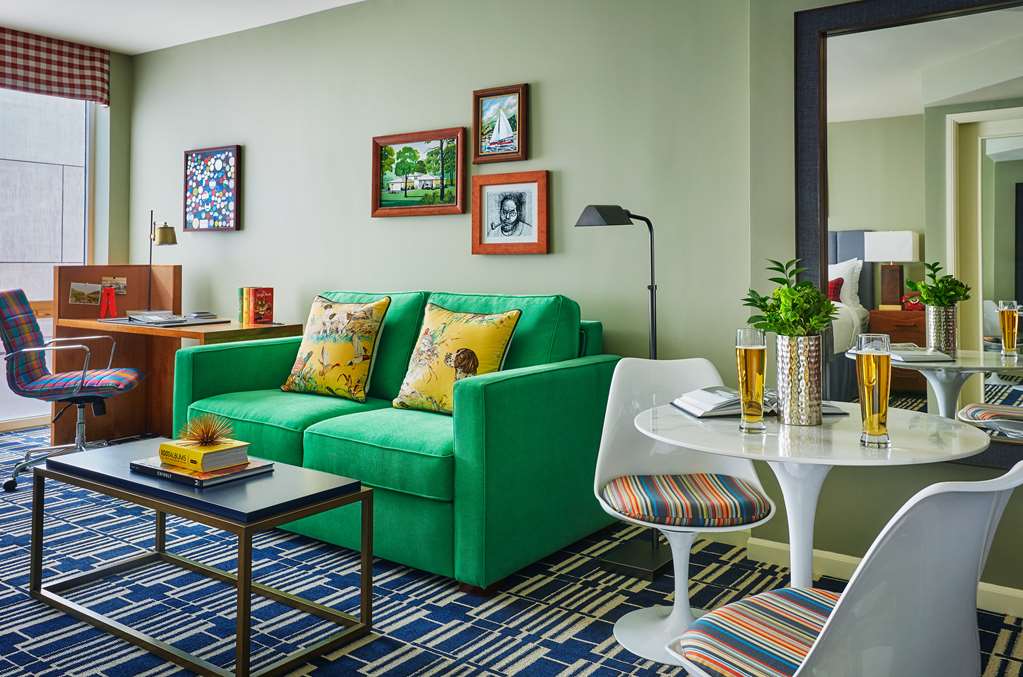
The design idiom is dense, referential and deliberately nostalgic: patterned wallpapers and carpets, saturated colour, collegiate memorabilia, vintage furniture, plaid and pennants and framed ephemera, all of it referring to the university town the hotel sits in. Nothing was left plain.
That is a genuine and coherent design position rather than an accident, and it produces a photographic situation with one dominant characteristic: every background competes.
A patterned wall behind a face is visually active. A saturated colour behind a face throws that colour onto skin when light bounces off it. And a wall covered in framed objects gives the eye a dozen things to look at other than the people.
So the question is not how to photograph it — that is straightforward once understood — but whether the register suits the wedding. A couple who chose it for the maximalism will get pictures unlike anyone else’s. A couple whose styling is minimal and modern will find the building arguing with them in every frame, and no amount of florals overrides wallpaper.
The second thing to understand is that a themed hotel is lit for atmosphere rather than for faces. Levels are low, sources are warm, and the fixtures are themselves decorative — which means the ambient is characterful and inadequate in equal measure.
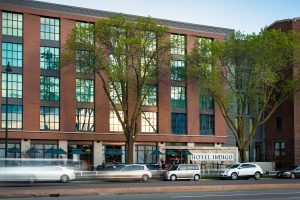
And the third is the location. A downtown hotel on Madison’s isthmus is a few streets from the state capitol and a five-minute walk from two lakes, which is a genuinely unusual urban setting and the building’s best asset once you step outside it.
Madison sits at about forty-three degrees north at roughly eight hundred and sixty feet. The June noon sun reaches around seventy and a half degrees, the December noon sun about twenty-three and a half, days run from about eight hours fifty-five to fifteen hours twenty-five, and civil twilight is roughly thirty-three minutes.
We have not photographed a wedding here. Which spaces are bookable, whether there is a roof terrace and the permitted hours are questions for the hotel.
The Graduate Madison at a glance
| Where | A heavily themed collegiate hotel in downtown Madison, Wisconsin |
| The idiom | Dense, referential, nostalgic — pattern and colour on every surface |
| Suits | A couple who want colour and character, and a winter date |
| Does not suit | Minimal or modern styling, which the building will fight |
| Ask first | Bookable spaces, whether there is a roof terrace, permitted hours |
What it suits
It suits a couple who want the venue to be visible in the photographs, and that is genuinely rare. Most hotels are neutral and most styled weddings supply their own character; here the building supplies more character than the styling will, and for the right couple that is the entire appeal.
The pictures will be warm, dense, colourful and immediately identifiable as somewhere specific. Nobody will mistake them for a ballroom.
It suits colour, obviously and usefully. A maximalist interior gives a photographer saturated backgrounds that require no work — and where a neutral venue needs uplighting to introduce colour, here it is already in the wallpaper. That is worth something to a couple not paying for lighting design.
It suits close work. The most reliable frames in a dense interior are tight ones: a half-length portrait against a patterned wall reads as deliberate, because at that framing the pattern becomes texture rather than competition. And details — a vintage chair, a framed object, a patterned carpet — are strong subjects in their own right and they place the pictures.
It suits the getting-ready sequence particularly well, and this is the thing to plan around. Hotel rooms in a themed property are heavily decorated, which means the morning frames — usually the most visually flat part of a wedding day, taken in a beige room — are here taken somewhere with character. That is a real advantage and it is the part of the day a themed hotel most improves.
It suits a photographer who will bring light, because the ambient will not do it. Low warm levels and decorative fixtures mean nearly every frame indoors is lit — and in a room with pale-ish ceilings and moderate distances, bounce actually works, which after a brick warehouse is a relief.
And it suits a winter date completely. Madison in December gives about eight hours fifty-five of daylight, hard cold, and long stretches of flat grey overcast — conditions that gut a venue dependent on grounds and that an interior-driven hotel does not notice. The building’s best frames are all indoors and all artificial, so a January wedding here costs almost nothing.
The downtown location adds one further thing worth having: the state capitol is a few streets away and both lakes are a five-minute walk. That means a city frame and a water frame are available in the same hour without transport, which very few urban hotels can offer.
What it does not suit
It does not suit minimal or contemporary styling. A couple whose flowers, stationery and dress are restrained and modern will be photographed against plaid, pattern and pennants — and the two registers will fight in every frame. That is the clearest reason not to choose it.
It does not suit a couple expecting the photographs to be quiet. Dense decoration photographs as dense decoration, and the honest product is busy and warm rather than clean and airy.
It does not suit wide frames indoors, and this is the practical limitation. A room where every surface is patterned gives the eye nowhere to rest, so a wide shot of a decorated interior reads as visual noise rather than as a space. The compositions that work are tight; the ones that fail are wide.
That matters for group photographs. A party of twenty against a patterned wall is twenty faces competing with a wallpaper, and the usual answers apply: find the plainest surface in the building, go outside, or use the room’s own architecture — a doorway, a stair, a window wall — to give the frame structure the decoration cannot.
It does not suit anyone relying on the house lighting. Decorative fixtures are chosen to look good in the room, not to light faces — which means low levels, warm colour, and light coming from ornamental lamps at odd heights. Every frame is lit by the photographer.
It does not suit a photographer who has not thought about bounce colour. This is the specific technical trap of a maximalist interior: bouncing a flash off a saturated wall returns that colour onto skin, and a deep green or oxblood wall will tint every bounced frame taken near it.
The fix is to bounce off the ceiling where it is pale, or to go direct through a modifier where it is not — and to check a face rather than assume, because the cast is obvious once seen and invisible until looked for.
It does not suit a large seated reception unless the hotel has a purpose-built ballroom, and a themed boutique property may not. A converted or decorated function room at a boutique hotel is often modest in size, and that is worth establishing rather than assuming.
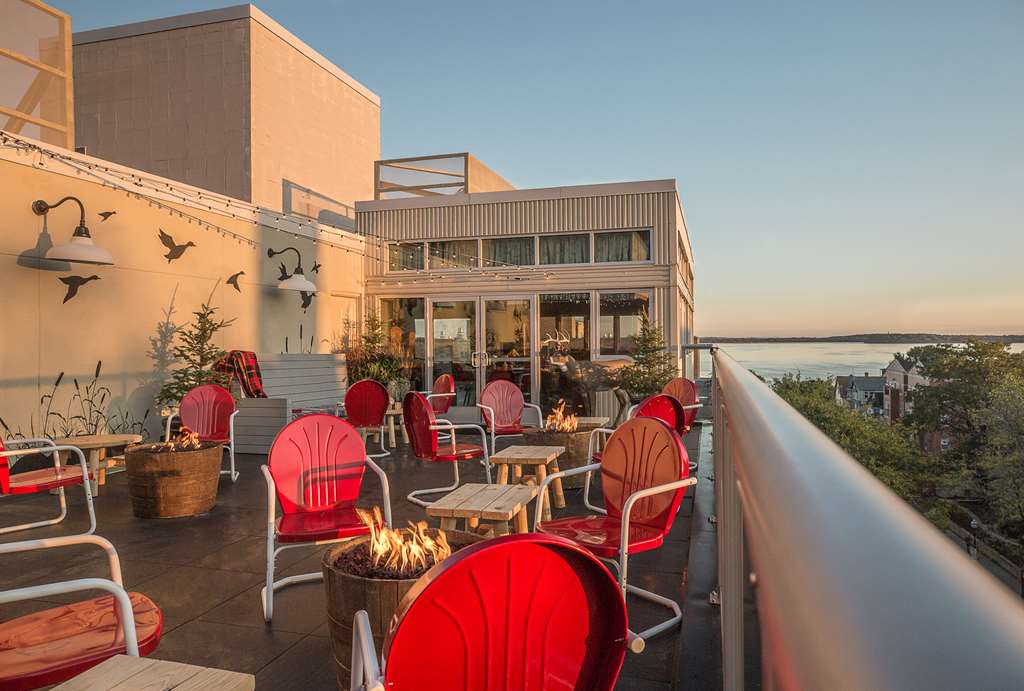
And it does not suit anyone wanting grounds. A downtown hotel has a forecourt and perhaps a roof terrace; there is no landscape. Whatever greenery appears is in containers, and a frame that needs a tree needs a walk.
One last honest note. A themed hotel is a working hotel with other guests, and its public spaces are busy — which means strangers in the background of lobby frames and a photographer being tactical rather than assuming clear backgrounds. That is normal and worth expecting.
- Go tight; wide frames in a patterned room read as visual noise
- Never bounce off a saturated wall — it tints skin. Ceiling or direct
- The getting-ready frames are where a themed hotel most improves a day
- Find the plainest surface in the building before the group photograph
- Ask about a roof terrace — in a downtown it is the only real exterior
Technique, the isthmus and the year
Five things raise a day at a maximalist hotel above the default.
Go tight by default. At half length or closer, a pattern becomes texture and the frame reads as intentional. At full length in a wide room it becomes competition. That single habit does more than any lighting choice.
Bounce off the ceiling, not the walls. Most themed interiors have decorated walls and plainer ceilings, and the ceiling is the surface that will return something close to neutral. Where the ceiling is also decorated, go direct through a modifier and leave the room to be background.
Gel warm and let the room be warm. Decorative fixtures are tungsten or warm LED, and a daylight-balanced flash against them puts a blue-white face in a golden room. A quarter to a half warm gel with a correspondingly warm white balance keeps faces in the room’s own world — and correcting the room toward neutral removes the reason for being there.
Drag the shutter so the fixtures register. The lamps and sconces are a substantial part of what makes the interior look like itself, and a frame exposed only for flash renders them dark and the room anonymous. A thirtieth to a sixtieth on a wide lens.
And add a rim. In a busy interior a subject lit only frontally merges into the pattern behind them, and a rim at about a stop over the key on the far shoulder lifts them clear. In a maximalist room this matters more than in a plain one, not less.
Outside, the isthmus is the building’s real asset and it is worth planning two excursions rather than one.
Madison’s downtown sits on a strip of land perhaps half a mile wide between Lake Mendota and Lake Monona, with the state capitol on the high point. That means water is a five-minute walk in either direction from anywhere central, and the capitol is a legible architectural subject a few streets away.
A pale granite dome is a specific exposure problem — a bright object with a narrow tonal range that blows easily — so expose for it and let the sky fall where it falls, because a blown dome has no ribs to recover.
The two lakes face opposite ways, which is the geographical gift: Mendota to the north-west gives the sunset, Monona to the south-east gives the sunrise. One of them always has the sun behind it.
Water reflects the sky and acts as a large low-angle source, filling under the chin and lifting eye sockets — strongest at grazing angles, so the last hour. And a low camera turns a rippled surface into a bright specular path running toward the lens, which is worth dropping to knee height for.
The year ranks clearly. Late September into mid-October is the best window: the hardwoods turn — sugar maple to scarlet and orange, oak to russet, basswood to yellow — the air reaches its clearest, and the lakes are still mild and often calm.
Summer is long-lit at fifteen hours twenty-five and humid enough to fill shadows by about a stop and a half against a dry climate, with hazier distances.
Spring is the weakest season at this latitude — cold, late, grey, the lakes at their coldest and the trees not yet leafed — and April in Madison is a difficult date.
Winter is where this venue earns its place. Eight hours fifty-five of December daylight, hard cold and flat overcast are irrelevant to an interior-driven hotel, and both lakes freeze substantially in most winters — which gives a genuinely distinctive frame across flat white ice toward the capitol, if anyone is willing to stand in it for ten minutes.
Civil twilight here runs about thirty-three minutes, among the longer figures in this library, which makes the blue hour a real working session rather than a scramble. In December it arrives around five, comfortably before the reception; in June near nine-thirty, after dinner.
More frames from The Graduate Madison
The Graduate Madison wedding photography: common questions
What is the core question with this venue?
Whether the register suits the wedding. The decoration is total, and a minimal or modern styling will fight it in every frame.
What is the default technique?
Go tight. At half length or closer a pattern becomes texture; at full length in a wide room it becomes competition.
Can I bounce flash here?
Off the ceiling, yes. Off a saturated wall, no — it returns that colour onto skin, and a deep green or oxblood wall tints every bounced frame near it.
Where does a themed hotel most help?
The getting-ready sequence. Those frames are usually taken in a beige room; here they are taken somewhere with real character.
Where do group photographs go?
The plainest surface in the building, outside, or somewhere with architectural structure — a stair, a doorway, a window wall.
Does it suit winter?
Completely. The best frames are all interior and artificial, so eight hours fifty-five of grey December daylight costs almost nothing.
More Madison, WI venue guides
We are writing a photographer’s guide to every venue we would happily shoot in Madison, WI. Here are three more, plus the full index:
- The Hotel Indigo Madison: What It Suits, and What It Does Not
- The Madison Club, Madison: The Venue’s Own Logic
- The Madison Museum of Contemporary Art: One Frame, and How It Is Made
Planning a wedding at The Graduate Madison?
A building with more character than your florals. Tell us your date.