 Roxy’s Downtown: Photographing a Small Stage Room
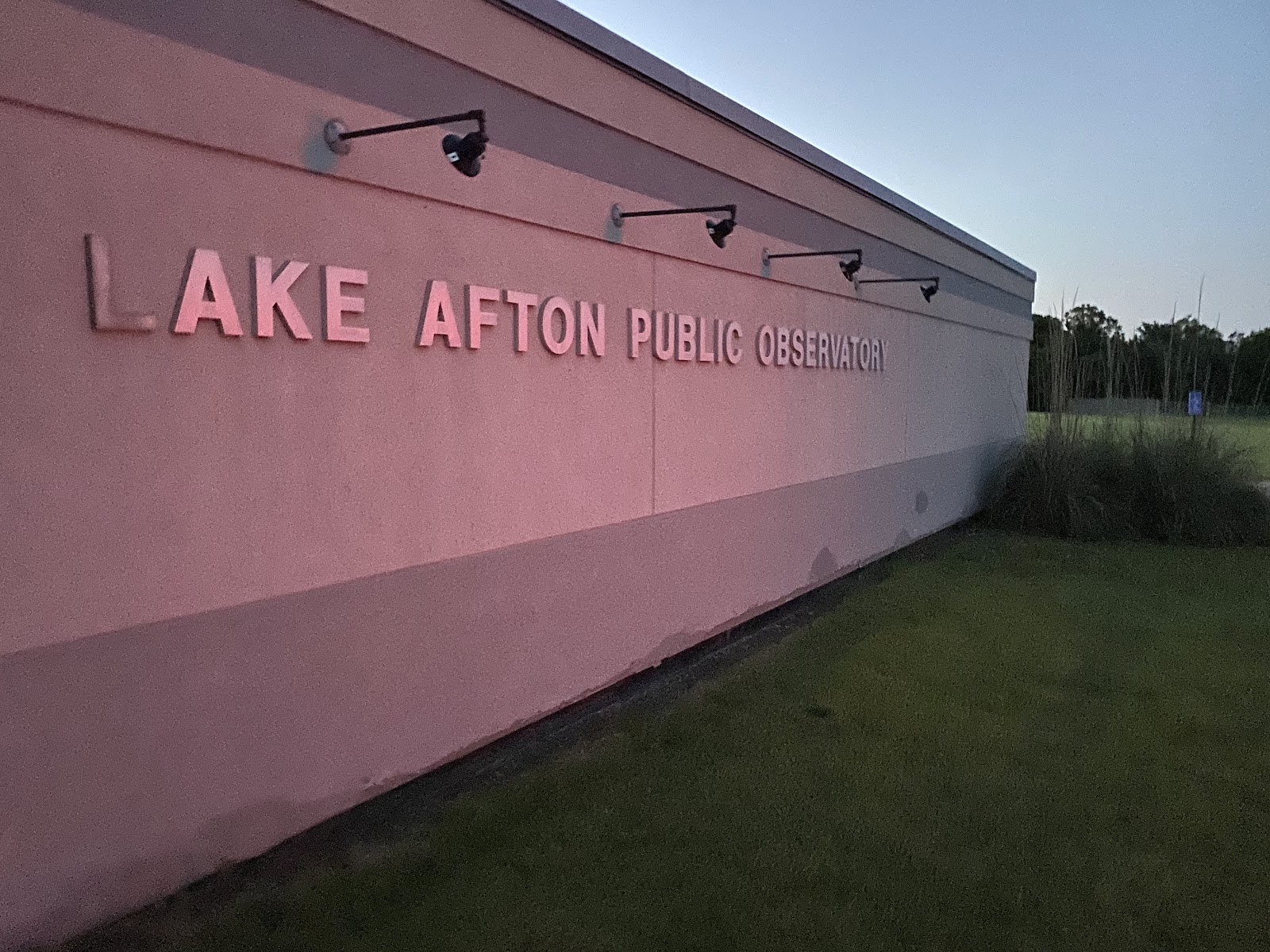
The Lake Afton Observatory, Goddard: One Frame, and How It Is Made
One frame: an open dome, a couple, and the sky through the slit.
This guide is about a single photograph, and it depends on a building feature that exists almost nowhere else: a roof that opens.
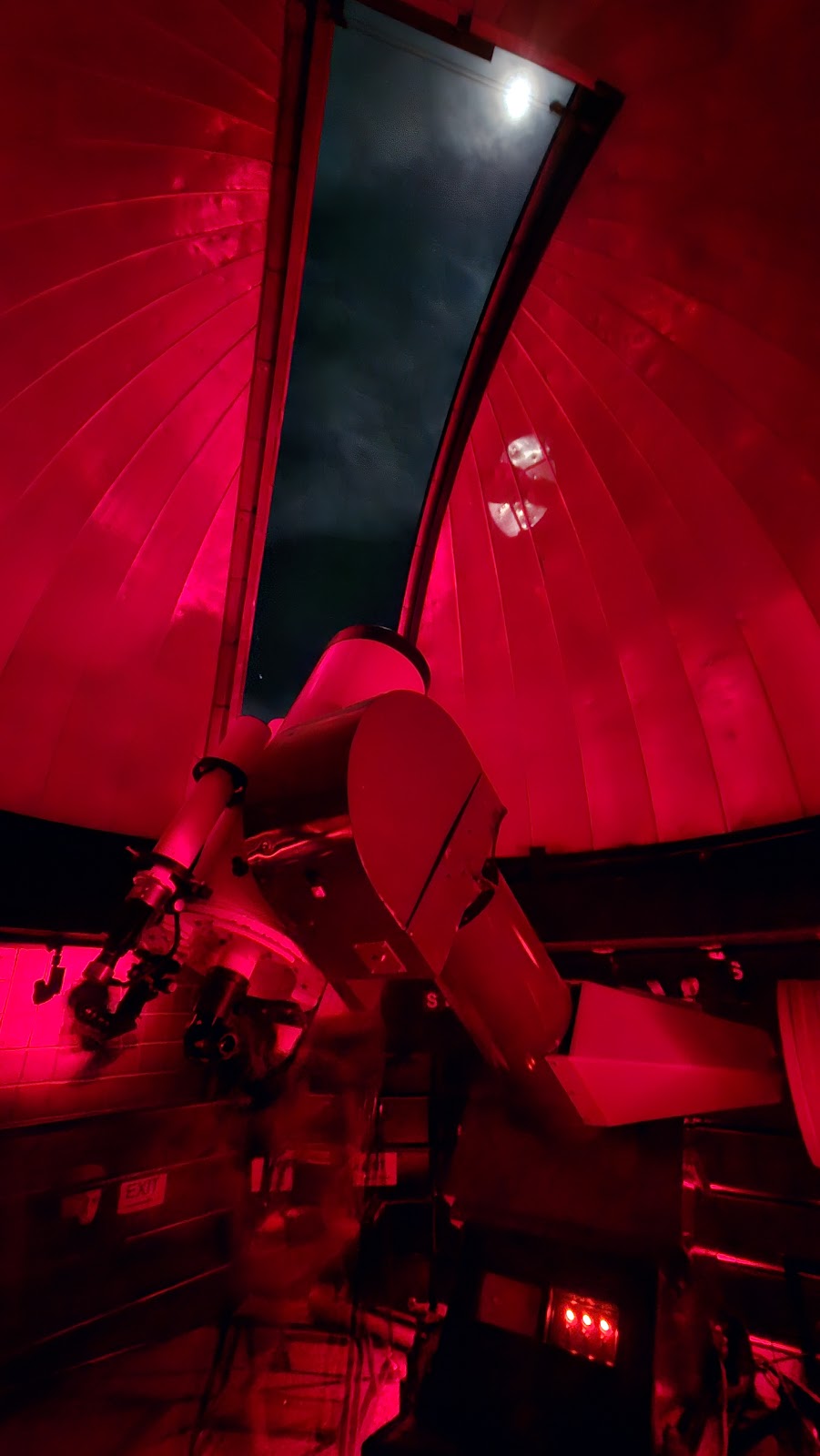
An observatory dome is a hemisphere with a shutter — a slit that slides open to expose a section of sky to the telescope. When it is open at night, the interior of the dome contains a bright rectangle of stars in an otherwise pitch-black room.
The frame is the couple inside the dome, lit by one controlled source, with the open slit and the night sky visible above and behind them.
It is difficult for a specific reason that is worth stating precisely: the sky through the slit is dark, but it is not black — it holds stars, and stars require a long exposure to register. Meanwhile the couple require a short one, because people move.
That conflict is the whole technical problem. A single exposure cannot give thirty seconds to the sky and a two-hundredth to the people, so the frame has to be built rather than taken.
The site helps in one important respect. This is rural Kansas, on the plains west of Wichita, and the sky here is genuinely dark — far darker than any metropolitan venue in this library. An observatory is sited for exactly that reason, and it means the stars through the slit will actually be there to photograph.
The building’s other feature is that it is designed to exclude light entirely. Astronomy requires darkness, so the interior has no windows worth the name, dark surfaces, and red-filtered working lights — which are chosen to preserve night vision and which are a colour problem discussed below.
Goddard sits at about thirty-seven and three-quarter degrees north at roughly fourteen hundred and fifty feet, west of Wichita on the Kansas plains. Days run from about nine hours forty to fourteen hours forty, and civil twilight is roughly twenty-eight minutes — relatively short.
We have not photographed a wedding here. Whether the dome can be opened for an event, what the site permits and the hours are questions for their staff — and the first decides whether this guide applies at all.
The Lake Afton Observatory at a glance
| Where | A public observatory on the plains west of Wichita, Kansas |
| The frame | The couple inside the dome with the open shutter slit and stars above them |
| The difficulty | Stars need thirty seconds; people need a two-hundredth |
| The advantage | Genuinely dark rural sky — an observatory is sited for that |
| Ask first | Whether the dome can be opened for your event at all |
Building the frame
There are two ways to make this photograph and they give different results. Both are legitimate; the first is simpler and the second is better.
**The single-exposure version.** Set an exposure long enough for the stars to register — twenty to thirty seconds at a wide aperture and a high ISO — and freeze the couple with a single low-power flash fired during it.
The star limit is the constraint. Stars trail visibly once the exposure exceeds roughly five hundred divided by the focal length in full-frame terms, so a 20mm lens allows about twenty-five seconds and a 14mm about thirty-five. Beyond that the points become short lines, which at small reproduction sizes reads as softness rather than as motion.
So: the widest fast lens available at or near maximum aperture, twenty to twenty-five seconds, ISO somewhere between 3200 and 12800 depending on the camera. Focus manually on a bright star using live view magnification, then do not touch it — autofocus will not work in the dark and will hunt.
The flash must be brief, off-camera, at about forty-five degrees, warm-gelled, and at low power. Fire it near the start of the exposure and tell the couple to hold still for two seconds only, which is entirely achievable when they know it is coming. Twenty-five seconds of stillness is not; two seconds is.
The weakness of this version is the dome interior. At an exposure set for stars, the dome’s own structure will be almost invisible unless it catches some of the flash, and the frame can read as two people floating in blackness.
**The blended version.** Two exposures from a locked-off tripod: one for the stars and the dome at twenty-five seconds, one for the couple at a two-hundredth with the flash. Combined afterwards, that gives a fully rendered dome, correct stars and a sharply lit couple.
That is more work and it is the stronger picture, because the dome’s ribs and shutter mechanism are the thing that makes the frame an observatory rather than a night portrait. If the couple are willing to stand still for one frame and then hold a pose for a second frame, it is straightforward.
The composition matters more than the technique. Place the couple off-centre and the slit off-centre, not both in the middle — a dome is a circle and a centred subject under a centred slit is static. Better is the couple to one side with the slit’s bright rectangle cutting diagonally above them, which gives the frame direction.
And include the ribs. A dome’s interior is structured with radiating ribs and a track for the shutter, and those converge toward the apex — which is a strong graphic pattern and the thing that identifies the building. A camera low, looking up past the couple toward the slit, catches both.
Two practical matters. The moon governs whether this works at all: a full moon washes the sky out and the stars disappear, while a new moon or a moon that has set gives the full display. That is fixed a year in advance and a date chosen near a new moon is worth more than any equipment.
And the season governs what is up there. The galactic core — the bright structured part of the Milky Way — is visible from this latitude between roughly March and October, high in the south in June and July, which is the ideal case. In winter the sky is darker and clearer but the core is absent, so the frame is stars rather than Milky Way.

The rest of the building, and the lake
The dome frame is the one this guide is about; the rest of the site needs handling and is more conventional.
The interior is dark by design and the working lights are red. Red filtering preserves dark adaptation, which is why astronomers use it, and it is a genuine problem for a camera: red light illuminates only the red channel, which means a face lit by it has no information in green or blue and cannot be corrected to a normal skin tone. It is not a colour cast; it is missing data.
So there are two options and no middle. Commit to it, letting the frame be monochromatic red, which is atmospheric and honest to the place. Or bring your own white light for anything that needs normal colour, and accept that doing so spoils anyone’s dark adaptation for the next twenty minutes — which matters if a telescope session is part of the event and is worth asking about.
For the practical portraits, bring light. A single source through a modifier at forty-five degrees plus a rim behind is the whole plan, and the rim matters more than usual because the surroundings are near-black and a frontally lit subject loses their edges entirely.
Bounce is unavailable. Dark surfaces are the point of the building, so nothing returns usable light and every frame works direct.
Drag the shutter only if there is something worth registering. In a room lit solely by red working lights, dragging the shutter adds red to the frame and little else — so unless the red is wanted as an effect, a shorter shutter and a clean flash-lit frame is better here than the usual advice.
The telescope itself is a subject and it is worth a deliberate frame. A large instrument on a mount is a strong mechanical object, and raking a light across it at a shallow angle picks out its structure — the tube, the mount, the counterweights — where flat light renders it as a grey cylinder. A couple beside it, small, gives scale.
Outside, the lake is the site’s other asset and it changes what the evening can do. Water reflects the sky, which at night means it doubles whatever is above it — and a lake under a dark rural sky with a lit dome beside it is a frame that no urban observatory could produce.
Whether the water is still is a matter of wind, and in Kansas that is a real question. This is among the windiest states in the country, with average speeds well into double figures and very little to interrupt them — so a mirror surface is luck rather than schedule. Broken water still works: a low camera turns a rippled surface into a path of reflected light running toward the lens.
The wind matters more than that, though, and it governs equipment across the whole site. Never put a modifier on an unweighted stand anywhere on open plains ground; a softbox is a sail and it will go over. Hand-held with a braced assistant is the only reliable method, and a five-hundredth of a second for anything with hair or fabric in it.
The daytime frames are plains frames and the honest summary is that the landscape is open, flat to gently rolling, largely treeless away from the water, and offers very little shade. A grove along the lake shore will be the only cover — cottonwood most likely, the Kansas state tree, broad-crowned with leaves that rustle audibly — and finding it on arrival is worth five minutes.
Kansas humidity does soften the midday sun compared with a dry climate: water vapour scatters light and fills shadows, so contrast runs perhaps a stop and a half lower than the desert at the same angle. But at seventy-five degrees of sun elevation in July on open ground, a portrait still wants the trees or a carried diffuser.
- A date near a new moon is worth more than any equipment
- Five hundred divided by the focal length is the shutter limit before stars trail
- Two seconds of stillness with a flash, not twenty-five
- Include the dome’s ribs — they are what identifies the building
- Red working light has no green or blue data; commit to it or bring white light
Why the site works, and the year
It is worth being explicit about why a rural observatory can make this frame when a city venue cannot, because the reasoning is not intuitive.
Light pollution does not simply make the sky brighter — it raises the noise floor of the exposure in a way that cannot be corrected afterwards. In a moderately light-polluted sky, the ambient glow reaches a usable exposure in three or four seconds, long before the faint structure of the Milky Way has accumulated enough signal to separate from it.
So a bright sky does not give a dimmer Milky Way. It gives none at all, because the structure sits below the noise. That is why the difference between a suburban site and a genuinely dark one is categorical rather than incremental, and why an observatory is built where it is.
Rural Kansas delivers on that. Away from Wichita the plains are sparsely populated with little between the ground and the horizon, and the sky is dark enough that the Milky Way is visible to the naked eye on a clear moonless night.
The plains also give one meteorological advantage that is easy to overlook: very long sightlines. With a flat horizon in every direction, weather is visible a long way off — which means a clearing sky can be anticipated rather than hoped for, and a night session can be planned around a front that has already passed.
The seasons divide sharply for an astronomical frame.
Autumn, from late September into November, is the best window overall. The storm season has ended, the air is at its clearest of the year, the nights are lengthening, and the prairie grasses around the site turn copper and bronze and hold that colour for months. Nights are cool rather than cold.
Winter gives the darkest and clearest skies of the year — cold air holds less moisture, which means better transparency — with a nine-hour day, real wind and genuinely cold nights. The galactic core is absent, so the frame is stars and constellations rather than Milky Way structure. A wedding party standing in an open dome in a Kansas January will be cold, and that is not a small consideration.
Summer puts the Milky Way high in the south by full dark, which is the ideal case for the signature frame — but it arrives late, because civil twilight in late June does not end until well after nine, and full astronomical darkness later still. So a summer version of this frame happens near eleven at night, which needs the couple briefed and willing.
Spring is the season to be careful with. April into June is Great Plains storm season, and an observatory site on open ground is exposed. The cloud that makes storms also removes the stars, so the astronomical frame is unreliable — and a supercell here is a genuine hazard rather than an inconvenience, which means a shelter plan and someone watching the radar.
One closing practical note that applies all year. The dome shutter is a mechanical system operated by the observatory’s own staff, and whether it can be opened for a wedding at all is entirely their decision — it depends on weather, wind, the instrument’s condition and their willingness. Asking early is essential, because if the answer is no then the frame this whole guide describes does not exist, and the venue becomes a dark room beside a lake.
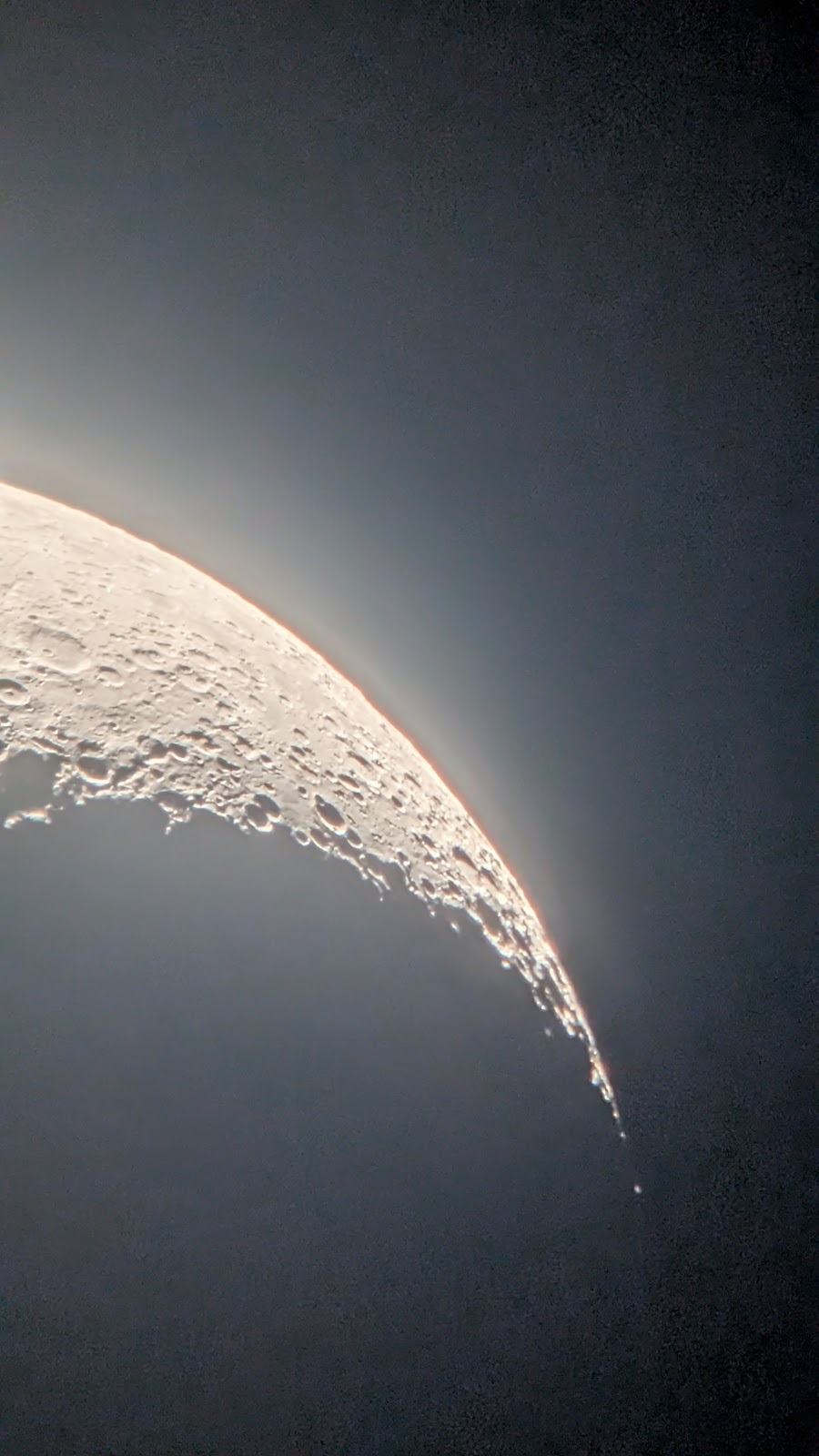
More frames from The Lake Afton Observatory
The Lake Afton Observatory wedding photography: common questions
What is the frame here?
The couple inside the dome, lit by one source, with the open shutter slit and real stars above and behind them.
Why can't it be one exposure?
Stars need twenty-five seconds and people need a two-hundredth. Either fire a brief flash inside a long exposure, or blend two frames from a locked-off tripod.
How much does the moon matter?
More than anything else. A full moon erases the stars entirely; a new moon or one that has set gives the full display. Phase is fixed a year ahead.
Why is red working light a problem?
It illuminates only the red channel, so a face lit by it has no green or blue data at all. That is missing information, not a correctable cast.
Why does a dark rural site matter so much?
Skyglow raises the exposure’s noise floor. In a bright sky the ambient reaches exposure before faint structure accumulates, so the Milky Way is absent rather than dim.
What should I ask first?
Whether the dome can be opened for your event. It is the staff’s decision and depends on weather and the instrument — and without it this frame does not exist.
More Kansas venue guides
We are writing a photographer’s guide to every venue we would happily shoot in Kansas. Here are three more, plus the full index:
- The Prairie Rose Chuckwagon Supper, Benton: What It Suits, and What It Does Not
- The Regier Farm, Hillsboro: Field Notes
- The Sand Creek Station, Goddard: The One Decision That Governs Everything
Planning a wedding at The Lake Afton Observatory?
A roof that opens onto a dark sky. Tell us your date.