 Roxy’s Downtown: Photographing a Small Stage Room
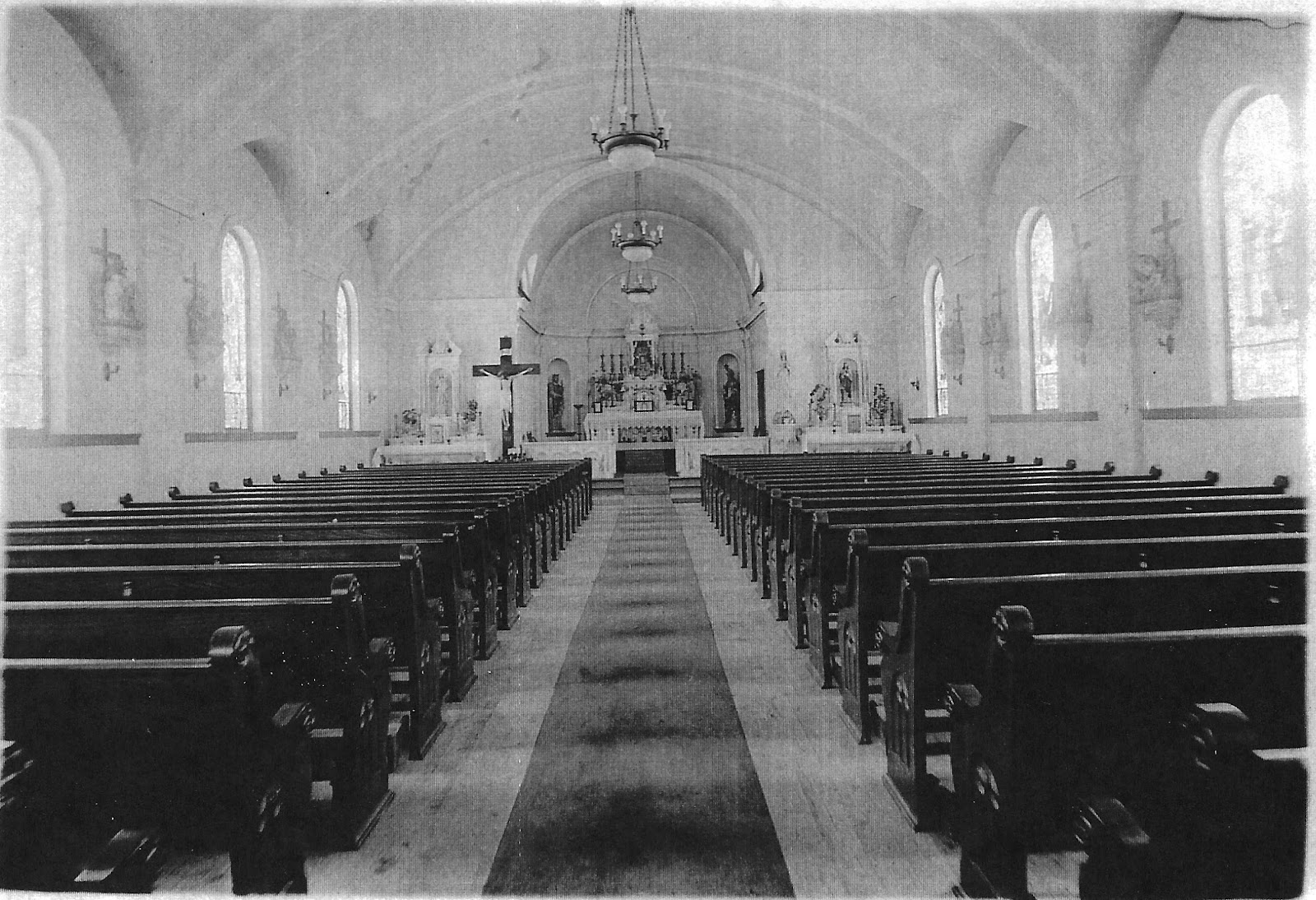
The Historic Elmdale Church, Elmdale: The Venue’s Own Logic
Built once, plainly, by people who could afford it once.
A small rural church has a logic and it is economic before it is architectural.
A prairie community of a few hundred people built one church, subscribed for by its congregation, using local materials and local labour, and then kept it for a century and a half without substantially altering it. There was never money for a second phase.
That produces a building of a very particular kind: small, plain, structurally simple, and almost entirely original. No Victorian re-ordering, no mid-century extension, no modern lighting scheme imposed over the old one. What is there is what was built.
For a photographer that is unusually good news, because the light in such a building is the light it was designed to have — and nineteenth-century church design assumed no electricity.
The consequence is that the windows are the whole lighting scheme, and they are generous relative to the floor area. A small church needed enough daylight to read a hymn book by at any hour of a service, which means tall openings along both long walls and often a window behind the altar.
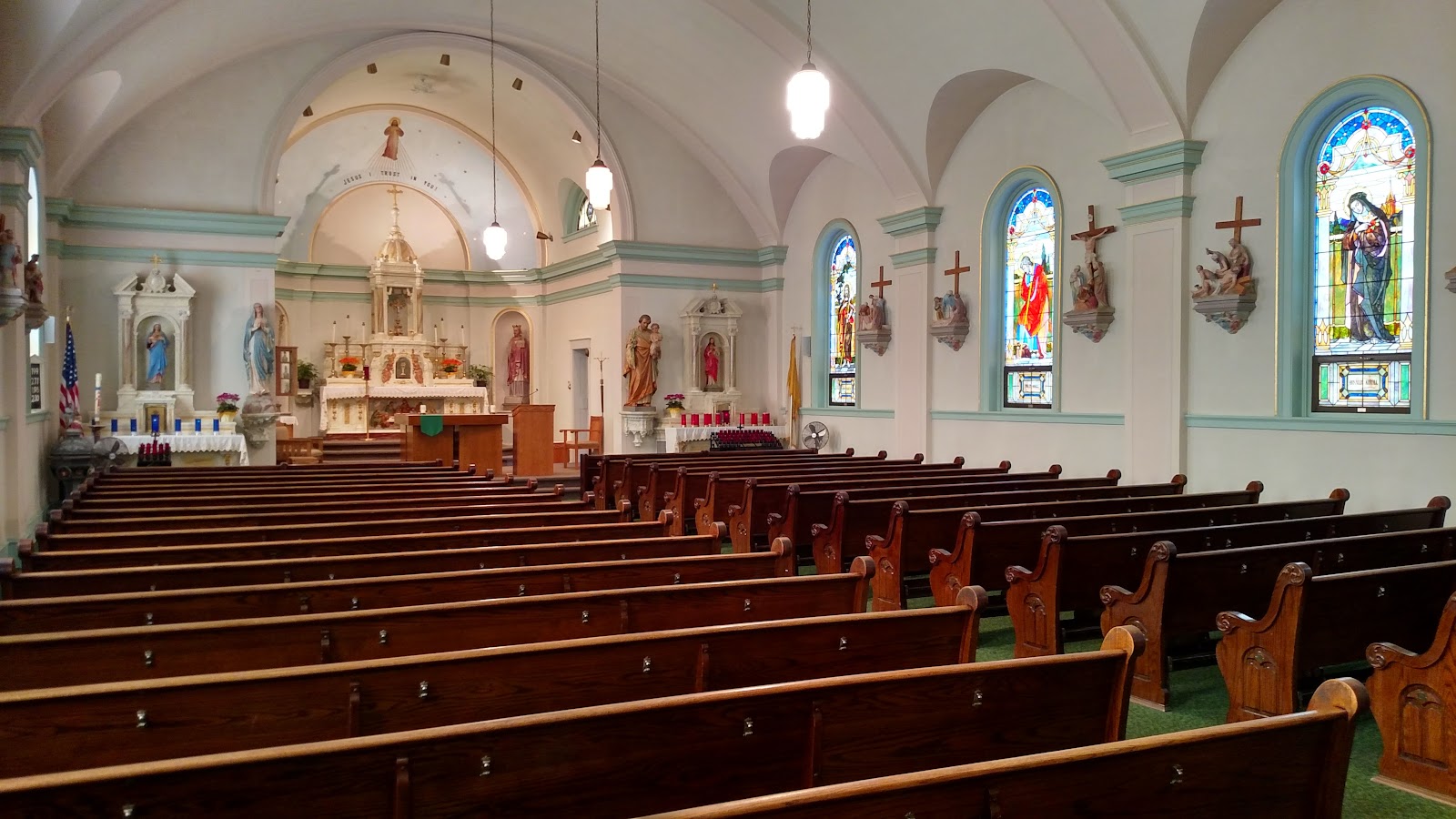
Two long walls of windows means cross-light: a subject can be placed to take a key from one side and a fill from the other with nothing added at all. That is the best unassisted portrait condition in this library and it is available in almost any small church.
The second consequence of building once is the material. In the Flint Hills the local material is limestone, because the tallgrass prairie is treeless except along its creeks and timber had to be freighted in — so a rural church here is very often cut stone, pale and warm-toned and strongly textured.
And the third is scale. This building holds perhaps sixty or eighty people on its benches, which is the honest capacity, and the photographic capacity is lower still.
Elmdale sits at about thirty-eight and a half degrees north at roughly eleven hundred and fifty feet in Chase County. The June noon sun reaches around seventy-five degrees, the December noon sun about twenty-eight and a half, days run from about nine hours forty to fourteen hours forty-five, and civil twilight is roughly twenty-nine minutes.
We have not photographed a wedding here. The real capacity, what is included and the permitted hours are questions for whoever manages it.
The Historic Elmdale Church at a glance
| Where | A small historic church in Elmdale, Chase County, Kansas |
| The logic | Built once, plainly, in local material, and never substantially altered |
| What that gives | Windows on both long walls, and therefore free cross-light |
| The material | Flint Hills limestone — the prairie is treeless, so stone was local |
| The limit | Sixty or eighty on the benches; fewer than that photograph well |
The cross-light, and how to use it
The single most useful thing to understand here is that the building gives you a two-light setup for free, and most photographers never notice it.
With tall windows along both long walls, any position in the nave receives light from two opposing directions. One side will be brighter — whichever faces the sun at that hour — and the other will be filling. The ratio between them is typically somewhere between two and four to one depending on the hour and the weather, which is close to ideal for a face.
The technique is to find which wall is brighter, turn the subject three-quarters toward it, and expose for the lit cheek. The opposite window opens the shadow side just enough that it retains detail, and the result has clear modelling with no black shadows and no equipment whatsoever.
That ratio is adjustable by position rather than by settings. Standing closer to the bright wall increases it; standing in the centre of the nave reduces it; standing closer to the fill wall reverses it. Walking a couple two metres across the aisle is a lighting change.
Orientation decides the hours and it is the thing to establish on arrival. A church oriented with its long walls running north and south gets sun on one side in the morning and the other in the afternoon, which means the good side swaps at midday. One running east and west gets much less direct sun on either long wall and correspondingly softer, more even light all day — which is the easier condition and the duller one.
The altar window, where there is one, is the building’s hardest element. A window directly behind where the couple will stand puts them in silhouette against a source four or five stops brighter than their faces.
The three answers are the usual ones and the first is under-used. Expose for the window and let them silhouette, which in a small church with a simple traceried window is a strong graphic frame and technically trivial. Expose for their faces and let the window blow, accepting it as a bright shape. Or bridge the gap with a source on them at about a stop and a half under the window’s exposure, which in a small building is easily done with one light.
If the glass is coloured, the cast is the issue rather than the brightness. Light through stained glass takes that colour completely, so a face standing in a red or gold patch is lit red or gold and no white balance recovers it without wrecking the rest of the frame. Either commit to the patch deliberately or keep faces out of it and photograph the patch separately.
In a small church those patches move visibly within the length of a ceremony, and they are predictable: a south-facing window throws its patch across the floor and onto the opposite wall through the middle of the day, travelling as the sun moves. Fifteen minutes spent working out where it will be at the vows is worth more than any technique.
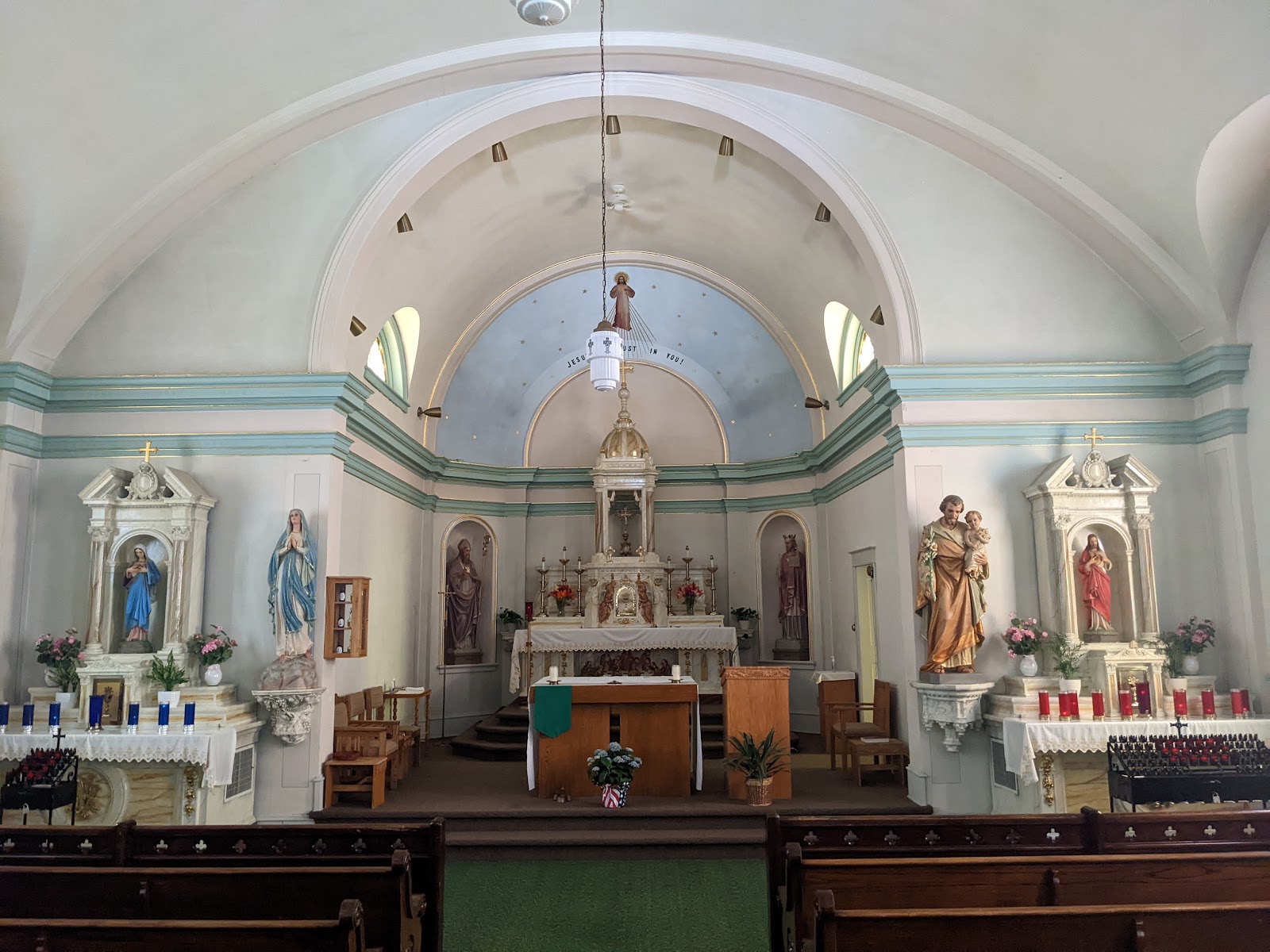
The benches are the composition. A small church’s fixed pews give a strong receding rhythm either side of a central aisle, and a camera low on the aisle’s centre line renders that symmetrically — which is a frame the architecture hands you, and which collapses into an ordinary diagonal half a metre off axis.
The roof structure is worth looking up at. A rural church of this date often has exposed trusses or a boarded ceiling following the pitch, and a wide lens from low on the centre line renders it converging toward the altar. It says what kind of building this is more clearly than any wall does.
One honest caution about scale. A small church interior is genuinely small, which means a photographer cannot stand far back — so a wide lens is the only option for anything containing the room, and a wide lens at close range distorts whoever is nearest the frame edge. Keep faces away from the corners.
The stone, the village and the prairie
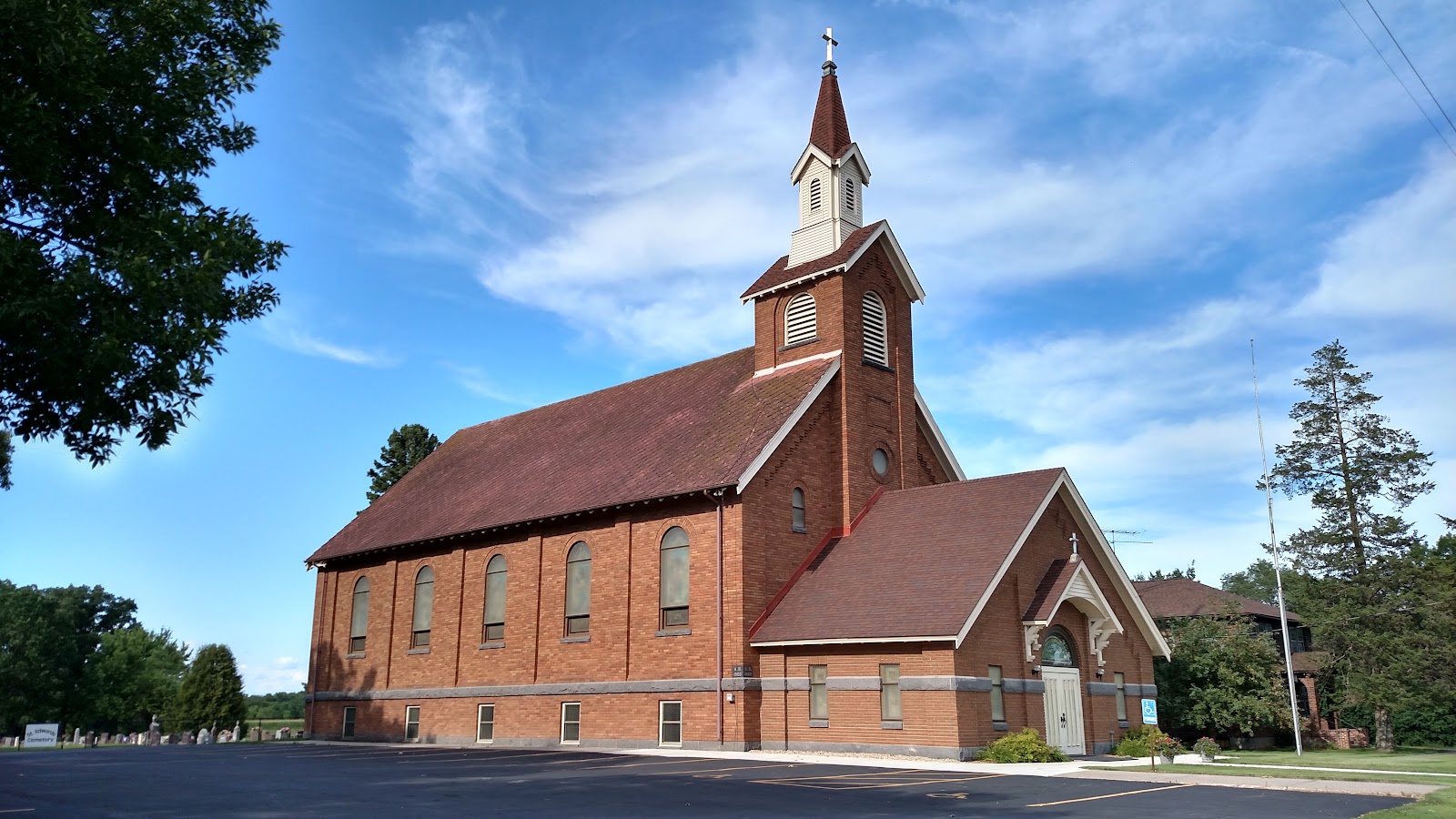
Outside, limestone is the subject and it has one requirement: raking light.
Cut limestone is pale, warm-toned and textured with visible tool marks and bedding planes, and under a frontal midday sun all of that flattens into an even pale field with no modelling at all. Under a low sun across the face, every course separates, the window reveals gain depth, and the colour goes from grey-buff to genuine honey.
So the exterior is a first-hour or last-hour subject, emphatically. That is worth building the day around rather than discovering at four in the afternoon.
Keep the camera square on the facade. A simple symmetrical elevation photographed with the camera tilted up converges the verticals and the building leans back, which on a plain gable front is immediately obvious. Keep the sensor plane parallel and raise the camera instead, or correct afterwards and accept the crop.
The doorway is the best single detail. A church door in a stone surround is a strong frame, and a couple standing in one is both framed and separated from the surroundings — and at close range the modest scale reads as appropriate rather than small. One of those per wedding.
If there is a bell tower or a spire, it wants a long lens from distance rather than a wide one from close. Compression brings it forward against the sky; a wide lens from the churchyard renders it small above a great deal of foreground.
The village around it is a Flint Hills settlement of a few hundred people, which means the setting is open, quiet and largely free of the modern intrusions that complicate a town frame. Parked vehicles are the exception and in a place this size it is usually possible to find an angle or an hour with none — early morning most reliably.
Overhead power lines are the other thing to watch, and they are invisible in a viewfinder and glaring in an edit. Look up before committing to any wide exterior.
The prairie is immediately beyond, and it is the setting that makes this building what it is. The Flint Hills roll away in rough grass with limestone benches breaking through the slopes, and a frame that places a small stone church against open prairie says more about it than any interior detail — a single built thing in a landscape with almost nothing else in it.
That frame wants the building small and the grass and sky large, which is the opposite of the instinct. A church filling the frame is a picture of a church; a church occupying a fifth of the frame with prairie around it is a picture of a prairie church.
The grass is a subject in its own right and its behaviour is worth knowing. Tallgrass species — big bluestem above all — reach six to eight feet by late summer, and the colour cycle runs opposite to trees: green through summer, then copper, bronze and russet from October, and that colour holds all winter because the dead growth stands until it burns in spring.
So this landscape has warm ground colour for five months rather than two weeks, which makes late autumn and winter far more photogenic here than in wooded country.
The wind is the constant. Kansas is among the windiest states, with average speeds well into double figures and little to interrupt them on open ground — which means a modifier never goes on an unweighted stand, a five-hundredth of a second is the default for hair and fabric, and tallgrass in wind moves as travelling waves that can be frozen as texture or blurred at a thirtieth into flowing bands.
The seasons: late September into October is the best window, with grass at full height and turning, storm season over and the clearest air of the year. May and early June give green grass and wildflowers with a real risk of severe weather — Great Plains storm season, where a supercell is a hazard rather than an inconvenience and an outdoor plan needs genuine shelter. Midsummer is hot and humid with a difficult midday. And March into April brings the controlled burns that maintain the prairie, producing a black landscape for a week or two and, on burn days, smoke haze that no forecast mentions.
- Find the brighter wall and turn them three-quarters toward it — the other wall fills
- Walking two metres across the aisle is a lighting change
- Limestone only reads in raking light: exterior at the ends of the day
- Shoot the church small in the prairie, not filling the frame
- Look up for power lines before any wide exterior
Size, and what it suits
The practical question here is capacity, and it needs to be separated into two numbers.
The seating capacity is how many people fit on the benches. The photographic capacity is how many can be present while a photographer still has somewhere to stand, an aisle to move along and a background that is not the backs of guests’ heads.
In a small rural church those numbers are quite different. A building seating eighty leaves a photographer pressed against the back wall with a wide lens and no choice of position — which produces competent coverage of a full room and very little else.
At forty, the same building has room to work: positions to choose, the aisle clear, the windows usable, and backgrounds that are architecture rather than people. That is the headcount this kind of venue is genuinely good at, and it is worth being honest about.
It suits a small wedding extremely well for that reason, and the free cross-light means the pictures will be good with almost no equipment — which is a real advantage for anyone whose budget does not extend to a heavily-lit production.
It suits a party that wants the building to be plain. A rural prairie church is austere by construction rather than by design choice, and a couple who want that register will get coherent pictures. One who wants grandeur is in the wrong building, and no amount of styling makes a small stone church read as a cathedral.
It suits the shoulder seasons and even the winter, because the interior light is daylight and daylight in a two-window-walled building is adequate under overcast. A grey Kansas day gives soft even cross-light, which flatters faces and needs nothing — so the weather that ruins an outdoor venue is close to neutral here.
It does not suit a large wedding, and the constraint is physical rather than administrative.
It does not suit a reception, unless there is a hall attached. A church is a ceremony space, and a prairie village of a few hundred people may not have an obvious second venue within easy distance — which is worth establishing early, because a beautiful ceremony followed by a forty-minute drive is a different day from one where both happen in one place.
It does not suit an evening event, if the original lighting is all there is. A building constructed before electricity and never substantially rewired may have minimal artificial lighting — a few pendant fixtures at best — which means after dark the interior is genuinely dim and every frame is lit by the photographer.
That is worth asking about specifically, because it decides whether an evening ceremony is a candlelit atmosphere or a lighting problem.
And it does not suit anyone who needs facilities. A small rural church may have very limited provision for changing, catering or anything else, and that is a practical planning matter rather than a photographic one — but it affects the day, and a photographer who knows there is no getting-ready room will plan the morning somewhere else.
One closing note. A building kept by a small community for a century and a half is usually maintained by volunteers who care about it a great deal. Asking what may and may not be moved, leaned against or lit is both courteous and useful — and the person who unlocks the door will often know exactly which window throws the best patch and at what hour, which is information no amount of scouting gets faster.
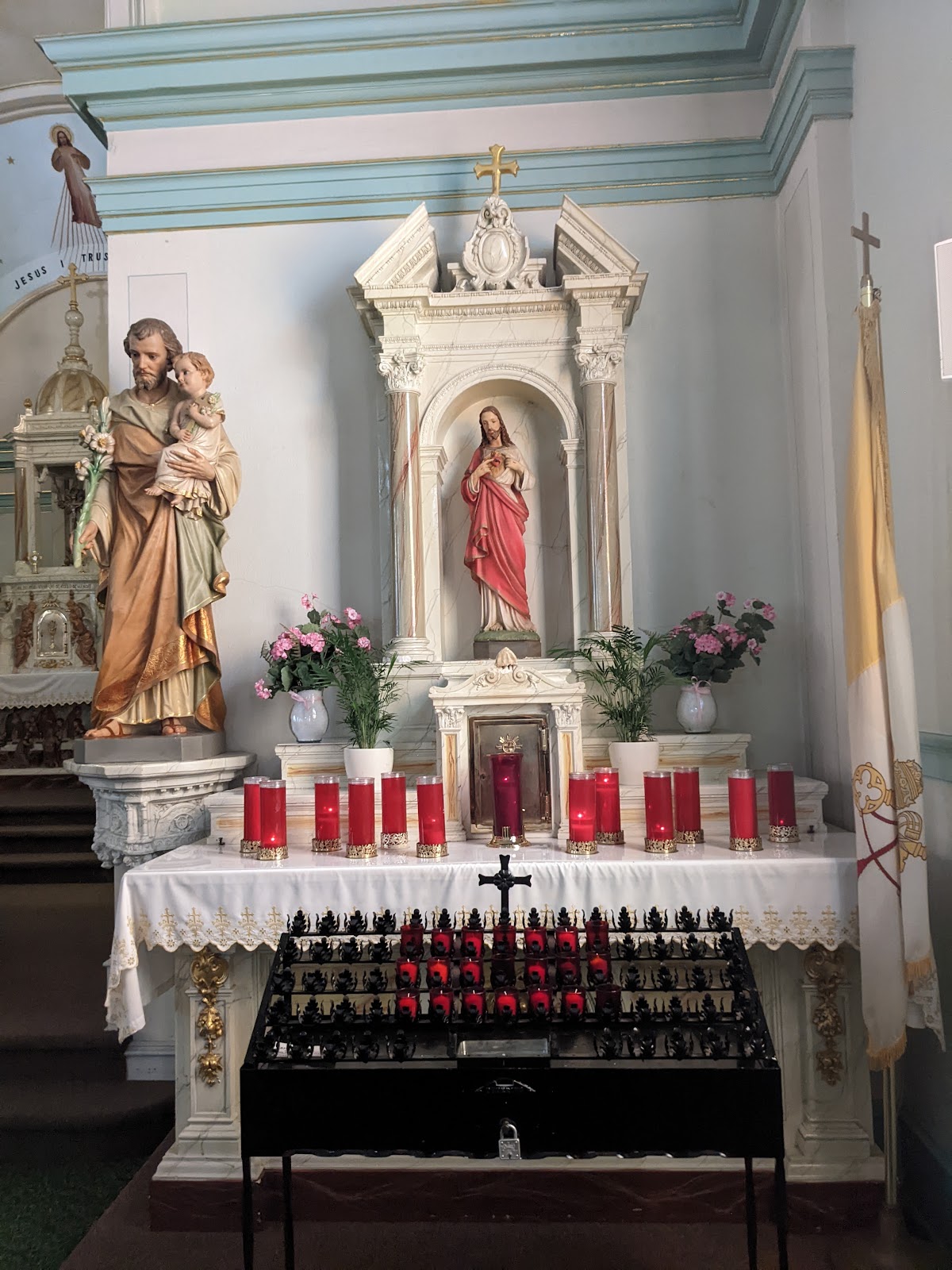
More frames from The Historic Elmdale Church
The Historic Elmdale Church wedding photography: common questions
What is the free advantage here?
Cross-light. Windows on both long walls mean a key from one side and a fill from the other, at a ratio close to ideal, with no equipment at all.
How do I adjust that ratio?
By position, not settings. Closer to the bright wall increases it, the centre of the nave reduces it, closer to the fill wall reverses it.
What about a window behind the altar?
Silhouette them deliberately, expose for their faces and let it blow, or bridge the gap with one light about a stop and a half under the window.
When should I photograph the stone outside?
First or last hour. Cut limestone flattens completely under a frontal midday sun and only shows its courses and tool marks in raking light.
What headcount really works?
About forty. Eighty fit on the benches, but at eighty a photographer is against the back wall with a wide lens and no choice of position.
Does overcast hurt?
Barely. Soft even cross-light through two window walls flatters faces, so the weather that ruins an outdoor venue is close to neutral here.
More Kansas venue guides
We are writing a photographer’s guide to every venue we would happily shoot in Kansas. Here are three more, plus the full index:
- The Lake Afton Observatory, Goddard: One Frame, and How It Is Made
- The Prairie Rose Chuckwagon Supper, Benton: What It Suits, and What It Does Not
- The Regier Farm, Hillsboro: Field Notes
Planning a wedding at The Historic Elmdale Church?
A small plain building with very good light. Tell us your date.