 The House of Blues, Cleveland: What It Suits and What It Does Not
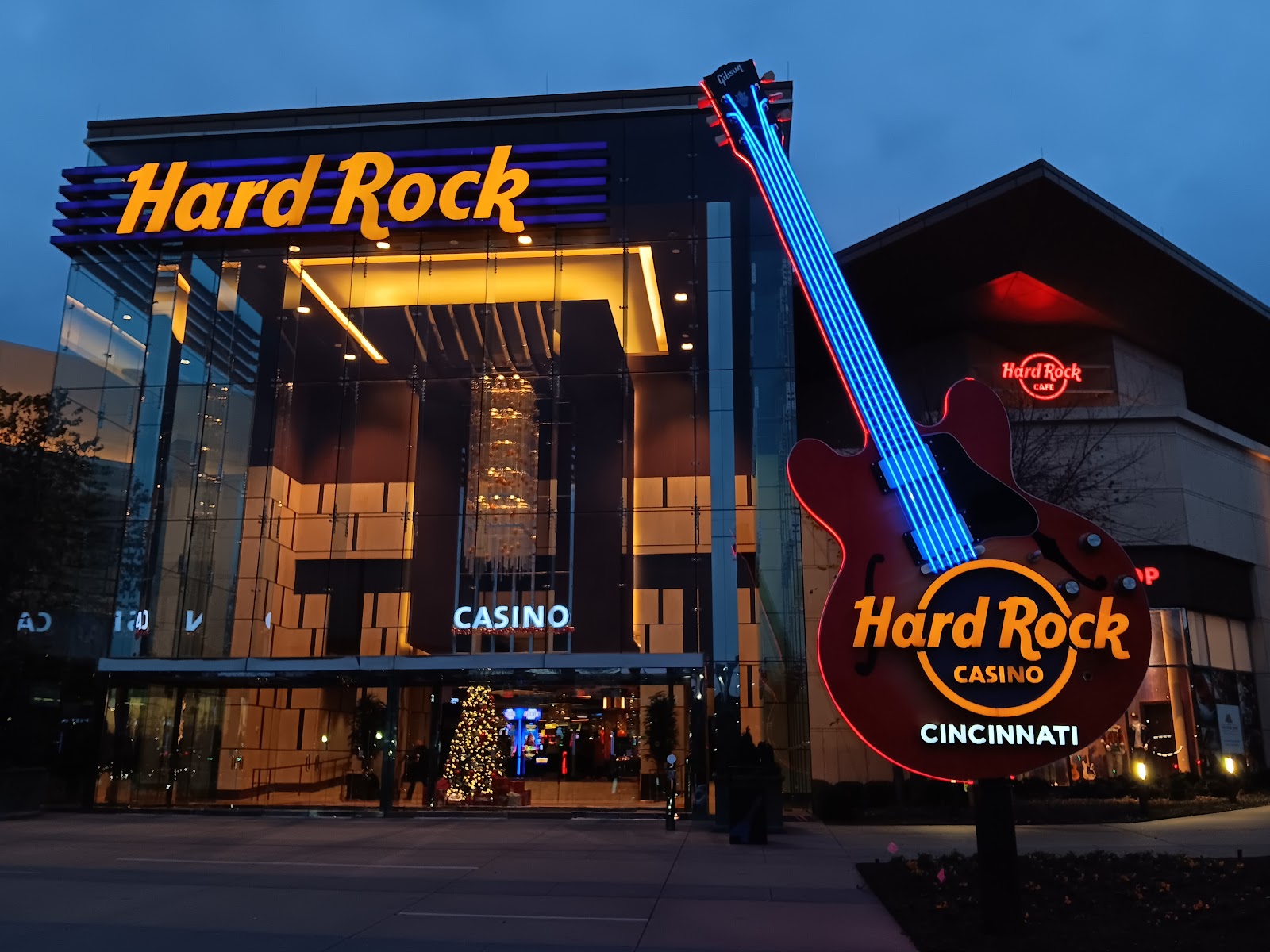
The Hard Rock Casino, Cincinnati: The One Decision That Governs Everything
No windows anywhere. That one fact decides the whole day.
A casino is the only building type in these guides that excludes daylight on purpose, for commercial reasons, and completely.
The reasoning is well documented and it is deliberate: a gaming floor with no windows and no clocks gives a player no external reference for how long they have been there. Whether that works as intended is beside the point — the architecture follows from it, and the architecture is what a photographer has to work with.
So the decision that governs everything here is this: **you are lighting every single frame.** There is no window to fall back on, no golden hour indoors, no overcast day that makes things easy, no moment when the building helps. Whatever is in the picture is there because someone put a light on it.
That is not a complaint. A building with no daylight is entirely consistent, which is a genuine advantage — the lighting plan that works at two in the afternoon works identically at eleven at night, in July or in January, in sun or in a thunderstorm. Nothing about the schedule threatens the pictures.
It also means the building has no bad hour and no good one. Every other venue in this library has a best twenty minutes; this one does not, and the day can be arranged entirely around what suits the couple rather than around the sun.
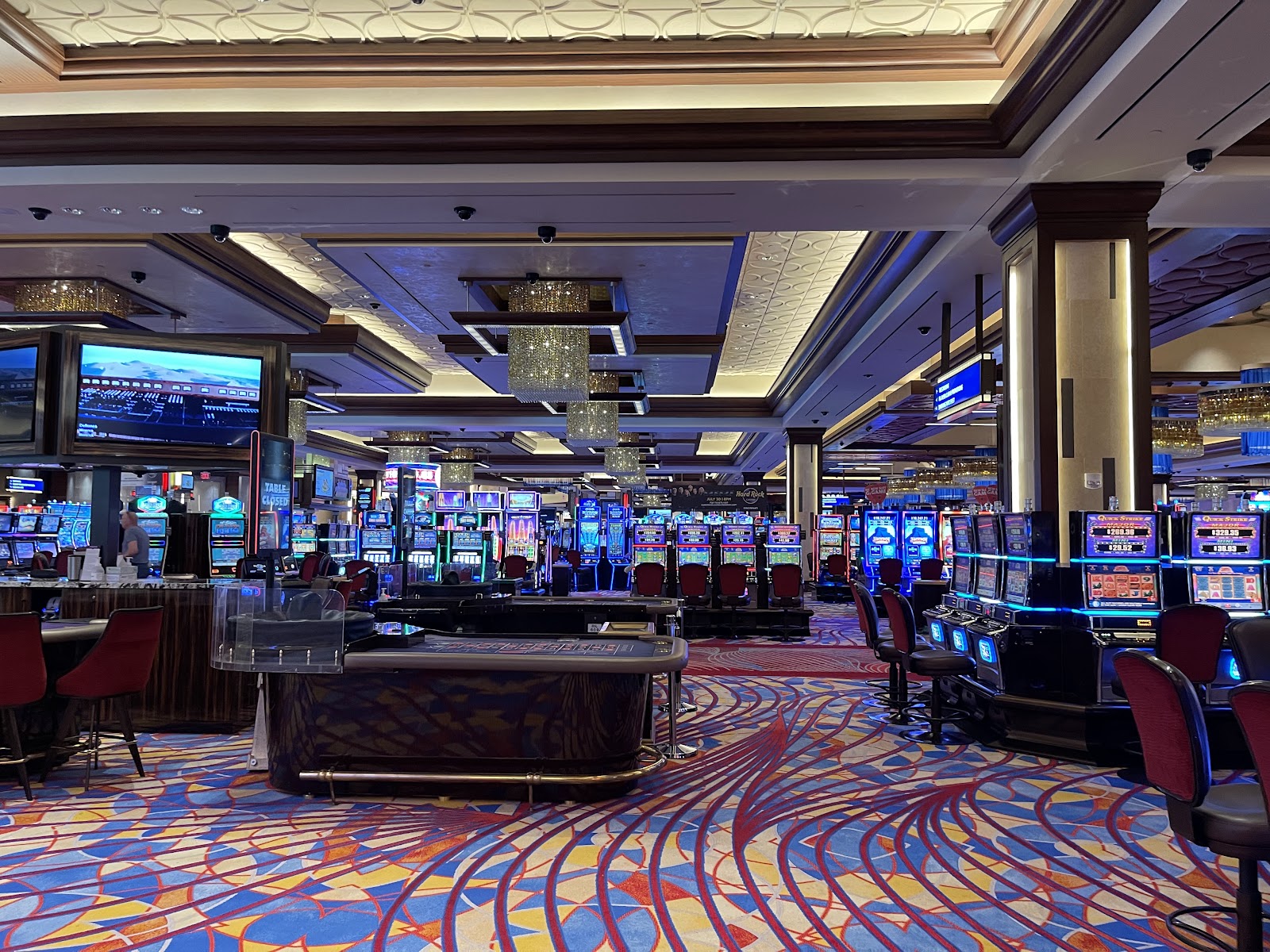
The second consequence is colour, and it is the harder half. Casino interiors are lit by a dense mixture of sources — warm downlights, coloured LED coves, neon and faux-neon signage, backlit panels, screens, spotlights on features — often several within a metre of each other and all of different colour temperature. There is no single correct white balance anywhere in the building.
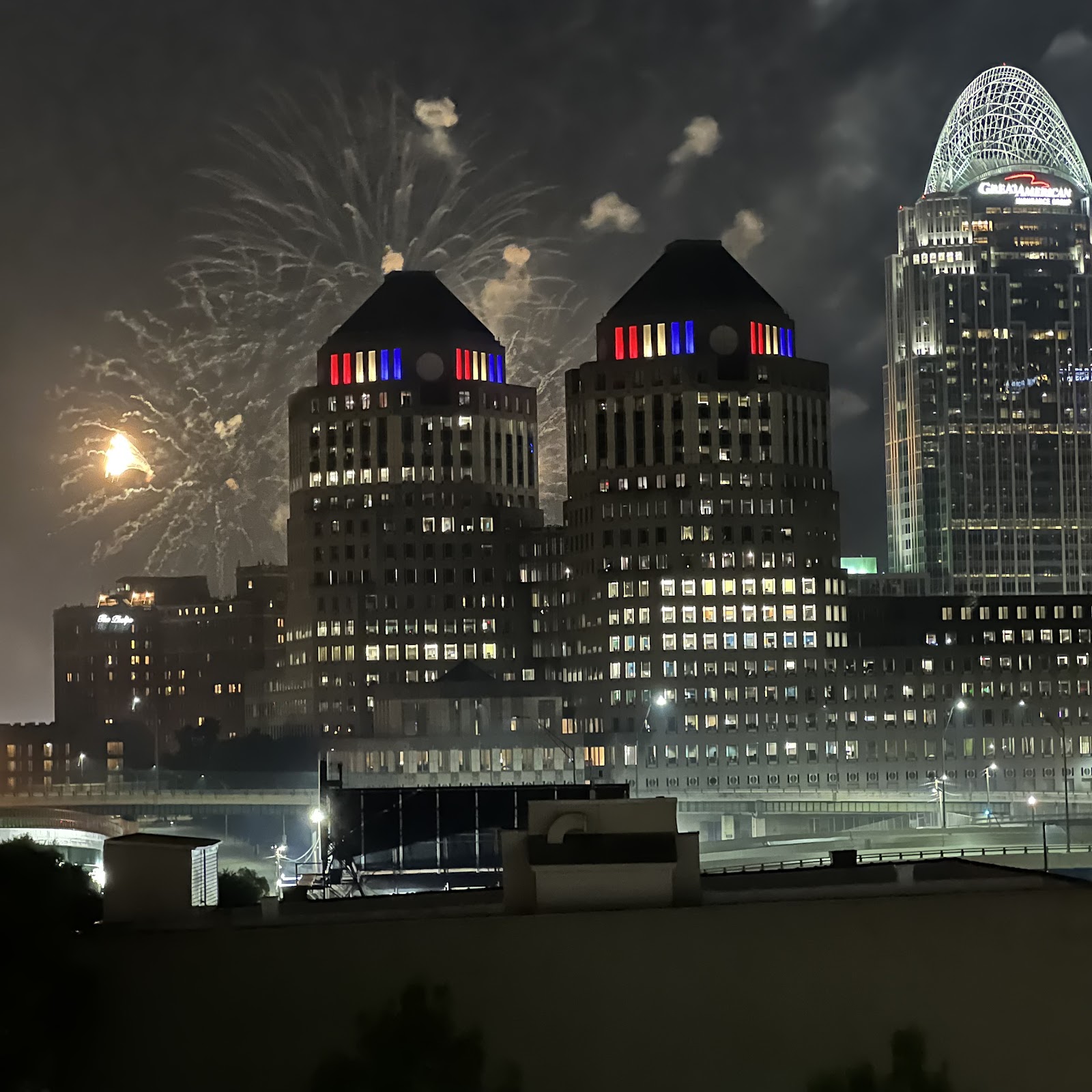
Cincinnati sits at about thirty-nine degrees north at roughly five hundred feet on the Ohio River. Those figures barely matter inside this building, and they matter entirely for the twenty minutes anyone steps outside — where civil twilight runs about thirty minutes and the downtown riverfront is genuinely photogenic.
We have not photographed a wedding here. Which rooms are bookable, whether the gaming floor is accessible for photography and the permitted hours are questions for their team — and the gaming floor question is worth asking early, because the answer is often no.
The Hard Rock Casino at a glance
| Where | A casino and event venue in downtown Cincinnati |
| The decision | You are lighting every frame. There is no daylight anywhere |
| The advantage | Total consistency — the plan works at any hour, in any weather, year round |
| The difficulty | Dense mixed colour: warm downlights, coloured LED, neon and screens |
| Ask first | Whether the gaming floor is accessible for photography at all |
Lighting a building that gives you nothing
If every frame is lit, the method has to be portable, repeatable and quick, because a wedding does not wait for a lighting setup.
The workhorse is a single off-camera source through a modifier, held or stood at about forty-five degrees to the subject and slightly above eye level. That one arrangement covers the great majority of the day, and its virtue is that it is fast — one assistant, one stand, and a position that can be re-established in fifteen seconds in a new room.
The second source is a rim from behind, and in this building it matters more than usual. Casino interiors are visually busy — patterned carpet, signage, mirrors, lit panels — and a subject lit only from the front merges into that background. A rim light at about a stop over the key on the far shoulder separates them cleanly and it is the single biggest improvement available.
Bounce is often unavailable and it is worth checking rather than assuming. Casino ceilings are frequently dark, low and acoustically treated, and walls are often patterned or dark — none of which returns usable light. Where there is a pale wall, use it; where there is not, direct through a modifier is the answer.
The exposure approach that works is to let the room go darker than it looks. A casino is dim and the instinct is to lift the ambient until the space is legible, which produces a muddy grey frame full of competing detail. Setting the ambient two stops under and lighting the subject properly gives a clean picture of people in a rich dark environment, which is both more flattering and more accurate to how the place feels.
Drag the shutter deliberately rather than accidentally. The lit signage, coves and screens are the reason the background says casino, so they need enough exposure to register — usually a thirtieth to a sixtieth on a wide lens, with the flash freezing the subject. Below a thirtieth the ambient smears; above a hundred and twenty-fifth the background goes black and the frame could be anywhere.
The colour problem needs a decision made once and applied consistently. There are two workable positions and one that fails.
The failing position is to correct toward neutral. Neutralising a magenta LED wash and a warm downlight in the same frame is impossible, and attempting it gives grey skin and dead colour everywhere.
The first workable position is to gel the key warm to match the dominant ambient — usually tungsten-ish — set a warm white balance, and let the coloured LED washes read as saturated colour accents. That gives natural skin and a background that looks like the room does. It is the right default.
The second is to commit to the colour entirely: gel the key to match a dominant coloured source and let the whole frame sit in that cast. That is a strong stylistic choice, it suits a casino better than it suits most venues, and it should be used for a handful of frames rather than the whole day.
Mirrors are the last technical issue and they are everywhere in this building type. A mirrored column or wall will show the photographer, the lighting stand and the assistant, and it will do so in frames where the mirror was not consciously noticed. The habit is to check the reflective surfaces before the frame rather than after — and where a mirror cannot be avoided, use it deliberately, because a subject and their reflection is a good picture.
The gaming floor, and what else the building has
The gaming floor is the thing people imagine photographing and it is usually the thing they cannot.
Casinos generally restrict photography on the floor, and the reasons are substantive: other patrons have a strong expectation of privacy, gaming regulation constrains what may be recorded, and security has its own interest in what is documented. So a permitted wedding shoot on an active floor is rare, and where it happens it is usually a defined corner at a defined time with an escort.
That is worth establishing early because it is the difference between a distinctive set of pictures and a conventional one. A wedding party at a craps table is a genuinely unusual frame; a wedding party in a hotel ballroom is not.
If access is granted, the technique is speed and a wide aperture. There will be no time for stands, so a single on-camera source bounced off a card held at arm’s length, or a hand-held modifier, is the realistic setup — and the frames should be planned in advance so the window is used rather than explored.
If access is refused, the building still has three things worth working.
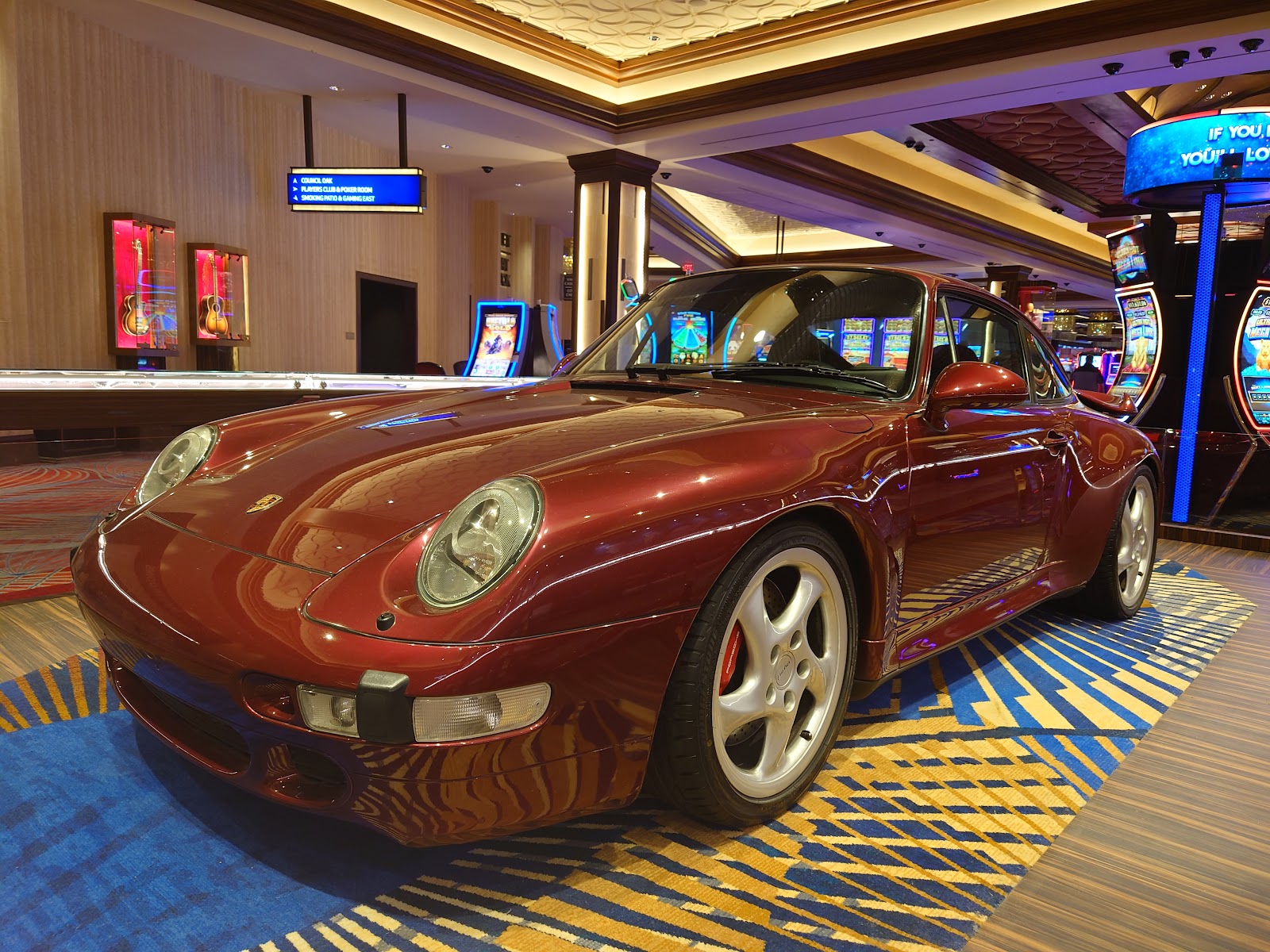
The first is the signage and the branded interiors. A venue of this kind is heavily themed, and the theming is the visual identity — large graphics, memorabilia displays, guitar cases, neon. Those are lit already, often well, and they make backgrounds that are unmistakably this venue rather than a generic room. A subject placed against a large lit graphic with a rim light is a strong, quick, repeatable frame.
Memorabilia cases are the underused version. A lit vitrine is a small bright source at close range, so a face turned toward one picks up a defined key with rapid falloff, and the object in the case is in frame. That is the same trick that works in a museum and it works here for the same reason.
The second is the event spaces themselves, which are conventional and therefore straightforward: a ballroom or function room with controllable lighting, pale surfaces more often than not, and enough room to work. The technique is the standard one — bounce for a soft key, warm gel to match the house tungsten, drag the shutter so the room’s own light registers, and keep the chandeliers or feature lighting exposed rather than blown.
The third is the corridors and transitional spaces, which in a building this size are extensive and which are where the unposed pictures happen. A long corridor with a repeating rhythm of lit panels is a natural perspective frame, and a photographer standing at the end of one with a fast lens gets the register of the day that arranged frames cannot.
The escalators and stairs are worth a specific mention because they give height, and height is scarce in a windowless building. Shooting down a stair or an escalator onto a group gives separation and shows the space, which a level camera in a low-ceilinged room cannot do.
- One source at forty-five degrees plus a rim behind — the rim is what separates
- Let the room go two stops under; lighting the whole space gives mud
- Drag to a thirtieth or sixtieth so the signage registers, no slower
- Gel warm to the dominant ambient; never try to neutralise mixed colour
- Check every mirror before the frame, not after
Outside, and why the schedule is free
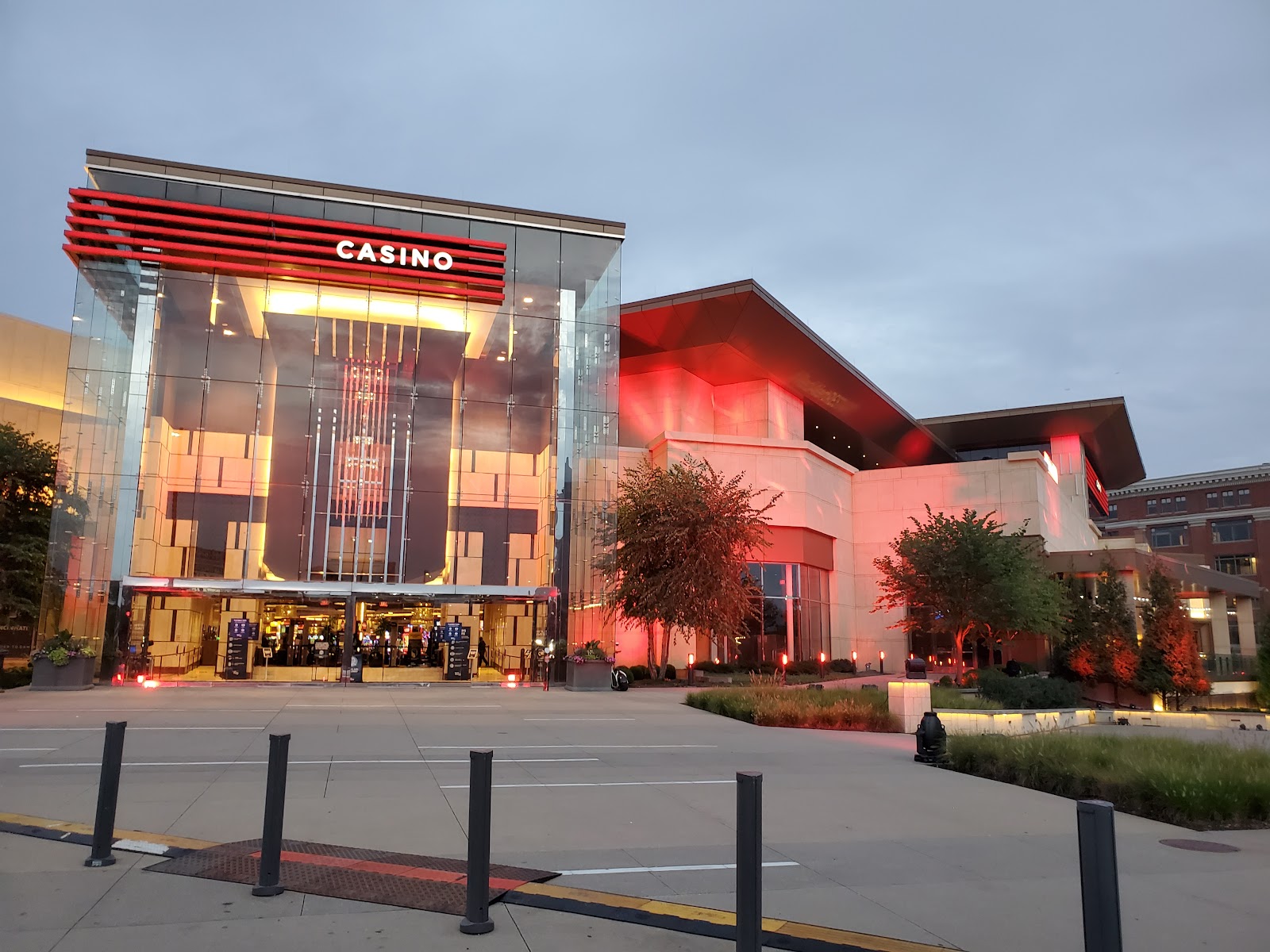
The twenty minutes outdoors are worth planning because they are the only place the building’s consistency breaks, and because downtown Cincinnati on the river is genuinely good.
The city sits in a basin on the Ohio River with hills rising on both sides, which gives a downtown with a real edge to it — the river, the bridges, and the Kentucky bluffs beyond. The Roebling Suspension Bridge is the landmark: completed in 1866, it was the longest suspension bridge in the world at the time, and its designer went on to build the Brooklyn Bridge on the same principles. Its towers and cable curve are instantly legible in a frame.
A bridge wants a long lens and a low camera. Compression stacks the cables and makes the structure dominant; a wide lens from street level renders it as a thin line across the frame and wastes it.
The brick is the other material. Cincinnati’s nineteenth-century building stock is deep red-brown brick, and in low evening light it goes genuinely warm — which pairs well with a warm-gelled key and badly with an ungelled one.
Civil twilight runs about thirty minutes here, which is longer than the desert venues in this library and shorter than a northern summer. The useful consequence is that the blue hour is a real working window rather than a scramble: roughly twenty minutes when the sky still holds colour and the city lights are on, which is the best exterior light the location offers.
That is the one frame worth leaving the building for. A couple on the riverfront with the bridge lit, the downtown behind, and a warm-gelled source on them at about a stop over the ambient, taken fifteen minutes after sunset — it is the picture that says Cincinnati, and it takes ten minutes.
The weather is the reason the windowless building is an asset rather than a limitation. Ohio’s climate is humid continental and it is genuinely variable: thunderstorms through the summer, weeks of flat grey overcast in winter when the river basin sits under a temperature inversion, and a shoulder-season pattern that can produce frost and heat in the same fortnight.
At most venues that variability is a risk to be managed. Here it is irrelevant to everything except the ten minutes outside — and if the weather is bad, those ten minutes simply do not happen and nothing else about the day changes. That is a real form of insurance and it is the strongest practical argument for a venue of this kind.
It also makes a winter wedding entirely sensible, which at most venues it is not. December in Cincinnati gives a nine-hour day, frequent overcast and a fair chance of rain or snow — conditions that would gut an outdoor venue’s coverage and that this building does not notice.
Summer’s compensation outside is the long evening: fifteen hours of daylight at the solstice, with the blue hour landing near nine in the evening, which means an outdoor frame is available after the reception has properly started rather than requiring the day to be interrupted.
And mid to late October is worth one deliberate excursion regardless of the season the wedding falls in. The hills on both sides of the Ohio valley turn together — sugar and red maple in scarlet, oak and hickory in bronze — and because the terrain is steep the colour reads in mass from anywhere on the riverfront. It is the one time of year when the view out of downtown is as good as the view of it.
More frames from The Hard Rock Casino
The Hard Rock Casino wedding photography: common questions
What is the one decision?
That you are lighting every frame. There is no daylight anywhere in the building, so nothing in a picture is there unless you put a light on it.
Is that actually a problem?
It is mostly an advantage. The building is completely consistent, so the plan works at any hour in any weather, and the schedule can suit the couple rather than the sun.
How do I handle the mixed colour?
Gel the key warm to match the dominant ambient and let coloured LED washes read as accents. Never try to neutralise everything — that gives grey skin and dead colour.
What shutter speed for the background?
A thirtieth to a sixtieth so the signage and coves register. Slower smears the ambient; faster than a hundred and twenty-fifth kills it and the frame could be anywhere.
Can we photograph on the gaming floor?
Usually not, and it is worth asking early. Patron privacy and gaming regulation generally restrict it; where it is allowed it is a defined corner at a defined time.
What is worth going outside for?
The blue hour on the riverfront — about twenty minutes when the sky holds colour and the Roebling Suspension Bridge is lit. Ten minutes of work for the frame that says Cincinnati.
More Cincinnati, OH venue guides
We are writing a photographer’s guide to every venue we would happily shoot in Cincinnati, OH. Here are three more, plus the full index:
- The Taft Museum of Art, Cincinnati: One Frame, and How It Is Made
- The Cincinnati Art Museum: The Venue’s Own Logic
- The Cincinnati Music Hall: A Walk Through the Building
Planning a wedding at The Hard Rock Casino?
No windows, no bad weather, no bad hour. Tell us your date.