 Overhills Mansion: Who This Venue Suits, and Who It Doesn’t
Fort McHenry, Baltimore: A Walk Through a Star Fort
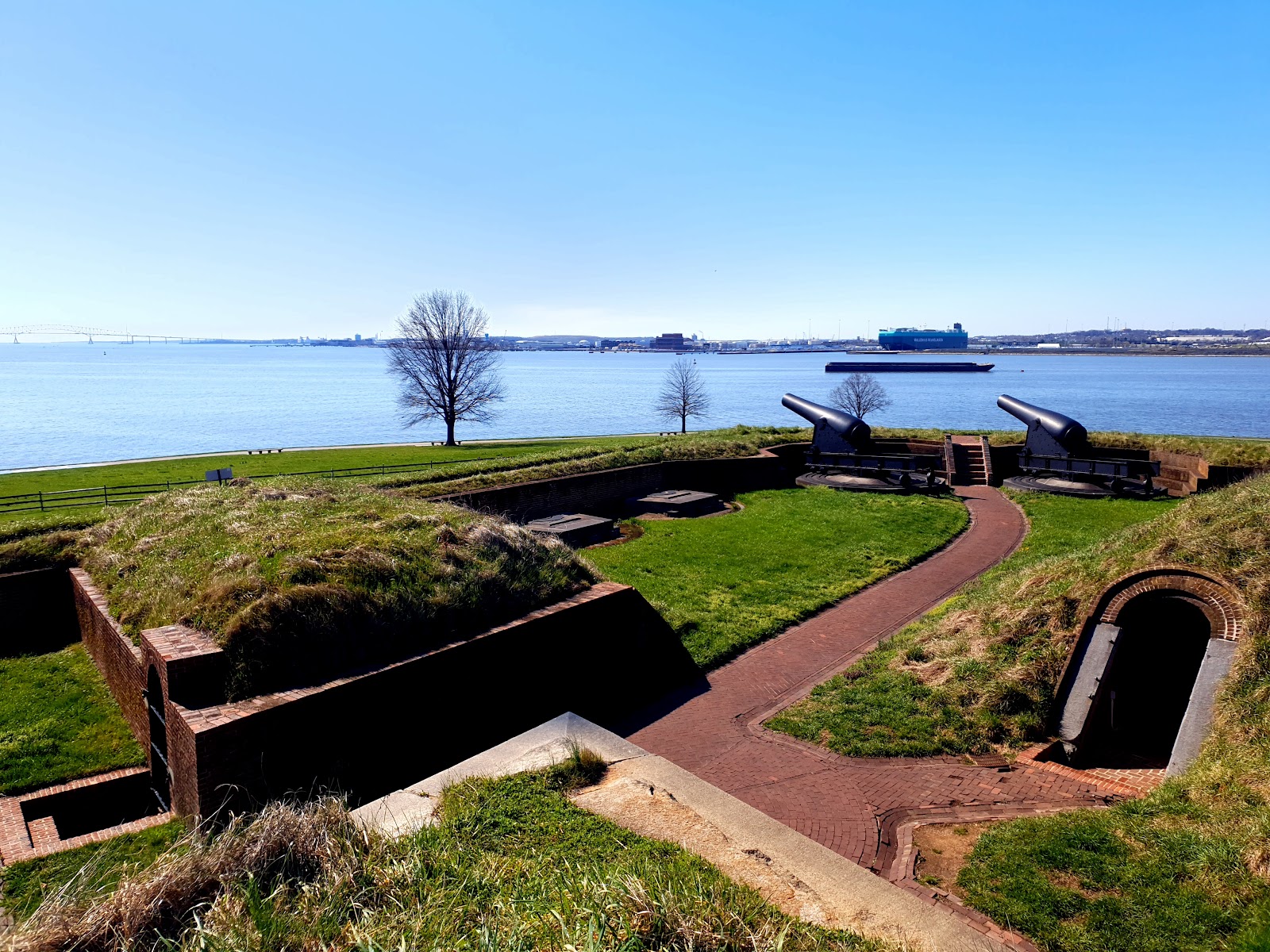
A fort is a low brick shape inside grass banks, under an enormous sky. That geometry is unlike any other venue.
Fort McHenry sits on the Baltimore waterfront and offers several locations within its historic walls for a ceremony or a reception.
A star fort is an unusual venue geometry and worth understanding rather than treating as a historic building with grounds. It is deliberately low: walls built to resist artillery are thick, squat and set inside sloping earth banks, so nothing rises far above the ground. That produces three conditions that occur together almost nowhere else — an enormous unbroken sky, brick and turf as the only two materials, and sight lines that run along the tops of banks rather than through rooms.
It also produces a specific problem. Low structures cast almost no shade, and a site with no shade under a mid-Atlantic summer sun is a genuinely hard place to work in the middle of the day. The fort is a morning-and-evening venue whether or not anyone plans it that way.
This is a walk around the site. We have not photographed a wedding at Fort McHenry; earthwork forts behave consistently. What a federal or public historic site permits — stands, amplification, guest numbers, timings, vehicle access — is set by the institution rather than negotiated, and it should be in writing before a schedule is drafted.
Fort McHenry at a glance
| Where | The waterfront, Baltimore, Maryland |
| Character | A historic star fort — brick, earth banks, open sky, water beyond |
| The geometry | Everything is low, so the sky is enormous and shade is almost absent |
| Best hours | Early and late; the middle of a summer day is unworkable outdoors |
| Ask first | Permissions in writing — stands, numbers, timings, access |
The ramparts and the banks: working with a low horizon
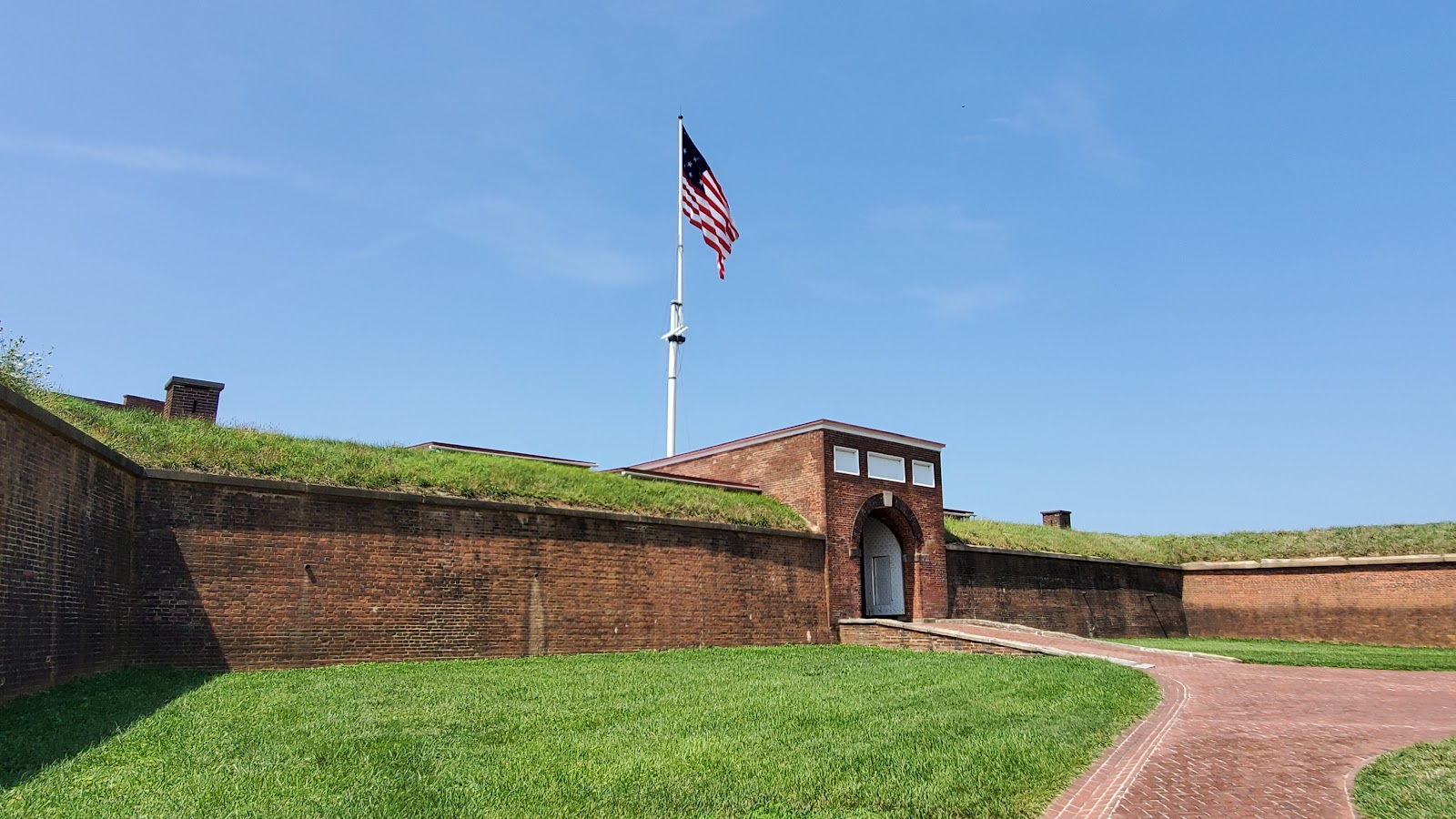
Start on the earthworks, because they are the feature that makes the site photographically distinctive. Sloping grass banks do two things: they give elevation without a building, and they create clean uninterrupted horizons against the sky.
Elevation matters because it lets you place a camera above a subject or a subject above a camera without any architecture. Standing at the foot of a bank and shooting up puts a couple against nothing but sky, which is the cleanest background that exists — no clutter, no fence, no distraction, and an outline that reads instantly. Standing on top of a bank and shooting down puts them against turf instead, which is a uniform predictable mid-tone.
Those two frames are opposites and both are worth having. Against sky, a couple reads as silhouette or near-silhouette unless something lights them, so this is where a source or a reflector earns its place. Against turf, they are lit by open sky from above and need fill from below, or a lifted chin, or a low reflector.
The horizon line is the compositional tool a fort gives you and almost nothing else does. A bank crest running diagonally across a frame, with a couple walking along it, is a strong graphic composition available at any hour and from many positions — and because the site is low, the crest against sky is genuinely clean rather than cluttered with trees or buildings.
The absence of shade is the corresponding cost and it needs planning for rather than enduring. The only reliable shade on a fort is the shadow cast by the walls themselves, which is narrow, moves quickly, and exists only on one side at a time. Learning where that shadow will be at the ceremony hour rather than at the site-visit hour is the single most useful preparation here, and in a Baltimore July the difference between planning it and not is very large.
The brick, the interior spaces and the water
Brick is the fort’s only built material and it is the most forgiving surface any venue offers. It is a mid-tone that meters predictably, it holds real texture, and it retains detail across a wide exposure range. The condition is raking light: light running along a brick wall lifts every mortar line into relief, while light pointed at the same wall flattens it into a plain brown field.
Brick also bounces warm, which is useful rather than problematic at a fort because it is the only bounce available. A wall on the sunlit side throws warm reflected light back across anything standing near it, which fills the shadow that open sky creates from above — so a position two metres out from a sunlit brick wall, in its own shade, is one of the best-lit spots on the site.
Interior spaces in a fort are the opposite condition: thick walls, small openings, low ceilings, and very little light. That gives dramatic, steeply falling-off window light — a single small opening acting as a hard directional source with everything else going to black, which is a genuinely striking portrait condition and available nowhere in a modern building. It is a one-position, one-frame proposition rather than a room to work in, and it is worth finding.
Small rooms with pale or plastered walls do bounce, unusually, so a flash aimed at a low ceiling can work here where it fails in a hall. Test it in the first minute, because the difference in a dark casemate is large.
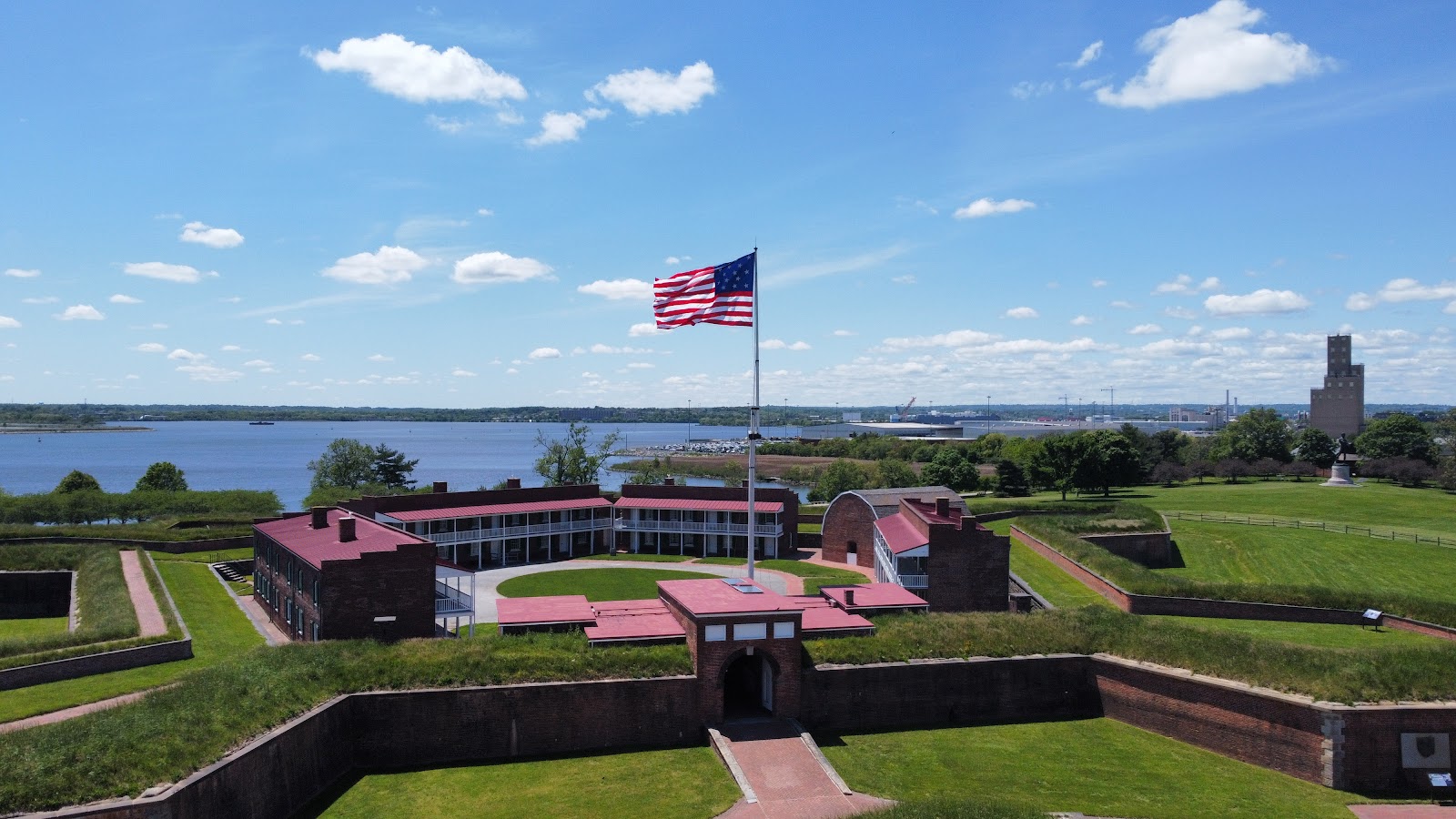
The water beyond the fort is the locating element and it wants a long lens. Compression brings shipping, the far shore and the harbour close behind a couple; a wide lens reduces all of it to a strip at the bottom of the sky. Still water mirrors early in the day and breaks into texture as the breeze builds, so a reflection frame is a morning proposition.
Wind off the water is a constant here rather than an occasional event, which matters for a veil, for light stands and for anything on a tripod. It also means the site is cooler than inland Baltimore, which is the one climatic mercy the fort offers in August.
- Shoot up a bank for sky as background; you will need a light on the faces
- Shoot down a bank for turf as background; you will need fill from below
- Two metres out from a sunlit brick wall, in its shade, is the best light here
- Casemates give hard small-opening light with everything else black
- Long lens for the water; wide reduces the harbour to a strip
The hours, the permissions, and Baltimore weather
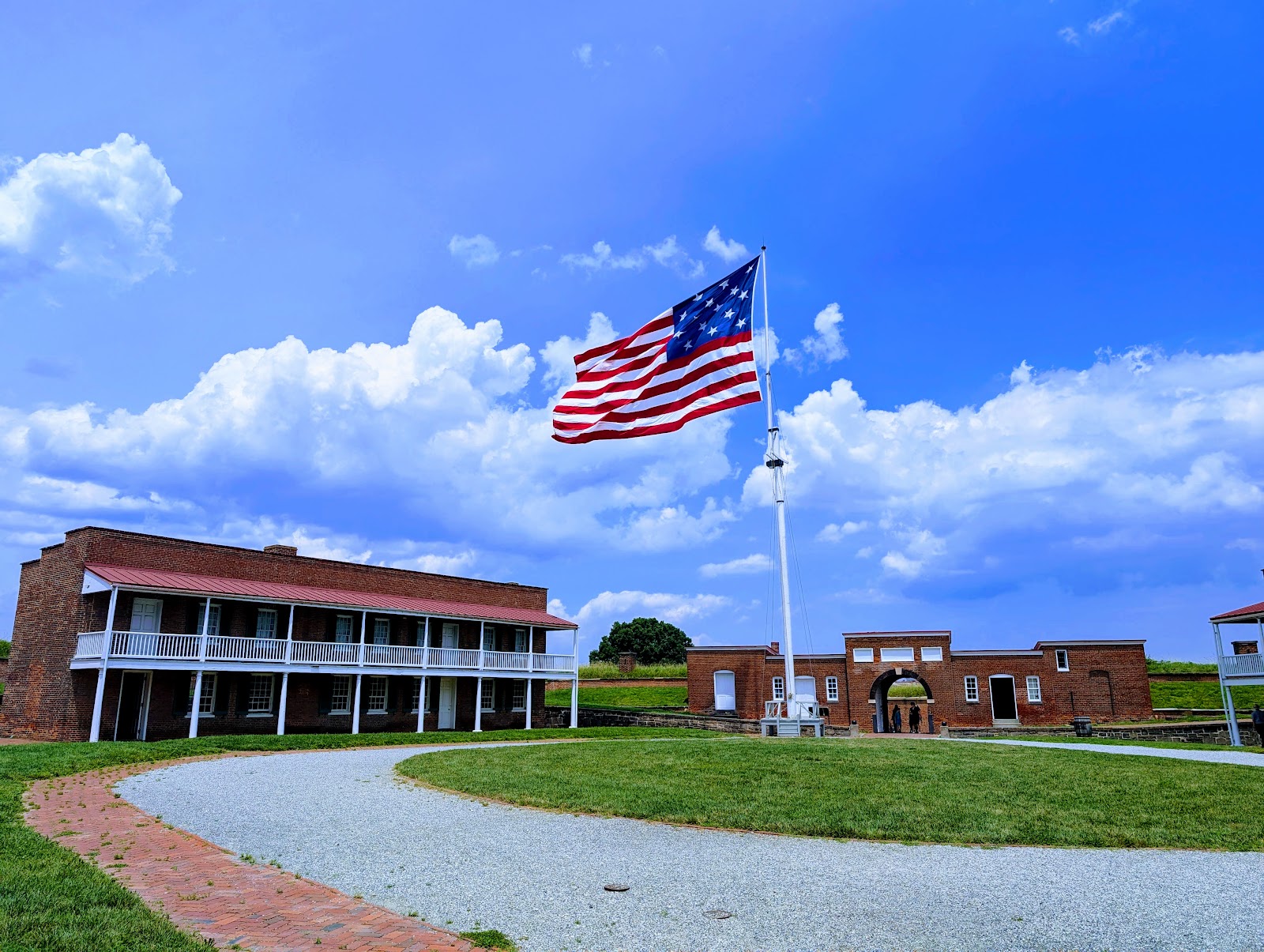
The last ninety minutes are when the fort becomes itself, and the reason is geometric rather than aesthetic. Because everything is low, the sun stays visible almost to the horizon, which means the golden hour here is genuinely long rather than clipped short by trees or buildings the way it is at an inland venue. Raking light along a bank crest, along a brick wall and across turf all arrive at once.
The twenty minutes after sunset are a separate opportunity and they belong to the sky. With nothing rising above the horizon, a fort under a post-sunset sky is almost all sky — a couple placed on a bank crest against it becomes a silhouette in a field of colour, which is a frame the site produces better than almost anywhere. It needs the sky lit rather than the couple, so it happens after sunset rather than during it.
Permissions are more extensive at a public historic site than at a commercial venue and they are not adjustable on the day. Guest numbers, timings, whether stands and tripods are allowed, whether amplification is permitted, vehicle and equipment access, and which areas are included — all of that belongs in writing before the schedule is drafted. A site that says access ends at a particular hour has ended it.
Mid-Atlantic summer conditions are the operational limit and they bite harder here than at a sheltered venue. Heat with no shade is the governing fact, so outdoor blocks should be short and purposeful and the wall shadow located in advance. Afternoon thunderstorms are common rather than rare, and a fort has very little cover — which makes the fallback question a real one, and the safety dimension of standing on exposed open ground in a storm a serious rather than a nominal concern.
Humidity produces the season’s equipment risk in both directions: kit chilled in an air-conditioned car fogs comprehensively on reaching warm damp air outside, taking many minutes to clear, and in winter the reverse happens on coming in. Let equipment come towards the ambient temperature before it is needed rather than moving it straight between the two.
What the weather gives back at a site like this is considerable. A departing storm over water, with a dark sky and low sun coming in underneath, throws brick into the strongest relief it ever gets and turns the harbour into a lit surface under a black sky. That is the best version of this venue and it only exists after rain.
More frames from Fort McHenry
Fort McHenry wedding photography: common questions
What makes a fort photographically distinctive?
Everything is low. That gives an enormous unbroken sky, clean horizons against it, and elevation from earth banks rather than architecture — a geometry that occurs almost nowhere else.
What is the main practical problem?
No shade. Low structures cast almost none, and the only reliable shade is a narrow band beside the walls that moves quickly. Learn where it will be at the ceremony hour, not at the site-visit hour.
Where is the best light on the site?
Two metres out from a sunlit brick wall, standing in its own shade. The wall bounces warm light back to fill the shadow that open sky creates from above.
What do the interior spaces give you?
Hard directional light from a small opening with everything else falling to black — a striking portrait condition unavailable in any modern building. It is one frame in one position rather than a room to work in.
Why is the golden hour long here?
Because nothing rises above the horizon, so the sun stays visible almost to the end. Raking light along the bank crests, the brick and the turf all arrive together.
What has to be in writing beforehand?
Guest numbers, timings, whether stands and amplification are allowed, vehicle and equipment access, and which areas are included. A public historic site’s limits are not adjustable on the day.
More Baltimore, MD venue guides
We are writing a photographer’s guide to every venue we would happily shoot in Baltimore, MD. Here are three more, plus the full index:
- The Four Seasons Baltimore: Photographing a Waterfront Luxury Hotel
- Frederick Douglass-Isaac Myers Maritime Park: One Frame and How It Is Made
- The Hotel Monaco, Baltimore: Field Notes on a Restored Early-1900s Building
All Baltimore, MD Wedding Venues →
Planning a wedding at Fort McHenry?
Permissions first, then the two good hours. Tell us your date and we will plan both.