 The Iowa Events Center: Four Ways Out of the Blank-Hall Problem
The Davenport Hotel, Iowa: The Light Through a Day
A city that faces south across a river has its best exterior light at both ends of the day and none in the middle.
Davenport looks south across the Mississippi, which is unusual among river cities and which sets the shape of a wedding day here.
The reason is geography: through the Quad Cities the Mississippi runs roughly east to west rather than north to south, so the city sits on the north bank with the water to the south. And south is where the sun is for the whole of the day.
The consequence is that the river is backlit from mid-morning until late afternoon — silver water, rim light on anyone at the edge, and a bright band behind any subject that has to be exposed for. That is a real effect and it is not the picture most people imagine when they think of a riverfront. The frames that people do imagine happen at either end of the day, when the sun is low enough to come along the river rather than across it.
Inside, a historic hotel behaves as historic hotels do, which means the interior does not change and everything indoors is movable. So the schedule is built around the river.
This is that day in order. We have not photographed a wedding at the Davenport Hotel; historic city hotels behave consistently and the river’s orientation is a matter of a map. Which spaces are included, whether the lighting is adjustable and what may be attached are questions for their team.
The Davenport Hotel at a glance
| Where | Davenport, Iowa, on the north bank of the Mississippi |
| The geography | The river runs east–west, so the city looks south across it |
| Morning | Guest-room windows, and the river before the sun comes round |
| Midday | Interiors; the river is backlit and the streets are the alternative |
| Evening | The river again, with the sunset running down its length |
Morning and midday
The morning belongs to the guest rooms and to the river before the sun has come round to the south.
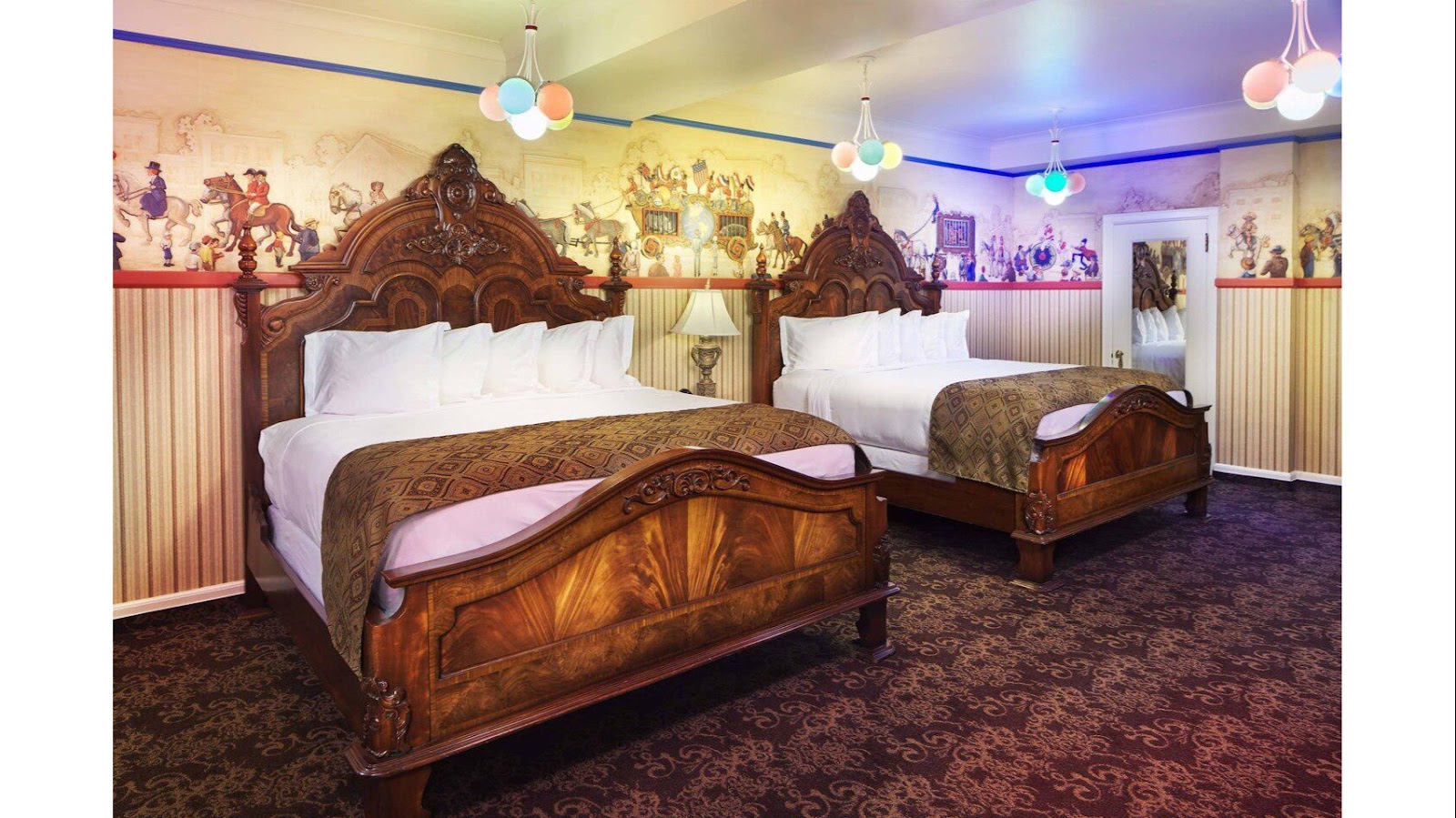
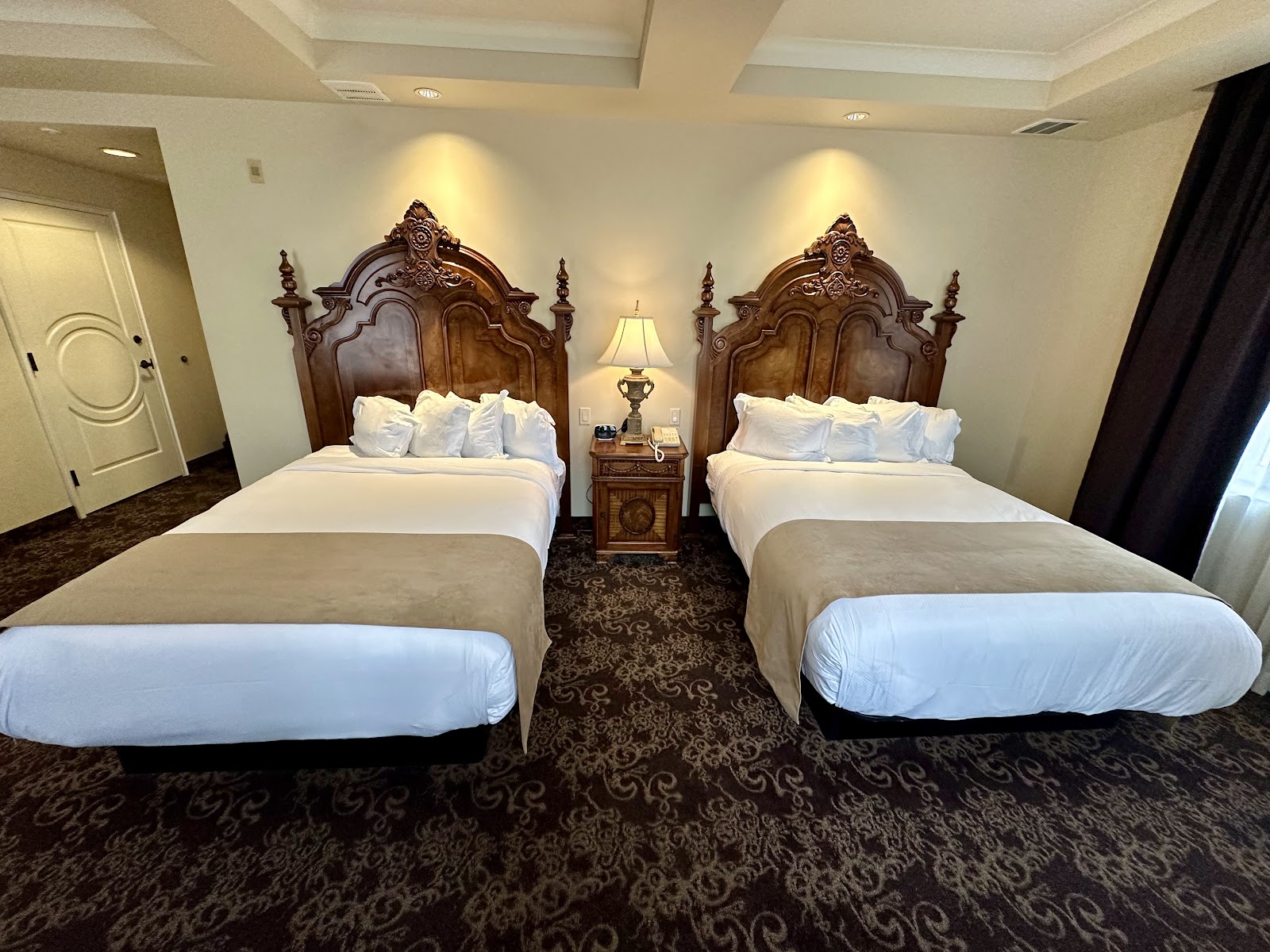
The guest rooms are the only interior daylight in most hotels and the requests are the ordinary ones: largest window on the shaded side, every overhead fitting switched off so the room has one colour of light rather than two landing on the same face, lamps moved out of frame, and two to three metres back from the glass so the fall-off is even across two faces.
At Davenport’s latitude, about forty-one and a half degrees north, the midday sun reaches roughly seventy-two degrees above the horizon in June and only about twenty-five in December. So a north-facing room is shaded all year and is the most reliable; a south-facing one is a high source in summer and a low directional one through most of a winter afternoon — which in a city whose view is to the south means the rooms with the river view are also the ones carrying the sun. Those are two different frames and worth treating as such.
In a historic hotel the windows are frequently tall, which has a specific advantage over modern glazing: because a period sash extends close to the floor, the light wraps upward as well as sideways and fills under the chin, which a small high casement cannot do.
Early on the river is not yet backlit, because the sun is still in the east and the water runs east to west — which means the light comes along the river rather than across it. That gives a clean, frontlit, textured water surface and the only hour of the day when a riverside frame is straightforwardly lit. It is worth twenty minutes.
Through the middle of the day the sun comes round to the south and the river becomes a bright band. That is not unusable, it is a different picture: backlit water goes silver, anyone at the edge rim-lights, and the exposure has to be set for the faces with the water allowed to go bright. Done deliberately it is striking; done accidentally it produces two silhouettes.
So the middle of the day is for the interiors and the streets. Davenport’s older building stock is brick and stone with nineteenth-century detail, and all of it reads only under raking light — a short walk to find which elevation the sun is skimming is worth more than any accessory. And the streets in a mid-sized city are wide enough to stand back in, which means a building can be photographed whole: rare enough to be worth using.
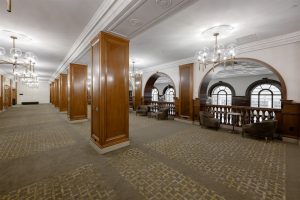
Inside, the hotel’s conditions are the usual historic ones. Warm absorbent surfaces put the public rooms a stop or two below a pale room with the same fittings, so measure rather than estimating. Ceilings vary, so test bounce once per space — grand rooms return little and corridors and smaller rooms frequently work. And warm bounce arrives on the shadow side of a face from several directions at once, which one warm-gelled source with white balance set to the gel handles and a global correction does not.
Evening, and the river's own hour
The evening is when the geography pays off, and it does so twice.
The last hour of daylight brings the sun low in the west, which on an east–west river means the light runs down its whole visible length rather than across it. The water carries the colour along the full stretch instead of in a patch, and low sun rakes the near bank, the bridges and the brick of the waterfront — which is the strongest exterior condition the city gives.
Then the crossing: twenty-five to forty minutes after sunset, when the sky still holds colour at about the brightness of the city’s own lighting, so one exposure holds couple, buildings, bridges and sky, with all of it doubled in the water. At this latitude that window is a comfortable length — longer than in a dry climate, shorter than on the northern plains — and it is the one unmovable frame of the day.
Camera height is the governing variable at the water. Low across the surface sees a mirror reflecting the sky and whatever stands beyond; high looking down sees the river’s own colour, which on the Mississippi is brown with sediment. Low is nearly always the answer, and it is more so here than on clear water.
A polariser earns its place in the daytime frames, because backlit water produces specular highlights several stops above everything else, which clip completely and fool any metering system. It should come off for the mirror frames, though, because a polariser also reduces reflections — polarise to see into water, remove it to see the sky in water.
One local feature is worth knowing about because it affects access rather than light: the riverfront here is open parkland rather than a walled embankment, which is unusual among large Mississippi cities. That means the water’s edge is genuinely accessible — and it also means the ground is designed to flood. High water in spring is a normal event rather than a disaster, and a riverside position that exists in September may be underwater in April, so it is worth checking rather than assuming.
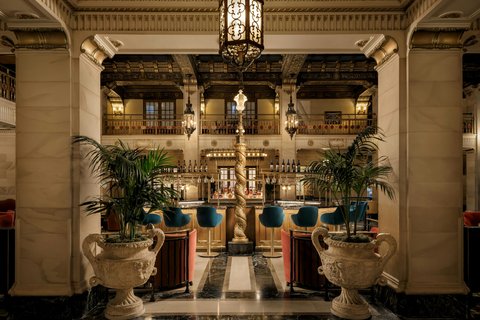
Back inside, the evening is where a historic hotel’s own light does its work. Decorative fittings are the visual signature and they photograph well at a wide aperture, becoming warm points of light in the depth behind a subject — the frame the building gives. The condition is distance: a fitting immediately beside a head pulls the eye off the face every time, and moving the couple a step fixes it.
Steep fall-off is the compensation for a low ambient: a subject three metres in front of anything else in a warm dim room sits against natural darkness with no equipment. And the added light should be modest — one warm-gelled source, off the camera axis, at face height, about a stop above the ambient. Two stops floats a face in blackness and discards the reason for choosing a historic hotel.
Mixed colour is the standing difficulty in a building relit over decades: original fittings, later replacements, modern LED, and any coloured uplighting installed for the event. Pick the temperature that should be correct, set white balance to it, and switch off or overpower whatever else lands on skin.
- Use the first hour: the river is frontlit before the sun comes south
- Midday river frames are backlit — expose for faces and commit to the silver
- Ask which way the guest room faces; the view and the sun are the same side
- Camera low at the water; the Mississippi is brown from above
- Polarise to see into water; remove it to see the sky in water
The Iowa year
The seasons here are four emphatic ones, with one of the larger annual temperature ranges in the country, and the river amplifies two of them.
Summer is hot and genuinely humid, and the humidity rather than the heat is the photographic fact: moist air scatters light, which softens shadows and slightly flattens distance — a gift for faces and a nuisance for a long view down the river, which can dissolve into haze in July in a way it does not in October.
The fogging problem is the equipment issue in this climate and a hotel makes it worse, because the public rooms are cooled hard for occupancy: a body carried straight out into July air fogs on every surface at once and does not clear quickly. Opening a bag twenty minutes before going out is the whole fix — and at a venue whose one unmovable frame is a timed crossing, a fogged lens means missing it.
Severe afternoon thunderstorms are a real possibility from late spring onward, which at an entirely indoor venue costs a decision rather than a picture. A storm approaching across a wide river valley is also visible for a long time before it arrives, which is both a useful warning and the most dramatic sky the location produces.
Autumn is the best light of the year and it is worth building a date around. The humidity drops, the air clears so the long river view holds detail, the deciduous cover along both banks turns, and low sun arrives at a civilised hour — usually mid-to-late October. With the sunset running down the length of the river, an October evening here is the strongest condition the city offers.
River fog is the autumn and spring bonus and it is frequent, because a large body of water in a valley with cool air above it produces it readily. Fog is diffusion at landscape scale: it separates the far bank and the bridges into grey layers, softens everything, and gives a frame no clear morning does. It burns off, so it is an early opportunity rather than something to schedule.
Winter is cold and frequently overcast, which is less of a disadvantage than it sounds — overcast is the best soft source there is, and a grey January day gives even shadowless light that flatters faces and saturates colour, including through the tall hotel windows.
Snow is the compensation twice over. Outdoors it is the best natural fill available, lifting exactly the shadows a low sun carves while fooling a meter by about two stops toward underexposure — so a snow frame needs deliberate overexposure relative to what the camera suggests. Indoors it turns the ground into an enormous reflector, so the guest-room windows give softer, brighter and more even light in February than in June.
And the river in winter is a different subject entirely: ice forms along the banks in cold spells, the bare cover opens the sightlines across to the far bank, and the December midday sun at only about twenty-five degrees above the horizon rakes the water all day rather than backlighting it from overhead. For a city that looks south across a river, that low winter sun is genuinely the best light it gets — the one season when the middle of the day works.
The constraint is the short day, which compresses the outdoor block into a couple of hours and means the riverside positions should be decided in advance rather than explored.
More frames from The Davenport Hotel
The Davenport Hotel wedding photography: common questions
Why does the river's orientation matter?
Because through the Quad Cities the Mississippi runs east to west, so Davenport looks south across it — and south is where the sun is all day, making the water backlit.
When is a riverside frame straightforwardly lit?
The first hour of the day, before the sun comes round to the south, when the light runs along the river rather than across it.
What happens at the evening?
The sun goes low in the west and the light runs down the river’s whole visible length, so the water carries the colour along the full stretch rather than in a patch.
Which guest room should be requested?
It depends on the frame. North-facing is shaded all year and most reliable; south-facing has the river view and the sun on the same side.
Should a polariser be used at the water?
Polarise to see into water; remove it to see the sky in water. It is essential for the backlit daytime frames and works against you for the mirror frames.
Is winter useful here?
Unusually so. A December sun at only twenty-five degrees rakes the river all day instead of backlighting it, which makes winter the one season the middle of the day works.
More Davenport, IA venue guides
We are writing a photographer’s guide to every venue we would happily shoot in Davenport, IA. Here are three more, plus the full index:
- The Figge Art Museum, Davenport: A Building Meant to Be Seen Through
- The German American Heritage Center, Davenport: Field Notes on a Brick Building
- The RiverCenter, Davenport: The Problem, and Four Ways Out
Planning a wedding at The Davenport Hotel?
A city that faces the sun across water. Tell us your date and we will time it.