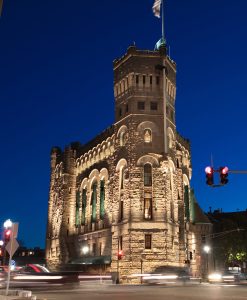
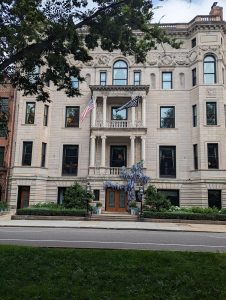
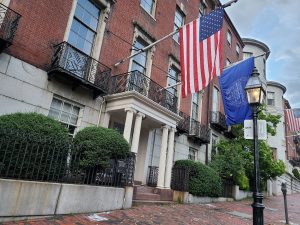
 The Somerset Club on Beacon Street: Is It Right for You?
The Chatham Bars Inn, Chatham: The One Decision That Governs Everything
Lit at dawn, in its own shade all afternoon. That decides the day.
One decision governs a wedding day at this venue and it is a consequence of which way the building points.
The Chatham Bars Inn stands on a bluff above the water at Chatham, on the elbow of Cape Cod where the peninsula turns and faces the open Atlantic. It is a shingle-style seaside hotel of nineteen fourteen — a long, low, weathered-shingle building with white trim, verandahs and a spread of cottages, of a type built along this coast when the railways brought summer visitors to it.
The building’s principal front faces east, out over the water. That is why it was built that way and it is the whole appeal of the place.
It also means the facade is lit at dawn and in its own shade for the entire afternoon.
That is the decision, and it is more consequential than it sounds because it separates the two things a couple wants into opposite ends of the day. The building — which is a genuine architectural subject, not a backdrop — takes direct light for perhaps ninety minutes after sunrise and then never again. The water in front of it is lit from behind at dawn and lit from the land side in the evening. And the late-afternoon light, which is when a wedding actually happens, falls on the back of the hotel and on whatever is west of it.
So there are three possible plans and a couple has to choose one.
The first is a dawn session. If the couple are staying on site and willing to be dressed at five or six, an hour at first light gives the building lit warm from the front, the Atlantic taking the sun directly, and an empty beach — and it is the only time any of that is available. It is also the best photography this venue produces, by a clear margin.
The second is to accept the building as a shaded subject and photograph it that way. A shingle facade in its own shade under a bright sky is a soft, even, silver-grey object, which is not dramatic and is entirely usable — and the verandahs, which are deep, become the best portrait light on the property at any hour.
The third is to give the afternoon to the shore and the land side, where the light is, and treat the hotel as somewhere the day happens rather than as something in the frame.
All three are legitimate. What does not work is planning for golden light on the front of the building at six in the evening, which is the assumption most couples arrive with and which the geometry simply does not allow.
What follows is each of those in practice, then the shore and the tide, then the Cape Cod year — which has more fog in it than most people expect and a hurricane season that is not remote.
The Chatham Bars Inn at a glance
| Where | A 1914 shingle-style seaside hotel on a bluff above the Atlantic at Chatham, Cape Cod |
| The decision | The front faces east: lit at dawn, in its own shade every afternoon |
| The best plan | A dawn session, if the couple will get up — it is the venue’s best photography |
| The afternoon | Deep verandahs for portraits; the shore and the land side for the light |
| Ask first | Beach access and permits, the tide table, and which rooms face which way |
Why the aspect governs, and the three plans
Take the dawn version first, because it is the one worth arguing for.
In the first ninety minutes after sunrise, the sun comes up out of the Atlantic directly in front of the hotel and strikes its whole east front at a very low angle. Shingle is the ideal surface for that: weathered cedar goes a soft silver-grey with a great deal of small-scale variation in it, and raked almost horizontally every shingle edge throws its own shadow, so the facade reads as a textured surface rather than as a grey plane. The white trim picks out warm against it. The verandah posts throw long shadows across the boards.
At the same moment the water in front is lit from the far side, which puts a specular path across it running toward the camera, and the beach is empty. There is nobody on it at five in the morning in any month.
So the dawn hour gives you the lit building, the lit water, the sun over the ocean and privacy — and none of those four is available at any other time of day. If a couple is staying at the hotel, which most will be, the cost is getting up, and it is worth saying plainly that this is the single best photographic opportunity the venue has.
Mist is the bonus. The water off this coast is cold, and on a warm morning the temperature difference produces sea fog that sits over the water and drifts inshore — which at dawn, with a low sun behind it, gives a shingle hotel emerging from luminous white. That is the finest frame the Cape offers and it cannot be arranged.
Now the second plan, which is the realistic one for most weddings: the building as a shaded subject.
From mid-morning onward the sun moves round to the south and then the west, and the east front goes into its own shade and stays there. Under a bright sky that is not a disaster — a shaded shingle facade lit by a large area of open sky is soft, even and silver, and the white trim reads cleanly against it. It is a quiet photograph rather than a dramatic one.
What it does mean is that the building’s own texture disappears, because texture needs raking light and shade has none. So a shaded facade is a tonal subject rather than a textural one: photograph its shape, its long horizontal lines, its roofline and the rhythm of its openings rather than its surface.
And the verandahs become the venue’s best asset. A deep roofed verandah facing the water is an outdoor room, and the geometry is exactly what a portrait wants: the roof removes the overhead sky, so what reaches you arrives horizontally from a very large bright area — the sea and the sky in front — with the boards bouncing a little back up underneath. Soft, directional, filled from below, and available at every hour of every day.
Work about a metre inside the line of the posts with the subject facing out. Falloff from a verandah edge is roughly a stop per step, so positions are stepped out rather than estimated — two metres further in and a face is underlit and flat.
Photograph along the verandah as well as across it. A long run of posts and rail gives a receding rhythm with a built-in vanishing point, and on a building of this length that is the strongest architectural frame available.
Now the third plan, which is where the afternoon light actually is.
West of the hotel, the light in the last hours is unobstructed and coming across the land. That means the back of the building, any west-facing lawn, garden or courtyard, and the cottages are all lit warm when the front is not. Establish on a scout which outdoor spaces face west, because those are the late-afternoon portrait positions and they are not where the view is.
That produces the honest trade at the heart of this venue. In the last hour you can have the couple lit warm with no sea behind them, or the sea behind them with the couple in shade and lit by you. One small warmed source at low power solves the second, which is why a light is worth carrying here even on a bright day.
And at the balance point, twelve to fifteen usable minutes after sunset, the whole thing resolves. Once the direct sun has gone, the east front and the water are in the same soft light, the sky behind the hotel to the west takes colour, and the building’s own lighting comes up. A frame of a lit shingle hotel against a coloured western sky, with the couple on the lawn, is the venue’s second-best photograph and the one most people do get.
The shore, the tide and the bars
The shore is the other half of the venue and two facts govern it.
The first is the tide, and here it matters more than at most venues because of what low water exposes. Cape Cod’s tidal range at this end is moderate rather than extreme, but the ground in front of the hotel shelves very gently — which means that at low water a broad plain of rippled, wet, flat sand is uncovered, and at high water it is not there at all.
Flat wet sand is a mirror, and a broad plain of it is the single best photographic surface on the property. A couple reflected in it with a low sun behind them, camera at ground level, is the frame this shore exists for. From standing height the same surface is a shiny grey sheet; from twenty centimetres it doubles everything above it. Lie down.
The ripples are the second gift. Low raking light across rippled wet sand picks out every ridge, so the surface becomes a field of fine parallel texture running away from the camera — and it changes with every tide, so it is never the same twice.
So check the published tide table for the date, and plan the beach session around low water rather than around the clock. If low water and dawn coincide, that is the session and everything else is secondary.
The second fact is that this shoreline moves. Chatham sits behind offshore barrier beaches that shift continuously and have breached repeatedly within living memory, opening and closing inlets and rearranging the bars that give the place its name. The consequence for a photographer is practical: the beach in front of the hotel is not the same beach it was five years ago, and a position or a sightline from an older photograph may not exist.
So scout it rather than planning from images, and ask the hotel what the current shoreline is like. That is a more useful question here than at any other coastal venue in this library.
Establish beach access too. A hotel on a bluff has a way down, but how a wedding party in formal shoes gets to the sand, how long it takes, and what is permitted on a beach that may be public below the high-water mark are all specific questions with specific answers. A commercial photography permit may be required; ask early.
The wildlife is worth a paragraph because it affects use of the beach rather than the photographs. This stretch of coast supports a very large grey seal population, and the seals in turn attract white sharks through the warmer months, which has changed how beaches here are used and how they are signed and patrolled. Nobody at a wedding is likely to be swimming, but a couple who imagine wading is part of the plan should know the local situation, and the hotel will.
Seals themselves are genuinely photogenic — a beach or a bar with a hundred of them hauled out on it, at a long focal length, is a frame nowhere inland offers — and there are legal minimum distances for approaching marine mammals. Use a long lens and do not walk toward them.
The planting is the third shore element and it is the Cape’s signature. Beach grass on the dunes is tall, fine and translucent, and it backlights into a glowing screen at a low sun angle — and it is usually protected as dune stabilisation, so photograph it and do not walk into it. Beach roses grow in dense thickets along the edges and flower through early summer. Bayberry and scrub oak fill the ground behind.
And hydrangeas, which are the thing people associate with this coast. The soil here is sandy and acidic, which turns mophead hydrangeas a strong blue, and they flower through July and August in quantity at properties of this kind. A bank of blue hydrangea against silver shingle is the Cape Cod frame, it exists for about six weeks, and it is worth asking the hotel when theirs are at their best.
Two practical notes about working on this shore. Salt air is corrosive and a breezy day puts a fine saline mist on lenses, bodies and contacts — wipe everything down the same evening rather than the next week, and change lenses with your back to the wind, low down, or not at all, because sand in a zoom barrel is a repair rather than a clean. And an ocean-facing bluff is exposed: a sea breeze builds on most warm afternoons, which makes a veil on the beach a two-person job and a lightstand a hazard. The lee side of the building is the calm ground.
Cape Cod, and the year
Three regional conditions shape a wedding here and the first is the one people underestimate.
Fog. The water off this coast is cold well into summer, and warm air moving over it produces sea fog with great frequency — most often in late spring and early summer, often arriving with little warning, and sometimes persisting for days. It is one of the defining features of the outer Cape.
For a photographer that is an asset rather than a problem. Fog is a diffuser the size of the sky: no shadows, a collapsed contrast range, saturated colour and skin that needs almost no work. And a low shingle building with white trim emerging from luminous white is a superb subject, as is a beach with the water’s edge disappearing into nothing.
Two technical notes. Fog frames come back flat and need contrast added rather than removed, so expose slightly to the right and build it afterwards. And fog is bright, so a meter will underexpose it — add half a stop to a stop and check a histogram.
What fog costs is the view, and at a venue whose appeal is an ocean horizon that has to be said honestly: a foggy day removes the sea. If a couple’s priority is a wide frame with the Atlantic in it, fog is the one condition that cannot be worked around, and it is common enough in June that it should be mentioned.
The second condition is the latitude and the maritime moderation. Chatham sits at about forty-one and three-quarter degrees north, which gives civil twilight of roughly thirty-one minutes in midsummer with a usable balance point of thirteen to sixteen — among the longer dusks in this library. The midsummer noon sun reaches about seventy-two degrees, low enough that even a clear midday has direction in it, and the midwinter noon sun sits near twenty-five degrees and rakes shingle from late morning to mid-afternoon.
The surrounding water also delays the seasons at both ends. Spring is cool and late here — the ocean holds the Cape back, so leaf-out and flowering run behind the mainland — and autumn is warm and long, with the first frost considerably later than inland and colour arriving in late October rather than early. A couple booking early May for a full garden should know it may not have arrived; a couple booking late October will probably find it milder and more colourful than they expected.
The third condition is that this is a hurricane coast, and it needs stating plainly. The season runs June through November and peaks in late August and September, and the outer Cape is genuinely exposed — a tropical system tracking up this coast brings sustained wind, surge and rain, and a named storm offshore a week out disrupts travel, accommodation and suppliers whether or not it makes landfall nearby. Cape Cod also has one road on and off it for practical purposes, which turns a travel disruption into a real problem.
A late-August or September date here deserves a genuine contingency and a conversation about insurance. In the colder months the equivalent hazard is the nor’easter, which brings wind and heavy wet snow to this coast and is a travel problem rather than a photographic one.
Season by season, then. July and August are the season: warm rather than hot, the hydrangeas out, the water at its most usable, long evenings with sunset after eight in late June, and the fog risk easing as summer goes on. They are also the busiest and most expensive weeks on the Cape by a wide margin, and the beaches are not private.
Late September into mid-October is the strongest window and the one to recommend. The crowds go after Labor Day, the air clears markedly, temperatures remain comfortable because the ocean is still warm, sunset lands around six so the balance point falls at a civil hour, and the light is low through the whole afternoon — which at a shingle building means the one condition that makes its surface read is available for hours rather than ninety minutes at dawn.
That last point is worth emphasising, because it partly resolves the decision at the top of this guide. In autumn and winter, a lower sun tracking further south means the east front of the building keeps raking light later into the morning and the whole day has more direction in it. The aspect problem is at its worst in June and at its mildest in October.
Late May into June is lovely and cool with the highest fog probability.
Winter is long, cold and short-dayed, with sunset before half past four in late December and the Cape genuinely quiet. The balance point falls before five — during cocktails, and therefore a named timeline item — and any outdoor session is minutes rather than an hour on an exposed bluff. In exchange: the clearest air of the year, an empty beach, a low sun raking shingle all afternoon, and a hotel interior entirely unaffected by the season. A January date here will be dramatically easier and cheaper to book.
The compensation in any season is the half hour after a storm or a shower clears, which on this coast is the best light of the year: washed air so the horizon and the offshore bars resolve, wet sand at its most mirror-like regardless of the tide, shingle and white trim several tones darker and far more saturated, standing water on the flats reflecting a broken sky, and a low sun under a broken ceiling onto the building. Wet shingle is a considerably better material than dry shingle. If a cell goes through at six, do not pack.
Two closing notes. Ask which guest rooms face which way, because at a hotel where aspect is the governing fact, an east-facing room gives you dawn light over the ocean for the preparation coverage and a west-facing one gives you soft skylight all morning and warm light late. It is one question and it shapes the first two hours of the day.
And ask what else is happening at the hotel on the date. A large seasonal resort runs several events at once in high season, and that affects access to the verandahs, the lawns and the quiet corners you were counting on.
More frames from The Chatham Bars Inn
The Chatham Bars Inn wedding photography: common questions
What is the one decision?
How to handle the fact that the building’s principal front faces east. That is why it was built that way and it is the whole appeal — and it means the facade is lit at dawn and in its own shade for the entire afternoon. So the two things a couple wants are at opposite ends of the day: the building as a lit subject, and the late light that a wedding actually happens in. There are three workable plans and the one that does not work is expecting golden light on the front of the hotel at six in the evening.
Is a dawn session really worth it?
It is the single best photographic opportunity this venue has, and it is worth arguing for. In the first ninety minutes the sun comes up out of the Atlantic directly in front of the hotel and rakes the whole east front — and weathered cedar shingle is the ideal surface for raking light, because every shingle edge throws its own shadow and the facade reads as texture rather than as a grey plane. At the same time the water is lit from the far side with a specular path running toward the camera, and the beach is completely empty. None of those four things is available at any other hour.
What about the afternoon?
Two options. Accept the building as a shaded subject and photograph its shape rather than its surface — long horizontal lines, roofline, the rhythm of openings — because texture needs raking light and shade has none. And use the verandahs, which become the property’s best asset: a deep roofed verandah facing the sea removes the overhead sky and leaves light arriving horizontally from a very large bright area, with the boards bouncing a little back up. Work a metre inside the posts, because falloff is roughly a stop per step.
Where is the late light?
West of the hotel — the back of the building, any west-facing lawn or courtyard, and the cottages, which are all lit warm when the front is not. That is the honest trade: in the last hour you can have the couple lit warm with no sea behind them, or the sea behind them with the couple in shade and lit by you. One small warmed source solves the second, which is why a light is worth carrying even on a bright day. At the balance point it resolves — the front and the water go into the same soft light while the western sky takes colour.
Does the tide matter?
Considerably, because the ground here shelves very gently, so low water uncovers a broad plain of rippled wet sand that simply is not there at high tide. Flat wet sand is a mirror and it is the best photographic surface on the property — a couple reflected in it with a low sun behind them, camera at ground level. Lie down, because from standing height it is only a shiny grey sheet. Check the published table and plan the beach session around low water rather than the clock; if low water and dawn coincide, that is the session.
When is the best time of year?
Late September into mid-October, and it partly resolves the aspect problem. The crowds go after Labor Day, the air clears, temperatures stay comfortable because the ocean is still warm, sunset around six puts the dusk window at a civil hour — and a lower sun tracking further south keeps raking light on the east front later into the morning, so the one condition that makes shingle read is available for hours rather than ninety minutes at dawn. July and August have the hydrangeas and the warmth and are the busiest weeks on the Cape. Late spring has the highest fog probability, which is an asset unless the ocean view is the priority.
More Massachusetts venue guides
We are writing a photographer’s guide to every venue we would happily shoot in Massachusetts. Here are three more, plus the full index:
Planning a wedding at The Chatham Bars Inn?
Get up at five, or give the afternoon to the west. Tell us your date.