 The Rio, Las Vegas: A Walk Through an Off-Strip Resort
The Sioux Falls Convention Center, Sioux Falls: Field Notes, Problem and Solution
The building is a box. The stone outside is the reason.
These are field notes, because a convention centre is a set of specific technical problems rather than one idea, and because at this one the reason to come is a rock.
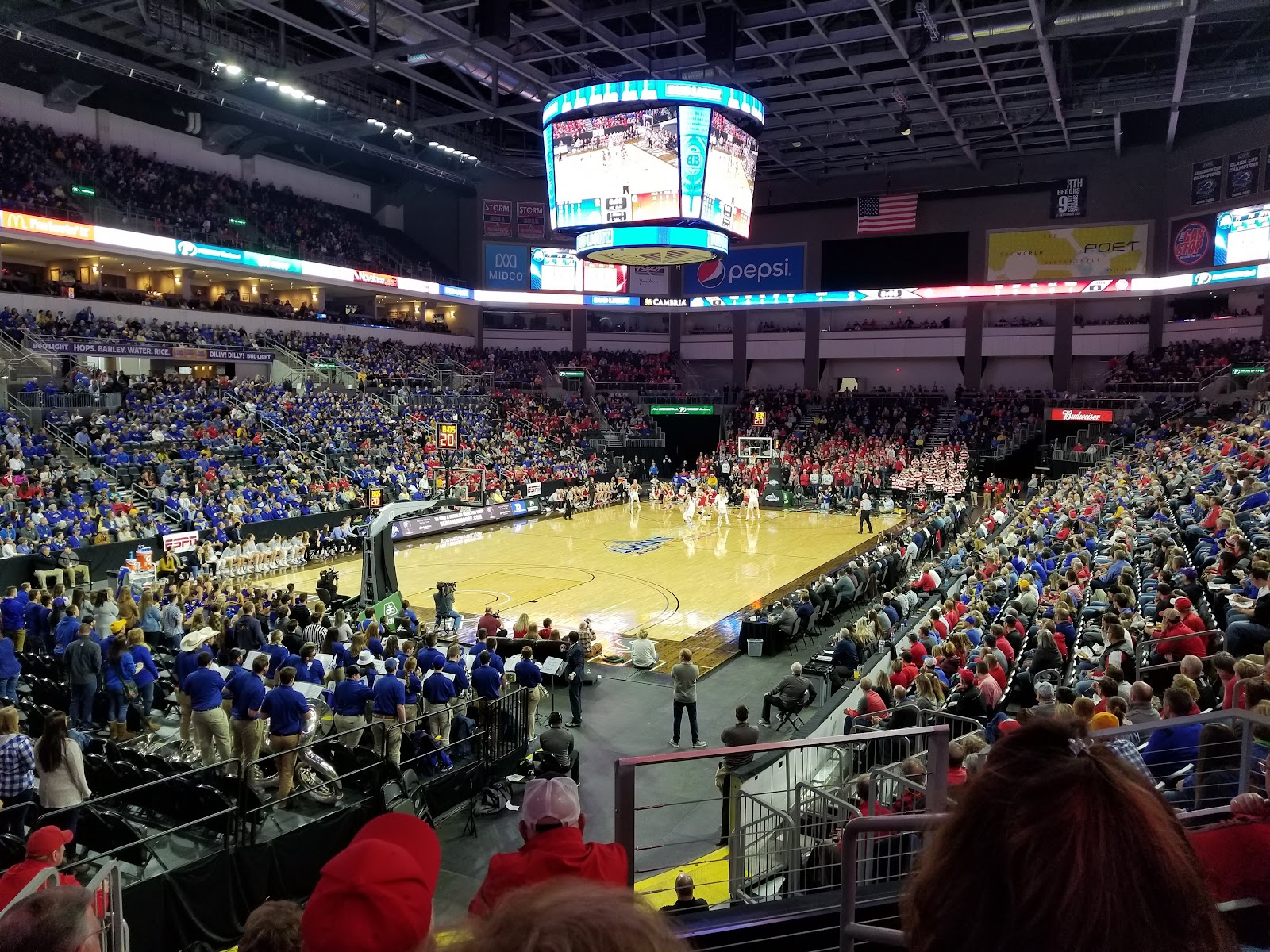
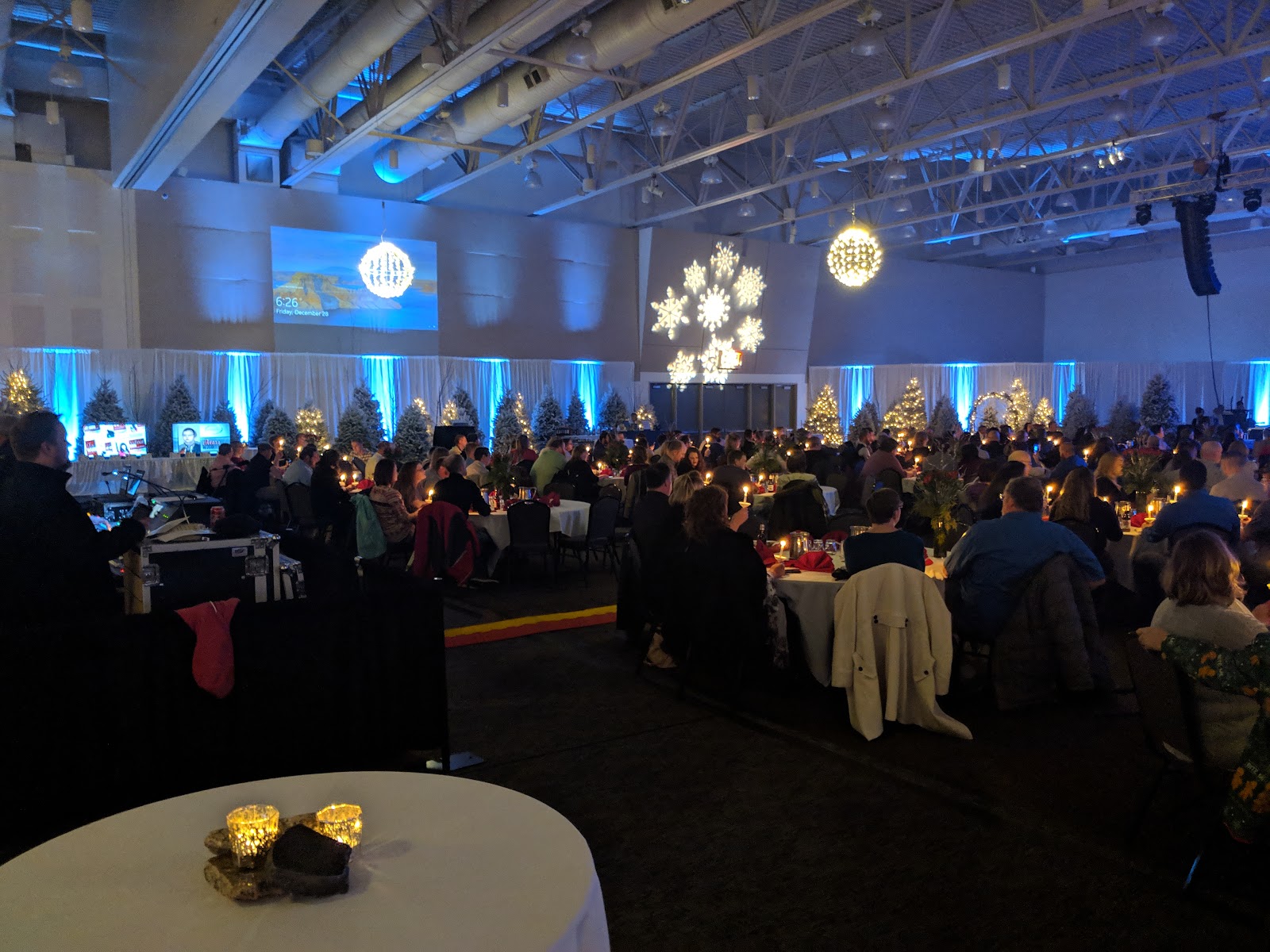
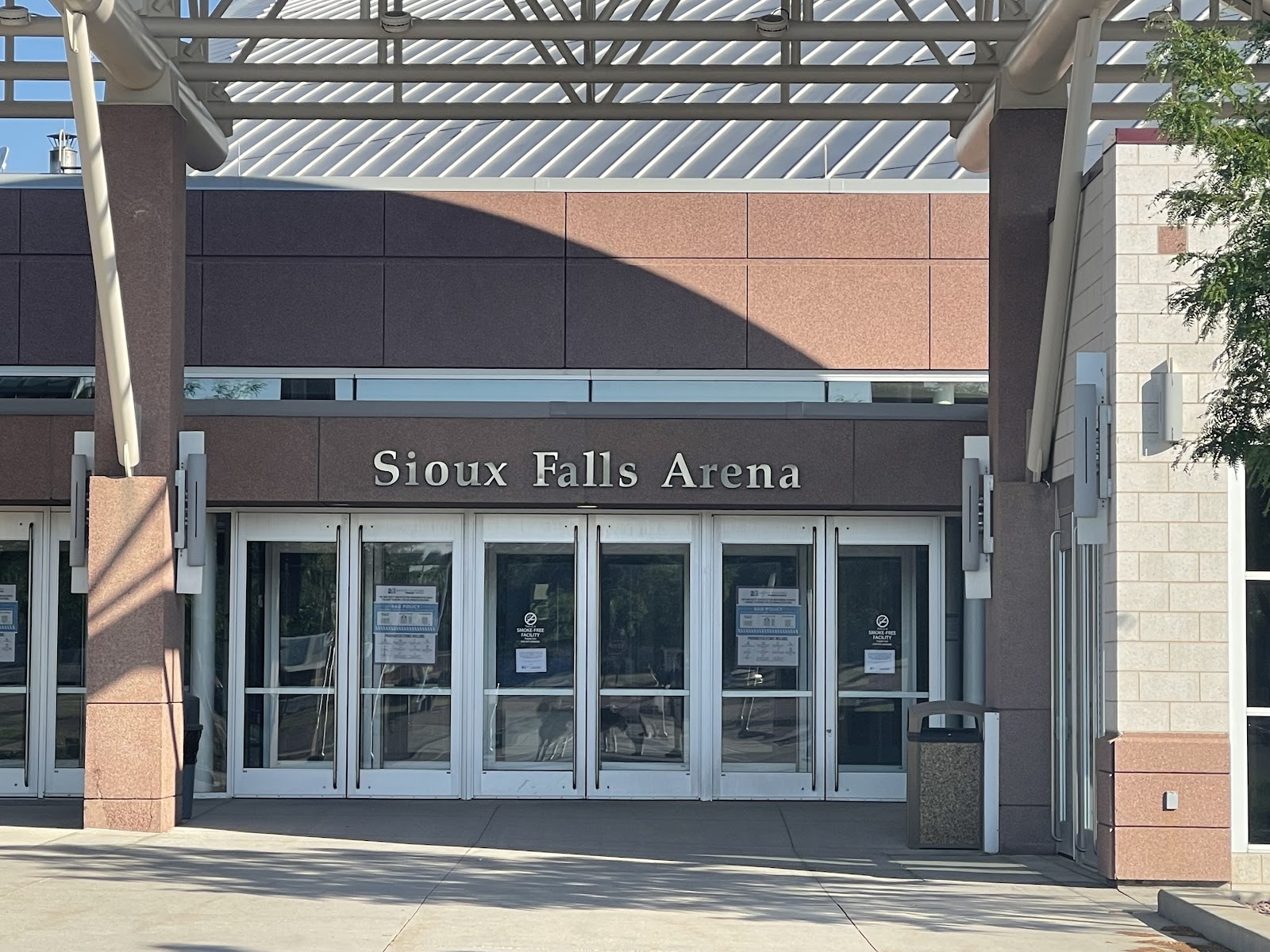
The Sioux Falls Convention Center is a large municipal and event complex in Sioux Falls, South Dakota, with the usual components: exhibit space, ballrooms, meeting rooms and glazed circulation, with an arena adjacent. And a short distance away the Big Sioux River drops through a gorge in a series of ledges, which is the feature the city is named for.
That rock is the thing worth knowing about, because it is unlike any other stone in this collection.
Sioux quartzite is a metamorphosed sandstone, extremely hard, and it is pink — a genuine warm rose-to-purple pink, not a grey with a hint of colour. The river falls over it in stepped ledges, the gorge walls are made of it, and the city’s older buildings are built from it, because it was quarried locally and there was little else.
For a photographer that is a gift, because it is a warm stone. Almost every rock in this library is cool: grey limestone, grey granite, dark basalt, all of which go blue in shade and need warming in post. Pink quartzite does the opposite. It holds warmth in shade, it saturates in low light, and it sits against green water and blue sky as a three-colour landscape.
It also has a specific behaviour worth using: it is hard and it fractures into angular blocks with flat faces rather than weathering into rounded forms, so a quartzite ledge is a set of planes and edges. In raking light those edges throw hard shadows and the rock reads as architecture rather than as geology.
So the shape of a good day here is straightforward: everything that needs a roof in the building, at whatever hour, and a session at the gorge in the last hours of light.
Two facts about the building first, because they are the same at every convention centre and they decide the indoor plan.
The hierarchy inverts what people expect. The glazed concourses are the best interior spaces, because modern convention centres invest in pre-function circulation — tall glass, open volume, views out — and so the space that exists to be walked through is the one with the light in it. The ballrooms are serviceable and anonymous. And the exhibit halls are the hardest photographic space in any venue type: very large, usually windowless, with exposed services overhead and lighting designed to put an even level on a trade stand rather than on a face.
And the light is accumulated. A building of this kind gathers fixtures across renovations, so a single hall may carry metal halide high bays, older fluorescent, newer LED panels and architectural accent lighting at once — different colour temperatures with different and sometimes spiky spectra that no single white balance reconciles.
Notes follow, grouped by where you are standing. Then the gorge, then the Northern Plains year — which is the most extreme continental climate in this collection.
The Sioux Falls Convention Center at a glance
| Where | A large convention and event complex in Sioux Falls, South Dakota |
| The reason | A pink quartzite river gorge a short distance away — a warm stone, which is rare |
| Indoor hierarchy | Glazed concourses best, ballrooms anonymous, exhibit halls hardest |
| The technical problem | Accumulated mixed light sources that no single white balance reconciles |
| Ask first | Which rooms you have, whether they are glazed, and park permit rules |
What you meet, and what each one needs
The glazed concourse. Problem: essentially none, which is why it comes first. Solution: use it for everything that needs to look good. A tall glass wall is a very large soft source, and in a space with pale floor and ceiling the bounce fills the shadow side for free. Put the subject side-on to the glass two or three metres back and work — it is the best natural light in the building and it is available all day.
The glazed concourse, second note. Problem: the glass is coated to reject heat, which shifts transmitted daylight cooler and often slightly green, and on a bright Plains day the exterior is very bright indeed. Solution: warm the whole block consistently rather than frame by frame, and expect a blown exterior in any frame that keeps a face correct — either accept the bright window as negative space or light the subject enough to balance it.
The glazed concourse, third note. Problem: in winter, condensation. A large glazed area at minus twenty outside and twenty inside will fog or frost on the inner face, and the view disappears. Solution: that is often a better background than the view — frosted glass is a diffused luminous panel and a subject beside it is softly lit against a white field. Work with it rather than looking for a clear pane.
The ballroom. Problem: anonymous, with dense patterned carpet and a ceiling height that is modest relative to floor area, so a wide frame reads as a large flat room. Solution: bounce for the ambient and go long for the faces. Two lights into opposite corners aimed at the ceiling — if it is pale, and check, because exposed dark ceilings are common — lift the whole room by a stop and a half invisibly. Then work at eighty-five or a hundred and thirty-five millimetres for anything with a person in it, so the carpet compresses into a wash.
The ballroom, second note. Problem: the movable partitions. Convention ballrooms subdivide with air walls, which leave visible floor tracks, ceiling channels and vertical seams that read as institutional. Solution: know where they are and compose them out, or shoot along them so a seam becomes a line rather than a join. The floor tracks are the ones that catch people out, because they run straight through the middle of a wide frame.
The exhibit hall. Problem: everything. Very large, likely windowless, with services exposed overhead, a floor finish chosen for forklifts, and high-bay lighting that is bright at floor level and arrives from a long way up — which gives flat top light, dark eye sockets, no modelling and a background of ductwork. Solution: minimise time, light hard, and go tight. Treat it as a black box: one modifier close and feathered, and the darkness behind separates the subject completely because the background sits four or five stops down.
The exhibit hall, second note. Problem: the ceiling often will not take a bounce, being dark, open and full of services. Solution: accept direct light and make it good. A single modifier close to the subject, feathered, produces a clean portrait in a hall like this, and the darkness becomes an asset — a subject lit at one end of a large dark space separates with no background work at all.
Mixed light sources, anywhere. Problem: metal halide, fluorescent, LED and accent lighting in one room, at different temperatures and with non-continuous spectra, so some sources record colours the eye does not agree with. Solution: choose the dominant source, balance for that, and let the rest fall. Do not average — averaging is what makes institutional interiors look grey. And gel any light you bring to match, because a neutral flash in a room lit by metal halide reads distinctly cold.
Mixed light sources, second note. Problem: older high-bay discharge lamps can flicker at a rate that interacts with a fast shutter, producing banding or shot-to-shot colour shifts. Solution: if you see banding, drop to a sixtieth of a second or slower and it usually disappears. Test on arrival rather than discovering it in the files.
Meeting rooms and service areas. Problem: small, low-ceilinged, windowless, carpeted. Solution: these are the plain surfaces of the building, and that makes them valuable. A blank painted wall in a service corridor or a small meeting room, lit with one source, gives a clean formal portrait that looks nothing like the rest of the set — which is exactly why two of them are worth finding on arrival.
Signage and wayfinding. Problem: a convention centre is covered in it, in institutional colours, at eye level, exactly where backgrounds live. Solution: long lenses and low or high camera positions. Eye level is the height at which all the apparatus lives; below it you get ceiling, above it you get floor.
One general note. Problem: a working event facility has its own bookings. Solution: establish what else is on site on the date, because a convention running in the adjoining halls turns the glazed concourse from a quiet light-filled room into a thoroughfare with lanyards in it — which is the difference between the best light in the building being usable and not.
The gorge, and the stone
The falls are a short distance from the building and they are the reason to choose this city, so the session there deserves planning rather than improvising.
The river drops through a gorge of pink quartzite in a series of stepped ledges rather than a single curtain, which gives you a sequence of drops, channels and pools at different levels with rock between them. That is a considerably more interesting subject than one big fall, because there are frames at several scales — the whole gorge, one ledge, one channel, one edge of rock.
The stone first, because it is the distinctive thing. Sioux quartzite is warm — a genuine rose-to-purple pink rather than a grey with a tint — and that warmth is the opposite of almost every rock in this collection. It holds its colour in shade instead of going blue, it saturates strongly in low light, and against green-brown river water and a blue sky it makes a three-colour composition with nothing muddy in it.
Light it from the side. Quartzite is extremely hard and fractures into angular blocks with flat faces, so a ledge is a set of planes and edges rather than a rounded mass — and in raking light those edges throw hard shadows and the rock reads as built rather than as eroded. In flat light it is a pink surface with no structure.
Wet quartzite is better still, and near a falls a great deal of it is permanently wet. Wet rock goes several tones darker and dramatically more saturated, so the spray zone is where the stone looks its best. Mind the front element and mind the footing.
Now the water, and it gives you a choice that should be made rather than defaulted. A fast shutter freezes a drop into distinct masses of white droplets, which reads as force and texture. A slow one — a quarter of a second up to a couple of seconds, on a tripod — renders it as a smooth veil, which reads as calm and makes the angular rock look harder by contrast. Both are good. Decide which the couple is, and make both if there is time.
For a long exposure in daylight you will need a neutral density filter, and it is worth carrying one specifically for this venue, because without it a second-long exposure is not achievable at any usable aperture.
The flow varies enormously through the year and it changes the subject completely. Spring melt and early-summer rain put a great deal of water through the gorge, which is loud, white and impressive; late summer and autumn can reduce it to channels between exposed ledges, which is quieter and shows far more of the rock. Neither is better and they are different photographs, so it is worth asking what the flow is doing in the week of the date.
In winter the falls partly freeze, building ice on the ledges and around the edges while water still moves through the middle. That is a genuinely spectacular subject — white ice on pink rock with dark moving water — and it is the version of this place almost nobody photographs.
The mill ruins are worth knowing about. There are nineteenth-century industrial remains at the falls, built of the same quartzite, and a ruined stone structure beside moving water is a strong subject in its own right: the same material as the gorge, squared and coursed instead of fractured, which makes a deliberate contrast between worked and natural stone. Photograph it close and raking for the masonry, and wide for the relationship between building and river.
Two practical matters. This is a public park, which means visitors — a city’s principal landmark is busy on any fine day and at weekends especially — and it very likely means a permit is required for a wedding group or for commercial photography. Ask the city, ask early, and do not assume, because the requirement is not waived by a wedding.
And the rock is dangerous when wet. Quartzite is hard and smooth-faced, and wet quartzite near moving water is genuinely slippery — people are injured at falls like this regularly. Stay on designated paths and viewing areas, keep a wedding party off the rock entirely, and do not step down toward the water for a better angle. There is no frame worth it.
The city’s older buildings are the third element and they extend the stone’s use. Because quartzite was the local material, downtown Sioux Falls has nineteenth and early-twentieth-century buildings faced in it — which means a pink stone streetscape, warm and unusual, in the same material as the gorge. That coherence is worth using: exterior frames downtown sit naturally beside frames at the falls.
Walking and travel times matter. Establish how far the falls are from the venue and how long a vehicle transfer takes with a party of a dozen, and put it on the timeline as a real number rather than an intention — because forty minutes of travel for a twenty-minute session has to be budgeted.
The Northern Plains, and the year
This is the most extreme continental climate in this collection and the year needs planning rather than assuming.
Sioux Falls sits at about forty-three and a half degrees north in the middle of the continent, a long way from any moderating ocean, which means the annual temperature range is enormous: summer afternoons into the low thirties and winter nights well below minus twenty, with a spread between the extremes that coastal photographers find hard to credit.
The latitude gives a useful number, though. Civil twilight runs roughly thirty-two minutes in midsummer with a usable balance point of fourteen to seventeen minutes — among the longer dusks in this library, and generous enough for two positions at the falls if both are decided in advance. The midsummer noon sun reaches about seventy degrees, low enough that even a clear midday has direction in it, and the midwinter noon sun sits near twenty-three degrees and rakes stone from late morning to mid-afternoon.
That last figure matters here more than usual, because a low sun on angular pink quartzite is the best light the city offers and in winter it is available for hours rather than minutes.
Wind is the constant. The Plains are open and the wind is sustained rather than gusty, blowing for hours or days, which makes a veil at an outdoor ceremony a genuine problem, a lightstand a hazard, and an unamplified officiant inaudible past the third row. At a falls, wind also carries spray considerably further than expected. Find the lee of any building or rock mass, sandbag everything, and ask the venue what the wind does, because anybody operating here knows.
Now the seasons, which divide sharply.
Late May into June is the first good window: everything green, the river running high and impressive, long evenings with sunset after nine by late June, and comfortable temperatures. It is also the wettest and most storm-prone part of the year — this region sits in an active corridor for severe convection, with supercells that arrive fast and carry damaging wind, large hail and a tornado risk. Any outdoor element in that window needs a covered alternative that genuinely exists, is reachable in minutes, and has a known capacity. At this venue that is not a problem, because the building is enormous and right there.
That resilience is the strongest practical argument for a convention centre in this climate and it is rarely made: a wedding whose ceremony and reception are indoors loses a trip to the falls on a bad day rather than losing the event.
September into mid-October is the strongest window and the one to recommend. The convection season winds down, the humidity drops out so the air is exceptionally clear, temperatures are comfortable, the light is low through the whole afternoon, and the region’s colour comes through late September and early October — carried by cottonwood, ash and maple along the river, which against pink rock is a genuinely good combination. Sunset around seven puts the balance point at a civil hour.
July and August are hot and humid by Plains standards, with dewpoints that surprise people this far north — the corn belt generates a great deal of moisture — and afternoon convection is frequent. The falls are usually at their lowest then, which shows the rock and reduces the water.
Winter is long, severe and genuinely photogenic, and it is the season nobody books. Temperatures well below freezing for months, substantial snow, and a low sun raking everything through a short day. At the falls it produces the version described above: ice building on pink ledges with dark water moving between them, which is spectacular.
Two snow notes. Snow is the best natural fill light there is, reflecting a very high proportion of what falls on it so the ground throws light upward into faces and fills eye sockets with no card at all. And it fools a meter: a mostly white scene reads as mid-grey and comes back one to two stops under, so add compensation and check a histogram. Snow in shade is genuinely blue because it reflects a blue sky — leave it, because neutralising it makes the snow grey and dead.
Against winter: at minus twenty with wind, a party in wedding clothes has minutes rather than an hour, and the operative number is wind chill rather than temperature. A falls session in January is three frames and a walk back. And blizzards close roads and ground flights across this region, which is a genuine travel problem for guests and suppliers — a winter date deserves a contingency that assumes some people cannot get here at all.
April and early May are the hardest months to plan: late heavy snow is normal, break-up leaves everything brown and wet, and the river is high and muddy. It is the period to advise against.
Two closing notes. The half hour after a storm clears on the Plains is exceptional and comes with something specific to open country: the air washes to clarity, wet quartzite goes dark and saturated, standing water reflects, and a low sun comes under a departing storm base — which on flat land means a lit foreground against a black sky, often with a rainbow, because the storm is moving away and the sun is behind you. That combination is the single most dramatic light available here and it is worth waiting for.
And establish the indoor capacity as a number, and what else is booked on the date. At this latitude in winter the heated interior is not a contingency; it is the venue, and the falls are a short excursion from it.
More frames from The Sioux Falls Convention Center
The Sioux Falls Convention Center wedding photography: common questions
What is the reason to come here?
The stone. Sioux quartzite is a metamorphosed sandstone, extremely hard, and it is genuinely pink — a warm rose-to-purple rather than a grey with a tint. The river falls over it in stepped ledges a short distance from the venue, the gorge walls are made of it, and the city’s older buildings are faced in it. That warmth is the opposite of almost every rock in this library, where limestone, granite and basalt all go blue in shade; quartzite holds warmth in shade and saturates in low light.
How should the rock be lit?
From the side, always. Quartzite fractures into angular blocks with flat faces rather than weathering into rounded forms, so a ledge is a set of planes and edges — and in raking light those edges throw hard shadows and the rock reads as built rather than eroded. In flat light it is a pink surface with no structure. Wet quartzite is better still, going several tones darker and dramatically more saturated, so the spray zone is where the stone looks its best.
What about the water itself?
A choice to make rather than default. A fast shutter freezes the drop into distinct masses of white droplets, reading as force; a slow one of a quarter-second to a couple of seconds on a tripod renders it as a smooth veil, which makes the angular rock look harder by contrast. Carry a neutral density filter, because a long exposure in daylight is not achievable without one. And ask what the flow is doing in the week of the date, because spring melt and late summer are completely different subjects.
Which interior space is best?
The glazed concourse, which inverts most people’s assumption. Modern convention centres invest in pre-function circulation — tall glass, open volume, views out — so the space that exists to be walked through is the one with the light in it. Put the subject side-on to the glass two or three metres back and the pale surfaces fill the shadow side for free. One winter bonus: at minus twenty outside, a large glazed area frosts on the inner face, which turns it into a diffused luminous panel and makes a better background than the view.
What is the main technical problem indoors?
Accumulated mixed light sources. A building of this kind gathers fixtures across renovations, so one hall may carry metal halide high bays, older fluorescent, newer LED panels and architectural accents at once, with spectra no single white balance reconciles. Choose the dominant source, balance for it, gel your own light to match, and let the rest fall — do not average, because averaging is what makes institutional rooms look grey. And if you see banding, drop to a sixtieth or slower, because older discharge lamps flicker.
When is the best time of year?
September into mid-October: the severe-convection season winds down, the humidity drops out so the air is exceptionally clear, temperatures are comfortable, the light is low all afternoon, and colour along the river against pink rock is a genuinely good combination, with sunset around seven putting the dusk window at a civil hour. Winter is spectacular and nobody books it — ice building on pink ledges with dark water between them — but at minus twenty with wind a falls session is three frames and a walk back, and blizzards are a real travel risk. April and early May are the period to advise against.
More South Dakota venue guides
We are writing a photographer’s guide to every venue we would happily shoot in South Dakota. Here are three more, plus the full index:
Planning a wedding at The Sioux Falls Convention Center?
The stone is warm and the building is a box. Tell us your date.