 The Blue Ball Barn, Wilmington: A Walk Through a Converted Barn
Buena Vista, New Castle: How the Light Moves on a Greek Revival House
A pale columned house, which is a reflector rather than a backdrop.
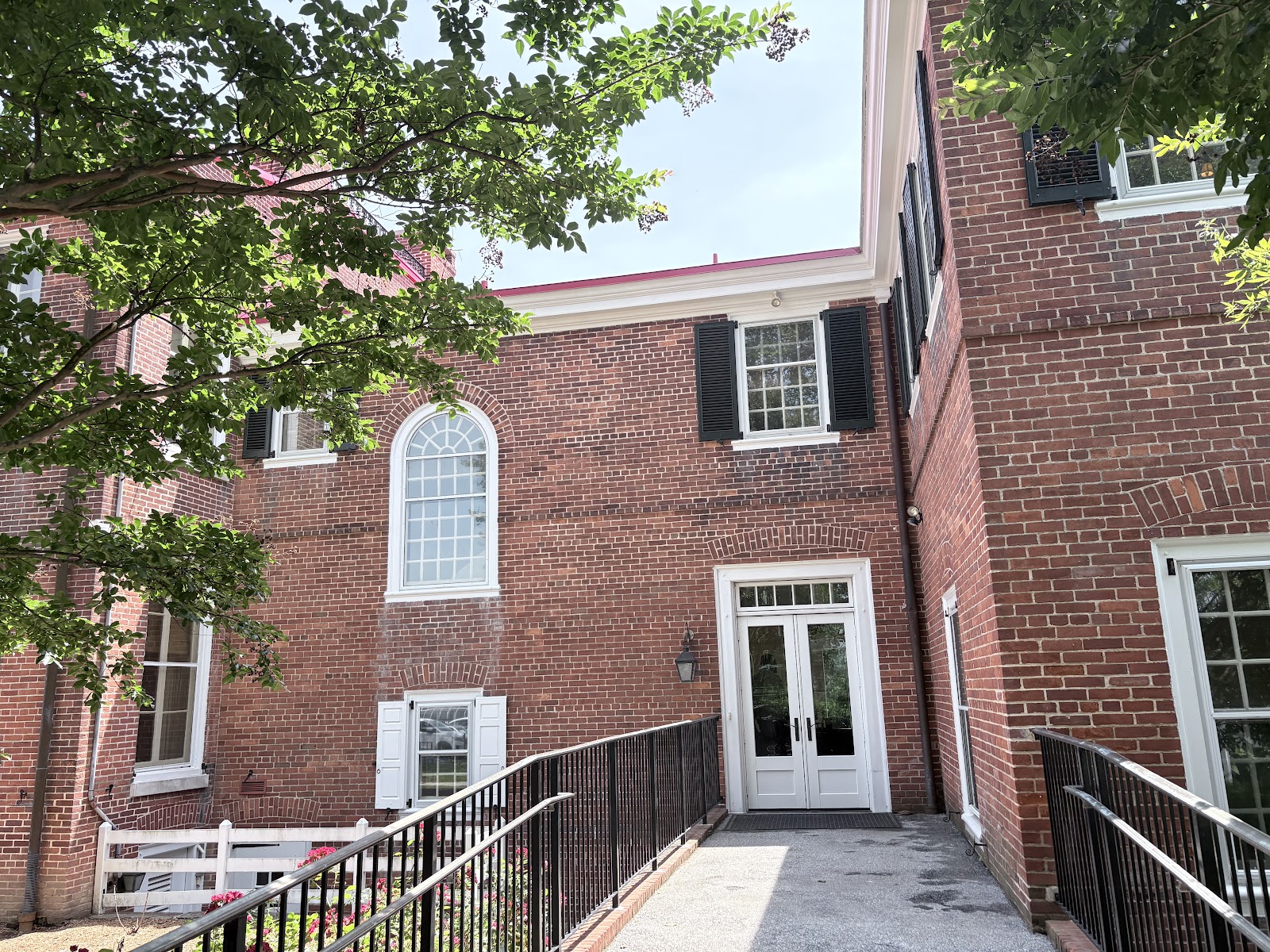
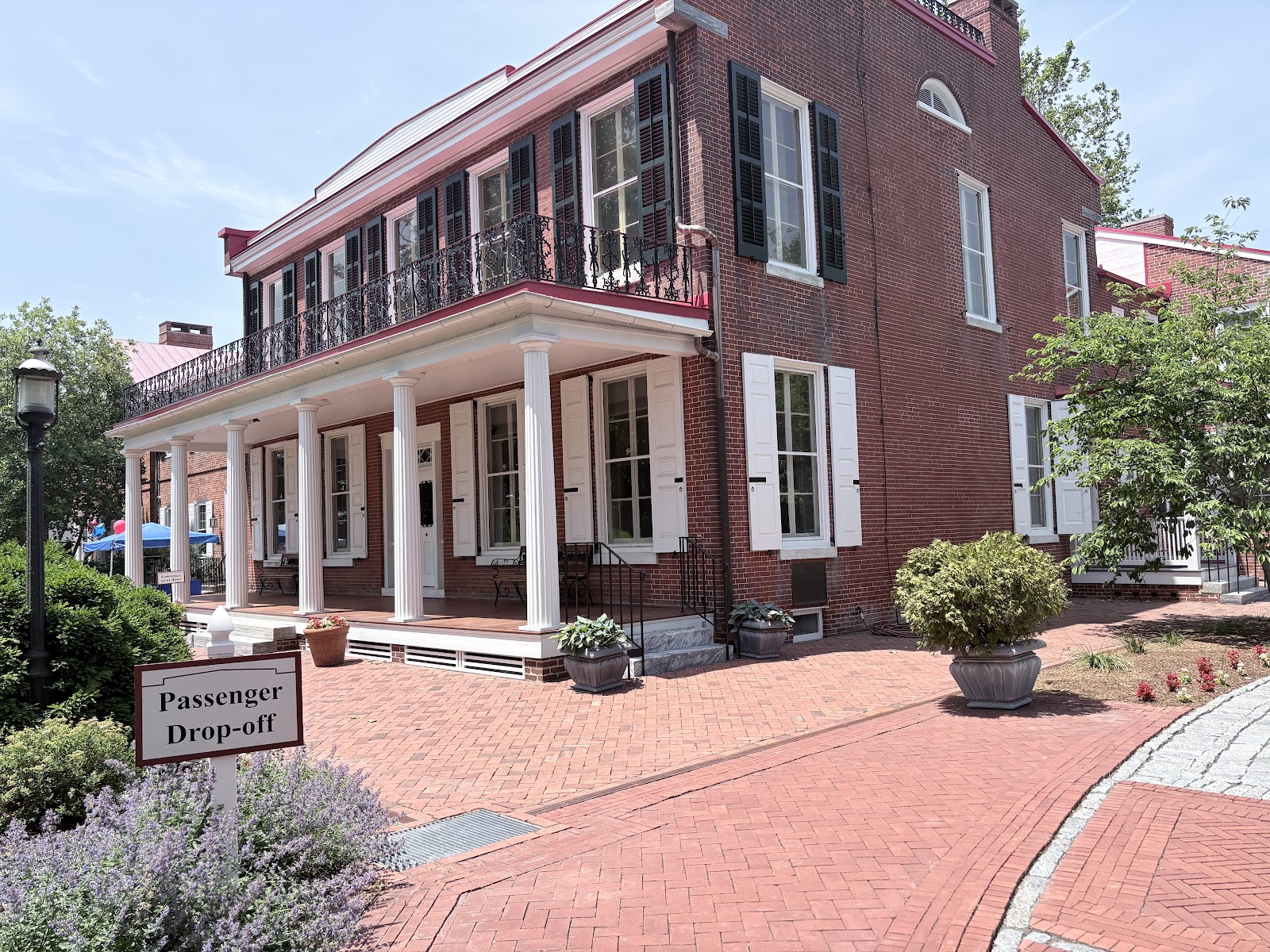
A Greek Revival mansion is a specific photographic proposition and the reason is the paint. This is a pale house with a columned portico, which means it is a very large area of high-reflectance surface rather than a dark absorbing one.
That inverts the usual expectation about historic buildings. A stone or brick house is a dark element in a frame and a background that skin sits against; a large white or cream-painted house is a light element and a substantial reflector, which changes the light around it as well as behind it.
Three things follow. The light near a sunlit pale wall is brighter, softer and more evenly distributed than near a dark building of the same size, which makes standing a subject beside one the most flattering free light available anywhere. Meters mislead: a frame containing much pale façade reads bright and the camera underexposes, often by a full stop. And the building has almost no silhouette against a bright or overcast sky, because pale paint and pale cloud are close in value — so the roofline disappears at midday and only reappears when the light is low.
The columns are the second element and they are a compositional structure rather than a decorative one. A portico is a rhythm of verticals, which is the strongest thing architecture offers a camera, and it is also a deep roofed space with an open side — which makes it a directional soft source with a hard mask and the best portrait position on the property at any hour.
The third element is the setting: lawns, mature specimen trees and northern Delaware’s Piedmont-fringe countryside. This corner of the state is rolling rather than flat, which gives relief that nine-tenths of Delaware lacks.
New Castle sits at about thirty-nine and two-thirds degrees north. The June noon sun reaches around seventy-three and a half degrees, the December noon sun about twenty-seven, days run from about nine hours twenty to fifteen hours, and civil twilight is around thirty minutes.
We have not photographed a wedding at this house. Which rooms and grounds are included, what access there is to the portico and the interiors, and what the permitted hours are, are questions for their team.
Buena Vista at a glance
| Where | A Greek Revival mansion with lawns and specimen trees in New Castle County, Delaware |
| The paint | A pale house is a reflector, not a backdrop: brighter softer light, and a fooled meter |
| The portico | A rhythm of verticals and a directional soft source with a hard mask |
| The setting | The Piedmont fringe — rolling ground, which most of Delaware lacks |
| Ask first | Included rooms and grounds, portico and interior access, permitted hours |
Morning into midday
The first decision of the morning is which elevation is lit, and on a formally planned house that is worth two minutes with a compass.
A Greek Revival house is symmetrical with a principal front, and its detail — the columns, the entablature, the window surrounds, the joinery — reads only under light raking across it at a shallow angle. Under frontal light it flattens into a pale field; under a high sun it flattens completely.
That makes each elevation a first-or-last-hour subject and it makes knowing the orientations the difference between a strong architectural frame and a weak one. A wall rakes for roughly twenty or thirty minutes once a day.
Mid-morning is the best open-ground portrait window before the evening. With the sun between twenty and forty degrees, faces have modelling rather than shadowed sockets, the lawn has texture, and a group with the sun behind the camera needs nothing added.
It is also the hour to use the pale wall as a light rather than as a background. A subject standing three or four metres from a sunlit white elevation, facing it or at an angle to it, is lit by an enormous neutral reflector — soft, generous and colour-neutral, which is the most flattering free light in this guide. The exposure caution stands: compensate positively and check on skin, because the wall in frame will pull the meter down.
Midday is the hardest light of the day and the portico is the answer. Depth back from its open edge is the whole control: at the edge the light is bright and nearly frontal and the result is flat; two or three metres back, against the wall, the ratio is dramatic and the sunlit lawn beyond has fallen four or five stops.
That deep position produces the most expensive-looking portrait on the property with no equipment at all, it works at any hour including the middle of a July afternoon, and it works in rain — which for a mid-Atlantic summer date is worth as much as the light.
The columns are the rhythm and they reward precision. A camera moved a few inches decides whether a column bisects a face, frames it, or disappears. One couple per intercolumniation, or the pair centred in a single gap with the rhythm receding behind them, turns repetition into composition.
And the symmetrical frame is available and exacting. On the building’s exact axis, absolutely level, with the couple centred and the columns receding evenly on both sides, at a camera height around the subjects’ chest so the verticals do not converge — that is a composed and still photograph that very few venues can produce. A minute with a level is worth it; approximately right is visibly worse than not attempting it.
The other midday answer is the trees, and in northern Delaware the species that matters is American holly — the state tree. It is evergreen, dense and very dark, which makes its margin one of the few genuinely near-black backgrounds in this state: a subject a metre inside a holly stand has soft directional light in front and three or four stops of dark behind, at any hour.
On a property dominated by pale paint and green lawn, one near-black background is disproportionately valuable.
Afternoon to dark, and inside
Early afternoon is the weakest window and the right time for the interiors, and a house of this period is a light problem rather than a separation one.
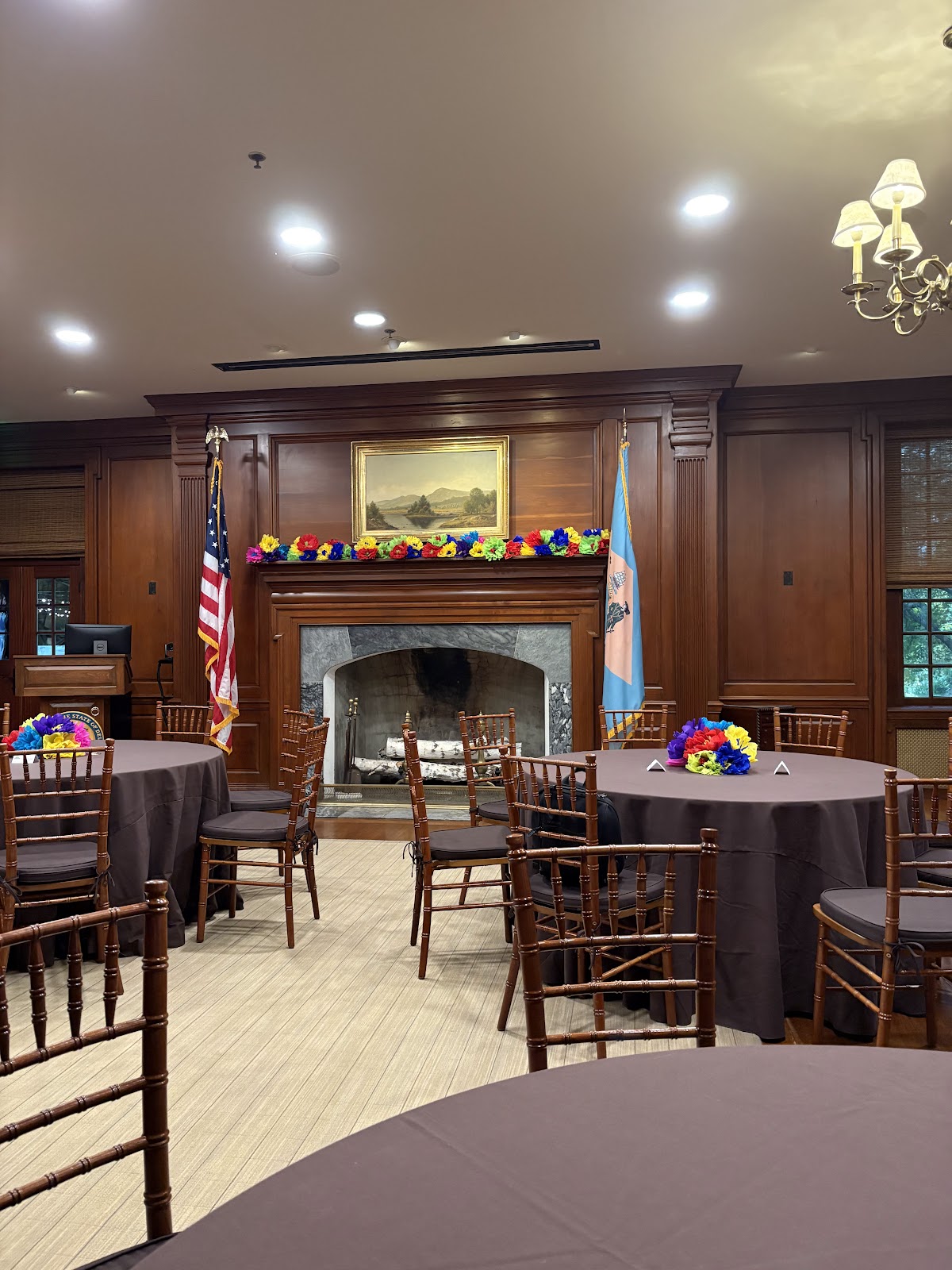
Greek Revival interiors have tall windows, generous ceiling heights and — depending on the decoration — finishes that may be pale or dark. Where they are dark, the fall-off from a window is steep and free: three or four stops from a face at a window to the wall behind, which does the separation with nothing added. Meter on skin and let the room go dark.
Where they are pale, the problem inverts: everything is bright and a subject has nothing to sit against, so the answers are to find something dark, to use the window at forty-five degrees so the opposite side of the face falls off, or to add a source a stop over ambient.
Tall windows in this period are often floor-length, which does something useful: they act as a strip light rather than a box, giving a long vertical gradient down a standing figure that a square window cannot. A subject at forty-five degrees to a floor-length window, at a distance that sets the ratio, is the best interior frame in a house like this.
In a room with windows on two walls, one becomes key and the other fill — a complete lighting setup made of architecture. And a central hall with a stair, which a symmetrical house of this type almost always has, gives a level change, a balustrade at leaning height and a directional source from whatever light reaches the landing.
Mid-afternoon the sun crosses and the other elevations begin to rake. The useful discipline at that point is to separate the jobs: photograph the architecture while the light is shallow across it, and photograph people in the portico or in the building’s own shaded returns.
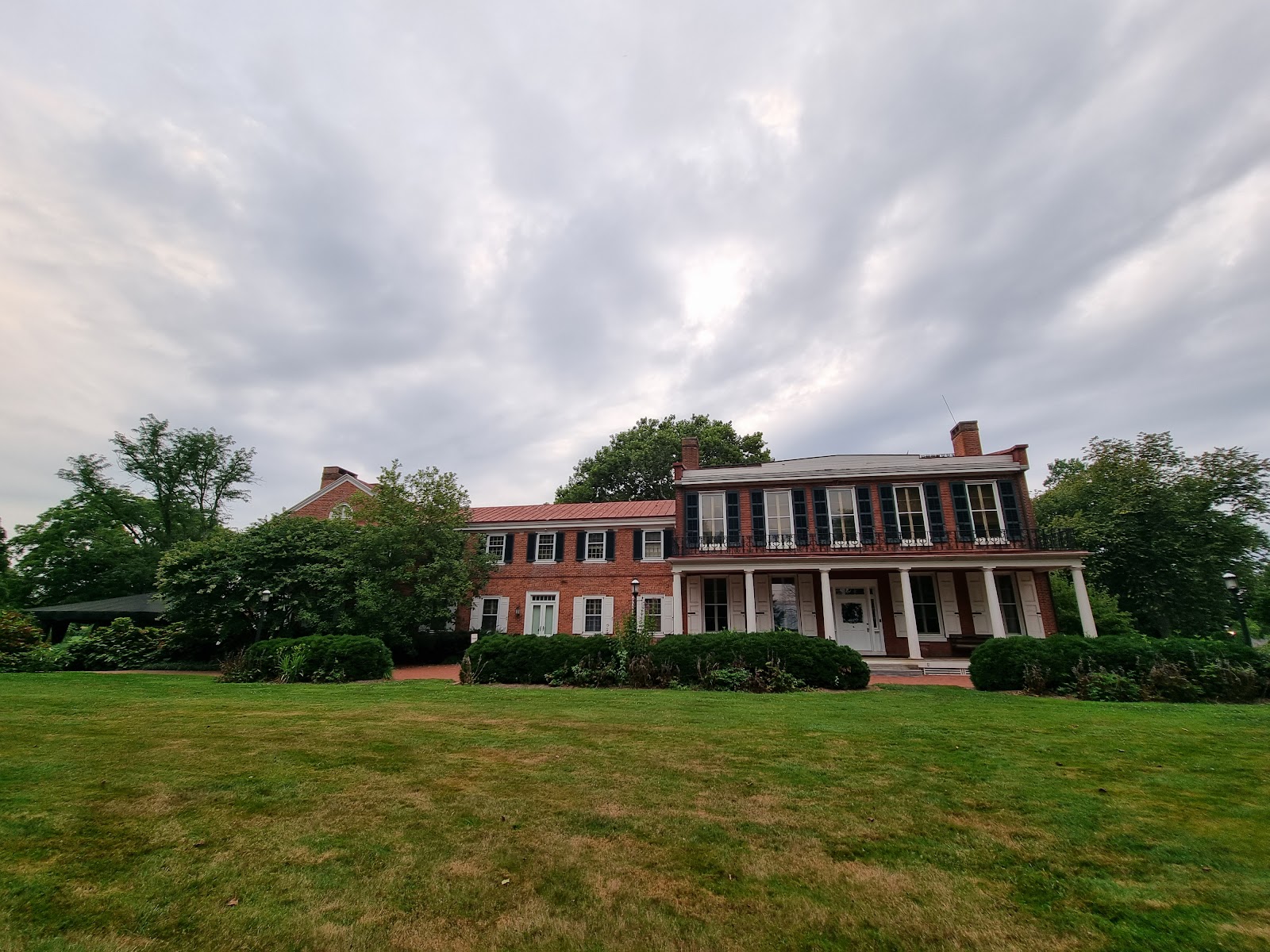
The last ninety minutes are the property’s best, and in northern Delaware’s rolling country most of them are available on the ground rather than being cut off by high ground. A low sun on a pale façade produces the one condition in which the building has both texture and a silhouette — the paint takes a colour from the sun, the columns model, the roofline separates from a deepening sky, and the whole thing reads.
Three frames belong to that window. The couple with the lit façade behind them, which needs nothing. The couple with the sun behind them on the lawn, exposed for the sky and lifted by a close warm-gelled source. And the house itself, lit frontally and low, with nobody in it — because a Greek Revival front in raking light is a photograph in its own right.
The gel is not optional. Low sun here is strongly warm and open shade is lit by a blue sky, so an ungelled flash puts cold faces into a gold frame.
Then dusk, and at this latitude it is around thirty minutes of civil twilight — a workable window. If the house is lit, the crossing point is the frame: the sky and the lit façade sit within about a stop of each other for roughly ten minutes, and a pale columned house against a deep blue sky with warm-lit windows is a simple, complete photograph. Scout the camera position in daylight.
The gradient is the last resource and it is the Piedmont fringe’s gift. From below the subjects on any rise they stand against open sky with no horizon behind them — the cleanest background in any conditions, and the way to remove the drive, the parking and the guests in one move. From above them the grounds and the house fill the space behind.
Two completely different photographs from one spot, by walking twenty metres. Nine-tenths of Delaware cannot offer that.
- Check every elevation’s orientation — a wall rakes for twenty minutes a day
- Use the pale wall as a light: three or four metres out, and compensate a stop
- Depth back from the portico edge is the whole lighting control
- On the axis, level, at chest height — or deliberately off it
- A floor-length window is a strip light, not a box
The northern Delaware year
Four real seasons on the Piedmont fringe, and at a pale house the seasons do something specific: they change what the building has to sit against.
Winter is the best season for the architecture and it is worth being emphatic. The December noon sun at around twenty-seven degrees never rises high enough to flatten anything, which means a pale elevation facing anywhere near the sun rakes for the whole short afternoon rather than for twenty or thirty minutes — so the columns, the entablature and the joinery have texture for hours instead of minutes.
Bare trees also open the grounds completely, which means the house is visible from positions that summer foliage conceals, and the specimen trees become structure rather than mass.
American beech is the winter surprise in this region: it holds pale tan dead leaves on the tree through much of the winter, which means a beech stand in February is a warm-toned space rather than a bare grey one — and against a white house that is a better background than either bare grey or summer green.
Holly stays near-black, which in a landscape of browns and greys makes it the one solid dark mass rather than one dark thing among many. Snow is variable in northern Delaware and rarely deep; when it lies it is the best natural fill available, lifting shadows to within a stop and fooling a meter by about two, and a white house against snow is a study in pale tones that is harder and more interesting than it sounds — the building has to be exposed for and the snow allowed to go bright.
Freezing rain is the more characteristic mid-Atlantic winter event, and an ice-glazed specimen tree against a pale façade is remarkable and entirely unplannable.
Spring is early here and genuinely fine. March brings the earliest bulbs; April brings dogwood, redbud and cherry, all lit directly before the canopy closes; and the lawn greens through late April.
That two-to-three-week window before leaf-out completes is the best fortnight of the year on any Piedmont property, because a flowering understorey in full light is a condition that does not recur. Magenta redbud against a white Greek Revival front is the strongest colour combination the property offers.
The costs are the mid-Atlantic severe-weather season building from April, which on open lawn makes a named indoor alternative a requirement.
Summer is the weakest season for the building and the busiest for weddings. Everything is green, the middle of the day at seventy-three and a half degrees of elevation flattens the façade completely, and dew points in the low twenties Celsius put haze in the air — which at a property whose subject is a building at close range costs little.
What summer gives is fifteen hours of daylight and a thirty-minute twilight, which is an unhurried schedule, and a long low evening in which the pale house finally reads.
Autumn is the second strong season and it is late here: the second half of October into early November. The Piedmont palette is rich — tulip poplar clear yellow, sugar maple orange and scarlet, sweetgum purple-red, beech bronze, oak russet — and on a property with mature specimen trees it arrives on individual objects rather than as a mass.
That is better: one enormous tulip poplar in full yellow beside a white house is a stronger photograph than a hillside of mixed colour, because it is a single subject placed against a single plain field. And because oak and beech colour and drop slowly, the window is a genuine three weeks rather than two.
Late November strips it back to structure — bare hardwood, tan beech, near-black holly, brown lawn and a very low sun all day — and the house is at its best with almost nobody there.
More frames from Buena Vista
Buena Vista wedding photography: common questions
What does the pale paint change?
A large white house is a reflector rather than a backdrop: the light beside it is brighter and softer, the meter underexposes by about a stop, and the roofline vanishes against a pale sky.
Where is the best portrait position?
Two or three metres back under the portico roof, against the wall — a four or five stop fall-off to the sunlit lawn, with no equipment, in any weather.
How do I take the symmetrical frame?
On the building’s exact axis, absolutely level, camera at about the subjects’ chest height. A nearly symmetrical frame reads as a mistake.
What is the best interior light?
A floor-length window used at forty-five degrees. It acts as a strip light rather than a box, giving a long vertical gradient down a standing figure.
What gives a dark background here?
American holly. On a property dominated by pale paint and green lawn, one near-black background is disproportionately valuable.
When is the house at its best?
Late autumn and winter, when a sun that never rises above twenty-seven degrees rakes the façade for whole afternoons — and April, for redbud against white paint.
More Delaware venue guides
We are writing a photographer’s guide to every venue we would happily shoot in Delaware. Here are three more, plus the full index:
- The Cape May–Lewes Ferry, Lewes: The One Decision That Governs Everything
- Deerfield Golf Club, Newark: Field Notes, Problem and Solution
- Dogfish Head Craft Brewery, Milton: The Venue’s Own Logic
Planning a wedding at Buena Vista?
A pale house that lights you as well as backing you. Tell us your date.