 The Blue Ball Barn, Wilmington: A Walk Through a Converted Barn
The Wharf at Lewes: How the Light Moves on a Tidal Canal
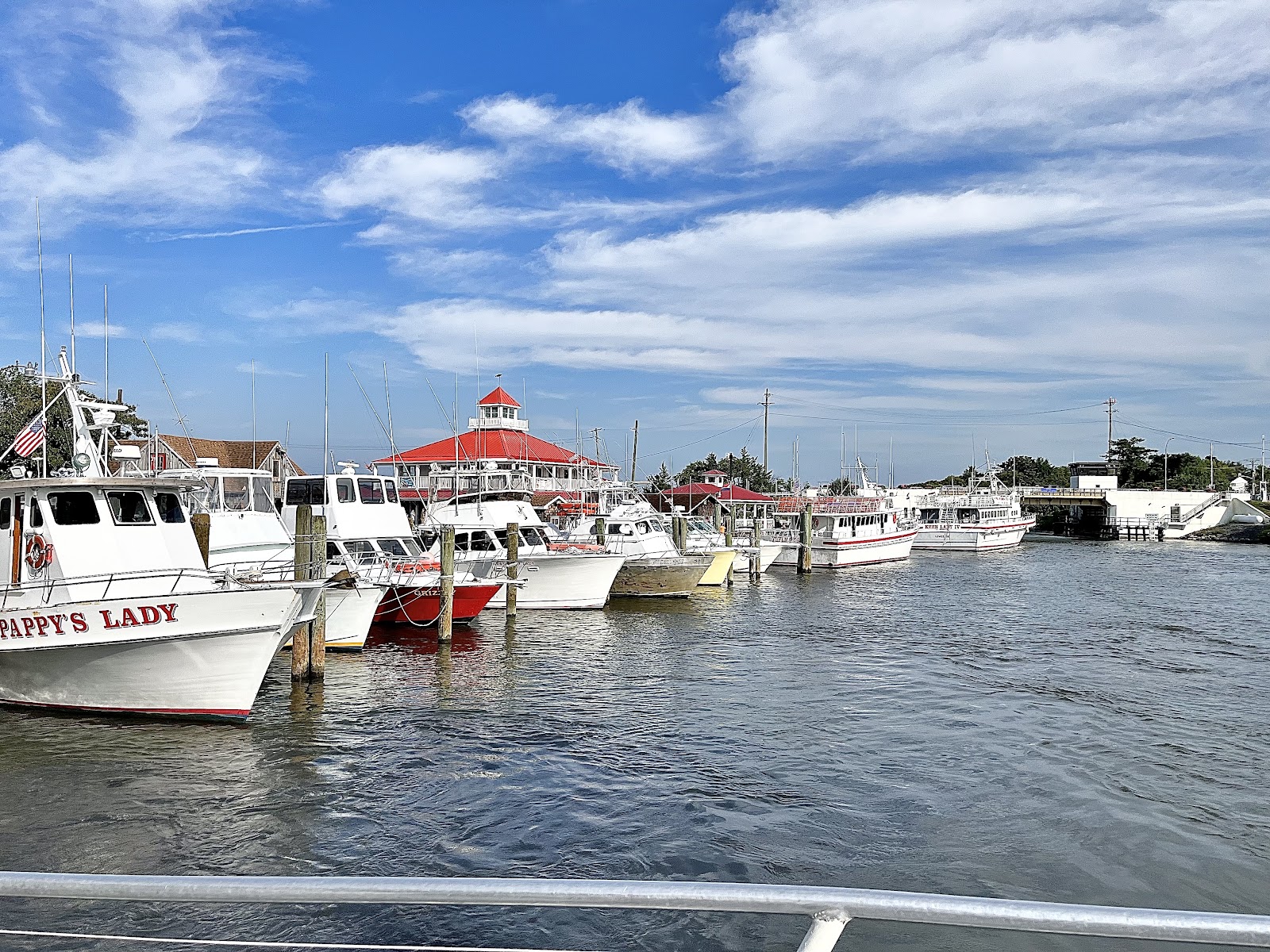
A narrow working channel, which means the light comes down it rather than across.
The water here is a canal rather than open bay, and that single fact governs the light more than anything else on the property.
A narrow waterway behaves quite differently from an open shore. It has two banks close together rather than one shore and a horizon, which means the light reaching the water arrives largely from a strip of sky along its axis. It runs in a fixed direction, which means the sun passes across it rather than along it for most of the day, and comes down it only when its heading and the sun’s align. And it is sheltered, which means it is calm far more often than open water — so reflections are available at hours when a bay is a texture.
The practical consequence is that the whole photographic day here can be predicted from one piece of information: which way the channel runs. Establishing that on arrival takes two minutes and determines when the water is lit, when it is in shade, and when the low sun comes straight down it — which is the frame worth waiting for.
The second governing fact is the tide. Lewes sits at the mouth of Delaware Bay, where the tidal range is around five feet — moderate by the standards of this guide, and enough to change a working waterfront substantially. At high water the channel is full, the boats float level, the water reaches the built edge and every reflection frame works. At low water the edge has withdrawn, exposed mud and pilings show, and boats in shallow berths sit differently.
That range is smaller than New England’s and much larger than Delaware’s inland bays. Looking it up is a two-minute job that decides what the waterfront looks like.
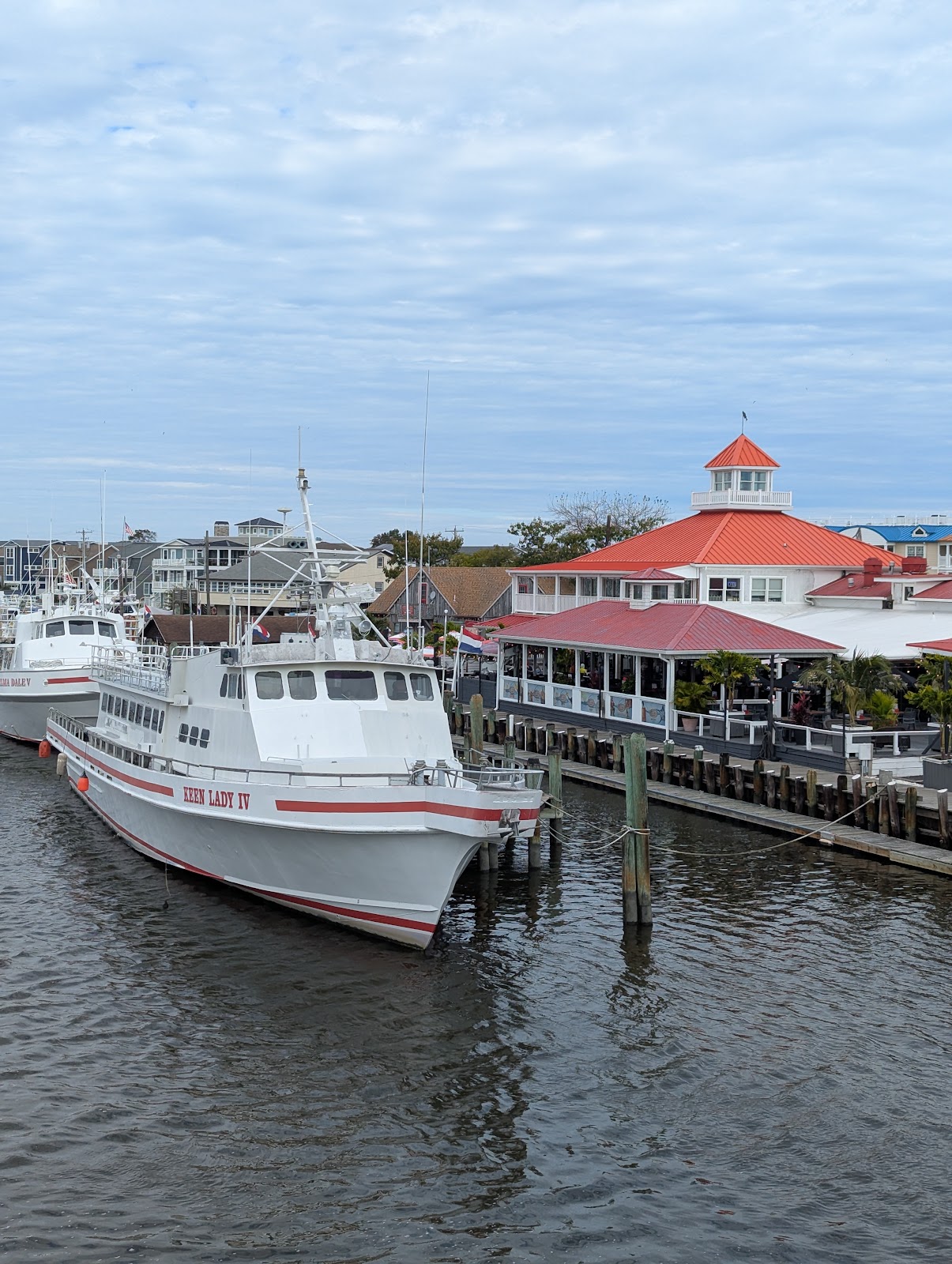
The third is that this is a working waterfront rather than an ornamental one: moorings, fishing and charter boats, gear, pilings and the commercial fabric of a small port. That is a background with real content and real clutter, and using it deliberately is most of the work.
Lewes sits at about thirty-eight and three-quarter degrees north. The June noon sun reaches around seventy-four and a half degrees, the December noon sun about twenty-eight, days run from about nine hours twenty-five to fourteen hours fifty, and civil twilight is around twenty-nine minutes.
We have not photographed a wedding at this venue. Which spaces are included, what access there is to the wharf and the water’s edge, and what the permitted hours are, are questions for their team.
The Wharf at Lewes at a glance
| Where | A waterfront venue on the working canal at Lewes, near Delaware Bay’s mouth |
| The channel | Narrow and sheltered: the light comes down its axis, and it is calm more often |
| First job | Establish which way the channel runs — it predicts the whole day |
| The tide | Around five feet at Lewes, twice a day |
| Ask first | Included spaces, wharf and water’s edge access, permitted hours |
Morning into midday
The first hour belongs to the water and it is the one worth getting up for, because a sheltered channel at dawn is a mirror.
The town and the bay mouth face broadly east and north-east, which means the sun rises over the water — and on this part of the coast that is the reliable direction for low sun over the sea. At first light the boats are lit from the front, the buildings along the wharf are lit low and warm, and the channel surface is unbroken because the air has not begun to move.
A working waterfront at dawn is the strongest frame this kind of venue produces: a mirror holding masts, hulls, pilings and the buildings behind them. The reflection rule applies — a reflection is about a stop darker than what it reflects, so compose so the reflection is of dark hulls, pilings and the far bank rather than of the open sky, and the two sit within a stop of each other and need nothing.
Mist on the channel is common on warm mornings in spring and autumn, because the water here is cool and any warmer air over it condenses. Mist among masts with a low sun behind it is the frame that defines a mid-Atlantic port.
Mid-morning is the best land portrait window before the evening. With the sun between twenty and forty degrees, faces have modelling rather than shadowed sockets, and a group with the sun behind the camera at this hour needs nothing added.
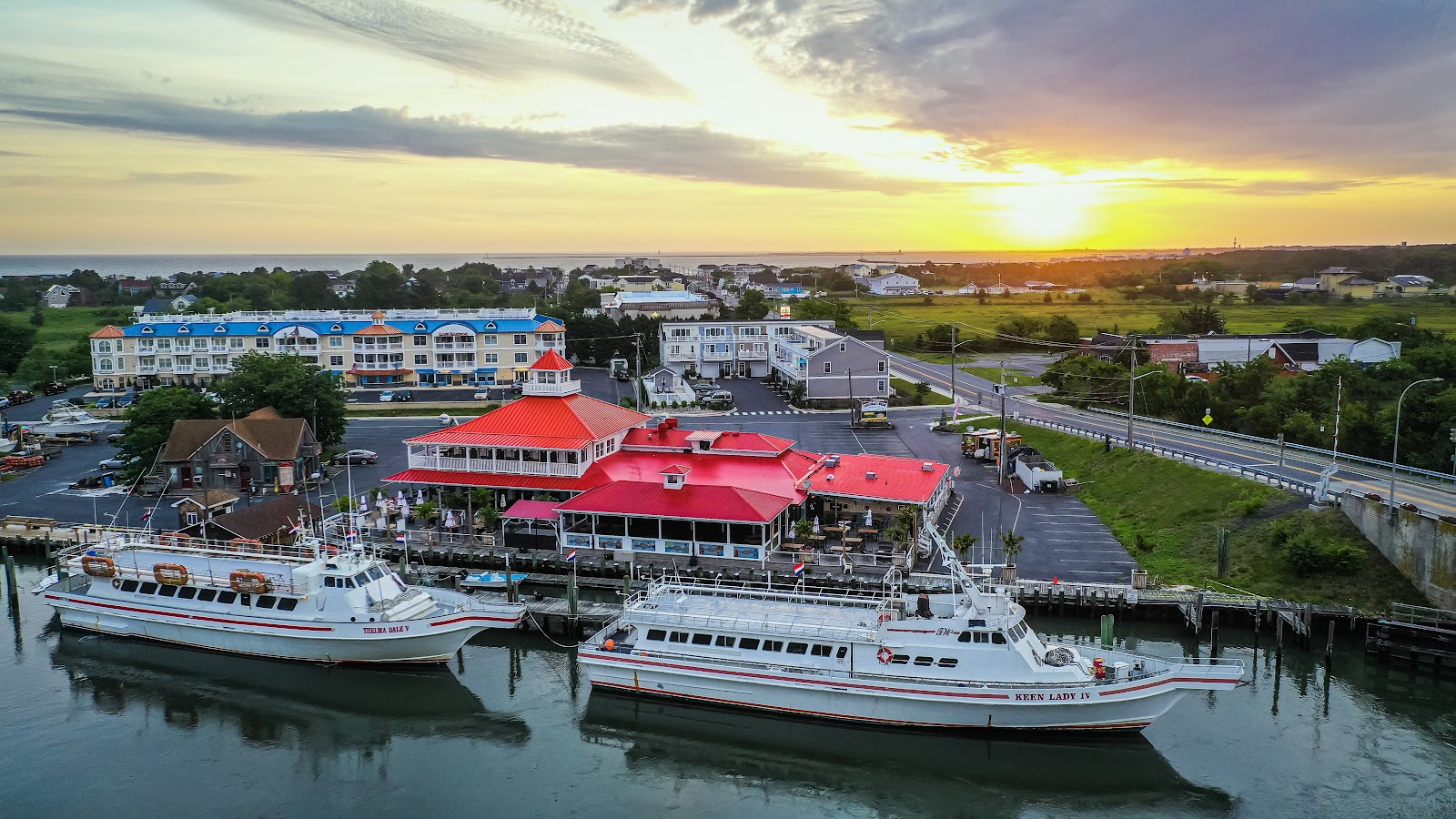
It is also the hour when the waterfront’s colour is at its strongest, and colour is this venue’s real asset. Painted hulls, buoys, trim, gear and the fabric of a small port are the most saturated things on this coast — the only strong colour in a landscape of grey water, green marsh and pale sand. A white dress against a red hull or a stack of painted buoys is a bold graphic picture that no inland venue can produce.
And it is when the pilings read. Weathered timber piling is dark, textured and vertical, and it is a high-frequency surface — which means it comes alive under light raking across it and reads as a flat brown field under frontal light. A run of pilings at a shallow light angle is the best texture on the property and it is a morning or evening subject.
Midday is the hardest light of the day and a wharf has little cover. At seventy-four and a half degrees of June elevation the sun puts eyes in shadow and foreheads in light, and the answers are architectural — a doorway, a covered deck, the shaded side of a building, a boathouse.
A doorway is the best free setup anywhere: a subject a metre inside an open door is lit by the whole sky in front and backed by the dark interior, a giant softbox and a four or five stop black backdrop, in any weather.
The other midday answer is the channel’s own geometry. A narrow waterway with buildings along one bank means that bank is in shade for part of the day while the opposite one is lit — which gives a subject in even shade with a brightly lit far bank behind them. That is studio separation supplied by the layout, and on a channel it is available twice a day rather than once.
Afternoon to dark, and the town
Early afternoon is the weakest window and the right time for the interiors and the town.
A waterfront venue’s interiors are likely to be either timber or pale and modern. Timber absorbs, which means the ambient sits a stop or two below what the eye estimates and the background falls away for free — meter on skin and let the room go dark. Pale and modern inverts the problem to separation: find something dark, use the glazing at forty-five degrees, or add a source a stop over ambient so the subject has a shadow side at all.
The specific advantage of a water-facing window is that the light coming through it has bounced off the channel and the sky rather than off grass, which makes it brighter, cooler and more neutral than an inland window — and worth seeking out for that reason, with the white balance set on a face rather than on a preset.
Mid-afternoon the light crosses onto the other bank and the property begins to improve, and the frame worth waiting for is the one where the low sun comes down the channel’s axis rather than across it.
That happens once or twice a day depending on the channel’s orientation and the season, and when it does the effect is specific: the water becomes a corridor of light, the pilings and hulls on both sides are rim-lit, and a subject standing on the wharf has warm directional light along the water and dark banks to either side. It is the best exterior frame the venue offers and it is entirely predictable from the geometry.
Working out when it will happen — which requires knowing the channel’s bearing and the sun’s azimuth at sunset on the date — is a five-minute calculation that is worth more than any amount of technique here.
The last ninety minutes otherwise behave as any waterfront’s do. The three answers to backlight over water apply where the sun is down the channel: a close warm-gelled source at a stop over ambient with the exposure set for the sky and water; a silhouette exposed for the sky alone, which works because the far bank gives a clean horizontal base; or turning around and using the low sun frontally.
The gel is not optional. Low sun here is strongly warm and open shade is lit by a blue sky, so an ungelled flash puts cold faces into a gold frame.
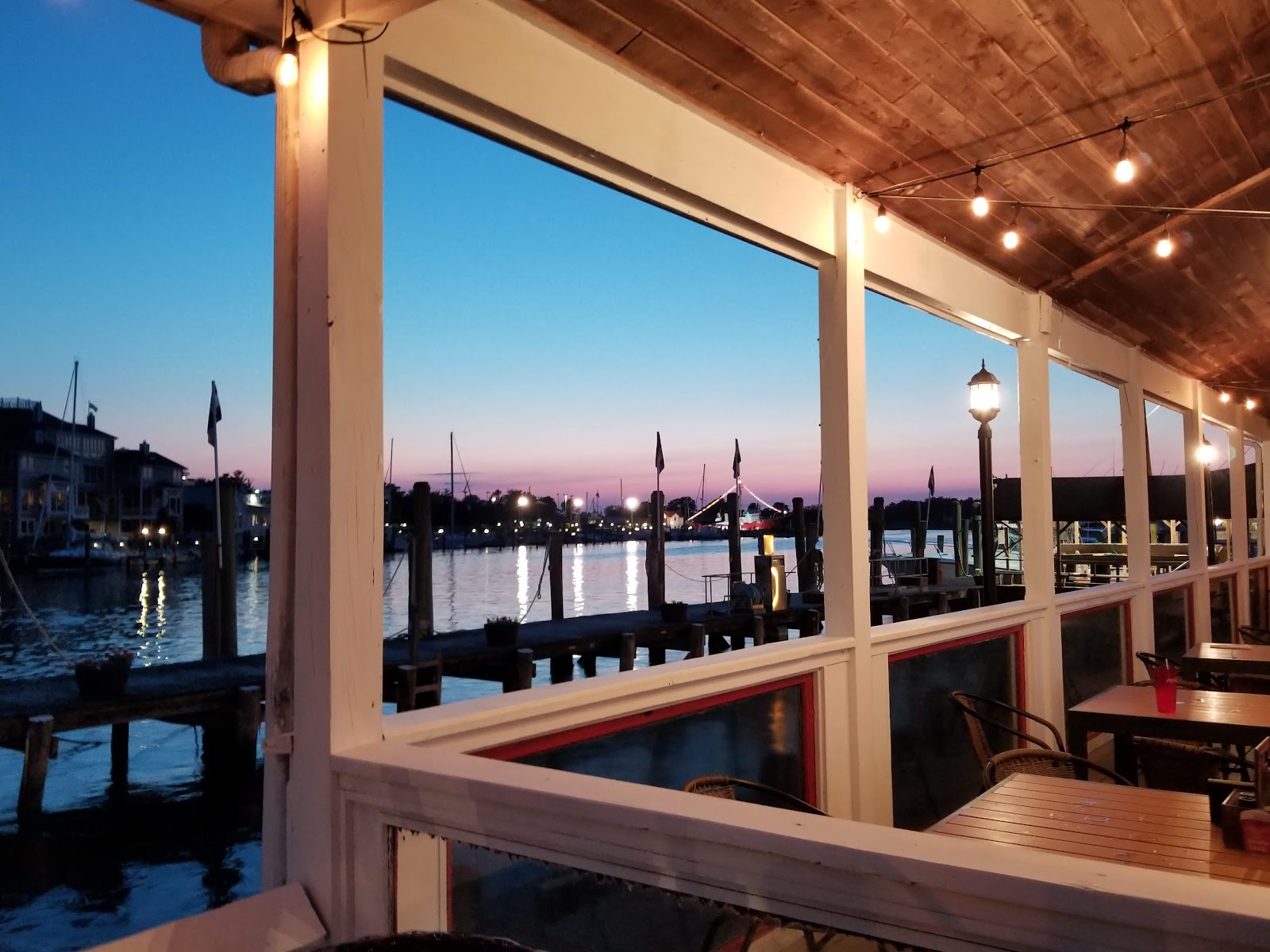
Then dusk, and on a working waterfront it is the venue’s best hour. A port at blue hour becomes a field of lit points — mast lights, boat windows, the buildings along the wharf, street lighting — over dark still water that doubles all of them, with everything unlit invisible. That last part is the important one: dusk removes the clutter that daylight reveals.
The crossing point applies: the sky and the lit waterfront come within about a stop of each other for roughly ten minutes, and that crossing is the frame. Civil twilight here runs around twenty-nine minutes, so it is a workable window and a short one — scouted in daylight, because ten minutes is not enough to search.
Lewes itself is the other resource and it is a genuinely good one. This is one of the oldest towns in Delaware, with a coherent historic core of clapboard and brick, and that material is completely different from a working wharf and a short walk away.
And Cape Henlopen, at the bay’s mouth, gives dunes, pale quartz sand and pine within a short distance. The bay beaches there are also the site of a globally significant natural event — horseshoe crabs spawn on the highest tides around the new and full moons in May and June, with migrating shorebirds arriving to feed on the eggs — which is of real interest and a reason some beaches have access restrictions in those weeks.
Two practical notes. Salt aerosol on a waterfront settles on front elements within minutes rather than hours. And a channel funnels wind along its axis, which makes a lightstand a liability and every source handheld or weighted.
- Establish the channel’s bearing first — it predicts the whole day
- Reflect dark hulls and pilings, not the open sky
- A subject in shade with a lit far bank behind: available twice a day
- The low sun down the channel’s axis is the frame worth calculating for
- Dusk removes the clutter that daylight reveals
The Delaware Bay year
Four real seasons at the mouth of a large estuary, and a working waterfront whose content changes with them as much as its light does.
Winter empties it. Many boats are hauled out, the gear is stowed, and the moorings are bare — which removes most of the clutter and leaves the buildings, the pilings and the water. For a photographer that is a substantial simplification and it makes winter the cleanest the waterfront looks all year.
The December noon sun at around twenty-eight degrees means the whole short day rakes rather than floods, which is exactly what weathered piling, painted hull and brick want. The channel runs slate grey under a low sun and sometimes ices at its edges, and snow — variable and rarely deep here — covers the wharf and removes the remaining visual noise.
Winter also brings the earliest dusk: sunset just after half past four in December, which puts the blue-hour waterfront crossing at around five rather than after nine. For an evening reception that lands the best frame of the day before the event.
Sea smoke — steam rising off relatively warm water on a very cold still morning — is possible at the bay mouth and it is spectacular.
The costs are cold, a nine-and-a-half-hour day, and wind funnelled along the channel that is worse in winter than at any other time.
Spring is the fog season on this coast, because warm air moving over water still cold from winter condenses. On a narrow channel fog does something specific and rather good: it removes the far bank and the town, leaving the nearest pilings and hulls in soft even light against white — which is the cleanest this venue ever looks and is a genuinely good photograph once.
Late spring brings the horseshoe crab and shorebird season to the bay beaches nearby, around the new and full moons of May and June.
Summer is the busy season and the hardest for light. Days run to nearly fifteen hours at the solstice, and the middle of one at seventy-four and a half degrees of elevation on a wharf with no cover is the worst light of the year. Dew points in the low twenties Celsius put haze in the air, which softens the bay beyond the channel mouth.
The waterfront is at its fullest and busiest, which means at its most cluttered and at its most alive — and which makes the compression and close-frame approaches essential rather than optional.
Early autumn is the strongest window and it is emphatic. September and October bring drier, clearer air than August, the end of the fog season, thinning crowds, a bay still warm enough that the light over it is stable, the calmest conditions of the year, and the most frequent dawn mist on the channel.
The Delaware coastal plain turns late — the second half of October into early November — with sweetgum purple-red, red maple scarlet and oak russet against dark loblolly pine and evergreen holly. On a waterfront that colour appears in the town’s street trees and on the far bank rather than on the wharf, which makes it a background resource, and warm colour against a slate channel and weathered timber is the best combination of the year.
November empties the waterfront again, the sun is low all day, the air is at its clearest, and the dusk crossing arrives at a civilised hour. It is quietly the best month here for the frame the venue is really about.
More frames from The Wharf at Lewes

The Wharf at Lewes wedding photography: common questions
What should I establish first?
Which way the channel runs. It predicts when the water is lit, when it is in shade, and when the low sun comes straight down its axis.
Why is a channel different from open water?
It is narrow and sheltered, so the light arrives largely from a strip of sky along its axis and the surface is calm far more often than a bay.
How do I expose a reflection?
Compose so the reflection is of dark hulls, pilings and the far bank rather than the open sky. A reflection runs about a stop darker than what it reflects.
Does the tide matter?
Around five feet at Lewes, twice a day — enough to change the built edge, the exposed mud and how the boats sit.
What is the best frame of the day?
Blue hour. A port becomes a field of lit points over dark still water, and everything unlit becomes invisible — which removes the clutter daylight reveals.
When is the waterfront at its cleanest?
Winter and November, when the boats are hauled out and the gear is stowed — and the dusk crossing arrives before five in the afternoon.
More Delaware venue guides
We are writing a photographer’s guide to every venue we would happily shoot in Delaware. Here are three more, plus the full index:
- Winterthur Museum, Garden & Library: The One Decision That Governs Everything
- The Avenue Inn, Rehoboth Beach: Field Notes on a Small Resort Inn
- Bellevue Hall, Wilmington: What It Suits, and What It Does Not
Planning a wedding at The Wharf at Lewes?
A channel with a bearing and a tide. Tell us your date and we will work both out.