 The Audubon Aquarium: Field Notes on Photographing Through Glass
The Bourbon Orleans Hotel, New Orleans: One Frame and How It Is Made
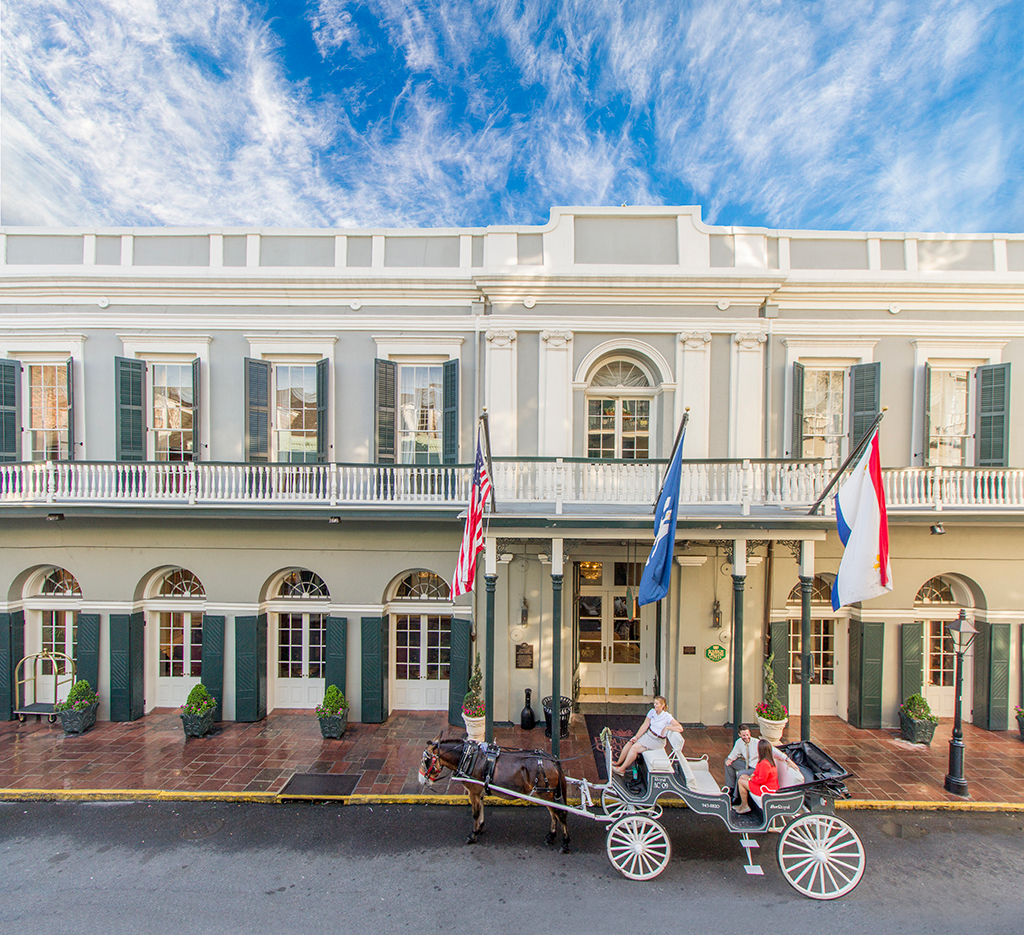
A cast-iron gallery over a Quarter street is the one frame this city gives and nowhere else does.
The Bourbon Orleans sits in the French Quarter, and its own material points to the surrounding streets and historic buildings as backdrops for couples who want to slip away for a few portraits.
One frame defines a hotel like this and it is worth building the coverage around rather than collecting incidentally: the couple on a cast-iron gallery, the ironwork in the frame, the street below or behind, and the Quarter’s rooflines beyond. It works because a gallery does three things at once — it puts a couple above the crowd, it gives an ornamental foreground or frame that is specific to this city, and it is covered, which means the light is good and the rain does not matter.
So this is written as one frame and the three things it needs. We have not photographed a wedding at the Bourbon Orleans; Quarter hotels with galleries behave consistently. Which balconies are accessible, whether they are private, and what the ballroom lighting can be set to are the questions for their team — the first one decides whether this frame exists at all.
The Bourbon Orleans Hotel at a glance
| Where | The French Quarter, New Orleans, Louisiana |
| Character | A historic Quarter hotel with cast-iron galleries over the street |
| The frame | On the gallery: ironwork, the street below, rooflines beyond |
| It needs | Access, a decision about the ironwork, and the right hour |
| Ask first | Which balconies are accessible and whether they are private |
The frame, and the three things it needs
The first requirement is access, and it is the only one that cannot be solved by technique. Galleries at a Quarter hotel may belong to particular guest rooms, may be shared, or may be restricted for structural or safety reasons, and a balcony that is visible from the street is not necessarily a balcony a photographer can stand on. Establish which are available, from which rooms, and whether anyone else will be using them.
The second is a decision about the ironwork, which is the element that makes the frame specific. Cast-iron railings and brackets are dense, ornamental and dark, and they can be used three ways. Shot through, from inside the gallery looking out, the ironwork becomes a foreground frame around the couple — the most characteristic version. Shot from the far side of the gallery looking back, the couple sits behind the railing, which reads as an enclosure. Or shot from the street below, the gallery becomes the setting and the couple appear above and framed by it.
All three work and they are different photographs, so the useful thing is to take all three rather than to pick. The one that fails is the accidental version — ironwork crossing a face, which is dark and hard-edged and reads as an obstruction rather than a frame.
The third is the hour, and a gallery has two good ones. Through the day, because a gallery is covered, it is an architectural softbox: a roof overhead blocking the sky and an open side giving horizontal directional light, which is soft, flattering and available all day regardless of the sun. Anyone standing a metre inside the railing is being lit properly.
Then the twenty minutes after sunset are the frame the gallery exists for. With the sky still holding colour, the street lighting beginning to read, and the ironwork in silhouette, one exposure holds all three — and it needs one light on the faces at about a stop under the sky, or they go dark. That is a clock-time appointment: sunset plus fifteen, in position, couple already there.
One further note that decides the composition: which way the gallery faces. A gallery looking down a street gives depth and a long sight line; one looking across at the building opposite gives a flat wall two storeys away, which is a background rather than a view. The former is the frame; the latter needs a long lens and a wide aperture to become one.
The street below, and the rest of the building
The street is the second half of the gallery frame and it is not a neutral element. Quarter streets are busy at every hour a wedding happens, which means people, signage, vehicles and litter are all potentially in shot. From above, that is mostly manageable — a high angle looking down a street compresses the crowd into texture and the signage into pattern — but it needs deciding rather than accepting.
The tools are the usual ones: long lenses, which blur a busy background into unreadable tone; tight framing; and choosing the moment rather than waiting for a gap, because in the Quarter a gap does not come.
At street level the galleries themselves are the resource. The continuous covered pavement they create runs along whole streets and gives soft directional light all day, which is the most useful architectural fact in this city. It is also shelter, which in a climate with near-daily summer thunderstorms is not a small thing.
Pastel stucco is the accompanying condition. Walls painted pink, yellow, green or ochre bounce their own colour strongly onto anyone near them, and because the cast is localised white balance cannot correct it. Use it deliberately — a warm wall as the reason for warm light — or step two metres away, and set white balance on a face in the position being used.
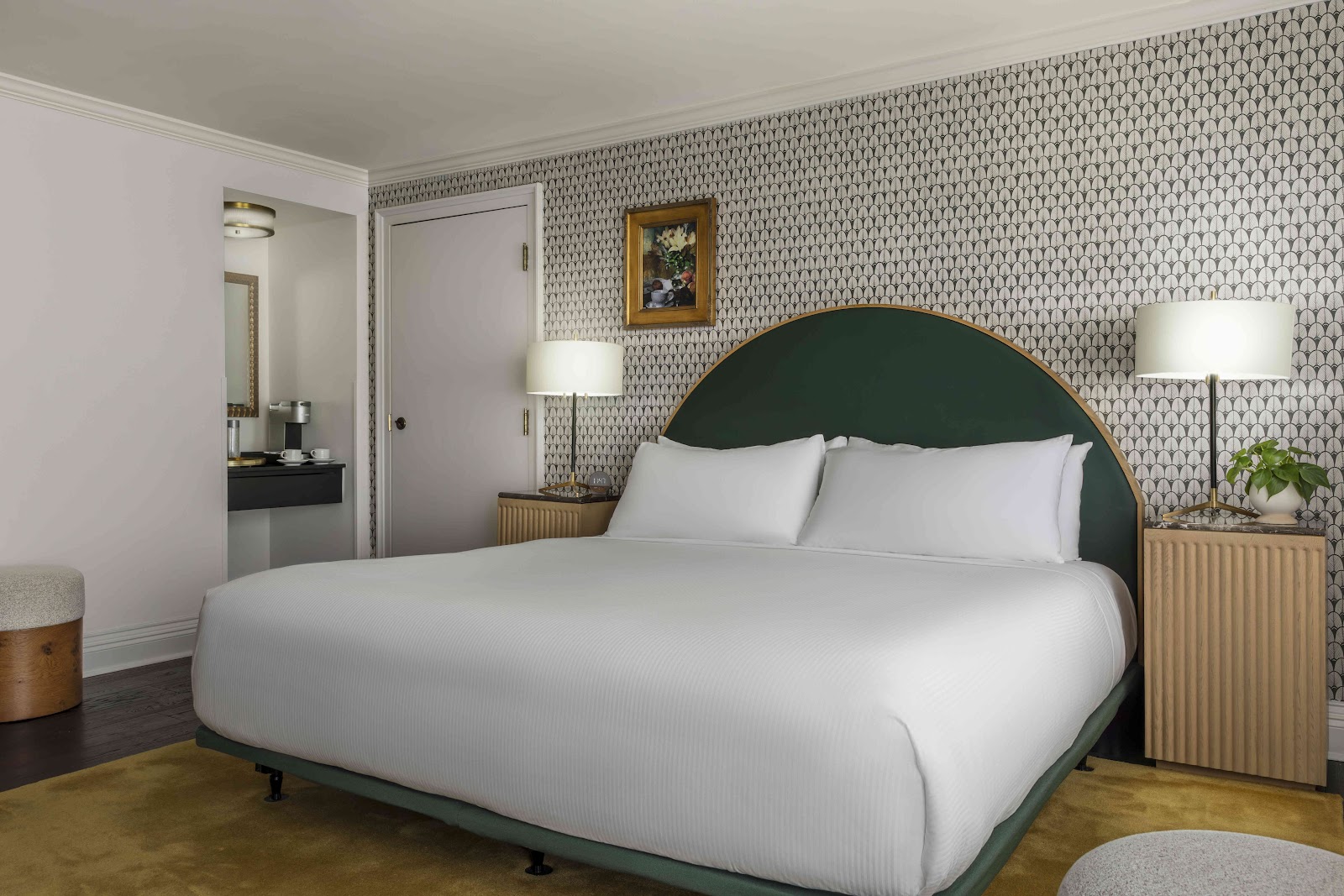
Inside, a historic Quarter hotel is a familiar set of conditions. Guest rooms are the best portrait light: domestic-sized windows with close walls that bounce, and low ceilings that actually return a flash. Ask for the largest window on the shaded side, switch off every overhead so the room has one colour of light, and move the lamps out of frame.
Public rooms and a ballroom will be tall, warm-lit and ornate, which means no usable bounce and ornament that disappears under even light. Test bounce once on arrival; place one source to graze plasterwork rather than face it; expose for the room so it stays warm and dim; and use the steep fall-off as free separation. Asking whether the ballroom can be dimmed to pools rather than lit evenly is worth more than any equipment decision.
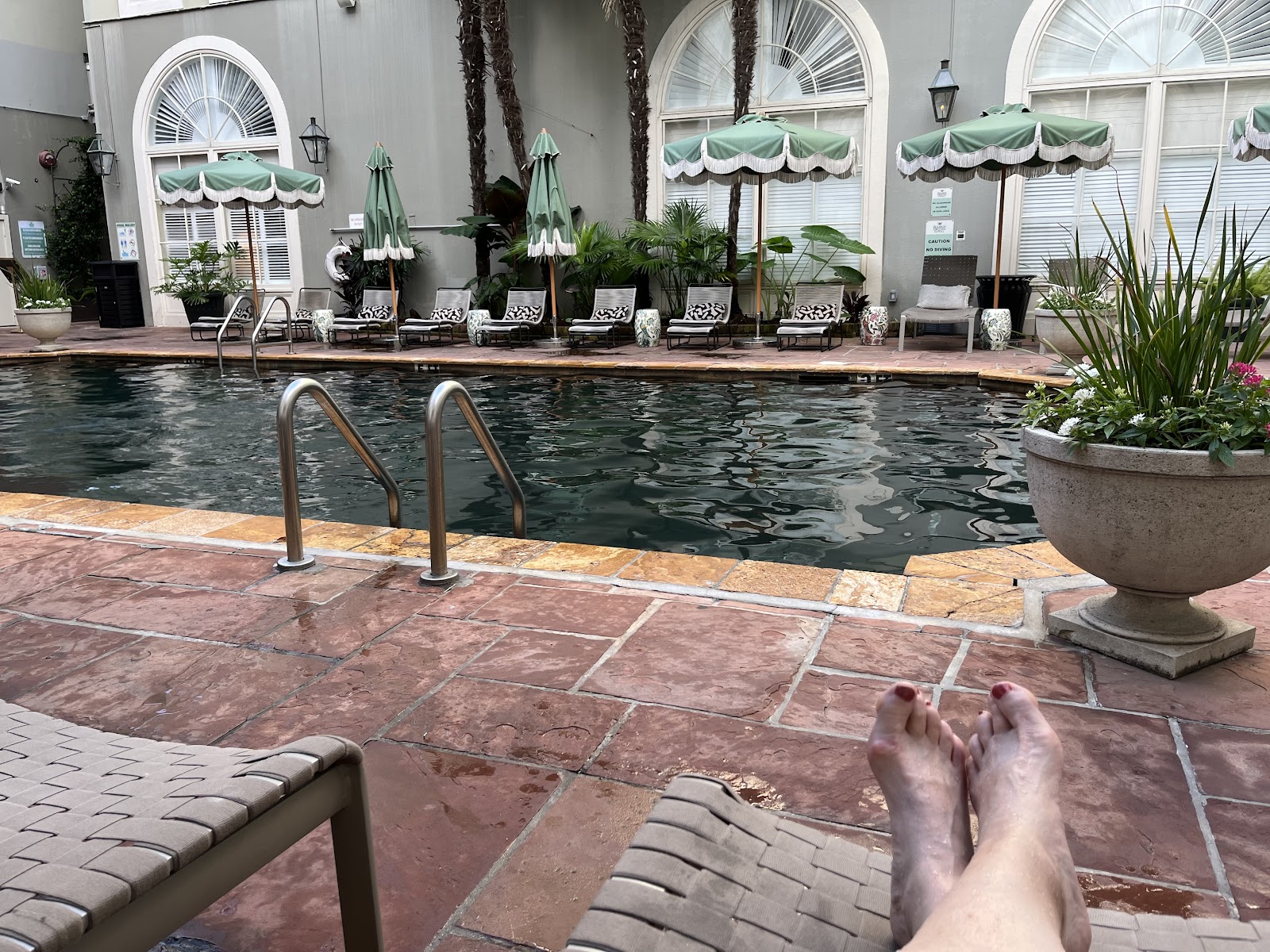
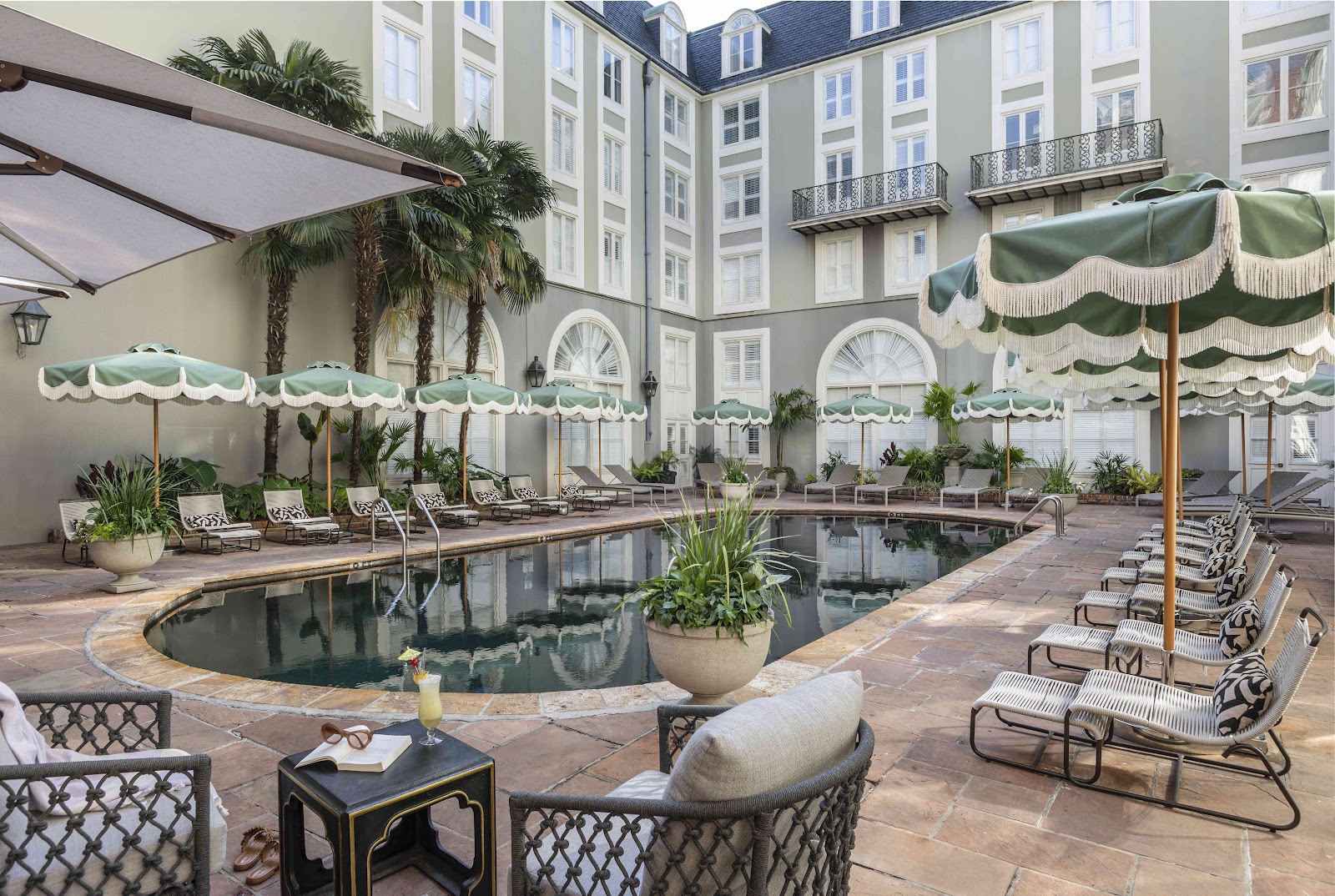
A courtyard, if there is one, is the other good light on the property: walls bouncing on all sides with sky above makes a soft contained directional source with a clean background. Fix the overhead direction with a low reflector or a lifted chin.
- Settle balcony access first; the frame does not exist without it
- Take all three ironwork versions — through, behind, and from below
- Never let ironwork cross a face; it reads as obstruction, not frame
- A covered gallery is a softbox: a metre inside the railing, all day
- Sunset plus fifteen on the gallery, one light on the faces
The hours, and New Orleans weather
The running order at a Quarter hotel is straightforward once the gallery is understood. The interior does not change through the day, so it can be scheduled wherever convenient. The gallery is good all day for soft light and exceptional for twenty minutes after sunset. The street is best in the last ninety minutes on any street that runs towards the setting sun, and in gallery shade at any other time.
That means the one immovable item is the dusk gallery frame, and the practical approach is to build backwards from it: sunset time, minus fifteen for getting into position, minus however long the couple needs to be extracted from their own reception.
New Orleans weather is the most demanding in this series and it bears on this venue unusually lightly, which is the argument for it. Heat and humidity make long outdoor blocks genuinely difficult in formal clothes — but a covered gallery is shade, and the covered pavements below are shade, so the two positions that matter most are both sheltered.
Afternoon thunderstorms are close to a daily feature of a Gulf Coast summer rather than an occasional event, and again the gallery answers it: a couple on a covered balcony with rain falling beyond the railing and warm light behind them is a better frame than the dry version, not a compromise. That is a genuine and unusual advantage.
Humidity produces the region’s specific equipment problem in its most severe form. A camera chilled by a strongly air-conditioned hotel interior fogs comprehensively and immediately on reaching the outside air, and in this city it can take a long time to clear — long enough to lose the dusk window entirely, which would be the worst possible loss here. The handling is to put the camera out onto the gallery twenty or thirty minutes before it is needed, or to keep a body at ambient temperature throughout, and to plan one outdoor block rather than several.
Crowds and noise are the last practical consideration. A Quarter street is loud, and a balcony over one is loud too — which matters for a ceremony held anywhere with an open door onto the street more than it matters for photography, but it is worth knowing when a schedule puts vows at the same hour as the street’s busiest.
More frames from The Bourbon Orleans Hotel
The Bourbon Orleans Hotel wedding photography: common questions
What is the defining frame here?
The couple on a cast-iron gallery with the ironwork in frame and the street and rooflines beyond. It puts them above the crowd, gives an ornamental frame specific to this city, and is covered.
How should the ironwork be used?
Three ways, and take all three: shot through from inside as a foreground frame, shot from the far side so the couple sits behind the railing, and shot from the street so the gallery becomes the setting.
What is the version that fails?
Ironwork crossing a face. It is dark and hard-edged, so it reads as an obstruction rather than as a frame.
Why is a gallery good light all day?
Because it is covered. A roof overhead blocks the sky and the open side gives horizontal directional light — a softbox at architectural scale, regardless of where the sun is.
What is the one timed frame?
Sunset plus about fifteen minutes on the gallery, with the sky still coloured, street lighting beginning to read and the ironwork in silhouette. It needs one light on the faces or they go dark.
Does rain ruin it?
No — it improves it. A couple on a covered balcony with rain falling beyond the railing and warm light behind is a better frame than the dry version, which in this city is a real advantage.
More Louisiana venue guides
We are writing a photographer’s guide to every venue we would happily shoot in Louisiana. Here are three more, plus the full index:
- The Four Seasons New Orleans: What It Suits and What It Does Not
- The Gallier House, New Orleans: Field Notes on a Victorian House Museum
- The Hotel Monteleone, New Orleans: Field Notes on a Historic Grand Hotel
Planning a wedding at The Bourbon Orleans Hotel?
Balcony access first, then a clock time. Tell us your date and we will settle both.