 The Audubon Aquarium: Field Notes on Photographing Through Glass
The Four Seasons New Orleans: What It Suits and What It Does Not
Flexibility at any scale is a real product. It is not the same thing as character.
The Four Seasons New Orleans emphasises flexibility — whatever the size of the guest list or the scale of the event, as its own description has it, the space accommodates it.
That is worth taking seriously rather than treating as marketing, because flexibility at scale is genuinely rare and genuinely useful. What a modern luxury hotel gives is capacity, service, climate control, parking, accessible circulation and a real indoor fallback — a combination almost no other venue type offers at once, and in a city where afternoon thunderstorms are near-daily in summer, the last of those is worth more here than almost anywhere.
What it does not give is a look that is specifically its own, and being honest about that makes the planning better rather than worse. This is written as suits and does not suit. We have not photographed a wedding here; modern luxury hotels behave consistently. Which rooms are included, whether the ballroom lighting is adjustable, and what upper-floor or terrace access exists are the questions for their team — the last one matters most.
The Four Seasons New Orleans at a glance
| Where | New Orleans, Louisiana |
| Character | A modern luxury hotel with flexible space at every scale |
| Suits | Capacity, service, weatherproofing, accessibility, guests who travel |
| Does not suit | Couples who want the venue itself to supply the character |
| Ask first | Rooms included, ballroom lighting control, upper-floor access |
The two conditions: even light and pale surfaces
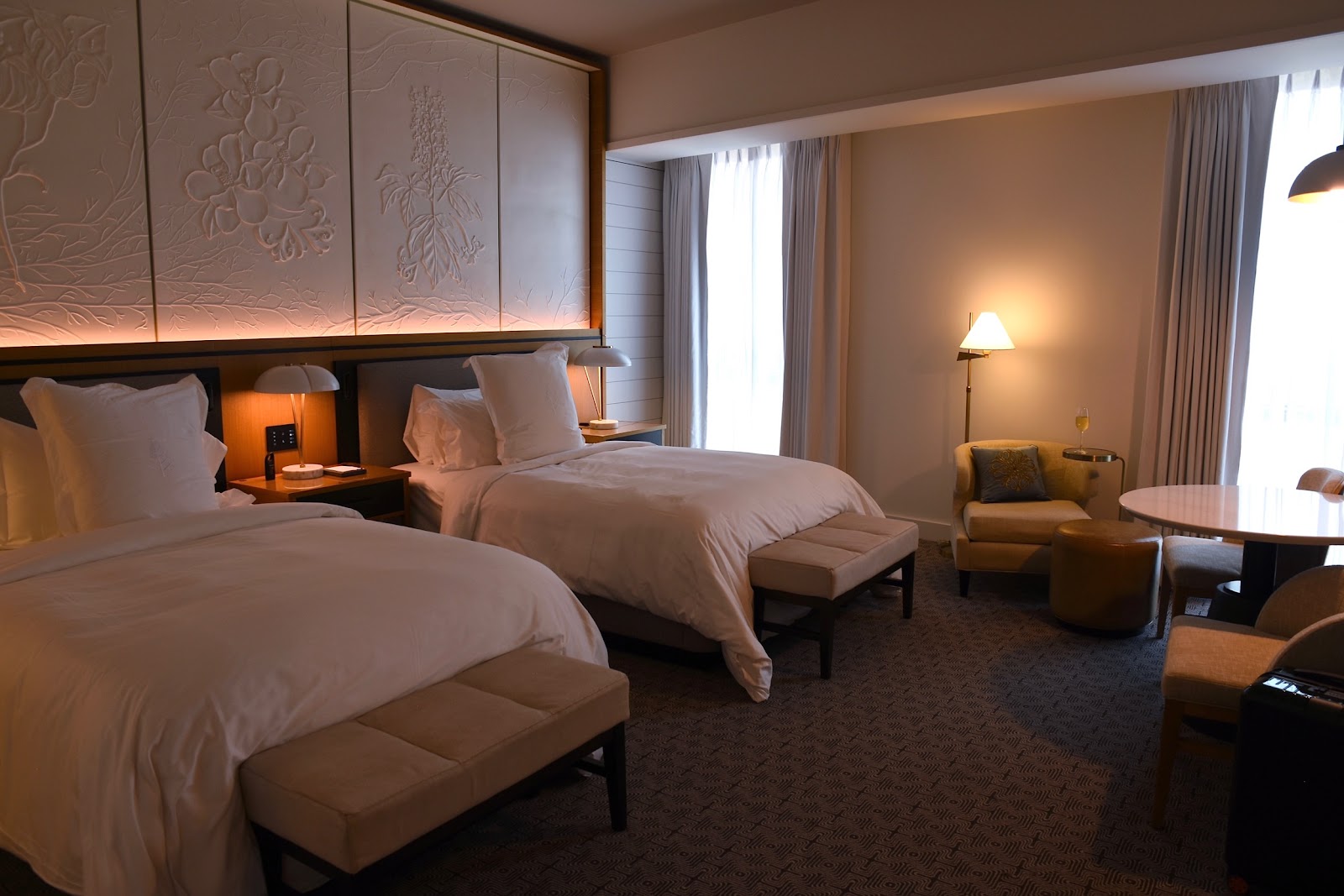
Modern luxury interiors are built on two principles and both are photographic problems disguised as qualities. Light should be even, because unevenness reads as cheap. Surfaces should be pale and uncluttered, because that reads as calm and expensive.
Even light removes modelling. A face looks three-dimensional in a photograph because one side is brighter than the other, and the gradient between them is what the eye reads as shape. Light arriving from many directions at similar intensity erases that gradient, so a technically correct exposure can still produce a face that looks flat.
The fix does not need to be strong. One directional source, off the camera axis at face height, set close to the ambient level rather than above it, restores a shadow side without making the frame look lit. In a room with high even ambient, adding half a stop in one direction does more than adding two overall.
Pale surfaces remove separation, which is the default failure mode in every hotel of this class: a pale dress against a pale wall under even light has almost nothing distinguishing one from the other. Four tools address it and they stack — depth, so the background sits well behind the subject; a wide aperture, so it goes soft; placement against the darkest element in the room; and negative fill, which is the under-used one.
Negative fill costs nothing and works better than adding light. Placing something dark — a coat, a panel, an open doorway to an unlit space — on the shadow side of a face subtracts bounced light from that side and deepens the gradient. In a pale marble lobby that single move can be the difference between a flat frame and a modelled one.
The ballroom is the exception to all of it, because a reception is lit low. Expect a high ceiling with no usable bounce, warm decorative fittings, overhead sources and steep fall-off — and that fall-off is the free separation the rest of the hotel refuses to provide. Ask whether the lighting can be dimmed to pools rather than set evenly; it usually can, and the difference exceeds any equipment decision.
Who it suits
The flexibility is the product, and it fits a recognisable set of intentions — particularly the ones involving numbers, guests who need looking after, and a climate that removes options.
These briefs are well served here:
- Larger guest counts, which the function space absorbs without strain
- Guests travelling from elsewhere, who need rooms, access and no logistics
- Anyone who wants the weather to be genuinely irrelevant to the day
- Weddings where service, catering and timing matter more than architecture
- Couples who want several spaces on one site with no travel between them
Who should look elsewhere
The reverse list is not a criticism. A hotel of this class is built to be excellent and unobtrusive for a very wide range of events, and the qualities that make it dependable are the same ones that make it unspecific.
Several reasonable briefs run against the grain here:
- Couples who want the venue immediately recognisable in the photographs
- Anyone whose references are period texture, courtyards, ironwork or ornament
- Small intimate weddings, which can feel lost in rooms built for two hundred
- Briefs where the interior should carry the gallery rather than the city
- Anyone wanting an outdoor ceremony with character of its own on site
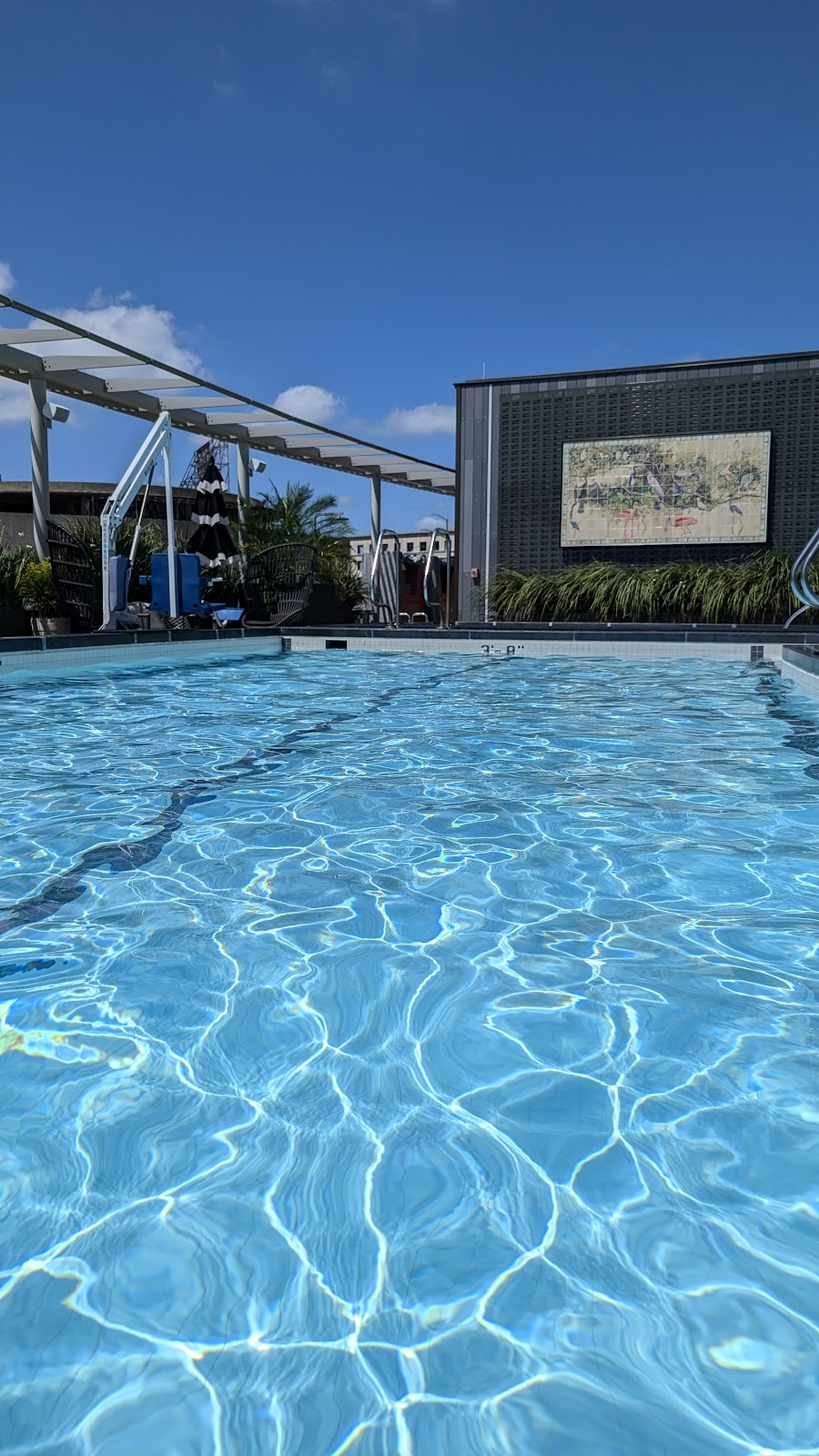
Where the character comes from, and the weather
The honest plan at a venue like this is that the character comes from outside, and in New Orleans that is an unusually good deal. Very few cities supply so much specificity within a short walk, which means the gap the hotel leaves is easy to fill.
The defining photographic feature of the Quarter is the cast-iron galleries overhanging the pavements. They create continuous covered shade along whole streets, functioning as an architectural softbox at street scale: a roof blocking the sky and an open side giving horizontal directional light. It is soft, it is directional, it is available all day, and it works in rain — the most useful architectural fact in the city.
Pastel stucco is the accompanying condition. Walls painted pink, yellow, green or ochre bounce their own colour strongly onto anyone near them, and because the cast is localised white balance cannot correct it. Use it deliberately or step two metres away, setting white balance on a face in the position being used.
Quarter streets are narrow with low buildings, so direct low sun reaches street level only where a street runs towards it — those give ninety minutes of raking light down a block, and the others stay in gallery shade, which is not a loss. Crowds are constant, and the tools are long lenses and tight framing rather than waiting for a gap.
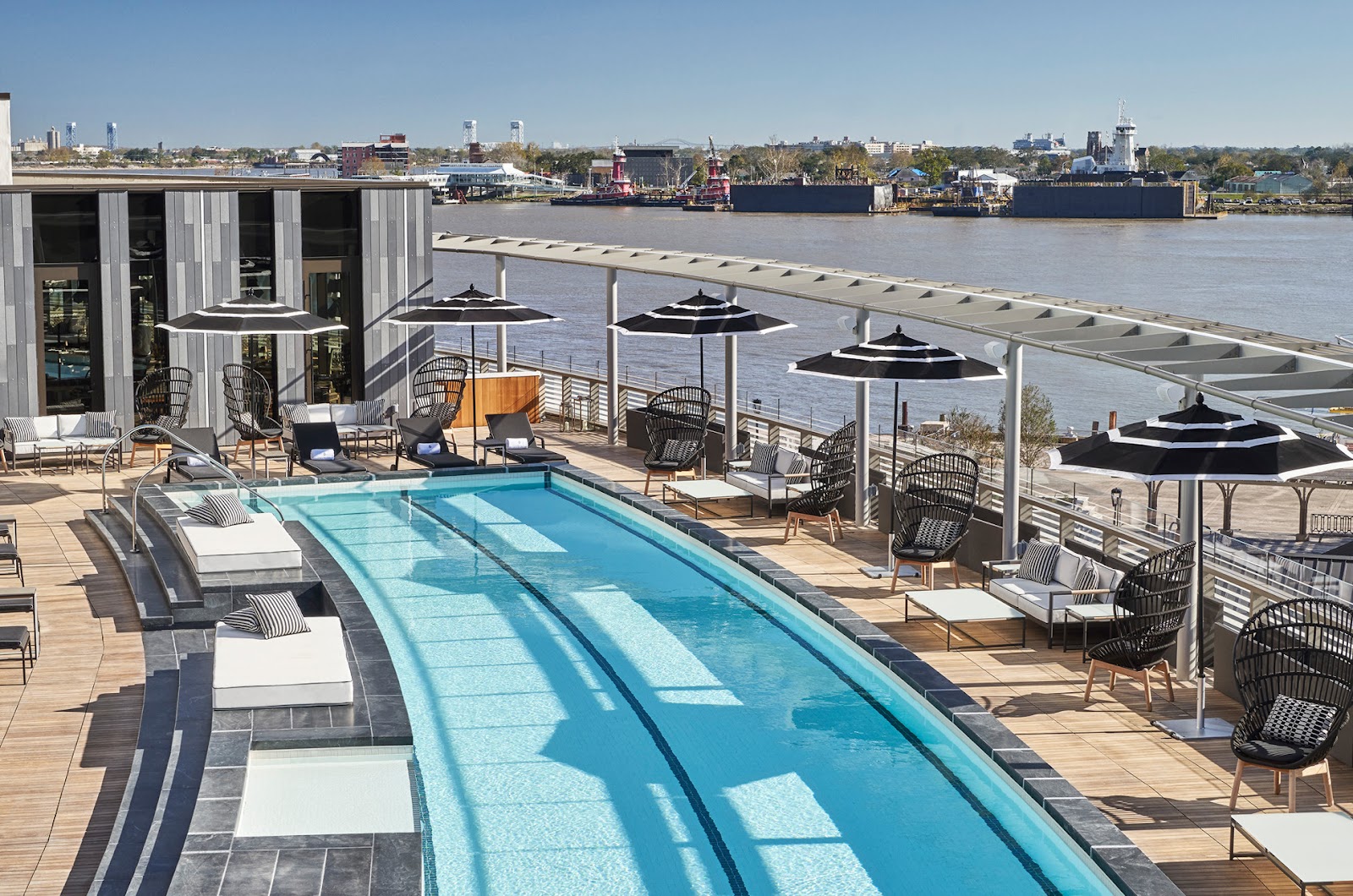
If the hotel has upper-floor or terrace access it is worth asking about specifically, because height in New Orleans is rarer than in most cities. Above the Quarter’s two- and three-storey roofline, low sun arrives earlier and the river and roofscape become available — a frame street level cannot give. And it is where the one timed frame lives: roughly twenty minutes after sunset the city falls to about the brightness of the interior lighting, and one exposure holds the lit room or terrace, the couple and the city together.
New Orleans weather is the most demanding in this series and it is the strongest argument for this venue type. Heat and humidity make long outdoor blocks genuinely difficult in formal clothes, and afternoon thunderstorms are near-daily in a Gulf Coast summer rather than occasional — so a large hotel means the day continues without a decision being needed, while everybody at a garden venue is making one.
Humidity also produces the region’s equipment problem in its most severe form, and a luxury hotel is where it bites hardest because the air conditioning is most effective. A camera chilled indoors fogs comprehensively and immediately on reaching the outside air and can take a long time to clear. Warm the kit twenty or thirty minutes before the outdoor block and plan one excursion rather than three, because every in-and-out cycle costs frames.
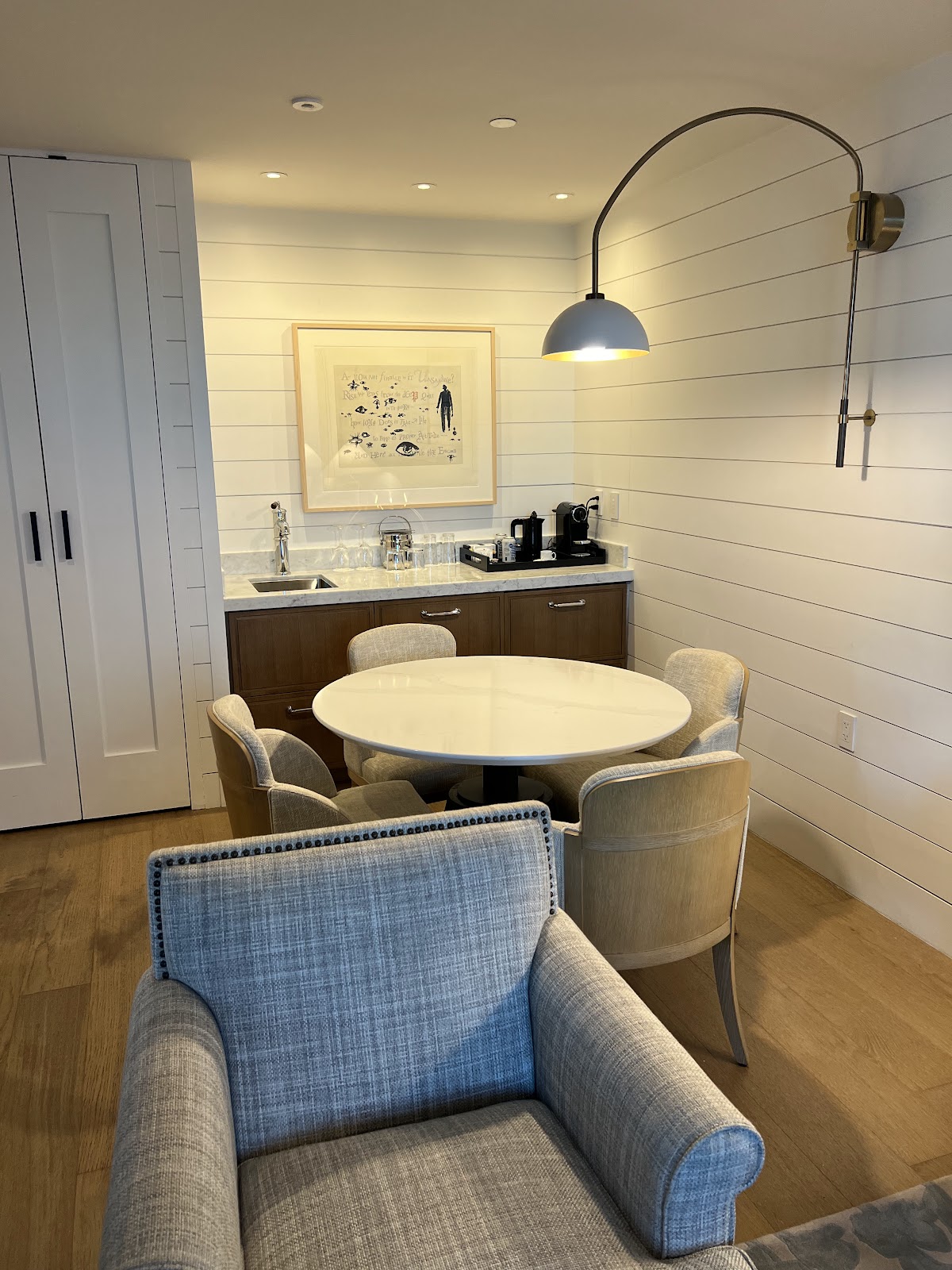
More frames from The Four Seasons New Orleans
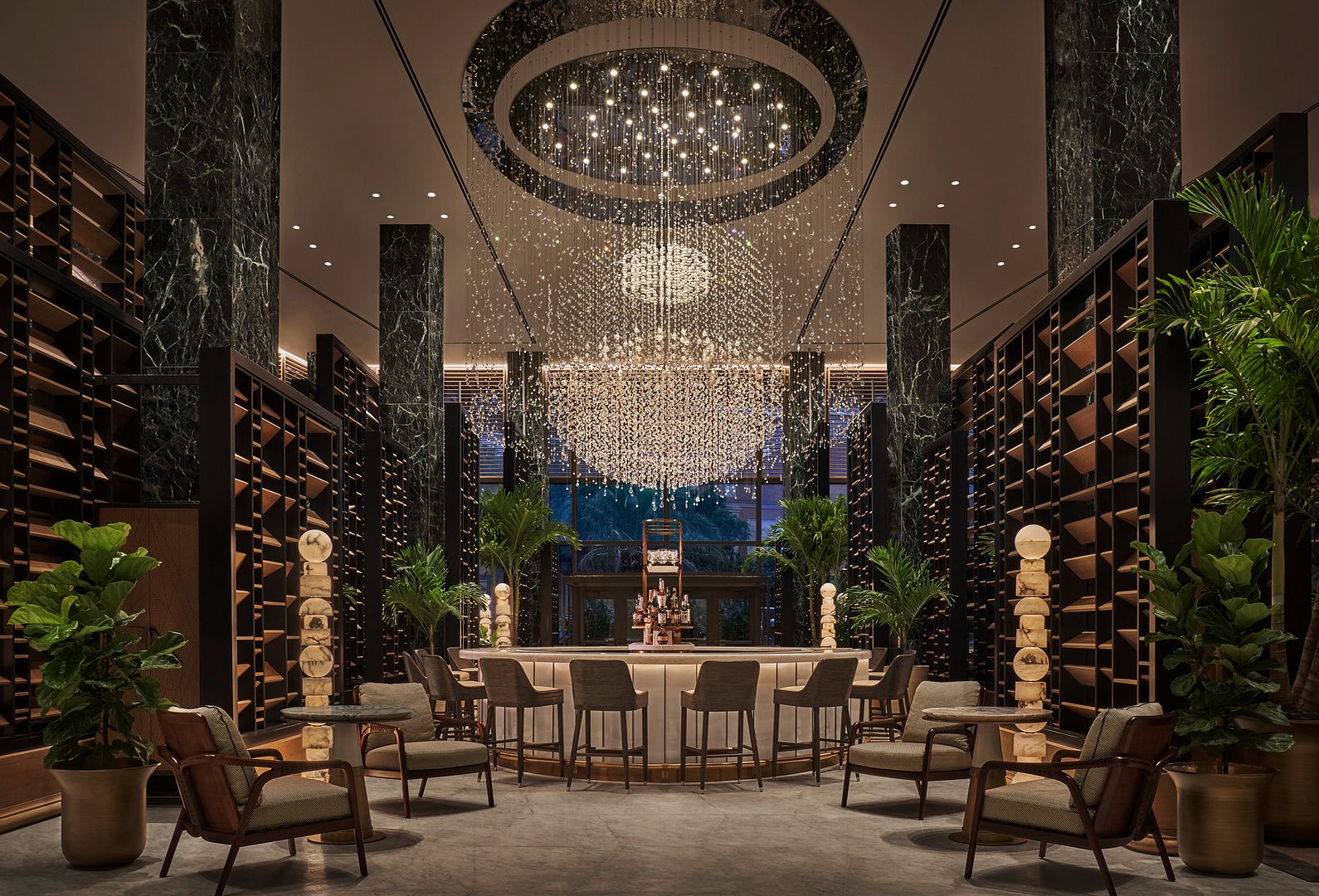
The Four Seasons New Orleans wedding photography: common questions
What is a modern luxury hotel actually good at?
Capacity, service, climate control, accessibility and a real indoor fallback, all on one site — and in a city with near-daily summer thunderstorms, that last one is worth more than usual.
What does it not give?
A look of its own. Interiors of this class converge everywhere, so the gallery’s character has to come from the city outside rather than from the building.
Why does even light cause a problem?
Because shape in a photograph comes from the gradient between a bright and a dark side of a face, and light arriving from many directions at similar intensity erases it.
What is the best fix for pale-on-pale?
Negative fill. Something dark on the shadow side of a face subtracts bounced light and deepens the gradient, and in a pale marble room it beats adding light.
What should you ask about the ballroom?
Whether the lighting can be dimmed to pools rather than set evenly. A room with a few lit areas and the rest falling away is dramatically better, and it is a request rather than equipment.
Why ask about upper-floor access?
Because height is rare in New Orleans. Above the Quarter’s low roofline, low sun arrives earlier and the river and roofscape become available — and that is where the dusk crossing frame lives.
More Louisiana venue guides
We are writing a photographer’s guide to every venue we would happily shoot in Louisiana. Here are three more, plus the full index:
- The Gallier House, New Orleans: Field Notes on a Victorian House Museum
- The Hotel Monteleone, New Orleans: Field Notes on a Historic Grand Hotel
- Maison Dupuy, New Orleans: One Frame and How It Is Made
Planning a wedding at The Four Seasons New Orleans?
If capacity and weatherproofing matter most, this works — and the city supplies the rest. Tell us your date.