 The Audubon Aquarium: Field Notes on Photographing Through Glass
Maison Dupuy, New Orleans: One Frame and How It Is Made
A walled courtyard with sky above is the closest thing architecture gets to a studio.
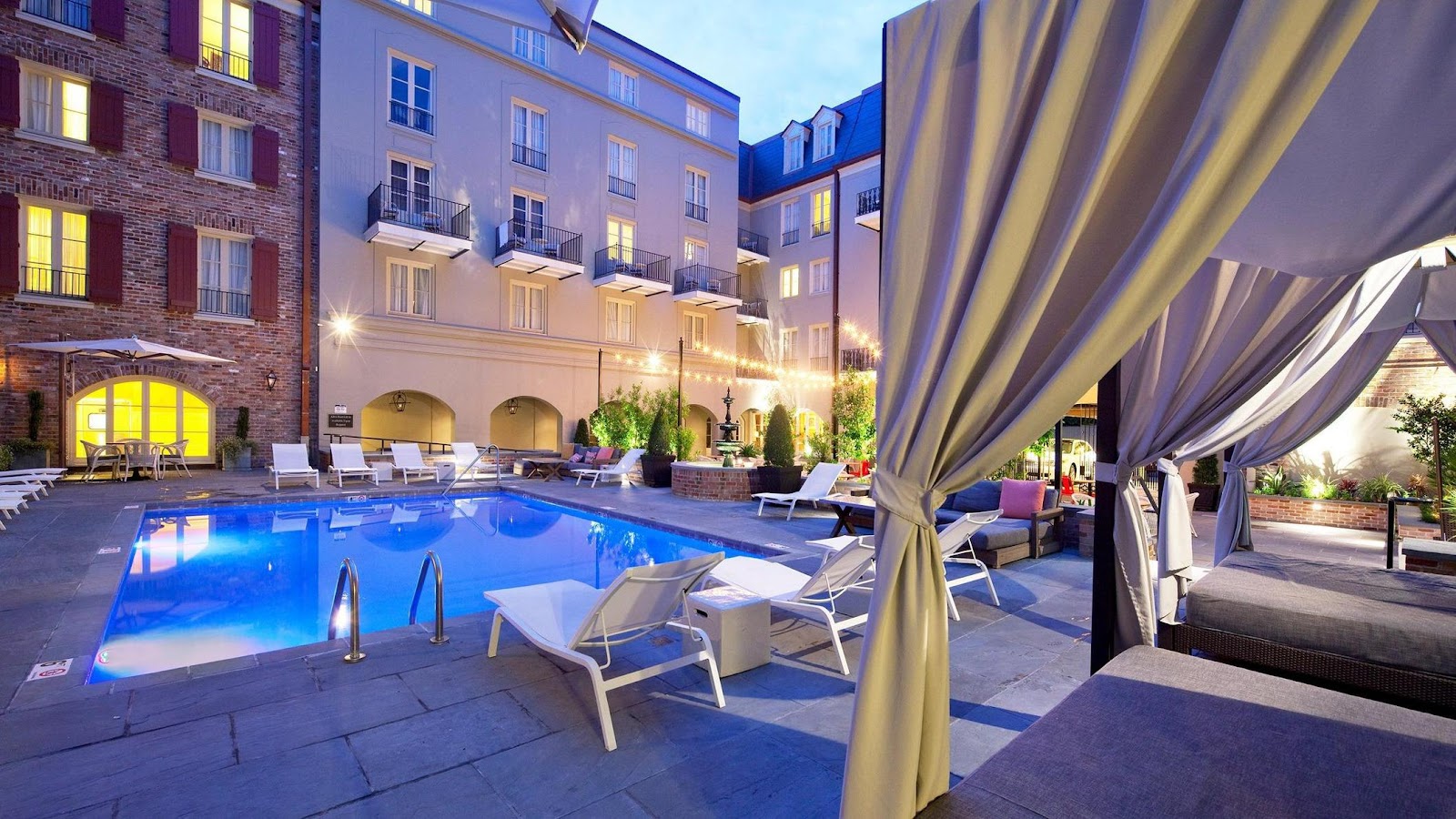
Maison Dupuy sits in the historic French Quarter and blends classic and contemporary styles, as its own description puts it — and like most Quarter hotels of its kind, it is arranged around a courtyard.
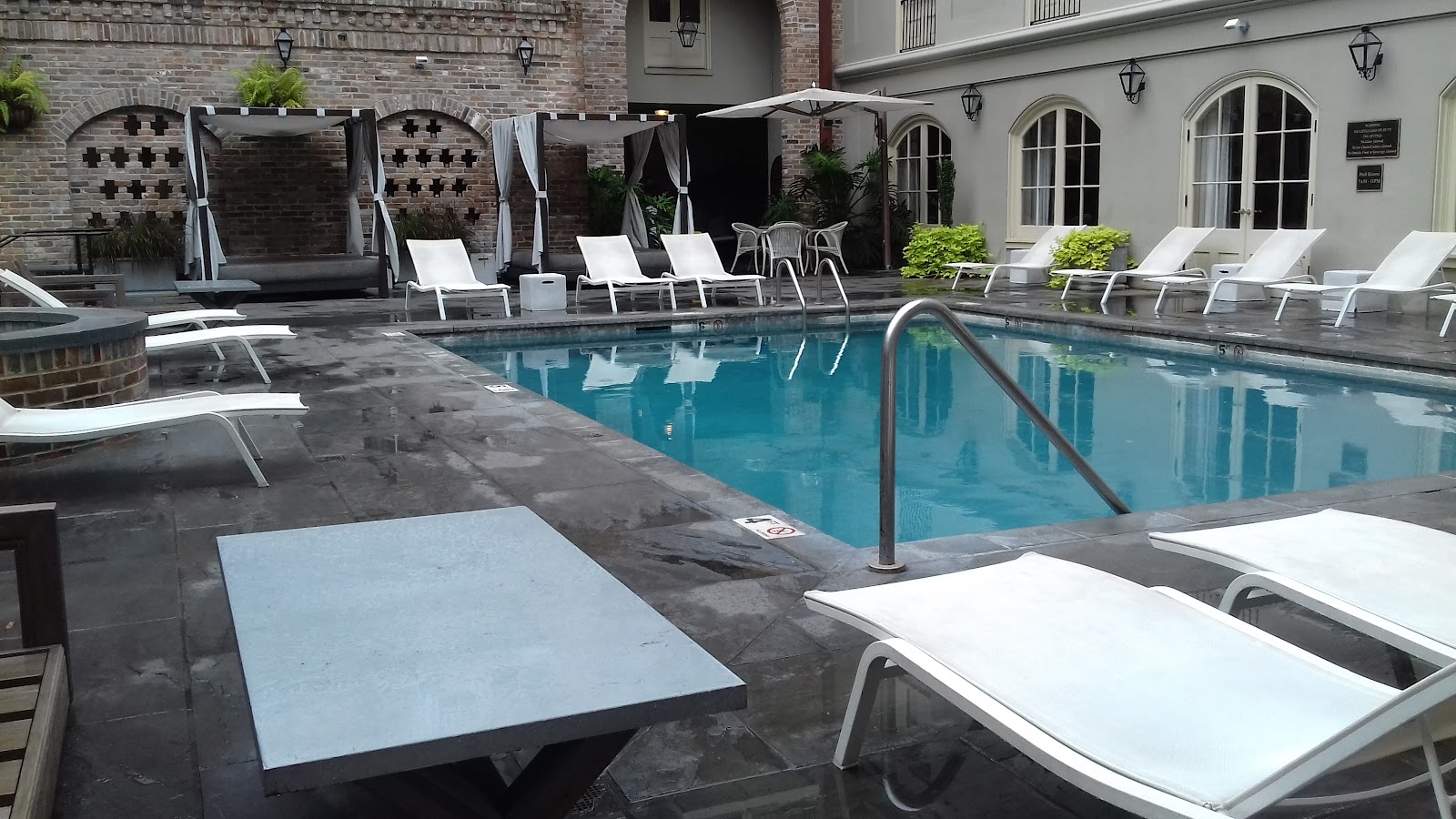
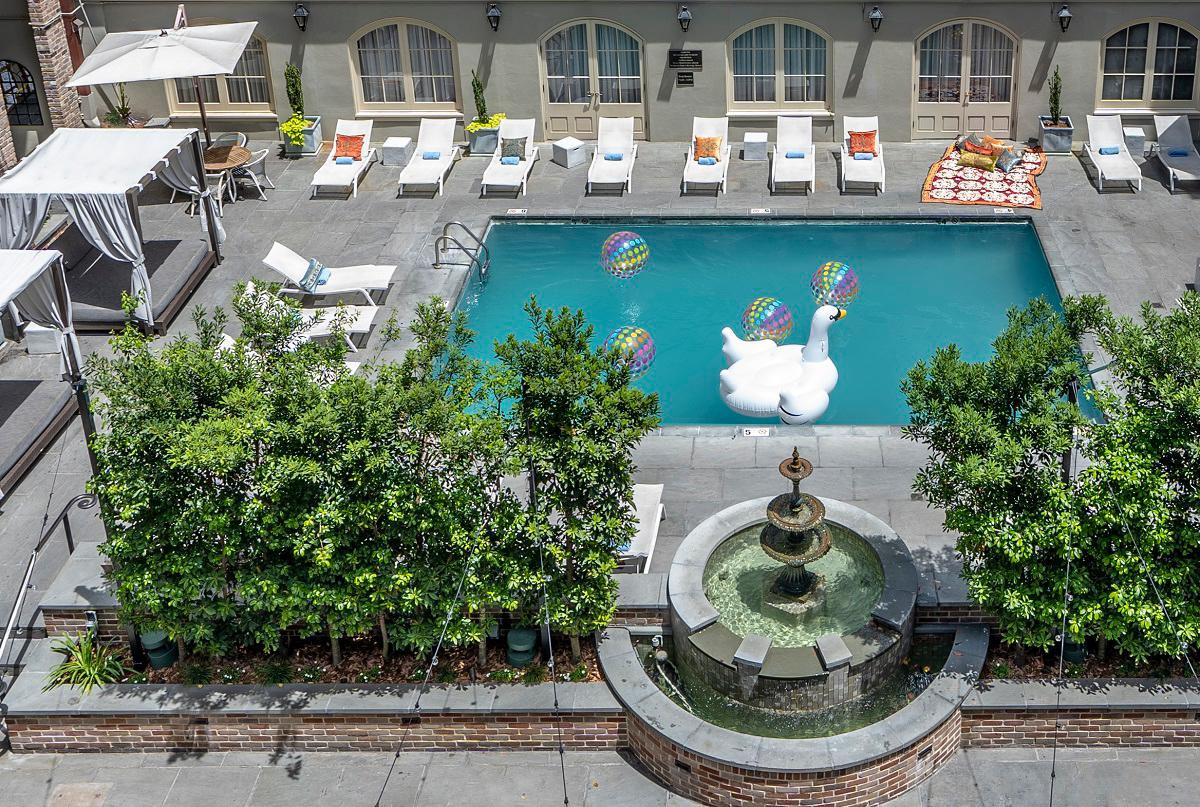
The courtyard is the frame worth building the day around. A walled courtyard is a photographic instrument rather than a garden: four walls that bounce light inward, an opening to the sky above that acts as the source, planting for texture, and no view out — which means no distant clutter, no passers-by and no background to manage. It is the closest thing architecture gets to a studio, it costs nothing, and it works for hours rather than for twenty minutes.
So this is written as one frame and the three conditions it needs. We have not photographed a wedding at Maison Dupuy; Quarter courtyard hotels behave consistently. What the courtyard’s capacity is, whether it is exclusive, and what the wet-weather plan for a courtyard ceremony looks like are the questions for their team.
The Maison Dupuy at a glance
| Where | The French Quarter, New Orleans, Louisiana |
| Character | A Quarter hotel arranged around a walled courtyard |
| The frame | In the courtyard: contained, bounced, no background to manage |
| It needs | A position, a fix for the overhead light, and a colour decision |
| Ask first | Courtyard capacity and exclusivity, and the wet-weather plan |
The frame, and the three conditions
The first condition is the position, and it is not the middle. A courtyard’s light comes from the rectangle of sky overhead, which means standing in the centre puts a subject directly under it — flat, top-down light that darkens eye sockets and marks the line under the nose. The position that works is against a wall, ideally the one opposite the brightest sky, where light arrives from one side having bounced off the facing wall and from above at an angle rather than straight down.
In practice that means walking the four sides and looking at a hand held out in each, which takes a minute and settles the whole day. One side will be noticeably better than the other three, and it will change through the day as the sun crosses the opening.
The second condition is a fix for the overhead component, because even in the best courtyard position there is more light from above than from the front. The cheapest fixes are a reflector held low bouncing light back up into the face, a pose with the chin lifted and the face turned slightly upward, or a small source at face height that overrides the geometry entirely. Any of the three works; having none of them is the commonest reason courtyard portraits look slightly hollow around the eyes.
The third condition is a colour decision, and in New Orleans it is unavoidable. Courtyard walls in the Quarter are frequently stucco painted pink, yellow, ochre or green, and those walls are the bounce source — which means the light filling a face in a courtyard is that colour. Because it is localised and bounced rather than global, white balance cannot separate it from the subject.
There are two honest approaches. Use it: set a custom white balance on a face in the position being used, accept a warm or coloured cast as the character of the place, and keep it consistent through the block. Or neutralise it: hold a white or silver reflector so the fill comes from a neutral surface instead of the wall, which restores skin tone while leaving the wall as coloured as it is behind. The failure is neither — shooting on auto white balance and letting it drift between frames, which is why a courtyard sequence so often fails to match itself.
Planting is the fourth element and in a Quarter courtyard it is typically banana, palm and fern — dense, architectural, and strongly green. It gives texture and framing, and it throws green onto anyone standing close to it, so the same white balance discipline applies. A palm frond arching into the top of a frame is the courtyard equivalent of the live oak’s low limb.
The courtyard through the day, and the hotel around it
A courtyard’s great advantage is that it is usable all day, which almost nothing outdoors in New Orleans is. Because the walls shade most of the floor for most of the day, and because the sky rather than the sun is the main source in the shaded portion, there is a workable soft-light position at nearly every hour.
The exception is the middle of the day when the sun is high enough to come directly into the courtyard, which puts a hard patch of sun on part of the floor and leaves the rest in shade — a five- or six-stop difference within a few metres. That is not a problem if it is understood: work in the shaded part, use the sunlit part as a bright background element, and never straddle the line.
Late afternoon is when a courtyard becomes most attractive, because the sun drops low enough to strike the upper part of one wall while the floor stays shaded. That lit wall becomes a large warm reflector aimed downward into the space, which raises the level, warms the light and produces a quality that no other hour gives. It is worth knowing which wall it will be, which means one visit at approximately the right hour.
After dark a courtyard has no ambient of its own beyond whatever lighting the hotel has installed, so evening frames there are a lighting exercise: one source on the couple, with any lit wall, planting or gallery as background. A long exposure with warm hotel windows above and planting lit from below is a good frame and it is usually missed.
Inside, the hotel follows the ordinary pattern. Guest rooms are the best portrait light — domestic windows, close walls that bounce, low ceilings that return a flash. Ask for the largest window on the shaded side, switch off every overhead so the room has one colour of light, move the lamps out of frame.
Function rooms will be warm-lit with overhead sources and mid-level ambient, possibly with a ceiling too high to bounce from — one test frame settles it. Expose for the room so it stays warm and dim, add one warm-gelled source at face height for legibility, set white balance to the gel and hold it through the block.
Galleries and balconies, where the hotel has them, are the other Quarter asset: covered, so they give horizontal directional light all day and work in rain, with cast-iron railings as an ornamental frame.
- Work against a wall, not in the middle of the courtyard
- Fix the overhead component with a low reflector or a lifted chin
- Decide about the wall colour: use it with custom white balance, or neutralise it
- Never straddle the sun line; work the shaded part and use the sunlit part behind
- In late afternoon, the lit upper wall becomes a large warm reflector
The Quarter outside, and New Orleans weather
The Quarter is the outdoor extension and it is exceptional material. The defining photographic feature is the cast-iron galleries overhanging the pavements, which create continuous covered shade along entire streets — a roof blocking the sky and an open side giving horizontal directional light, functioning as an architectural softbox at street scale. In this climate it is the most useful architectural fact in the city: soft, directional, available all day, and working in rain.
Pastel stucco applies outside exactly as it does in the courtyard: walls bounce their own colour onto nearby skin, the cast is localised so white balance cannot separate it, and the answer is to use it deliberately or step two metres away.
Quarter streets are narrow with two- and three-storey buildings, so direct low sun reaches street level only where a street runs towards it. Those streets give ninety minutes of raking light down a whole block; the others stay in shade, which is not a loss.
Crowds are constant at any hour a wedding happens, and waiting for a gap does not work. The tools are long lenses, which compress and blur a busy background into unreadable tone, and tight framing.
New Orleans weather governs the outdoor half of the day and this venue handles it better than most. Heat and humidity make long blocks genuinely difficult in formal clothes — but a shaded courtyard is markedly cooler than a street, and the galleries are shelter as well as light.
Afternoon thunderstorms are close to a daily feature of a Gulf Coast summer rather than an occasional event, which makes the courtyard ceremony question a real one: an open courtyard has no roof, so a stated fallback with a capacity and an agreed decision time is required. The compensation is that a courtyard after rain is genuinely better — stucco darkens and shows texture, planting saturates, flagstones hold reflections, and the light goes soft and even.
Humidity produces the region’s specific equipment problem in its most severe form: a camera chilled by a strongly air-conditioned interior fogs comprehensively and immediately on reaching the courtyard, and it can take a long time to clear. Since the courtyard is where most of the photography happens, the practical answer is to get a body out to ambient temperature early and keep it there rather than cycling it in and out.
More frames from The Maison Dupuy
The Maison Dupuy wedding photography: common questions
Why is a courtyard so good?
Because it is a contained instrument rather than a garden: four walls bouncing light inward, sky above as the source, and no view out — so no distant clutter, no passers-by and no background to manage.
Where should you stand in it?
Against a wall, not in the middle. The centre puts a subject directly under the sky opening, which is flat top-down light. Against a wall, light arrives from one side after bouncing off the facing wall.
How do you fix the overhead light?
A reflector held low, a lifted chin, or a small source at face height. Having none of them is why courtyard portraits often look slightly hollow around the eyes.
What about coloured stucco walls?
The bounce source is the wall, so its colour fills the face and white balance cannot separate it. Either set a custom white balance and keep it consistent, or fill from a neutral reflector instead.
What happens at midday?
The sun comes directly into part of the courtyard, giving a five- or six-stop difference within a few metres. Work the shaded part, use the sunlit part as a bright background, and never straddle the line.
Does rain ruin a courtyard?
It improves the frames — stucco darkens and shows texture, planting saturates, flagstones hold reflections. It does remove an open-air ceremony, so a fallback with an agreed decision time is needed.
More Louisiana venue guides
We are writing a photographer’s guide to every venue we would happily shoot in Louisiana. Here are three more, plus the full index:
- The National WWII Museum, New Orleans: What It Suits and What It Does Not
- The New Orleans Museum of Art: How the Light Moves
- The Ogden Museum, New Orleans: A Walk Up Through the Building
Planning a wedding at The Maison Dupuy?
A courtyard rewards one minute of walking its four sides. Tell us your date.